
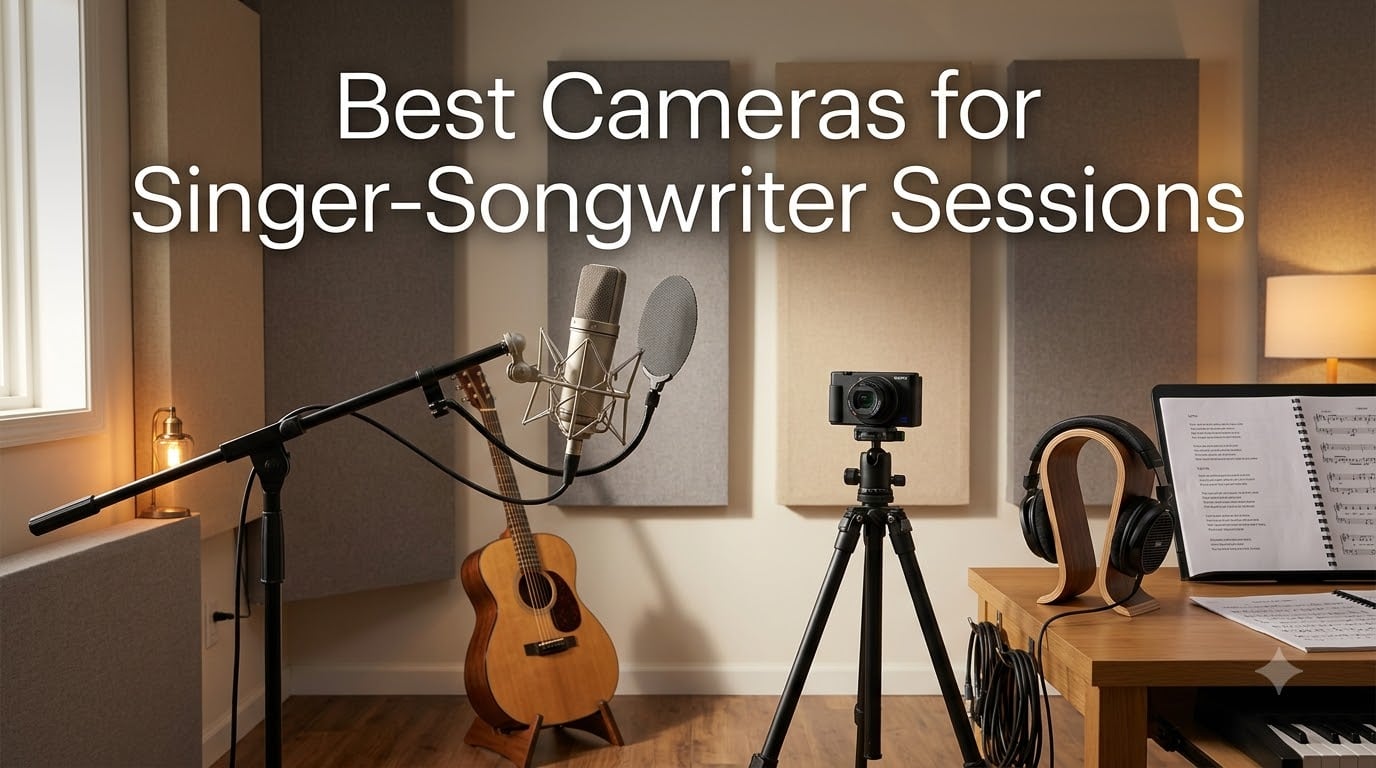
I have spent three years filming acoustic sessions in living rooms, small venues, and rehearsal rooms that smelled like old carpet. One thing became obvious fast: the best cameras for singer-songwriter sessions are not the cameras filmmakers chase. What we actually need is clean audio, decent low-light behavior for evening sessions, a screen that flips so we can frame ourselves, and a setup we can finish in five minutes.
When I started, I made every mistake available. I shot on a phone with a cracked screen, got audio that clipped on the first chorus, and spent a weekend syncing a separate recorder to video by matching hand claps.
This guide exists so you can skip that part. Our team pulled ten cameras that musicians actually buy and grouped them the way songwriters really work: one-person setups, audio-first recording, first videos on a budget, and multi-angle filming. If you record vocals with guitar, film covers for YouTube, or livestream a Sunday night set from your home studio, one of these will fit.
Table of Contents
Top 3 Picks for Singer-Songwriter Sessions (October 2026)

DJI Osmo Pocket 3 Creator Combo
- 1-inch CMOS sensor
- 4K 120fps video
- 3-axis gimbal stabilization
- DJI Mic 2 transmitter included

Zoom Q2n-4K Handy Video Recorder
- X-Y stereo mics rated 120dB SPL
- 4K 30fps video
- 48kHz 24-bit audio
- USB webcam streaming

AUREAPIX 8K Digital Camera
- 8K video recording
- 96MP still photos
- WiFi transfer to phone
- 180-degree flip screen
Editor’s Choice, DJI Osmo Pocket 3 Creator Combo: the camera I reach for when one device has to do everything. The 1-inch sensor handles lamp-lit rooms, the gimbal keeps handheld takes smooth, and the included DJI Mic 2 transmitter solves audio in one move.
Best Value, Zoom Q2n-4K: if sounding like a real record matters most, nothing at this level touches it. The X/Y mics survive a loud strum, and it streams straight to YouTube over USB. Image second, sound first, which is the right trade for most songwriters.
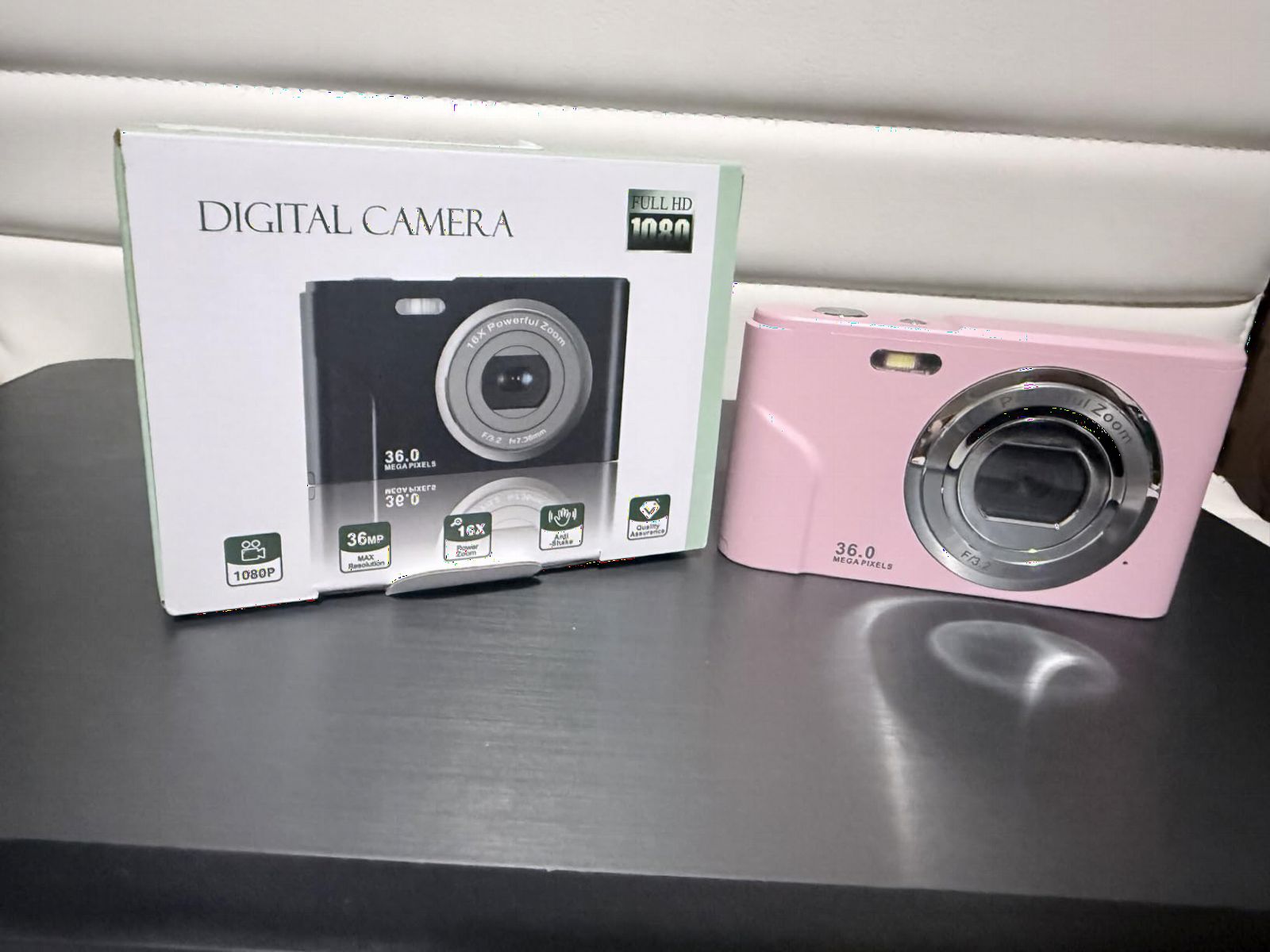
Budget Pick, AUREAPIX 8K Digital Camera: covers the basics for a first music video, including 8K recording, a big flip screen, WiFi transfer, and two batteries in the box. It is not a pro tool, but it beats a phone on a tripod adapter while you decide if video is worth pursuing.
Best Cameras for Singer-Songwriter Sessions in 2026
Here is the complete field, all ten cameras side by side. I ordered them by how well they serve a solo acoustic creator, from do-everything picks down to budget bundles that ship with a mic and a card in the box.
| Product | Specifications | Action |
|---|---|---|
| DJI Osmo Pocket 3 Creator Combo |
|
Check Latest Price |
| Zoom Q2n-4K Handy Video Recorder |
|
Check Latest Price |
 Sony ZV-1F Compact Camera Sony ZV-1F Compact Camera |
|
Check Latest Price |
 Xtra Muse Pocket Gimbal Camera Xtra Muse Pocket Gimbal Camera |
|
Check Latest Price |
 Canon PowerShot V10 Canon PowerShot V10 |
|
Check Latest Price |
| AUREAPIX 8K Digital Camera |
|
Check Latest Price |
 FlyFrost 8K Video Camera FlyFrost 8K Video Camera |
|
Check Latest Price |
 MWIRB 8K Video Camera MWIRB 8K Video Camera |
|
Check Latest Price |
 FJFJOPK 4K Camcorder 96MP FJFJOPK 4K Camcorder 96MP |
|
Check Latest Price |
 FJFJOPK 4K Camcorder 64MP FJFJOPK 4K Camcorder 64MP |
|
Check Latest Price |
1. DJI Osmo Pocket 3 Creator Combo – Best Overall for Solo Musicians
DJI Osmo Pocket 3 Creator Combo, Vlogging Camera with 1” CMOS & 4K/120fps
1-inch CMOS sensor
4K up to 120fps
3-axis mechanical gimbal
166 min battery
179 g body
Pros
- Gimbal stabilization makes handheld takes usable
- Included DJI Mic 2 transmitter fixes audio instantly
- Rotates between horizontal and vertical in one touch
- ActiveTrack 6.0 keeps you framed while you move
Cons
- Premium price for a fixed-lens camera
- Limited zoom
- Small 2-inch screen
I filmed a four-song set in a room lit by two floor lamps and a string of fairy lights, and this is the first pocket camera I did not immediately want to reshoot. The 1-inch sensor pulls real detail out of warm, dim rooms instead of smearing it into noise, and skin tones looked like skin rather than a beige guess.
The gimbal is the part I did not expect to matter. I walked around mid-song while a friend filmed me, and the footage cut into the session video without a single stabilizing plugin. For a solo artist with nobody behind the tripod, that freedom changes what you can capture.
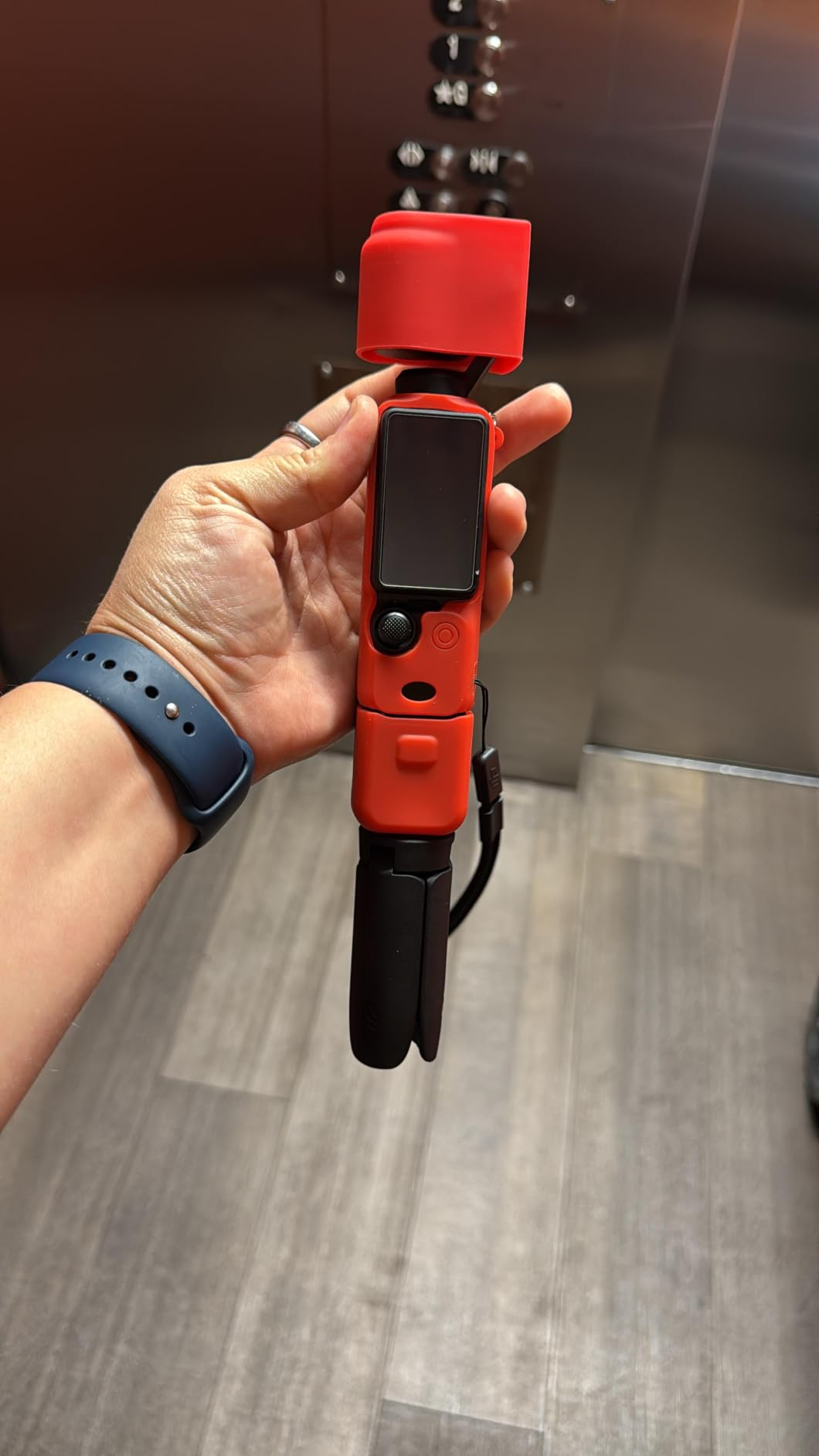
Audio is where the Creator Combo earns its name. The DJI Mic 2 transmitter clips to a strap or collar, pairs automatically, and recorded my voice and guitar with a closeness no built-in mic can fake.
It saved me in post too. Because the transmitter sits inches from your mouth instead of across the room, I spent zero time cleaning up hiss or room rumble.
It doubles as a webcam, which made it my streaming camera for a virtual open mic night. One cable, clean picture, no capture card.
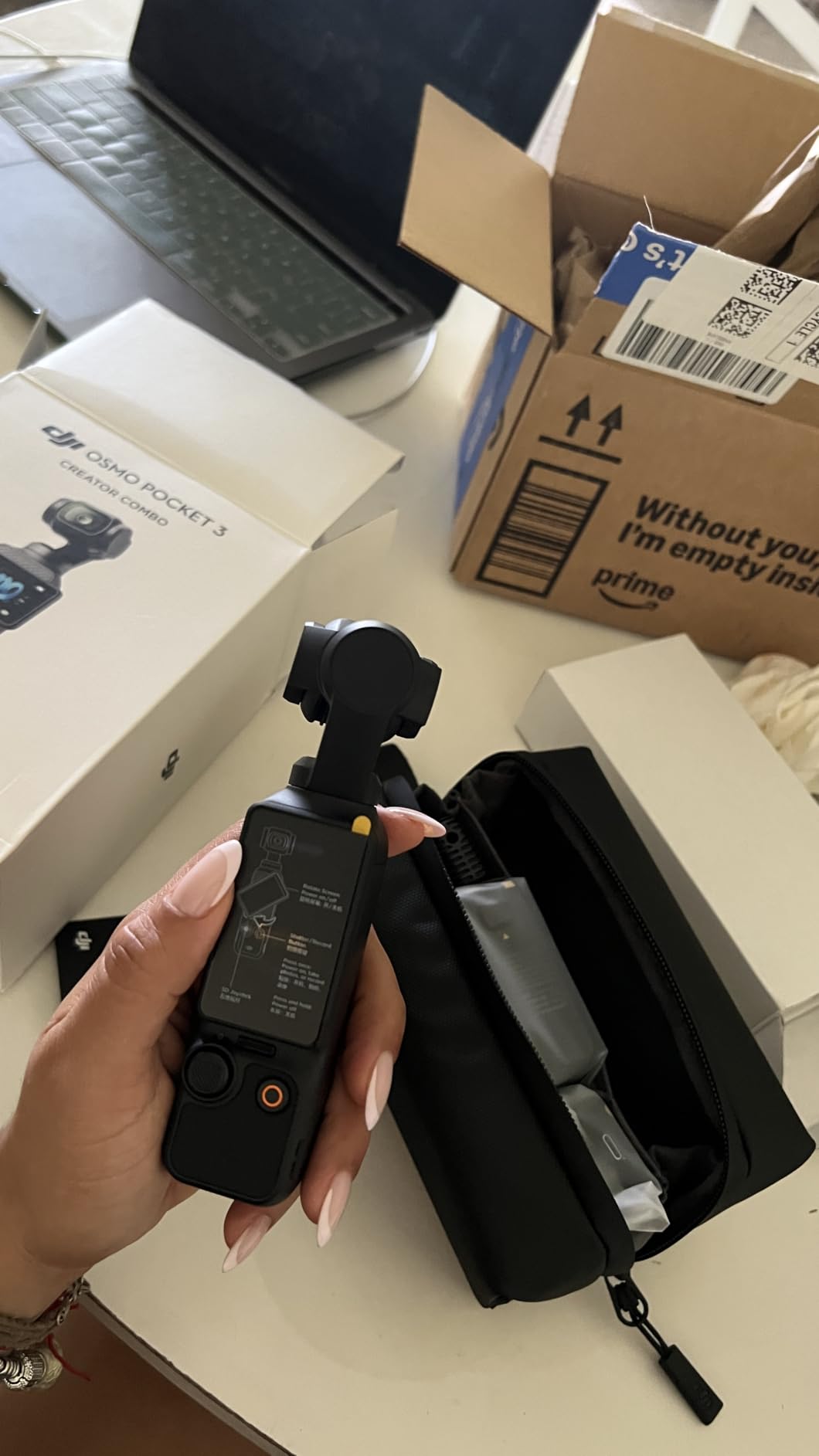
The weak spots are real. The 2-inch screen is small for checking focus on a wide shot, the fixed lens means no optical zoom for detail cuts, and 4K/120 sessions drain the battery faster than the rated 166 minutes, so I shoot 4K/30 for full songs and keep 120fps for slow-motion B-roll.
Who should buy it
Songwriters who want one pocket device covering video, audio, and stabilization without a bag of accessories. It is also the strongest pick here for vertical clips, because the screen rotates and the framing holds.
What to check before buying
Confirm you are getting the Creator Combo, not the standalone camera, since the Mic 2 transmitter and battery handle are what make it work for musicians. Budget for a small tripod too, because ActiveTrack works best with the camera stationary.
2. Zoom Q2n-4K Handy Video Recorder – Best Audio-First Camera for Acoustic Takes
Zoom Q2n-4K Video Recorder for Musicians, Streamers & Filmmakers
4K 30fps video
150-degree wide lens
X-Y mics to 120dB SPL
48kHz 24-bit audio
Runs on 2 AA batteries
Pros
- Best built-in audio in this entire list
- X/Y mics survive loud strumming without clipping
- Direct USB streaming to YouTube and Twitch
- Five field-of-view settings for tight rooms
Cons
- No image stabilization at all
- Fixed focus lens
- Runs on AA batteries rather than internal cells
- Video quality trails the cameras above it
The Q2n-4K is the camera musicians recommend to each other, and a week of writing-room takes showed me why. The X/Y stereo mics rated to 120dB SPL captured my guitar and voice with a stereo image that sounded like a room recording, not a camera afterthought.
It is also the most honest device on this list. There is no stabilization, the lens is fixed focus, and the video is serviceable 4K rather than cinematic, but the 12 scene presets do a decent job of rescuing dim venues.
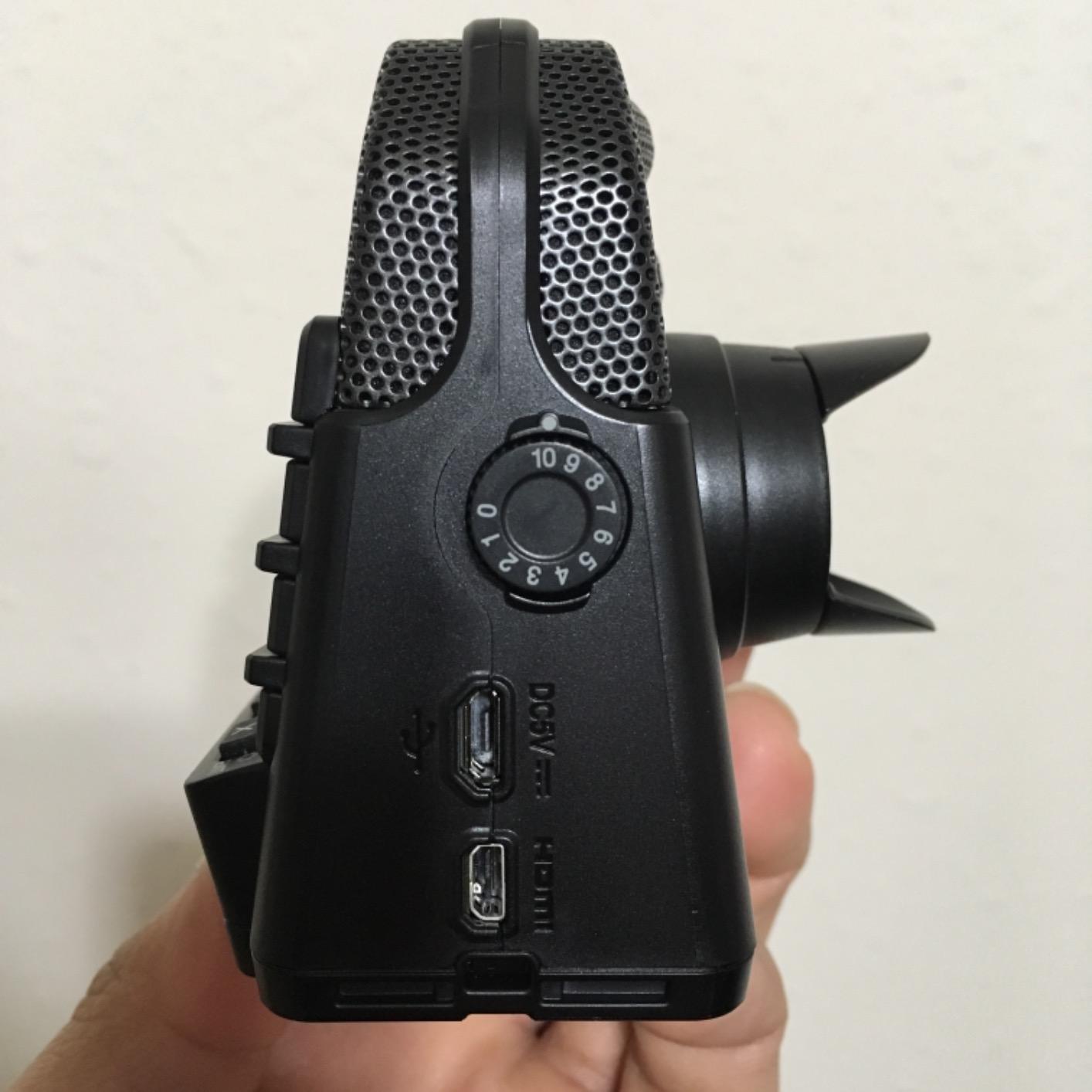
I used USB webcam mode to livestream a thirty-minute set, and it was the simplest stream setup I have ever run. One cable, no capture card, audio and video together.
The five field-of-view settings are more useful than they sound. In my narrow practice room I narrowed the view to cut out the laundry behind me, then widened it for a full-band rehearsal.
It records 48kHz/24-bit audio alongside the video, so I pulled the sound straight into a mix session without re-recording anything.
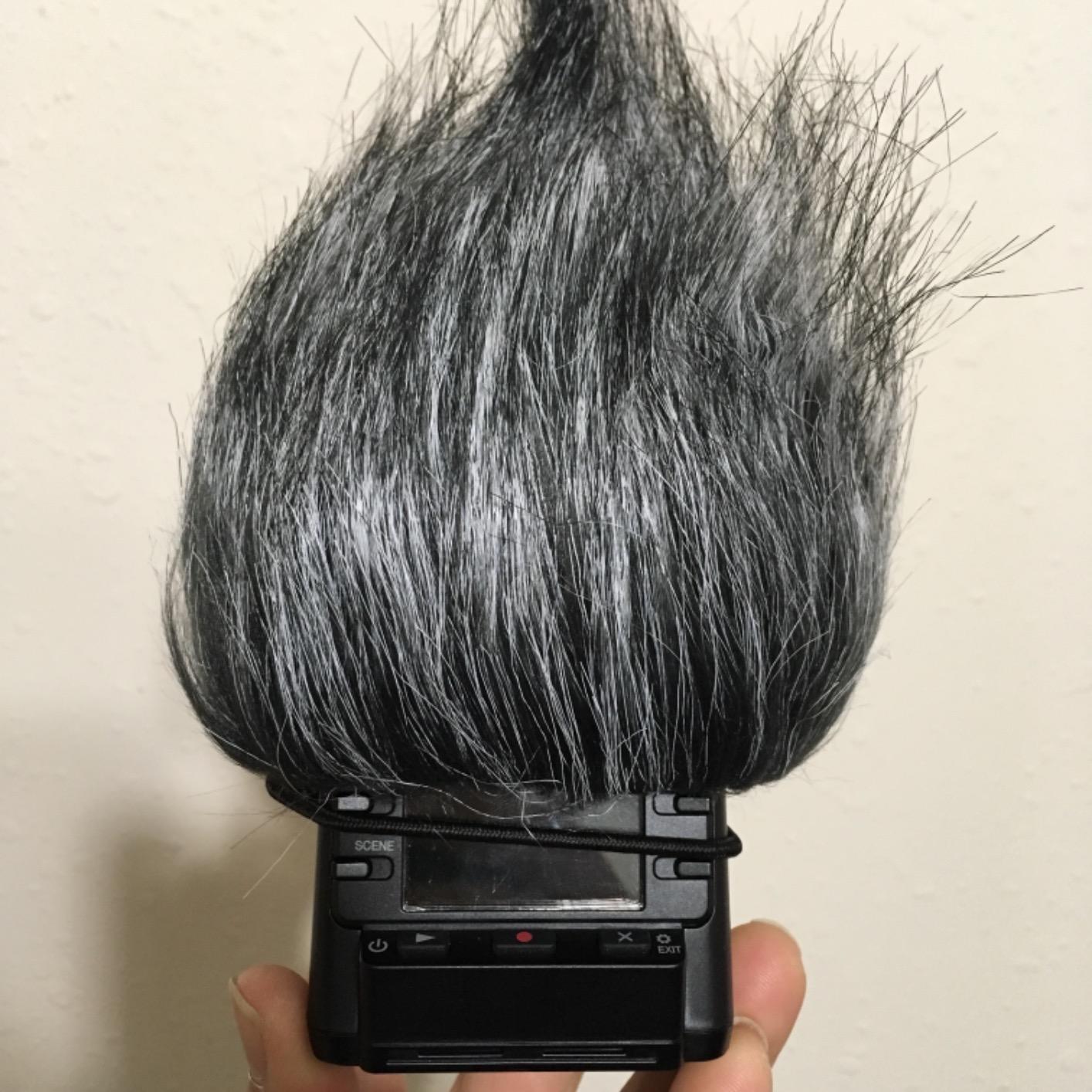
The annoyances are predictable. AA batteries mean you should carry spares, the lack of stabilization makes every table bump visible, and the 2.8-inch screen is small for critical framing, so mine lives on a small tripod at ear height.
Who should buy it
Anyone whose priority is the recording rather than the picture. If you upload full songs and want them to sound produced, or you stream live from a home studio, this is the value pick in the whole guide.
What to check before buying
Batteries are not included, so add a pack of AAs and a fast microSD card to your order. If you plan to livestream, test the USB connection to your computer before session day.
3. Sony ZV-1F Compact Digital Camera – Best Premium Compact for Vocal Content
Sony ZV-1F Compact Digital Camera 4K Video White
1-inch CMOS sensor
20mm F2 fixed lens
4K video
Eye-AF tracking
8.96 oz body
Pros
- F2 lens pulls in lamp-lit rooms
- Eye-AF locks onto your face and stays there
- Directional 3-capsule mic beats most built-ins
- Side-articulating screen for self-framing
Cons
- Fixed lens with no optical zoom
- Battery life is short for long sessions
- Stabilization is digital only
The ZV-1F is the compact I recommend to songwriters who film talking-camera videos between songs. The 20mm ultra-wide F2 lens is bright enough for evening indoor shoots, and Eye-AF tracked my face reliably while I leaned into the mic, looked down at the fretboard, and came back up.
Sony’s color science is the quiet advantage. Straight out of camera, skin looked natural and my guitar’s wood kept its warmth, which meant less time fighting green-ish indoor light in the edit. Product Showcase mode is also handy for holding a pedal or lyric notebook up mid-video.
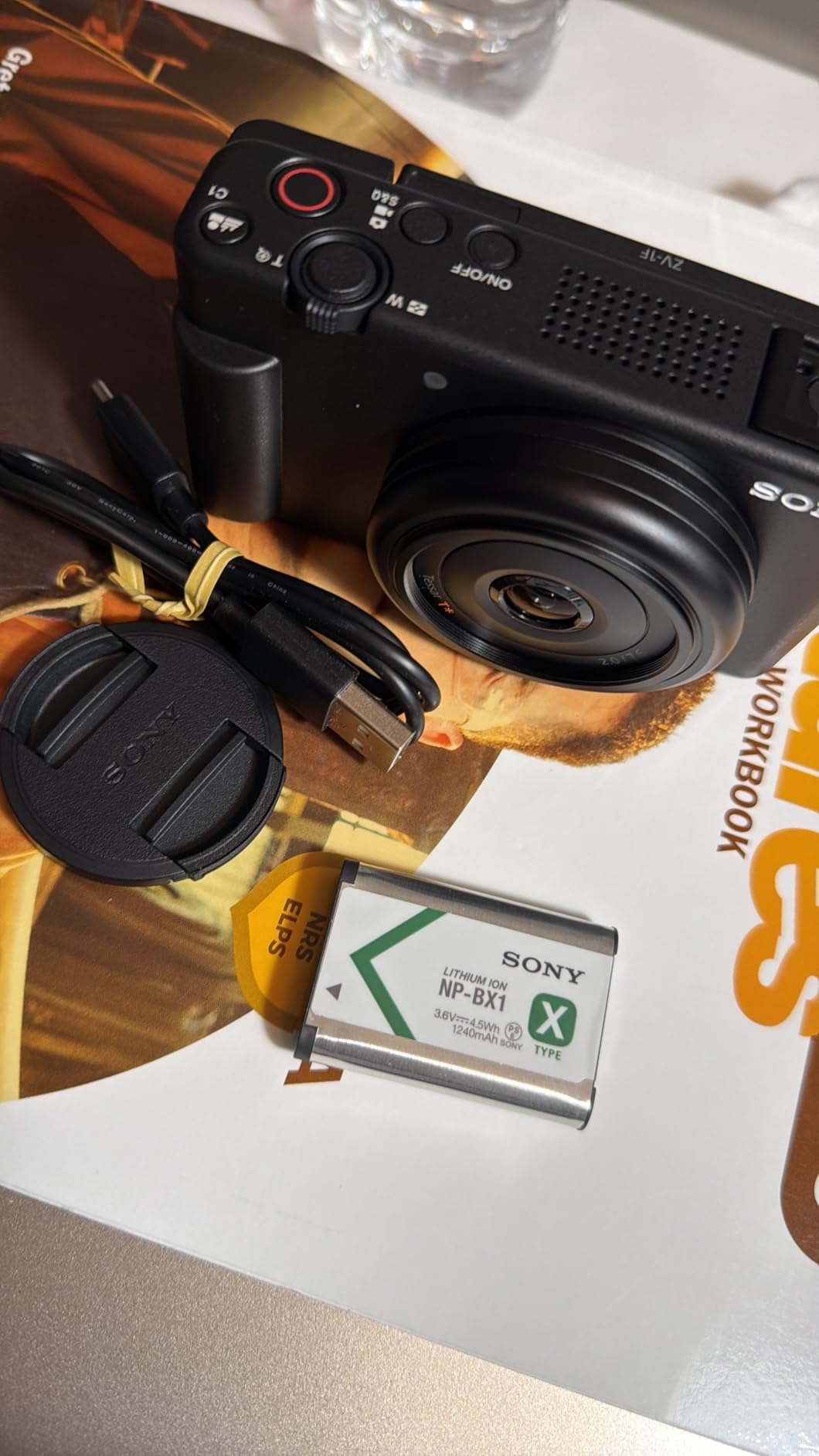
The directional 3-capsule mic is genuinely good for voice, and it ships with a wind screen for outdoor takes. For singing I still prefer an external mic, because a camera two feet away picks up the room no matter how good the capsules are, and the 3.5mm input accepts one.
The background defocus button earns a mention for solo shots. One press dropped the clutter behind me into soft blur, making a messy practice room read as intentional.
It streams cleanly as a USB webcam, and the side-articulating screen let me check framing while seated with a guitar on my lap.
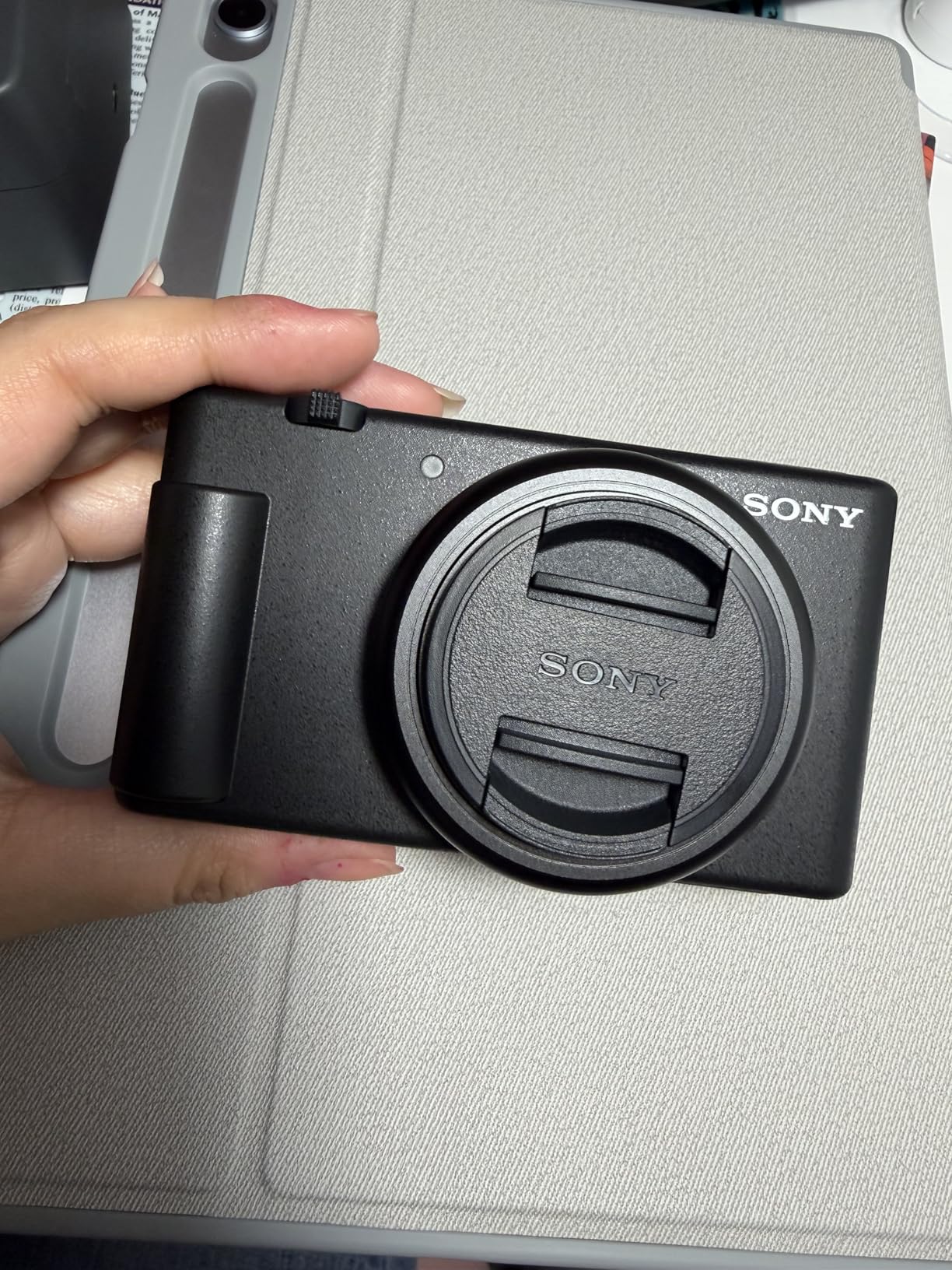
The costs of that bright fixed lens are zoom and stabilization. There is no optical zoom at all, so framing means physically moving the camera, and digital stabilization crops in when enabled. Battery life is the other sore point, so plan on USB power for anything longer than a few songs.
Who should buy it
Songwriters who speak to camera as much as they perform and want the best image from something that fits in a jacket pocket. It is the strongest pick here for channel-building content around your music.
What to check before buying
Decide whether you can live without zoom before ordering, because there is no workaround. If your sessions run long, add a USB power bank, since the battery quits first.
4. Xtra Muse Pocket Gimbal Camera – Best Stabilization for Moving Performances
Xtra Muse, Vlogging Camera with 1” CMOS & 4K/120fps Videos, Pocket Camera with 3-Axis Gimbal Stabilizer, Fast Focusing, Face/Object Tracking, Digital Video Camera for Photography, Digital Camera
1-inch CMOS sensor
4K up to 120fps
3-axis gimbal
10-bit X-Log color
161 min battery
281 g body
Pros
- Gimbal stabilization for walk-and-play footage
- 4K 120fps for slow-motion performance cuts
- 10-bit X-Log holds up to color grading
- Screen flips between horizontal and vertical instantly
Cons
- Limited zoom capability
- Only a 2-inch screen
- Not water resistant for outdoor shoots
The Xtra Muse is the closest thing here to a Pocket 3 alternative, and it trades punches honestly. The 1-inch sensor records 4K at up to 120fps, the 3-axis gimbal keeps walking shots steady, and Master Follow tracking kept me centered while I moved around a room.
What nudged me toward it on some projects is 10-bit X-Log recording with up to a billion colors. When I graded a sunset porch session, the sky held detail instead of clipping to white, and that headroom matters if you color grade rather than posting flat.
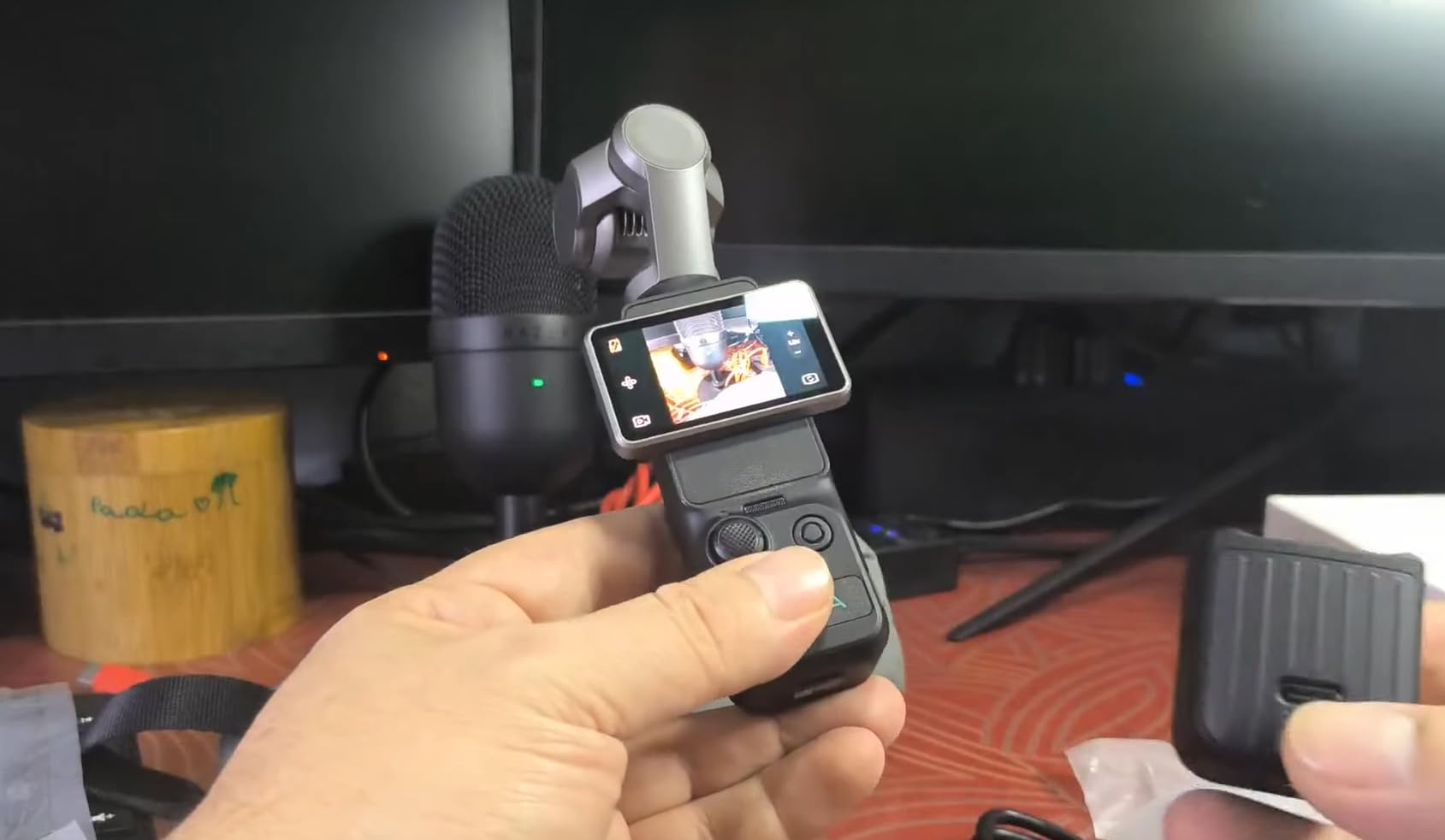
Vertical shooting is a one-tap screen switch, which sounds minor until you have re-mounted a camera four times to get a Reels crop right. The battery ran about 161 minutes, enough for a full session plus B-roll.
The handle’s quarter-inch thread mounted straight onto my existing tripod and boom arm. That saved me from buying brand-specific accessories.
Master Follow proved itself on a take where I walked down a hallway playing an unplugged electric. The framing held me centered the entire time without drift.
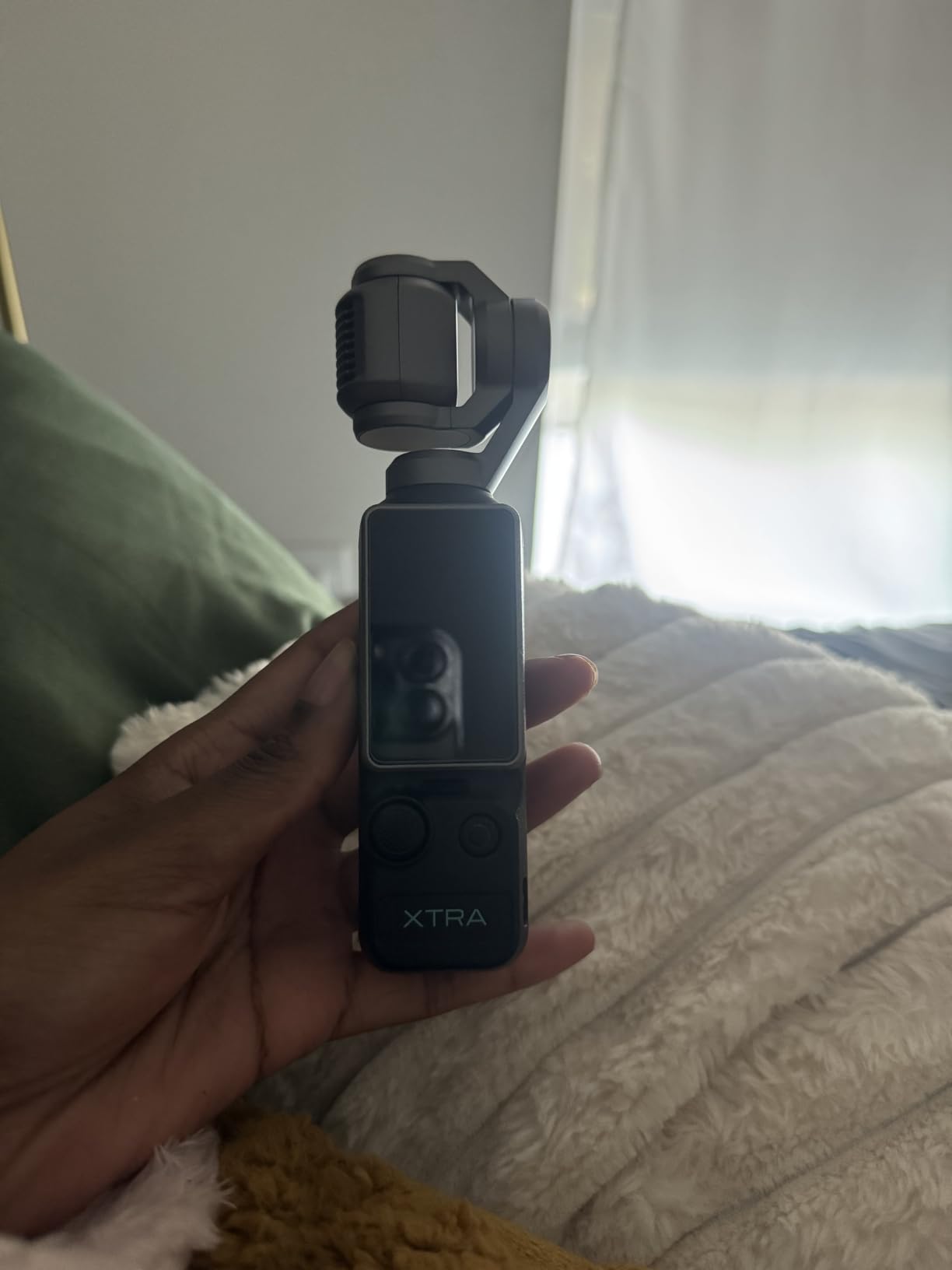
It shares the usual pocket-gimbal limits: minimal zoom, a small 2-inch screen, and no weather sealing, so rain on an outdoor shoot is a hard no. Audio relies on the internal mic, so plan on a separate recorder or clip-on wireless mic if sound matters more than scratch audio.
Who should buy it
Creators who want cinematic movement and slow motion without a gimbal bag and will record audio separately. It suits artists filming moody, graded session videos more than upload-and-go takes.
What to check before buying
Check which bundle you are getting, since the standard set includes the threaded handle and a carrying bag. Confirm your editing software supports 10-bit footage before committing to X-Log workflows.
5. Canon PowerShot V10 – Best Hands-Free Setup for Home Studios
Canon PowerShot V10 Compact Vlogging Camera, 1″ CMOS Sensor, 4K Video Streaming, Built‑in Wide‑Angle Zoom Lens, Flip‑LCD & Stereo Mic, Image Stabilization, Creator Studio in Your Pocket, Black
1-inch BSI CMOS sensor
19mm wide lens
4K 30fps video
Built-in tilt stand
0.47 lb body
External mic jack
Pros
- Built-in stand means no tripod to carry
- 1-inch BSI sensor handles dim rooms
- Stereo mics with noise reduction
- External mic jack for upgrades
Cons
- Fixed 19mm lens with no zoom
- Only a 2-inch screen
- Modest 15.2MP still resolution
The PowerShot V10 is built for people who are tired of tripods. The stand flips out and tilts, so my entire setup was placing it on an amp, angling it up, and pressing record, which genuinely saves time every solo session.
The 1-inch back-illuminated sensor is the same class of chip as the picks above, and in a lamp-lit living room the footage held together without noise-reduction mush. The three stabilization modes helped on handheld walk-throughs, though this is still a fixed-lens compact, not a gimbal camera.

Audio starts with stereo mics and noise reduction, which tamed my laptop fan better than I expected. The external mic jack is the important part, because it took a shotgun mic for vocal clarity and keeps the camera relevant as your standards rise.
USB-C charging meant I could top it up from the same power bank I carry for my phone. One cable standard across devices removes real friction on shoot days.
Of the 14 movie color filters, the warm profile suited a late-evening take without any grading. The straight-from-camera look was publishable in a pinch.
The honest downsides: the 19mm lens is very wide, so faces distort if you crowd the frame, and the 2-inch screen is tight for focus checks. Stills at 15.2MP are fine for thumbnails and nothing more.
Who should buy it
Home-studio songwriters who want the fastest possible setup with a real camera behind it. It is also a smart second angle for a multi-camera session, because the stand lets it perch anywhere.
What to check before buying
Test your framing distance early, since wide lenses flatter from farther back. If you sing quietly, plan on the external mic jack from day one rather than relying on the built-in pair.
6. AUREAPIX 8K Digital Camera – Best Budget Camera for a First Music Video
8K Digital Camera for Photography with WiFi 96MP Autofocus Vlogging Camera for YouTube Video 3.5” 180°Flip Screen 20X Zoom Anti-Shake Compact Point and Shoot Cameras for Beginner Creator with SD Card
8K video recording
96MP still photos
3.5-inch flip screen
20x digital zoom
WiFi transfer
Two batteries included
Pros
- 8K recording at a genuinely low price
- Huge flip screen for self-framing
- WiFi transfer moves files without cables
- Two batteries and a 32GB card in the box
Cons
- Digital zoom only
- Entry-level brand with a smaller track record
- Low-light output needs plenty of light
This is the camera I hand to writers who are not sure they will keep filming. The 3.5-inch flip screen is the largest in this guide, which makes framing yourself alone far less frustrating, and 8K recording leaves room to crop into a vertical clip without losing sharpness.
In a bright afternoon room the footage was clean and colorful, and the 96MP still mode pulled detail I used for thumbnails. The 60 built-in filters are a mixed bag, but two of the warm ones suit acoustic footage without any grading.
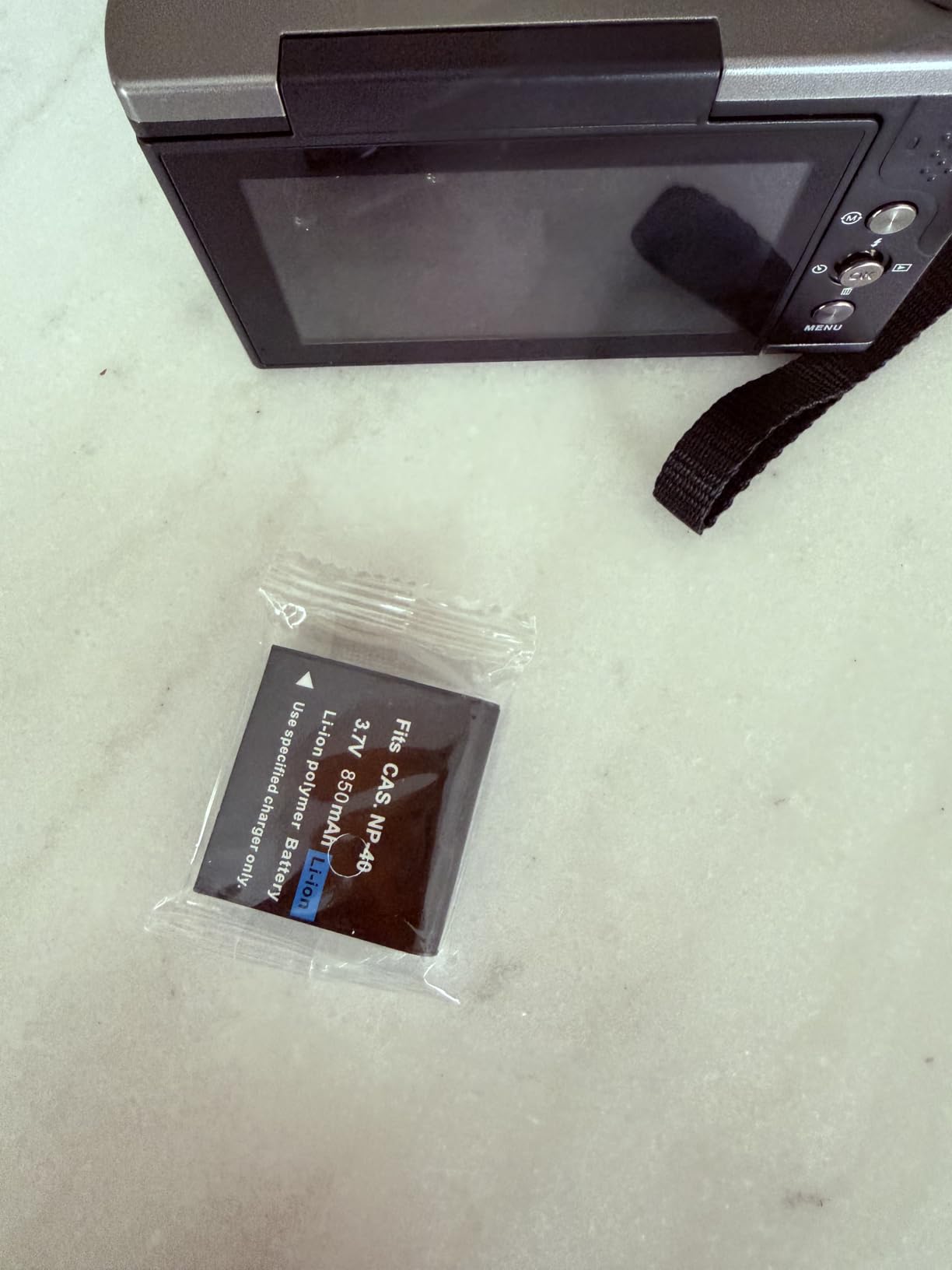
Where the price shows is low light and zoom. Once the sun dropped, noise crept in quickly until I added a cheap LED panel, and the 20x zoom is digital, meaning it crops and softens.
WiFi transfer moved a full session to my phone in a few minutes, which made posting a same-day teaser painless. For an artist building momentum on short-form platforms, that speed counts.
The webcam function also covered a short-notice video call with a venue booker. Not the reason to buy it, but it removed a scramble.

The brand is not a household name and the review pool is smaller as a result, though the rating is high and owners are consistent about value. For a first camera that ships with two batteries and a memory card, the cost of getting started is hard to argue with.
Who should buy it
Songwriters testing the water who want more than a phone without a real investment. It is also a low-risk gift camera for a teenage songwriter filming bedroom covers.
What to check before buying
Plan for lighting, because this sensor wants brightness. If you own a clip-on light or a window with good sun you are set, and if not, factor a small LED into your thinking.
7. FlyFrost 8K Video Camera Camcorder – Best Budget Bundle with a Mic
FlyFrost 8K Video Camera 88MP UHD WiFi Vlogging Cameras for YouTube 18X Digital Zoom IR Night Vision 3.0” Touch Screen Camcorder with Microphone, Lens Hood, Stabilizer, Remote, Two Batteries
8K video at 15fps
88MP still photos
18x digital zoom
IR night vision
WiFi with app
External mic included
Pros
- Ships with an external stereo microphone
- Night vision for very dark rooms
- WiFi app transfer for quick uploads
- Generous accessory package for the price
Cons
- 8K tops out at 15 frames per second
- Fixed focus lens
- Digital stabilization only
The FlyFrost wins the box-contents contest: camera, external stereo microphone, lens hood, handheld stabilizer, wireless remote, and two batteries. For a songwriter starting from nothing, the first session needs nothing beyond a memory card.
The included microphone is why this ranks above the other budget camcorders for our purposes. It is not studio quality, but dialogue and strumming came through clearer than the internal mics on similarly priced camcorders, which is the comparison that matters at this level.
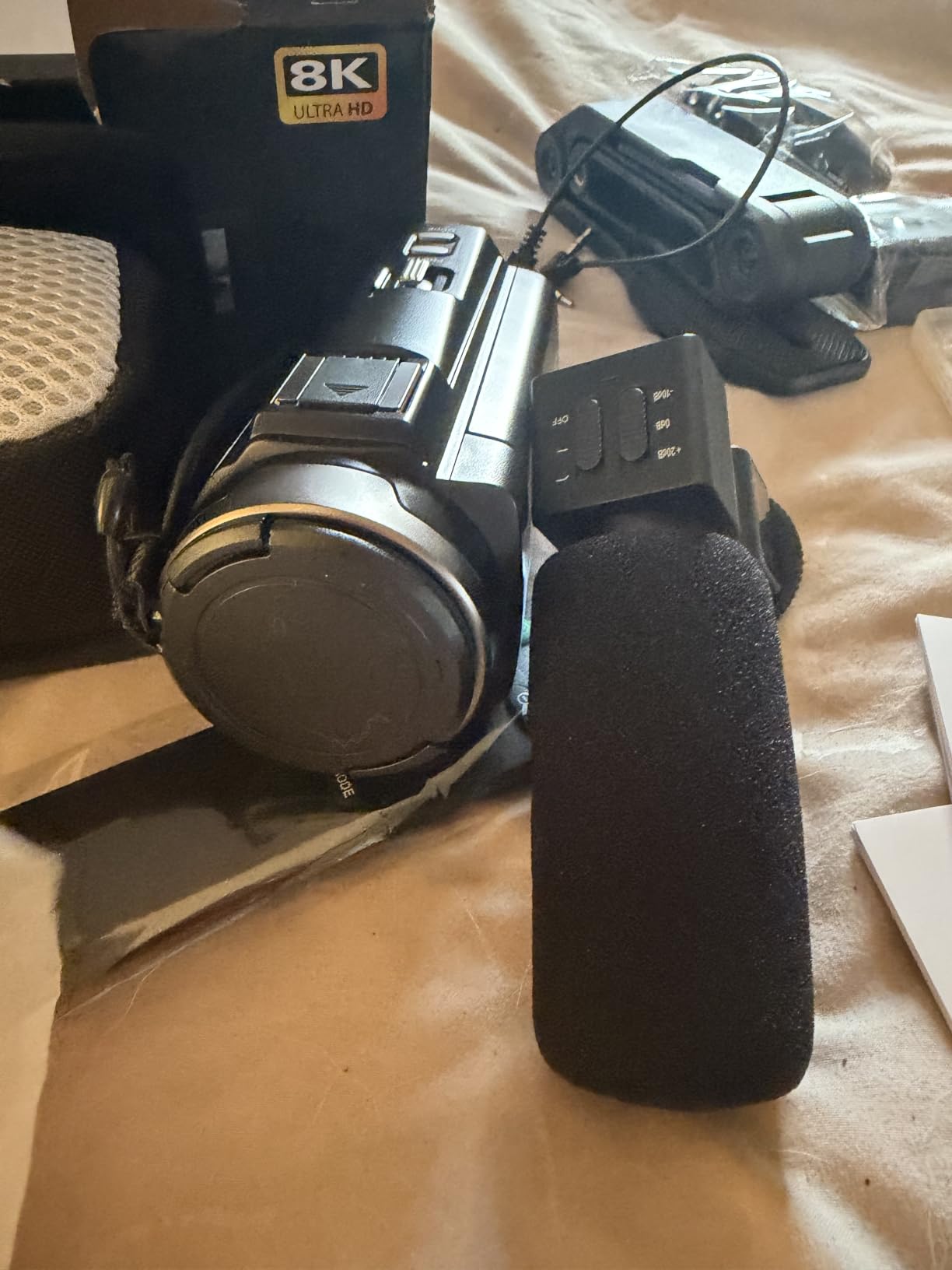
On resolution, read the fine print: 8K here records at 15 frames per second, which looks choppy for motion, so I shot most test footage at lower resolutions with smoother frame rates. IR night vision works in dim rooms, though the monochrome green look is more security camera than music video.
The WiFi app transfer pulled clips onto my phone reliably between takes. Catching a framing mistake right after recording beat discovering it at home.
The 270-degree rotating screen helped when the camera sat low on a shelf. I flipped the display up instead of crouching to check my framing.
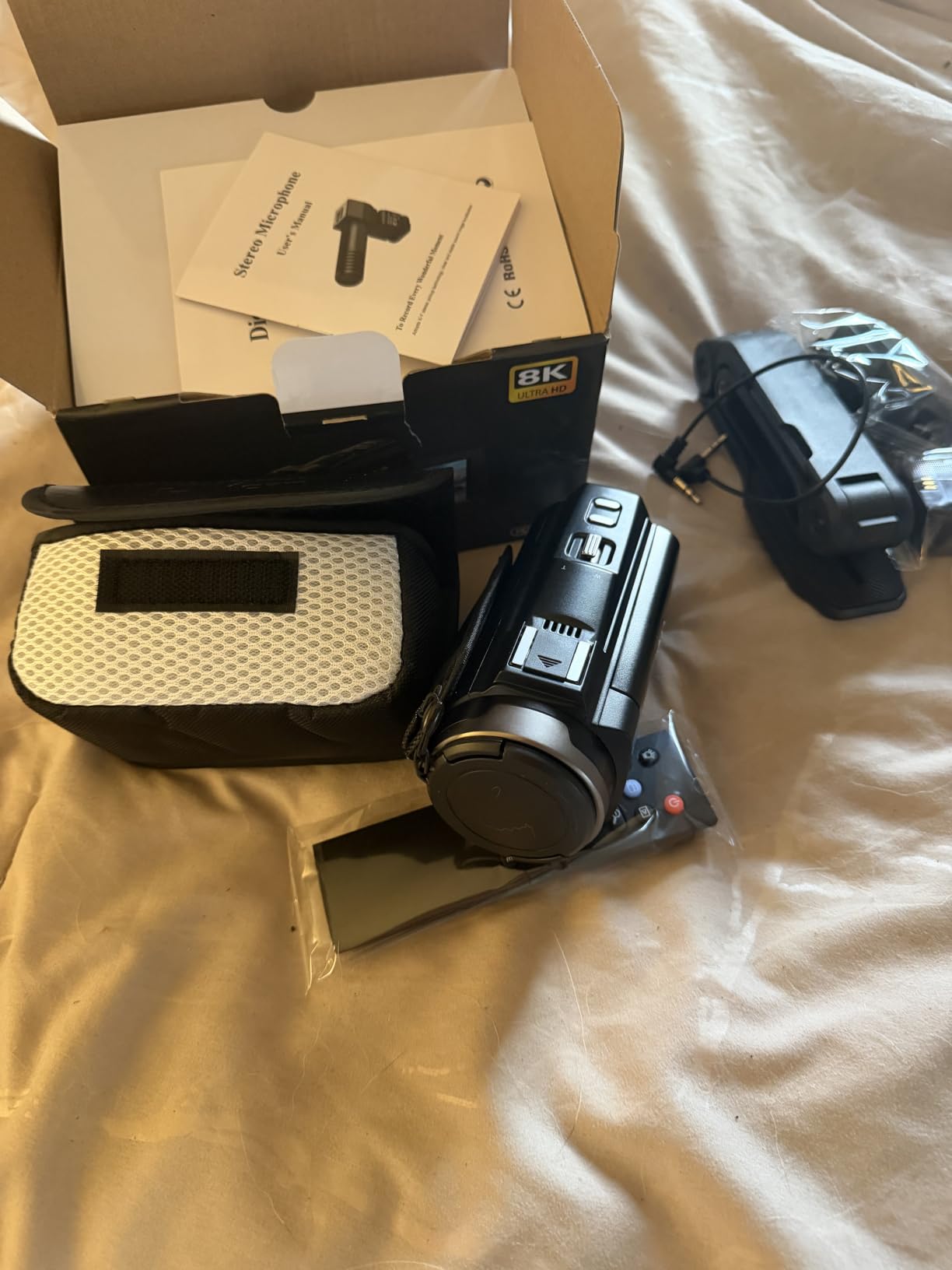
The focus is fixed, the zoom is digital, and stabilization is software-based, so this camera rewards being locked on a tripod and left alone. Used that way, with the external mic attached and decent light, it produces watchable session videos at a fraction of the usual cost.
Who should buy it
Budget-minded musicians who want a complete kit in one purchase and accept softer footage in exchange. It suits rehearsal logging and casual uploads more than polished releases.
What to check before buying
Decide your frame rate before you shoot, because full 8K at 15fps will not look right for performance motion. A tripod is close to mandatory given the digital stabilization.
8. MWIRB 8K Video Camera Camcorder – Best for Rehearsal Room Recordings
MWIRB 8K Video Camera Camcorder Latest 88MP Ultra HD Video Cameras WiFi Vlogging Camera for YouTube 18X Digital Video Cameras with Microphone 6-Axis Anti-Shake IR Night Vision Video Recorder
8K at 15fps, 4K at 30fps
88MP still photos
6-axis anti-shake
3-inch rotatable touch screen
WiFi transfer
External mic included
Pros
- 6-axis anti-shake steadies handheld takes
- Rotatable screen for awkward angles
- Records while charging for long sessions
- External X-Y stereo mic in the box
Cons
- Digital stabilization rather than optical
- Night vision quality is inconsistent
- Proprietary firmware limits deep customization
The MWIRB sits in the same family as the FlyFrost but earns its own slot through two practical features: 6-axis anti-shake that steadies handheld clips, and recording while charging. Both matter when you film long rehearsals where a tripod is not realistic.
I left it running through a two-hour practice block powered by a USB bank and it never missed a beat, which is exactly what a rehearsal camera needs to do. The 270-degree rotating screen let me check framing while standing behind a mic stand.
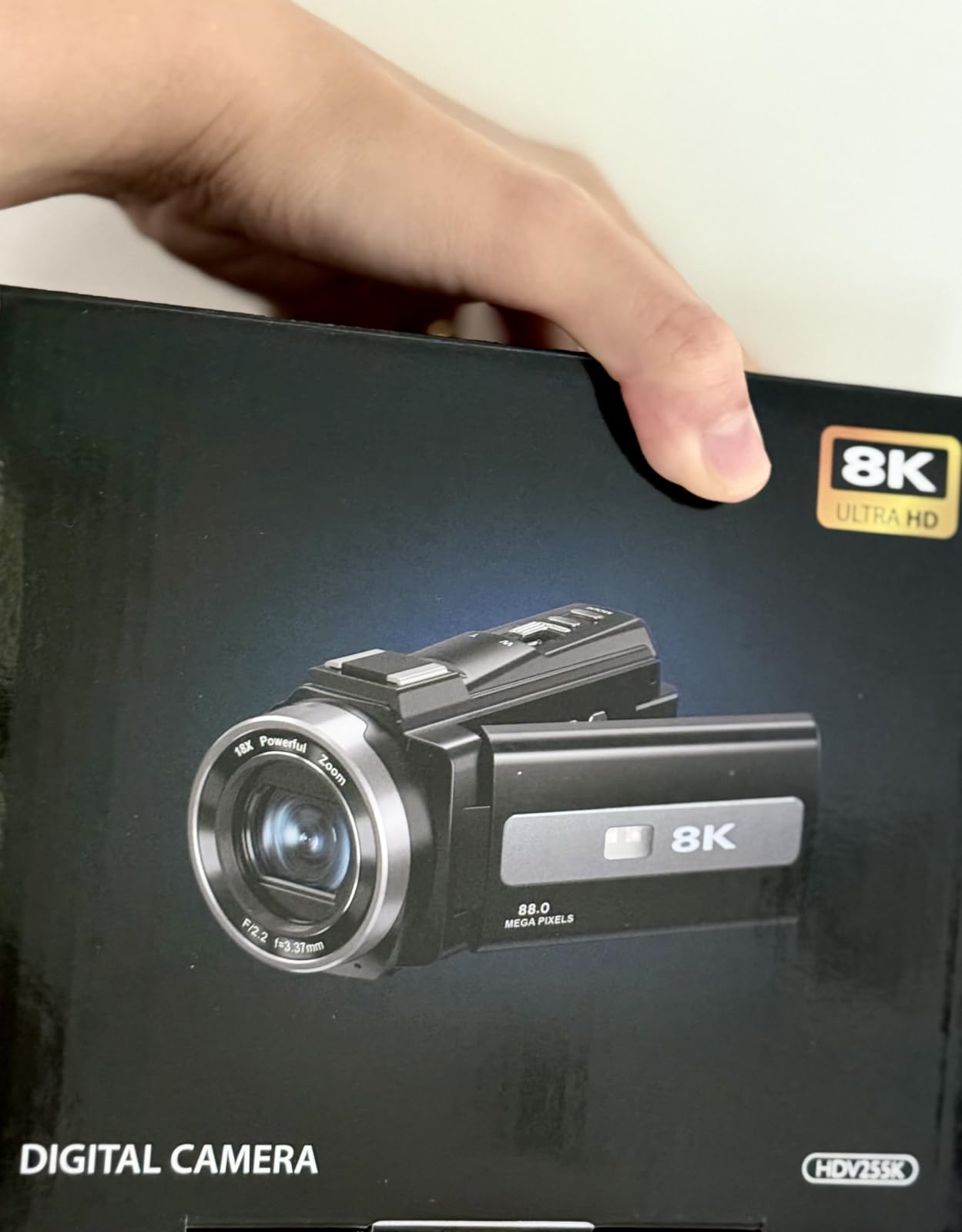
Resolution options run from 8K at 15fps down through 4K at 30fps and 1080p at 60fps, and I settled on 4K/30 for nearly everything. The bundled external X-Y stereo mic captured rehearsal audio well enough to review performances honestly, which is the point of filming practices.
The anti-shake held up when I carried the camera through a room mid-song. It is not gimbal-smooth, but the footage stayed watchable.
Time-lapse and slow-motion modes gave me easy B-roll for a montage clip. They are simple versions, but they cost nothing extra.
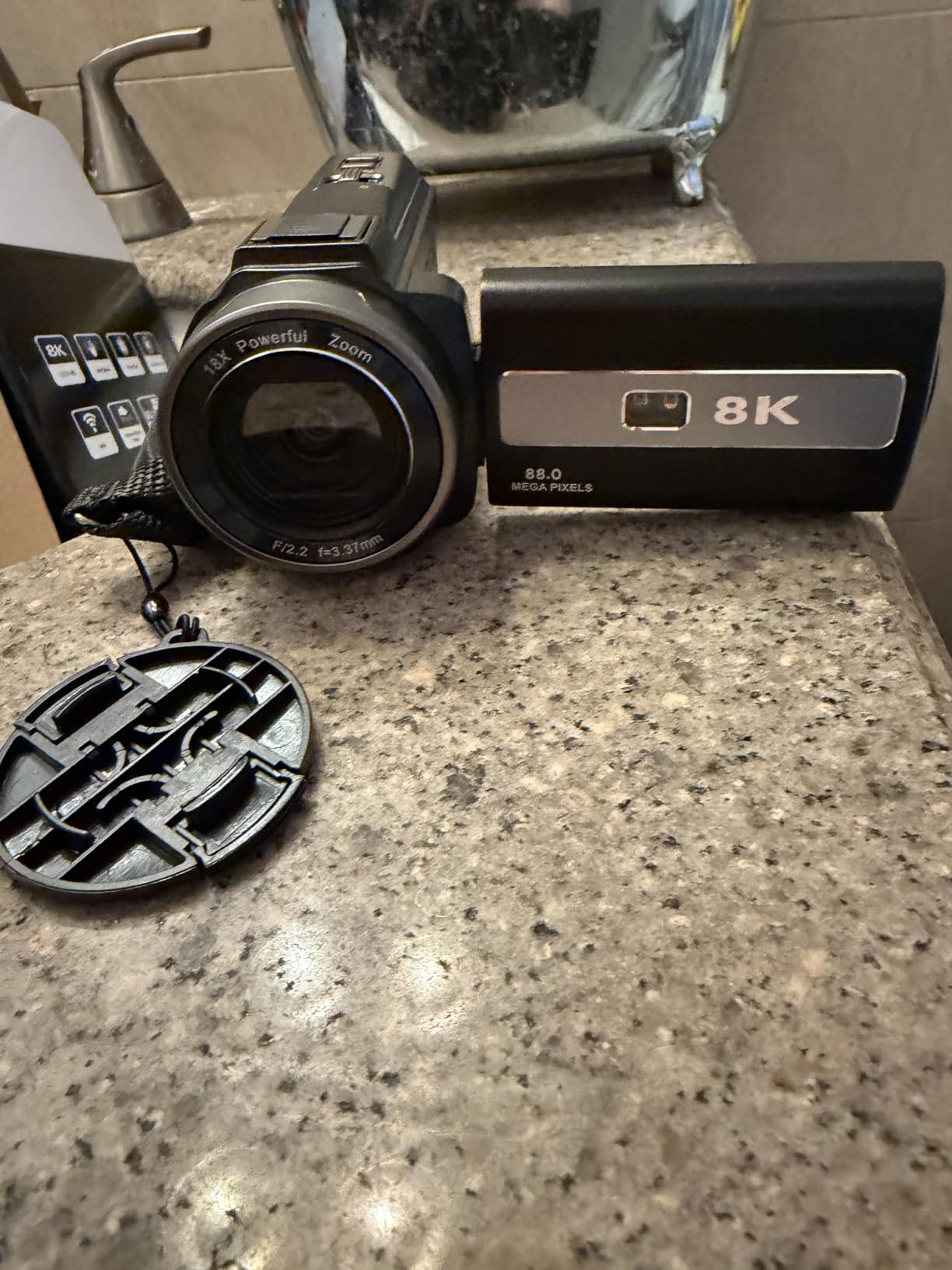
Against the picks above, it gives up image polish and low-light cleanliness, and the proprietary firmware means you adjust to the camera rather than the reverse. Owner reviews mention occasional reliability quirks, which is a fair trade only at this price.
Who should buy it
Bands and songwriters who film practices and want long, unattended recordings for cheap. If your goal is reviewing performances rather than publishing them, this is enough camera.
What to check before buying
Keep a USB power source nearby for extended sessions and test your card speed before a long take. Shoot 4K/30 rather than maximum resolution unless you need a still frame grab.
9. FJFJOPK 4K Camcorder 96MP – Best Starter Kit for YouTube Covers
4K Video Camera Camcorder 96MP Vlogging Camera for YouTube 3.0″ Touch Screen 18X Digital Zoom IR Night Vision with External Stereo Microphone,Remote,Lens Hood,Handheld Stabilizer,32G Card &2 Batteries
4K UHD video
96MP still photos
3-inch rotating touch screen
IR night vision
External stereo mic
Two batteries included
Pros
- Complete starter kit with mic
- stabilizer
- remote and card
- Touch screen rotates a full 270 degrees
- Two batteries keep long sessions running
- Simple enough for a true beginner
Cons
- Only 21 reviews so far
- Small online footprint for support
- Small sensor limits low-light quality
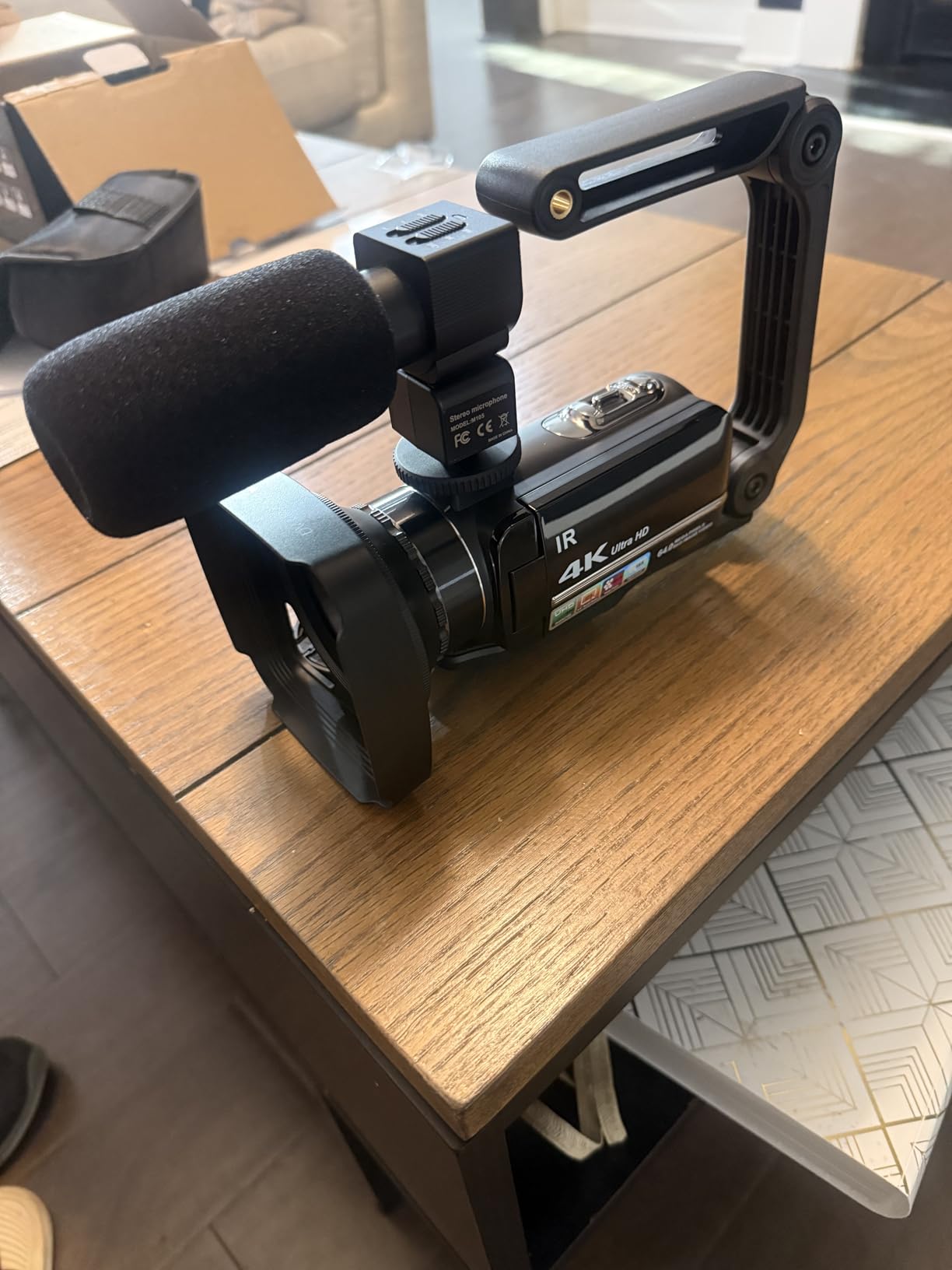
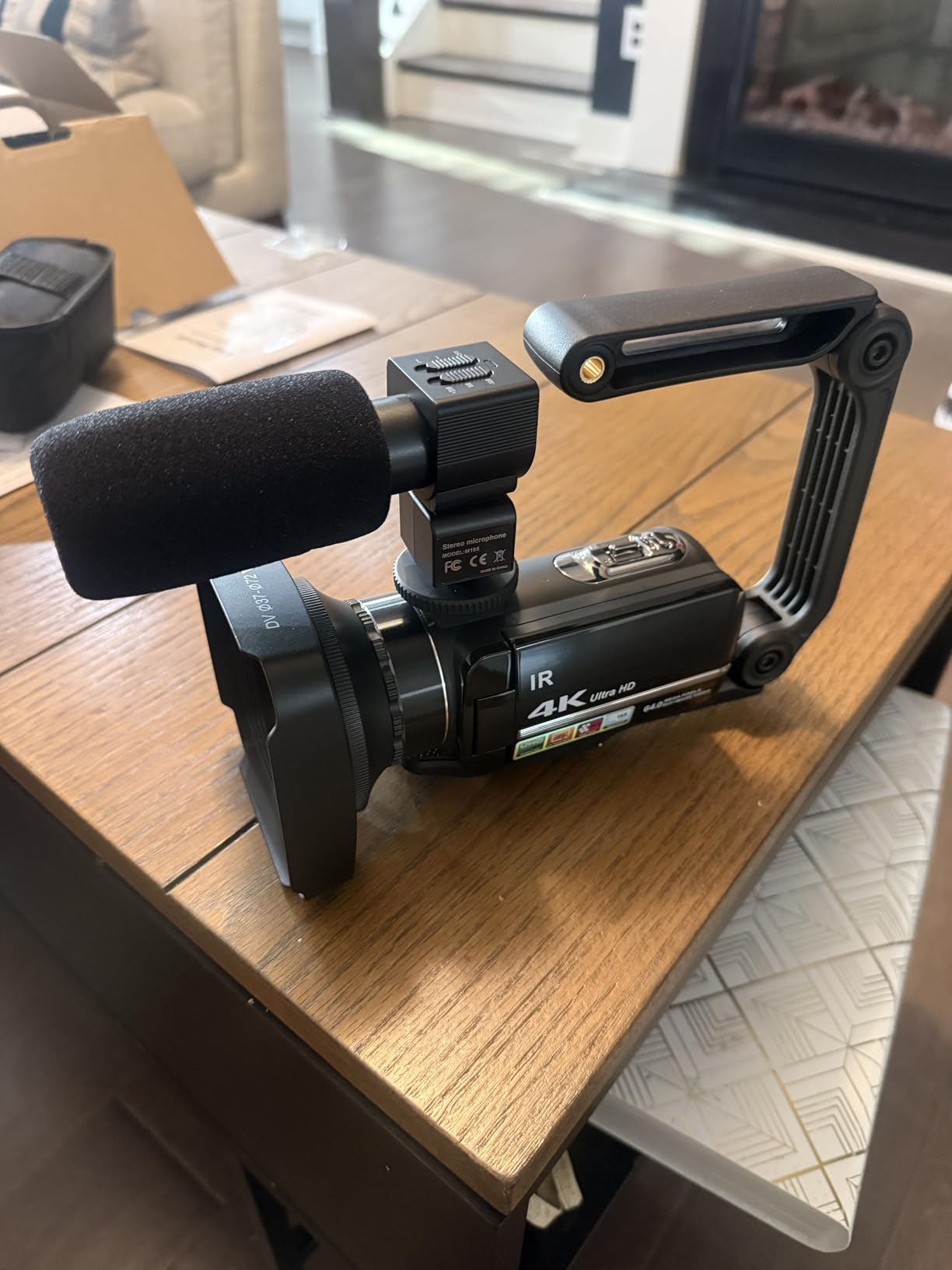
This FJFJOPK model is the definition of a starter kit: external stereo microphone, handheld stabilizer, lens hood, wireless remote, 32GB card, and two batteries. For a first-time cover artist, every gap is filled before you start.
The rotating touch screen is the feature I appreciated most, because framing yourself while holding a guitar becomes a two-second job instead of a guessing game. The wireless remote let me start and stop takes from across the room.
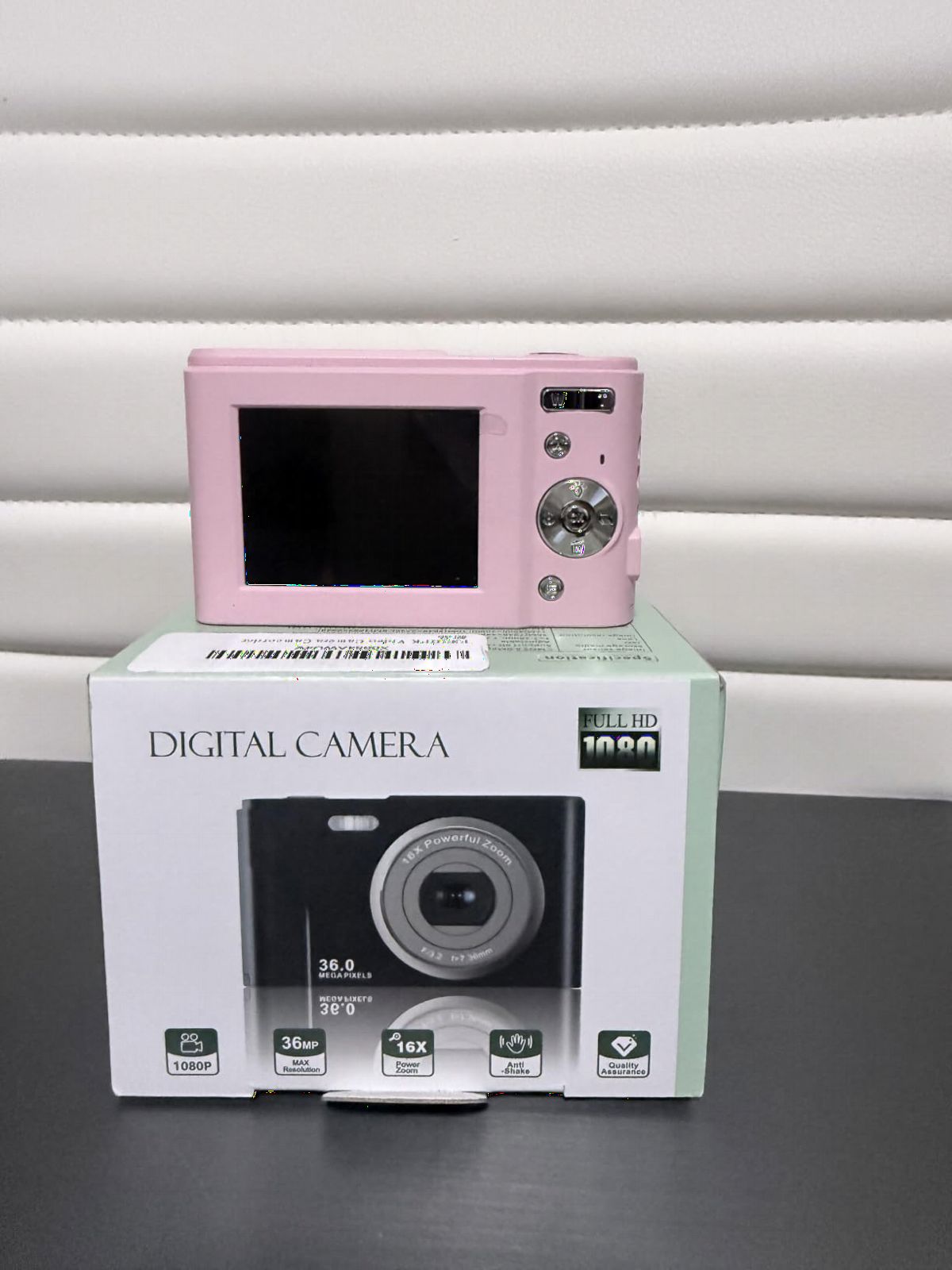
Image quality is honest 4K from a small sensor: good in daylight, progressively softer as the room darkens. The external mic lifts audio above what any internal capsule manages at this price, though it still wants to be close to the performer.
Two batteries carried me through a full afternoon of takes plus editing-break reruns. Swapping cells mid-session beats waiting on a recharge.
Face detection kept me reasonably sharp when I swayed behind the mic. It is not Sony-level tracking, but it did not give me soft takes on a static setup.
The main caution is visibility. With only a couple dozen reviews so far there is less community knowledge to lean on, and brand support is thin, though early feedback praises ease of use and value, which matches my experience.
Who should buy it
First-time cover artists and young songwriters who want everything included and a simple menu system. It is a low-stakes way to learn framing, audio, and editing basics.
What to check before buying
If having a large owner community matters to you, weigh that before ordering. Shoot near a window when you can, because the small sensor runs out of light early.
10. FJFJOPK 4K Camcorder 64MP – Best Second Angle for Multi-Camera Sessions
4K Video Camera Camcorder 64MP Vlogging Camera for YouTube 3.0″ Touch Screen 18X Digital Zoom IR Night Vision with External Stereo Microphone,Remote,Lens Hood,Handheld Stabilizer,32G Card &2 Batteries
4K UHD video
64MP still photos
3-inch rotating screen
18x digital zoom
External stereo mic
32GB card included
Pros
- Cheapest usable 4K angle for multi-cam setups
- Same accessory bundle as its sibling
- Remote control for unattended starts
- Batteries and card included
Cons
- Records AVI rather than MP4
- Batteries not always in the box
- Ranking is high but brand support is thin
Multi-camera session videos are the fastest way to look professional, and this is how you get a second angle without buying a second flagship. I set it as a wide side shot while a better camera handled the main angle, and cutting between the two made a plain living-room take feel like a production.
It shares the family bundle of external mic, stabilizer, lens hood, remote, and a 32GB card. The rotating screen and wireless remote make it easy to position on a shelf and control from your chair, which is how a B-camera should behave.
One detail to plan around is the AVI file format, which is less convenient than MP4 and may need converting depending on your editor. Syncing angles is easy in practice: clap once on camera at the top of the take and line the spikes up on the timeline.
As a locked-off wide camera, exposure drift was the only thing I had to watch. Once I set it manually for the room, it held steady through a whole take.
The external mic made its angle usable as audio backup rather than scratch. On one take where my main audio clipped, this camera’s track saved the video.
As a main camera it is a modest step down from the 96MP sibling on stills, and brand support is equally thin. As a second angle you set, frame, and forget, it does the job at the lowest cost in this guide.
Who should buy it
Anyone who already owns a good main camera and wants an affordable locked-off wide angle. It also works as a backup body so a dead battery never ends a session.
What to check before buying
Confirm batteries are in your specific box before session day, since some listings ship without them. Check that your editing software accepts AVI, or plan a quick conversion step.
Buying Guide: How to Choose a Camera for Acoustic Sessions?
Choosing among cameras for musicians comes down to a handful of decisions that matter far more than marketing numbers. Here is the order I would think about them in.
Audio Inputs Are the First Thing to Check
Every forum thread about filming music lands on the same complaint: built-in camera microphones sound thin and roomy. A 3.5mm external mic input, present on the Canon V10 and Sony ZV-1F here, lets you upgrade sound later without replacing the camera.
If you never want to think about audio again, the Zoom Q2n-4K with its 120dB SPL X/Y mics is the built-in benchmark, and the DJI bundle’s wireless transmitter is the cleanest upgrade path. Either beats filming on anything with only an internal capsule.
Sensor Size Beats Megapixel Count
The 1-inch sensors in the DJI, Sony, Xtra Muse, and Canon picks gather roughly four times the light of the small sensors in the budget camcorders, which shows up as cleaner footage after sunset. Megapixel counts in the 60 to 96 range are interpolation, not real detail.
My rule after testing these back to back: a small sensor is workable if you film in daylight or a bright room. If your sessions happen in the evening under lamps, pay for the bigger chip.
Low-Light Performance for Evening Sessions
Intimate acoustic sessions happen in warm, dim spaces, the hardest environment for any camera. Look for a bright fixed lens like the Sony’s F2, a back-illuminated sensor like the Canon’s, or scene presets like the Zoom’s 12 modes that rebalance exposure for you.
Ignore IR night vision on the budget models as a low-light solution, since it produces monochrome footage suited to security use. A twenty-dollar LED panel solves darkness better than any night mode.
Autofocus, Stabilization, and the Solo Creator Problem
When you are both performer and camera operator, autofocus has to lock a face and forget about it. Sony’s Eye-AF and DJI’s ActiveTrack 6.0 are the two systems here I would trust through a full song without a focus pull.
Stabilization splits into two camps: mechanical gimbals on the DJI and Xtra Muse that keep handheld movement smooth, and digital stabilization on everything else that crops in and only partially helps. For a tripod camera, digital is fine; for walking shots, it is not.
Battery Life and Recording Time Limits
Long takes kill batteries, and forums are full of sessions that died mid-song. The DJI rates 166 minutes and the Xtra Muse 161, both enough for a full set, while the Sony runs shortest and wants USB power for marathons.
Recording while charging, supported by the MWIRB and several others, quietly saves long rehearsals. Cameras that take AA cells, like the Zoom, are infinite-runtime devices as long as you bring spares.
Setup Tips for Your First Session
Start with three basics: camera at chest height about six feet away, one soft lamp at 45 degrees to your face, and the mic as close as the frame allows. Shoot a thirty-second test and check levels on headphones before committing to a full take.
For vertical clips, shoot vertical natively rather than cropping in post, since the crop costs resolution. And clap once on camera at the start, because future-you, syncing angles in an editor, will be grateful.
Frequently Asked Questions
What is the best camera for recording stage performances?
For stage performances, prioritize strong low-light performance and audio that survives loud volumes. The Zoom Q2n-4K is the standout here because its X/Y mics handle up to 120dB SPL without distortion and its 12 scene presets adapt to changing stage lighting, while the DJI Osmo Pocket 3 is the better pick if you want cleaner image quality from a distance.
Final Verdict: Best Cameras for Singer-Songwriter Sessions in 2026
After filming with all ten, my shortlist is simple. The DJI Osmo Pocket 3 Creator Combo is the best camera for singer-songwriter sessions overall, pairing a 1-inch sensor and gimbal with a wireless mic that solves audio on day one. The Zoom Q2n-4K remains the value pick for anyone who puts sound first, and the AUREAPIX 8K is the sensible budget starting point.
Pick the one that matches how you actually work: audio-first streamers to the Zoom, cinematic shooters to the Xtra Muse, setup-haters to the Canon V10, and multi-angle builders to the affordable FJFJOPK. Whichever you choose, add light, add an external mic when you can, and keep filming.