
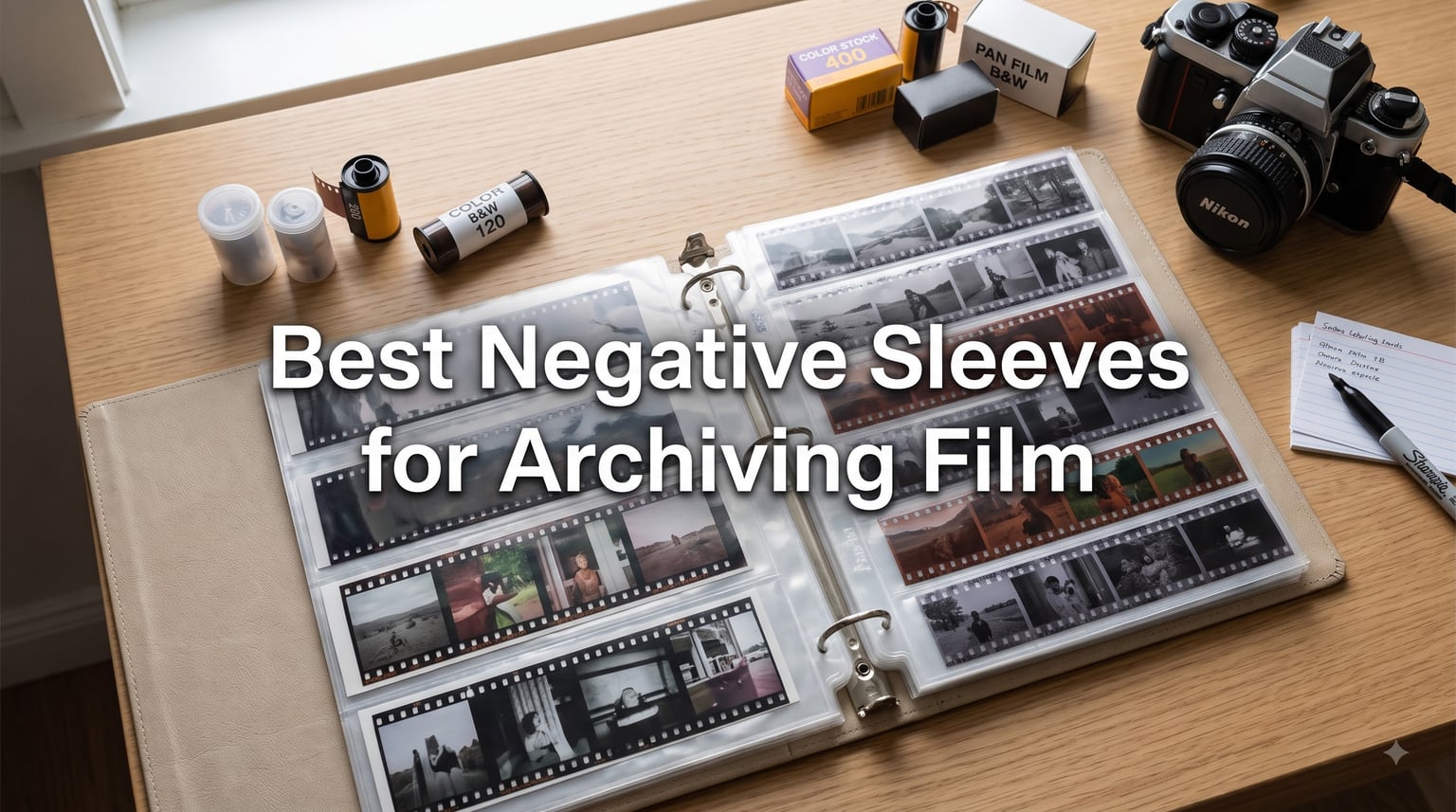
Your film negatives are the original source of every photo you have ever shot on analog stock. Unlike digital files that live on hard drives and cloud servers, negatives are physical objects that can last over 100 years when stored correctly. But put them in the wrong sleeve, and you could ruin decades of irreplaceable images in a matter of months.
Finding the best negative sleeves for archiving film comes down to three things: material safety, format compatibility, and long-term preservation quality. I have spent years shooting and storing film, and I have seen firsthand what happens when photographers cut corners on storage supplies. PVC sleeves outgas and stick to emulsion. Cheap plastic yellows and becomes brittle. The damage is permanent.
In this guide, I cover ten of the most trusted negative sleeves for archiving film available right now. I break down what material each one uses, which film formats they handle, and whether they work for contact printing. I also dig into the differences between polyester, polypropylene, and polyethylene so you can make an informed decision for your archive.
Table of Contents
Top 3 Picks for Negative Sleeves (October 2026)

eTone 50x 35mm Negative Preservers
- NO PVC polyethylene
- 7 strips of 6 frames
- 42 frames per page
- Includes labeling cards

Print File 120-4B Negative Preservers
- Holds 12 frames of 120 film
- Contact print compatible
- Fits 3-ring binders
- Archival quality

eTone 50x 4×5 Negative Preservers
- 4 sheets per page
- NO PVC polyethylene
- 50 pages per pack
- Large format ready
Best Negative Sleeves for Archiving Film in 2026
| Product | Specifications | Action |
|---|---|---|
| eTone 50x 35mm Negative Preservers |
|
Check Latest Price |
| Print File 120-4B Negative Preservers |
|
Check Latest Price |
| eTone 50x 4×5 Negative Preservers |
|
Check Latest Price |
 Print File Archival 35mm Negative Pages Print File Archival 35mm Negative Pages |
|
Check Latest Price |
 Print File Archival Photo Pages 8×10 Print File Archival Photo Pages 8×10 |
|
Check Latest Price |
 Printfile 35mm 25 Frames Printfile 35mm 25 Frames |
|
Check Latest Price |
 ClearFile Archival-Classic 35mm ClearFile Archival-Classic 35mm |
|
Check Latest Price |
 Print File Ultima Archival 120 Print File Ultima Archival 120 |
|
Check Latest Price |
 Printfile 4×5 Negatives 100 Pack Printfile 4×5 Negatives 100 Pack |
|
Check Latest Price |
 eTone 50x 120 Negative Page Preservers eTone 50x 120 Negative Page Preservers |
|
Check Latest Price |
1. eTone 50x 35mm Negative Page Preservers — Best Overall for 35mm Film
50x eTone Archival Storage Sheets 135 35mm Negative Page Preservers (50X135)
35mm format
7 strips of 6 frames per page
42 frames total
Polyethylene NO PVC
50 sheets per pack
Pros
- Slightly thicker plastic than competitors
- Rows tall enough to prevent corner tears
- Extra space at bottom for alignment
- Includes cardboard labeling cards
Cons
- Sleeve placement can conflict with binder holes
- Some find them awkward to use initially
I have used a lot of 35mm negative sleeves over the years, and the eTone 50-pack consistently surprises me with its quality for the price. You get 50 sheets, each holding seven strips of six frames. That is 42 frames per page, which means a single pack can handle over 2,000 frames of 35mm film. For most analog photographers, that covers a full year of shooting.
What sets these apart from cheaper alternatives is the slightly thicker polyethylene material. The rows are tall enough that your negative corners do not catch and tear when you slide strips in. That sounds like a small detail, but anyone who has ripped a strip of negatives trying to force it into a tight sleeve knows how valuable that extra millimeter is.
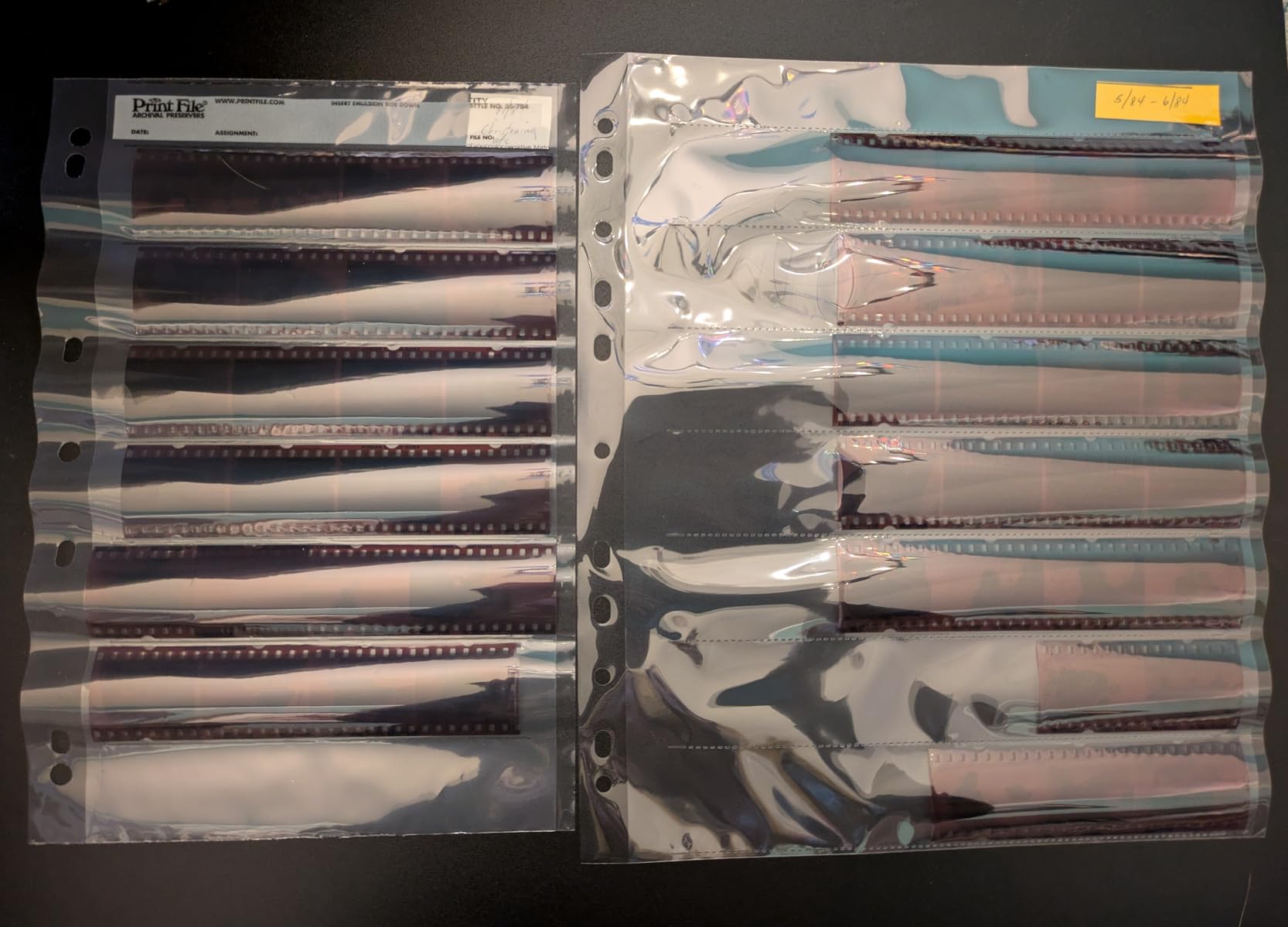
The polyethylene material is explicitly labeled as NO PVC, which is the single most important thing to verify when shopping for negative sleeves for archiving film. PVC contains plasticizers that migrate over time, causing the plastic to stick to your emulsion and create a permanent fog pattern. eTone uses pure polyethylene that will not outgas or bond to your film.
One thing to watch for: the sleeve placement can sometimes overlap with binder ring holes depending on your binder size. I recommend using an oversized binder or box binder to avoid any interference. The included cardboard labeling cards are a nice touch for keeping your archive organized by date, roll number, or subject.
Who Should Buy This
High-volume 35mm shooters who need archival storage at scale will get the most value from this pack. If you shoot 20 or more rolls a year, the 50-sheet capacity means you will not need to reorder frequently. The thick polyethylene construction also makes this a good choice for photographers who handle their negatives often for contact printing or scanning sessions.
Contact Printing Compatibility
The polyethylene material is transparent enough for basic contact sheet printing, though it is not as optically clear as PrintFile’s polyester-based pages. If you need gallery-quality contact prints, you may want to remove negatives before printing. For proof sheets and reference prints, these work just fine with negatives left in place.
2. Print File 120-4B Negative Preservers — Best for Medium Format Film
Print File 120-4B Negative Preservers for 120 Film – 25 Pack
120 medium format
12 frames of 6x4.5 or 6x6
8 frames of 6x7
Contact print on 8x10
25 pages per pack
Pros
- Gold standard for 120 film storage
- Excellent for contact sheets
- Affordable archival quality
- Fits standard 3-ring binders
- Holds multiple medium format sizes
Cons
- Material is quite thin
- Some prefer heavier weight stock
When it comes to medium format storage, the Print File 120-4B is what most photographers mean when they say “the standard.” With 806 reviews and a 4.7 rating, it has earned its reputation in the analog community. I have stored hundreds of rolls of 120 film in these sleeves, and they have never let me down.
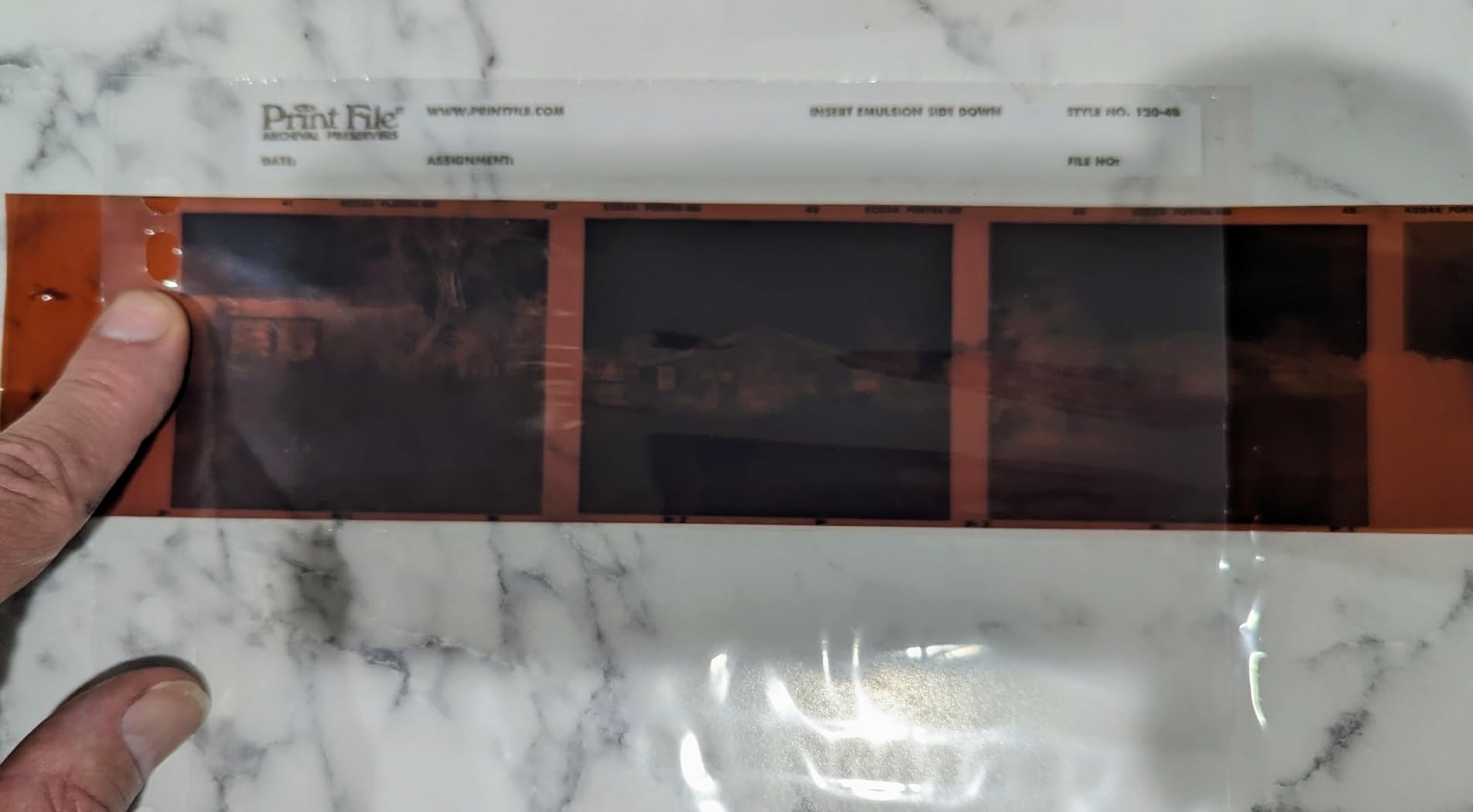
Each page holds twelve frames of 6×4.5cm or 6x6cm, or eight frames of 6x7cm 120 film. That covers virtually every medium format camera configuration, from Hasselblad to Mamiya RB67. The pages are sized at 8 9/16 inches wide by 11 5/16 inches high, which fits standard 3-ring binders perfectly.
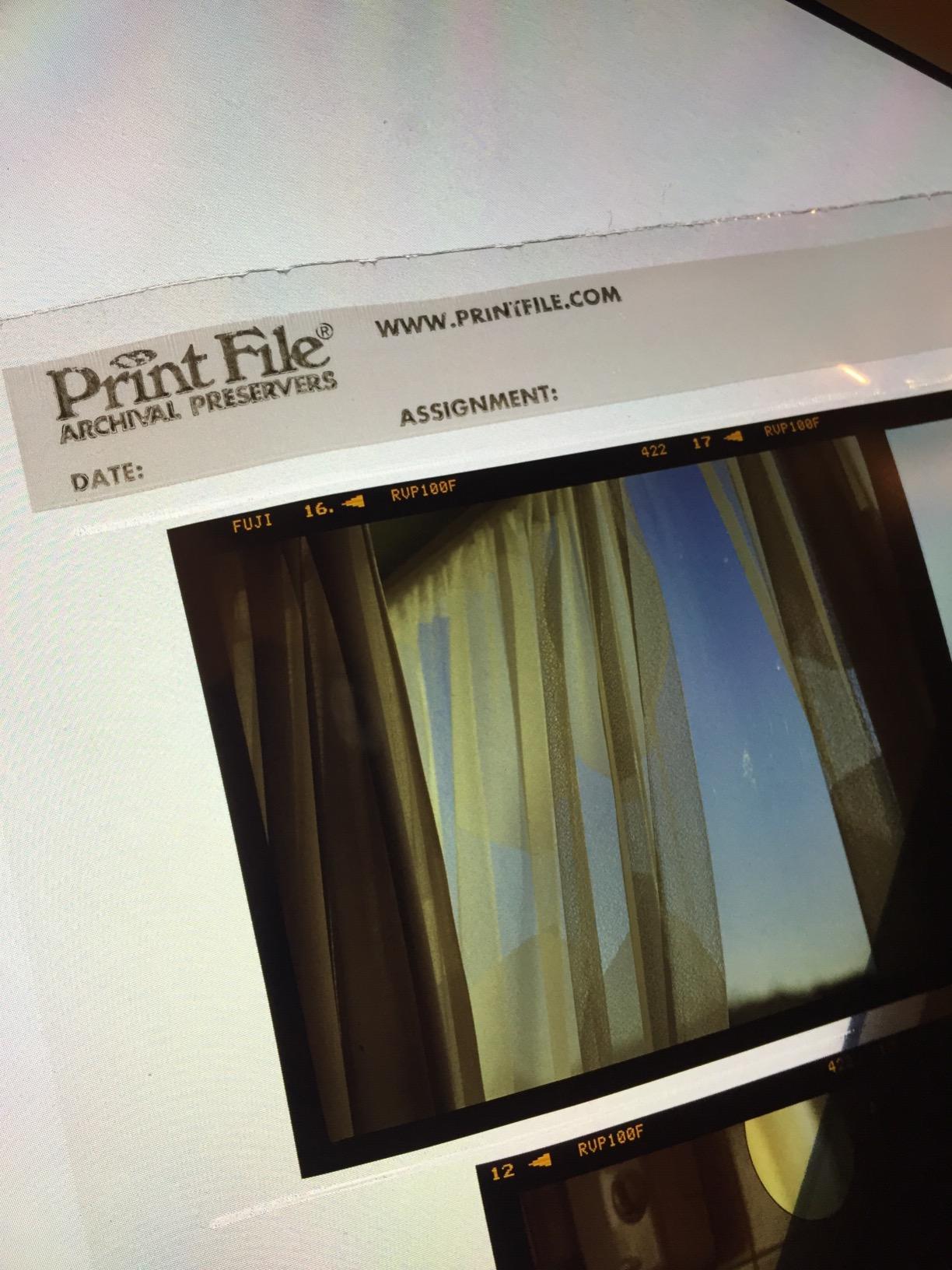
One of the standout features of the 120-4B is its contact printing compatibility. You can lay the page directly on 8×10 photographic paper and make a contact sheet without removing any negatives. The material is thin and clear enough that your contact prints come out sharp and detailed. For photographers who still work in the darkroom, this is a major advantage.
The most common complaint is that the material feels thin compared to some competing brands. That thinness is actually intentional. PrintFile uses a thinner top sheet to maximize optical clarity for contact printing. If you want heavier protection for rough handling, you might prefer the eTone alternative. But for archival storage in a binder that sits on a shelf, the PrintFile thickness is perfectly adequate.
Who Should Buy This
Any medium format photographer who wants reliable, community-tested storage at a reasonable cost. The 120-4B handles the widest range of medium format frame sizes, so you do not need to buy different sleeves for different cameras. Darkroom printers will especially appreciate the contact printing capability.
Long-Term Archival Performance
PrintFile has been making negative preservers for decades, and their track record in the analog community is unmatched. These pages use archival-grade polypropylene that has been independently verified by hundreds of photographers for long-term storage. Many users report negatives stored for 20-plus years with zero degradation.
3. eTone 50x 4×5 Negative Page Preservers — Best for Large Format
50x eTone Archival Storage Sheets 4×5 Negative Page Preservers (50X45)
4x5 large format
4 sheets per page
Polyethylene NO PVC
50 pages per pack
Fits oversized binders
Pros
- Well made and sturdy
- Fits 4x5 negatives beautifully
- Includes header cards for labeling
- Versatile for various negative sizes
Cons
- Pockets too narrow for 4x5 prints
- Header cards cannot be inserted due to sealed top
- Plastic can stick together when new
Large format photographers have fewer storage options than 35mm shooters, and finding quality 4×5 negative sleeves can be frustrating. The eTone 50-pack solves this problem with a well-constructed polyethylene page that holds four 4×5 negatives per sheet. With 50 pages, you can store up to 200 large format negatives in a single order.
The 4.8 rating from 21 reviews may seem like a small sample, but large format photographers tend to be a discerning group. The fact that every single reviewer gave this product four or five stars tells you something about the build quality. The polyethylene material is sturdy and the pockets are sized precisely for sheet film.
The NO PVC polyethylene construction is the same safe material used in eTone’s 35mm and 120 sleeves. It will not outgas, yellow, or bond to your emulsion over time. For large format negatives, which are often one-of-a-kind exposures, this level of material safety is non-negotiable.
Be aware that the pockets are designed specifically for negatives, not prints. Several reviewers noted that 4×5 photographic prints are slightly too large for the pockets. The header slot is also sealed at the top, which means you cannot insert the included labeling cards where intended. These are minor annoyances given the overall quality.
Who Should Buy This
Large format photographers shooting 4×5 sheet film who need archival storage in volume. The 50-page pack offers excellent value per sleeve compared to smaller retail packages. If you shoot with a view camera or large format rangefinder, these pages will keep your negatives safe and organized in oversized binders.
Binder System Compatibility
These pages are designed for oversized binders, OB-1 binders, and box binders rather than standard letter-size 3-ring binders. Make sure you have the correct binder system before ordering. The oversized format accommodates the larger page dimensions needed for 4×5 negative pockets without crowding.
4. Print File Archival 35mm Negative Pages — Best for 4-Frame Strips
Print File Archival 35mm Size Negative Pages Holds Seven Strips of Four Frames, Pack of 25
35mm format
7 strips of 4 frames
28 frames per page
Polypropylene and polystyrene
25 pack
Pros
- Perfect fit for 35mm organization
- Protects from scratches
- Quick viewing of all negatives
- Sturdy and well-made
- 100% recycled content
Cons
- Some shipping causes folds
- Limited to 4-frame strips
Not everyone cuts their 35mm negatives into strips of five or six frames. Many labs return negatives in strips of four, and the Print File Archival 35mm pages are designed specifically for that configuration. Seven strips of four frames gives you 28 frames per page, which matches how most commercial labs cut processed film.
With 635 reviews and a 4.6 rating, this is one of the most popular negative storage products on the market. The polypropylene and polystyrene construction is archival quality, and PrintFile backs it with decades of reputation in the photographic community. I have used these for years and they have never damaged a single frame.
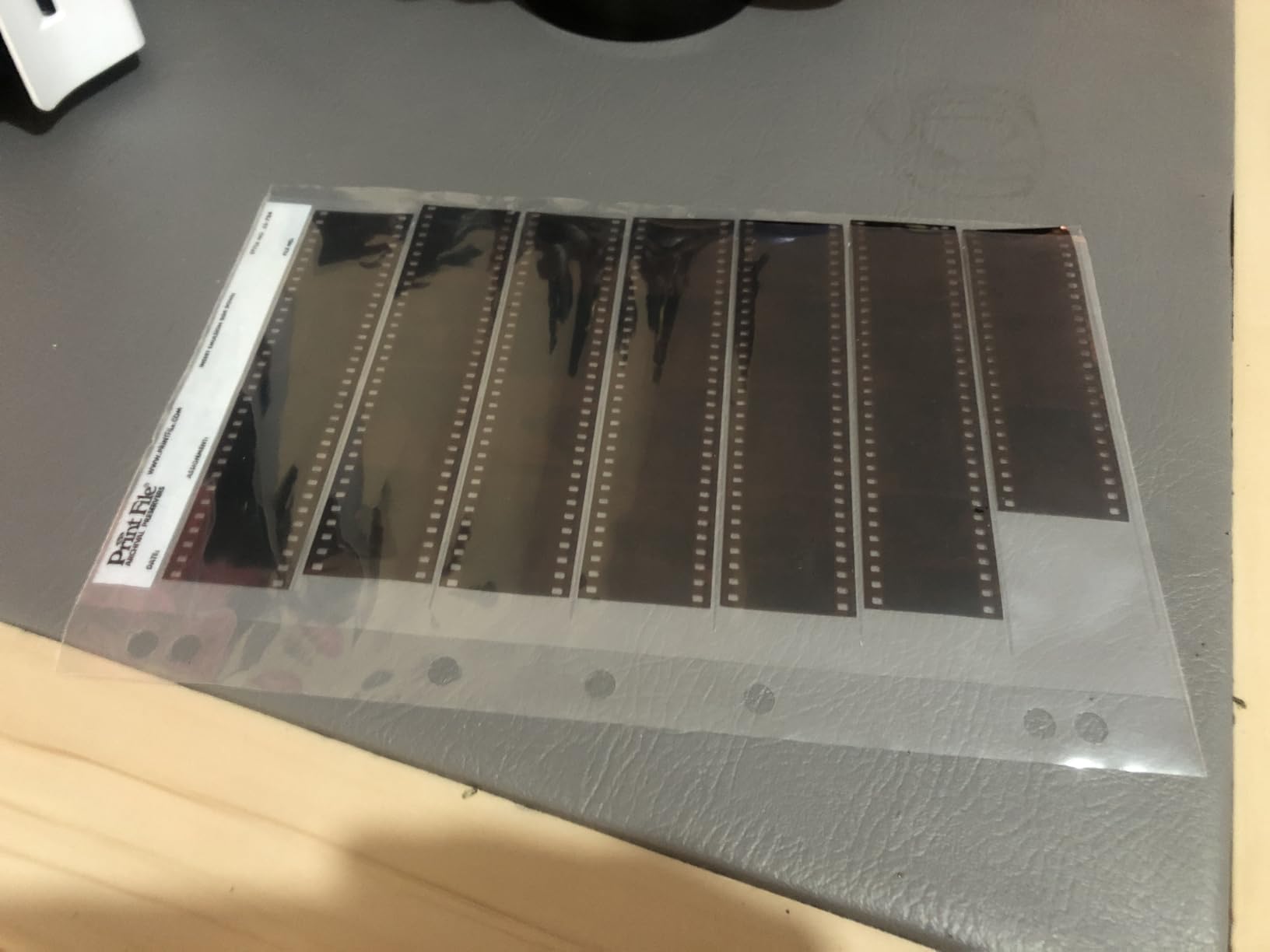
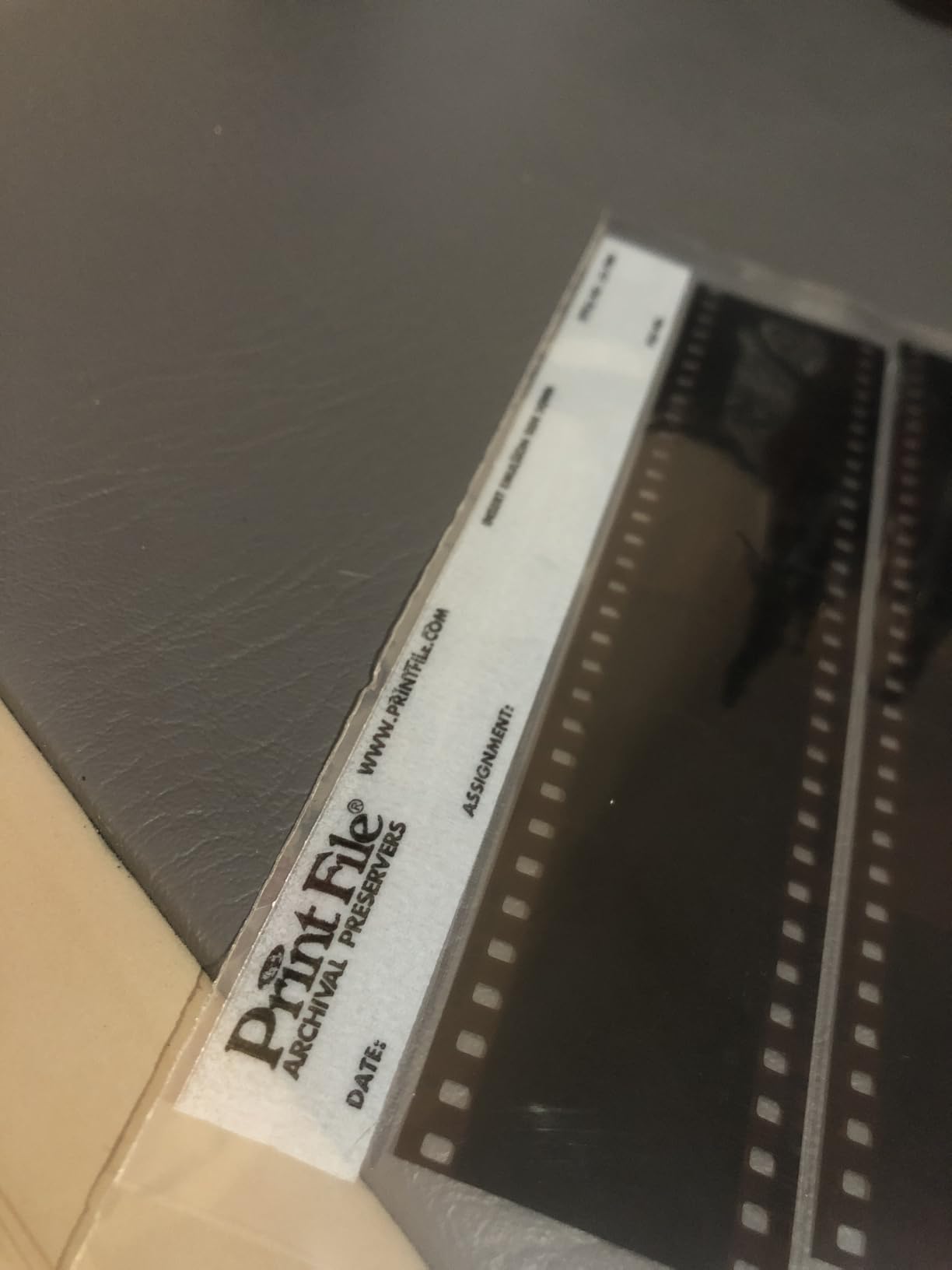
The pages fit standard 3-ring binders and the material is clear enough for viewing and basic contact printing. The polypropylene used here is different from the polyester in PrintFile’s premium lines, but it is still PAT-tested and safe for long-term storage. Polypropylene is slightly less optically clear than polyester but still fully archival.
One thing to note: some reviewers report that shipping can cause creasing or folding. This is a packaging issue rather than a product quality issue. If your pages arrive damaged, contact the seller for a replacement rather than using creased pages, which can create pressure points on your negatives.
Who Should Buy This
Photographers who get their film processed by commercial labs that cut negatives into 4-frame strips. If you shoot 35mm and want a simple, reliable storage system that matches standard lab output, these pages eliminate the need to recut your negatives. The 100% recycled content is also a plus for environmentally conscious photographers.
Material Safety and Certification
PrintFile’s polypropylene pages have been used in museum and gallery archives for decades. The material is pH neutral, PAT-tested, and free of plasticizers that could damage emulsion over time. While polyester is technically the premium archival material, polypropylene is fully accepted for long-term photographic storage by every major conservation authority.
5. Print File Archival Photo Pages 8×10 — Best for Print Storage
Archival Photo Pages Holds Two 8 x 10″ Prints, Pack of 25
8x10 print storage
2 prints per page
Polypropylene material
Fits 3-ring binders
25 pack
Pros
- Thick plastic protects prints
- Seam separates binder holes from prints
- Clean and clear material
- Holds prints securely without slipping
Cons
- Material could be thicker for some uses
- Some shipping damage reported
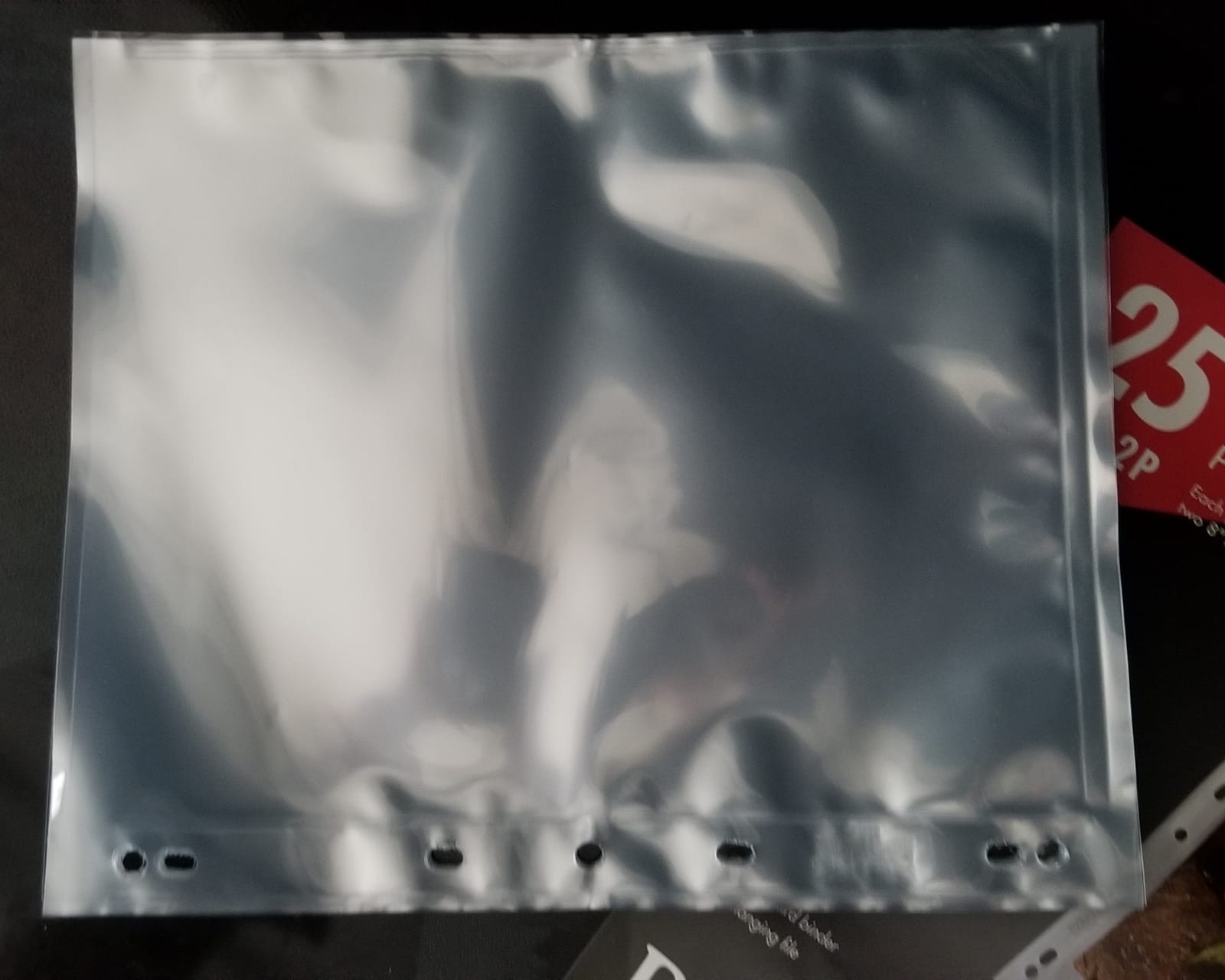
While this guide focuses on negative sleeves for archiving film, many photographers also need to store their finished prints. The Print File Archival Photo Pages hold two 8×10 prints, one on each side, in archival polypropylene that will not damage photographic paper or emulsion surfaces.
These pages are a natural companion to negative storage systems. When you archive a roll of film, you can store the negatives in PrintFile 35mm pages and the contact prints or enlargements in these 8×10 pages, all in the same 3-ring binder system. It creates a clean, organized archive where negatives and prints live side by side.
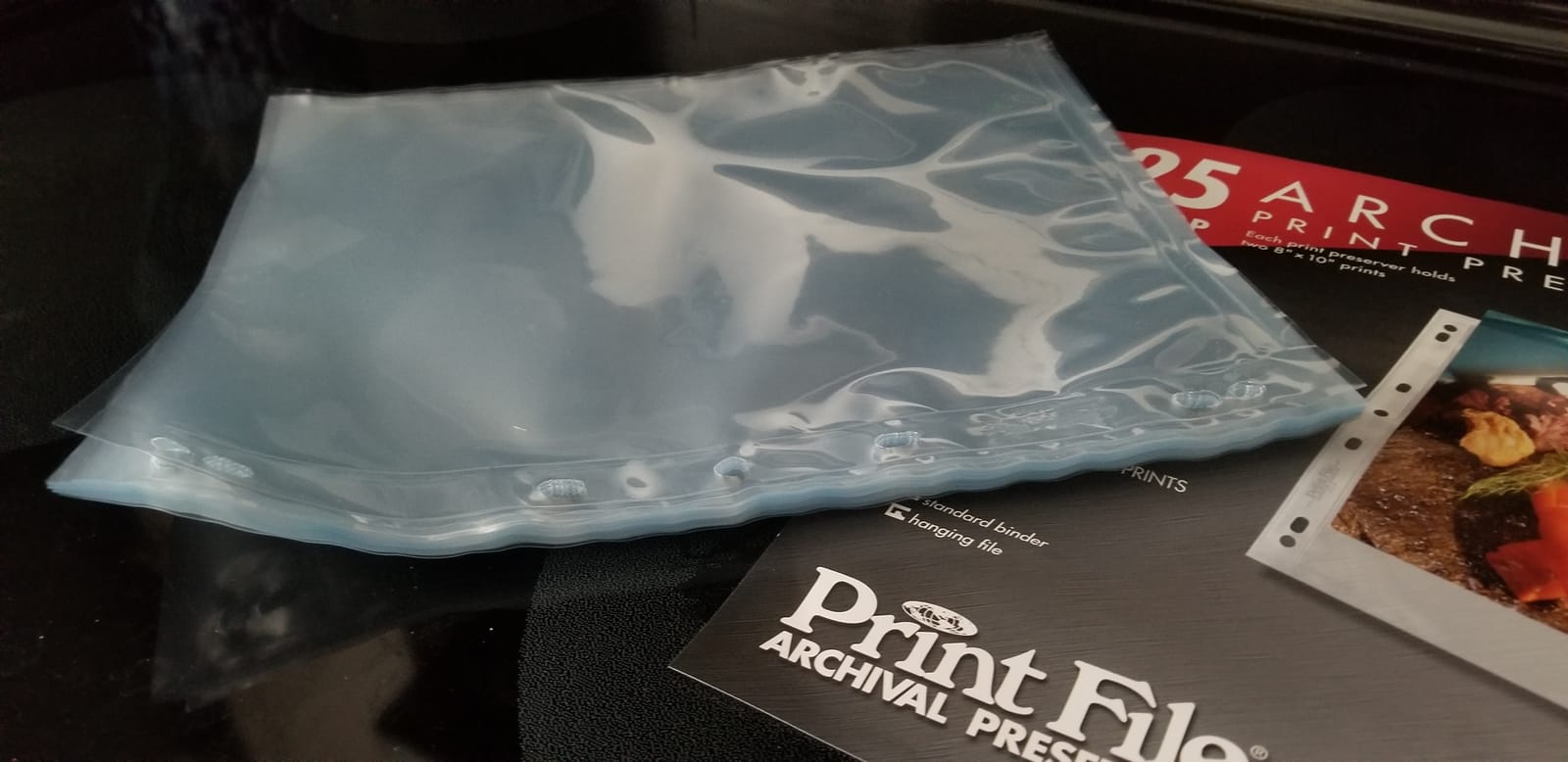
The 307 reviews and 4.6 rating reflect a product that has earned its place in the photographic storage market. The polypropylene material is thick enough to protect prints from scratches and fingerprints during handling, while remaining transparent for easy viewing. The seam that separates the binder holes from the print area is a small but thoughtful design feature that prevents ring damage.
Some reviewers mention that the material could be thicker for heavy-use applications. If you are frequently pulling prints in and out for client meetings or portfolio reviews, you might want to consider heavier sleeves. For archival storage where pages are accessed occasionally, the thickness is appropriate.
Who Should Buy This
Photographers who want to build a complete archive system that includes both negatives and prints in binders. These pages also work well for storing proof prints, contact sheets, and reference prints alongside their corresponding negatives. Fine art photographers who sell prints will appreciate having a professional storage system.
Integration With Negative Storage
The 8×10 print pages use the same binder system as PrintFile’s negative pages, so you can create mixed binders that pair negatives with their corresponding prints. This is especially useful for organizing work by project or date. Use dividers to separate sections and create a completely searchable analog archive.
6. Printfile 35mm 25 Frames — Best for Contact Sheet Quality
Printfile 35MM Strips Total of 25 Frames – Printfile 357BXW25
35mm format
25 frames per page
3 mil top sheet, 1.8 mil bottom
Contact sheet compatible
25 pack
Pros
- High clarity for quality contact sheets
- Strong continuous seams prevent hang up
- Thin backing for contact printing
- Accommodates up to 38 frames when needed
Cons
- May lose some frames on 8x10 contact sheets
The Printfile 357BXW25 is a specialized page designed for photographers who prioritize contact sheet quality. The top sheet is 3 mil thick and the bottom sheet is 1.8 mil, creating a combination that maximizes optical clarity for contact printing while keeping negatives secure. This thin backing is the key feature that sets this page apart.
With a 4.8 rating from 103 reviews, users consistently praise the print-through quality. You can create quality contact sheets without removing negatives from the sleeves, which eliminates handling damage risk. For darkroom photographers who make contact sheets from every roll, this page saves hours of work and protects film from fingerprint oils and scratches.
The strong continuous seams are another advantage worth highlighting. Cheaper sleeves have intermittent heat seals that can snag negative strips as you slide them in. PrintFile’s continuous seam runs the full length of each pocket, creating a smooth channel that prevents hang-ups and corner damage.
The one downside is that when making contact prints on 8×10 paper, you may lose some frames at the edges depending on your enlarger alignment. The page holds enough strips that the total frame count can exceed a standard 8×10 contact sheet. Plan your enlarger setup accordingly, or trim the page if needed.
Who Should Buy This
Darkroom photographers who make contact sheets from every roll of film. If your workflow involves regular contact printing for proofing and archiving, the optical clarity and thin backing of these pages will save you time and protect your negatives from repeated handling. The 25-pack covers 25 rolls of 35mm film.
Technical Construction Details
The dual-thickness construction is specifically engineered for contact printing. The 3 mil top sheet provides enough rigidity to keep negatives flat during printing while remaining transparent enough for sharp contact prints. The 1.8 mil bottom sheet reduces total material thickness, which improves contact between the negative and photographic paper during exposure.
7. ClearFile Archival-Classic 35mm — Budget-Friendly Option
ClearFile Archival-Classic Storage Page for Negatives, 35mm, 7-Strips of 5-Frames – 25 Pack
35mm format
7 strips of 5 frames
35 frames per page
Fits standard 3-ring binder
25 pack
Pros
- Good archival storage quality
- Fits standard binder system
- Great value pricing
- Prompt shipping from most sellers
Cons
- Slots can be tight on some negatives
- Material feels flimsy compared to Print File
- Durability concerns in hot climates
- May arrive damaged
ClearFile offers a budget-friendly alternative to PrintFile with their Archival-Classic storage pages. At 7 strips of 5 frames each, these pages hold 35 frames per sheet. The pricing per page is competitive, making them attractive for photographers building a large archive on a tight budget.
However, the lower price comes with some tradeoffs. Multiple reviewers note that the material feels thinner and less substantial than PrintFile pages. The slots can be tight on some 35mm negatives, requiring careful insertion to avoid bending. For occasional storage where pages sit undisturbed in a binder, these concerns are manageable. For active archives with frequent handling, you may want to invest in a heavier product.
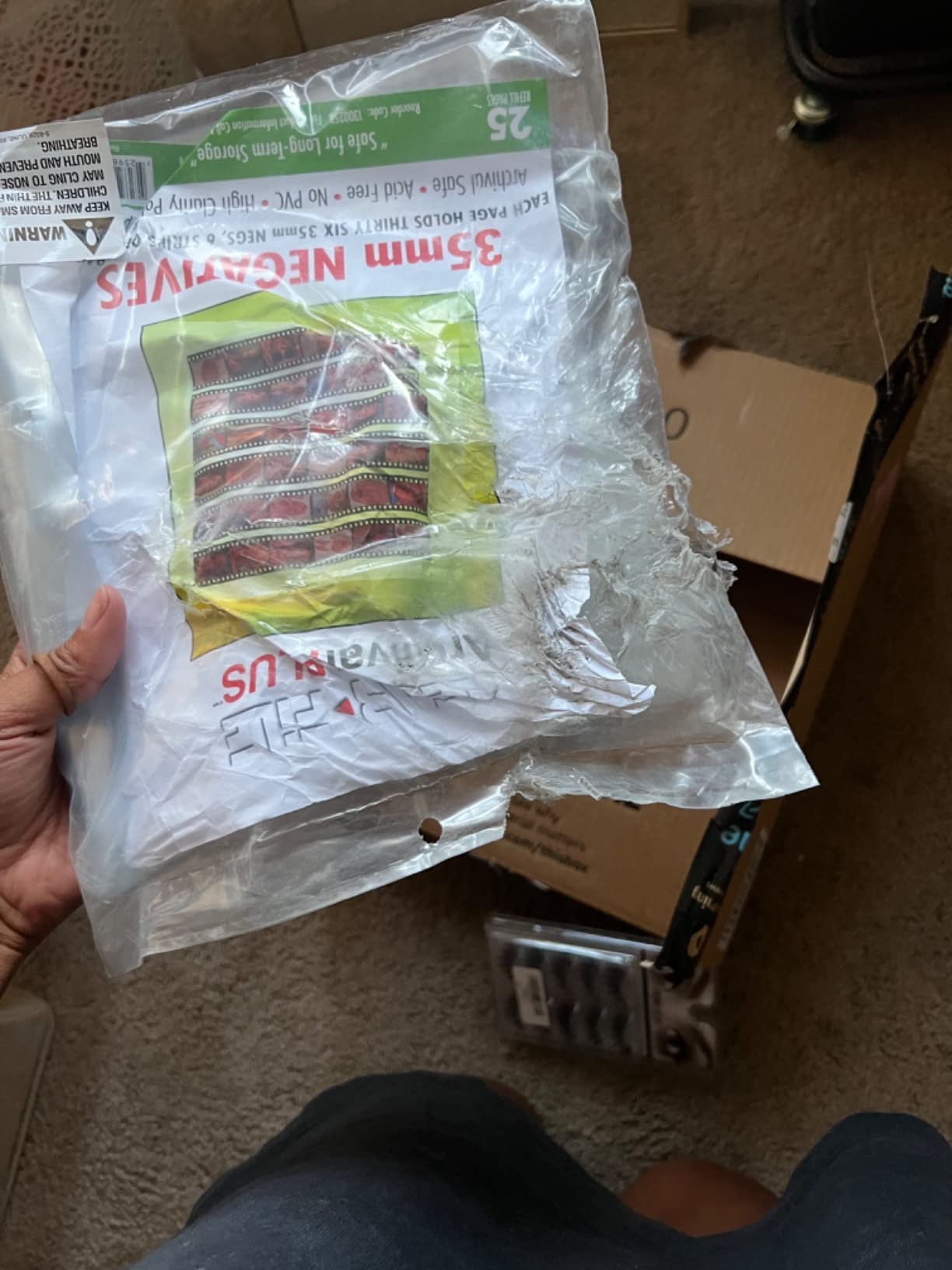
One advantage of ClearFile sleeves that forum users frequently mention is the smoother, shinier surface compared to PrintFile. Some photographers prefer this aesthetic for their archive presentation. The transparency is also quite good, making these suitable for contact printing in a pinch.
Durability in hot and humid climates is a concern raised by several reviewers. If you live in a region with high humidity or temperature fluctuations, be extra careful about storage conditions. Polyethylene can become tacky in extreme heat, and the thinner material used here may be more susceptible than premium alternatives.
Who Should Buy This
Budget-conscious photographers who need to archive a large volume of 35mm negatives without spending a fortune. These work best for static archives that will not be handled frequently. If you are a student or hobbyist building your first organized film storage system, ClearFile offers an accessible entry point.
Value Comparison With PrintFile
ClearFile pages are typically priced lower per sheet than PrintFile equivalents. For photographers storing hundreds of rolls of film, the savings can be significant. However, the thinner material and tighter slots mean you are trading convenience for cost. Consider mixing brands: use ClearFile for long-term storage and PrintFile for negatives you access regularly.
8. Print File Ultima Archival 120 — Best for Pre-Sleeved Film
Print File Ultima Archival 120 Size Negative Pages Holds Three Sleeved Strips of Four 6×6 Frames, Pack of 25, #ULT1203HB
120 medium format
Holds sleeved 120 film
15 frames of 6x4.5
12 frames of 6x6
9 frames of 6x7
25 pack
Pros
- Vertical inserts hold 4 negatives per strip
- Accommodates sleeved 120 film
- Works for 6x6 and 6x8 formats
- Professional archival quality
Cons
- No white border for writing data
- Higher price point
- Not Prime eligible
The Print File Ultima Archival 120 pages are designed for a specific use case that many medium format photographers encounter: storing film that is already individually sleeved. If you develop your own 120 film and use continuous individual sleeves before filing, the Ultima pages accommodate the extra thickness of pre-sleeved negatives.
These pages hold fifteen frames of 6×4.5cm, twelve frames of 6x6cm, or nine frames of 6x7cm sleeved 120 film. The vertical inserts are designed for four negatives per strip, which matches how many medium format photographers cut their negatives. The Ultima line sits at the top of PrintFile’s product range and uses their highest quality materials.
The 4.6 rating from 14 reviews is a small sample but reflects consistent satisfaction among professional users. This is not a mass-market product. It is designed for serious archivists and professional photographers who need double-sleeve protection for their most important work.
The main complaint is the lack of a white border for writing metadata. Most PrintFile pages include a writable strip for notes, roll numbers, or dates. The Ultima omits this feature, which means you need a separate labeling system. Some photographers use adhesive labels or a separate index sheet in the binder.
Who Should Buy This
Professional medium format photographers who already sleeve their negatives individually and want a second layer of archival protection. The Ultima pages are also ideal for photographers working in 6×6 and 6×8 formats who need maximum frame capacity per page. If you shoot weddings or commercial work on medium format, this double-sleeve approach provides the highest level of protection.
Double-Sleeving Strategy
Double-sleeving involves placing each negative strip in an individual continuous sleeve, then filing those sleeves into a larger storage page. This approach provides maximum protection against handling damage, dust, and environmental contaminants. The Ultima pages are one of the few commercial products specifically designed to accommodate this workflow without forcing you to trim or modify the inner sleeves.
9. Printfile 4×5 Negatives 100 Pack — Best Bulk Value for Large Format
Printfile 4 4in X 5in Negatives 100 Pack – Printfile 454B100
4x5 large format
4 negatives per page
Archival polyethylene
Contact print on 8x10
100 pack
Pros
- High quality archival storage
- Durable polyethylene material
- Fits standard 3-ring binders
- Tangle free lightweight design
Cons
- Pockets can be clingy when inserting
- Requires proper emulsion-side orientation
- Not Prime eligible
The Printfile 454B100 gives you 100 pages of 4×5 negative storage in a single order, making it the best bulk value for large format photographers. Each page holds four 4×5 negatives or transparencies, and the pages support contact printing on standard 8×10 photographic paper.
The archival polyethylene material is the same trusted construction PrintFile has used for decades. At 1.8 pounds for the entire pack, the pages are lightweight enough that they will not overload your binders, even when you fill multiple volumes. The tangle-free design means pages separate cleanly without sticking together.
One consistent note from reviewers is that the pockets can feel clingy when first inserting negatives. This is normal for new polyethylene sleeves and diminishes with use. The cling actually helps hold negatives in place once seated, which prevents shifting during binder transport. Just take your time on the first few insertions.
Proper orientation matters with these pages. You should always insert negatives emulsion-side down (facing away from you) to match the orientation needed for contact printing. If you insert them backwards, your contact prints will be laterally reversed. Take a moment to establish a consistent workflow.
Who Should Buy This
Large format photographers who shoot regularly and need a high-volume storage solution. The 100-page pack offers the best per-sleeve cost for 4×5 storage. If you shoot with a view camera for landscapes, architecture, or studio work, this pack will handle a full year or more of production depending on your output.
Per-Sleeve Cost Analysis
At 100 pages per pack, the per-page cost is lower than any retail alternative. Each page holds four negatives, giving you 400 negative slots. For a large format photographer producing 200 to 400 negatives per year, a single pack covers your entire annual storage needs. This makes the upfront investment very economical compared to buying smaller packs repeatedly.
10. eTone 50x 120 Negative Page Preservers — Budget Medium Format
50x eTone Archival Storage Sheets 120 Negative Page Preservers (50×120)
120 medium format
4 strips of 3 frames
12 frames per page
Polyethylene NO PVC
50 pack
Pros
- Better quality than competing budget brands
- Packaged well arrives undamaged
- Good value for 50 sheets
- Includes cardboard organization labels
Cons
- Some report flimsy material
- Pockets can tear with heavy use
- Not as heavy duty as PrintFile
The eTone 50-pack of 120 negative pages offers a budget-friendly alternative for medium format storage. Each page holds four strips of three frames, giving you twelve frames per page. With 50 pages, you can store up to 600 frames of medium format film in a single order.
The NO PVC polyethylene material matches what eTone uses in their 35mm and 4×5 products. This is the same safe, archival-grade plastic that will not outgas or damage your negatives. The explicit NO PVC labeling gives peace of mind that your film is protected from the most common storage hazard.
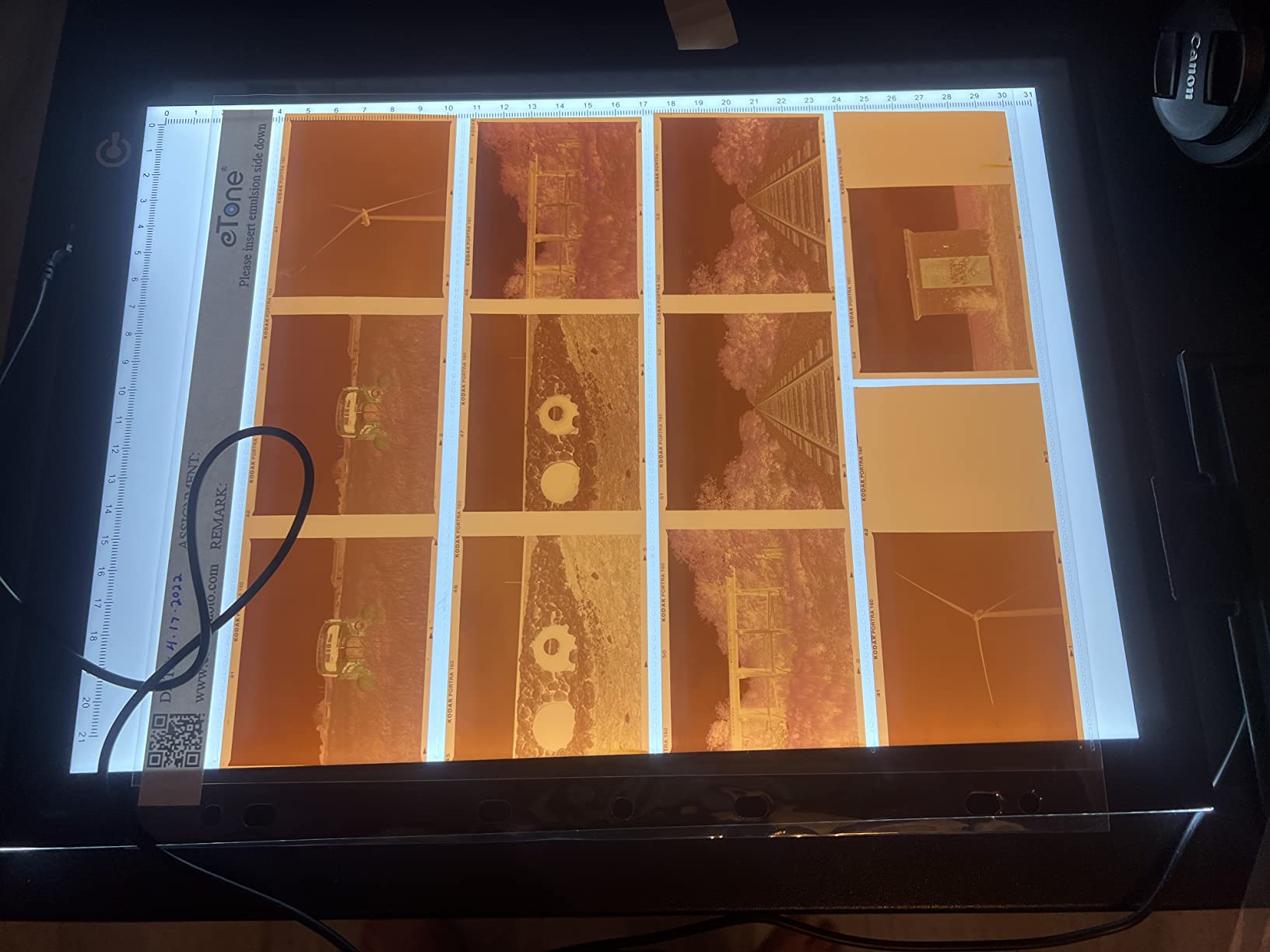
Reviewers note that the material is thinner than PrintFile’s 120 pages, and the pockets can tear with heavy or rough handling. For static archives that sit on a shelf, this is not a problem. For working photographers who pull pages in and out frequently, the thinner material may not hold up as well over time.
The included cardboard labels are a thoughtful addition for organizing your archive. You can write roll numbers, dates, or subject information on these cards and insert them at the top of each page. This labeling system helps you locate specific rolls quickly without pulling out every page.
Who Should Buy This
Budget-conscious medium format photographers who need volume storage at a low per-page cost. The 50-page pack handles a substantial archive for less than premium alternatives. If you are a student or hobbyist shooting 120 film regularly, these pages provide safe storage without the premium price tag.
eTone vs PrintFile for 120 Film
The main difference comes down to material thickness and build quality. PrintFile’s 120-4B uses a more substantial material that holds up better to frequent handling. eTone’s pages are thinner but still archival safe. If you access your archive daily, go with PrintFile. If your pages mostly sit undisturbed in a binder, eTone offers better value per page.
How to Choose Negative Sleeves for Archiving Film?
Selecting the right negative sleeves for archiving film requires understanding materials, formats, and storage conditions. Here is what matters most when making your decision.
Material Types: Polyester vs Polypropylene vs Polyethylene
The three archival-safe plastics used in negative sleeves each have distinct characteristics. Understanding the differences helps you choose the right material for your specific needs.
Polyester (often sold under the brand name Mylar) is the premium archival material. It is the most optically clear, chemically inert, and dimensionally stable of the three. Polyester does not absorb moisture, will not yellow over time, and has the longest track record in museum conservation. Archival Methods and PrintFile’s premium lines use polyester.
Polypropylene is the mid-range option and the most common material in commercial negative pages. It is archival safe, pH neutral, and PAT-tested for photographic storage. Polypropylene is slightly less clear than polyester and can absorb small amounts of moisture over time, but it is fully accepted for long-term archival use. Most PrintFile standard pages use polypropylene.
Polyethylene is the most affordable archival material. It is soft, flexible, and safe for film storage. eTone uses polyethylene in their negative pages. While not as rigid as polyester or polypropylene, polyethylene is perfectly safe for negatives that will not be handled frequently. It is also the material most commonly used for inner sleeves in double-sleeving systems.
Avoid PVC at All Costs
Polyvinyl chloride (PVC) is the one material you must never use for negative storage. PVC contains plasticizers that slowly outgas and migrate into your film emulsion. This causes a permanent cloudy pattern that cannot be reversed. PVC sleeves also bond to film emulsion in warm or humid conditions, effectively destroying the negative.
The danger is that PVC sleeves look identical to safe alternatives on store shelves. Many big-box retailers sell PVC photo sleeves alongside archival products without clear labeling. Always verify that the product explicitly states NO PVC or identifies the material as polyethylene, polypropylene, or polyester before purchasing.
Film Format Compatibility
Make sure the sleeves you choose match your film format. 35mm sleeves come in several strip configurations: 4-frame, 5-frame, and 6-frame strips are all common. The strip length you need depends on how your negatives are cut, which is usually determined by your lab or your personal cutting preference.
120 medium format sleeves must accommodate different frame sizes within the same format. A single roll of 120 film can produce 6×4.5cm, 6x6cm, 6x7cm, or 6x8cm frames depending on the camera. Look for sleeves that list compatibility with your specific frame size.
Large format sleeves come in 4×5 and 8×10 configurations. Make sure the pockets match your negative size exactly. Some 4×5 sleeves are too narrow for 4×5 prints, so check whether you are storing negatives or finished prints.
Storage Environment: Temperature and Humidity
Even the best negative sleeves cannot protect your film from poor storage conditions. The ideal environment for photographic negatives is 65 to 70 degrees Fahrenheit with 30 to 50 percent relative humidity. Avoid attics, basements, garages, and car trunks where temperature and humidity fluctuate wildly.
High humidity is the biggest threat. When humidity exceeds 60 percent, polyethylene and polypropylene can absorb moisture, potentially creating a microclimate inside the sleeve that promotes mold growth. If you live in a humid climate, consider using a dehumidifier in your storage area or adding silica gel packets to your binders.
Never store negatives in sealed plastic bags or airtight containers without humidity control. Trapped moisture causes more damage than open-air storage. Binders on open shelving in a climate-controlled room are generally the safest storage method for most photographers.
What Is PAT Testing?
The Photographic Activity Test (PAT) is the international standard for evaluating storage materials used with photographs. The test, developed by the Image Permanence Institute, evaluates whether a material will interact chemically with photographic emulsions over time.
Materials that pass the PAT are certified safe for long-term contact with photographic materials. All reputable negative sleeve manufacturers either PAT-test their products or use materials that have been independently verified to pass. When in doubt, look for PAT certification or stick with established brands like PrintFile that have decades of track record.
Frequently Asked Questions
What is the best way to store film negatives?
Store film negatives in archival-quality sleeves made from polyethylene, polypropylene, or polyester inside 3-ring binders. Keep binders in a climate-controlled room at 65 to 70 degrees Fahrenheit with 30 to 50 percent relative humidity. Always verify sleeves are PVC-free before use.
Are polypropylene sleeves archival?
Yes, polypropylene is a fully archival material accepted for long-term photographic storage. It is pH neutral, PAT-tested, and free of harmful plasticizers. Polyester is technically the premium archival material, but polypropylene is considered completely safe for negative storage by all major conservation authorities.
Is it worth keeping old photo negatives?
Yes, negatives are the highest-quality source of your images. Prints degrade over time and digital scans lose detail, but a properly stored negative retains full resolution and tonal range indefinitely. Negatives also allow for future reprints at any size and quality level that future technology can achieve.
Why do people keep 35mm film in the fridge?
Refrigerating unexposed film slows chemical aging and extends its shelf life beyond the expiration date. Cold storage reduces background radiation fog and preserves color accuracy. Once film is exposed and processed, however, negatives should be stored at room temperature in archival sleeves, not in the refrigerator.
What are the best archival photo sleeves?
The best archival photo sleeves are made from polyester, polypropylene, or polyethylene and are explicitly labeled as PVC-free. PrintFile, ClearFile, and eTone are the most trusted brands. Look for PAT-tested materials and choose the format that matches your specific film size, whether 35mm, 120 medium format, or 4×5 large format.
Final Thoughts on Negative Sleeves for Archiving Film
Choosing the right negative sleeves for archiving film protects decades of irreplaceable images. The material matters more than anything else: always choose polyethylene, polypropylene, or polyester, and never compromise with PVC. For 35mm shooters, the eTone 50-pack offers unbeatable volume value. Medium format photographers should stick with the Print File 120-4B as the proven community standard. Large format shooters get the best deal with eTone’s 4×5 50-pack or PrintFile’s 100-page bulk option for higher volume.
Start with the format that matches your film, verify the material is PVC-free, and store your binders in a climate-controlled room. Your negatives will outlast you when given the right home. 2026 is a great year to finally get your film archive organized.