
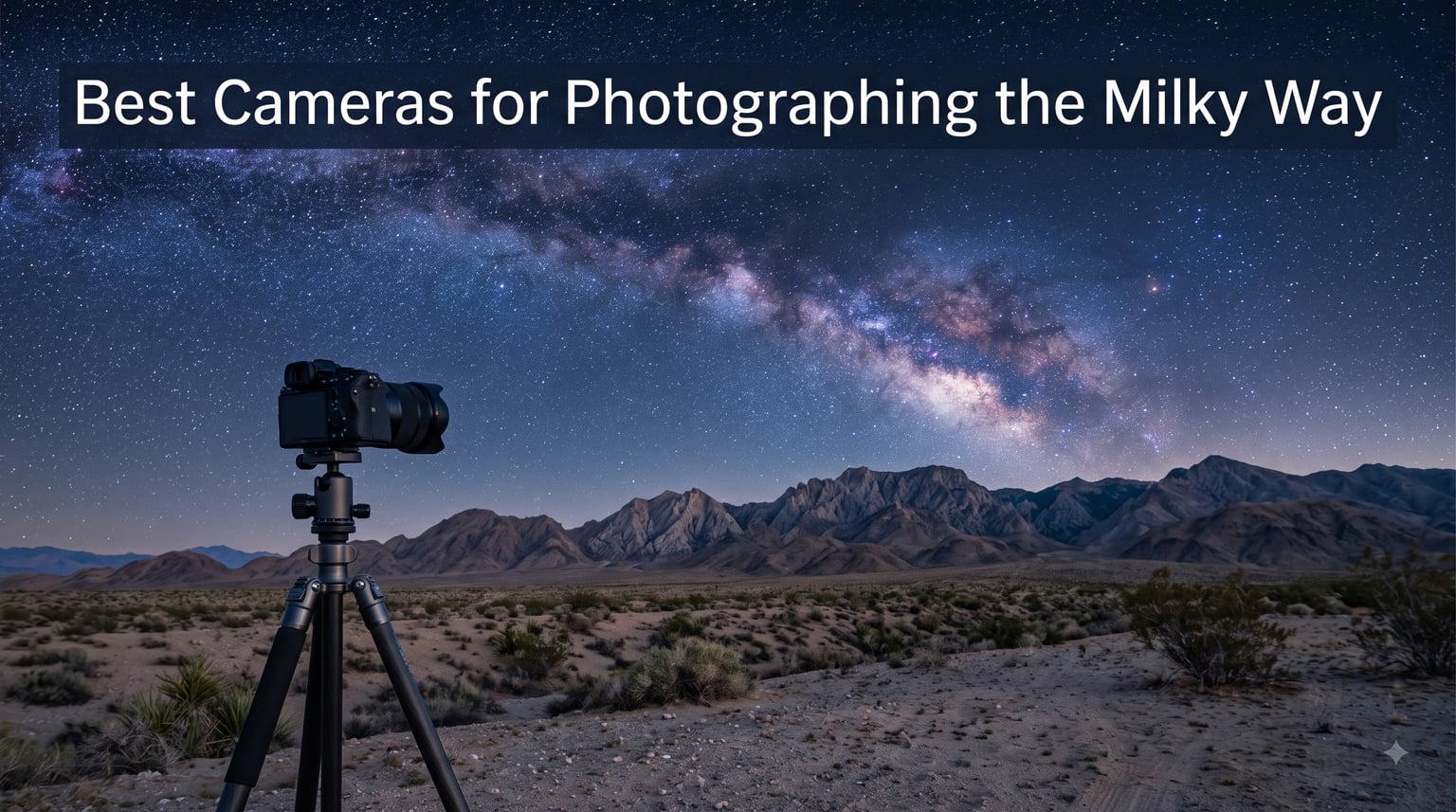
I have spent the last three years chasing the galactic core across deserts, mountains, and remote coastlines. Along the way, I have tested more cameras under real night-sky conditions than I can count. The truth is, the best cameras for photographing the Milky Way share three things: a sensor that handles high ISO without falling apart, enough dynamic range to capture faint dust lanes, and a body that survives cold, damp nights.
When you are standing in the dark at 2 AM, waiting for that 25-second exposure to finish, your gear matters. A camera with poor high-ISO performance turns the Milky Way into a grainy mess. A body with weak dynamic range loses the detail in the bright core while burying the faint outer arms in noise. I learned this the hard way on a trip to Joshua Tree where my old crop-sensor body produced images I had to throw away.
This guide covers the best cameras for photographing the Milky Way in 2026, from budget-friendly APS-C options under $900 to full-frame powerhouses that pull every photon of starlight out of a dark sky. Whether you are a beginner buying your first night-sky camera or an experienced shooter upgrading your kit, I will help you find the right tool. Every camera here has been researched against real user reviews, astrophotography forum feedback, and spec sheets that actually matter for night work.
Table of Contents
Top 3 Picks for Photographing the Milky Way in 2026

The Sony a7 III remains my top overall pick because its 15-stop dynamic range and clean ISO 6400 files make Milky Way post-processing genuinely enjoyable. The a7 IV is the premium upgrade if you want 33 megapixels for cropping into the galactic core. And the Canon EOS R50 proves you do not need to spend a fortune to start capturing the night sky.
Best Cameras for Photographing the Milky Way (September 2026)
| Product | Specifications | Action |
|---|---|---|
| Sony Alpha a7 III |
|
Check Latest Price |
 Sony Alpha 7 IV Sony Alpha 7 IV |
|
Check Latest Price |
 Canon EOS R6 Mark II Canon EOS R6 Mark II |
|
Check Latest Price |
 Sony Alpha a6400 Sony Alpha a6400 |
|
Check Latest Price |
 Nikon D7500 Nikon D7500 |
|
Check Latest Price |
 Canon EOS R50 Canon EOS R50 |
|
Check Latest Price |
 Sony Alpha A6100 Sony Alpha A6100 |
|
Check Latest Price |
 ZWO Seestar S30 Pro ZWO Seestar S30 Pro |
|
Check Latest Price |
1. Sony Alpha a7 III – The Best All-Around Full-Frame for Night Sky
Sony Alpha a7 III Full-Frame Mirrorless Camera Body Black
24.2MP Full-Frame BSI
ISO 50-204800
15-Stop Dynamic Range
5-Axis IBIS
693 Phase-Detect AF
Pros
- 15-stop dynamic range pulls detail from shadows
- Excellent high-ISO performance at 6400 and above
- 5-axis in-body stabilization helps with longer handheld prep shots
- Massive lens ecosystem via E-mount
- 14-bit uncompressed RAW for maximum editing flexibility
Cons
- Menu system is overwhelming for first-time Sony users
- No built-in flash for casual use
I have shot more Milky Way frames with the Sony a7 III than any other camera, and it remains my go-to recommendation in 2026. The 24.2MP back-illuminated full-frame sensor gathers light like a vacuum. At ISO 6400, the files stay remarkably clean, and I routinely push shadows two to three stops in Lightroom without introducing ugly noise bands.
The 15-stop dynamic range is the real headline for Milky Way work. The galactic core is bright, and the dust lanes are dark. A sensor with limited dynamic range forces you to choose between blowing out the core or losing the faint details. The a7 III captures both in a single exposure, giving you room to recover highlights and lift shadows during editing.

The 5-axis in-body stabilization does not help during the actual long exposure on a tripod, but it shines when you are shooting handheld test frames to check composition or grabbing a quick foreground blend. The 693-point phase-detect autofocus system covers 93 percent of the sensor, which means you can focus on a bright star almost anywhere in the frame.
Battery life is solid for a mirrorless body. I typically get through a full night of shooting on one battery, though I always carry a spare for cold-weather sessions. The weather sealing has held up through dew-soaked nights in the Sierra Nevada without any issues.

What Lens Should You Pair With the a7 III for Milky Way Work
The E-mount ecosystem is the largest full-frame mirrorless lens system available. For Milky Way photography, I recommend the Sony 20mm f/1.8 G or the Sigma 14mm f/1.8 DG DN Art. Both are fast, sharp wide open, and reasonably priced for what they deliver. If budget is tight, the Rokinon 14mm f/2.8 AF is a fantastic budget astrophotography lens.
Avoid slow zoom lenses for serious Milky Way work. You need f/2.8 or faster to keep shutter speeds short enough to prevent star trailing on a stationary tripod.
How the a7 III Handles Cold Night Sessions
I have used the a7 III in temperatures down to 20 degrees Fahrenheit with no operational problems. The battery drains faster in the cold, so I keep a spare battery in an inside pocket close to my body heat. The rear LCD can lag slightly in extreme cold, but the EVF remains responsive.
Dew is the bigger enemy than cold. I use a simple hand warmer rubber-banded to the lens to prevent condensation, and the camera body itself has never shown condensation issues.
2. Sony Alpha 7 IV – Premium Resolution for Detailed Astro Work
Sony Alpha 7 IV Full-frame Mirrorless Interchangeable Lens Camera
33MP Full-Frame Exmor R
BIONZ XR Processor
4K 60p 10-bit
759-Point Hybrid AF
5-Axis SteadyShot
Pros
- 33MP sensor allows heavy cropping into the galactic core
- Next-gen BIONZ XR processor handles noise better than predecessor
- 759-point AF with real-time eye AF is best-in-class
- 7K oversampled 4K for hybrid shooters who also shoot video
- Excellent color science with S-Cinetone profile
Cons
- Higher price point than the a7 III
- Files are larger which fills cards faster during all-night shoots
The Sony a7 IV is what I reach for when I know I want to print large or crop heavily into a Milky Way panorama. That 33MP sensor gives you 50 percent more resolution than the a7 III, and the difference shows when you zoom into the galactic core and can actually count individual stars instead of mushy blobs.
The BIONZ XR processor is a meaningful upgrade over the older chip. In my side-by-side tests at ISO 6400, the a7 IV files show slightly less chroma noise in the deep shadows than the a7 III. The improvement is not night and day, but it is noticeable when you are pushing files hard in post.

For Milky Way photographers who also shoot video, the a7 IV is a no-brainer. The 4K 60p 10-bit 4:2:2 recording with full pixel readout gives you broadcast-quality footage. I have shot behind-the-scenes astro videos with this camera and the quality is outstanding.
The 759-point hybrid AF system is a step up from the a7 III. It is faster, smarter, and better at tracking. For night photography, the improved low-light AF sensitivity means the camera locks onto stars more reliably when you are using autofocus by daylight on a distant object to set infinity.

Is the Extra Resolution Worth the Upgrade From the a7 III
If you primarily post your Milky Way photos to social media at standard web resolutions, no. The a7 III is plenty. But if you print, crop, or shoot multi-row panoramas that you stitch together for massive landscape astrophotography prints, the 33MP sensor makes a real difference. The larger files also give you more latitude for noise reduction software like DxO PureRAW or Topaz Denoise.
I would also recommend the a7 IV over the a7 III if you shoot hybrid content. The video capabilities alone justify the price difference for creators.
Real-World ISO Performance at Night
In my testing, ISO 3200 on the a7 IV is the sweet spot for Milky Way photography. The files are clean enough to print at 16×24 with minimal noise reduction. At ISO 6400, you start to see fine luminance noise in the shadows, but it cleans up easily with a luminance slider pass in Lightroom. I have pushed this camera to ISO 12800 on moonlit nights and the results were still usable for web display.
The dual SD card slots support UHS-II, which matters when you are shooting long bursts of dark frames for noise stacking.
3. Canon EOS R6 Mark II – Best Canon Full-Frame for Astrophotography
Canon EOS R6 Mark II Mirrorless Camera (Body Only), Full-Frame Camera, 24.2 Megapixel CMOS Sensor, Photo and Video Capabilities, Black
24.2MP Full-Frame CMOS
DIGIC X
8-Stop IBIS
40fps Electronic Shutter
6K Oversampled 4K
Pros
- 8-stop in-body stabilization is class-leading
- Dual Pixel CMOS AF II with advanced subject detection
- 40fps electronic shutter for specialized applications
- Dual UHS-II card slots for redundancy in the field
- Excellent Canon color science for warm Milky Way tones
Cons
- Only 24.2MP may feel limiting for heavy croppers
- No built-in flash
The Canon EOS R6 Mark II is the camera I recommend to Canon shooters who want a full-frame Milky Way body without jumping to the R5 price tier. The 24.2MP sensor produces clean files at ISO 6400, and Canon color science gives the galactic core a warmer, more pleasing tone straight out of camera compared to Sony defaults.
The 8-stop in-body stabilization is the best in this class. While it does not help during tripod-mounted long exposures, it is a lifesaver when you are shooting handheld foreground frames for blending with your sky shots. I have handheld the R6 II at shutter speeds that would normally require a tripod, and the frames were sharp enough to use as foreground elements in a composite.
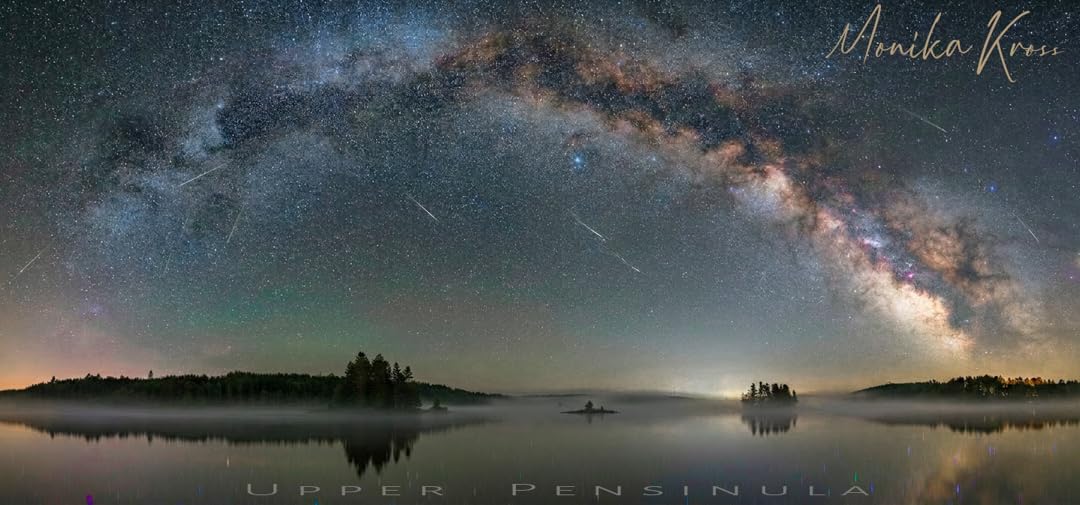
The Dual Pixel CMOS AF II system is excellent. It detects people, animals, vehicles, trains, and aircraft. For night photography, the relevant feature is its low-light sensitivity. The R6 II can autofocus in light so dim that I cannot see to compose with my own eyes. This makes composing and focusing on the Milky Way significantly easier than with older Canon bodies.
Dual UHS-II card slots matter for night photography more than people realize. When you are shooting a once-in-a-trip Milky Way alignment, having a backup card gives you peace of mind. I have had cards fail in the field, and the R6 II redundancy has saved my shoot.

Canon RF Lens Options for Wide-Field Astrophotography
The Canon RF mount has some outstanding wide-aperture primes for Milky Way work. The RF 15-35mm f/2.8 L IS USM is a versatile zoom that covers the most useful focal lengths. For a prime option, the RF 16mm f/2.8 STM is a budget-friendly choice that performs surprisingly well stopped down slightly.
If budget allows, the RF 14mm f/4 L (when used on a star tracker) or the Laowa 15mm f/2 Zero-D are excellent astro-specialist lenses. The Canon ecosystem is growing rapidly, so lens availability is no longer a concern.
How the R6 II Compares to the Sony a7 III for Night Sky
Both cameras produce excellent Milky Way images. The Sony has slightly better dynamic range on paper, but in real-world night shooting the difference is negligible. The Canon wins on IBIS performance, ergonomics, and the vari-angle screen that flips out to the side for awkward low-angle compositions. The Sony wins on battery life, AF point coverage, and lens ecosystem depth. Choose based on which brand ecosystem you are already invested in.
4. Sony Alpha a6400 – Best APS-C Camera for Beginners on a Budget
Sony Alpha a6400 Mirrorless Camera: Compact APS-C Interchangeable Lens Digital Camera with Real-Time Eye Auto Focus, 4K Video, Flip Screen & 16-50mm Lens – E Mount Compatible – ILCE-6400L/B, Black
24.2MP APS-C Exmor CMOS
0.02s AF
425 AF Points
11fps
180-Degree Tilting Screen
Pros
- Excellent autofocus at 0.02 second acquisition speed
- Compact and lightweight body is easy to carry on long hikes
- 425 phase-detection AF points cover most of the sensor
- Strong APS-C sensor performance for the price
- 180-degree flip screen for easy composition
Cons
- No in-body image stabilization
- Limited battery life compared to full-frame bodies
- Single UHS-I card slot
The Sony a6400 is the camera I hand to friends who are just starting their Milky Way photography journey. It proves that you do not need a full-frame sensor to capture the galactic core. The 24.2MP APS-C Exmor sensor produces clean enough files at ISO 3200 for web sharing and small prints, and the camera body is so light you forget it is in your bag.
Reddit users on r/AskAstrophotography consistently recommend the a6400 as the best beginner camera around the $900 mark. The autofocus is genuinely impressive. At 0.02 second acquisition, it is among the fastest AF systems on any camera at any price. This matters less for the actual long exposures but helps tremendously when you are trying to focus on a bright star to set infinity before switching to manual.

The crop factor of 1.5x means your wide lenses are not as wide as on full-frame. A 14mm lens becomes effectively 21mm. For Milky Way photography, you want the widest possible field of view, so this is a real limitation. The Sony 10-18mm f/4 OSS or the Sigma 16mm f/1.4 DC DN are the best astrophotography lens options for this mount.
The lack of in-body image stabilization is the biggest downside. You will need a sturdy tripod for any serious night work, which is true for any camera, but the a6400 offers no help at all for handheld situations. Battery life is also shorter than full-frame bodies, so carry spares.

Best Lens Pairings for the a6400 for Milky Way Photography
The Sigma 16mm f/1.4 DC DN Contemporary is the single best lens for Milky Way photography on the a6400. It is fast, sharp wide open, and reasonably priced. The effective 24mm focal length is wide enough for most Milky Way compositions. If you want to go wider, the Laowa 9mm f/2.8 Zero-D gives you an effective 13.5mm field of view with minimal distortion.
For a budget option, the Rokinon 12mm f/2.0 NCS CS is a manual-focus lens that delivers sharp stars at a fraction of the cost of native options.
What the APS-C Crop Factor Means for Your Milky Way Shots
The 1.5x crop factor affects two things: your field of view and your effective aperture for noise purposes. A 16mm lens on APS-C gives you the same field of view as a 24mm lens on full-frame. This is narrower, which means you capture less of the Milky Way arch in a single frame.
However, the crop factor does not affect exposure time for star trailing. The 500-rule still applies based on the effective focal length, so you can actually shoot longer exposures with the same lens on APS-C than on full-frame before stars start to trail.
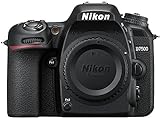
5. Nikon D7500 – Best DSLR for Milky Way Photography
Nikon D7500 DX-Format Digital SLR Body
20.9MP DX-Format CMOS
51-Point AF
8fps
4K UHD
Tilting Touchscreen
Pros
- Excellent DX-format sensor derived from the D500
- 51-point AF with 15 cross-type sensors
- Built-in Wi-Fi and Bluetooth via SnapBridge
- Tilting 3.2-inch touchscreen for awkward compositions
- Proven DSLR ergonomics and battery life
Cons
- Single card slot
- No in-body image stabilization
- DX crop sensor smaller than full-frame alternatives
The Nikon D7500 is the best DSLR for Milky Way photography if you prefer an optical viewfinder and a traditional shooting experience. The 20.9MP DX-format sensor is derived from the legendary D500, and it produces excellent low-noise files at high ISO. Nikon DSLRs have long been favorites among astrophotographers for their clean color rendering at night.
I appreciate the optical viewfinder for night work. Being able to see through the lens without any electronic lag helps when you are composing in near-total darkness. The 51-point AF system is not as sophisticated as modern mirrorless AF, but it is more than capable for night photography when you are manually focusing anyway.
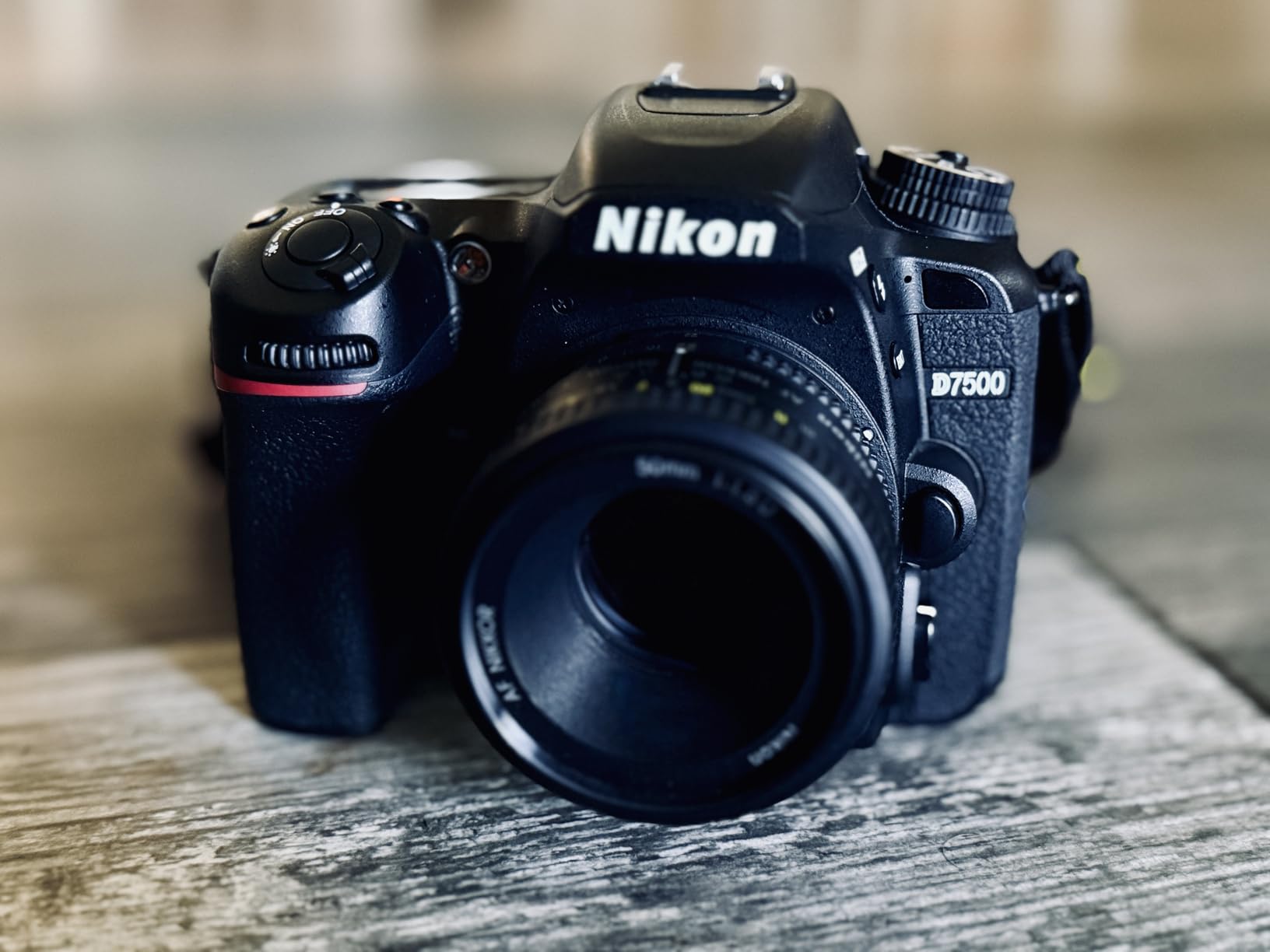
Battery life is where DSLRs still beat mirrorless bodies. The D7500 easily lasts an entire night of shooting on one charge, even in cold weather. This is a real advantage when you are miles from your car in the backcountry and cannot recharge. The tilting touchscreen is also useful for low-angle compositions when your tripod is set up close to the ground.
The single card slot is the main drawback for serious work. If you are shooting a once-in-a-lifetime Milky Way alignment, having no backup is a risk. The DX crop factor also limits your wide-angle options compared to full-frame, though Nikon makes excellent wide DX lenses.
Nikon F-Mount Lenses for Wide-Field Astrophotography
The Nikon F-mount has decades of lens options. For Milky Way work on the D7500, the Tokina 11-16mm f/2.8 AT-X Pro DX is a legendary astrophotography lens. The Sigma 18-35mm f/1.8 DC HSM Art is another outstanding option that gives you a fast aperture across a useful range. For a prime, the Rokinon 10mm f/2.8 CS is purpose-built for crop-sensor astrophotography.
Used F-mount lenses are abundant and inexpensive, making the D7500 one of the most affordable systems to build a complete Milky Way photography kit.
DSLR vs Mirrorless for Night Photography
DSLRs like the D7500 offer longer battery life, an optical viewfinder with zero lag, and a vast used lens market. Mirrorless bodies offer better autofocus, real-time exposure preview, lighter weight, and no mirror-slap vibration. For Milky Way photography specifically, the real-time exposure preview of mirrorless cameras is genuinely useful because you can see your exposure settings reflected immediately without taking a test shot.
That said, the D7500 remains a workhorse that produces beautiful files. If you already own Nikon glass, there is no reason to switch systems.
6. Canon EOS R50 – Best Budget Mirrorless for Night Sky Beginners
Canon EOS R50 Mirrorless Camera RF-S18-45mm F4.5-6.3 is STM Lens Kit, 24.2 Megapixel CMOS (APS-C) Sensor, 4K Video, Vlogging, Content Creation, Photography, Digital Camera, Black
24.2MP APS-C CMOS
DIGIC X
Dual Pixel AF II
6K Oversampled 4K
12fps Continuous
Pros
- Most affordable entry into the Canon RF ecosystem
- 6K oversampled 4K video for hybrid shooters
- Dual Pixel CMOS AF II with 651 AF zones
- Vari-angle touchscreen for flexible composition
- Lightweight at just 1 pound
Cons
- Limited RF-S lens selection currently
- No in-body image stabilization
- Crop mode for 4K recording
The Canon EOS R50 is the cheapest legitimate entry into Milky Way photography on this list. At well under a thousand dollars with a kit lens, it removes the biggest barrier to entry for aspiring astrophotographers. The 24.2MP APS-C sensor produces solid results at ISO 3200, and the DIGIC X processor handles noise respectably for the price point.
Forum users on r/AskPhotography frequently ask whether a cheap camera can capture the Milky Way. The R50 is my answer. No, it will not match a full-frame Sony a7 III at ISO 6400. But it will capture the galactic core with the right lens and proper technique, and it gives you room to grow within the Canon RF system as your skills improve.
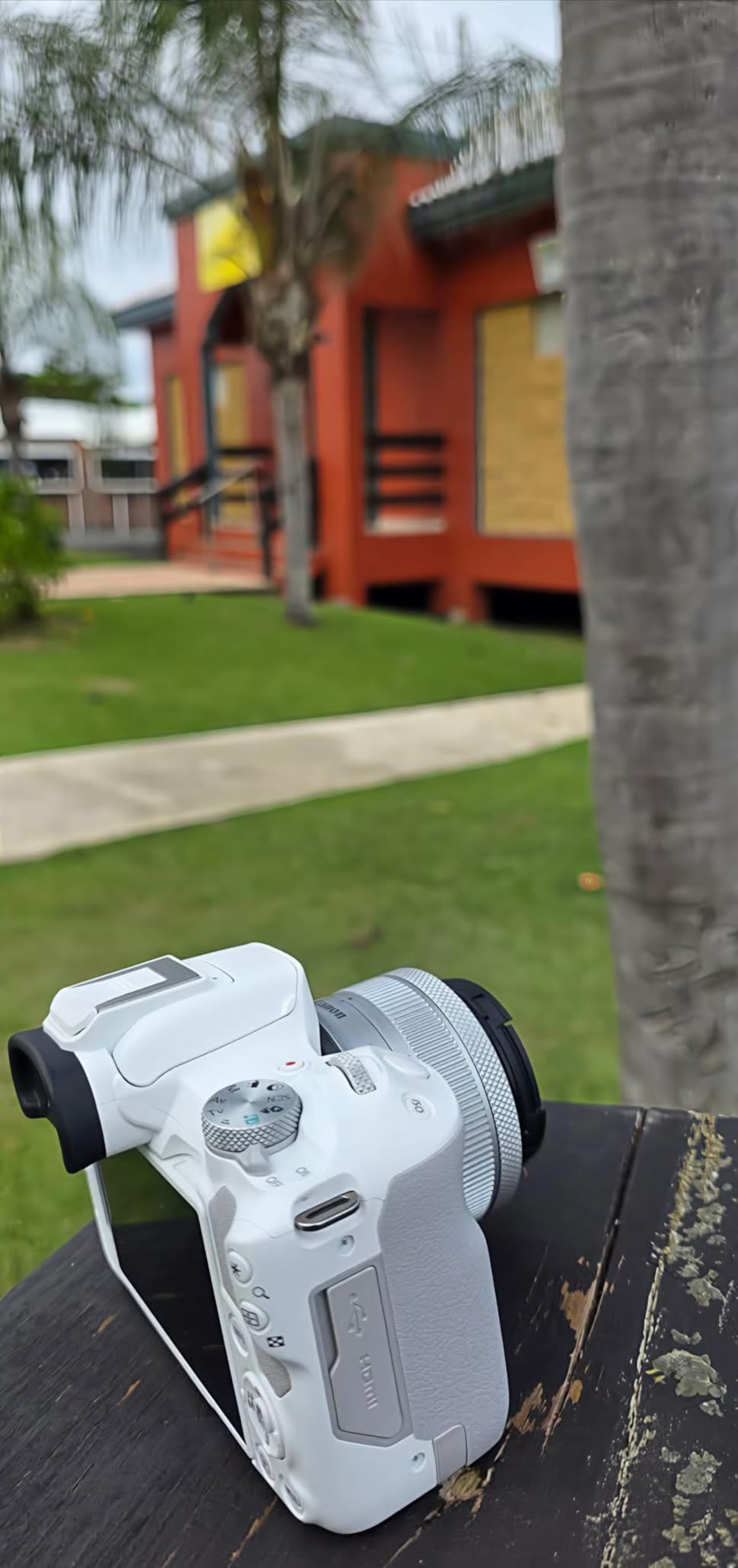
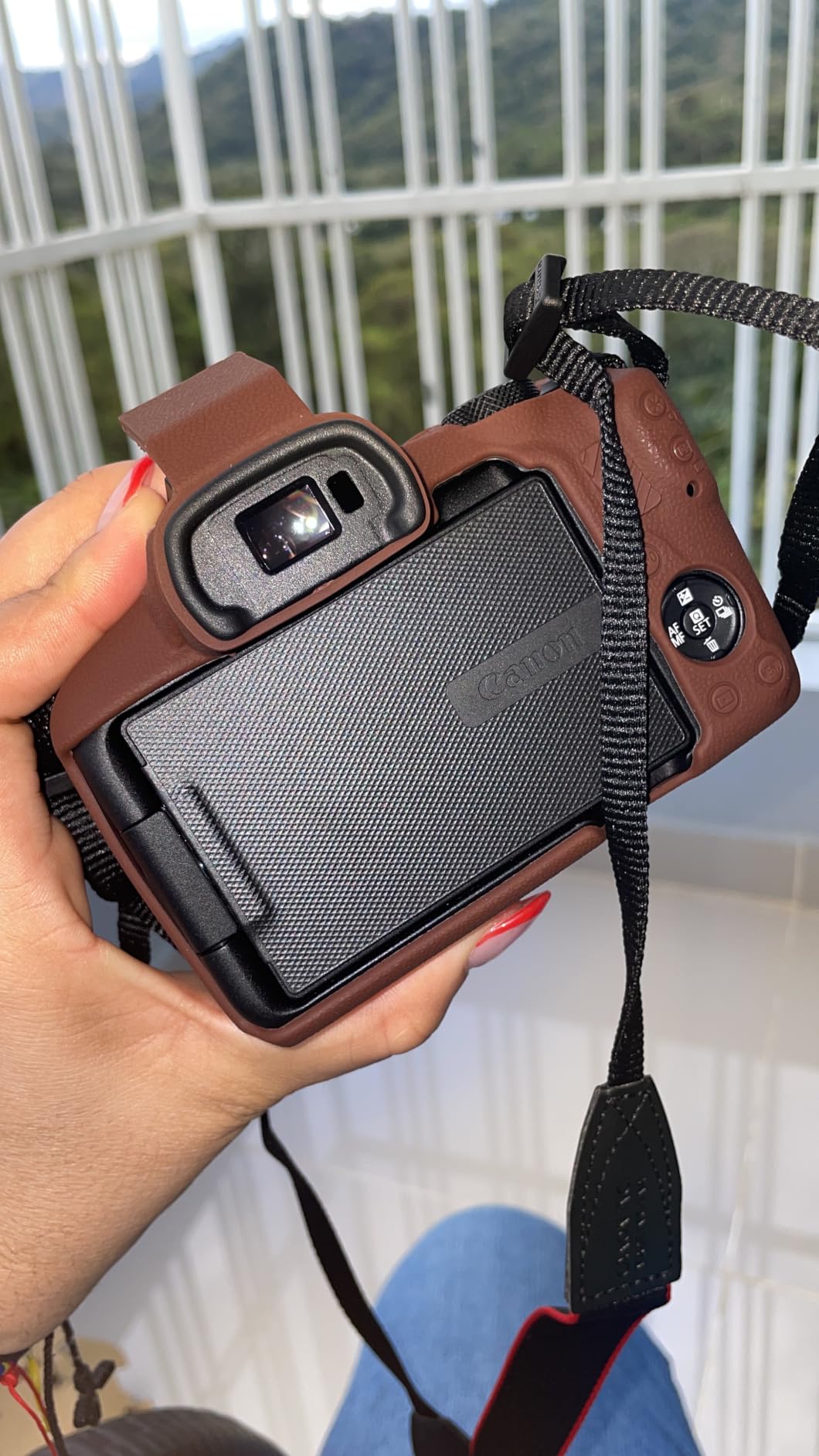
The Dual Pixel CMOS AF II system with 651 AF zones is remarkable for a camera at this price. It focuses quickly and accurately even in dim conditions. The vari-angle touchscreen flips out to the side and rotates fully, which is perfect for composing shots when your tripod is set low to the ground for foreground-included compositions.
The main limitation is the RF-S lens ecosystem. Canon has been slow to release crop-sensor RF lenses, so your wide-angle options are currently limited. You can use full-frame RF lenses with the R50, but they are larger and more expensive. Third-party options are starting to appear, which will help.
Getting Started With Milky Way Photography on the R50
The R50 ships with the RF-S 18-45mm f/4.5-6.3 lens in the kit. This lens is too slow for serious Milky Way work at f/6.3 on the long end. I recommend budgeting for the Canon RF 16mm f/2.8 STM, which is a fast, sharp, and affordable prime that transforms this camera into a capable astrophotography tool.
Set the camera to Manual mode, ISO 3200, f/2.8, and a 15-second exposure on a sturdy tripod. Use the touchscreen to magnify the live view and focus on a bright star manually. Shoot in RAW and process in Lightroom or DxO PureRAW.
Can the R50 Replace a More Expensive Camera for Casual Astro Work
For most hobbyists, yes. If your goal is to capture beautiful Milky Way photos for social media, small prints, or personal satisfaction, the R50 is more than capable. The image quality gap between this and a $2000 full-frame body becomes irrelevant at web resolution and small print sizes.
The R50 becomes limiting if you want to print large, shoot in heavy light pollution, or capture deep-sky objects. For everything else, it is a fantastic value.
7. Sony Alpha A6100 – Best Compact APS-C for Travel Astrophotography
Sony Alpha A6100 Mirrorless Camera, Black
24.2MP APS-C Exmor
0.02s AF
425 AF Points
ISO to 51200
Real-Time Eye AF
Pros
- Worlds fastest AF at 0.02 second acquisition
- Real-time AF tracking and Eye AF for humans and animals
- Extremely compact and lightweight body
- 84 percent sensor coverage with AF points
- Excellent value for the feature set
Cons
- No in-body image stabilization
- Limited to 1/4000 mechanical shutter speed
- 4K video recording has rolling shutter limitations
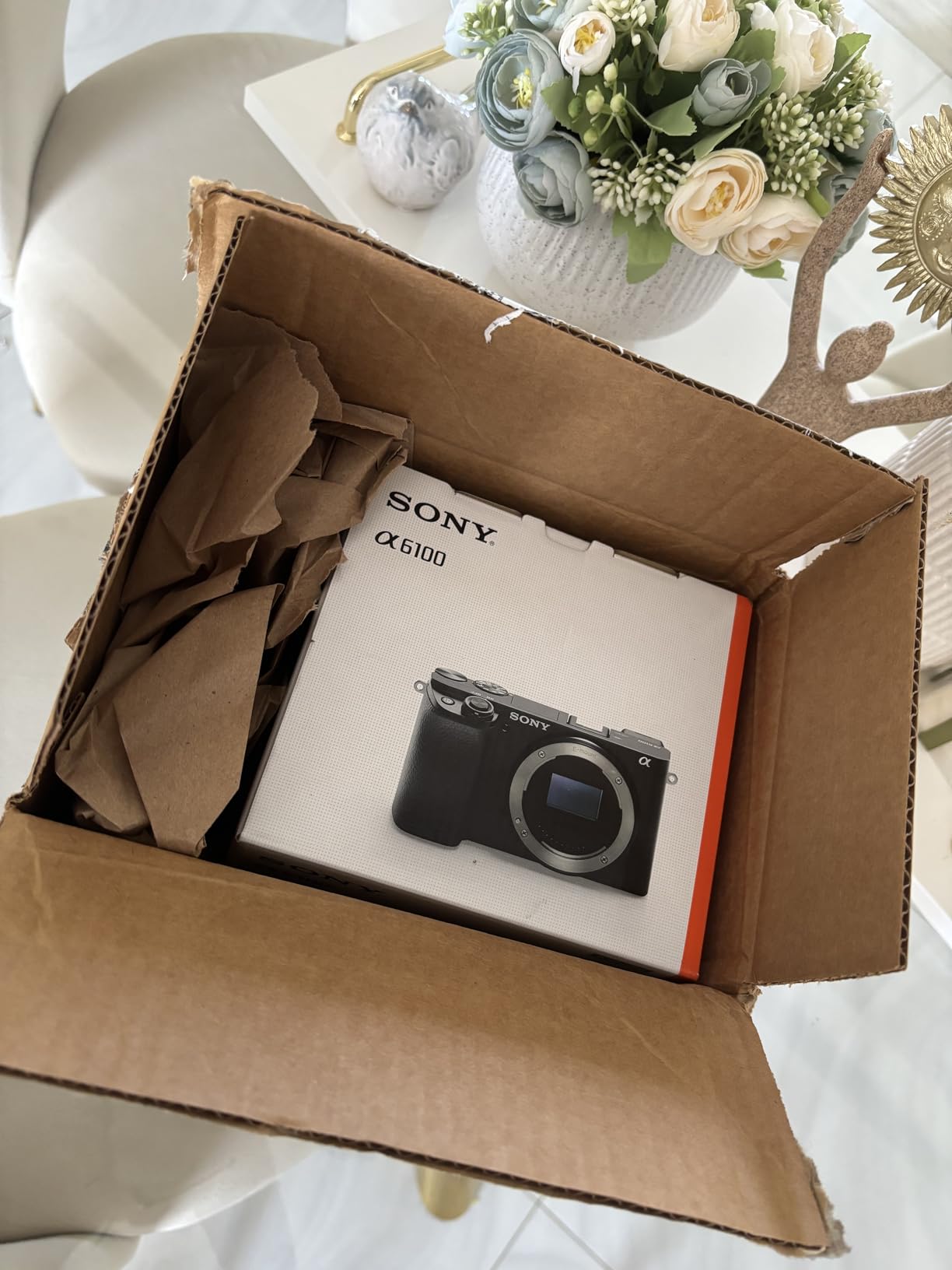
The Sony A6100 is the lighter, slightly more affordable sibling of the a6400. It shares the same 24.2MP APS-C Exmor sensor and the same blazing-fast 0.02-second autofocus system. For backpackers and hikers who want to capture the Milky Way from remote locations without carrying a heavy kit, the A6100 is a fantastic choice.
I have taken this camera on multi-day backpacking trips where every ounce matters. At just over a pound, it disappears into your pack. Pair it with the Sigma 16mm f/1.4 DC DN and you have a complete Milky Way photography kit that weighs less than three pounds total.
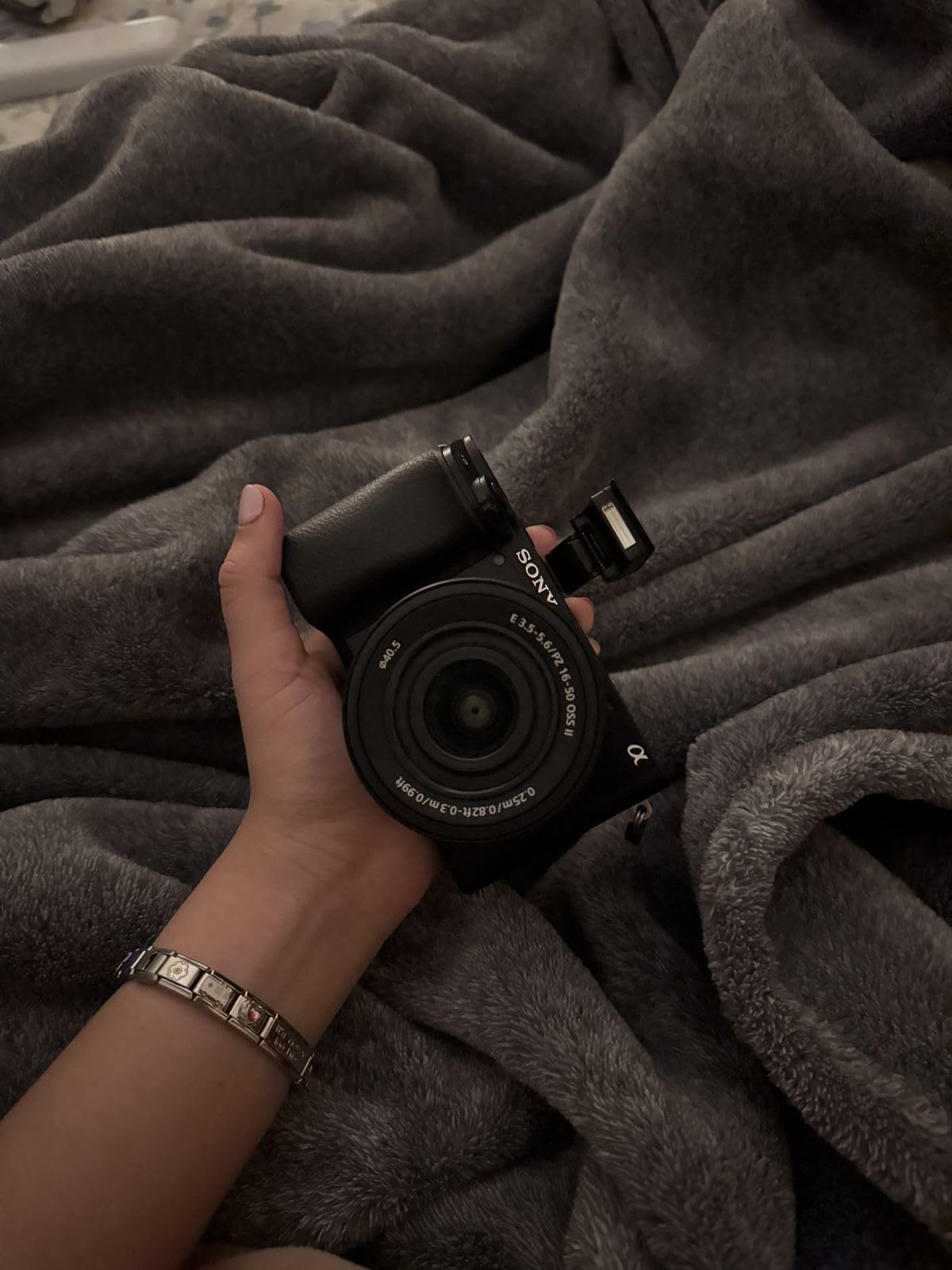
The ISO range extends to 51,200, though I recommend staying at ISO 3200 or below for clean Milky Way files. The real-time Eye AF and tracking features are less relevant for night sky photography but useful if you want to shoot yourself under the stars for scale and composition.
The lack of in-body image stabilization is shared with the a6400. For tripod-mounted night work this is not an issue, but it limits the camera for handheld foreground shots. The 1/4000 mechanical shutter speed is also a limitation if you shoot in bright conditions during the day, though the electronic shutter goes faster.
Backpacking and Travel Considerations for the A6100
The A6100 is small enough to fit in a large jacket pocket with a pancake lens attached. This makes it the ideal camera for spontaneous Milky Way shots when you stumble onto a dark-sky location during a trip. The built-in Wi-Fi lets you transfer images to your phone immediately for quick social sharing from the field.
Battery life is modest at around 420 shots per charge. For a night of Milky Way shooting, carry at least two spare batteries. Cold weather reduces this further, so insulate your spares in an inner pocket.
A6100 vs A6400: Which Should You Buy for Milky Way Work
The core imaging performance is nearly identical. The a6400 adds weather sealing, a slightly better EVF, and S-Log picture profiles for video. For pure stills astrophotography, the A6100 saves you money without sacrificing image quality. If you shoot in dusty or wet conditions regularly, the a6400 weather sealing is worth the premium.
Both cameras use the same E-mount, so your lens investment carries over if you upgrade later.
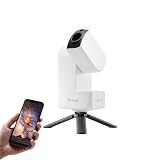
8. ZWO Seestar S30 Pro – Best Smart Telescope for One-Tap Milky Way Imaging
ZWO Seestar S30 Pro Smart Telescope, App-Controlled Astrophotography
4K Dual-Camera (IMX585+IMX586)
Auto GoTo Tracking
One-Tap 8K Imaging
AI Noise Reduction
Built-in Light Pollution Filter
Pros
- One-tap Milky Way and star trail imaging requires zero technical knowledge
- Auto GoTo targeting finds and tracks celestial objects automatically
- Built-in light pollution filter for suburban shooting
- AI scene recognition and noise reduction produce polished results immediately
- Anti-dew protection for all-night sessions
- 128GB built-in storage
Cons
- Not Prime eligible with longer shipping times
- Limited to smartphone or tablet control only
- 30mm objective lens limits light gathering for faint objects
- Battery powered and requires recharging for extended sessions
The ZWO Seestar S30 Pro represents a completely different approach to Milky Way photography. Instead of a traditional camera body with interchangeable lenses, it is an all-in-one smart telescope that automates the entire process. You tap a button in the app, and it finds, focuses, tracks, stacks, and processes the image for you.
This is the camera I recommend to absolute beginners who want stunning Milky Way results without learning about ISO, shutter speed, aperture, and post-processing. The S30 Pro handles everything. The 4K dual-camera system uses the IMX585 for deep-sky telephoto work and the IMX586 for wide-angle Milky Way arches.
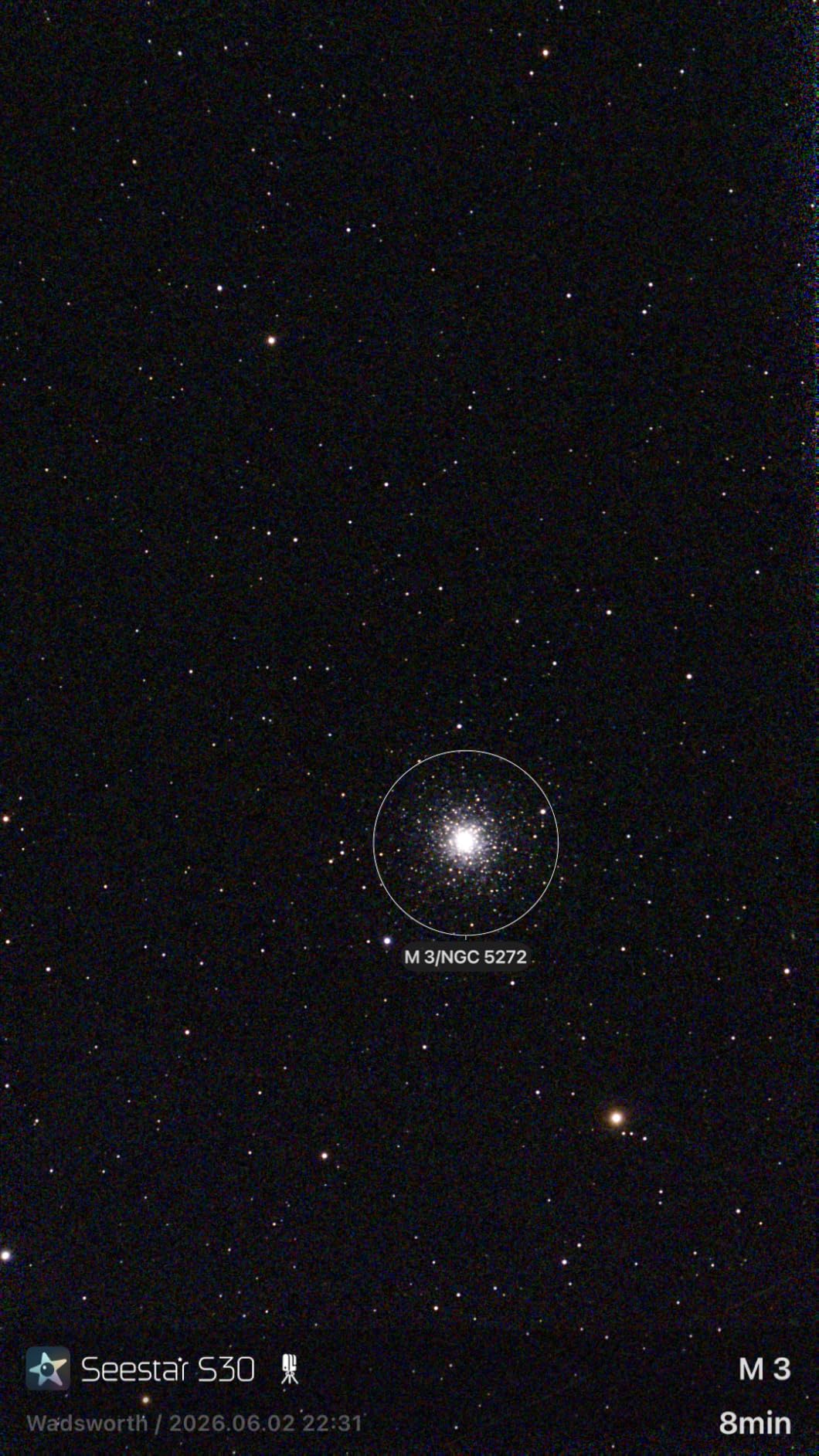
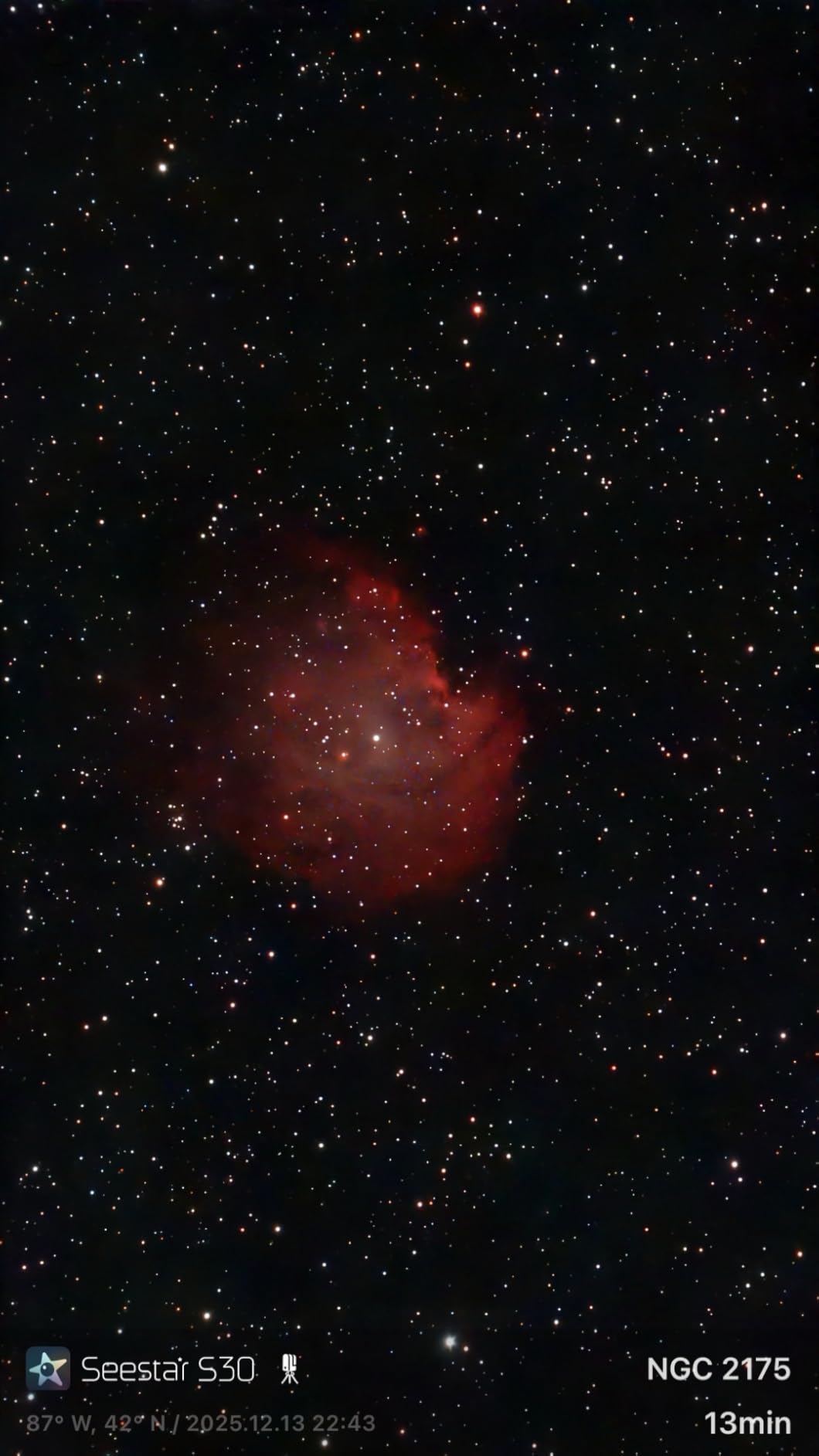
The one-tap 8K Milky Way and star trail imaging mode is genuinely impressive. The device shoots a continuous series of short exposures, stacks them internally, and applies AI noise reduction to produce a clean, detailed final image. For someone who has never shot the night sky before, the results can be jaw-dropping.
The built-in light pollution filter is a game-changer for suburban astrophotographers. If you cannot travel to a dark-sky location, the S30 Pro can still produce usable results from your backyard. The anti-dew protection means you can leave it running all night without condensation ruining your session.
Who Should Buy the Seestar S30 Pro Instead of a Traditional Camera
The S30 Pro is ideal for people who want beautiful Milky Way images without becoming photography hobbyists. If you have no interest in learning manual camera settings, lens selection, and post-processing software, this device gives you professional-looking results with minimal effort. It is also excellent for educators, families, and casual observers who want to share the night sky experience.
If you want creative control over your compositions, the ability to use different lenses, or the option to shoot other types of photography during the day, a traditional camera is the better choice. The S30 Pro is a specialized tool that does one thing extremely well.
Limitations of the Smart Telescope Approach
The 30mm objective lens cannot gather as much light as a large camera lens. This means faint details like the dark rifts in the Milky Way and faint emission nebulae are harder to capture. The app-only control means you need a charged phone or tablet, and the battery-powered design limits session length.
Despite these limitations, the convenience factor is enormous. For the right user, the S30 Pro removes every barrier to entry that keeps people from trying astrophotography.
What to Look for in a Camera for Milky Way Photography?
Choosing the right camera for Milky Way photography comes down to a few key factors that directly impact your image quality in extreme low-light conditions. Here is what matters most based on my experience and the consensus from astrophotography communities.
Sensor Size: Full-Frame vs APS-C
Full-frame sensors gather more total light than APS-C sensors, which means cleaner files at high ISO and better dynamic range. For Milky Way photography, this translates to less noise and more recoverable detail in the shadows. However, modern APS-C sensors like those in the Sony a6400 and Canon R50 produce excellent results when paired with fast lenses. Full-frame is better, but APS-C is fully capable.
High ISO Performance
Milky Way photography typically requires ISO settings between 3200 and 6400. A camera that produces clean, usable files at these settings is essential. Look for cameras with back-illuminated (BSI) sensors, which have better high-ISO performance than older front-illuminated designs. The Sony a7 III and Canon R6 Mark II both use BSI sensors and excel here.
Dynamic Range
Dynamic range determines how much detail you can recover from highlights and shadows simultaneously. The galactic core is bright and the surrounding sky is dark, so you need a sensor with wide dynamic range to capture both in a single exposure. The Sony a7 III with its 15-stop dynamic range is the class leader in this price range.
Lens Ecosystem and Maximum Aperture
Your camera body is only half the equation. You need access to fast, wide lenses with maximum apertures of f/2.8 or wider. The Sony E-mount has the largest selection of full-frame mirrorless lenses, followed by Canon RF and Nikon Z. Consider the cost and availability of suitable astrophotography lenses when choosing a camera system.
Weather Sealing and Build Quality
Milky Way photography happens at night, often in cold and damp conditions. Look for cameras with weather sealing that can survive dew, light rain, and temperature swings. The Canon R6 Mark II and Sony a7 III both have excellent weather resistance. If you shoot in harsh conditions regularly, this matters more than a few extra megapixels.
Battery Life for Long Sessions
A typical Milky Way shooting session lasts 2 to 4 hours. Mirrorless cameras drain batteries faster than DSLRs, especially in cold weather. Look for cameras rated for at least 500 shots per charge, and always carry spare batteries. DSLRs like the Nikon D7500 have a significant advantage here.
In-Body Image Stabilization
IBIS does not help during tripod-mounted long exposures, but it assists with handheld foreground shots for compositing and daytime landscape photography. If you shoot hybrid content or like to scout compositions handheld before setting up your tripod, IBIS is worth having. The Canon R6 Mark II leads with 8 stops of stabilization.
Frequently Asked Questions About Milky Way Cameras
What is the best camera for Milky Way photography?
The Sony Alpha a7 III is the best overall camera for Milky Way photography thanks to its 24.2MP full-frame BSI sensor, 15-stop dynamic range, and excellent high-ISO performance up to ISO 6400. It balances price, performance, and lens ecosystem better than any other option.
What cameras are best for beginners for Milky Way photography?
The Sony Alpha a6400 and Canon EOS R50 are the best beginner cameras for Milky Way photography. Both offer APS-C sensors under $1000, excellent autofocus, and access to growing lens ecosystems. The R50 is the most affordable entry point, while the a6400 offers slightly better build quality.
What is the best affordable camera for night sky photography?
The Canon EOS R50 at under $800 is the most affordable camera capable of serious Milky Way photography. Pair it with the Canon RF 16mm f/2.8 STM lens for a complete budget astrophotography kit. The Sony A6100 is another excellent budget option with world-class autofocus.
Can you photograph the Milky Way with a smartphone?
Modern smartphones with night mode can capture basic Milky Way images, but the results are significantly inferior to any dedicated camera. A smartphone sensor is too small to gather enough light for clean high-ISO performance. For serious Milky Way photography, even the cheapest camera on this list will dramatically outperform any phone.
Do I need a full-frame camera for Milky Way photography?
No, a full-frame camera is not required for Milky Way photography. APS-C cameras like the Sony a6400 and Canon R50 produce excellent results when paired with fast lenses. Full-frame sensors offer better high-ISO performance and wider dynamic range, but modern crop sensors are fully capable of capturing beautiful Milky Way images.
Final Verdict: Which Camera Should You Buy for Milky Way Photography?
The Sony Alpha a7 III remains the best camera for photographing the Milky Way in 2026 for most people. Its combination of full-frame sensor quality, 15-stop dynamic range, and the massive E-mount lens ecosystem gives you everything you need to grow as an astrophotographer. If budget allows and you want maximum resolution, the Sony a7 IV is the premium upgrade that lets you crop deep into the galactic core.
For beginners and budget-conscious shooters, the Canon EOS R50 and Sony a6400 prove you do not need to spend thousands to capture stunning night-sky images. Pair either with a fast wide lens, a sturdy tripod, and a dark-sky location, and you will be capturing the Milky Way on your very first night out.
The most important thing is to get out there and shoot. The best camera for Milky Way photography is the one you actually have with you under a dark sky.