
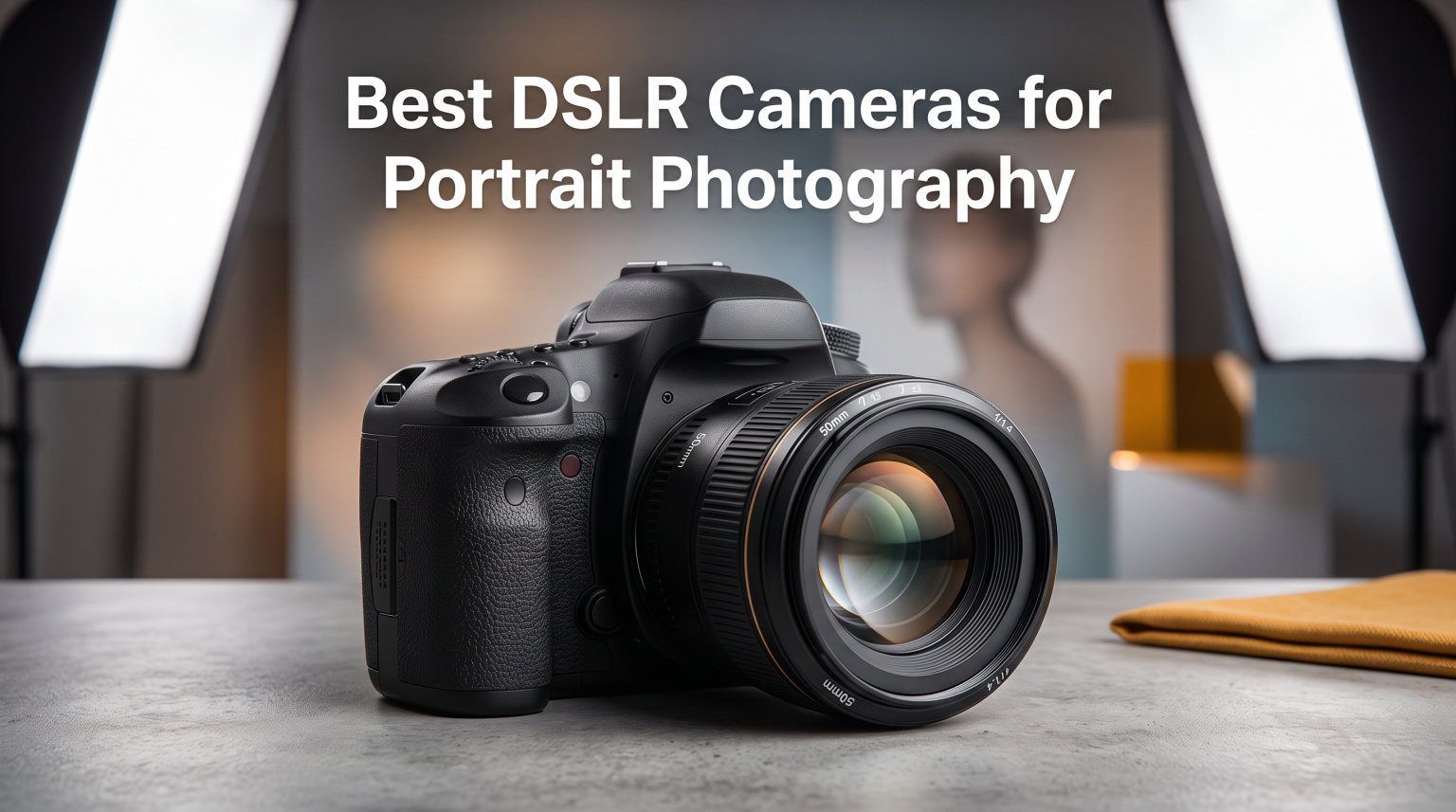
DSLR cameras for portrait photography remain one of the smartest investments a photographer can make in 2026. Even with the mirrorless wave dominating headlines, DSLRs continue to deliver the optical viewfinder experience, the battery life, and the lens ecosystems that portrait photographers have relied on for decades. I have spent years shooting portraits on both Canon and Nikon DSLR bodies, and the results still stand up against any modern mirrorless system when paired with the right glass.
What makes a great portrait DSLR comes down to a few core things. You need a sensor large enough to produce that creamy background separation, an autofocus system fast enough to lock onto eyes, and dynamic range wide enough to recover details from shadows and highlights during editing. Full-frame sensors excel here, but some APS-C options punch well above their weight class.
In this guide, I cover eight of the best DSLR cameras for portrait photography, ranging from professional flagship bodies to budget-friendly kits for beginners. Whether you shoot weddings, studio portraits, or family sessions, there is a DSLR on this list that fits your workflow and your budget.
Table of Contents
Top 3 DSLR Picks for Portrait Photography (September 2026)
Best DSLR Cameras for Portrait Photography in 2026
| Product | Specifications | Action |
|---|---|---|
 Nikon D850 Nikon D850 |
|
Check Latest Price |
 Canon EOS 5D Mark IV Canon EOS 5D Mark IV |
|
Check Latest Price |
 Nikon D780 Nikon D780 |
|
Check Latest Price |
 Canon EOS 6D Mark II Canon EOS 6D Mark II |
|
Check Latest Price |
 Nikon D7500 Nikon D7500 |
|
Check Latest Price |
 Nikon D750 Nikon D750 |
|
Check Latest Price |
 Nikon D7200 Nikon D7200 |
|
Check Latest Price |
 Canon EOS Rebel T7 Canon EOS Rebel T7 |
|
Check Latest Price |
1. Nikon D850 – 45.7MP Resolution King
Nikon D850 FX-Format Digital SLR Camera Body
45.7MP Full-Frame BSI CMOS
153-Point AF System
9 FPS Continuous
Dual Card Slots
Pros
- Outstanding 45.7MP resolution for flawless detail
- No optical low-pass filter for maximum sharpness
- Excellent dynamic range for editing flexibility
- Dual card slots for professional redundancy
Cons
- Expensive professional camera body
- Large file sizes require significant storage
I have shot more portrait sessions on the Nikon D850 than any other camera on this list, and it never fails to impress. The 45.7-megapixel backside-illuminated sensor captures an extraordinary level of detail in skin textures, hair strands, and fabric patterns that you simply cannot get from lower-resolution sensors. When clients order large prints, the D850 delivers files that hold up at any size.
The 153-point autofocus system is one of the most capable AF arrays ever put in a DSLR. For portrait work, the wide coverage means your subject does not have to be dead-center for the camera to lock focus. Eye detection through live view works well for static subjects, though it is not as seamless as modern mirrorless systems.
Dynamic range on the D850 is class-leading. I regularly shoot portraits in challenging backlight situations, and the D850 lets me recover shadow details from the subject’s face while keeping highlight information in the sky. The files are incredibly malleable in Lightroom, giving portrait photographers enormous creative freedom during post-processing.
The tilting touchscreen is handy for shooting from waist level or slightly above eye level during portrait sessions. Dual card slots (one SD UHS-II and one CFexpress/XQD) provide the peace of mind that working professionals need when shooting weddings or paid portrait gigs.
For Whom It Is Good
The D850 is the ideal camera for professional portrait photographers, wedding photographers, and serious enthusiasts who want maximum resolution and image quality. If you shoot studio portraits with strobes, outdoor environmental portraits, or high-end headshots where detail matters, this camera delivers results that compete with medium format systems at a fraction of the cost.
It is also the right choice for photographers who print their work large. The 45.7MP files produce stunning prints at 24×36 inches and beyond without any upscaling artifacts.
For Whom It Is Bad
The D850 is overkill if you primarily share images on social media or deliver web-resolution galleries. The massive file sizes eat through storage fast, and you will spend more time managing files than you might expect. Beginners and hobbyists on a budget will find the price point hard to justify.
Photographers who primarily shoot fast-moving subjects like sports or wildlife may also find the 9 FPS burst rate limiting, though for portrait work this is rarely an issue.
2. Canon EOS 5D Mark IV – The Versatile Workhorse
Canon EOS 5D Mark IV DSLR Camera (Body Only)
30.4MP Full-Frame CMOS
61-Point AF with 41 Cross-Type
4K Video
7 FPS
Pros
- Excellent Canon color science for skin tones
- Dual Pixel CMOS AF for smooth live view focus
- 4K video capability
- Massive EF lens ecosystem
Cons
- Complex menu system for beginners
- No vari-angle screen
The Canon EOS 5D Mark IV has been my go-to recommendation for portrait photographers who want professional results without stepping into flagship territory. Canon color science is legendary among portrait shooters, and the 5D Mark IV renders skin tones with a warmth and accuracy that requires minimal post-processing. Straight out of camera, JPEGs look natural and flattering.
The 61-point autofocus system with 41 cross-type points provides excellent subject tracking across a wide portion of the frame. In my experience, the AF locks on quickly and accurately even in dim reception halls or golden hour conditions where light is fading fast.
At 30.4 megapixels, the resolution hits a sweet spot for portrait photographers. You get enough detail for large prints and aggressive cropping, but the file sizes remain manageable. The 4K video capability is a bonus for portrait photographers who also shoot behind-the-scenes content or client promotional videos.
Dual Pixel CMOS AF makes live view focusing smooth and responsive, which is useful for portrait photographers who shoot tethered to a computer in studio. The 3.2-inch touchscreen lets you tap to focus, and the optical viewfinder provides the bright, lag-free viewing experience that DSLR shooters love.
For Whom It Is Good
The 5D Mark IV is perfect for wedding and event portrait photographers who need one camera body that can handle every situation. The Canon EF lens ecosystem is one of the largest and most affordable in the industry, meaning you can build a portrait lens collection (85mm f/1.8, 70-200mm f/2.8, 50mm f/1.4) without breaking the bank.
It is also an excellent choice for photographers transitioning from crop-sensor Canon bodies who already own EF or EF-S lenses. Your existing glass will work natively with no adapters needed.
For Whom It Is Bad
Photographers who need a vari-angle articulating screen for overhead or ground-level shooting will be disappointed. The fixed screen limits creative angles compared to cameras like the Canon 6D Mark II or Nikon D780. The menu system is also deep and complex, which can frustrate users coming from simpler cameras.
If you need cutting-edge features like in-body image stabilization or 8K video, the 5D Mark IV will not deliver. It is a stills-first camera that excels at photography but offers only basic modern video features.
3. Nikon D780 – The Modern Hybrid DSLR
Nikon D780 Body
24.5MP Full-Frame CMOS
Hybrid AF System
4K UHD Video
Dual SD Slots
Pros
- Hybrid AF combines DSLR and mirrorless tech
- Excellent low-light performance
- Lightweight for full-frame
- Tilting touchscreen
Cons
- Limited live view AF point selection
- No built-in flash
The Nikon D780 is the most modern DSLR on this list, and it shows. Nikon took the best elements from their mirrorless Z6 and packed them into a traditional DSLR body. The result is a camera that gives portrait photographers the optical viewfinder experience they love, combined with on-sensor phase-detect autofocus for live view shooting.
I appreciate the 24.5-megapixel resolution for portrait work. It produces clean, detailed files without overwhelming your storage. The EXPEED 6 processor delivers excellent high-ISO performance, and I have shot usable portrait sessions at ISO 6400 without hesitation.
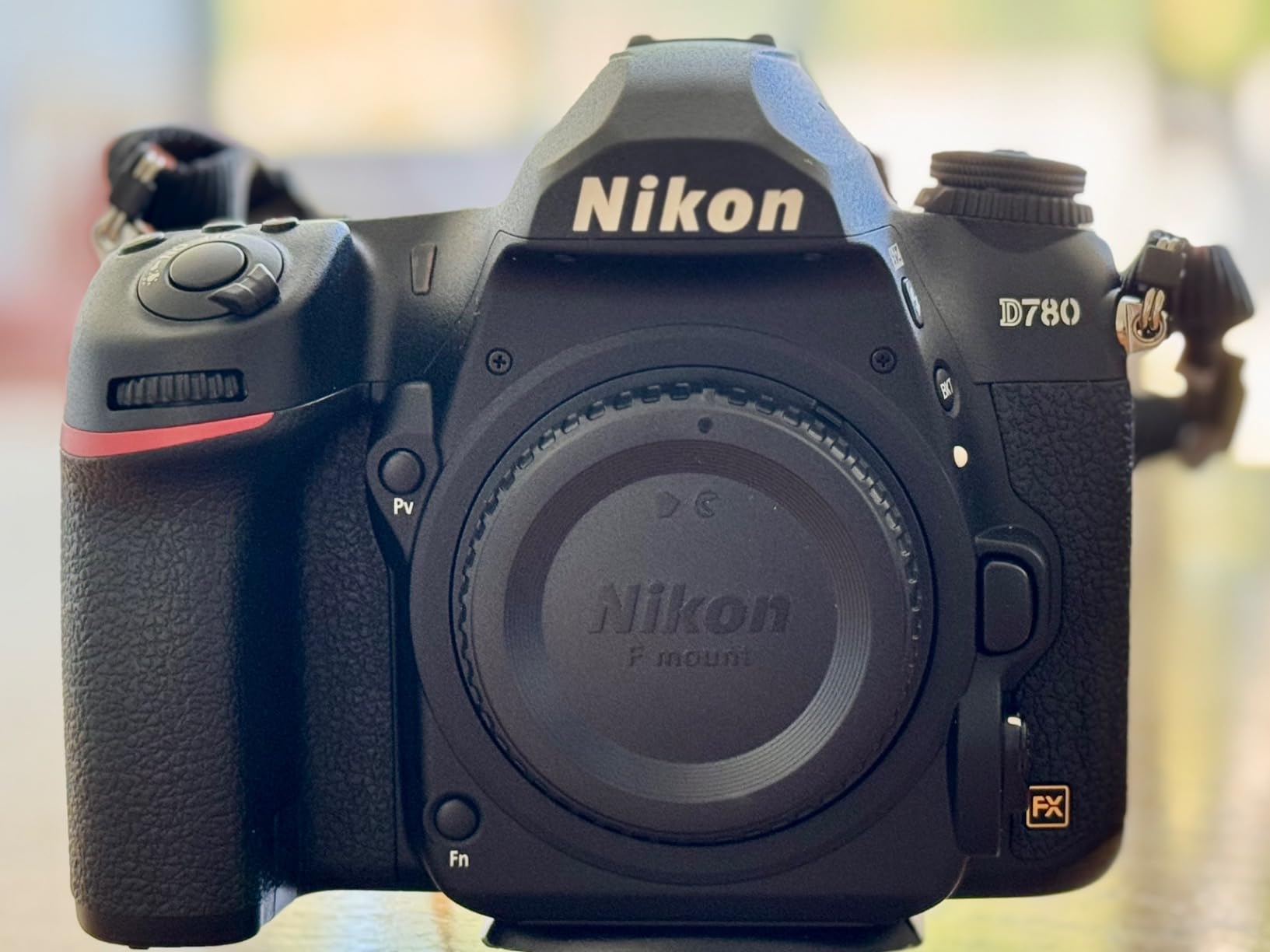
The hybrid autofocus system is the standout feature for portrait photographers. When shooting through the optical viewfinder, the 51-point AF system handles traditional DSLR focusing duties. Switch to live view, and the on-sensor phase-detect system takes over with 273 focus points and eye detection that actually works well for static portrait subjects.
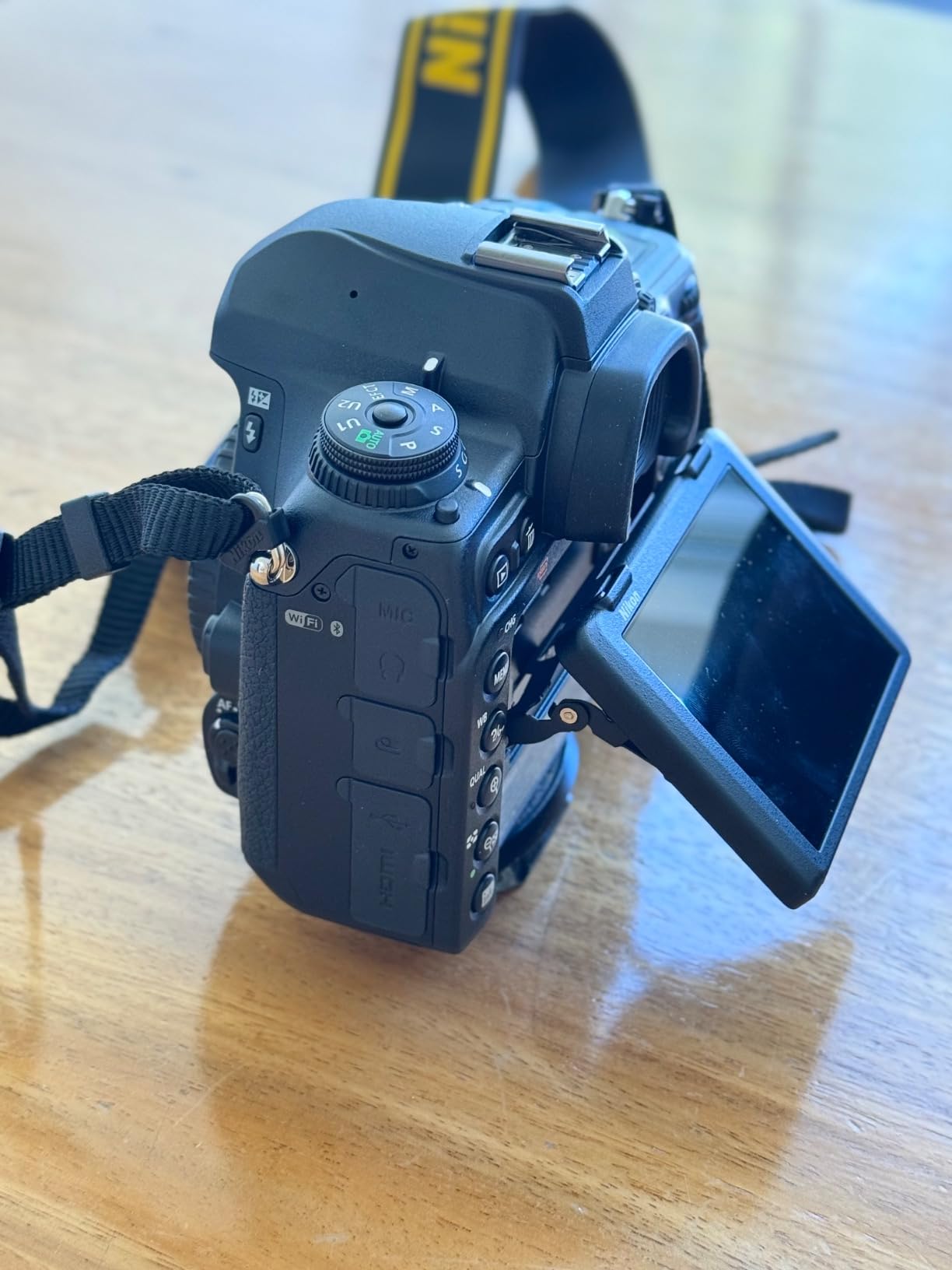
Dual SD card slots are a welcome feature at this price point. The tilting touchscreen makes waist-level shooting easy, and the lightweight body (just 710 grams) reduces fatigue during long portrait sessions or wedding days.
For Whom It Is Good
The D780 is ideal for photographers who want one foot in the DSLR world and one foot in modern technology. If you have an existing collection of Nikon F-mount lenses, the D780 lets you keep using them while gaining live-view autofocus performance that rivals mirrorless cameras.
It is also an excellent choice for portrait photographers who shoot both stills and video. The 4K recording quality and hybrid AF make it a capable hybrid tool for content creators who also shoot portraits professionally.
For Whom It Is Bad
Photographers who need the highest resolution for large prints should look at the D850 instead. At 24.5MP, the D780 is plenty for most portrait work, but it cannot match the cropping flexibility and print size potential of its higher-resolution sibling.
The live view AF point selection is more limited than what you get on Nikon mirrorless cameras. If you primarily shoot in live view mode rather than through the optical viewfinder, a mirrorless camera might serve you better.
4. Canon EOS 6D Mark II – Entry-Level Full-Frame
Canon EOS 6D Mark II Digital SLR Camera Body – Wi-Fi Enabled
26.2MP Full-Frame CMOS
45-Point All Cross-Type AF
Articulating Touchscreen
Built-in Wi-Fi GPS
Pros
- Affordable entry to full-frame portrait photography
- Fully articulating touchscreen for creative angles
- Dual Pixel CMOS AF
- Compact and lightweight body
Cons
- No 4K video recording
- Single SD card slot
- 1/4000 max shutter speed
The Canon EOS 6D Mark II is the camera I recommend most often to portrait photographers making their first jump to full-frame. At this price point, getting a full-frame sensor with Canon color science and Dual Pixel AF is remarkable value. The 26.2-megapixel sensor produces clean, detailed portraits with that signature Canon warmth.
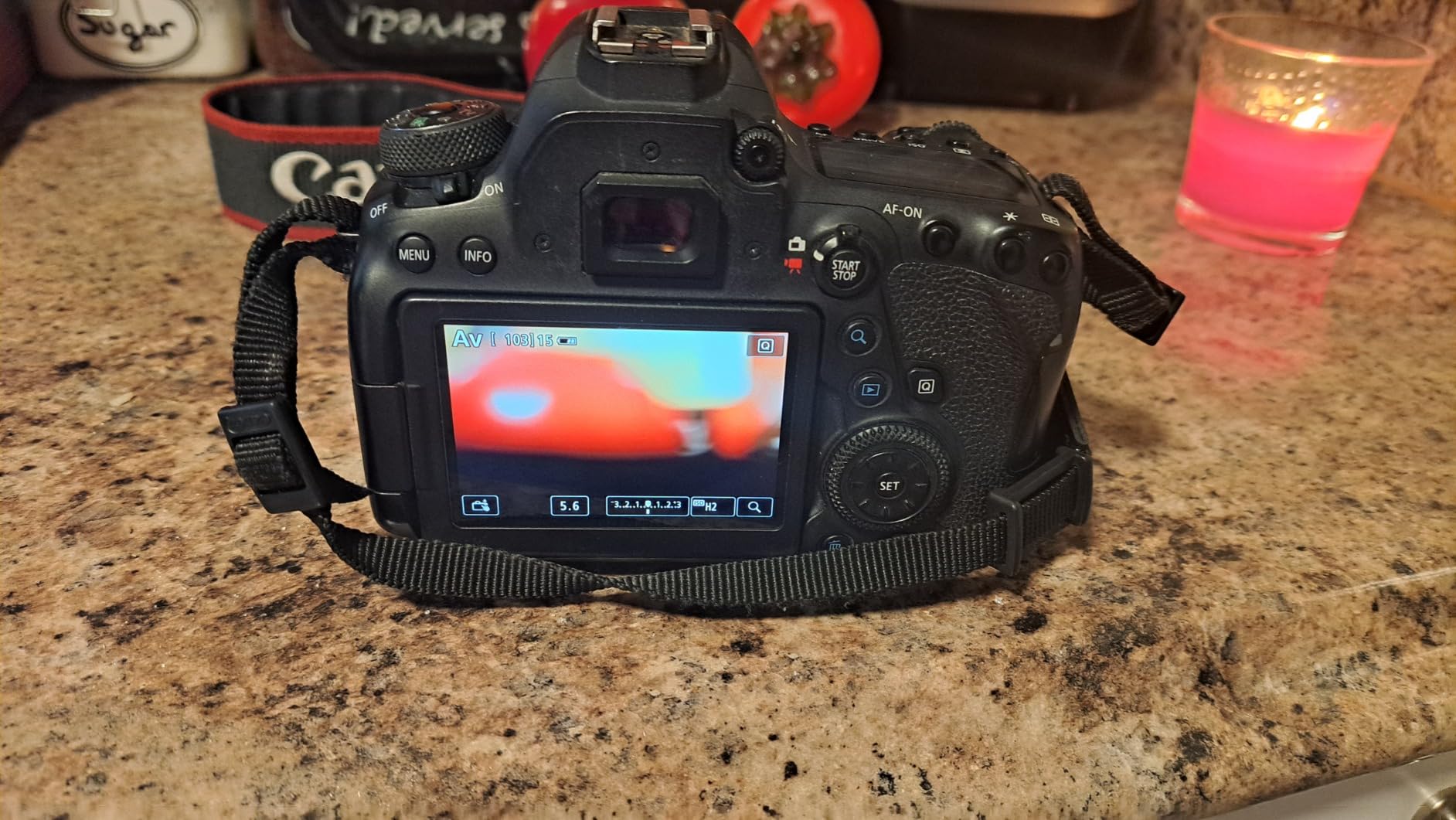
The fully articulating touchscreen is a feature I wish every DSLR had. For portrait photographers, being able to flip the screen out and compose from any angle opens up creative possibilities that fixed-screen cameras cannot match. I have shot overhead crowd shots at weddings and ground-level children portraits with ease because of this screen.
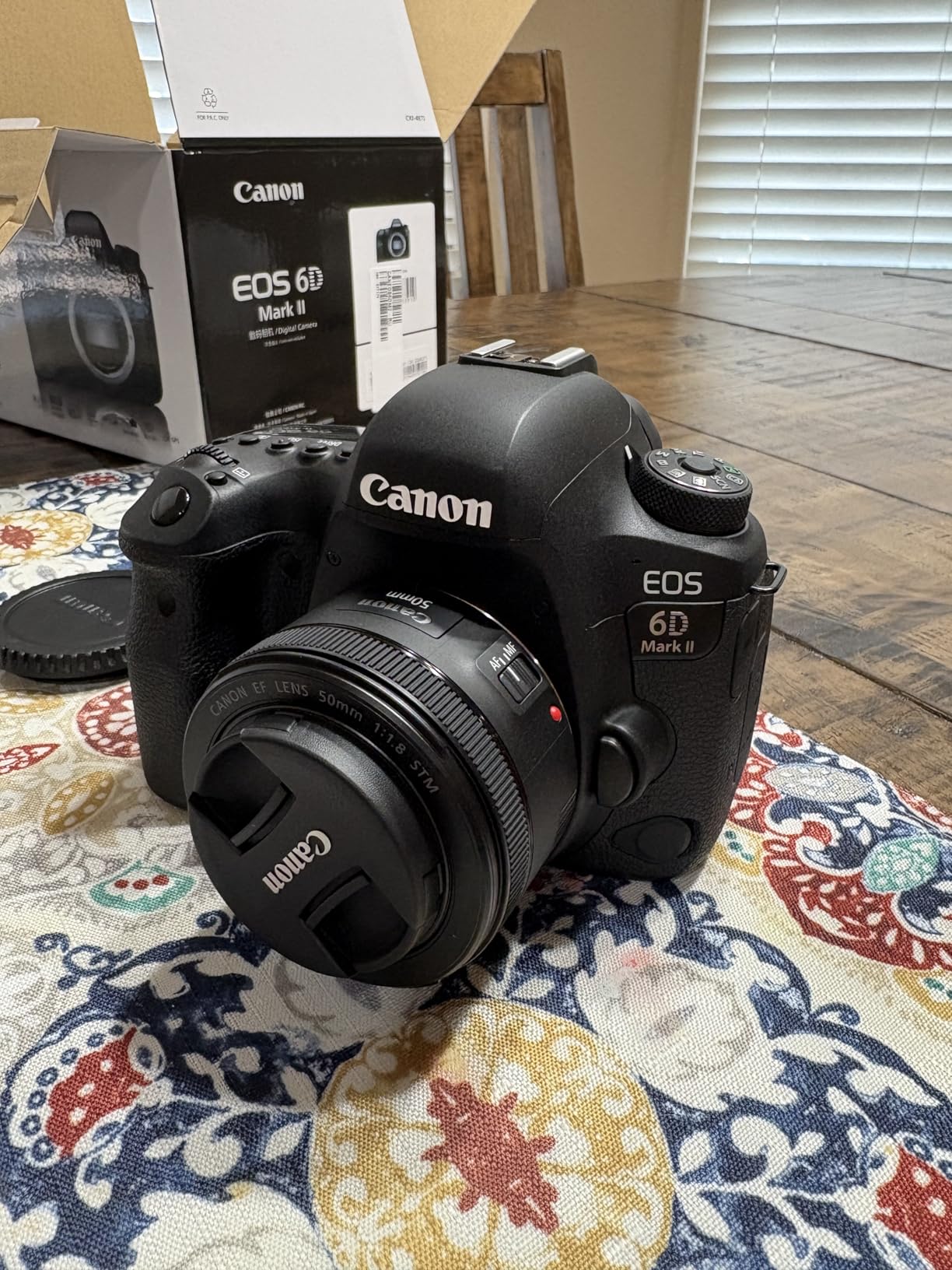
The 45-point all cross-type AF system is a significant upgrade over the original 6D’s 11-point system. Cross-type points are more sensitive and accurate, especially with fast portrait lenses shot wide open at f/1.4 or f/1.8. Focus acquisition is quick and confident in most lighting conditions.
Built-in GPS, Wi-Fi, NFC, and Bluetooth give you plenty of connectivity options. I use the Wi-Fi regularly to transfer preview images to my phone for clients during portrait sessions. The weather-sealed body provides confidence when shooting outdoors in unpredictable conditions.
For Whom It Is Good
The 6D Mark II is perfect for enthusiast portrait photographers upgrading from an APS-C Canon body. Your existing EF-S lenses will mount (in crop mode), and you can gradually invest in full-frame EF lenses as your budget allows. The articulating screen and excellent live view AF make it great for vloggers and content creators who also shoot portraits.
It is also a smart choice for photography students and serious hobbyists who want full-frame quality without the professional price tag. The intuitive Canon interface helps newer photographers learn without being overwhelmed.
For Whom It Is Bad
The lack of 4K video is a significant omission if you shoot video alongside your portrait work. Full HD is fine for casual clips, but clients increasingly expect 4K quality. The single SD card slot is also a dealbreaker for some professional wedding photographers who require dual card redundancy.
The 1/4000 second maximum shutter speed is slower than professional bodies. This means you may need neutral density filters when shooting wide-open portraits in bright sunlight to avoid overexposure.
5. Nikon D7500 – APS-C Powerhouse with Lens
Nikon D7500 20.9MP DSLR Camera with AF-S DX NIKKOR 18-140mm f/3.5-5.6G ED VR Lens, Black
20.9MP DX-Format CMOS
51-Point AF
4K UHD Video
Includes 18-140mm Lens
Pros
- Excellent image quality rivaling full-frame
- 4K video recording
- Comes with versatile 18-140mm lens
- 8 FPS continuous shooting
- Weather-sealed body
Cons
- Single SD card slot
- APS-C crop factor affects wide-angle portraits
- Learning curve for manual mode
The Nikon D7500 surprised me the first time I shot portraits with it. Despite being an APS-C camera, the 20.9-megapixel sensor produces image quality that rivals some full-frame bodies. The sensor shares DNA with the legendary D500, and it shows in the clean high-ISO performance and rich color rendering.
This kit includes the AF-S DX NIKKOR 18-140mm f/3.5-5.6G ED VR lens, which is a capable walkaround lens for portrait work. On the crop sensor, 140mm gives you an effective focal length of 210mm, which is perfect for tight headshots with beautiful background compression.
The 51-point autofocus system with 15 cross-type sensors handles portrait duties well. I have used it for everything from controlled studio sessions to outdoor natural-light portraits, and the AF tracks subjects reliably. The group area AF mode is particularly useful for environmental portraits where you want a cluster of focus points to lock onto your subject.
At 8 frames per second, the burst rate is fast enough for candid portrait moments at events or family sessions with active children. The 4K video recording adds versatility if you shoot hybrid content for portrait clients.
For Whom It Is Good
The D7500 is ideal for enthusiast portrait photographers and semi-professionals who want a rugged, capable camera without the full-frame price tag. The included 18-140mm lens covers most portrait focal lengths, making this a complete kit right out of the box for photographers on a budget.
It is also a great backup body for professional Nikon shooters who already own F-mount glass. The weather-sealed construction means you can confidently shoot outdoor portrait sessions in challenging conditions.
For Whom It Is Bad
The APS-C crop factor means you lose some of the wide-angle environmental portrait capability that full-frame cameras offer. A 35mm lens becomes a 52mm equivalent, which changes your compositional approach. The single SD card slot is also a concern for professional work where image redundancy matters.
Photographers who want the shallowest possible depth of field for that creamy bokeh look will find the crop sensor limiting compared to full-frame alternatives. The f/5.6 maximum aperture at the long end of the included lens also restricts background blur options.
6. Nikon D750 – The Full-Frame Legend
Nikon D750 FX-Format Digital SLR Camera Body
24.3MP Full-Frame CMOS
51-Point AF
Tilt Vari-Angle LCD
Dual SD Slots
Pros
- Exceptional low-light performance
- Dual SD card slots
- Tilting vari-angle LCD
- Compact and lightweight full-frame body
- -3EV low-light autofocus
Cons
- Older model released in 2014
- 1/4000 max shutter speed
- Focus points clustered toward center
The Nikon D750 may be an older camera, but it remains one of the best values in full-frame portrait photography. I have recommended this camera to countless photographers, and its reputation is well earned. The 24.3-megapixel sensor delivers beautiful image quality with excellent tonal range and color depth.
What sets the D750 apart is its low-light capability. The -3EV autofocus sensitivity means the camera can focus in near-darkness, which is invaluable for wedding reception portraits or moody indoor studio sessions. At ISO 6400 and even 12800, the files remain clean enough for professional delivery.
The tilting vari-angle LCD was ahead of its time when the D750 launched, and it remains useful for portrait photographers today. Being able to tilt the screen for waist-level composition or overhead angles adds creative flexibility that fixed-screen DSLRs lack.
Dual SD card slots provide the redundancy that working portrait photographers need. At just 1.65 pounds, the compact monocoque body design makes the D750 one of the lightest full-frame DSLRs ever made. Long wedding days and extended portrait sessions are noticeably less fatiguing with this camera.
For Whom It Is Good
The D750 is perfect for budget-conscious portrait photographers who want full-frame quality and professional features without paying flagship prices. Wedding photographers, in particular, benefit from the dual card slots, low-light AF, and lightweight body combination. It remains one of the best used-market deals in photography.
It is also excellent for photographers who already own Nikon F-mount lenses and want a capable second body. The familiar Nikon controls and ergonomics make it a natural fit for anyone already in the Nikon ecosystem.
For Whom It Is Bad
The D750 is an older camera, and it shows in some areas. There is no 4K video, no touchscreen functionality, and the menu system reflects Nikon’s older interface design. Photographers who want modern connectivity and touch controls will find the D750 limiting.
The autofocus points are clustered toward the center of the frame, which can make off-center composition more challenging compared to cameras with wider AF point spread. This requires focus-and-recompose technique more often than I would like.
7. Nikon D7200 – The APS-C Classic
Nikon D7200 DX-Format DSLR Body (Black)
24.2MP DX-Format CMOS No OLPF
51-Point AF
Dual SD Slots
Built-in Wi-Fi NFC
Pros
- No OLPF for maximum sharpness
- Dual SD card slots
- Excellent high-ISO performance
- Works with legacy AI-S lenses
- Professional build quality
Cons
- Fixed non-tilting LCD screen
- No 4K video
- No touchscreen functionality
- No built-in flash
The Nikon D7200 is a camera that refuses to die in popularity, and for good reason. The 24.2-megapixel DX-format sensor lacks an optical low-pass filter, which means portraits come out incredibly sharp with fine detail preserved. I have compared D7200 files side by side with higher-resolution cameras, and the sharpness holds up remarkably well.
Dual SD card slots are a feature that most APS-C cameras in this price range do not offer. For portrait photographers shooting paid sessions, having automatic backup to a second card provides confidence that your images are safe. This alone makes the D7200 worth considering over newer entry-level bodies.
The 51-point autofocus system handles portrait work competently. Low-light AF performance down to -3EV means you can focus in dim conditions without hunting. The camera also works beautifully with Nikon’s legacy manual focus AI-S lenses, which is a bonus for portrait photographers who enjoy shooting with vintage glass.
Built-in Wi-Fi and NFC let you transfer images to your phone for quick client previews. The professional build quality with weather sealing gives you confidence shooting outdoor portrait sessions in less-than-ideal conditions.
For Whom It Is Good
The D7200 is ideal for enthusiast portrait photographers who want professional build quality and dual card slots without paying full-frame prices. The no-OLPF sensor produces exceptionally sharp portraits, and the wide lens compatibility (including legacy glass) appeals to photographers who like to experiment with different lens characteristics.
It is also a strong choice for photography students who want a serious camera body that will grow with them. The professional controls and dual card slots teach good workflow habits from the start.
For Whom It Is Bad
The fixed LCD screen is the biggest drawback for portrait photographers. No tilting capability means you are locked into eye-level composition, which limits creative angles. The lack of a touchscreen also makes navigating menus and selecting focus points slower than modern alternatives.
No 4K video and only 1080p recording will disappoint hybrid shooters. If video is part of your portrait business, the D7200 will not meet your needs in 2026 and beyond.
8. Canon EOS Rebel T7 – Best Budget Starter Kit
Canon EOS Rebel T7 DSLR Camera Double Zoom Lens Kit with EF-S 18-55mm and EF 75-300mm Lenses, 24.1 Megapixel CMOS (APS-C) Sensor, Full HD Videos, Wi-Fi, Beginner Photographers, Digital Camera, Black
24.1MP APS-C CMOS
Dual Lens Kit (18-55mm and 75-300mm)
9-Point AF
Wi-Fi NFC
Pros
- Excellent value with two lenses included
- Great for learning portrait photography fundamentals
- Built-in Wi-Fi for easy sharing
- Scene Intelligent Auto mode helps beginners
- Lightweight and portable
Cons
- Basic 9-point autofocus system
- No articulating or touchscreen LCD
- No 4K video
- 3 FPS burst is slow
The Canon EOS Rebel T7 is the camera I recommend to every aspiring portrait photographer who asks me where to start. The dual lens kit includes both an 18-55mm standard zoom and a 75-300mm telephoto, giving you the essential focal lengths for portrait work right out of the box. The 75-300mm lens, in particular, is a great starting point for compressed headshots.
At 24.1 megapixels, the APS-C sensor produces detailed images that are more than enough for web galleries, social media, and moderate-sized prints. Canon’s color science renders skin tones beautifully even at this entry level, which is a significant advantage for portrait photography.
The Scene Intelligent Auto mode genuinely helps beginners get good results while learning. The camera analyzes the scene and selects appropriate settings, which means new portrait photographers can focus on composition and posing before diving into manual controls. As your skills grow, the full manual controls are there when you are ready.
Built-in Wi-Fi and NFC make sharing preview images with portrait clients simple. The lightweight body is comfortable to hold during long learning sessions. With over 8,500 reviews and a 4.7-star rating, the Rebel T7 has proven itself as one of the most popular entry-level DSLRs ever made.
For Whom It Is Good
The Rebel T7 is perfect for absolute beginners who want to learn portrait photography without a large upfront investment. The included lenses cover the portrait focal length range, so you can start shooting headshots, environmental portraits, and family sessions immediately. It is also an excellent gift camera for a teenager or young adult interested in photography.
Hobbyists who primarily share images online will find the image quality more than sufficient. The Canon EF lens mount also means you can upgrade to better portrait lenses (like the affordable 50mm f/1.8) as your skills and budget grow.
For Whom It Is Bad
The 9-point autofocus system is basic and can struggle with fast or off-center subjects. The fixed, non-touchscreen LCD feels dated in 2026, and the 3 FPS burst rate will not keep up with active children or event photography. Serious portrait photographers will outgrow this camera quickly.
The included lenses lack image stabilization, which means you need faster shutter speeds to avoid blur when shooting handheld. Low-light performance is also limited compared to the full-frame options on this list, restricting your indoor portrait capabilities.
How to Choose the Best DSLR Camera for Portrait Photography?
Choosing the right DSLR for portrait photography comes down to understanding which features actually matter for capturing great images of people. I have broken down the key considerations below to help you make an informed decision based on your specific needs and budget.
Full-Frame vs APS-C Sensors for Portraits
Full-frame sensors are generally preferred for portrait photography because they provide better background separation, superior low-light performance, and wider dynamic range. The larger sensor area means you can achieve shallower depth of field at any given aperture and focal length, producing that sought-after bokeh effect. Cameras like the Nikon D850, Canon 5D Mark IV, and Nikon D780 all use full-frame sensors for this reason.
APS-C sensors are not a dealbreaker for portrait work, though. Cameras like the Nikon D7500 and Canon Rebel T7 produce excellent portrait images, especially when paired with fast prime lenses. The crop factor actually works in your favor for headshot photography, as it effectively increases the reach of your telephoto lenses. Just be aware that wide environmental portraits require wider lenses to compensate for the crop.
Autofocus Systems and Eye Detection
Autofocus is critical for portrait photography because the difference between a sharp eye and a slightly soft eye can make or break an image. Look for cameras with a high number of autofocus points and a good percentage of cross-type sensors, which are more accurate with vertical detail.
The Nikon D850 leads the pack with 153 AF points, while the Canon 5D Mark IV offers 61 points with 41 cross-type. For eye detection autofocus, the Nikon D780 is your best bet among DSLRs, as its hybrid AF system brings mirrorless-style subject tracking to live view mode.
Megapixels and Resolution
More megapixels matter when you plan to print large or crop heavily into your portrait images. The Nikon D850 at 45.7MP gives you the most cropping flexibility of any camera on this list. For most portrait work shared online or printed at standard sizes, anything from 20 to 30 megapixels is more than sufficient.
Keep in mind that higher resolution means larger file sizes. The D850 files can exceed 50MB each in RAW format, which adds up quickly during a full portrait session. Make sure your computer, storage, and backup systems can handle the data load.
Dynamic Range and ISO Performance
Dynamic range determines how much detail you can recover from shadows and highlights during editing. For portrait photographers shooting in natural light, this is essential. The Nikon D850 and D750 both excel in dynamic range, giving you the ability to rescue underexposed faces or recover blown highlights in backgrounds.
High ISO performance matters for indoor portraits, wedding receptions, and golden hour sessions that extend into low light. The Nikon D750 remains one of the best low-light DSLRs ever made, with clean files even at ISO 12800. The Canon 6D Mark II also performs well in dim conditions.
Lens Ecosystem and Compatibility
A camera body is only as good as the lenses you attach to it. Canon EF and Nikon F mounts have the largest lens ecosystems in the photography world, with decades of new and used lenses available at every price point. For portrait work, you will want at least one fast prime lens (50mm f/1.8, 85mm f/1.8) and ideally a 70-200mm f/2.8 zoom.
The used lens market for Canon EF and Nikon F mount is enormous, which means you can find professional portrait lenses at significant discounts. This is a major advantage of the DSLR ecosystem that mirrorless systems are still building toward.
Battery Life and Ergonomics
One of the underrated advantages of DSLR cameras for portrait photography is battery life. DSLRs typically deliver 800 to 1,200 shots per charge, compared to 300 to 500 for most mirrorless cameras. For all-day wedding portrait sessions, this means carrying fewer spare batteries and worrying less about power.
Ergonomics also matter when you are holding a camera for hours during a portrait session. DSLR bodies tend to have deeper grips and more physical controls than mirrorless cameras, which many photographers prefer. The Nikon D850 and Canon 5D Mark IV both have excellent handling that makes long shoots more comfortable.
Dual Card Slots for Professional Work
If you shoot paid portrait sessions or weddings, dual card slots are not optional. They provide automatic backup of every image to a second memory card, protecting you from the catastrophic loss of a card failure. The Nikon D850, D780, D750, and D7200 all offer dual card slots, while the Canon options on this list (5D Mark IV excluded in some configurations) tend to offer single slots at their price points.
FAQs
Which DSLR camera is best for portrait photography?
The Nikon D850 is widely regarded as the best DSLR camera for portrait photography thanks to its 45.7-megapixel full-frame sensor, outstanding dynamic range, and 153-point autofocus system. For Canon shooters, the EOS 5D Mark IV is the top choice with its superb color science and 61-point AF system. Both deliver professional-grade portrait results.
Are DSLR cameras good for portraits?
Yes, DSLR cameras are excellent for portrait photography. They offer large sensors for beautiful background blur, extensive lens ecosystems with affordable portrait glass, optical viewfinders for precise composition, and battery life that far exceeds mirrorless cameras. Many professional portrait photographers still prefer DSLRs in 2026.
What camera is best for portrait photography?
The best camera for portrait photography depends on your budget and skill level. For professionals, the Nikon D850 and Canon EOS 5D Mark IV are top choices. For enthusiasts, the Nikon D780 or Canon EOS 6D Mark II offer excellent value. Beginners should consider the Canon EOS Rebel T7 as an affordable starting point.
Do you need a full-frame camera for portrait photography?
You do not strictly need a full-frame camera for portrait photography, but it helps. Full-frame sensors provide better background separation, superior low-light performance, and wider dynamic range. However, APS-C DSLRs like the Nikon D7500 and D7200 produce excellent portrait images, especially when paired with fast prime lenses.
How many megapixels do you need for portrait photography?
For most portrait photography shared online or printed at standard sizes, 20 to 30 megapixels is more than enough. If you plan to print large format portraits or crop heavily into your images, consider cameras with 40 or more megapixels like the Nikon D850. Remember that higher resolution means larger file sizes and more storage demands.
Final Thoughts on DSLR Cameras for Portrait Photography
DSLR cameras remain outstanding tools for portrait photography in 2026, offering proven image quality, massive lens ecosystems, and battery life that mirrorless cameras cannot match. Whether you choose the resolution powerhouse Nikon D850, the versatile Canon EOS 5D Mark IV, or the budget-friendly Canon Rebel T7, you are getting a camera capable of producing beautiful portrait images.
The best DSLR camera for portrait photography is ultimately the one that fits your budget, your existing lens collection, and your shooting style. Any of the eight cameras on this list will serve you well as you develop your portrait photography skills and build your portfolio.
1 thought on “8 Best DSLR Cameras for Portrait Photography (September 2026) Expert Reviews”