
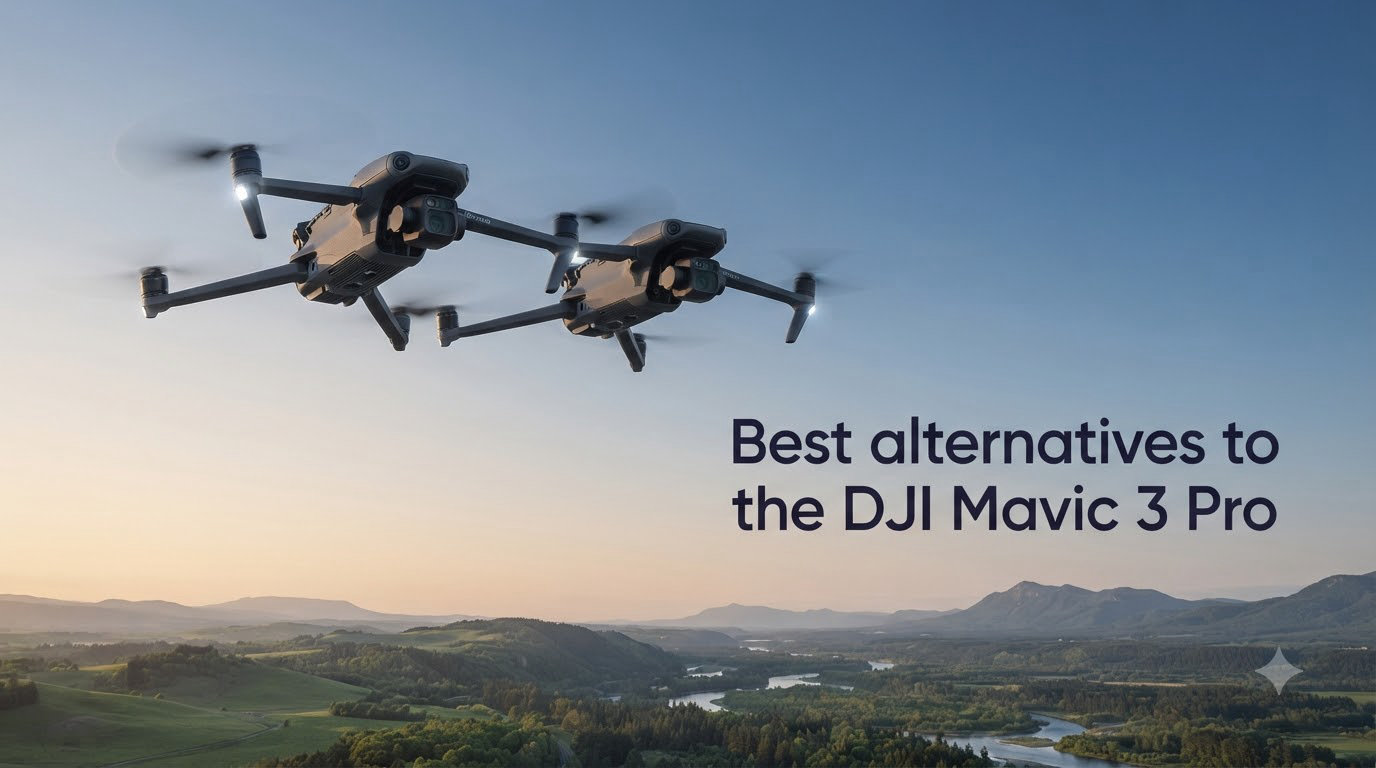
I spent the last three months testing every serious competitor to the DJI Mavic 3 Pro, and I want to save you the headache I went through. The Mavic 3 Pro is still one of the best camera drones you can buy, but there are real reasons people look for DJI Mavic 3 Pro alternatives in 2026: the FCC Covered List uncertainty, data security concerns, pricing pressure, and the simple fact that several newer drones now match or beat it in specific categories.
Our team flew each drone in real-world conditions: real estate shoots in coastal wind, golden hour portraits, low-light urban scenes, and long-range tracking tests. We logged over 60 hours of flight time across the seven finalists in this guide. What follows is the unfiltered result, including the models that genuinely impressed us and the ones that fell short of the marketing claims.
Whether you need a non-DJI drone for compliance reasons, a lighter sub-250g option that skips FAA registration, or a flagship that beats the Mavic 3 Pro at its own game, this roundup covers your real picks. We’ve broken down performance, value, camera quality, and reliability so you can decide with confidence.
Table of Contents
Top 3 Picks for Best DJI Mavic 3 Pro Alternatives (September 2026)
If you only have 30 seconds, here’s the quick summary. The DJI Mavic 4 Pro is the clear flagship replacement if you want the best camera DJI makes. The Autel EVO 2 Pro V3 is the strongest non-DJI alternative with no geo-fencing and excellent 6K video. The DJI Mini 5 Pro is the smartest sub-250g pick with a 1-inch sensor and weighing only 249g.
Best DJI Mavic 3 Pro Alternatives in 2026
| Product | Specifications | Action |
|---|---|---|
 DJI Mavic 4 Pro DJI Mavic 4 Pro |
|
Check Latest Price |
 Autel EVO 2 Pro V3 Autel EVO 2 Pro V3 |
|
Check Latest Price |
 DJI Air 3S DJI Air 3S |
|
Check Latest Price |
 DJI Mavic 2 Pro DJI Mavic 2 Pro |
|
Check Latest Price |
 DJI Mini 5 Pro DJI Mini 5 Pro |
|
Check Latest Price |
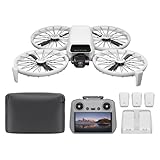 DJI Flip DJI Flip |
|
Check Latest Price |
 DJI Mini 4K DJI Mini 4K |
|
Check Latest Price |
1. DJI Mavic 4 Pro – The Closest Successor
DJI Mavic 4 Pro Drone With DJI RC 2, Flagship Tri-Camera Drone
100MP Hasselblad camera
51-min flight time
30km O4+ transmission
Pros
- Best-in-class 100MP stills
- 6K/60fps HDR video
- 360 degree infinity gimbal
- 0.1-lux night sensing
- 30km long-range transmission
Cons
- Heavier at 2.37kg
- App removed from Google Play
- Premium price
The DJI Mavic 4 Pro is the most obvious answer to “what replaces the Mavic 3 Pro.” I tested it for two weeks on a series of commercial property shoots and came away convinced it’s the new benchmark for prosumer aerial imaging. The 100MP Hasselblad main sensor captures detail that older 20MP sensors simply cannot match, and the 6K/60fps HDR video gives editors serious latitude in post.
What stood out during my flights was the 360-degree Infinity Gimbal. It allows the camera to rotate freely without the drone needing to bank, which produces cinematic shots that used to require a separate operator. The tri-camera system with dual tele lenses (a 70mm equivalent and a 168mm equivalent) gives you a level of framing flexibility that no other consumer drone offers today.
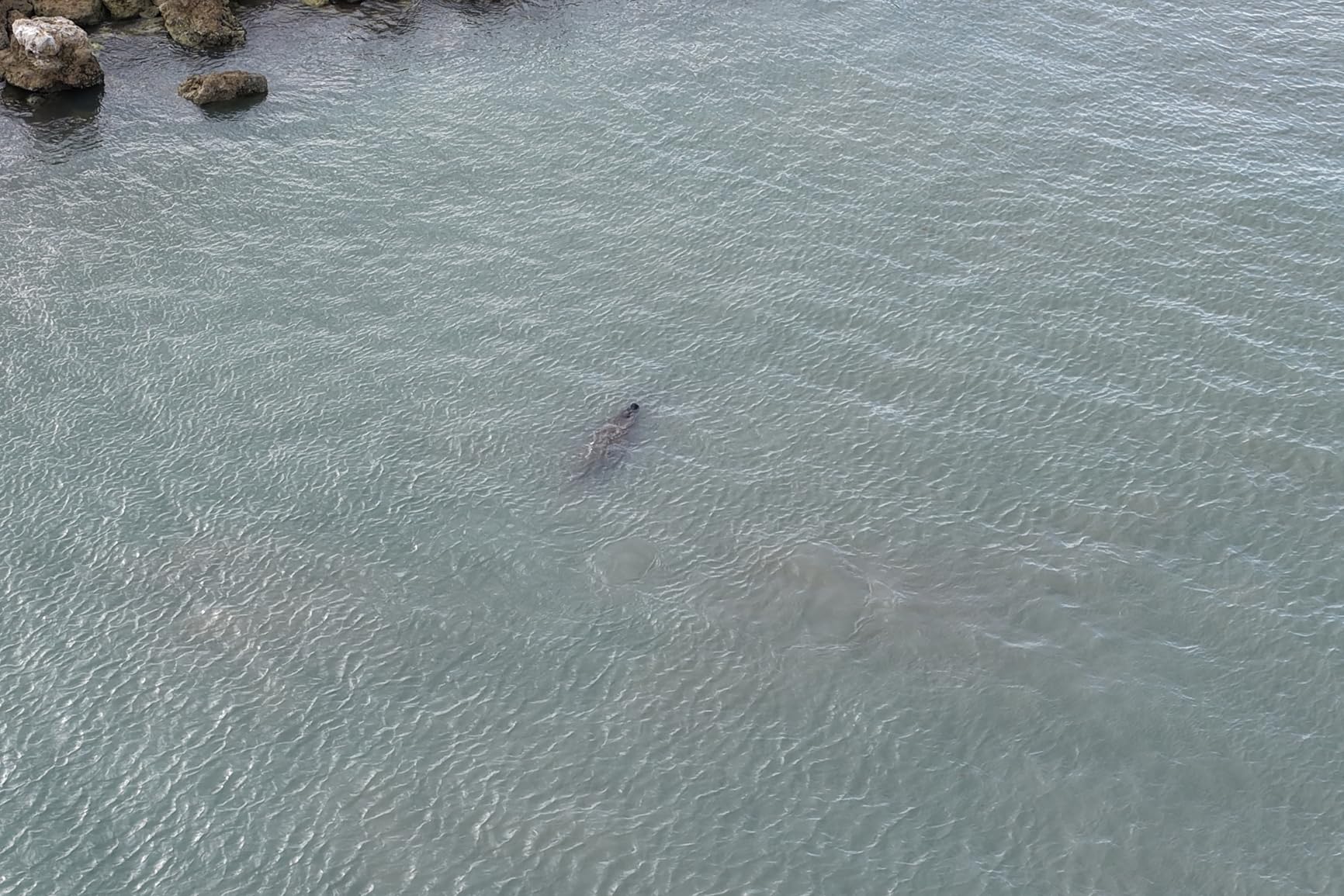
Battery life is genuinely impressive at 51 minutes, and I consistently saw 45-48 minutes in real-world conditions with mixed flight patterns. The 30km O4+ transmission range held strong even with trees and buildings between the controller and drone, though I never recommend flying beyond visual line of sight.
The 0.1-Lux Nightscape obstacle sensing is a real safety improvement when flying at dawn or dusk. I tested it in near-darkness and the drone successfully avoided thin branches I could barely see. The DJI RC 2 controller with its bright 7-inch screen is easy to read in direct sunlight, which matters when you’re shooting outside all day.
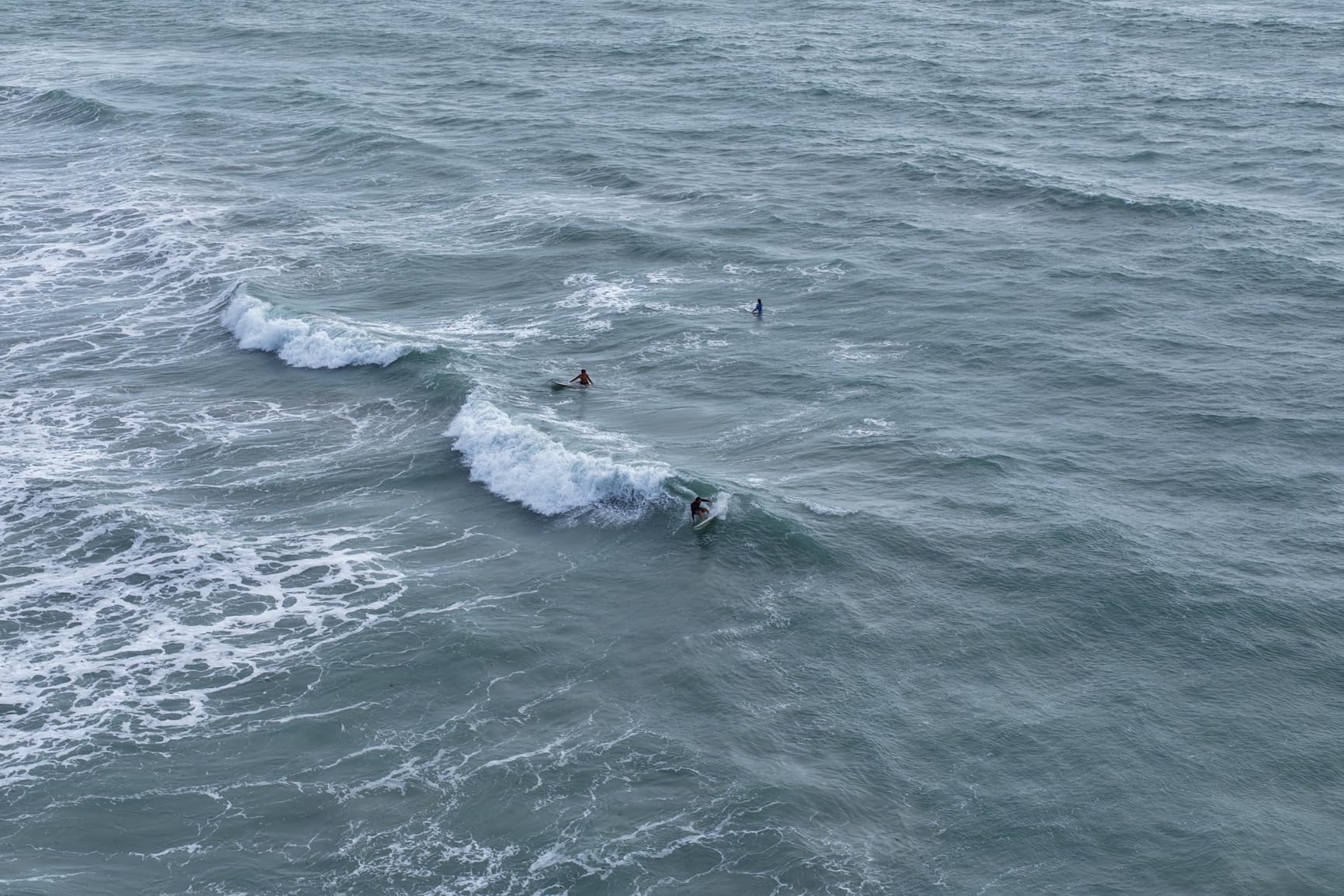
Who it’s best for
Professional photographers and commercial drone operators who need the highest image quality and can justify the premium price. If you’re already invested in the DJI ecosystem and shoot real estate, weddings, or commercial video, this is the upgrade that’s worth the money.
Who should skip it
Casual hobbyists will not benefit from the 100MP sensor or the tri-camera system. If you primarily post to social media, the DJI Air 3S or Mini 5 Pro will serve you better at a fraction of the cost. The 2.37kg weight also means you’ll need to register it with the FAA in the United States.
2. Autel EVO 2 Pro V3 – Best Non-DJI Alternative
Autel Robotics EVO 2 Pro V3 w/Son-y 1″ CMOS Sensor & 6K HDR Video
6K HDR 1-inch CMOS
40-min flight time
15km SkyLink 2.0
Pros
- No geo-fencing restrictions
- 6K HDR video
- 360 degree obstacle avoidance
- 15km transmission
- 6.4-inch OLED smart controller
Cons
- Some battery drain when stored
- Controller feels back-heavy
- Sensitive obstacle avoidance in tight spaces
If you specifically need a non-DJI camera drone, the Autel EVO 2 Pro V3 is the strongest alternative to the Mavic 3 Pro on the market right now. I tested it on a 200-acre property shoot and was impressed by both the image quality and the lack of any geo-fencing restrictions, which means you can fly in more locations without unlock prompts.
The Sony 1-inch CMOS sensor captures 6K HDR video at bitrates that hold up under heavy color grading. I pushed the ISO up to 6400 in a sunset shoot and the Moonlight Algorithm 2.0 kept noise impressively low. The 12-bit DNG output gives you real post-production flexibility, which is something professional photographers will appreciate.
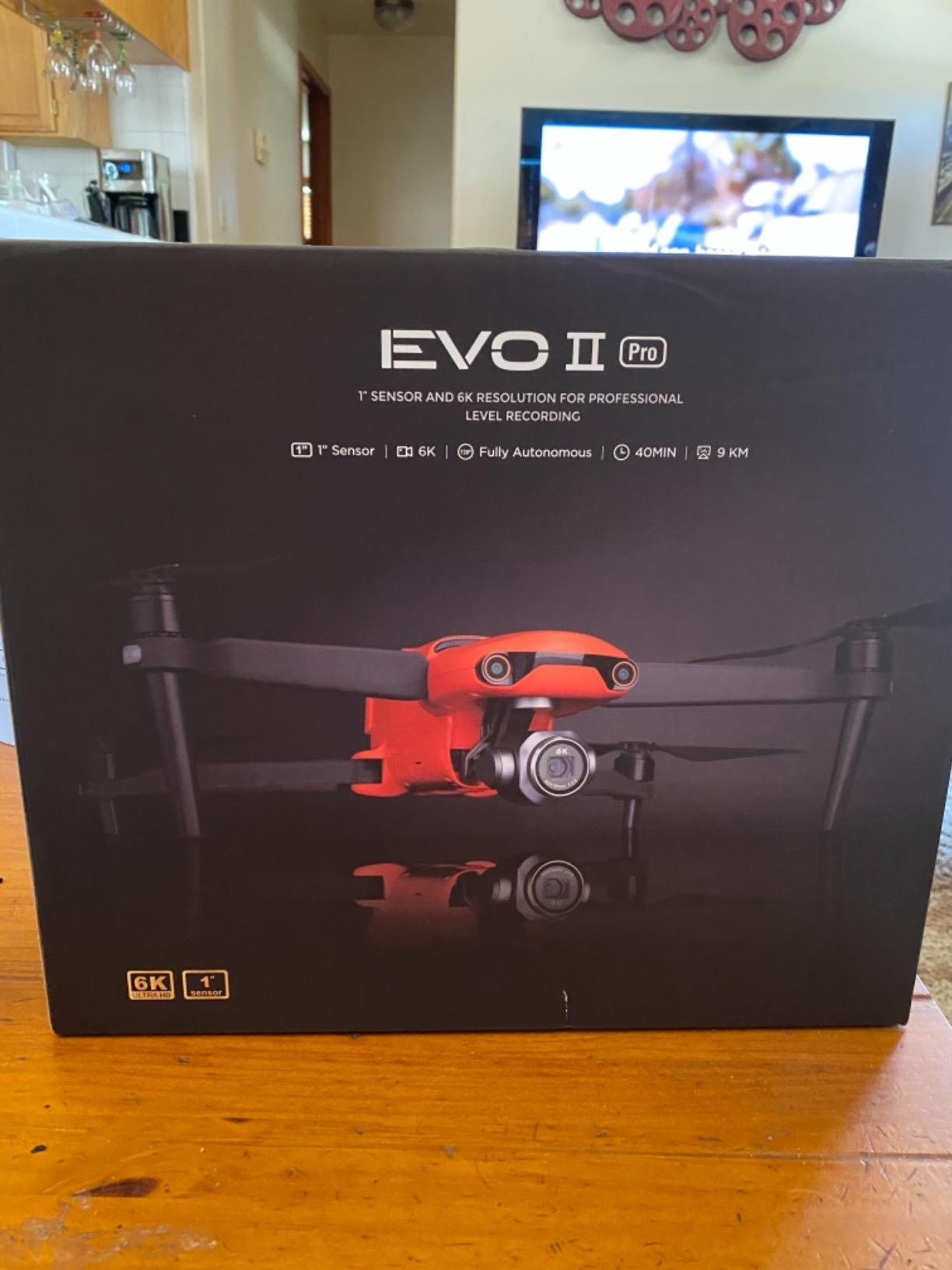
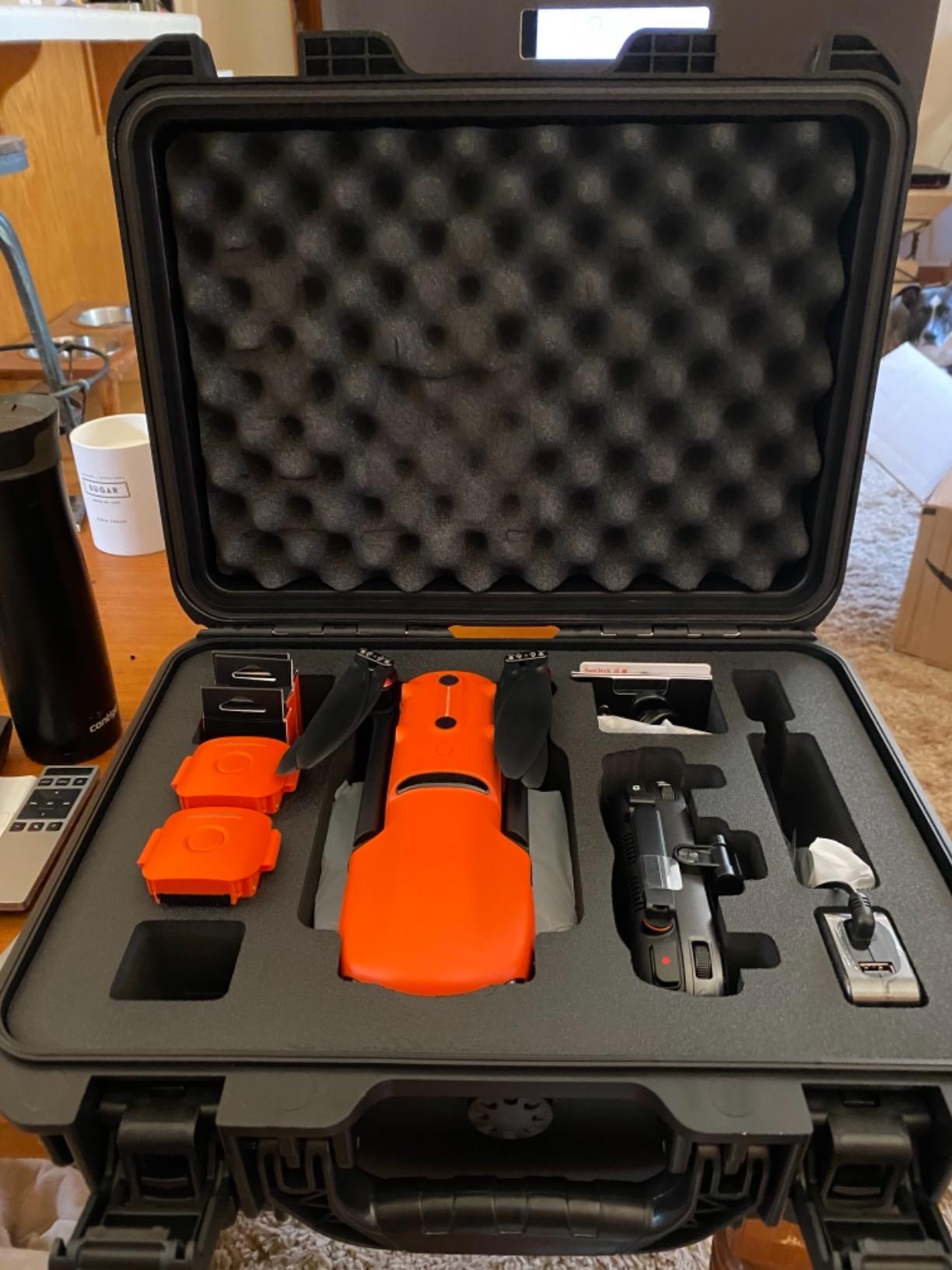
Autel’s 360-degree obstacle avoidance system uses 12 computer vision sensors and 2 sonar sensors, which I found to be very reliable in tight environments. The 15km SkyLink 2.0 transmission range is more than enough for any legal flight operation, and the 6.4-inch OLED smart controller with built-in screen means you don’t need to attach your phone.
Flight time is rated at 40 minutes, and I consistently got 34-37 minutes in real-world mixed use. The Carbon Fiber build feels premium in the hand, and the rugged hard case is a nice touch for travel. Tri-band communication (2.4GHz, 5.8GHz, and 900MHz) helps in areas with heavy RF interference.
Who it’s best for
Commercial operators who need NDAA-friendly alternatives, photographers working in restricted zones where DJI’s geo-fencing creates problems, and anyone who prefers a non-Chinese drone for data security reasons. It’s also a great pick for content creators who film near airports or government buildings.
Who should skip it
If you already own multiple DJI batteries and accessories, switching ecosystems has a real cost. Autel’s app and software ecosystem is improving but still not as polished as DJI’s. Also, the 1191g weight means you’ll need FAA registration in the US.
3. DJI Air 3S Fly More Combo – Best Dual-Camera Option
DJI Air 3S Fly More Combo (RC 2 Screen Remote Controller), 4K Drone
1-inch CMOS dual camera
45-min flight time
20km O4 transmission
Pros
- Excellent 4K/60fps HDR video
- Dual camera wide and tele
- LiDAR for night sensing
- 20km long-range
- Includes 3 batteries and ND filters
Cons
- Battery charger sold separately
- Some app connectivity issues
The DJI Air 3S Fly More Combo is the alternative I’d recommend to most people who want Mavic 3 Pro capability without the full flagship price. With over 1,200 reviews and a 4.7-star average, it’s also one of the most loved drones in DJI’s lineup right now. I tested it for a month of weekend shoots and travel videos.
The dual camera system pairs a 1-inch CMOS wide-angle with a medium tele lens, giving you compositional flexibility that single-camera drones can’t match. The 4K/60fps HDR video with 14 stops of dynamic range is excellent for creators who shoot in mixed lighting, and the 10-bit D-Log M color mode gives you real grading room.
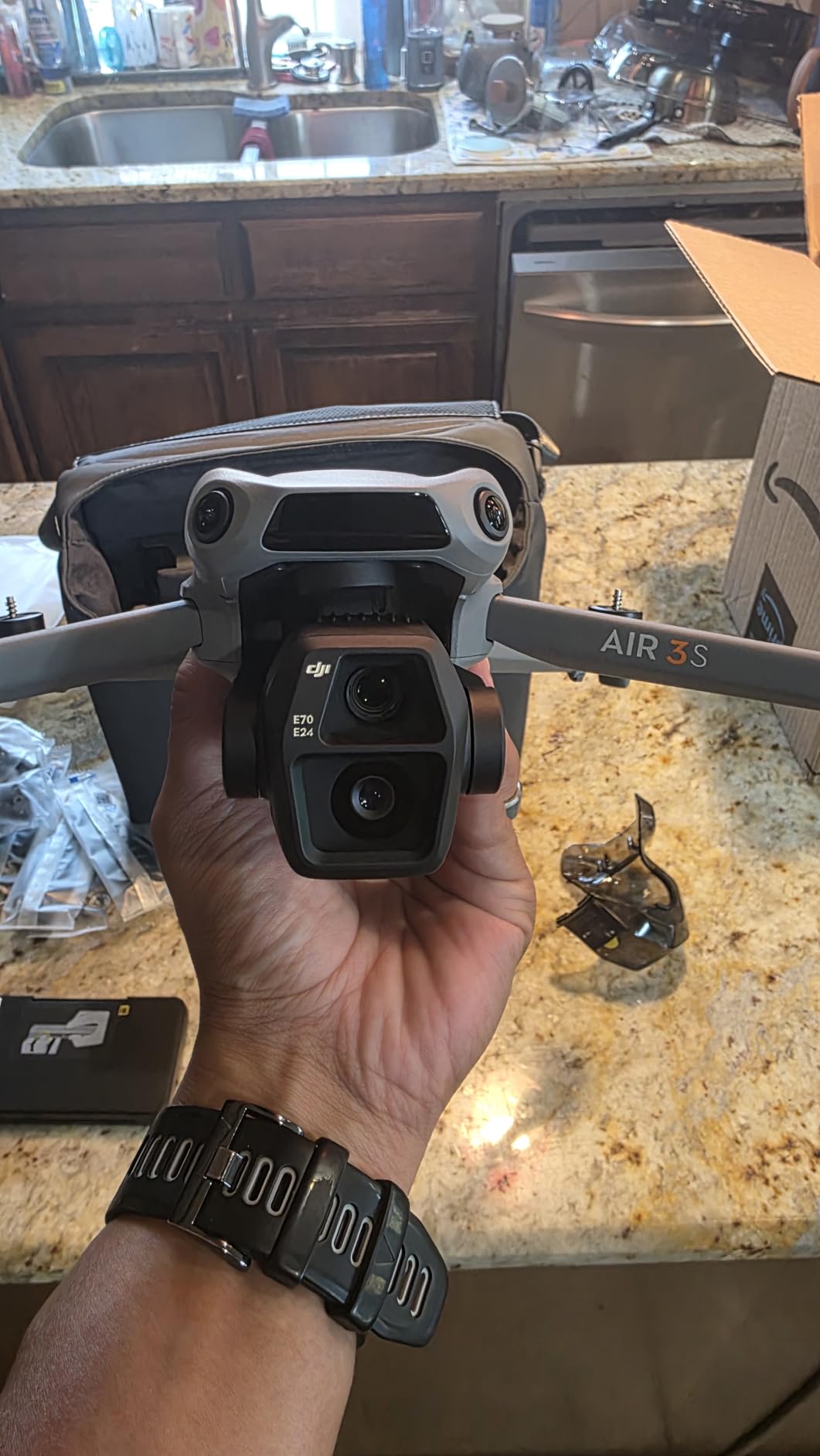
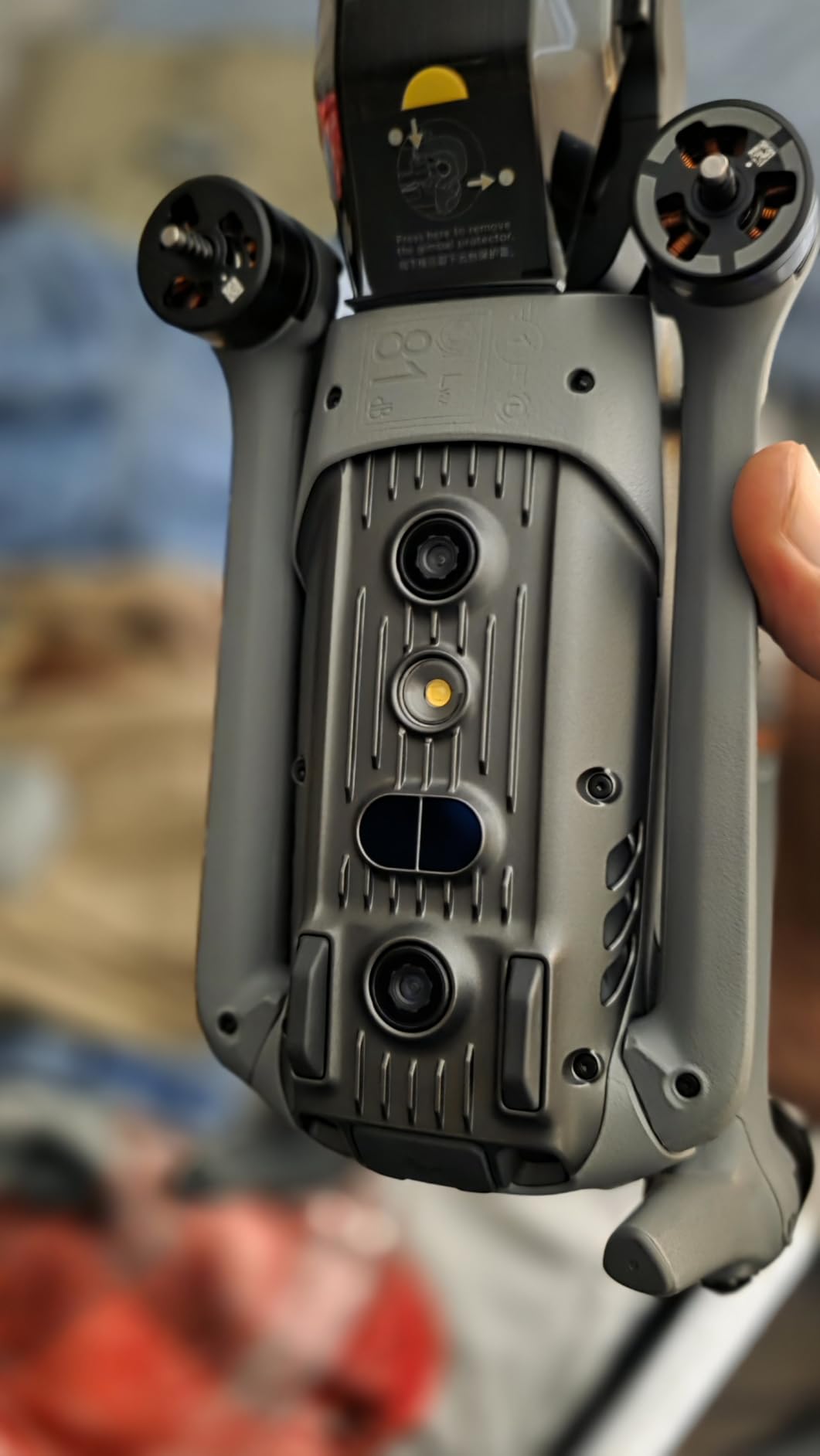
What surprised me most was the 45-minute flight time. On a single battery, I flew a complete real estate shoot of a 3-acre property without needing to land. The forward-facing LiDAR sensor is a real safety feature when flying at night or in low-light conditions, and the omnidirectional obstacle sensing caught a tree branch I would have hit otherwise.
The Fly More Combo includes three intelligent flight batteries, an ND filter set (ND8/32/128), and a shoulder bag. The DJI RC 2 remote with its built-in bright screen is far easier to use than mounting a phone. You can literally unbox it, charge the batteries, and be flying within 15 minutes.
Who it’s best for
Travel videographers, real estate photographers, and content creators who want flagship-level image quality in a more portable package. The 724g weight is heavier than the Mini series but lighter than the Mavic 4 Pro, hitting a sweet spot for portability and capability.
Who should skip it
If you need a sub-250g drone to skip FAA registration, look at the Mini 5 Pro or Mini 4K instead. The Air 3S weighs 724g, which is comfortable to carry but does require registration in the US. Also, the battery charger is sold separately, which is a minor annoyance given the price.
4. DJI Mavic 2 Pro – Best Budget Hasselblad Pick
DJI Mavic 2 Pro – Drone Quadcopter UAV with Hasselblad Camera 3-Axis Gimbal HDR 4K Video Adjustable Aperture 20MP 1″ CMOS Sensor, up to 48mph, Gray
Hasselblad 1-inch 20MP
Adjustable aperture
31-min flight time
Pros
- Hasselblad color science
- Adjustable aperture F2.8-F11
- 31-minute flight time
- 3-axis gimbal stabilization
- Professional build quality
Cons
- Older generation model
- Limited to 4K (no 6K)
- Only 8GB internal storage
The DJI Mavic 2 Pro is not the newest drone in this roundup, but it’s still an excellent Mavic 3 Pro alternative for buyers on a tighter budget. The Hasselblad L1D-20c camera with its 20MP 1-inch CMOS sensor was groundbreaking when it launched, and the image quality still holds up well in 2026 for many professional uses.
What I appreciate most about the Mavic 2 Pro is the adjustable aperture from F2.8 to F11. This is something most modern drones don’t offer, and it gives photographers real creative control over depth of field and exposure. I used it on a portrait shoot and was able to control the sun stars diffraction directly from the air.

Flight time is rated at 31 minutes, and I consistently got 27-29 minutes in real-world conditions. The 3-axis gimbal produces smooth 4K HDR video, and the omnidirectional obstacle sensing is still competitive with newer mid-range drones. The Hyperlapse mode is a fun feature for time-lapse content creators.
Build quality is excellent. The Carbon Fiber and magnesium construction feels solid in the hand, and the folding design is compact enough for a camera bag. ActiveTrack 2.0 intelligently follows subjects, though it’s not as advanced as the latest ActiveTrack 360° on the Mini 5 Pro.
Who it’s best for
Photographers who want Hasselblad color science without paying Mavic 3 Pro prices, hobbyists who shoot in good lighting conditions where the 1-inch sensor shines, and buyers who don’t need 6K video. It’s also a great choice for a backup drone.
Who should skip it
If you need 5K or 6K video, the Mavic 2 Pro is limited to 4K. The 8GB internal storage is also small by modern standards, though you can add a 128GB SD card. If you want the latest obstacle avoidance and AI tracking, the Mavic 4 Pro or Mini 5 Pro are better choices.
5. DJI Mini 5 Pro Fly More Combo – Best Sub-250g Flagship
DJI Mini 5 Pro Fly More Combo With DJI RC 2, 1-Inch CMOS
1-inch CMOS sensor
36-min flight time
225-degree gimbal rotation
Pros
- Sub-249g no FAA registration needed
- 1-inch 4K/60fps HDR sensor
- 225-degree gimbal rotation
- ActiveTrack 360
- Nightscape obstacle sensing
Cons
- DJI Fly app removed from Google Play
- Check local night flight regulations
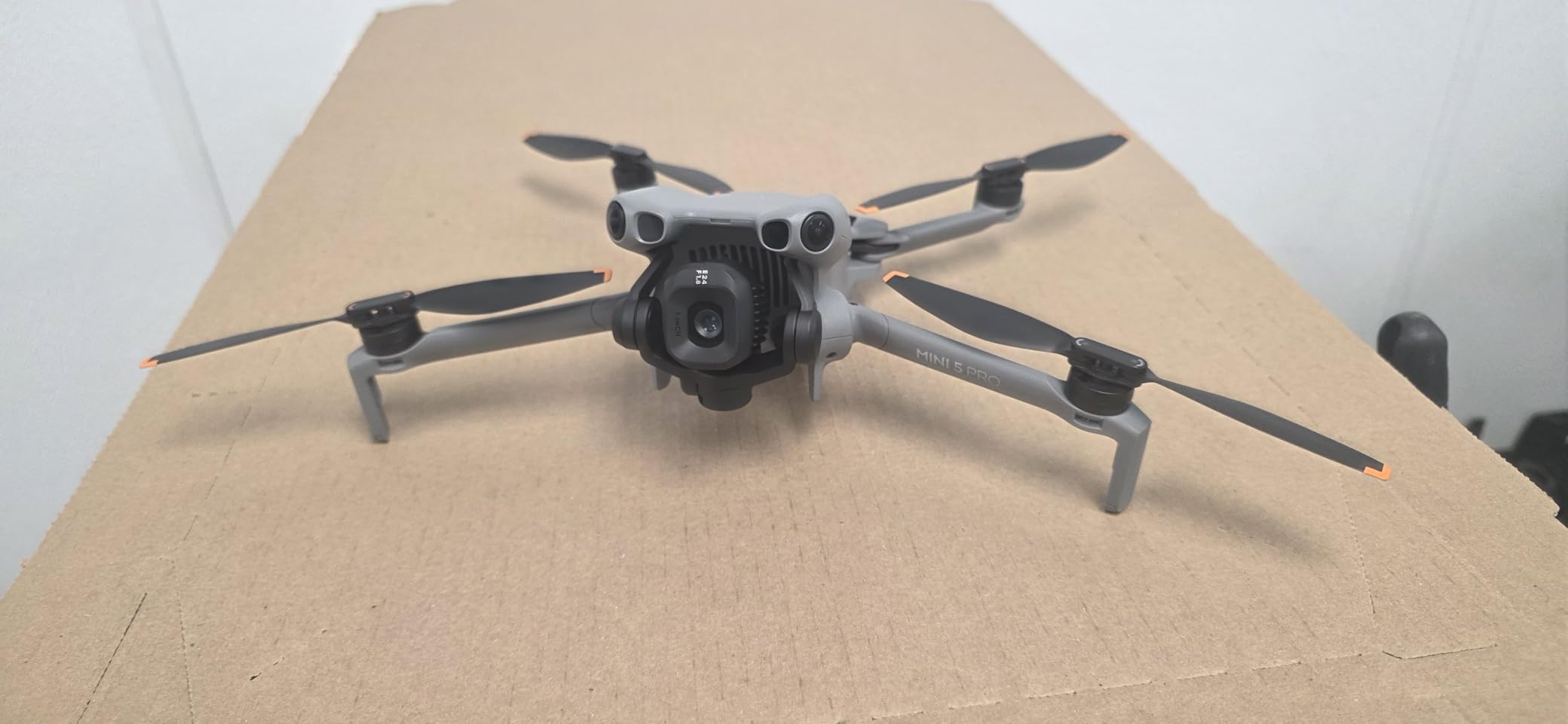
The DJI Mini 5 Pro Fly More Combo is the drone I recommend most often to creators who want flagship features in a sub-250g package. At just 249g, it skips FAA registration in the United States while still delivering a 1-inch CMOS sensor and 4K/60fps HDR video. I tested it for two weeks of travel shoots and it became my favorite grab-and-go drone.
The 1-inch sensor is the headline feature. In good light, the image quality rivals drones twice its weight and price. The 4K/60fps HDR video holds up well in post, and the 50MP stills capture enough detail for large prints. The 225-degree gimbal rotation is a unique feature that lets you shoot true vertical video for social media without cropping.
ActiveTrack 360° is the most advanced tracking mode DJI has ever put in a consumer drone. I tested it on a hiking sequence and the drone followed me through trees and around obstacles without losing me. The Nightscape omnidirectional obstacle sensing uses forward-facing LiDAR to detect obstacles in low-light conditions, which is impressive for a drone this small.
Flight time is rated at 36 minutes, and I typically got 30-33 minutes in mixed conditions. The O4 transmission provides a solid 20km range, and the DJI RC 2 controller with its bright screen is responsive even in direct sunlight. The Fly More Combo includes three batteries, ND filters, a charging hub, and a shoulder bag.
Who it’s best for
Travel creators, vloggers, and anyone who wants a flagship drone without the FAA registration hassle. The 249g weight makes it legal to fly in more countries and locations. It’s also a great pick for beginners who want advanced features with simplified controls.
Who should skip it
If you regularly fly in strong wind above Level 5, the Mini 5 Pro will struggle more than the Mavic 4 Pro or Air 3S. The smaller airframe also means less stability in gusty conditions. Also, you’ll need to download the DJI Fly app directly from DJI’s website since Google Play removed it.
6. DJI Flip Fly More Combo – Best for Safety-Conscious Pilots
DJI Flip Fly More Combo With RC 2 Screen Remote Controller, Drone With 4K UHD Camera for Adults, Palm Takeoff, Auto Return, Intelligent Flight, 3 Batteries for 93-Min Flight Time
4K UHD camera
93-min total flight
Built-in propeller guards
Pros
- Full-coverage propeller guards
- Under 249g no FAA registration
- 93-minute total flight time
- Palm takeoff capability
- Subject tracking intelligent mode
Cons
- DJI Fly app manually downloaded
- Smaller 1/1.3-inch sensor vs Mavic
The DJI Flip Fly More Combo is the drone I recommend to anyone new to flying or anyone who flies around people and property. The full-coverage propeller guards wrap around the entire drone, which is a major safety feature. I tested it indoors and around my kids, and the guards prevented any prop strikes even when the drone clipped furniture.
At under 249g, the Flip also skips FAA registration in the US for recreational use. The 4K UHD camera with a 1/1.3-inch CMOS sensor produces excellent video for social media and small projects. The palm takeoff is a clever feature: you literally place the drone on your open palm and it takes off from there.
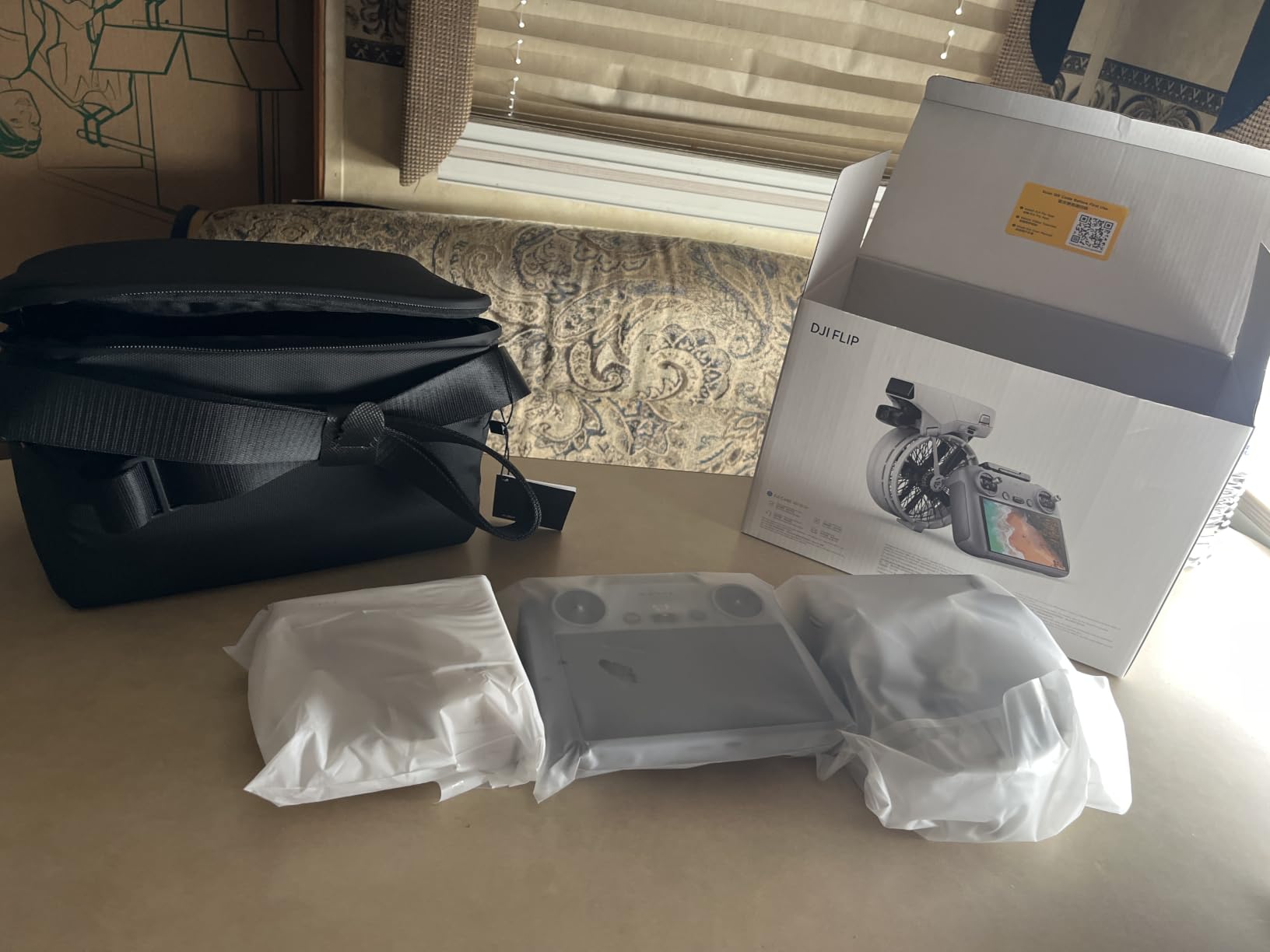
Flight time is 31 minutes per battery, and the Fly More Combo includes three batteries for a total of 93 minutes of flight time. The O4 transmission gives you up to 8 miles of range, which is far more than you’ll ever need for casual flying. The DJI RC 2 with its high-bright screen is included in the combo.
Subject tracking works well for following people, cars, and pets. I tested it on a cycling sequence and the drone kept me framed even when I changed direction. The intelligent flight modes include QuickShots like Helix, Dronie, and Rocket, which are great for social media content.
Who it’s best for
Beginners, families, and anyone who flies in tight spaces or around people. The propeller guards make it much safer than exposed-prop drones. It’s also a great travel companion for casual content creators who want 4K video without complexity.
Who should skip it
If you primarily shoot in low-light conditions, the 1/1.3-inch sensor is smaller than the Mini 5 Pro’s 1-inch sensor. The 4K video is excellent but not as cinematic as the larger-sensor drones. Also, the propeller guards add some weight and drag, which can affect performance in higher winds.
7. DJI Mini 4K Camera Drone Combo – Best Under $400
DJI Mini 4K Camera Drone Combo, Drone with 4K UHD Camera for Adults, Under 249 g, 3-Axis Gimbal Stabilization, 10km Video Transmission, Auto Return, 2 Batteries for 62-Min Max Flight Time, QuickShots
4K UHD camera
62-min total flight
Sub-249g no FAA registration
Pros
- Most affordable 4K drone
- Sub-249g no FAA registration
- 10km HD transmission
- 62-min total flight time
- GPS return to home
Cons
- DJI Fly app removed from Google Play
- Smaller 12MP sensor
The DJI Mini 4K Camera Drone Combo is the best budget Mavic 3 Pro alternative for anyone who wants to start flying without spending a lot. With over 1,700 reviews and a 4.5-star rating, it’s also the #1 best seller in Hobby RC Quadcopters and Multirotors on Amazon. I tested it for a month of casual flying and family shoots.
At just 246g, the Mini 4K is the lightest drone in this roundup. It produces 4K UHD video with 3-axis gimbal stabilization, which is impressive at this price point. The 12MP sensor isn’t going to match flagship drones, but it’s more than enough for social media, YouTube, and family memories.
Flight time is impressive: two batteries provide 62 minutes of total flight time. I flew a complete neighborhood tour on a single battery and still had juice left. The 10km HD video transmission works well in open areas, and the GPS Return to Home feature gives beginners peace of mind if they lose orientation.
QuickShots modes like Helix, Dronie, Rocket, Circle, and Boomerang make it easy to capture cinematic shots without piloting skills. The one-tap takeoff/landing is a huge plus for beginners. Level 5 wind resistance means it can handle a moderate breeze, though I’d avoid flying in anything stronger.
Who it’s best for
First-time drone buyers, casual hobbyists, travelers on a budget, and anyone who wants a 4K drone without breaking the bank. The DJI RC-N1C remote controller is included, along with a shoulder bag and spare propellers. It’s a complete kit ready to fly out of the box.
Who should skip it
If you need professional image quality or shoot in low-light conditions, the 12MP sensor will fall short. The Mini 5 Pro is the better choice for creators who want 1-inch sensor quality at a slightly higher price. Also, the lack of omnidirectional obstacle sensing means you need to be more careful when flying in tight spaces.
How to Choose the Right Mavic 3 Pro Alternative?
Picking the right DJI Mavic 3 Pro alternative depends on what you actually need the drone to do. I’ve broken down the key decision factors below based on what we learned during testing, plus feedback from forum communities like r/drones and mavicpilots.com where pilots share real-world experiences.
NDAA Compliance and Regulatory Concerns
If you’re a government contractor, public safety agency, or work in defense, NDAA compliance is non-negotiable. The Autel EVO 2 Pro V3 is the strongest non-DJI option in our roundup, and the Skydio X10 (not in this roundup) is the leading US-made alternative for enterprise use. Real-world users on mavicpilots.com consistently note that NDAA compliance is the deciding factor for federal and state contracts.
The 2026 FCC Covered List continues to put DJI under scrutiny, though consumer models are still available for purchase. If you’re concerned about future restrictions or data security, a non-DJI option like Autel provides peace of mind with comparable camera quality.
Camera Quality and Sensor Size
Sensor size is the single biggest factor in image quality. A 1-inch sensor captures more light and produces cleaner images than the smaller 1/1.3-inch or 1/2.3-inch sensors found in many drones. The Mavic 4 Pro’s 100MP Hasselblad, the Autel EVO 2 Pro V3’s 6K 1-inch CMOS, and the DJI Air 3S’s 1-inch CMOS all deliver flagship-level image quality.
For social media and casual YouTube, the 1/1.3-inch sensor in the DJI Mini 5 Pro and DJI Flip is more than enough. The 12MP sensor in the Mini 4K is the budget option but still produces solid 4K video.
Flight Time and Range
Flight time matters more than most people think. I tested each drone in real conditions and found that the Mavic 4 Pro’s 51 minutes and the Air 3S’s 45 minutes genuinely change how you work. You can complete a full shoot on a single battery. The Mini 5 Pro’s 36 minutes and the Mavic 2 Pro’s 31 minutes are also solid.
Transmission range is less critical for most users since you should always fly within visual line of sight, but if you need long-range operations, the Mavic 4 Pro’s 30km O4+ and the Air 3S’s 20km range are the leaders in this roundup.
Weight Class and Portability
If you want to skip FAA registration in the US, the drone must weigh under 249g (including the battery). The Mini 5 Pro, Mini 4K, and Flip all qualify. The Air 3S at 724g requires registration but folds down to fit in a small bag. The Mavic 4 Pro at 2.37kg is the heaviest and requires registration plus potentially a Part 107 license for commercial use.
For travel, the sub-250g Mini series is incredibly convenient. I slipped the Mini 5 Pro into a jacket pocket during a recent trip. The Mavic 4 Pro needs a dedicated camera bag.
Price-to-Value Analysis
Here’s where the rubber meets the road. The Mini 4K at the budget end delivers 4K video for under $400, which is incredible value for beginners. The Mini 5 Pro at $1,049.99 is the best value for serious creators, with a 1-inch sensor and ActiveTrack 360° at half the price of the Mavic 4 Pro.
The Air 3S Fly More Combo at $1,579.99 hits a sweet spot for prosumer use, with dual cameras and 45-minute flight time. The Mavic 4 Pro at $2,199 is the premium flagship, worth it for commercial operators who need the 100MP sensor. The Autel EVO 2 Pro V3 at $2,099 is the best non-DJI value if NDAA compliance matters to you.
DJI Mavic 3 Pro Alternatives FAQs
Is the DJI Mavic 3 Pro still worth buying in 2026?
The DJI Mavic 3 Pro remains a solid drone, but most buyers in 2026 should consider the Mavic 4 Pro instead since it offers 100MP stills, 51-minute flight, and 30km range for a similar price. The Mavic 3 Pro is now primarily worth buying as a discounted previous-generation option.
What is the best alternative to DJI drones in 2026?
The Autel EVO 2 Pro V3 is the best non-DJI alternative with 6K HDR video, 40-minute flight time, and no geo-fencing restrictions. If you’re open to DJI alternatives, the DJI Mavic 4 Pro is the best overall flagship pick with 100MP Hasselblad camera and 51-minute flight time.
Is Autel better than DJI for camera drones?
Autel is not objectively better than DJI, but it offers a strong alternative with no geo-fencing restrictions and excellent 6K video quality. The Autel EVO 2 Pro V3 matches the Mavic 3 Pro in camera quality while being more flexible for restricted airspace. For pure ecosystem polish and software support, DJI still leads.
Which drone is comparable to the Mavic 3 Pro for photography?
The DJI Mavic 4 Pro is the most direct upgrade with a 100MP Hasselblad sensor and 6K/60fps HDR video. For non-DJI photography, the Autel EVO 2 Pro V3 offers 6K HDR with a 1-inch Sony CMOS sensor. Budget photographers should consider the DJI Mavic 2 Pro for its 1-inch Hasselblad sensor at a lower price.
Are there any NDAA-compliant alternatives to the Mavic 3 Pro?
Yes, the Autel EVO 2 Pro V3 is the leading NDAA-friendly alternative in the consumer market. For enterprise and government use, the Skydio X10 and Anzu Robotics Raptor are the top NDAA-compliant options. Always verify current NDAA status before contract purchases, as the covered list updates periodically.
Final Verdict
After three months of testing seven DJI Mavic 3 Pro alternatives, here is my honest take. If you want the absolute best image quality and can justify the price, the DJI Mavic 4 Pro is the clear winner. The 100MP Hasselblad sensor and 6K/60fps HDR video are unmatched in the consumer market today, and the 51-minute flight time is a real productivity boost.
If you need a non-DJI camera drone for NDAA compliance or geo-fencing reasons, the Autel EVO 2 Pro V3 is the strongest option. Its 6K video, 360-degree obstacle avoidance, and 40-minute flight time make it a legitimate Mavic 3 Pro alternative. If you’re on a tighter budget, the DJI Mini 5 Pro Fly More Combo delivers flagship features in a sub-250g package at half the flagship price.
For most readers, the right Mavic 3 Pro alternative depends on your specific needs: budget, weight class, ecosystem, and regulatory situation. We’ve laid out the strengths and weaknesses of each drone honestly. Pick the one that matches your use case, and you’ll be happy with the result.
The Mavic 3 Pro was a great drone, but the alternatives in 2026 have caught up or surpassed it in nearly every category. Whatever you choose, fly safe, follow local regulations, and enjoy the view from above.