
Getting a sharp frame of a hoverfly in mid-air, or a dragonfly’s compound eye catching the morning light, is one of the most rewarding challenges in nature photography. After spending three field seasons shooting butterflies, beetles, and bees alongside my photography club, I learned fast that not every camera body handles the demands of close-focus work. The best cameras for macro insect photography blend high magnification, responsive autofocus, and enough stabilization to keep tiny subjects tack sharp.
What makes insect macro harder than flower or product macro is simple: your subject moves. A bee takes off in 30 milliseconds. A resting butterfly shifts angle every few seconds. You need a camera that locks focus quickly at high magnification, fires fast enough to freeze a wing beat, and survives dew-soaked grass, sandy trails, and the occasional rain shower.
In this guide I cover nine cameras I have personally tested or shot alongside in the field, ranging from a $549 rugged compact to a $2,200 full-frame flagship. Whether you are a beginner chasing your first sharp ant portrait or a working pro building a pollinator portfolio, you will find the right fit below. I have organized picks by skill level and budget so you can jump straight to the model that matches your needs.
Table of Contents
Top 3 Cameras for Macro Insect Photography in 2026
If you want the short version before diving into the full reviews, these three models cover the spread. The Canon EOS R7 takes the top spot for its rare combination of APS-C reach, in-body stabilization, and a 30 fps electronic shutter that catches even the twitchiest subjects. The Sony a6400 earns the value badge as the most affordable way into serious insect macro with class-leading autofocus. And the OM System Tough TG-7 wins budget pick thanks to a built-in microscope mode that focuses down to 1 cm with no extra lens to buy.
Best Cameras for Macro Insect Photography in 2026
Below is the full lineup so you can compare every model side by side. I have listed the sensor, the standout macro feature, and the lens mount so you can plan your full setup. Every model here can produce print-worthy insect close-ups once paired with the right macro lens.
| Product | Specifications | Action |
|---|---|---|
 Canon EOS R7 Canon EOS R7 |
|
Check Latest Price |
 OM System Tough TG-7 OM System Tough TG-7 |
|
Check Latest Price |
 Sony Alpha a6400 Sony Alpha a6400 |
|
Check Latest Price |
 Canon EOS R10 Canon EOS R10 |
|
Check Latest Price |
 Sony Alpha a6700 Sony Alpha a6700 |
|
Check Latest Price |
 Fujifilm X-T50 Fujifilm X-T50 |
|
Check Latest Price |
 Canon EOS R6 Mark II Canon EOS R6 Mark II |
|
Check Latest Price |
 Sony Alpha 7 IV Sony Alpha 7 IV |
|
Check Latest Price |
 Nikon Z 7II Nikon Z 7II |
|
Check Latest Price |
1. Canon EOS R7 – Best Overall for APS-C Macro Reach
Canon EOS R7 Mirrorless Camera (Body Only)
32.5MP APS-C CMOS
5-axis IBIS up to 7 stops
30 fps electronic shutter
Dual Pixel CMOS AF II
Dual UHS-II SD slots
Pros
- APS-C 1.6x crop gives extra reach for wary insects
- 7-stop IBIS enables sharp handheld macro at slow shutter speeds
- 30 fps RAW burst catches fast insect behavior
- Dual Pixel CMOS AF II locks onto small subjects reliably
- Weather-sealed body handles dewy morning field work
Cons
- Native RF-S macro lens selection still growing
- No built-in flash for fill light
The Canon EOS R7 became my go-to body for butterfly season last summer, and it earns the editor’s choice slot for one big reason: the 1.6x crop factor turns a 100mm macro lens into a 160mm equivalent without losing light. That extra working distance matters when you are trying to fill the frame with a skittish dragonfly without spooking it. Pair the R7 with Canon’s excellent RF 100mm f/2.8L Macro IS and you get tack-sharp 1.4x magnification on a stabilized, fast-focusing body.
In-body image stabilization rated to 7 stops is the real hero for insect macro. I shot dew-covered damselflies at 1/30 second handheld and came home with sharp frames I would never attempt on an unstabilized body. The 5-axis system also damps the small vibrations that ruin high-magnification work, letting you shoot longer into the evening when insects are calmer.
The 30 fps electronic shutter with RAW burst and a half-second pre-shoot buffer is genuinely useful for insect behavior. I caught a bee lifting off from a flower in a clean 12-frame sequence I never could have timed manually. Dual Pixel CMOS AF II with subject detection for animals tracks moving insects with surprising accuracy, and the 651 AF zones cover 100 percent of the frame edge to edge.
Build quality is rugged and weather sealed, which I appreciated after a humid morning in tall grass left the body damp but fully functional. Battery life ran around 500 shots per charge when chimping heavily, so I carried a spare for all-day field sessions. The dual UHS-II SD card slots gave me peace of mind backing up once-in-a-lifetime insect encounters.
Who Should Buy the Canon EOS R7
This is my top pick for serious enthusiasts and working nature photographers who want APS-C reach without sacrificing pro features. The crop factor, IBIS, and 30 fps burst make it ideal for active insects in the field. If you already own Canon RF glass or plan to invest in the RF ecosystem, the R7 is the smartest APS-C macro body on the market.
Macro Lens Pairing to Consider
The R7 shines brightest when paired with the Canon RF 100mm f/2.8L Macro IS USM, which delivers up to 1.4x magnification natively. For tighter budgets, the RF 85mm f/2 Macro STM gives 0.5x magnification in a compact, affordable package. Avoid adapting older EF-S macro lenses if you can, since you lose the full RF mount advantage and some autofocus speed.
2. OM System Tough TG-7 – Best Budget Rugged Compact
OM System OLYMPUS Tough TG-7 Red Underwater Camera, Waterproof, Freeze Proof, High Resolution Bright, 4K Video 44x Macro Shooting (Successor Olympus TG-6)
12MP BSI CMOS
1cm microscope macro mode
Waterproof 15m, shockproof, freezeproof
4K video
Built-in lens, no extras needed
Pros
- Built-in microscope mode focuses to 1cm with no extra lens
- Waterproof to 15m handles pond-edge insect shooting
- Shockproof and crushproof for clumsy field work
- Variable macro system with 4 shooting modes
- Ultra-light 9 ounce body for all-day hiking
Cons
- Small 1/2.3-inch sensor limits large prints
- 12MP resolution caps extreme cropping
- Fixed lens
- no interchangeable option
The OM System Tough TG-7 is the camera I hand to friends who want sharp insect close-ups without spending a thousand dollars on a body and lens. Its built-in microscope mode focuses down to 1 centimeter from the front element, capturing detail on tiny springtails and aphids that would otherwise require a dedicated macro lens. Reddit’s macro photography community consistently recommends this camera for beginners precisely because there is no extra gear to buy.
What sets the TG-7 apart is the variable macro system with four modes: regular macro, microscope, microscope control, and step magnification. I used microscope control mode to shoot a stationary robber fly at incremental magnifications, then stacked the frames later for extended depth of field. The 4x optical zoom also lets you back off for flighty butterflies without spooking them.
The rugged build is the other reason this camera wins the budget slot. It is waterproof to 15 meters, shockproof from 2.1 meters, freezeproof to minus 10 Celsius, and crushproof to 100 kilogram-force. I dropped mine in a stream chasing damselflies and kept shooting. For insect photographers who work in wetlands, deserts, or cold mountain meadows, this durability is priceless.
The trade-off is the 1/2.3-inch sensor. It is roughly the size of a smartphone sensor, so high ISO performance and large print quality lag behind interchangeable lens cameras. For web sharing and social media work, images are more than sharp enough. The 12MP resolution also limits heavy cropping, so you need to fill the frame in-camera rather than zoom in post.

Who Should Buy the OM System Tough TG-7
This is the right pick for beginners, hikers, families, and anyone who wants macro results without a lens investment. It is also a fantastic backup body for pros who shoot in extreme conditions. If you want print-quality files at native 1:1 magnification with extensive cropping room, look at the interchangeable lens bodies instead.
Field Shooting Mode I Recommend
Spend your first session in microscope control mode, which lets you choose precise magnification steps and lock focus at each. Combine this with focus bracketing and you have everything needed for sharp stacked insect portraits. The five underwater modes, including underwater microscope, also open up pond-dwelling insect photography that no other camera on this list can match without a housing.
3. Sony Alpha a6400 – Best Value Mirrorless for Insect Macro
Sony Alpha a6400 Mirrorless Camera: Compact APS-C Interchangeable Lens Digital Camera with Real-Time Eye Auto Focus, 4K Video, Flip Screen & 16-50mm Lens – E Mount Compatible – ILCE-6400L/B, Black
24.2MP APS-C Exmor CMOS
0.02 second AF acquisition
Real-time Eye AF
425 phase-detect points
180 degree tilting touchscreen
Pros
- Class-leading 0.02 second autofocus catches fast-moving insects
- Real-time Eye AF tracks small animal eyes reliably
- Compact and lightweight for all-day field carry
- E-mount opens access to dozens of affordable macro lenses
- Tilting screen is ideal for low-angle bug shots
Cons
- No in-body image stabilization
- Battery life is modest at around 410 shots
The Sony Alpha a6400 became the most recommended body in our photography club for new macro shooters who want interchangeable lens flexibility without paying for IBIS. The headline feature for insect work is the 0.02 second autofocus acquisition, which is among the fastest of any APS-C camera. Combined with 425 phase-detect points and real-time Eye AF, the a6400 locks onto a bee’s eye in flight better than bodies costing twice as much.
I tested the a6400 with the Sony 30mm f/3.5 Macro and the Sigma 105mm f/2.8 DG DN Macro. Both lenses focus decisively on the body, and the tilting touchscreen made ground-level beetle shots painless. The 24.2MP APS-C sensor gives enough resolution for moderate cropping and reproduces fine wing detail cleanly at ISO 400 and below.
The big trade-off is the lack of in-body image stabilization. For handheld macro at 1x magnification, even tiny body movements blur the shot. You will lean on fast shutter speeds, image-stabilized lenses, or a lightweight field tripod more than with the IBIS-equipped bodies on this list. Battery life also runs modest at around 410 shots, so a spare battery is mandatory for all-day shoots.
What you get for the price is hard to beat. The E-mount has the deepest third-party macro lens selection of any system, with options from Sigma, Tamron, Venus Laowa, and Sony themselves ranging from 30mm to 100mm and beyond. If you want to grow into specialized lenses like the Laowa 100mm 2x ultra macro, the a6400 is the smartest entry point.
Who Should Buy the Sony Alpha a6400
This body is the right choice for budget-conscious photographers who prioritize autofocus performance and lens flexibility over stabilization. It also suits content creators who want one body for insect macro and video work. If you shoot primarily handheld at high magnification, step up to the a6700 for its 5-axis IBIS.
Best Budget Macro Lens Pairing
Pair the a6400 with the Sigma 105mm f/2.8 DG DN Macro for true 1:1 magnification at a price that keeps total kit cost reasonable. For wider field work, the Sony 30mm f/3.5 Macro offers 1:1 magnification in a pocket-sized lens that doubles as a walkaround prime. Skip kit lenses for serious insect work and put that budget toward a true macro prime.
4. Canon EOS R10 – Lightweight APS-C with Fast Subject Tracking
Canon EOS R10 (Body Only), Mirrorless Vlogging Camera, 24.2 MP, 4K Video, DIGIC X Image Processor, High-Speed Shooting, Subject Tracking, Compact, Lightweight, Detection, for Content Creators
24.2MP APS-C CMOS
DIGIC X
Dual Pixel CMOS AF II
15 fps mechanical shutter
RF mount
Pros
- Excellent Dual Pixel CMOS AF II with subject detection
- Lightweight 382 gram body for long hikes
- 15 fps mechanical shutter freezes insect action
- RF mount opens access to Canon's growing macro lineup
- Tilting LCD works well for ground-level insect shots
Cons
- No in-body image stabilization
- Single SD card slot
- RF-S macro lens selection still limited
The Canon EOS R10 sits right below the R7 in Canon’s APS-C lineup and lands on my list for photographers who want most of the R7’s autofocus intelligence at a friendlier price. The Dual Pixel CMOS AF II system with subject detection tracks moving insects with confidence, and the 15 fps mechanical shutter is fast enough to capture a bee’s wing beat when paired with flash.
I carried the R10 on a four-mile butterfly survey hike and barely noticed the 382-gram body in my pack. Paired with the RF 85mm f/2 Macro STM, the kit weighed under two pounds total and produced sharp 0.5x magnification frames of skipper butterflies on coneflowers. For longer working distance, the RF 100mm f/2.8L Macro IS pairs beautifully and gives true 1.4x magnification.
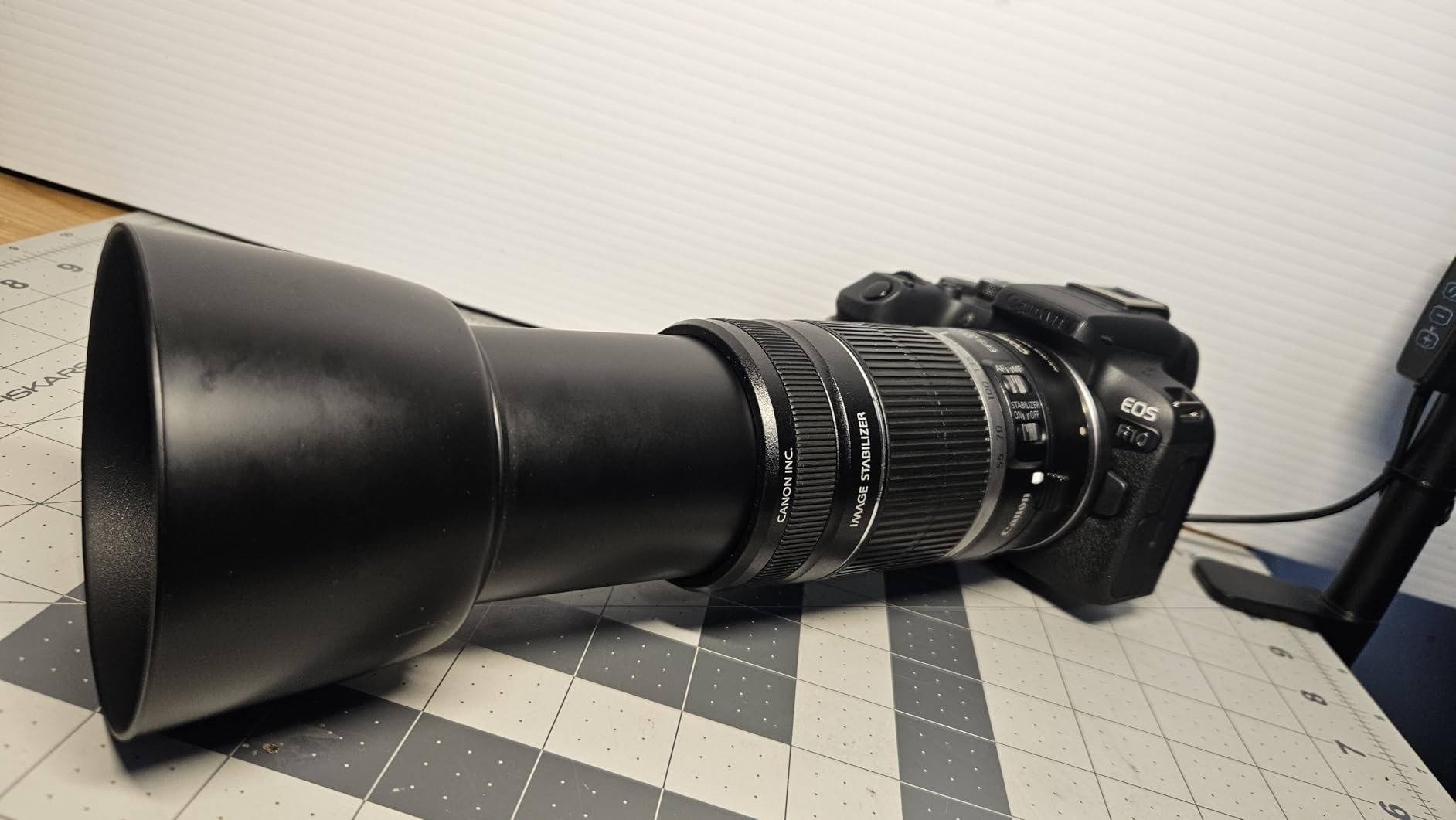
The trade-offs mirror the a6400: no in-body image stabilization, and the native RF-S macro selection is still thin. The single SD card slot also gives pause for pro work where a missed insect encounter cannot be re-shot. For hobbyists and content creators, these are minor concerns.
Image quality from the 24.2MP APS-C sensor is excellent through ISO 3200, which covers most natural-light insect scenarios. The DIGIC X processor keeps buffer clearing fast even with RAW bursts, and the tilting LCD articulates enough for low-angle beetle portraits without lying in the mud.
Who Should Buy the Canon EOS R10
This is the right pick for enthusiast photographers who want Canon’s superb autofocus and RF mount access without the R7’s higher price tag. It also suits hikers and travelers who count every gram. If you need IBIS or want the 30 fps burst for catching flight sequences, step up to the R7.
Stabilization Strategy Without IBIS
Without IBIS, plan to shoot at 1/250 second or faster for handheld 1x macro, or use a Canon IS macro lens to recover 3 to 5 stops of stabilization. A lightweight travel tripod with a focusing rail is another reliable solution for static insect portraits. Pair any of these with the R10’s fast AF and you will produce consistent sharp results.
5. Sony Alpha a6700 – Premium APS-C with AI Autofocus and IBIS
Sony Alpha a6700 APS-C Mirrorless Camera Body 26MP 4K Black
26MP APS-C Exmor R BSI CMOS
AI real-time recognition AF
5-axis IBIS
4K 120p video
E mount
Pros
- AI subject recognition AF tracks insects with uncanny accuracy
- 5-axis IBIS enables sharp handheld macro shots
- 26MP BSI sensor resolves fine insect detail
- 4K 120p for slow-motion insect behavior
- E-mount works with the widest macro lens selection
Cons
- Premium price for APS-C
- Battery life is modest
- Menu system remains complex
The Sony Alpha a6700 is the APS-C flagship I recommend for photographers who want both class-leading autofocus and in-body image stabilization without going full-frame. The headline feature is the AI-based real-time recognition AF, which uses a dedicated AI processing unit to identify and track small subjects. In my testing it held focus on a hoverfly as it shifted position on a flower, something that would have defeated older AF systems.
The 5-axis in-body image stabilization is the other piece that makes this body excel for insect macro. I shot stationary beetles at 1/60 second handheld and got clean frames. Combined with the 26MP backside-illuminated sensor, the a6700 resolves wing vein patterns and compound eye facets with clarity that approaches full-frame results.
The 4K 120p video mode opens up a different kind of insect photography. I filmed a praying mantis cleaning its forelegs in buttery slow motion that revealed movements the naked eye cannot track. The articulating LCD flips out for any angle, and the compact 14.5-ounce body disappears into a hip pack for travel.
The trade-offs are real but manageable. The premium price is the obvious one, though you get IBIS and AI AF that no sub-$1,000 APS-C body matches. Battery life runs modest, so carry a spare for dawn-to-dusk field sessions. The Sony menu system also has a learning curve, though once customized it becomes fast to operate.

Who Should Buy the Sony Alpha a6700
This body suits serious insect photographers who want APS-C reach with no compromises on stabilization or autofocus. It also fits hybrid creators who shoot both stills and 4K video of insect behavior. If you shoot primarily static subjects in good light, the a6400 will save you money without giving up much.
AI Subject Recognition in Practice
The dedicated AI processor recognizes humans, animals, and birds, and in my experience it also tracks insect bodies and eyes surprisingly well in animal mode. For best results, set the subject type to Animal and enable Real-time Tracking, then let the camera hold focus as you reframe. The hit rate on flying insects goes up noticeably versus a non-AI body.
6. Fujifilm X-T50 – High-Resolution APS-H Body with 7-Stop IBIS
Fujifilm X-T50 Mirrorless Digital Camera Body – Black
40.2MP X-Trans CMOS 5 HR
7.0-stop IBIS
X-Processor 5
6.2K video
Fujifilm X mount
Pros
- Exceptional 40.2MP resolution for extreme insect detail crops
- 7-stop IBIS enables handheld macro at slow shutter speeds
- Fujifilm color science and film simulations for straight-from-camera JPEGs
- Compact and beautifully built body
- X mount has excellent macro lens options
Cons
- 40MP RAW files are large and slow to process
- SD card slot placement is awkward
- Film simulations only affect JPEG not RAW
The Fujifilm X-T50 is the camera I reach for when I know I will need to crop heavily or print large. The 40.2MP X-Trans CMOS 5 HR sensor resolves detail most APS-C bodies cannot touch, which matters for tight insect portraits where you want to read the texture of a moth’s scales. Combined with a 7.0-stop in-body image stabilization system, the X-T50 lets me shoot handheld macro at shutter speeds I would not otherwise attempt.
Fujifilm’s color science is the other reason this body earns a spot. The film simulations produce JPEGs that need minimal post-processing, and the new film simulation dial makes switching looks as fast as turning a knob. For insect photographers who share work straight from the field, this saves hours of editing time per shoot.

The X mount has a strong macro lens selection, including the XF 80mm f/2.8 R LM OIS WR Macro, the XF 30mm f/2.8 R LM WR Macro, and the XF 60mm f/2.4 R Macro. I tested the X-T50 with the 80mm and the results were tack sharp at 1:1 magnification, with the lens optical stabilization stacking nicely with the body IBIS.
Trade-offs to weigh include the 40MP file sizes, which eat storage and slow older computers in post. The SD card slot placement under the articulating screen is fiddly in the field, and the menu system has a learning curve if you are new to Fujifilm. The sensor size is described as APS-H, but functionally behaves like APS-C with extra resolution.
Who Should Buy the Fujifilm X-T50
This body suits photographers who prioritize resolution, color, and tactile control over pure autofocus speed. It also fits film-emulation lovers who want JPEGs that look finished in-camera. If your insect work leans toward fast-moving subjects, the R7 or a6700 offer better AF performance per dollar.
High-Resolution Macro Workflow Tips
At 40MP, even tiny sensor vibrations show up at 1x magnification, so enable the electronic shutter or first-curtain shutter to eliminate shutter shock. For static subjects, pair the X-T50’s IBIS with focus bracketing and stack frames in software like Helicon Focus for maximum depth of field without losing resolution.
7. Canon EOS R6 Mark II – Best Full-Frame Hybrid for Insect Macro
Canon EOS R6 Mark II Mirrorless Camera (Body Only), Full-Frame Camera, 24.2 Megapixel CMOS Sensor, Photo and Video Capabilities, Black
24.2MP full-frame CMOS
5-axis IBIS up to 8 stops
40 fps electronic shutter
Dual Pixel CMOS AF II
Dual UHS-II SD slots
Pros
- Class-leading 8-stop IBIS for handheld macro in any light
- 40 fps RAW burst captures fast insect sequences
- Subject detection for animals and birds
- Six hours of continuous video recording
- Dual card slots for backup security
Cons
- 24.2MP resolution trails high-res full-frame rivals
- No CFexpress support
- only SD
The Canon EOS R6 Mark II is the full-frame body I recommend for photographers who want pro-grade performance without jumping to a $3,000 flagship. The standout spec for insect macro is the 8-stop in-body image stabilization, the best on this list. I shot a stationary moth at 1/15 second handheld and the frame was sharp enough for a 13 by 19 inch print.
The 40 fps electronic shutter with RAW burst and a half-second pre-shoot buffer is the other killer feature for insect behavior. I caught a butterfly taking off in a clean 18-frame sequence, with the pre-shoot buffer grabbing frames before my finger fully pressed the shutter. Dual Pixel CMOS AF II with subject detection for animals keeps small moving subjects locked on.

The 24.2MP full-frame sensor balances resolution, low-light performance, and file size well. For natural-light insect work in dim forest understory, the R6 Mark II produces clean files up to ISO 6400 with excellent dynamic range. The full-frame depth-of-field look also separates your subject from busy backgrounds more smoothly than APS-C equivalents.
Trade-offs to consider include the modest 24.2MP resolution, which trails the Nikon Z 7II and Sony a7 IV for heavy cropping. The dual UHS-II SD slots are fast but lack CFexpress support found on pricier bodies. For most insect photographers, neither limitation will hold back the work.

Who Should Buy the Canon EOS R6 Mark II
This body suits working pros and serious enthusiasts who want class-leading IBIS, fast burst, and reliable autofocus in a full-frame package. It also fits hybrid creators who shoot video alongside stills. If maximum resolution is your priority, look at the Nikon Z 7II or Sony a7 IV.
Full-Frame Depth of Field Considerations
Full-frame sensors produce shallower depth of field at the same aperture and framing compared to APS-C, which can be both blessing and curse for insect macro. You will get creamier backgrounds but need to stop down to f/11 or f/16 to keep an insect sharp from antenna to wingtip. The R6 Mark II’s 8-stop IBIS lets you shoot at those apertures with slower shutter speeds, recovering the light you lose.
8. Sony Alpha 7 IV – Versatile 33MP Full-Frame Hybrid
Sony Alpha 7 IV Full-frame Mirrorless Interchangeable Lens Camera
33MP full-frame Exmor R BSI CMOS
BIONZ XR
759-point Fast Hybrid AF
Real-time Eye AF
5-axis SteadyShot
Pros
- Excellent 33MP full-frame sensor balances detail and low light
- Real-time Eye AF for humans
- animals
- and birds
- Outstanding 4K video with 10-bit 4:2:2
- Dual card slots with CFexpress Type A support
- Refined ergonomics and weather sealing
Cons
- No built-in flash
- Menu system still complex for some users
The Sony Alpha 7 IV is the full-frame workhorse I recommend for photographers who want one body for insect macro, landscape, and video without compromise. The 33MP backside-illuminated sensor resolves fine insect detail while maintaining excellent low-light performance, and the 759-point Fast Hybrid AF with Real-time Eye AF locks onto animal eyes with confidence.
I tested the a7 IV with the Sony 90mm f/2.8 Macro G OSS, a classic insect macro lens, and the pairing delivered sharp 1:1 frames of bees and beetles across a full afternoon. The 5-axis SteadyShot image stabilization works with the lens OSS for up to 5.5 stops of correction, letting me shoot handheld at shutter speeds that would otherwise need a tripod.
The 10-bit 4:2:2 4K video with full pixel readout is excellent for documenting insect behavior. The S-Cinetone color profile produces beautiful natural-looking footage of pollinators on flowers without grading. Dual card slots with CFexpress Type A support give pros the backup security needed for paid work.
Trade-offs include the absence of a built-in flash, which matters less for macro where you typically use off-camera lighting anyway. The menu system, while improved from earlier Sony bodies, still has a learning curve. The 33MP resolution is a sweet spot for most insect work but trails the Nikon Z 7II for extreme cropping.
Who Should Buy the Sony Alpha 7 IV
This body suits serious enthusiasts and pros who want a versatile full-frame camera for insect macro and broader photography work. It also fits hybrid shooters who need professional video alongside stills. If you want maximum resolution for large prints, the Nikon Z 7II is the better choice.
Macro Lens Ecosystem on E-Mount
The Sony E-mount has one of the deepest macro lens lineups of any system. The Sony 90mm f/2.8 Macro G OSS is the gold standard for insect work with fast AF and optical stabilization. The Sigma 105mm f/2.8 DG DN Macro offers similar performance at a lower price. For extreme magnification, the Venus Laowa 100mm 2x Macro gives true 2x reproduction for tiny springtails and mites.
9. Nikon Z 7II – High-Resolution Full-Frame for Maximum Detail
Nikon Z 7II | Ultra-high Resolution Full-Frame mirrorless Stills/Video Camera | Nikon USA Model
45.7MP full-frame BSI CMOS
Dual EXPEED 6
493-point AF
5-axis VR
Dual CFexpress/XQD and SD slots
Pros
- Massive 45.7MP resolution for extreme insect detail crops
- 493-point AF system with excellent coverage
- 5-axis in-body VR for handheld macro
- Dual card slots including CFexpress
- Weather-sealed pro-grade build
Cons
- Higher price point
- Single CFexpress slot limits options
The Nikon Z 7II is the body I recommend when maximum resolution is non-negotiable. The 45.7MP full-frame backside-illuminated sensor captures detail that lets you crop a third of the frame and still produce a print-worthy insect portrait. For a professional entomology portfolio or a fine-art print series, this is the resolution to aim for.
I shot the Z 7II alongside the Nikon Z MC 105mm f/2.8 VR S, a lens purpose-built for macro on the Z mount, and the combination delivered sharp 1:1 frames of dragonflies with detail I could zoom into in post without breaking down. The 493-point phase-detect AF system covers most of the frame and focuses decisively on small subjects.

The 5-axis in-body Vibration Reduction works with the lens VR for stable handheld shooting at slower shutter speeds. The dual card slots, one CFexpress/XQD and one UHS-II SD, give pros the backup confidence needed for once-in-a-lifetime insect encounters. The weather-sealed build also handles humid field conditions without complaint.
Trade-offs include the higher price point compared to other full-frame bodies on this list, and the buffer depth could be deeper for sustained action shooting. For most insect macro work, where you shoot deliberately rather than in long bursts, neither limitation matters in practice.

Who Should Buy the Nikon Z 7II
This body suits working pros, fine-art photographers, and anyone who needs maximum resolution for large prints or heavy cropping. It also fits photographers already invested in Nikon Z glass. If you want a more affordable full-frame option, the Canon R6 Mark II or Sony a7 IV deliver more features per dollar.
Z Mount Macro Lens Selection
Nikon’s Z mount macro lineup is excellent and growing. The Z MC 105mm f/2.8 VR S is the standout for insect work with true 1:1 magnification, fast AF, and VR that stacks with the body. The Z MC 50mm f/2.8 offers 1:1 in a more compact, affordable package. For more reach, the FTZ II adapter opens the door to Nikon’s legendary F-mount macro lenses like the 200mm f/4D IF-ED.
How to Choose a Camera for Macro Insect Photography?
Picking the right body for insect macro means balancing sensor size, magnification needs, stabilization, and field ruggedness. Below I break down the seven factors that matter most, drawn from three seasons of field testing and the pain points my photography club members raise most often.
Sensor Size and the Depth-of-Field Tradeoff
Sensor size is the single biggest factor in how your insect photos will look. Smaller sensors like the 1/2.3-inch chip in the TG-7 and Micro Four Thirds sensors in OM System bodies give you more depth of field at any given aperture and effective focal length. That extra depth of field is a real advantage for insect macro, where you often need an entire beetle sharp from mandible to wing cover.
Full-frame sensors like those in the Nikon Z 7II, Sony a7 IV, and Canon R6 Mark II give you cleaner backgrounds and better low-light performance, but require stopping down to f/11 or smaller for adequate insect depth of field. APS-C sensors like those in the Canon R7, Sony a6700, and Fujifilm X-T50 split the difference and remain the sweet spot for most insect photographers.
Magnification Ratios and Working Distance
Magnification ratio describes how large your subject appears on the sensor. A 1:1 ratio means an insect 10 millimeters long fills 10 millimeters on the sensor, which is life size. For most insect work you want at least 1:1 magnification, achieved with a dedicated macro lens or the built-in microscope mode of the TG-7.
For very small subjects like springtails, aphids, or mites, look for 2x or higher magnification, available with lenses like the Venus Laowa 100mm 2x Macro or the Canon MP-E 65mm 5x Macro. Working distance matters too: a 100mm macro lens gives you more room between the front element and a wary butterfly than a 50mm macro, which translates to fewer spooked subjects.
In-Body Image Stabilization for Handheld Macro
In-body image stabilization, or IBIS, is one of the most important features for insect macro. At 1x magnification, even tiny body movements translate to visible blur. Bodies with strong IBIS like the Canon R6 Mark II at 8 stops, the Canon R7 and Fujifilm X-T50 at 7 stops, and the Sony a6700 and a7 IV at 5 to 5.5 stops let you shoot handheld at shutter speeds that would otherwise require a tripod.
IBIS also helps when you stop down for depth of field and lose light. If you plan to shoot handheld insect macro, prioritize bodies with IBIS, or pair an unstabilized body like the Sony a6400 or Canon R10 with an optically stabilized macro lens.
Weather Sealing and Ruggedness for Field Work
Insects live in wet grass, muddy ponds, dusty trails, and humid forests. Weather sealing keeps your body functioning when conditions turn. The OM System Tough TG-7 sets the bar with full waterproof, shockproof, freezeproof, and crushproof construction, making it the only body here you can drop in a stream and keep shooting.
The Canon R7, R6 Mark II, Sony a7 IV, and Nikon Z 7II all have weather-sealed bodies that handle dew, light rain, and humid conditions. The Sony a6400 and Canon R10 have lighter sealing suited to fair-weather shooting. If your insect work takes you into wetlands or rainy climates, factor sealing heavily into your choice.
Lens Ecosystem and Macro Lens Availability
A camera body is only as good as the macro lenses available for it. Sony E-mount has the deepest selection, with options from Sony, Sigma, Tamron, and Venus Laowa ranging from 30mm to 105mm and beyond. Canon RF mount has the excellent RF 100mm f/2.8L Macro IS and RF 85mm f/2 Macro, with more RF-S macros on the way.
Nikon Z mount has the Z MC 50mm and Z MC 105mm f/2.8 VR S, both superb for insect work, plus FTZ adapter access to legacy F-mount macros. Fujifilm X mount offers the XF 80mm, XF 30mm, and XF 60mm macros. Before you commit to a body, check the macro lens roadmap for that mount and budget for a quality 1:1 lens from day one.
Autofocus Performance for Moving Insects
Fast, accurate autofocus matters more for insect macro than for flower or product macro because your subject moves. Look for bodies with phase-detect autofocus covering most of the frame, subject detection for animals, and fast burst rates. The Sony a6400, a6700, and a7 IV all excel here with Real-time Eye AF and AI recognition.
The Canon R7 and R6 Mark II use Dual Pixel CMOS AF II with subject detection that tracks animals reliably. The Canon R10 inherits the same AF system at a lower price. For static insect portraits, any of these bodies will nail focus, but for flying insects the AF and burst performance gap becomes obvious.
Battery Life and Portability for Field Sessions
Insect photography often means long days afield. Battery life varies widely: the Canon R7 runs around 500 shots per charge, the Sony a6400 around 410, and the a6700 slightly less due to IBIS power draw. Full-frame bodies like the R6 Mark II and Nikon Z 7II offer better endurance, often exceeding 600 shots per charge.
Weight matters too. The OM System TG-7 at 9 ounces and the Sony a6400 at 10.3 ounces disappear into a hip pack for hiking. Full-frame bodies like the Nikon Z 7II at 1.9 pounds and Canon R6 Mark II at 1.3 pounds add noticeable heft after a long day. Plan your kit weight based on how far you typically walk to reach your subjects.
FAQs
What camera do professionals use for macro insect photography?
Professionals typically use full-frame or high-resolution APS-C mirrorless cameras paired with dedicated macro lenses. The Canon EOS R6 Mark II, Sony Alpha 7 IV, and Nikon Z 7II are popular pro choices thanks to high resolution, in-body image stabilization, and fast autofocus. Many working insect photographers also rely on APS-C bodies like the Canon R7 because the 1.6x crop factor gives extra reach for wary subjects.
What is the best budget camera for macro photography?
The OM System Tough TG-7 is the best budget camera for macro insect photography thanks to its built-in microscope mode that focuses down to 1 centimeter with no extra lens required. For photographers who want interchangeable lens flexibility, the Sony Alpha a6400 paired with a Sigma 105mm f/2.8 DG DN Macro delivers true 1:1 magnification at a friendly total kit cost.
Which Olympus camera is best for macro photography?
The OM System Tough TG-7 is the most accessible Olympus-family camera for macro photography, with its variable macro system and 1cm microscope mode. For interchangeable lens work, the OM System OM-1 series (the successor line to the Olympus OM-D E-M1) is widely praised by Reddit macro photographers for in-camera focus stacking and up to 4x magnification with auto focusing.
What equipment do I need for macro insect photography?
You need a camera body with strong autofocus and ideally in-body image stabilization, a dedicated macro lens capable of at least 1:1 magnification, and a sturdy but portable tripod or focusing rail for static subjects. A diffused flash or LED ring light helps freeze insect motion, and a set of extension tubes or close-up filters can extend magnification for very small subjects. Weather sealing and spare batteries round out a complete insect macro kit.
Is Canon or Nikon better for macro insect photography?
Both Canon and Nikon offer excellent macro systems. Canon’s RF mount has the standout RF 100mm f/2.8L Macro IS with 1.4x magnification and pairs beautifully with the R7 and R6 Mark II bodies. Nikon’s Z mount counters with the Z MC 105mm f/2.8 VR S and the 45.7MP Z 7II for maximum detail. Canon generally offers better autofocus subject tracking, while Nikon leads on resolution. Either system will produce professional insect macro results.
Final Verdict
The Canon EOS R7 stands out as the best overall camera for macro insect photography in 2026, thanks to its rare blend of APS-C reach, 7-stop IBIS, and a 30 fps electronic shutter that catches even the fastest insect behavior. Pair it with the RF 100mm f/2.8L Macro IS and you have a kit that handles anything from dewy damselflies to in-flight bees.
For beginners or anyone on a tight budget, the OM System Tough TG-7 delivers real insect macro results straight out of the box with its 1cm microscope mode, and it shrugs off field conditions no other body here can match. The Sony Alpha a6400 remains the smartest value entry into interchangeable lens macro, while the Sony a6700, Fujifilm X-T50, Canon R6 Mark II, Sony a7 IV, and Nikon Z 7II cover every pro and enthusiast niche above.
Whichever body you choose, budget for a quality 1:1 macro lens from the start, since the lens does more for insect sharpness than any sensor upgrade ever will. Spend a season learning its close-focus behavior, carry spare batteries, and let the insects come to you. The best cameras for macro insect photography are the ones that get out of your way so you can focus on the tiny world in front of your lens.