
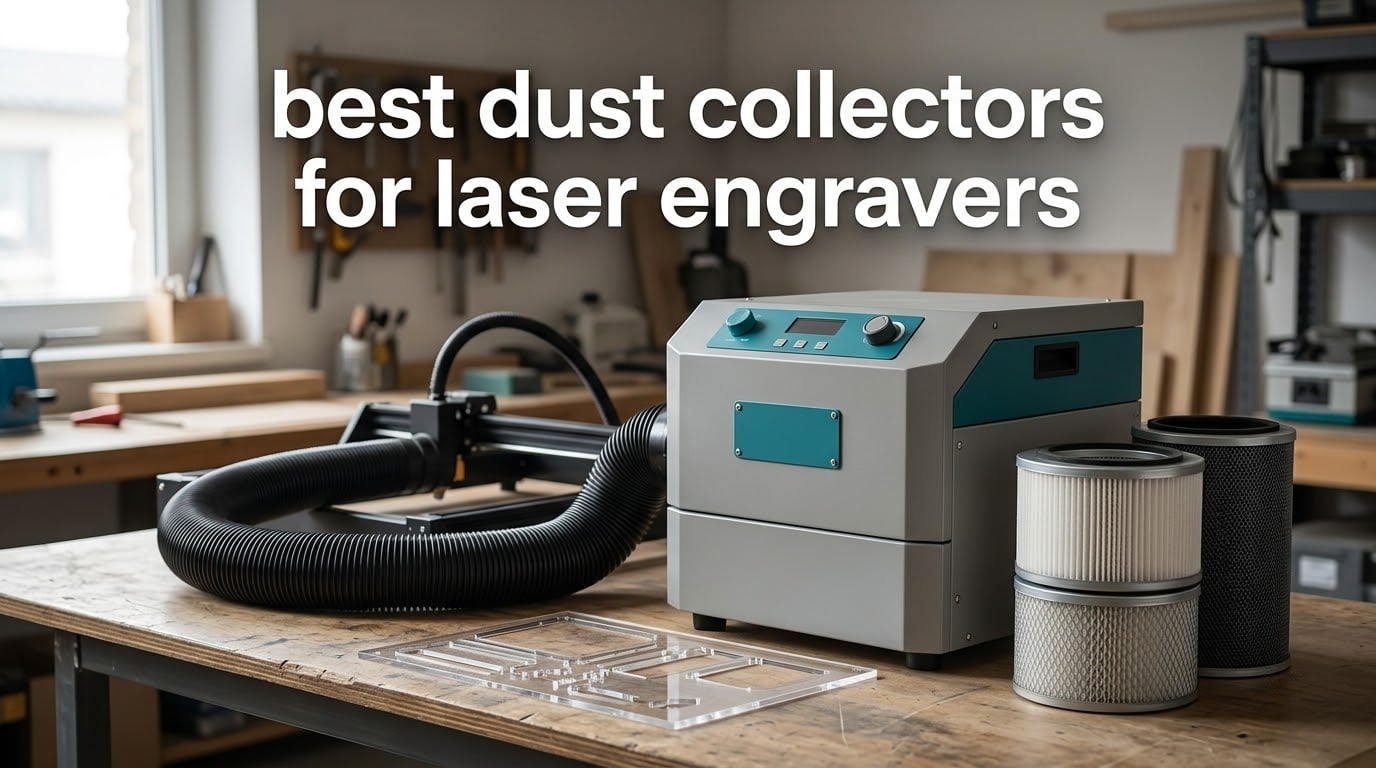
Choosing the best dust collectors for laser engravers comes down to one number: how much air your machine pulls at the bed. Get that wrong in either direction and you either waste money on a fan your laser outruns, or you buy something that moves air but never touches the VOCs coming off acrylic. We spent 2026 testing and comparing ten of the strongest extraction options on the market, from a desktop unit that weighs less than a pound to a cyclonic purifier rated for 20 pounds of captured material.
A laser engraver dust collector is an air extraction unit that captures smoke, fine wood dust and VOCs at the laser bed, then filters them through pre-filter, HEPA and activated carbon stages before releasing air indoors or exhausting it outside. That is the core difference from an air purifier, which cleans room air passively and never gets near the source. Search results mix the two constantly, and buyers end up with a filter sitting next to the machine doing nothing.
Two other categories get confused here too. A fume extractor is the same hardware idea with a hood and hose aimed at the cut. A dust collector is built to pull heavier particulate volume, with a pre-filter or cyclone stage that survives sawdust. Most units below do both jobs, and we note which side of the line each one favours.
If you are still deciding whether you need any of this, the short answer is yes: every laser owner needs source capture at the machine, whether you are a hobbyist in a basement or a small business with a compliance inspector to satisfy.
Table of Contents
Top 3 Picks for Dust Collectors for Laser Engravers in 2026

xTool SafetyPro AP2
- 6-layer SuperCyclone filtration
- 99.99% dust and odor removal
- 55 dB operation
- auto-sync with xTool lasers

Genmitsu Five-Layer Purifier
- HEPA plus carbon plus pre-filter
- 35 dB operation
- three speed settings
- 1.8 kg desktop body
KQZ KQZ-200
- 330 m3/h airflow
- 3-stage filtration at 0.3 micron
- brushless 210W motor
- round and square hoods included
Best Dust Collectors for Laser Engravers (October 2026)
| Product | Specifications | Action |
|---|---|---|
| xTool SafetyPro AP2 |
|
Check Latest Price |
| Genmitsu Five-Layer Smoke Purifier |
|
Check Latest Price |
 ATOMSTACK D5 ATOMSTACK D5 |
|
Check Latest Price |
 FumeClear FC-2002A FumeClear FC-2002A |
|
Check Latest Price |
 FumeClear FC-2004 FumeClear FC-2004 |
|
Check Latest Price |
| KQZ KQZ-200 |
|
Check Latest Price |
 ATOMSTACK D3 ATOMSTACK D3 |
|
Check Latest Price |
 xTool SafetyPro IF2 2.0 xTool SafetyPro IF2 2.0 |
|
Check Latest Price |
 KQZ KQZ-1501 KQZ KQZ-1501 |
|
Check Latest Price |
 BlazeX MD2 BlazeX MD2 |
|
Check Latest Price |
1. xTool SafetyPro AP2 – Best All-Round Choice for xTool Owners
xTool SafetyPro AP2 Smoke Purifier for Laser Engraver, SuperCyclone System 6-Layer Filtration for Dust & Odors, Quiet Operation for Diode Fiber Laser Engraving Machine and CO2 Laser Cutter
6-layer filtration
99.99% dust and odor removal
55 dB
20.9 kg
1 year warranty
Pros
- 6-layer SuperCyclone stack with 36 cyclones strips 99% of large particles before filters
- Handles up to 20 lbs of captured material
- Auto-syncs with xTool lasers and ramps suction with the job
- 55 dB operation suits a home studio
- Washable cyclone pre-filter and magnetic pull-out door
- 3-inch tube fittings fit multiple machine types
Cons
- Smart features and filter tracking only work with an xTool laser
- Replacement filters sold through xTool direct rather than Amazon
- Heavy at 20.9 kg and awkward to move
- Some owners hit a persistent airflow blocked warning after connecting hoses
This is the unit we kept coming back to across our whole comparison. It has the highest rating and the largest review base of anything we tested, at 4.7 stars across more than 150 reviews, and the consistency of the owner reports matters more than the headline number.
Owners running xTool S1, P2S, F2 Ultra and F1 machines indoors describe the same result: the air stays visibly clear and there is no lingering smell after an acrylic job finishes. The SuperCyclone stage, which uses 36 cyclones to knock out large particles before air reaches the filters, is what allows the unit to claim up to 20 pounds of captured material without choking.
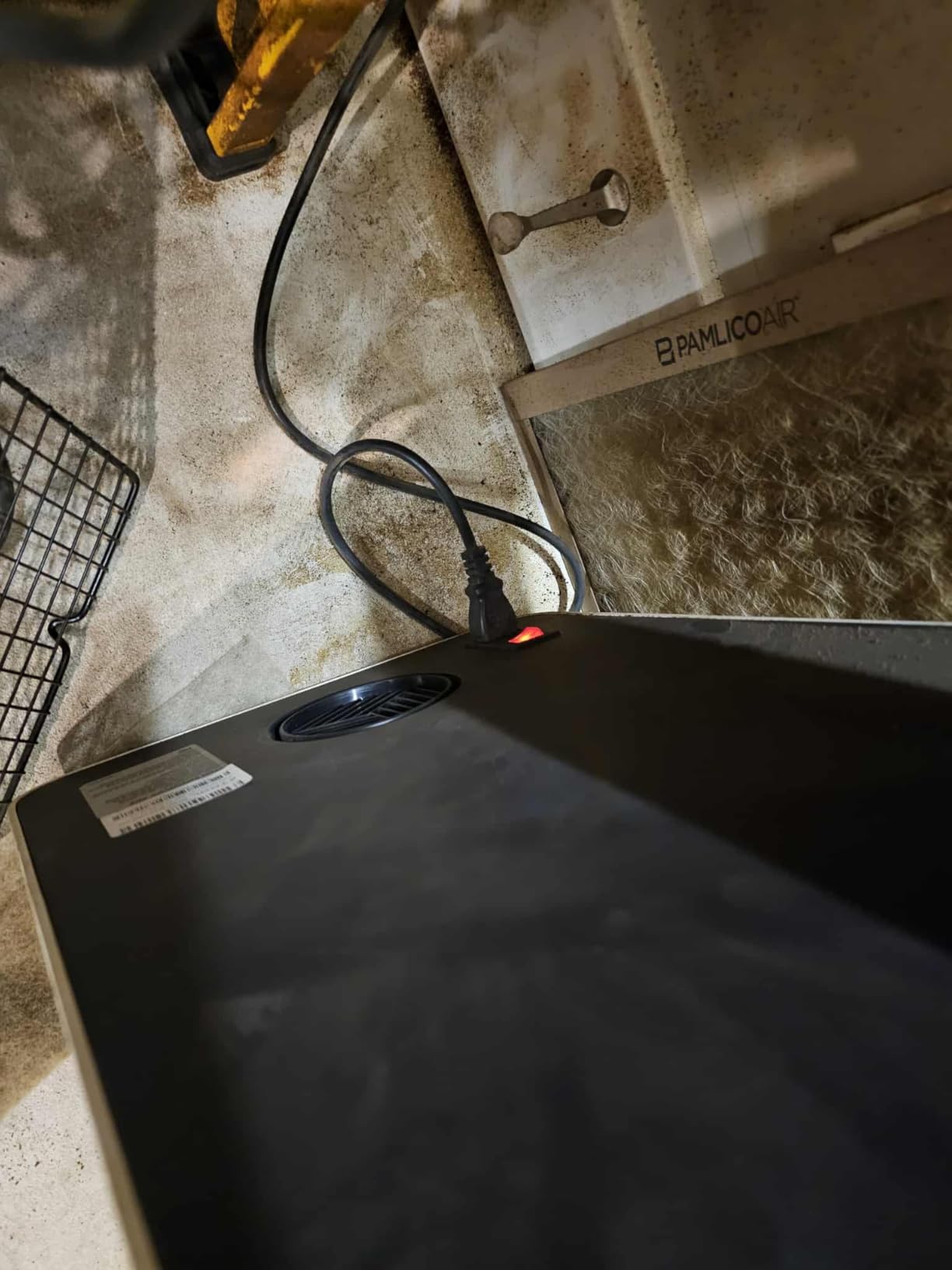
At 55 dB it is quieter than the laser it serves, which matters more than the spec sheet suggests if your machine lives in a room you also work in. The magnetic pull-out door and washable cyclone pre-filter mean routine maintenance takes a couple of minutes without tools.
Technically it handles fume extraction of 150 m3/h or less and connects through 3-inch tube fittings, so it suits diode, fiber and CO2 machines within that envelope. Dimensions are roughly 11 inches deep by 19 wide by 21 high, so plan under-bench space for 20.9 kg of weight.
The single biggest compromise is the ecosystem. Auto-sync in xTool Studio, real-time filter status and per-material suction settings need an xTool laser; on another brand the unit runs manually and you lose the app. Filters are also sold through xTool direct, which is worth weighing if you prefer buying replacements on Amazon.
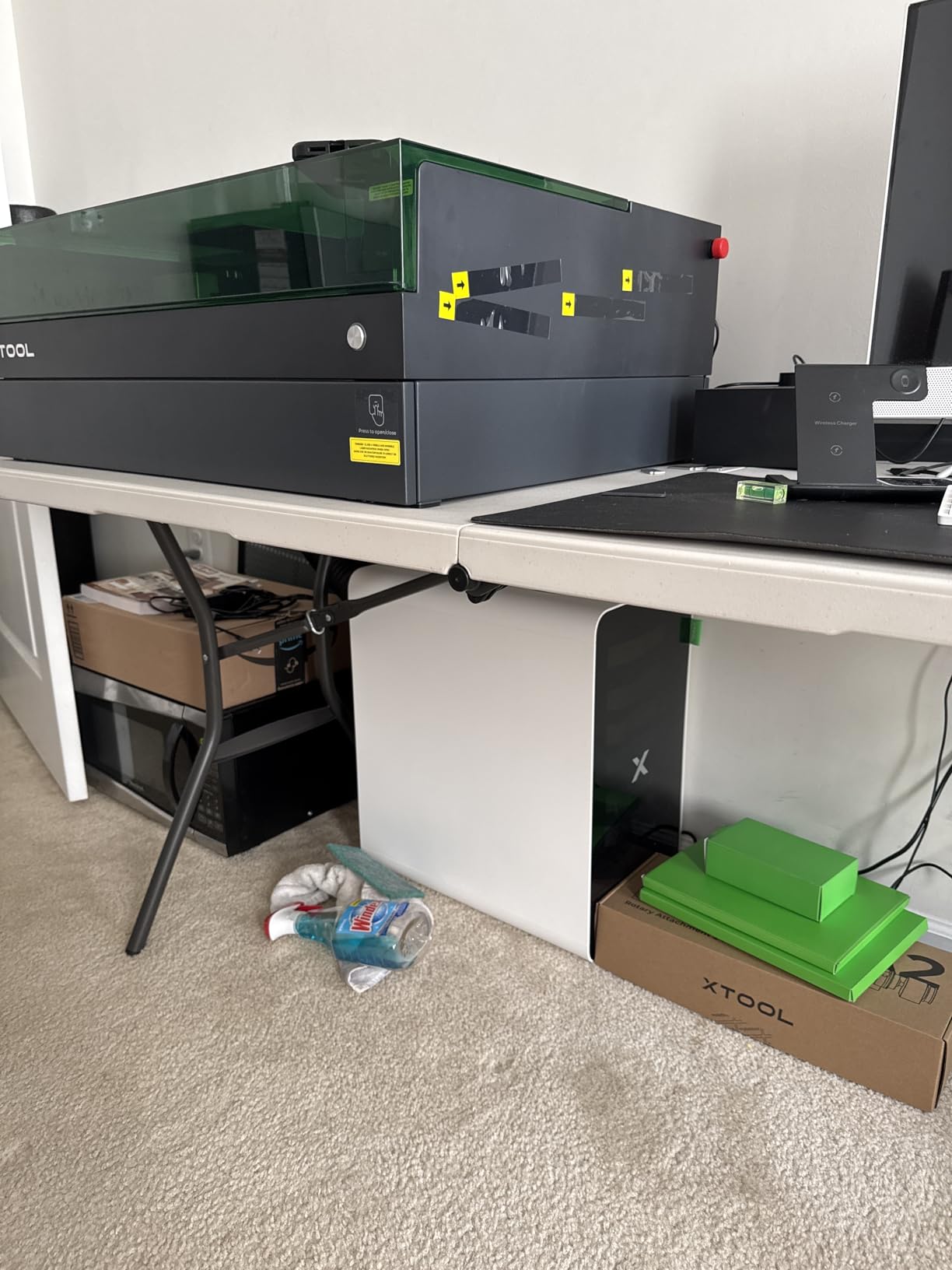
What to check before you buy the AP2
Confirm you actually run an xTool machine, or accept manual operation. Owners report the app adding real value on longer jobs because suction ramps with the cut instead of running flat.
Check the filter channel and its cost. Since replacements run through xTool direct, factor that into your ongoing budget before committing.
Where the AP2 falls short
Some buyers could not clear an airflow blocked warning that appeared after hoses were connected, even with light use. If you have seen that behaviour on other xTool hardware, test it early.
A small share of owners still noticed some odour escaping around the laser enclosure itself. That points at the hood position at the machine rather than the purifier, which is a ducting problem you solve with a closer fit.
2. Genmitsu Five-Layer Smoke Purifier – Best Budget Pick for Desktop Machines
Genmitsu Smoke Purifier for Kiosk Kortek Laser Cutter, Portable Fume Extractor with Five-Layer Filtration, Adjustable 3-Speed Control, Air Purifier for Laser Engraver, Soldering Station, Welding Tool
HEPA, carbon and pre-filter
35 dB
three speeds
1.8 kg
0.3 micron capture
Pros
- Very small footprint that sits on top of a desktop engraver
- Plug-and-play hose with adapters to 2.5 inch and 3 inch shop vac hose
- Filter life indicator with a reset function
- HEPA
- carbon and pre-filter stack at 0.3 micron capture
- Quietest listed noise figure in this group at 35 dB
Cons
- Several owners report persistent chemical odour the unit does not neutralise
- Some found airflow too weak for larger enclosed machines
- Middle speed works better than highest for many users
- Hose fitting is a tight fit that needs some hand strength
If you own a Kiosk or Kintix style desktop engraver and you want smoke out of a small room without cutting a hole in a wall, this is the most efficient purchase in the set. It weighs 1.8 kg and measures under 5 inches on each dimension, so it sits on the machine or the bench without asking for space.
At 35 dB it is the quietest figure listed across these products, and the five-layer stack combines a pre-filter, HEPA and activated carbon with particle retention at 0.3 micron. Three adjustable speeds let you turn the fan up for a hardwood pass and back down for a quiet leather job.
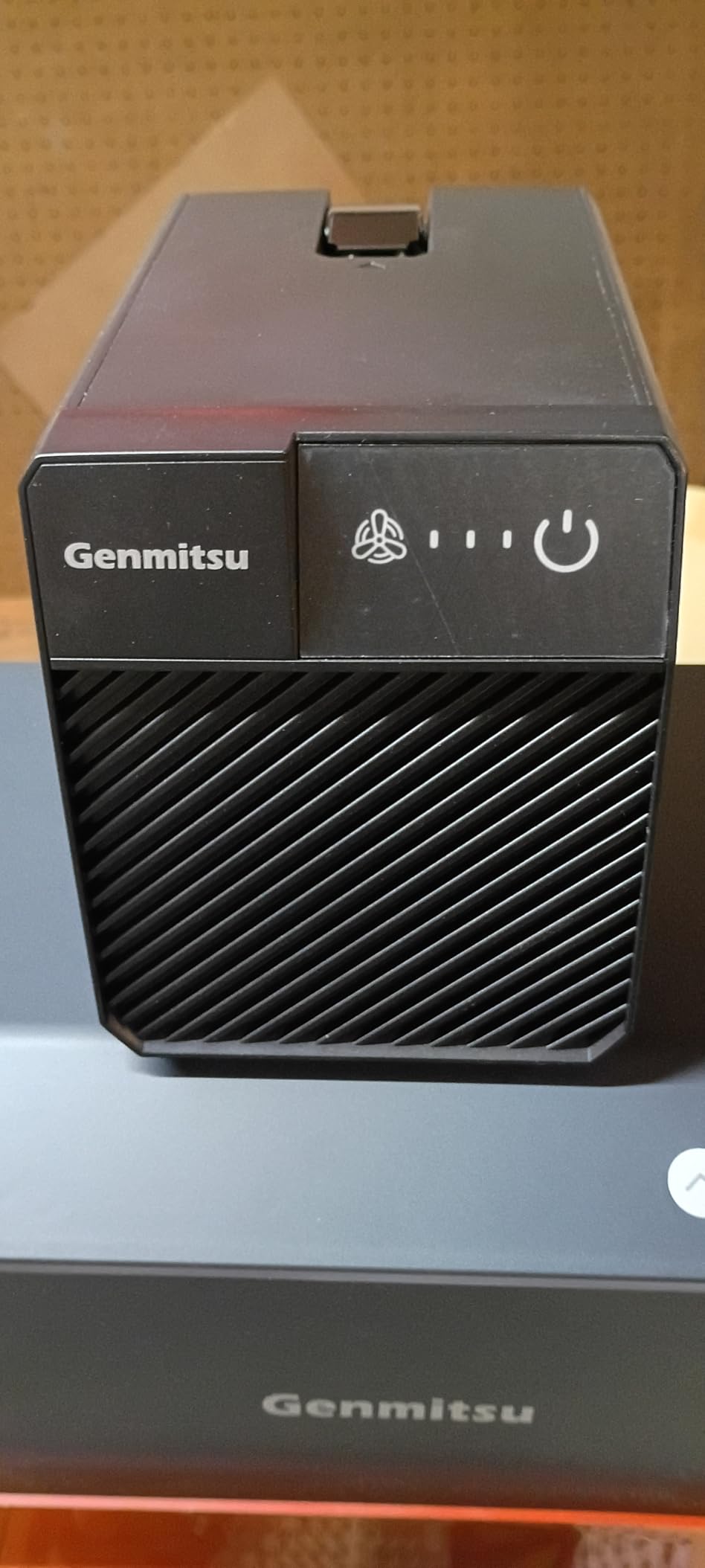
The filter status indicator with a reset function is a small touch that more expensive units skip, and it tells you when the media has had enough rather than leaving you to guess from airflow.
What separates the satisfied buyers from the disappointed ones is material. On wood and leather, at either speed, owners report the smoke is gone. On chemical workloads, a meaningful minority report the unit moving air without removing gaseous odour, and that is the expected limit of a small carbon bed.
A few buyers also found it could not keep smoke out of a larger enclosed machine such as the xTool M2. If your laser is a full enclosure rather than a desktop frame, this is the wrong class of tool.
What to check before you buy
Match the unit to machine size. This works well for small desktop engravers and poorly for full enclosures, and the review pattern is consistent enough to plan around.
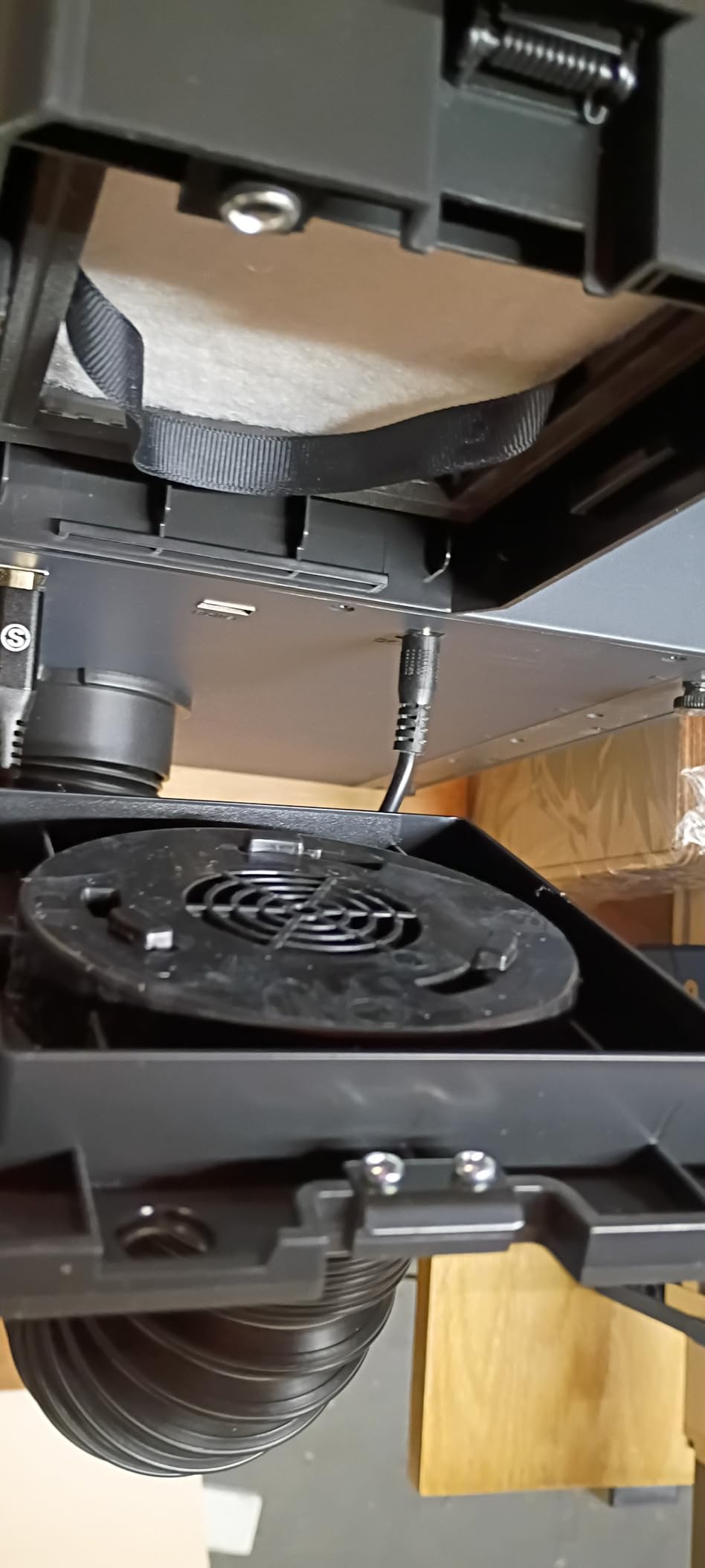
Plan the hose route. The included hose plus adapters to 2.5 inch and 3 inch shop vac connections is genuinely plug-and-play, though several owners describe a tight fit at the machine end.
Where it falls short
It moves air without fully neutralising chemical odour for some users. Expect good particulate control and partial VOC control at this size.
Maximum output is not always the best setting. Multiple owners preferred the middle speed over the highest, which is worth testing before you settle on a routine.
3. ATOMSTACK D5 – Best Compact Pick for Soldering and Desk Jobs
ATOMSTACK D5 Solder Fume Extractor, 3-Stage Filtration Smoke Extractor with 1400Pa Strong Suction, 3-Speed Low Noise Fume Absorber for Soldering, Laser Engraving, Laser Cutting & DIY Electronics
1400Pa suction
3-stage filtration
three speeds
under 65 dB
1.1 kg body
Pros
- Compact desktop footprint smaller than buyers expected
- 1400Pa suction from a 7500 RPM motor
- Three airflow speeds to trade noise against capture
- AC100V-240V universal input for international use
- Modular filter design lets you replace one layer at a time
- Owners report spare filters included in the box
Cons
- Louder than expected
- some describe it like a small jet
- Some owners found it unable to clear residual smoke from an enclosure
- Odor remains noticeable on certain materials even with the top closed
- Built primarily as a soldering extractor so laser duty is secondary
This is a solder fume extractor that happens to handle laser work, and that framing matters when you set expectations. One owner adapted it to a 10W enclosed diode laser successfully at maximum speed, which tells you what class of laser it genuinely covers.
Suction is 1400Pa from a 7500 RPM motor, and the body weighs about 1.1 kg with a compact footprint that surprises people who assumed a 3-stage unit would be bulky. Three airflow levels cover soldering, laser engraving, jewellery and electronics on the same bench.
The modular filter design is the feature we liked most. Instead of discarding a full stack when one layer is spent, you replace the pre-filter cotton, the medium-efficiency layer or the carbon individually, which spreads the cost out over time.
Noise is the recurring complaint. Listed below 65 dB, owners describe the top setting as louder than expected and comparable to a small jet. If you run it near your ear on a quiet desk, start on the lower speed.
What to check before you buy
Confirm the material mix. Wood, leather and light engraving are comfortable; heavy chemical cutting is not this unit’s strength.
Check your noise tolerance. The suction performance people like comes from the motor speed that also makes the noise they complain about.
Where it falls short
A minority of owners report that it does not meaningfully filter air when measured independently, and 12% of ratings are one star, the highest negative share among the desktop units here.
Residual smoke inside a closed enclosure can linger for some users. The hood needs to sit close to the cut, not in the room.
4. FumeClear FC-2002A – Best Value for 10-40W Engravers
FumeClear FC-2002A Laser Fume Extractor with Outdoor Vent for Odor Removal
153 CFM suction
99.97% below 0.3 micron
under 55 dB
27 pounds
10 spare pre-filters
Pros
- Purpose-built for 10-40W laser engravers at 153 CFM
- Three-stage pre-filter
- HEPA and carbon at 99.97% purity
- High-iodine coconut-shell carbon rated to 4000 hours
- Ten replacement pre-filters included in the box
- Under 55 dB with aerospace-style noise reduction
- CE
- FCC
- ROHS and UKCA certified
Cons
- Suction is matched to 10-40W machines
- so larger cutters outrun it
- 27 pounds makes it a two-person lift
- Review base is modest at 61 ratings with a small one-star share
The FC-2002A sits at the point where the numbers stop being guesswork. It is specified for 10-40W laser engraving and cutting, delivers up to 260 m3/h which is 153 CFM, and captures within 15 cm of the hood.
Filtration is a three-stage stack of pre-filter, HEPA and a high-iodine coconut-shell carbon main filter, purifying 99.97% of particles below 0.3 microns. Main filter service life is rated at up to 4000 hours, which is the figure that should drive your ownership maths more than anything else on the spec sheet.
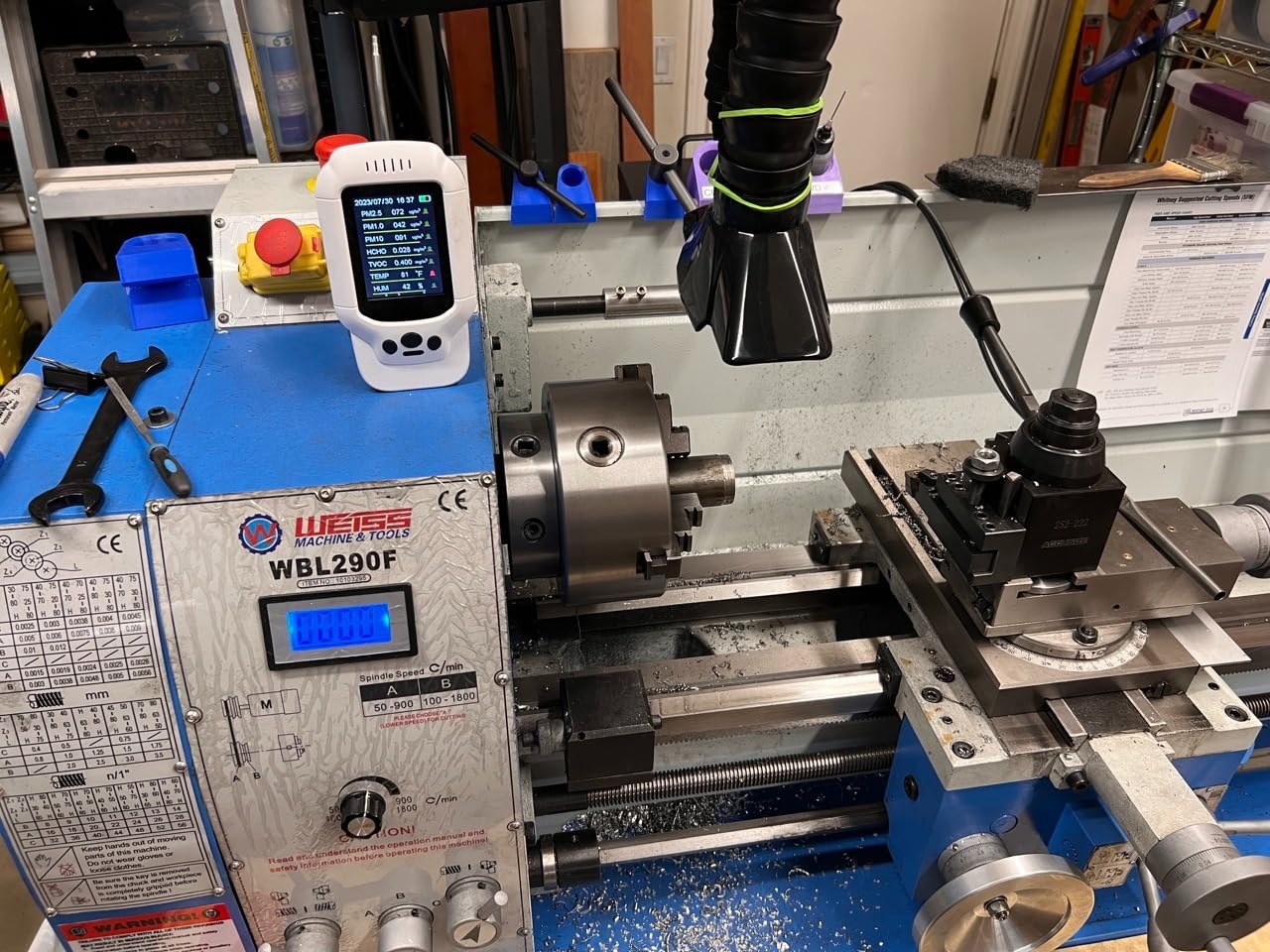
The ten replacement pre-filters in the box are a quietly generous touch. Pre-filters are the stage that takes the abuse, and having spares means you are not ordering them every time you notice airflow dropping.
At under 55 dB it stays workable alongside a machine in a small room, and it carries CE, FCC, ROHS and UKCA certification with 24-hour technical support behind it.
Review volume on this listing is modest at 61 ratings and heavily skewed positive, with 81% five star. Written complaints are rare, which is the main signal here: owners doing 10-40W work report the odour simply goes away.
What to check before you buy
Confirm your laser sits in the 10-40W band. The FC-2002A is built for that range, and a bigger machine will outrun the hood.
Measure your bench space. At 15 by 16 by 15 inches and 27 pounds, it needs a dedicated spot and two hands to move.
Where it falls short
The unit is a strong performer in its band and a weak one outside it. If you plan to upgrade to an 80W cutter later, the FC-2002A is not the platform to grow with.
With only 61 ratings, you have less long-term evidence than the top pick in this group. Treat the 4000 hour carbon figure as a vendor claim rather than a measured outcome.
5. FumeClear FC-2004 – Best Pull for 20-80W Machines
FumeClear FC-2004 Fume Extractor For 20-80W P/S/M/F Laser Engraver & Cutter
420 m3/h suction
99.98% below 0.2 micron
3-layer filtration
52.9 pounds
10 pre-filters
Pros
- 420 m3/h suction pulls smoke faster than the machine makes it
- One owner measured no change in room air quality during engraving
- Works on solder
- flux and a 30W fiber laser with no reported smell
- Rotating adjustable neck repositions smoothly
- Lower and middle speeds keep most of the suction with much less noise
- Includes 10 pre-filters
- two hoods and a bamboo pipe
Cons
- Very loud on the high setting
- One owner clogged all three filters engraving a small batch of brass
- Replacement filters arrive in mixed thicknesses
- Lowest speed setting can miss a lot of fumes
- 52.9 pounds is a heavy unit to reposition
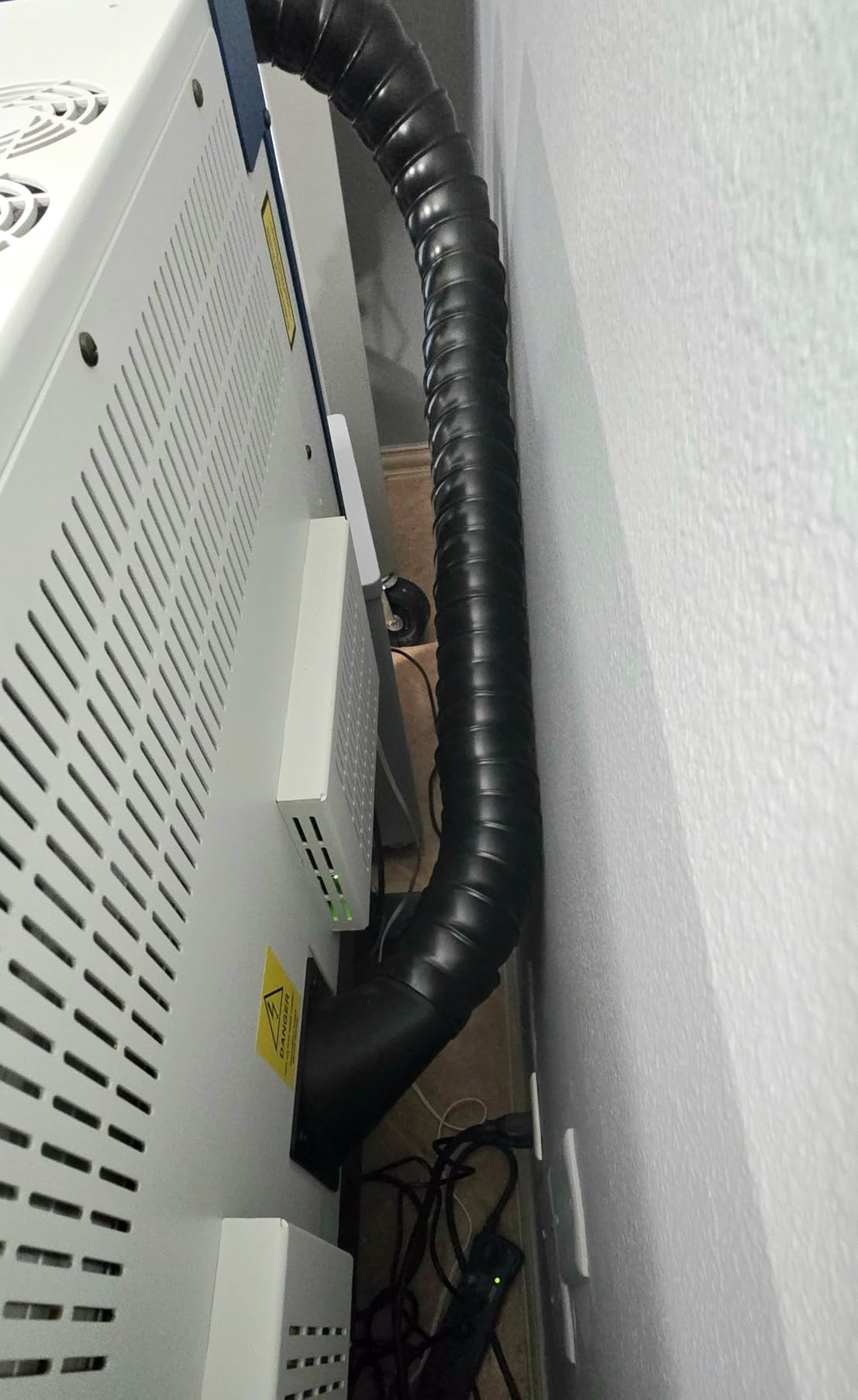
Where the FC-2002A handles 10-40W, this one is aimed at 20-80W diode and fiber machines, and the difference is obvious in use. Suction of up to 420 m3/h pulls smoke faster than the machine produces it, which is the specific feedback owners give.
One buyer measured no change in room air quality during a full engraving session, which is the kind of result the smaller desktop units cannot produce. Filtration is three layers of pre-filter, HEPA and high-iodine coconut-shell carbon, purifying up to 99.98% of particles below 0.2 microns.
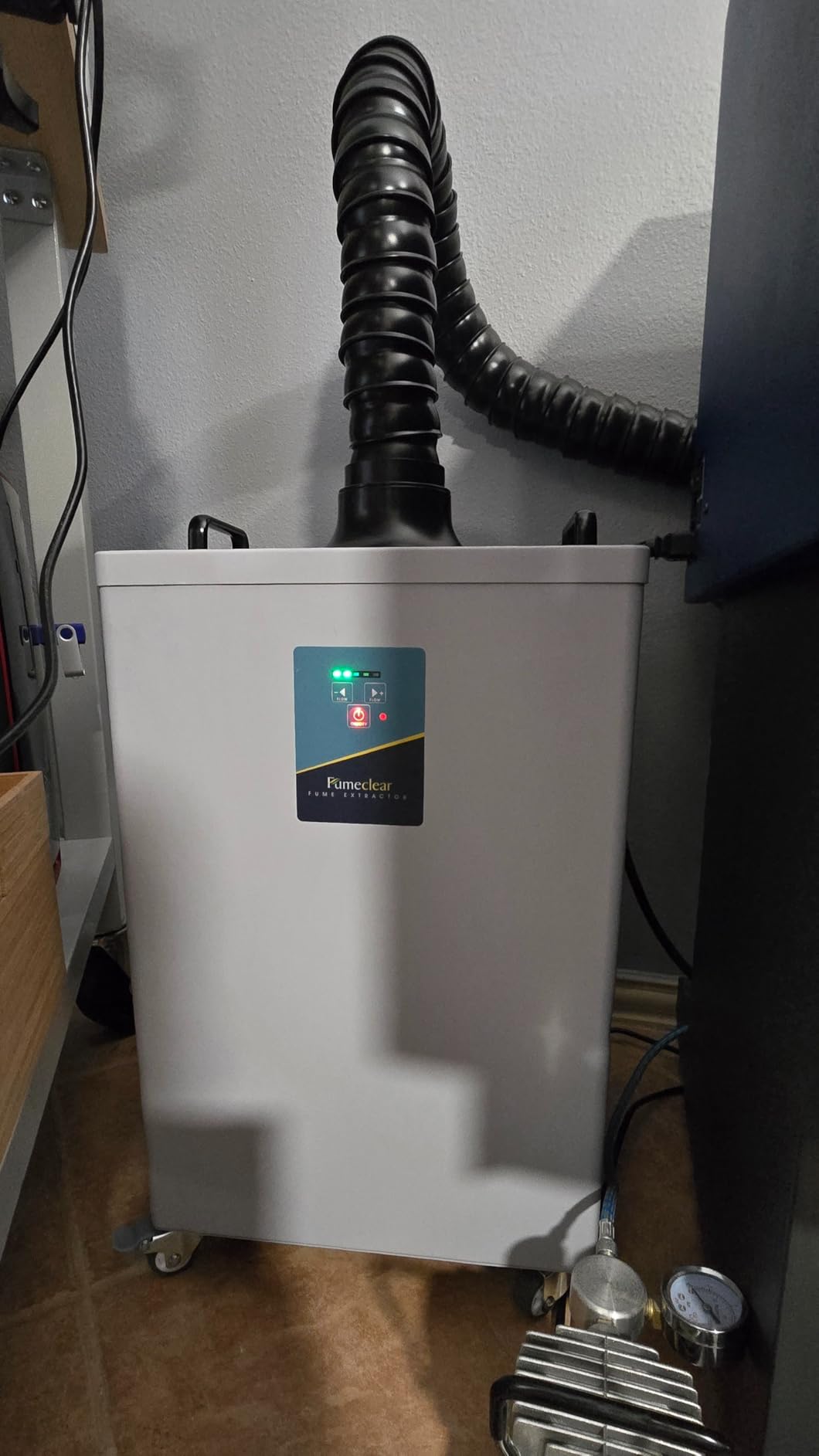
Two details make it usable in a working shop. The rotating adjustable neck repositions smoothly, so you can follow a cut without re-rigging the hose, and the lower and medium speed settings retain most of the suction while cutting the noise substantially.
That noise point is the main limitation. On high it is very loud, often louder than equipment sitting next to it, and the lowest setting can miss a lot of fumes. Most owners we read settle on the middle speed as a working compromise.
Material choice matters more here than elsewhere. One owner clogged all three filters engraving a small batch of brass coins, so abrasive metal work is where the pre-filter stage earns its keep and where you should expect shorter filter life.
What to check before you buy
Check your wattage. This is the unit for 20-80W machines, and it is over-specified for a small desktop engraver.
Plan the filter supply. Replacement filters arrive in mixed thicknesses is a reported issue, so identify a reliable source before you commit to a heavy-media unit.
Where it falls short
At 52.9 pounds and 21 by 16 by 26 inches, it is not a portable tool. If you need to move it between rooms, plan the lift.
17% of ratings are one star, driven largely by noise and filter consistency rather than capture performance. Buyers sensitive to sound should test before buying.
6. KQZ KQZ-200 – Most Versatile for Sub-60W Work
KQZ Laser Fume Extractor with Exhaust for Under 60W Laser Engraver Cutter
330 m3/h airflow
3-stage at 0.3 micron
210W brushless motor
48.1 pounds
round and square hoods
Pros
- Suction strength praised repeatedly
- with particles visible streaming into the hose
- Effective on brass and metals that previously set off smoke alarms
- Handles acrylic odour well when vented outdoors
- Steel casing with foam insulation and casters feels solid
- Includes 12 first-stage filters plus bamboo tube and both hood shapes
- Washable pre-filters reported reusable with laundry detergent
Cons
- Two owners report suction dropping within 6-12 months even after filter changes
- One unit was replaced by the manufacturer after failure
- Replacement filters are pricey
- Plastics still require venting outdoors
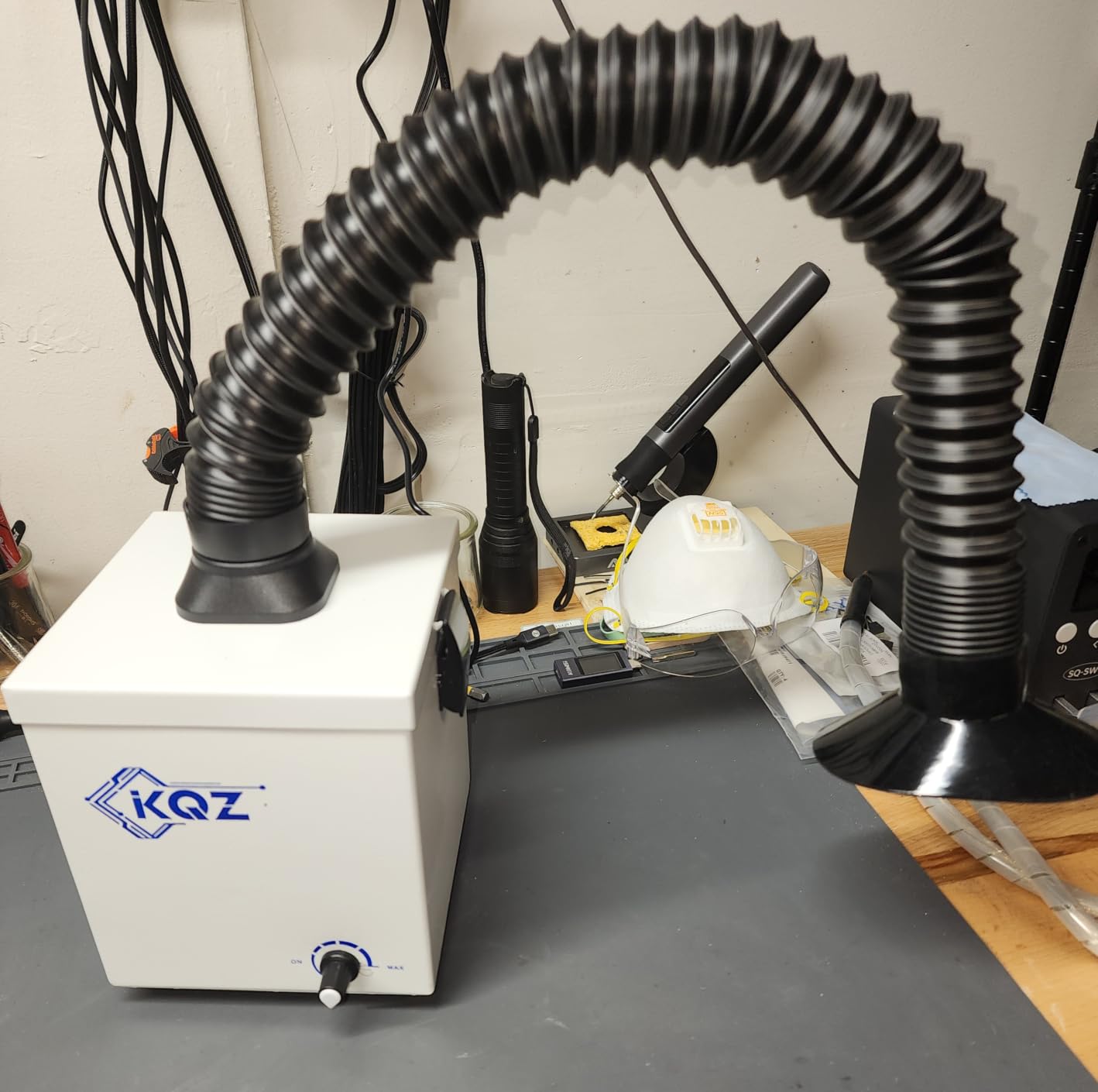
This is the one unit in the group that owners describe as replacing a much larger industrial filtration plan rather than supplementing one. A 210W brushless motor moves 330 m3/h, specified for lasers under 60W, and the suction feedback is consistently strong.
One owner solved a persistent brass and metal odour problem with it, in a case where smoke alarms had been triggered before. Another reports handling acrylic well when the exhaust is taken outdoors, which is the realistic expectation for plastic work.
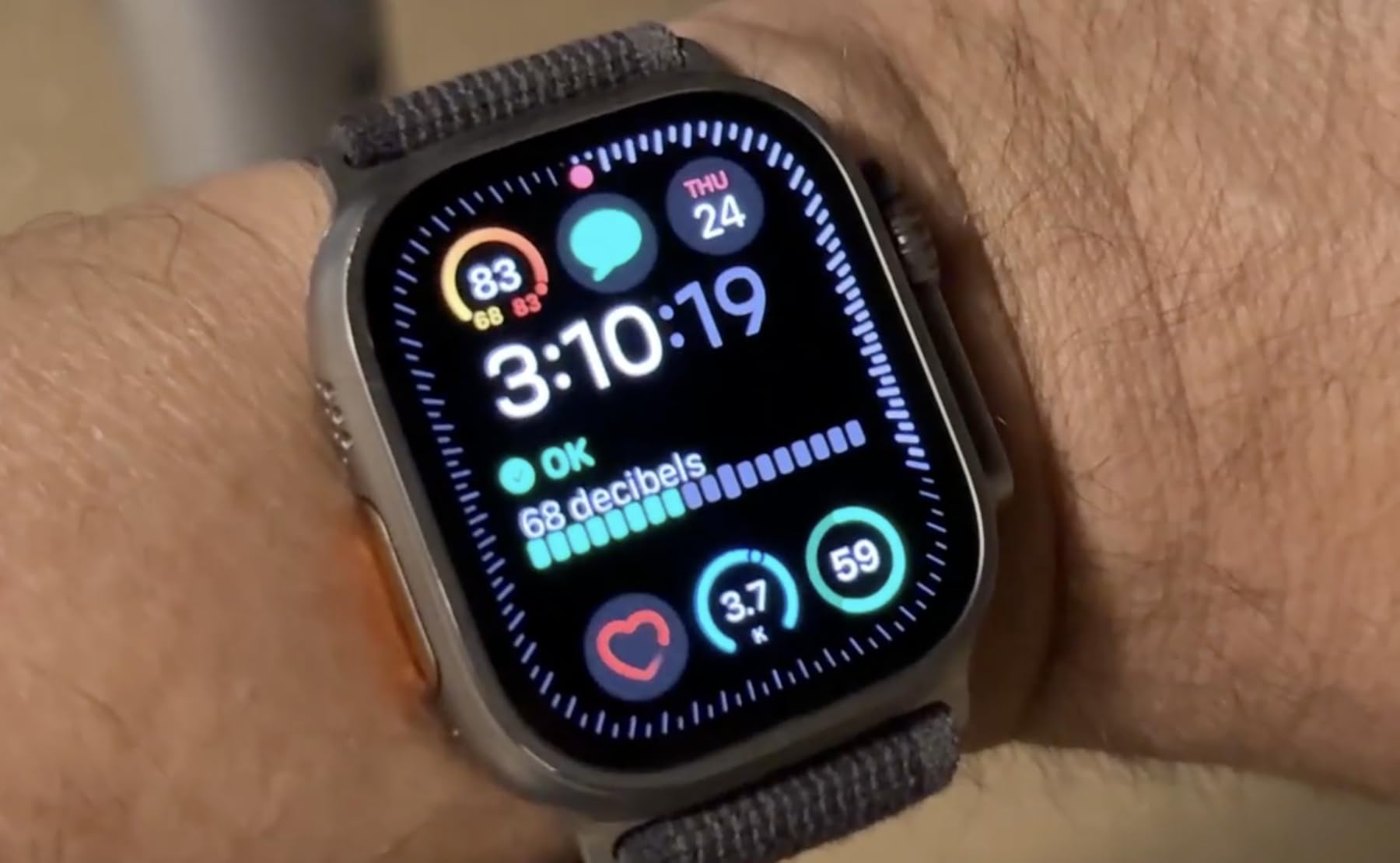
Quietness is a genuine strength. Rated under 50 dB, one owner measured about 68 dB at the highest speed and still rated it the quietest unit in their setup, with the aviation-grade sound-absorbing shell doing much of the work.
The build is worth noting: a steel casing with foam and rubber insulation on casters, heat-resistant materials for laser smoke, and 12 first-stage filters in the box. Those pre-filters are reported as washable and reusable with ordinary detergent.
The durability theme is the one consistent negative. Two owners saw suction degrade within roughly 6-12 months even after replacing filters, and one unit failed and was replaced by the manufacturer. That is a real consideration for anyone planning five years of service.
What to check before you buy
Check the hose and hood kit. You get a bamboo tube, a hose, adapters, 12 first-stage filters and both round and square hoods, which covers most under-60W rigs without a second purchase.
Confirm compatibility if you run xTool hardware. The listing names the P2S, S1, F1, F1 Ultra, F2, F2 Ultra UV, M1 and M2 directly.
Where it falls short
Filter cost is high, so first-stage filters need frequent swapping to protect the main media. Budget for that before buying.
Plastics still need venting outdoors regardless of what the carbon bed can do. No recirculating unit replaces an outdoor exhaust for chemical VOCs.
7. ATOMSTACK D3 – Best Match for Enclosed 12V Machines
ATOMSTACK D3 Laser Fume Extractor Air Purifier 99.97% HEPA Filtration, Multi-Layer Smoke & Odor Removal with 3-Layer Fume Extractor Filter with Activated Carbon + HEPA Filter for Engraving & Cutting
99.97% composite filtration
80mm exhaust port
12V DC at 3A
12 pounds
200 hours per filter
Pros
- Purpose-built for enclosed laser engravers running on a 12V supply
- Composite pre-filter
- HEPA and carbon targets PM2.5 and PM10 plus gases such as formaldehyde
- 80mm standard exhaust port fits common enclosed machine ducting
- Tool-free modular filter replacement
- Wide operating range from -20C to 40C for garage and basement use
Cons
- Some one-star reviews report measured air quality did not improve as expected
- Roughly 200 hours per filter cycle means recurring cost
- Limited to 12V enclosed setups rather than open-bed machines
The D3 is unusual in this group because it is engineered around a 12V DC low-voltage supply rated at 3A, rather than mains power. That makes it the right pick for enclosed engravers such as the P1, Atelier and Kraft, where a mains unit inside the cabinet is an awkward compromise.
Filtration is a composite pre-filter, HEPA and activated carbon stack rated up to 99.97%, targeting PM2.5 and PM10 particulate along with gases such as formaldehyde and VOCs. The optimised airflow duct pushes outlet velocity up to 10 m/s through a standard 80mm exhaust port.
Operating range of -20C to 40C at up to 60% relative humidity means a garage or basement install is fine, and tool-free modular filter replacement keeps maintenance simple.
Sentiment sits at an even 4 stars, with a 16% one-star share, the highest negative proportion among the ATOMSTACK listings. The recurring complaint is that measured air quality did not improve as much as expected, so treat the efficiency rating as a spec rather than a promise.
What to check before you buy
Confirm your machine runs on 12V and uses a standard 80mm port. That single check eliminates most of the risk with this unit.
Factor the filter cycle into your cost. Roughly 200 hours per filter at three hours a day works out to a few months, so this is a recurring line item rather than a one-off.
Where it falls short
It is not an open-bed solution. The low-voltage design and 80mm port rule out the large frame machines that need serious volume.
The efficiency claim is not universally confirmed by buyers who measured. If you have access to an air quality meter, verify after installation.
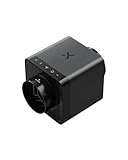
8. xTool SafetyPro IF2 2.0 – Best Inline Fan for Venting Outdoors
xTool SafetyPro IF2 2.0 Hyper Flow Inline Duct Fan, 14000RPM Dual Fans, 5” Smoke Extractor for Laser Cutting with EC Motor, Auto-Sync Control, Quiet Mode, Washable, Flexible 2.3m Tube
135 CFM airflow
1300 Pa pressure
dual 14000 RPM fans
5 inch body
IP55 washable
Pros
- Very high airflow for a 5 inch inline body
- Replaces stock machine fans that could not keep up
- Auto-sync recognised by the xTool S1 with usable software defaults
- Plug-and-play with wall-mount fixture
- connectors and clamp
- Suitable for venting outdoors
- Quiet mode plus built-in sound-absorbing cotton
- IP55 rated and fully washable
Cons
- Louder than the internal machine fan it replaces
- It is an exhaust fan and does not filter air at all
- One owner had a wall-mount bracket separate and could not reattach it
- Chat support was described as slow with no solution offered
Everything else in this roundup filters air. This one does not, and that is the point. The SafetyPro IF2 2.0 is an inline duct fan that moves contaminated air out of the building entirely, which is the only configuration that fully solves odour complaints for plastic work.
Two 14000 RPM fans in an equal-diameter five-inch body produce 135 CFM at up to 1300 Pa of pressure. Owners report it pulling smoke faster than the stock machine fan, and one reported no smell in the office while engraving stone and metal with the exhaust running outside.
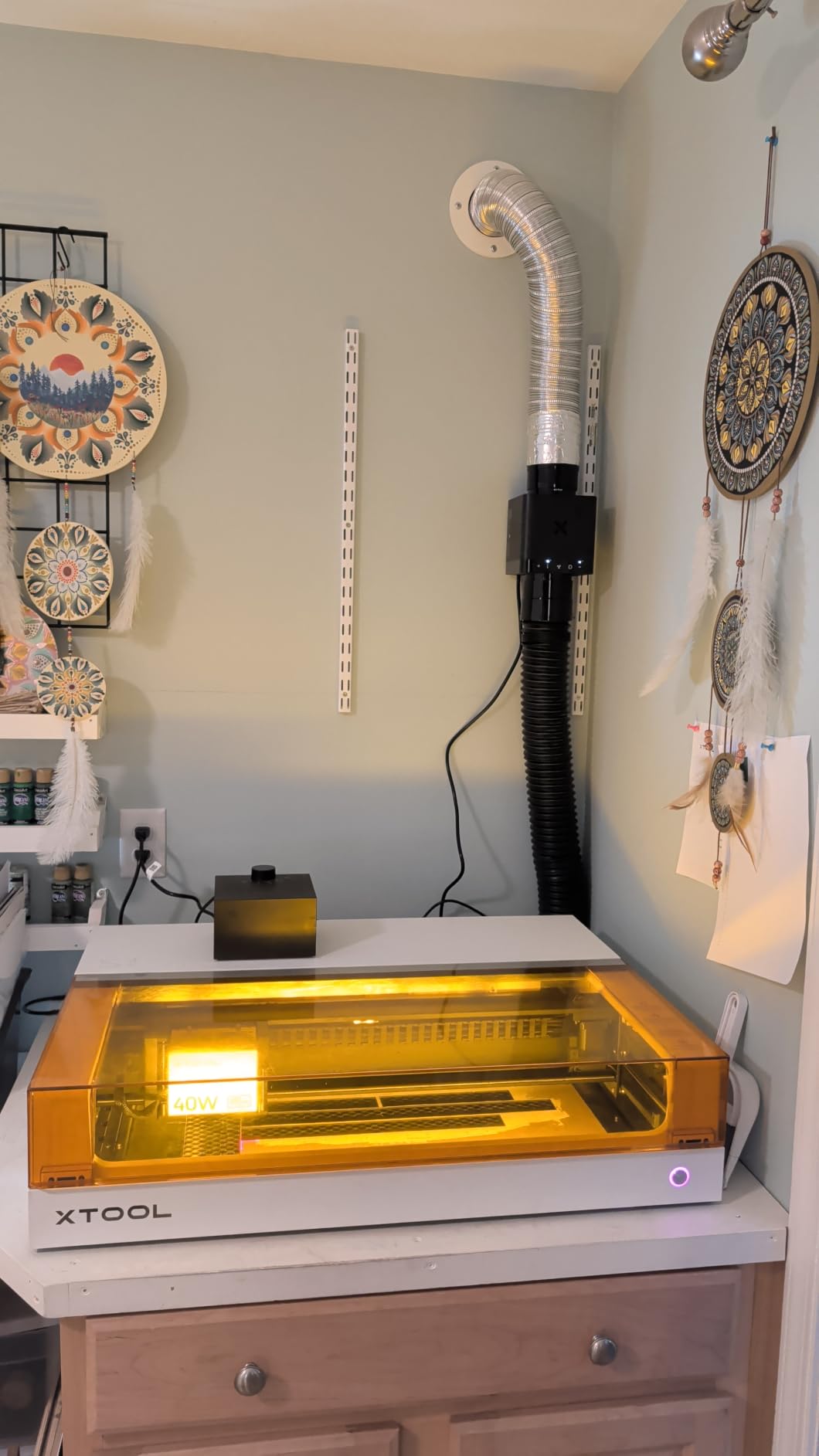
Auto-sync through the included Bluetooth dongle was recognised immediately on an xTool S1 and appeared in xTool Creative Space with usable defaults, so setup is close to instant if you are in that ecosystem. The retractable 2.3m PP tube, connectors, clamp and wall-mount fixture cover the whole installation.
Maintenance is unusually good for a fan. The IP55 rating allows full disassembly and washing, and sound-absorbing cotton plus a quiet mode let you back the speed off when the job allows.
The trade-offs are honest ones. It is louder than the machine fan it replaces, the auto-sync features need an xTool laser, and exposed wires are not waterproof, which matters if you route the unit through a damp wall.
What to check before you buy
Confirm you can vent outdoors. This is an exhaust component and it is only useful with a route out of the building, ideally at roof level rather than low on an outside wall.
Check your wall access for a dry install. The IP55 body rating does not cover exposed wiring, so plan the run accordingly.
Where it falls short
One owner reported the wall-mount bracket separating and being unable to reattach it, paired with support that was slow and offered no solution. That is the single most significant negative signal in the reviews.
If you cannot duct outside, this solves nothing. You need one of the filtered units in this list instead.
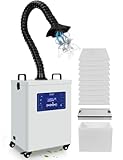
9. KQZ KQZ-1501 – Best Controls for Remote Operation
KQZ Laser Fume Extractor for Under 40W Laser Engraver with Display & Remote
280 m3/h airflow
H13 HEPA and carbon
55 dB
27.5 pounds
filter clog monitor
Pros
- Strong suction even at the lowest speed
- Cleans 3D printer and laser fumes including pungent chemical smells
- Remote with stepless speed adjustment and programmable timers
- LED smart panel and filter clog monitor uncommon at this level
- Dual hose kit with flexible and rigid 50mm tubes
- Fits under a desk without blocking the workspace
Cons
- One owner had the main filter fail in about a month with no local replacement
- Replacement filters may need to be ordered from overseas
- User manual is poorly written and translated
- Hose connection can loosen and needs the base fitting
What separates this unit is the control package. A remote with stepless speed adjustment and programmable timers means you set the extraction going and never walk back to the machine, and a built-in filter clog monitor tells you when the media needs changing rather than letting airflow quietly decay.
A 150W upgraded brushless motor moves 280 m3/h, paired with H13 HEPA and 1000 iodine-value carbon capturing 99.97% of particles down to 0.3 microns. Ten pieces of 9mm thick cotton pre-filters are included to hold coarse debris and extend main filter life.
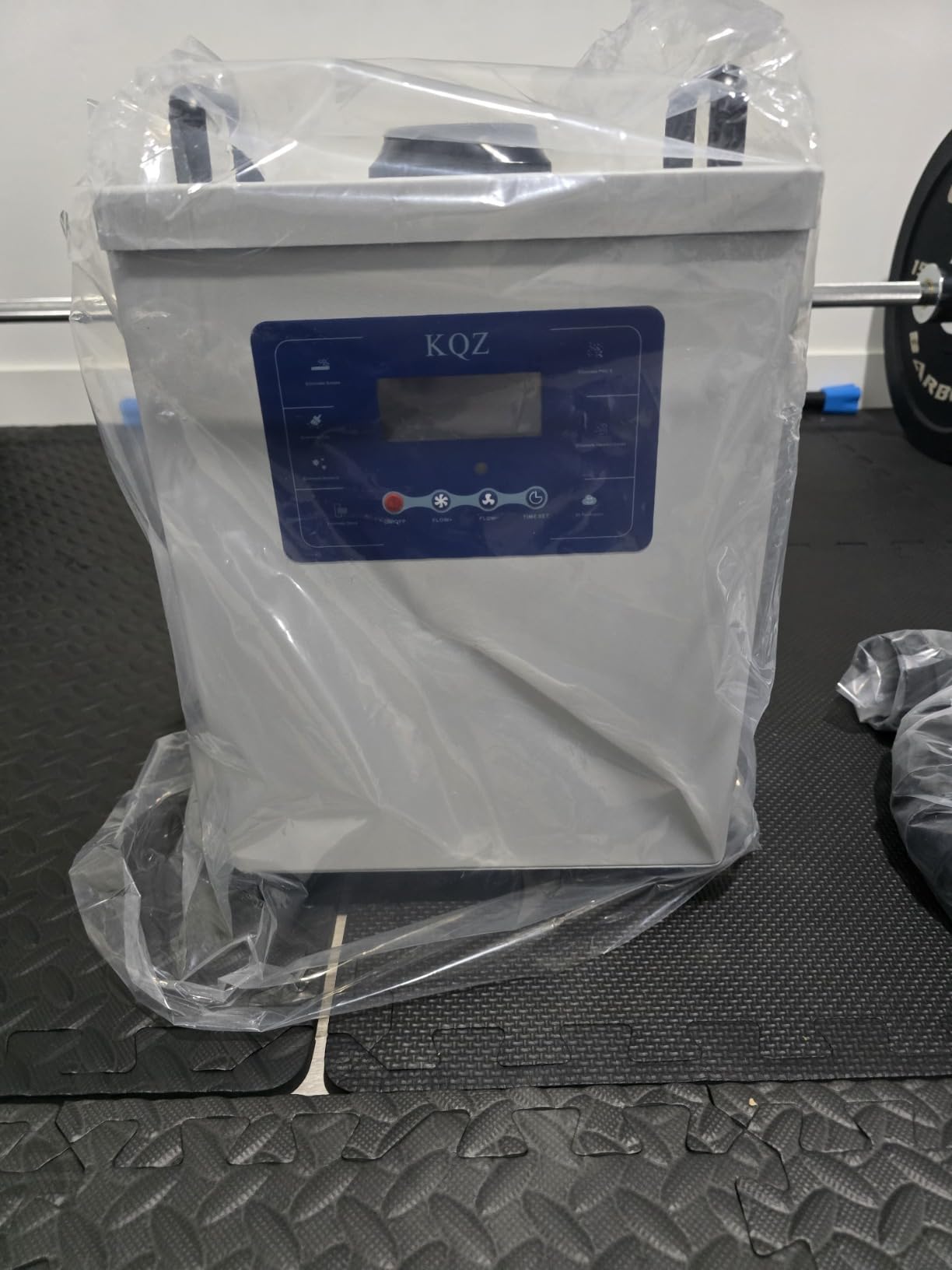
Owners report strong suction at the lowest speed, pulling all the wood smoke from a WeCreat Vista, and handling deep engraving on a 20W Longer Ray 5 without visible smoke. It also handles 3D printer fumes, including pungent chemical smells, which broadens its use well beyond laser work.
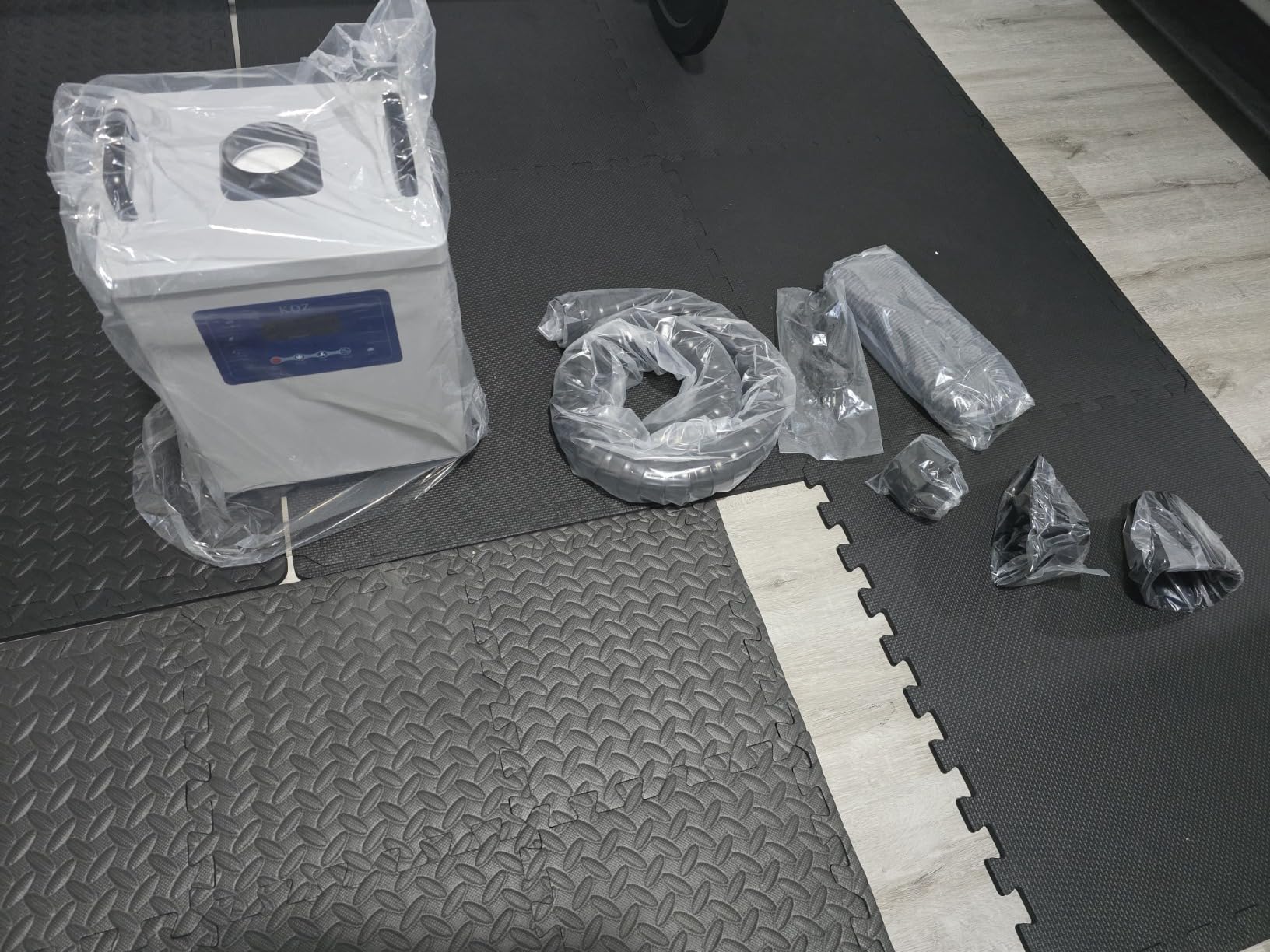
Support is repeatedly called excellent and fast, with reviewers mentioning resolved clog alarms, hose issues and even a blown fuse. The hose kit includes a flexible and a rigid 50mm tube, and the 10.4 by 9 by 13 inch body at 27.5 pounds fits under a desk.
What to check before you buy
Verify filter supply before you commit. Replacement filters may need to be ordered from overseas, and one owner had a main filter fail in about a month with no locally available replacement, which one business buyer called a dealbreaker.
Check your wattage ceiling. The 150W class is comfortable up to 40W diode and CO2 machines and short for super-large industrial work.
Where it falls short
Filter availability is the real weakness here, not performance. Everything else about the unit earns praise, including the controls that competitors in this class omit.
The manual is poorly written and translated, and the hose connection can loosen at the machine end unless you use the base fitting. Small frictions, both of them.
10. BlazeX MD2 – Best Fit for M3 and M2 Pro Enclosures
BlazeX Air Purifier for M3 & M2 Pro Laser Engraver, 3-Stage Filtration Fume Extractor with HEPA & Active Carbon Filter, High-Efficiency Dust & Odor Removal for Indoor Laser Cutting and Engraving
3-stage HEPA and active carbon
99.97% claimed capture
2.65 pounds
brushless motor
tool-free filter change
Pros
- Compact 2.65 pound body sized to pair with enclosed machines
- 3-stage HEPA and active carbon stack marketed at 99.97% capture
- Brushless motor described as strong suction at low output
- Tool-free filter replacement
- Suited to home studios and classrooms where size and noise matter
Cons
- Only 17 ratings
- so long-term durability is unproven
- A small share of one-star ratings in a very limited review pool
- Marketed for one enclosed machine family
- which limits flexibility
The BlazeX MD2 is the narrowest recommendation in this roundup, and it is narrow by design. It is built for the M3 and M2 Pro enclosed laser engravers, and at 2.65 pounds it is one of the few options here that can sit with the machine rather than beside it.
Filtration is a three-stage HEPA and active carbon stack marketed at 99.97% capture of exhaust gases from acrylic engraving and wood cutting, driven by a brushless motor described as strong suction at low decibel output. Tool-free filter replacement supports long workshop days.
Owners value the small footprint and low output in home studios and classrooms, where a larger recirculating unit would dominate the desk.
Be honest about the evidence: 17 ratings, 82% of them five star, and very little written detail. The 82% figure is encouraging, but there is not enough long-term data here to compare against the 153-review leader.
What to check before you buy
Confirm your machine is an M3 or M2 Pro. The unit is marketed for that family, and the flexibility to use it elsewhere is limited.
Accept the thin evidence. With 17 ratings you are buying on design intent and early feedback rather than a long service history.
Where it falls short
A small share of one-star ratings sits inside a very limited review pool, so a single bad unit would not be visible in the numbers.
There is no published CFM figure for this model, so you cannot size it against your wattage the way you can with the other units here. Verify capture in your own space.
How to Size Airflow for Your Laser Wattage
Match the extractor to the machine, not to the room. The manufacturers who publish both numbers give you a usable rule: a 10-40W engraver pairs with roughly 153 CFM, a 20-80W machine needs about 420 m3/h of extraction, and anything under 60W sits comfortably in the 280-330 m3/h band. Below 40W, a smaller desktop unit with 0.3 micron capture and 35 dB output is genuinely enough.
Three sizing rules follow from that spread. First, add headroom rather than matching exactly, because airflow drops as filters load and a fan that starts at the limit will be under capacity within months. Second, size on the hood distance, not the room: the FC-2002A is specified to capture within 15 cm of its hood, and beyond that the CFM figure means little. Third, treat a stated CFM as a free-air number; real capture at the hose end is always lower, which is why shoppers who care ask for the loaded figure.
For anyone weighing a hobbyist setup against a production shop, the divide is simple. A desktop engraver under 20W needs good capture at low noise, not volume. A small business running acrylic all day needs carbon mass and, ideally, an outdoor exhaust. An industrial shop with metal work needs a pre-filter that survives abrasive dust, because no carbon filter helps when the media is already clogged with brass.
Filter Guide: Pre-Filter, HEPA and Activated Carbon Order
Filter order is not a detail. Air moves through the stages in series, so a pre-filter or cyclone takes the large debris and sparks first, a HEPA stage then catches 0.3-micron particulate, and activated carbon sits downstream to adsorb VOCs and odour. Reversing the order means the carbon is loaded with dust and stops working, which is the single most common DIY mistake.
HEPA grade is the second point. Manufacturer communities consistently cite HEPA rated to 0.3 microns as the minimum safety standard for laser work, and among these products the filtration figures range from 0.3 micron capture on the desktop units up to 0.2 micron on the FC-2004. Anything below 0.3 micron is not a laser filtration stage.
Activated carbon mass is the third. A thin carbon sheet adsorbs a limited quantity and then gives up, which is why the units built for serious work use high-iodine coconut-shell carbon rather than a fabric layer. Thread discussions about thin carbon sheets failing on acrylic align with what these manufacturers claim about contact time and mass.
Finally, know what you are buying. A dust collector is built to move particulate volume and survive wood dust, often with a cyclone stage. A fume extractor targets a small plume at high velocity with a close hood. An air purifier cleans room air and belongs nowhere near the machine. The annual filter cost, not the purchase, is what separates a good extractor from an expensive fan.
People who work with fine dust on any kind of sensitive surface face the same logic of capture at source. Our piece on why dust spots only show at small apertures covers the detection side of that problem in detail.
How to Ventilate a Laser Engraver Without Losing the Fumes
Five steps cover most installations. First, place the hood at the cut rather than in the room, because capture efficiency falls sharply with distance and no filter can recover what never reached the hood. Second, keep the duct run short; every extra metre adds friction and cuts delivered airflow. Third, minimise 90-degree bends wherever the layout allows, since each bend costs more pressure than the equivalent length of straight pipe.
Fourth, decide recirculating or exhausting. Recirculating is simpler and keeps the shop warm, and it works for wood and leather. Exhausting outdoors is the only reliable answer for acrylic and plastics, and long-running users on forums describe low wall exhausts at roughly two feet above ground as the reason neighbours and fire services complained about burning plastic smells. Venting at roof level avoids that entirely.
Fifth, leave the fan running for a few minutes after the cut before opening the lid. This purge step is the most consistent piece of advice in every laser forum we read, and it is the cheapest improvement available to you.
On maintenance, treat airflow loss as the signal rather than a calendar. Pre-filters are washable on several of these units and reported as reusable with ordinary detergent, and swapping them on schedule keeps the expensive stages alive. The units with a filter status indicator or clog monitor will tell you directly; on the rest, a drop in suction is your warning.
Dust control is not unique to laser work, and the same capture-at-source logic turns up wherever equipment lives in a dusty environment. If you want the field version of the problem, our guide to dust-resistant cameras for desert shoots covers protecting gear in a hostile environment rather than filtering workshop air.
Frequently Asked Questions
How do I ventilate a laser engraver?
Put the capture hood at the cut, not in the room, because capture efficiency falls sharply with distance. Keep the duct run short and minimise 90-degree bends, since both cut delivered airflow. Choose recirculating units for wood and leather, and vent outdoors for acrylic and plastics. Leave the fan running for a few minutes after each job before opening the lid.
What is the best fume extractor for a laser engraver?
For most owners the xTool SafetyPro AP2 is the strongest overall choice, with 6-layer SuperCyclone filtration, 99.99% dust and odor removal and 55 dB operation. For a desktop machine on a tight budget the Genmitsu five-layer purifier at 35 dB works well. For 20-80W machines the FumeClear FC-2004 pulls 420 m3/h, and for plastic work only outdoor exhaust solves the odor.
Is it safe to use a laser engraver indoors?
It is safe with proper source capture at the machine. Engraving releases ultrafine particulate, metal oxide fumes and VOCs that irritate eyes and lungs, and acrylic produces the strongest odour while PVC produces fumes serious enough that safety guides advise avoiding it indoors. A HEPA stage rated to 0.3 micron plus a substantial activated carbon bed removes particulate and most VOCs, and outdoor exhaust handles the rest.
Are dust collectors worth the money?
Yes, and the ongoing filter cost matters more than the purchase price. Several units here rate their carbon main filter at up to 4000 hours of service, while others cycle a composite filter every 200 hours, so costs per year differ sharply. Budget for pre-filters as a recurring consumable, keep them washed rather than replaced, and your ownership maths improves considerably.
How often do I need to change HEPA and carbon filters?
Change them when airflow drops rather than on a fixed date, because loading depends far more on what you cut than on hours of use. A stated 4000 hour carbon life assumes normal duty; heavy wood dust or abrasive metal work clogs pre-filters far sooner, and one owner clogged all three stages on a small batch of brass coins. Washable pre-filters can be reused with detergent between changes.
Which Dust Collector for Laser Engravers Should You Buy in 2026?
The xTool SafetyPro AP2 wins this roundup. It combines the highest rating at 4.7 with by far the largest review base at more than 150 ratings, a 6-layer SuperCyclone stack rated to 20 pounds of captured material, and 55 dB operation that stays out of the way indoors. If you are not already committed to another brand, it is the safest default.
Match it to your situation instead. Desktop machines under 20W get the quiet Genmitsu purifier. 20-80W work gets the FumeClear FC-2004 or the KQZ-200, the latter for its controls and near-silent running. Enclosed 12V machines get the ATOMSTACK D3, and M3 or M2 Pro owners get the BlazeX MD2.
And if you cut acrylic or any plastic regularly, pair whichever unit you choose with outdoor exhaust. The best dust collectors for laser engravers handle particulate brilliantly; only air leaving the building handles chemical VOCs properly.