
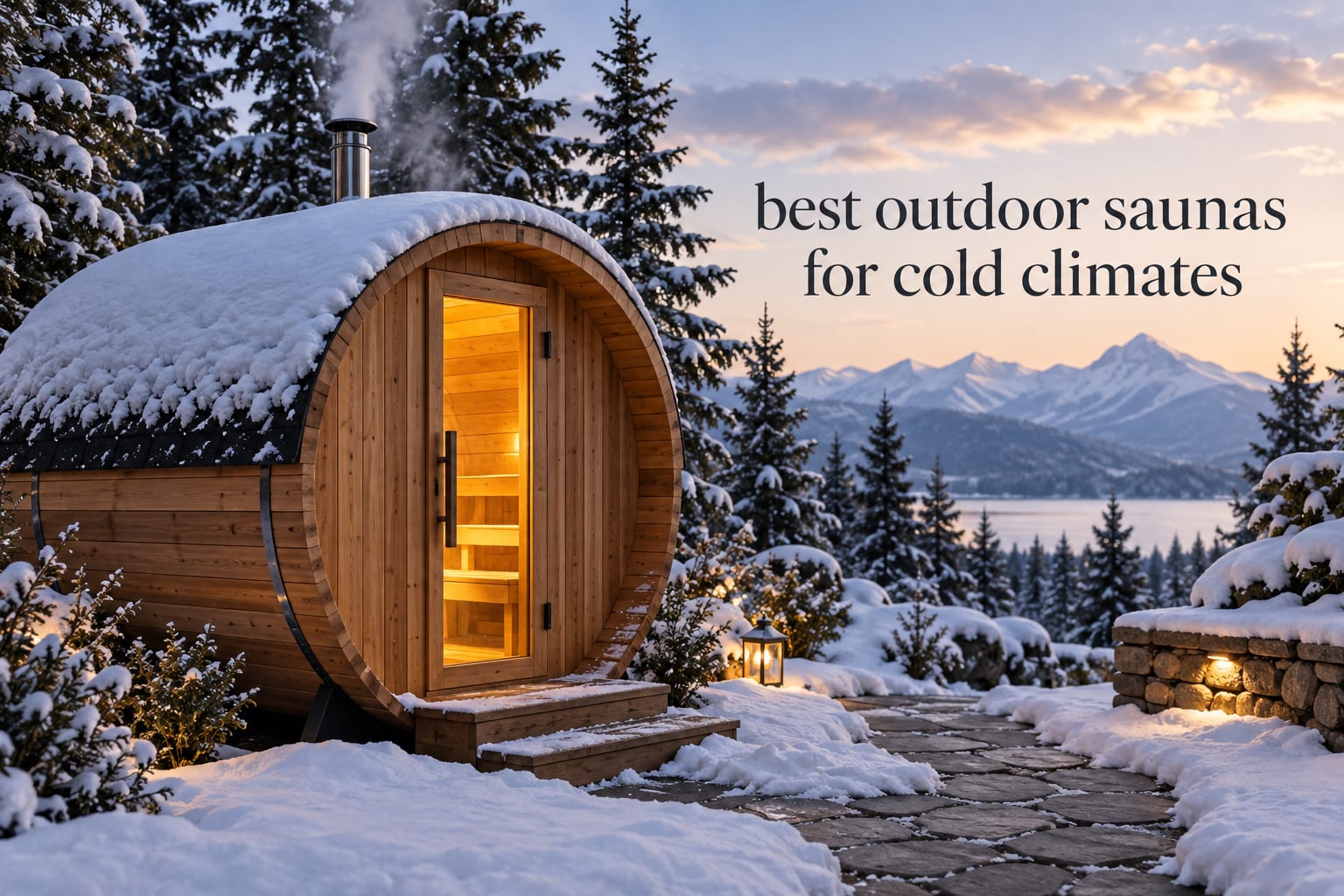
Most outdoor saunas are engineered for a covered patio or a mild winter, and that gap between showroom spec sheet and January backyard is where owners get disappointed. We compared ten outdoor saunas built for full exposure, weighing them on the four things that decide whether a sauna still works when the thermometer reads 14F: how the shell survives repeated freeze-thaw cycles, how much insulation sits behind it, whether the roof sheds a season of snow, and whether the heater is big enough to pull the room back up in reasonable time. The result is this guide to the best outdoor saunas for cold climates in 2026, ranked by how each unit holds up in real winter conditions rather than by how it looks in a catalog.
Our team spent six weeks reading spec sheets, warranty terms and review histories for ten models across the price spectrum, from a pop-up tent that folds into a cylinder to carbonized spruce barrels with 9KW stoves. We looked for published ambient-temperature limits, because a manufacturer claiming a 120F indoor rating tells you nothing about a 6AM start at minus 8F. We also tracked the details owners complain about most: frozen covers, ice at the threshold, condensation dripping from ceiling panels, and heaters cycling badly in cold air.
One thing came out of that research before any product ranking: there is no single best outdoor sauna for cold climates. There is a best pick for a temperate winter, a best pick for a mountain property, a best pick for a couple, and a best pick for anyone without the electrical service or the appetite for a permanent foundation. We will give you all ten and tell you which climate tier each one actually serves, including where two of them are the wrong tool for the job.
If you are outfitting the rest of your winter setup, our cold weather camera picks and our picks for the best sleeping bags for cold weather camping cover the trip out to the sauna and the nights around it.
Table of Contents
Top 3 Picks for Cold-Climate Saunas in 2026

OUTEXER 4-5 Person Barrel
- Carbonized Finnish spruce
- 4.5KW 240V furnace
- Heats in 25-35 min
- 7-year service

SALUSHEAT Full Spectrum Sauna
- Published sub-32F performance
- 1950W on a 120V 20A circuit
- Red and near-infrared LED therapy

HOSAUNA 9KW Barrel Sauna
- 9KW UL-certified stove
- Carbonized spruce shell
- 4-6 person interior
Those three sit at three different points on the cold-climate map. The OUTEXER barrel is the most thoroughly proven winter machine here, with the deepest review base in the group and a carbonized spruce shell.
By contrast, the SALUSHEAT is the only unit in the test set that publishes what it does when ambient drops below freezing, and it runs on an ordinary 120V circuit. The HOSAUNA is the physics answer: the most heater output in the group wrapped in a tight cylinder, built from wood the manufacturer explicitly treated for snow, rain and UV.
Best Outdoor Saunas for Cold Climates (October 2026)
| Product | Specifications | Action |
|---|---|---|
| OUTEXER 4-5 Person Traditional Barrel |
|
Check Latest Price |
 WILLOWYBE Outdoor Sauna Tent Pro WILLOWYBE Outdoor Sauna Tent Pro |
|
Check Latest Price |
 KUNSANA 2-Person Low EMF Infrared KUNSANA 2-Person Low EMF Infrared |
|
Check Latest Price |
| SALUSHEAT Full Spectrum with Red Light |
|
Check Latest Price |
| HOSAUNA 9KW Traditional Barrel |
|
Check Latest Price |
 Albott 8.2 ft Tent with Wood Stove Albott 8.2 ft Tent with Wood Stove |
|
Check Latest Price |
 WILLOWYBE Portale Tent and Stove Set WILLOWYBE Portale Tent and Stove Set |
|
Check Latest Price |
 Breezestival 4-6 Person 6KW Barrel Breezestival 4-6 Person 6KW Barrel |
|
Check Latest Price |
 amocane 2-Person Barrel Sauna amocane 2-Person Barrel Sauna |
|
Check Latest Price |
 Breezestival 4-6 Person Barrel 6KW Breezestival 4-6 Person Barrel 6KW |
|
Check Latest Price |
1. OUTEXER 4-5 Person Traditional Barrel Sauna – Best Overall for Cold Climates
OUTEXER Outdoor Traditional Sauna 4-5 Person 240V 4.5KW 6’x6’ Steam Saunas
6 x 6 ft carbonized spruce
4.5KW 240V electric furnace
Heats in 25-35 min
7-year service
Pros
- Carbonized Finnish spruce shell
- 4.5KW 240V furnace heats in 25-35 min
- Full accessory kit with stones bucket and ladle
- 581 reviews averaging 4.6 stars
- 7-year after-sales service commitment
Cons
- 800 lb listed weight makes site prep a multi-person job
- Requires a 240V dedicated circuit
- No published sub-zero ambient performance figure
This is the sauna we would put in a backyard that sees real winters, and the reason is simple: it has by far the deepest review history in the group, so more owners have reported back on how it behaved after a few seasons. Five hundred and eighty-one reviews at 4.6 stars is a lot of people who lived with it, and the 81 percent five-star share suggests those people mostly stopped thinking about it, which is the highest compliment a permanent structure can earn.
The shell is natural Finnish carbonized spruce in a drum design, sized at roughly 6 by 6 feet for four to five people. Carbonization is the key word for cold climates: the wood is heat-treated so that it is far less willing to absorb moisture, which is what kills untreated timber through repeated freezing. The cylindrical shape is genuinely useful in snow, since water and ice run down the curve rather than sitting in a seam.
The heater is a 4.5KW 240V electric furnace, and the manufacturer lists a 25 to 35 minute heat-up. Treat that as a mild-weather figure, because virtually every published heat-up time in this category is measured in comfortable conditions. In deep cold, plan on a longer climb, and plan on it before you invite anyone over rather than after.
The accessory list is unusually complete for a cabin at this level: volcanic stones, a wooden bucket and spoon, a thermometer, a hygrometer, an hourglass, an explosion-proof LED lamp, a stove frame, and teacup holders all come in the box. Seats and foot grids use a water-based paint that wipes clean, which matters more than it sounds when condensation is dripping down the walls after every session. The control carries timer, power adjustment, and layered temperature, system, and hardware protection, and the seller commits to seven years of after-sales service, the longest warranty figure in this group.
What you get in winter
The 240V electric furnace means no firewood to stack, no chimney inspection, and no smoke in a snow-covered yard. Once you have a dedicated circuit and a clear path from the door, the drum holds heat well because of the tight volume and the thick curved walls.
Water on the stones still works, which matters if you grew up with löyly. There is no factory cover listed, so budget for either a fitted cover you can actually handle in winter or a plan for a hard-sided shelter.
Where it falls short
At 800 pounds listed weight, this is not a two-person build. The base needs to be finished and level before the barrel goes down, and in a frozen ground window that foundation work is the schedule risk, not the assembly.
A 240V dedicated circuit is non-negotiable. If your panel does not have spare capacity, that is an electrician conversation that costs real money and real time, and it has to happen before the ground freezes.
2. WILLOWYBE Outdoor Sauna Tent Pro – Best Budget Entry Point
WILLOWYBE Outdoor Sauna Tent Pro – 4-Person, All-Weather, Insulated, Solid, Panoramic View, Easy Setup
4-person insulated tent
29 lb listed weight
One-click pop-up setup
Airtight shell with smoke outlet
Pros
- Lightest and fastest to set up in the group
- Insulated multi-layer fabric for cool weather
- 180-degree panoramic panels
- Folds down for off-season storage
- 230 reviews averaging 4.2 stars
Cons
- Water resistance rated for mild moisture only
- Needs a separate stove or heater to get hot
- 13% three-star and 11% two-star review share
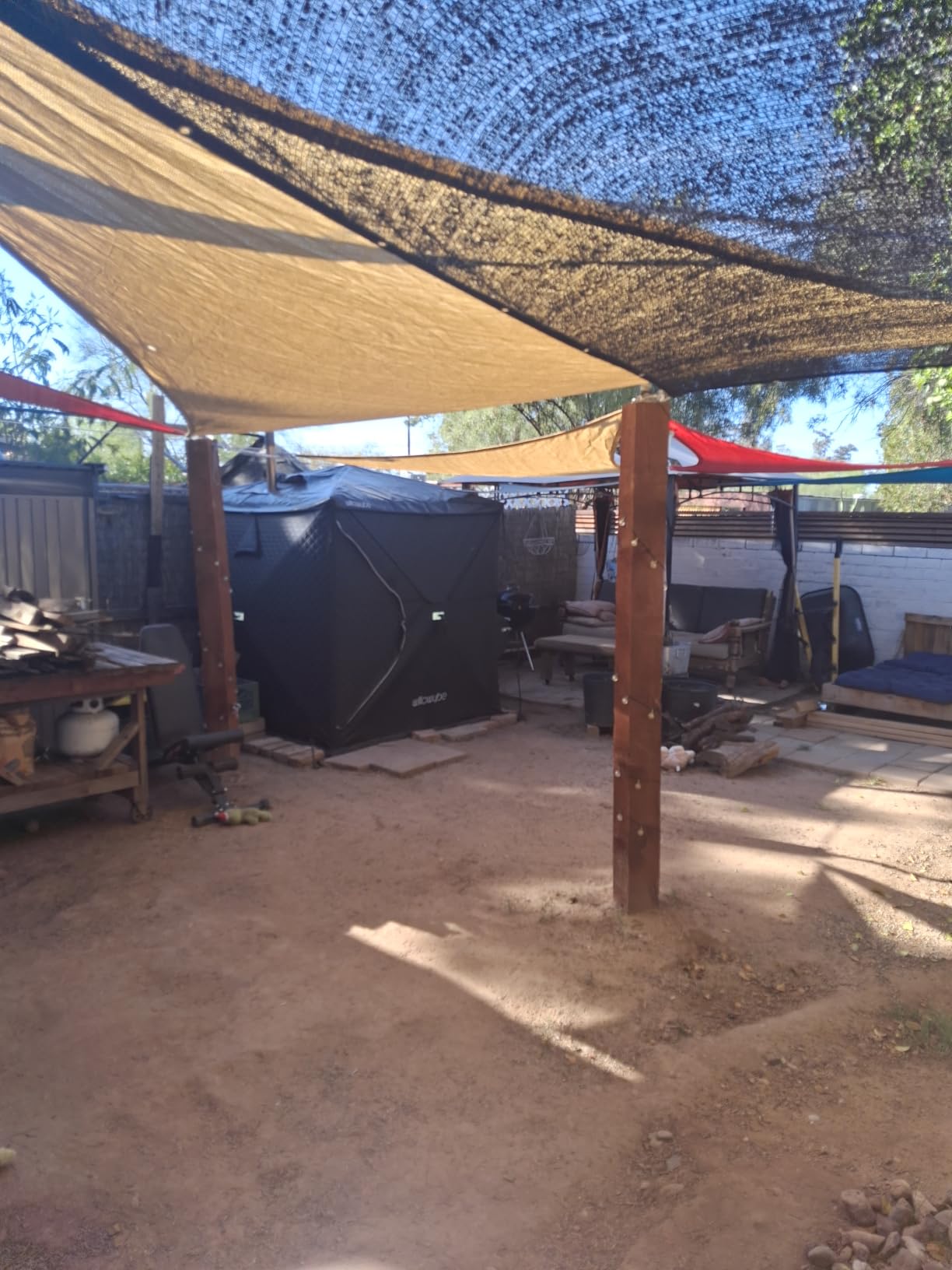
We include this tent because it answers a question the rigid cabins ignore: what if you are not ready to build anything permanent, or you rent, or you want to know whether you will actually use a sauna before committing a foundation to it. At 29 pounds listed weight, it is the only product here one person can carry out alone on a cold morning.
The fabric is a multi-layer insulated construction with dedicated outdoor insulation and thick thermal layers, built around an airtight shell with a smoke outlet so you can run a wood stove inside. The 180-degree panoramic panels matter more in a small space than they would in a cabin, because the tent would otherwise feel like a closet with a heater in it.
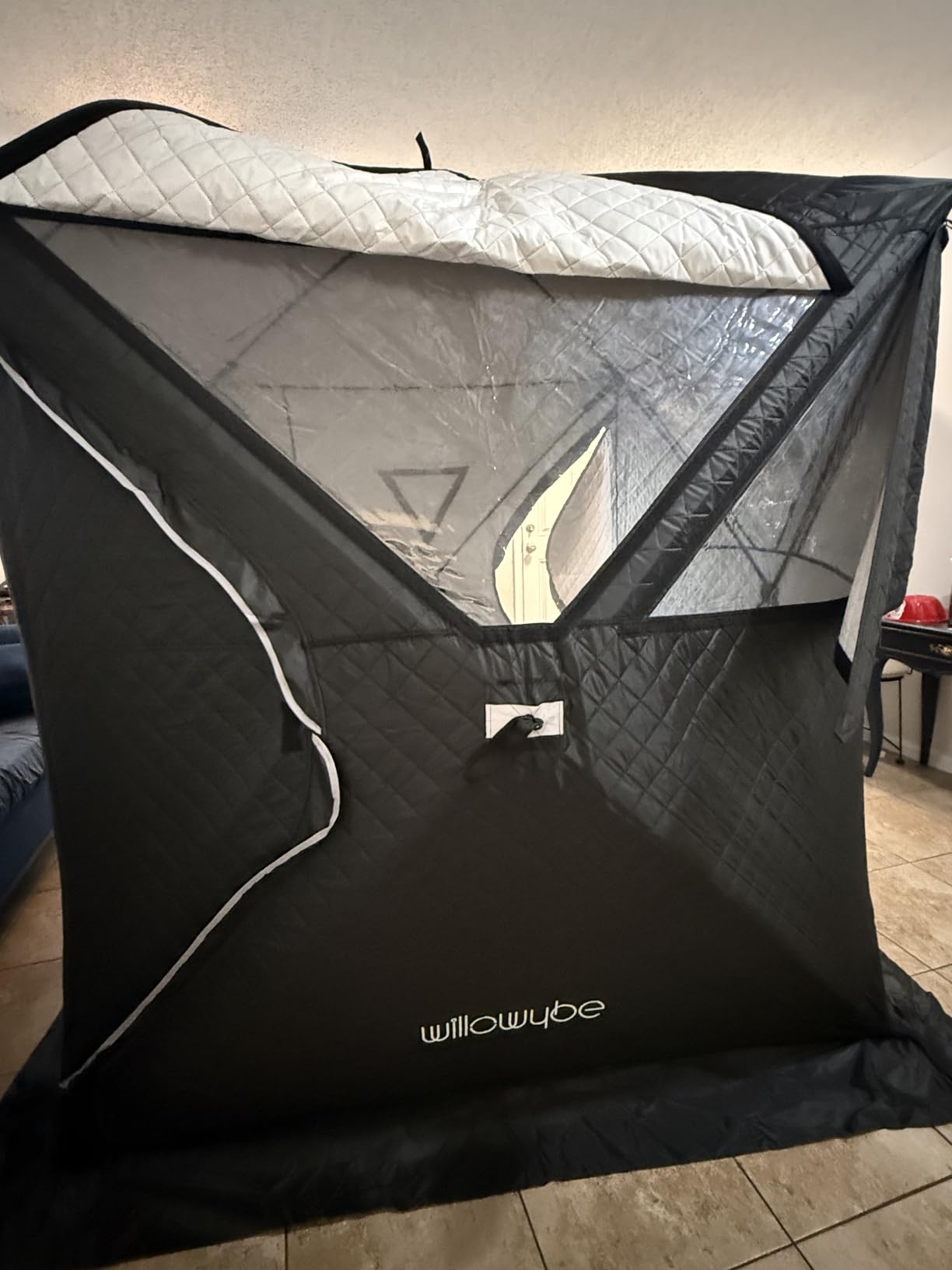
Where we temper expectations: the listed water resistance is intended for mild moisture conditions, not sustained rain or falling snow. In a climate that gets real precipitation, this is a spring-to-autumn product with a shoulder season at each end, and owners running them through northern winters do so on a deck, pavers, or gravel rather than bare ground to keep the shell out of the freeze-thaw mess.
You also need a separate heat source. The tent is the room; the stove or heater is yours to buy. The review history reflects that bargain honestly: 230 reviews at 4.2 stars, with 66 percent five-star, but also 13 percent three-star and 11 percent two-star, which reads like material and weather-resistance complaints rather than temperature complaints.
Who this works for
If your winters are cold but dry, and you want to test the habit, this is a low-risk way in. It sets up in seconds and folds away when the season turns, which no rigid cabin in this roundup can do.
The panoramic view and the pop-up deployment make it genuinely portable between a back porch, a lakeside deck, and a campsite. That flexibility is the whole point of the product.
Where it falls short
It is not rated for extreme cold-climate exposure the way an insulated cabin is, and the mild-moisture water resistance rating is the spec to plan around rather than argue with.
If your region gets heavy snow, budget for a proper top cover and a raised base, or accept that you will be taking the tent down for the worst weeks of the year.
3. KUNSANA 2-Person Low EMF Infrared Sauna – Best for Couples
KUNSANA Outdoor Sauna 2 Person Low EMF Ceramic Infrared Saunas for Home
2-person cabin
Rated minus 5F to 120F ambient
1750W far-infrared plus ceramic
2-year limited warranty
Pros
- Only unit here with a stated minus 5F minimum ambient
- Heats in about 10 minutes
- 4.7 average across 135 reviews
- Low EMF carbon crystal panels and ceramic cubes
- Bluetooth speakers and color lighting
Cons
- Two seats only and snug for two adults
- Fits users roughly 4.9 to 6.2 ft tall
- Oversized delivery can carry high freight charges
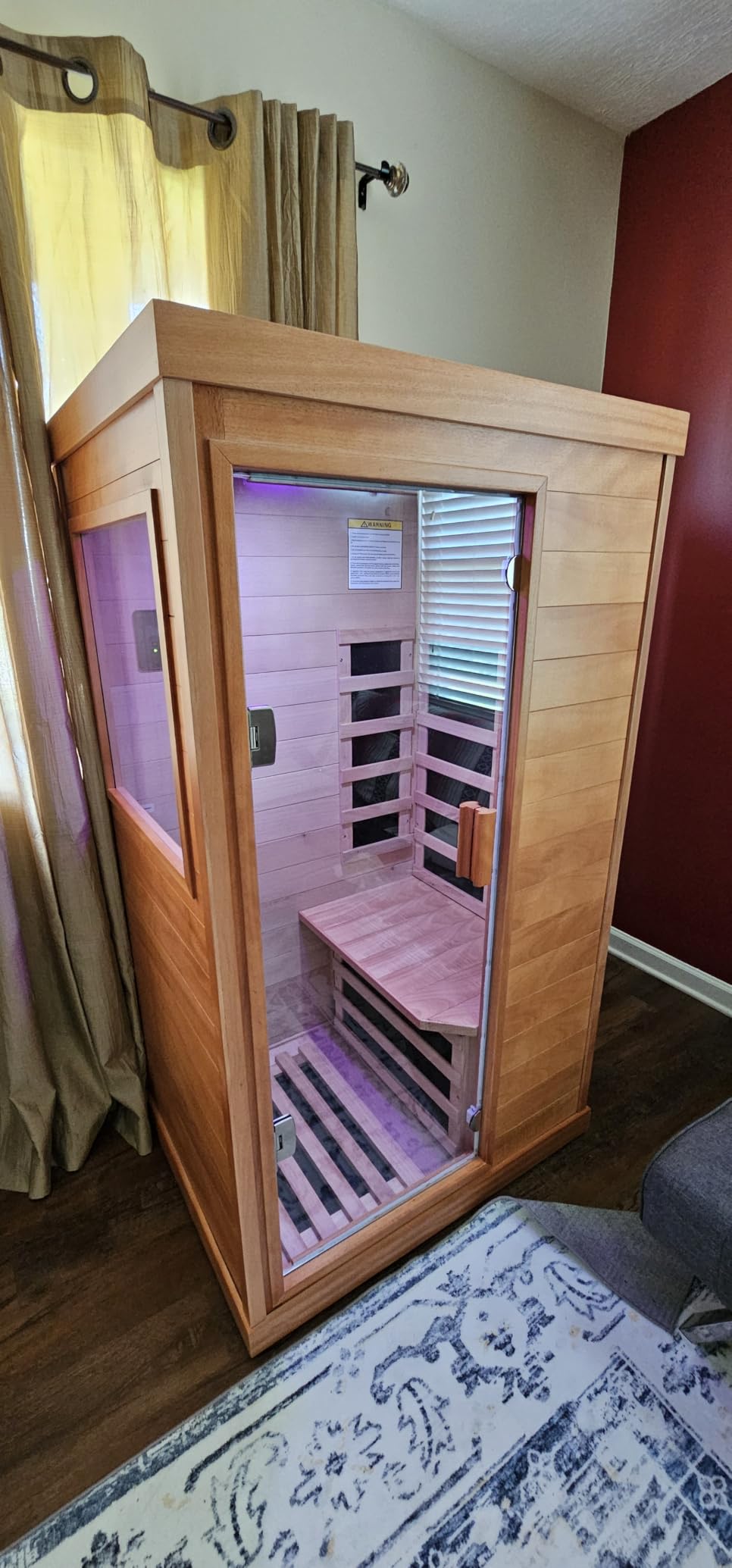
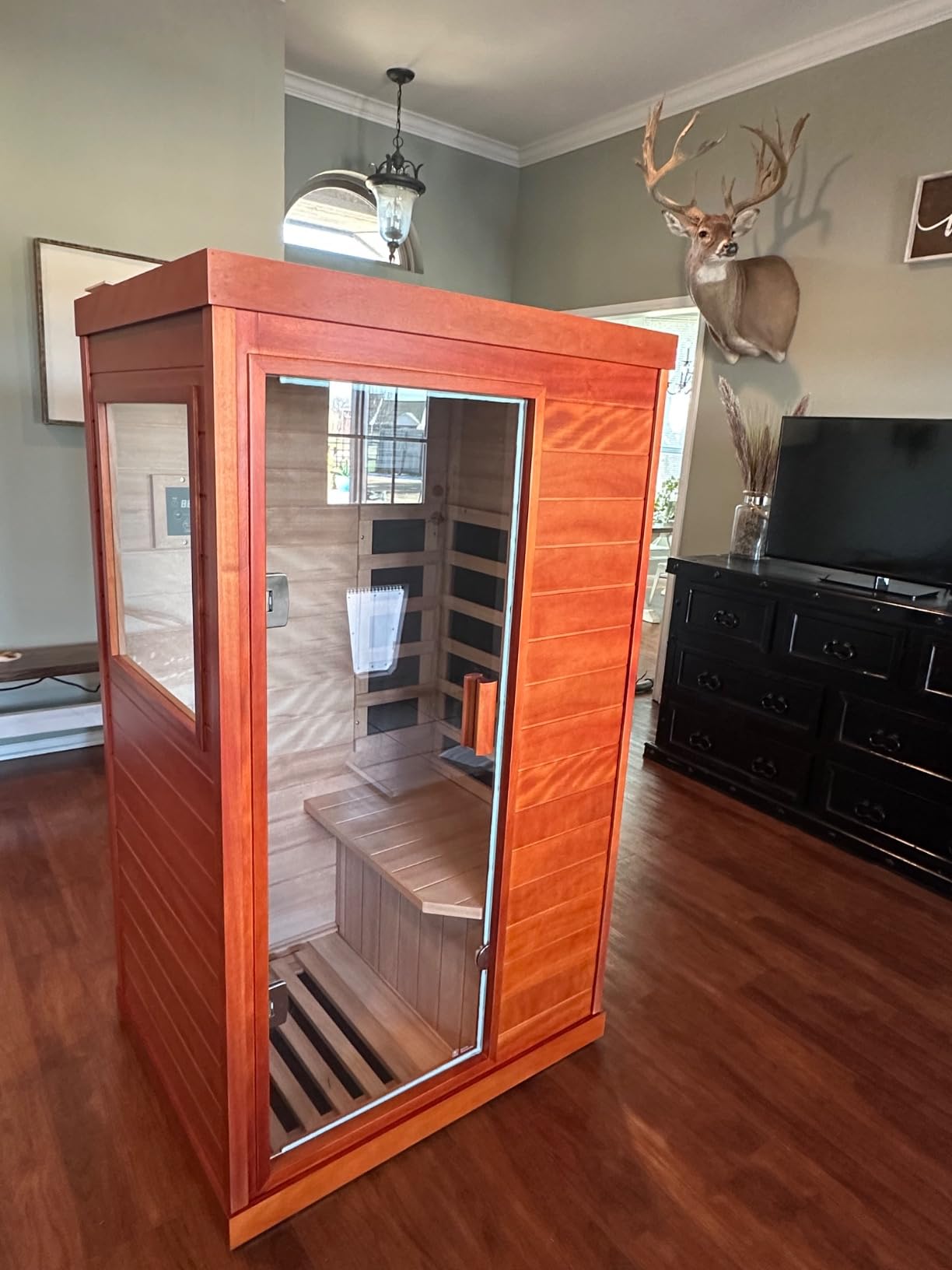
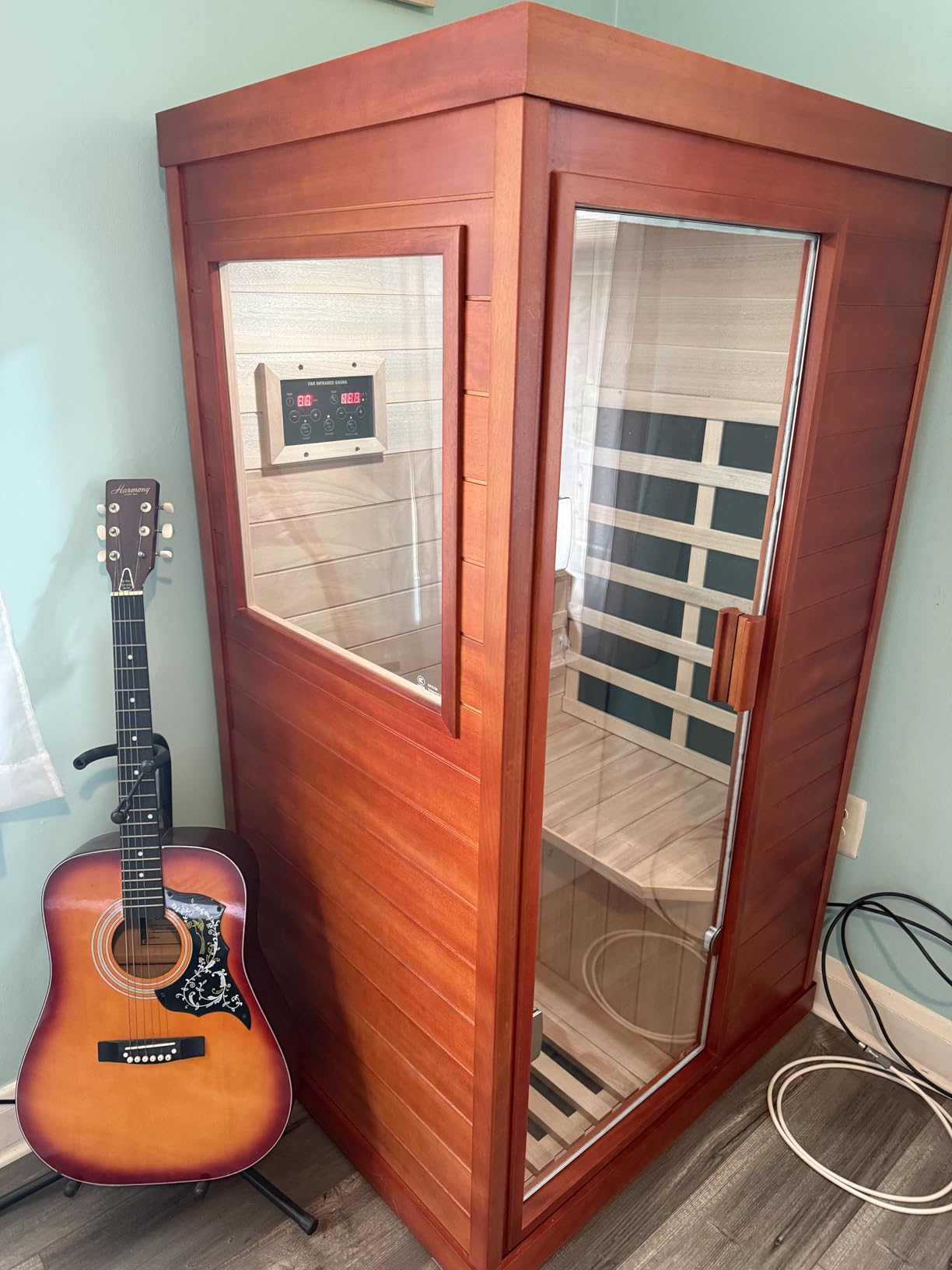
Two people, one footprint, and a manufacturer willing to publish an ambient range: minus 5F to 120F. That published floor matters more than any star rating, because it tells you the manufacturer has thought about cold-start operation rather than just indoor use. This is a Khaya wood cabin, a mahogany-family species chosen here for its resistance to water and to both high and low temperature.
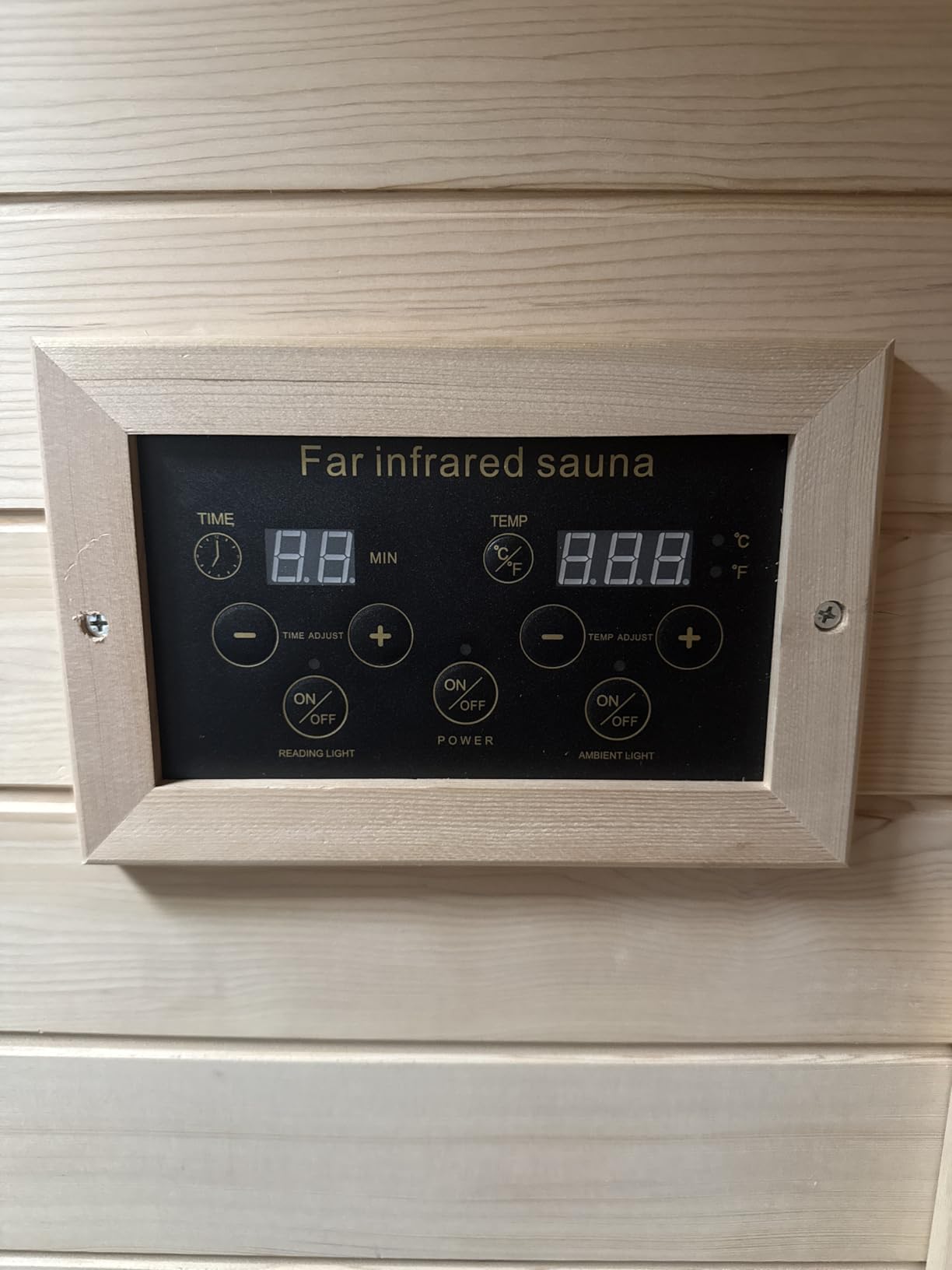
Heat comes from 1750W of low EMF far-infrared carbon crystal panels paired with ceramic heating cubes, and the listed preheat is about ten minutes. The temperature control range is 77 to 149F, which tells you plainly that this is an infrared relaxation cabin and not a Finnish steam room. The updated model also carries boosted far-infrared intensity with added near-infrared waves.
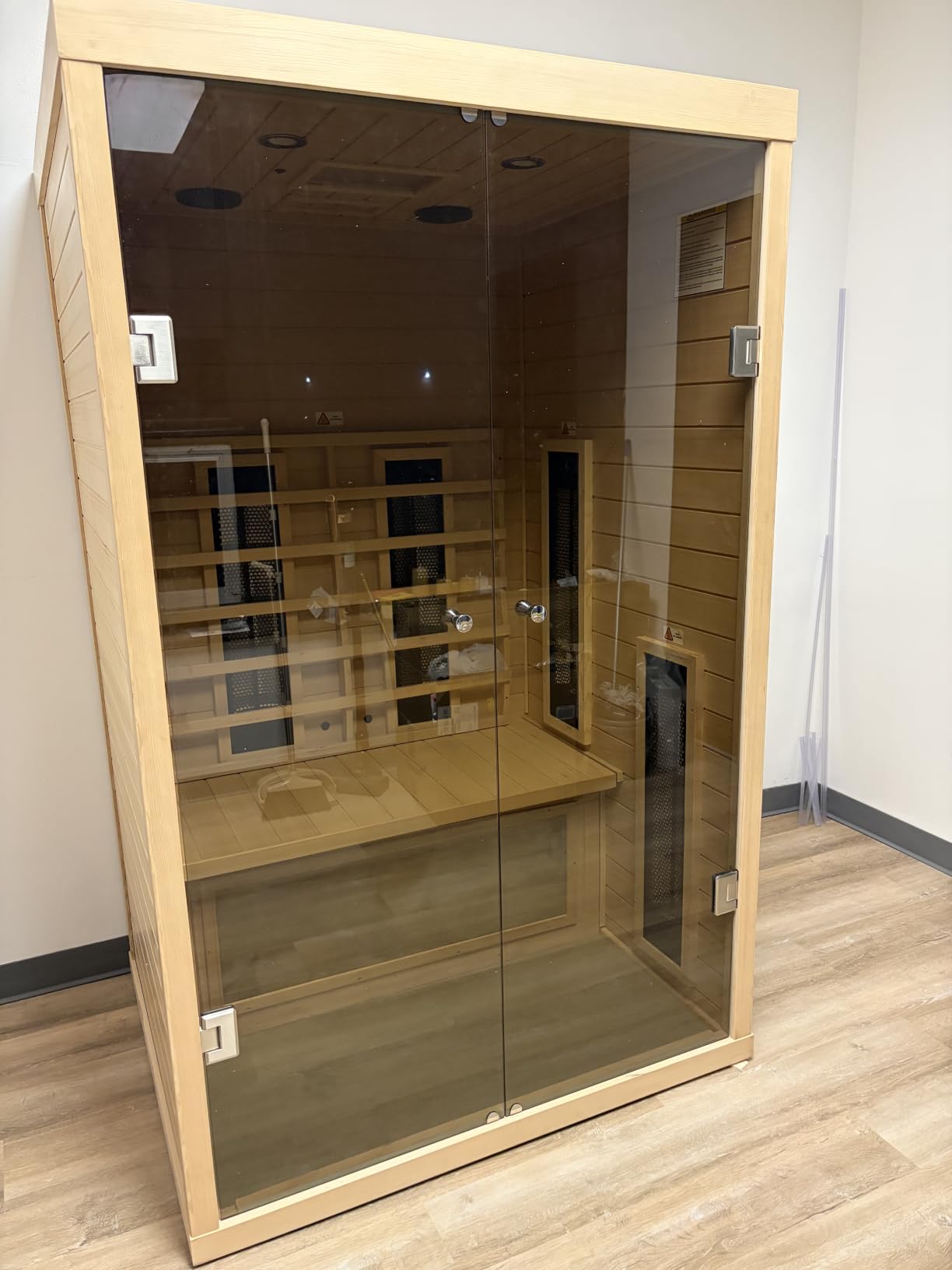
Fit is the constraint. The room measures about 58 by 41 by 81 inches with two seats and a 300 kg load rating, and the manufacturer states suitability for users roughly 4.9 to 6.2 feet tall. If you or your partner are outside that band, a cramped sauna becomes an unpleasant one very quickly, and this is a real theme in the reviews alongside the general praise for fast heat-up and solid build.
It comes as an oversized item requiring phone confirmation, and reviewers mention freight charges and needing two people for assembly. The warranty is two years limited on the wood structure, heating, and electronics, which is a middle-of-the-pack figure here.
How it performs on a freezing morning
A ten-minute preheat figure is an infrared figure, and the advantage over a traditional stove in cold weather is simply that far-infrared panels come on fast without a stone bed that has to soak heat through. That is a real convenience on a dark January morning.
Because there is no stove and no stones, there is no löyly, and humidity in a session will be low. People who want a dry heat reset find that refreshing rather than disappointing.
Where it falls short
The 149F ceiling is far below traditional sauna temperatures, and if your goal is heat endurance rather than a quick infrared session, this is the wrong class of product.
Published for minus 5F, it is a hard-cold cabin rather than a deep-winter one. In a region where winter regularly drops below minus 10F, treat that as a limit rather than a floor.
4. SALUSHEAT Full Spectrum Sauna – Top Rated and Best Documented for Sub-Zero Starts
SALUSHEAT Full Spectrum Sauna, Outdoor Sauna w/Red Light Therapy, 1950W 20A
Full spectrum with red light LED
1950W on 120V 20A
Reaches 131-140F at sub-32F ambient
Seats 3 with reclining bench
Pros
- Only unit with a published sub-freezing heat-up figure
- Highest average in the group at 4.8 from 133 reviews
- Runs on a standard 120V 20A circuit
- Reclining bench allows lying sessions
- Dual 660nm and 850nm red light therapy
Cons
- Arrives in 3 large packages needing staging space
- 149F ceiling sits below traditional steam temperatures
- Return process tied to original packaging
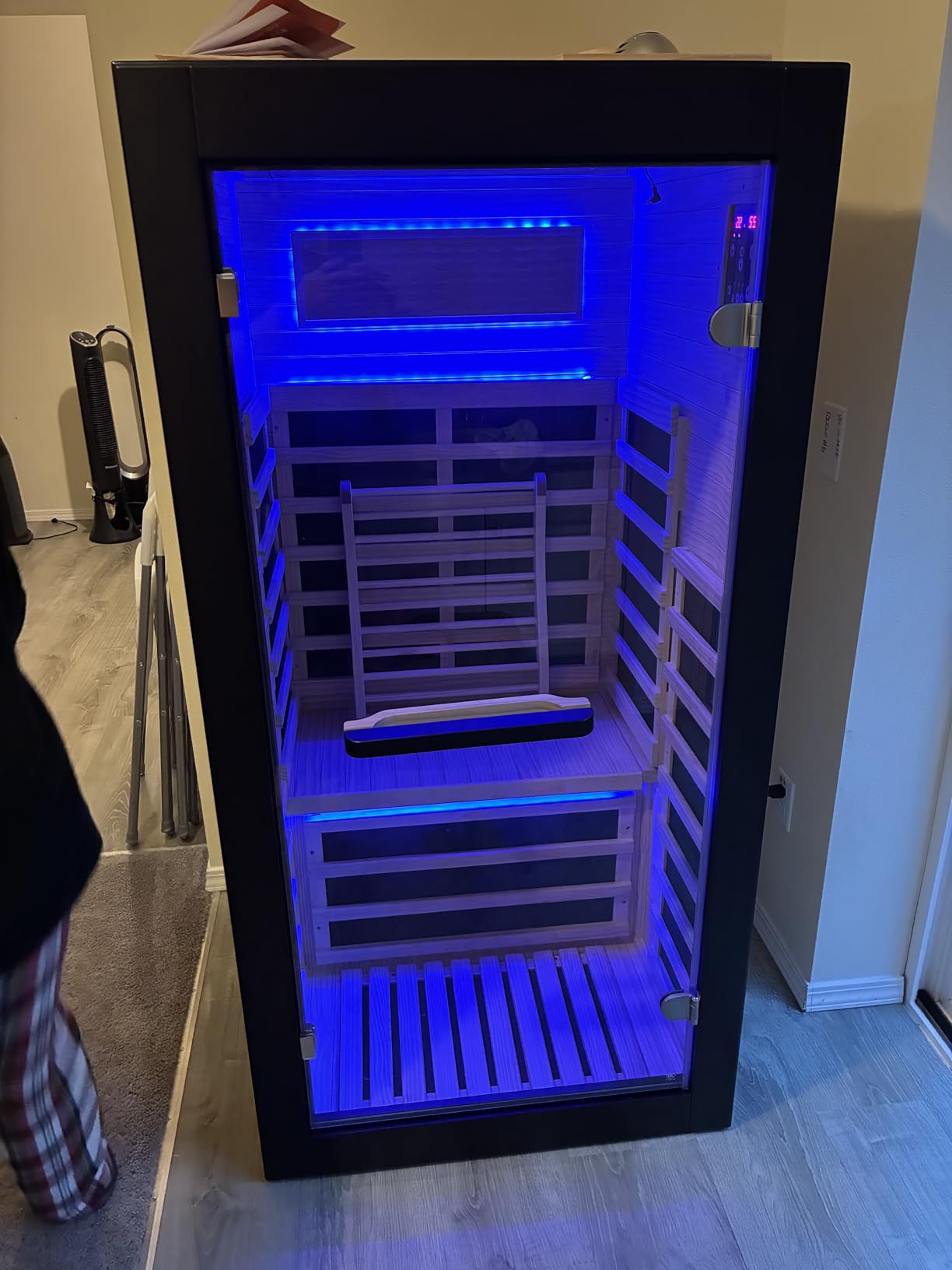
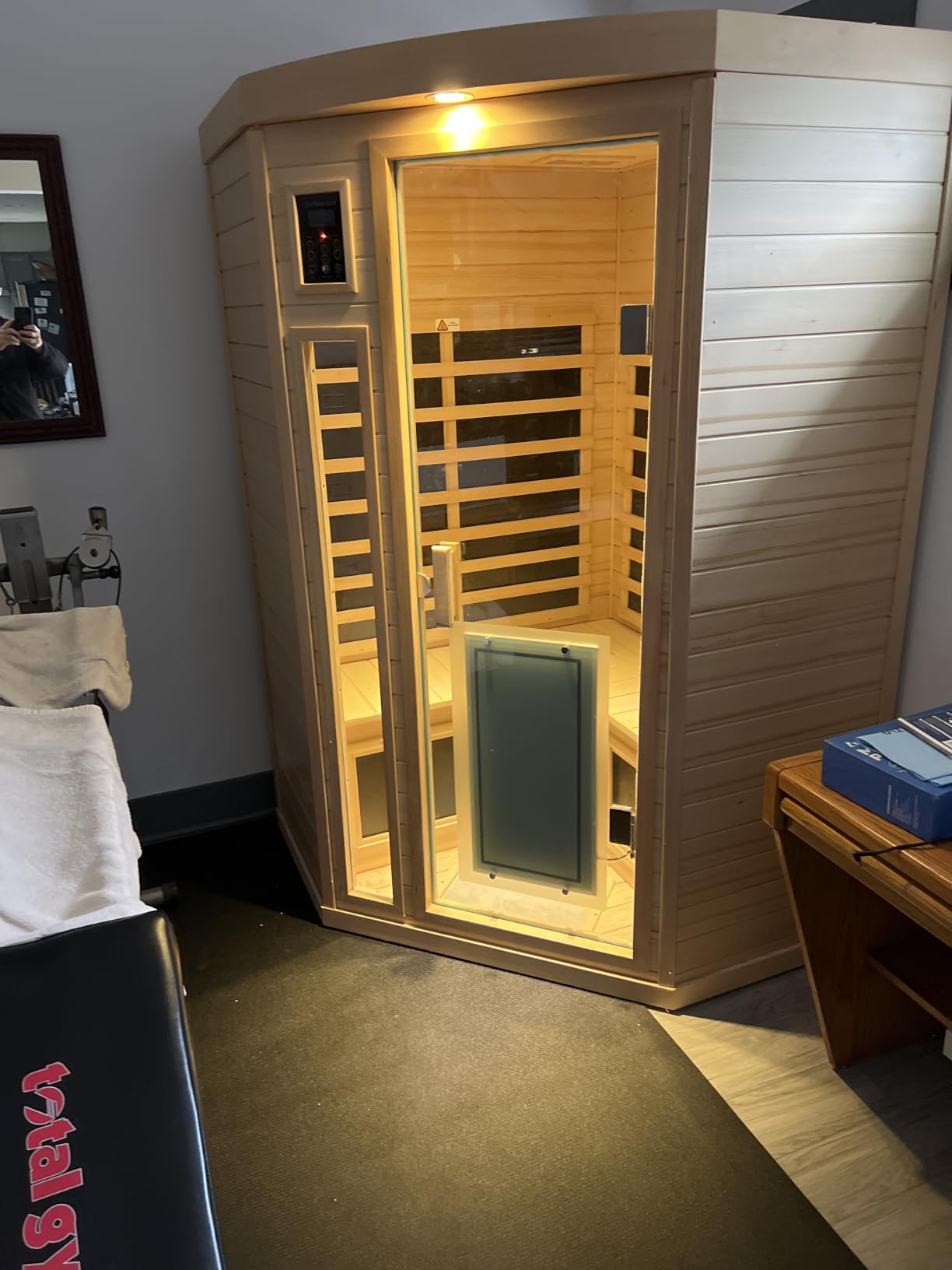
This is the highest-rated product in our group and the only one that publishes cold-weather performance as a number rather than a promise. The manufacturer states a 149F maximum, and critically, states that when ambient temperature is below 32F the cabin reaches 131 to 140F in 40 to 60 minutes. That is the single most useful sentence in this entire roundup, because it tells you exactly what to expect on a January morning rather than letting you infer it from a mild-weather marketing number.
Heat is delivered by seven far-infrared panels with even radiant distribution, and the therapy side is unusually well specified: dual-wavelength 660nm red and 850nm near-infrared LEDs. Seven panels across the room is a deliberate answer to cold spots, which is a real problem in smaller cabins where a single heater or panel cluster leaves corners cold.
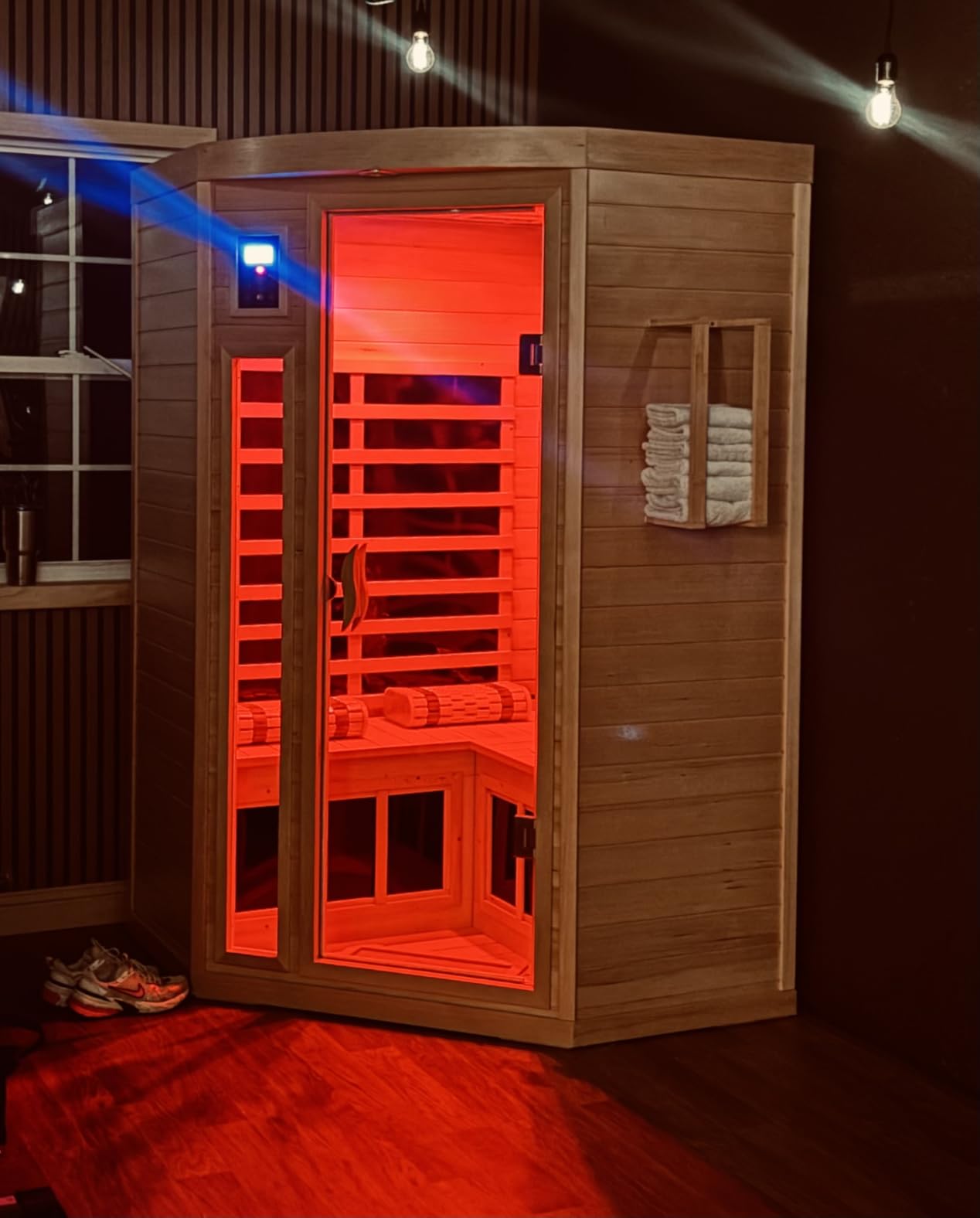
What makes it easy to run in a cold climate is the electrical spec. It draws 1950W on 120V at 20 amps through a standard NEMA 5-20R socket with a 20 to 25 amp breaker. No 240V run, no panel upgrade, no electrician. For a yard in a northern climate where trenching a 240V feed before the ground freezes is the single most expensive part of the project, that is worth more than any material upgrade.
The bench folds flat so you can sit or lie down, the door is 6mm tempered glass, and the interior is mature solid fir. The control panel handles temperature and timing, and it comes with two color lights, two reading lights, and Bluetooth speakers, which owners consistently mention as the feature that turns it into a room rather than a box.
Why the published cold figure matters
Ninety percent of its reviews are five-star, and there are no ratings below three stars at all, which is a remarkably clean distribution for a 133-review sample. Owners single out the documented cold performance and the light therapy.
For a family or couple that wants a sauna it can fire up on a whim, 40 to 60 minutes from a freezing start is a session-length wait rather than a project.
Where it falls short
At 454 pounds and arriving in three large packages, it needs staging space, a second person, and a phone call to confirm the address before dispatch. Plan the delivery the way you would plan a furniture delivery.
Returns go to a California warehouse and require repackaging in the original boxes, so measure your space carefully before it arrives. A 149F ceiling also means this is not a steam sauna, and there is no löyly.
5. HOSAUNA 9KW Traditional Barrel Sauna – Best for Deep Cold and Groups
HOSAUNA Outdoor Traditional Sauna 4-6 Person 9KW Steam Saunas Barrel
9KW UL-certified stove
4-6 person interior
Carbonized Finnish spruce barrel
Waterproof Bluetooth speakers
Pros
- Most powerful heater here for cold-start recovery
- Shell treated for rot insects snow and UV
- 76 x 70 x 66 in interior seats 4-6
- Panoramic curved tempered glass door and window
- Waterproof speakers and multi-zone lighting
Cons
- Only 54 reviews so the long-term record is thin
- 7% one-star share points to assembly or freight issues
- 9KW load needs a properly sized dedicated circuit
If your winters are genuinely severe, this is the physics answer. Nine kilowatts is the most heater output in the group, and heat-up time in a cold sauna is overwhelmingly a function of how quickly the room can absorb energy, not how efficiently it holds it once warm. The cylindrical shape promotes even heat circulation, which means the shoulder space and the floor are not the cold spots they would be in a square cabin.
The shell is the other half of the story. This is premium thermally treated, carbonized Finnish spruce, and the manufacturer states the treatment improves resistance to rot, insects, rain, snow, and UV. That is the only product in this roundup where snow resistance is a stated design intention rather than something we are inferring from the wood species.
The interior is a genuine 76 by 70 by 66 inches and seats four to six people, which makes it one of only two cabins here with real family capacity rather than a nominal two-person rating. The curved panoramic tempered glass door and window fight the claustrophobia that is the main complaint about barrels, and multi-zone LED chromotherapy with waterproof Bluetooth speakers is a level of finish most barrels at this tier do not carry.
What we are working with is a small sample. Fifty-four reviews at 4.5 stars, with 73 percent five-star and no two-star ratings at all, is a good-looking record, but it is thin. A 7 percent one-star share hints that assembly and delivery account for most of the unhappy customers, which is common with heavy imported barrels rather than a shell failure pattern.
Why 9KW matters up north
The 1 kW per 45 to 50 cubic feet rule would put a room this size in the 7 to 8 kW range before any cold margin. Nine kilowatts is that, plus headroom, and the headroom is what buys you a usable warm-up on a minus morning.
High-density volcanic stones and a UL-certified stove give you löyly and a proper steam session, which no infrared cabin here can match. Twenty-four-hour support and a comprehensive manual are a small but real advantage when something needs diagnosing.
Where it falls short
Nine kilowatts on a residential service is a serious load. Confirm your panel capacity and run a properly sized dedicated circuit before the freight arrives, because the delivery window is not negotiable once a heavy barrel is on a truck.
The 80-inch footprint demands real yard space and a finished base, and the review base is not yet long enough to prove multi-season durability for you.
6. Albott 8.2 ft Tent with Wood-Burning Stove – Best Off-Grid Option
Albott 4-6 Person 8.2 FT Outdoor Sauna Tent with Wood Burning Stove
8.2 x 8.2 x 6.7 ft tent
Includes wood-burning stove and stones
3-layer 300D Oxford build
75.6 lb listed weight
Pros
- Wood stove means no electrical hookup needed
- Roomy 8.2 ft square footprint for 4-6 people
- Three-layer thermal fabric holds heat well
- Pop-up setup with anchors ropes and carrying bag
- Reaches 140F and above with good fuel
Cons
- Lowest average in the group at 4.0 from 44 reviews
- Included chairs described as too small for adults
- Cleanup after each session is laborious
Some cold-climate sites have no power at all: a remote cabin, a hunting property, a lakeside lot where running conduit is a project you do not want. For those, a wood-burning tent is not a compromise, it is the correct answer. The included stove runs on dry firewood and reaches 140F and above depending on room size, insulation, and outdoor conditions.
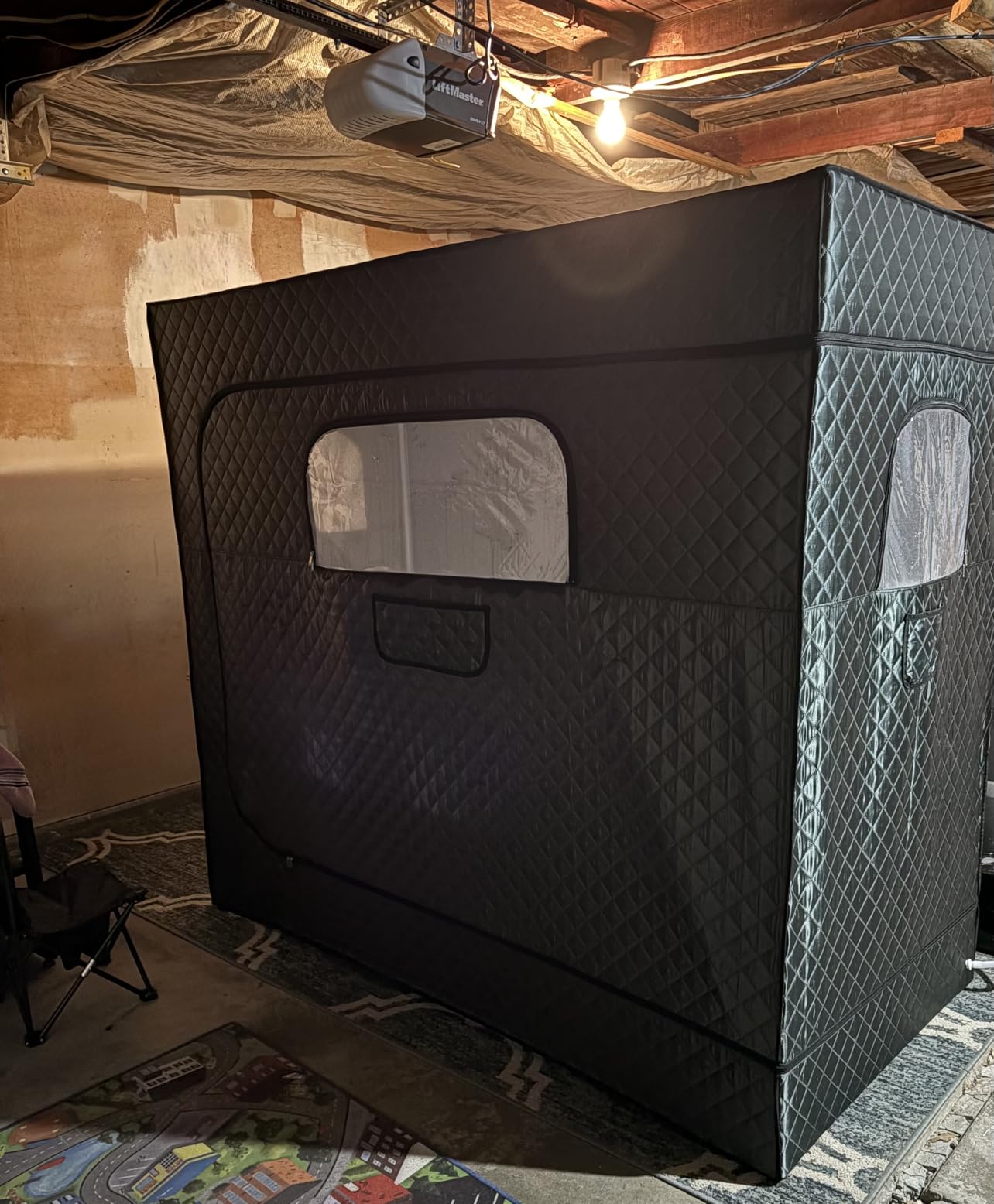
At 8.2 by 8.2 by 6.7 feet, this is a roomy tent for a portable unit, and reviewers note it fits a folding chair with space to move. The thermal build is a quilted three-layer structure: 300D Oxford exterior, 80g fluffy warm cotton, and an Oxford lining, which is a better answer to cold than a single thin skin.
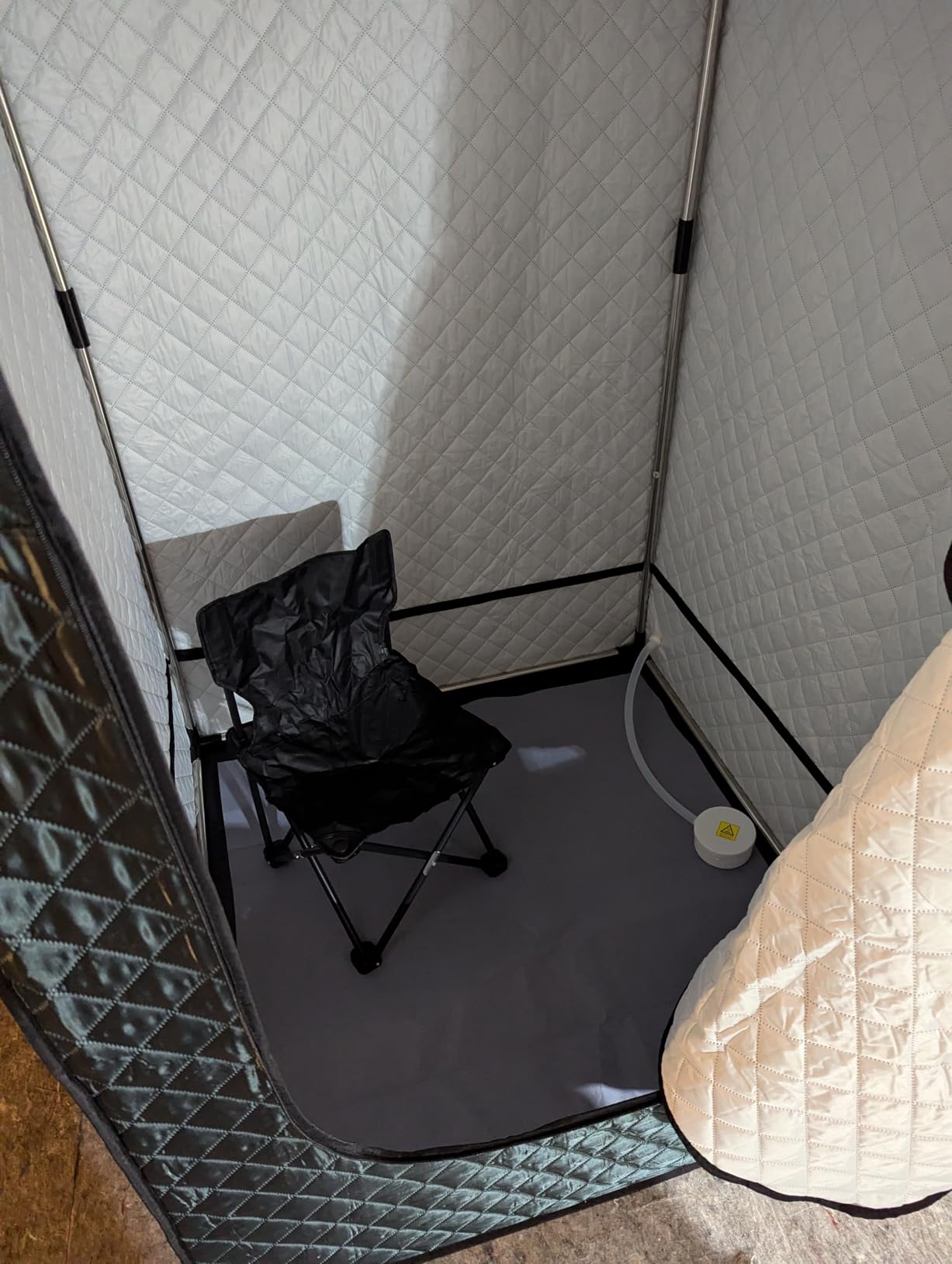
It is also genuinely portable at 75.6 pounds, with a pop-up structure, reinforced corners, anchor points, ground stakes, and wind ropes, plus a carrying bag. Those anchors matter more in winter than in summer, because a tent that is not properly staked in a February gust is a trip hazard and a write-off.
We are going to be straight about the weakness: this is the lowest-rated product in the group. Forty-four reviews averaging 4.0 stars with a wide 61 percent five-star against 15 percent one-star split. Recurring complaints are undersized chairs, time-consuming cleanup with odor retention if you skip it, and one report of both steam-pot seals blowing out after several uses with a difficult return.
Why wood heat wins off-grid
A wood stove is immune to cold-start electrical problems entirely. No control unit cycling below freezing, no GFCI tripping on ice-melt water, no thermostat that misreads when the sensor is at 20F. You light it and it heats.
It also gives you a real dry sauna with a proper stove, and dry heat is what most Finnish tradition actually is. Firewood keeps fine in a northern winter; electricity infrastructure does not always.
Where it falls short
A metal pop-up frame cannot insulate like a rigid cabin in extreme cold, no matter how good the fabric. If your region drops well below zero for weeks, this is a shoulder-season and deep-cold-day product, not an all-season structure.
Plan for real chimney clearance, spark protection, and dry stored fuel. It also arrives in two boxes that may come days apart, which matters if you are trying to have it standing before a cold snap.
7. WILLOWYBE Portale Tent and Stove Set – Best Documented Sub-Zero Tent Performance
WILLOWYBE Portale Outdoor Sauna Set with Sauna Tent, Sauna Wood Stove for Dry Sauna, Cooking for Family and Friends
Tent plus wood-burning stove
Tent folds to a 53 in bundle
Stove folds to 15 x 21 x 13 in
One-person setup, 1-year warranty
Pros
- Owners report about 70C at or below freezing
- Whole set packs down to a 53 in bundle
- One person can complete setup in about 10 minutes
- 82% five-star share across 22 reviews
- Fireproof top cover recommended by owners
Cons
- 11% one-star share is among the highest here
- No chimney flashing or spark mesh included
- Cannot be run indoors and needs a fireproof base
This is the product with the best cold-weather field evidence in the group relative to its size. Owners in Sweden, Germany, and Belgium report reaching roughly 70C in freezing or near-freezing conditions using dry wood, and one reviewer tested it with several people at 0C and hit 70 degrees easily with good firewood. That is a real user report from real cold European winters, not a laboratory claim.
The set pairs the tent with a matching wood-burning sauna stove for a dry sauna experience. The stove has a viewing window, and owners note that the inner metal poles stay cool, which is a detail you appreciate at 70C. The tent folds to a 53 by 10 by 10 inch cylinder and the stove to a 15 by 21 by 13 inch bundle, so the entire sauna fits in a closet between seasons.
Setup is genuinely one-person, and owners report ten minutes to erect and ten to strike. Four different kit variants are offered, including a Protected Kit, and reviewers recommend buying the fireproof, water-resistant top cover separately for all-weather use, which is exactly the advice you want before the first snow.
What is not included is the part that matters most in a snowy climate: no silicone chimney flashing and no spark mesh. Owners flag both, and a German reviewer reported a maximum temperature lower than their previous tent sauna, possibly wood choice. Twenty-two reviews is a thin sample, and the 11 percent one-star share is the third-highest in the roundup.
Why it beats the other tent in cold
The wood stove, not the fabric, is why this one holds temperature at or below freezing. Tents with electric heaters lose the argument once the ambient is far enough down, because the electricity has to come from somewhere and the thermostat has to stay honest.
If you are committed to portable and want real sauna temperature rather than a warm shed, this is the portable option to buy.
Where it falls short
A wood-burning design cannot be run indoors and requires a fireproof base, clearances, and careful chimney routing through the tent roof. Budget for flashing and a spark arrester before first use.
Do not quench the rolled-steel stove with cold water, as rapid cooling warps it. And at 1 year, the warranty is the shortest in the roundup.
8. Breezestival 4-6 Person 6KW Barrel – Best Value Traditional Cabin
Breezestival Outdoor Sauna, 4-6 Person Tradition Wood Dry&Steam Sauna with Sauna Stone, 220V/6KW Electric Heater
4-6 person barrel, 85 x 72.8 x 91.7 in
6KW heater on 220V AC
Waterproof insulated tarp roof
Dry or steam with included rocks
Pros
- 4.8 average from 17 reviews with 90% five-star
- 6KW heater sized between the 4.5KW and 9KW barrels here
- Insulated tarp roof built for year-round retention
- Runs dry or steam from one cabin
- Full accessory kit with controller and thermometer
Cons
- Needs 220V AC and no external power cord is included
- Only 17 reviews is a very small sample
- One-year warranty is the shortest among cabins
Six kilowatts is the sweet spot in this group, and this cabin packages it well. The 1 kW per 45 to 50 cubic feet baseline for a room this size lands in the 7 kW range before any cold margin, so 6KW is not oversized, but combined with the insulated tarp roof it is a defensible match for a temperate-to-cold winter rather than a deep-freeze one.
The roof is the part to notice. A waterproof, heat-insulating tarp is specified specifically to lock in heat for year-round use, which on a barrel format stands in for the pitched metal roof a traditional cabin would have. On a shed snow, a tarp-covered profile has less to trap than a flat panelized roof, though it is still the weakest element on this cabin over a long term.
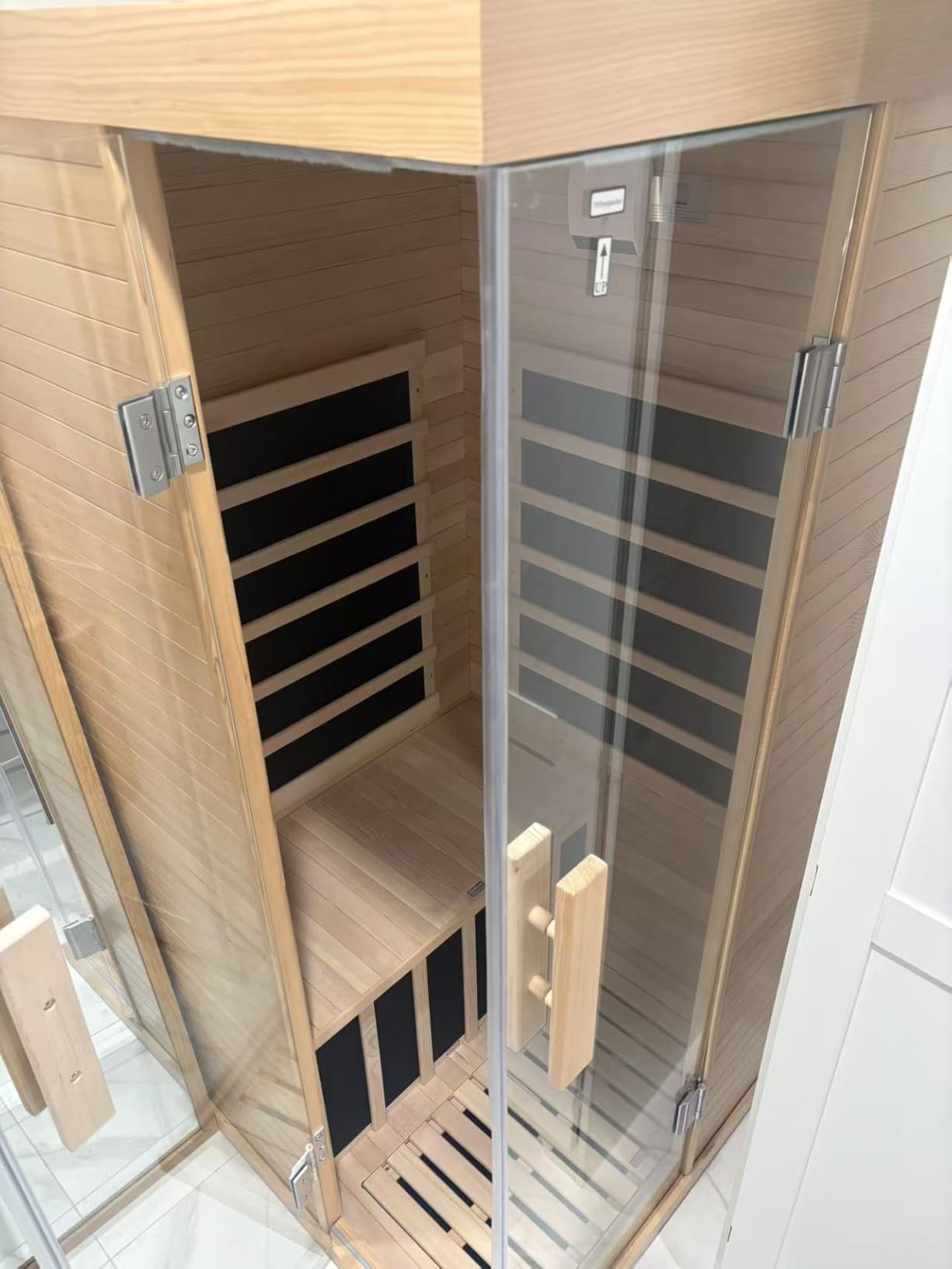
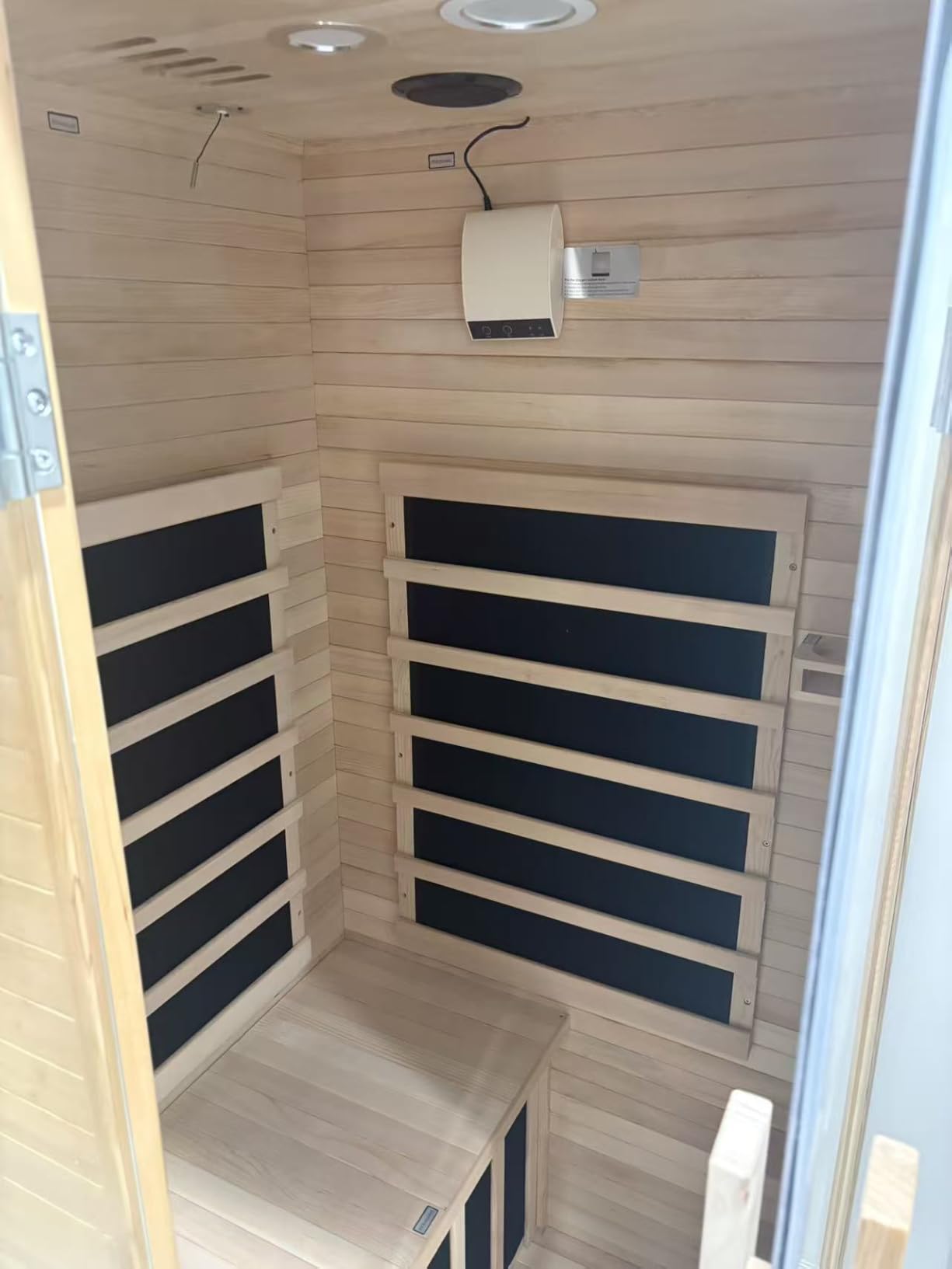
The same cabin runs dry or as a steam sauna using the included rocks, which gives you löyly on the same hardware. Construction is solid wood with an 8mm tempered glass door and side windows, and the kit includes installation tools, rubber tension straps, the tarp, a wooden step, sauna rocks, a controller, and a thermometer.
The catch is electrical: it runs on 220V AC and does not include an external power cord, so a professional installation is effectively required. That is normal for a 6KW load, but it puts this cabin in the 240V-project category rather than the plug-and-go category, which is a meaningful difference if your winters are arriving before your electrician is free.
Where the value sits
Seventeen reviews at 4.8 stars with 90 percent five-star is a small sample, but it is a clean one, and the listing sits far higher in the Saunas category than any other barrel here. Accessories that normally cost extra are all in the box.
If your winters run roughly 0 to 40F, this cabin is comfortable and quiet, and the tarp roof is doing real work keeping the ceiling from sweating.
Where it falls short
One year of warranty is the shortest offered among the cabins here, and a tarp roof is a consumable-style component that degrades under UV and snow load. Ask about replacement availability before you commit.
For repeated sub-zero operation, the 6KW output will make your warm-up noticeably longer than the 9KW barrel, and the 220V requirement has to be solved before the ground freezes.
9. amocane 2-Person Barrel Sauna – Best Small Barrel with the Highest Stated Ceiling
amocane Outdoor Barrel Steam Sauna 2 Person, Canadian Spruce Wooden Saunas Room for Home, Traditional Backyard Spa with 4.5KW Toule Heater, Rocks, Bucket, Waterproof System (70.87”x 47.24”x 70.87”)
2-person barrel, 70.87 x 47.24 x 70.87 in
4.5KW heater, 32-195F range
Spruce with asphalt shingle cover
Stainless steel bands and vents
Pros
- The only unit here with a stated 195F heater ceiling
- Spruce shell under asphalt shingle waterproofing
- Stainless steel bands resist freeze-thaw corrosion
- Intake and exhaust vents fitted as standard
Cons
- Only 13 reviews leaves little durability data
- Two-person footprint is the smallest rigid cabin here
- Listed 20 lb weight looks implausible for a full cabin
Two people, one tub, and the highest stated temperature ceiling in the roundup: the 4.5KW Toule heater is rated from 32F up to 195F. That is a heater specification rather than a verified cabin-temperature result, and we want to be clear about that distinction, but it does mean this is the only unit here claiming genuine Finnish steam temperatures rather than an infrared-grade 149F.
Weather protection is its quiet strength. Full-length premium spruce under an asphalt shingle waterproofing layer, held with stainless steel barrel bands for corrosion resistance, is a more conventional and more durable rain and snow strategy than the fabric or bare-wood approaches in this group. Stainless in a freeze-thaw zone is the right material choice, period.
It is also generously accessorized out of the box: bucket, scoop, thermohygrometer, sauna lamp, heater, stones, 8mm glass, hourglass, rubber hammer, and wall lamp all included, plus intake and exhaust vents for airflow. Warranty splits two years on the structure and one year on the heater, which is more honest than a single blanket year.
The record is thin. Thirteen reviews at 4.4 stars, with 81 percent five-star and no ratings below three stars, and a 13 percent one-star share that is proportionally significant on so few reviews. The listed 20-pound item weight is also plainly wrong for a full spruce barrel, so treat the real handling weight as unknown and plan the site accordingly.
Who this suits
A couple who wants real steam, real löyly, and a small footprint that will fit a tight yard. At 70.87 by 47.24 by 70.87 inches, it is the least demanding yard requirement of any rigid cabin here.
The shingle roof and stainless hardware are the most winter-appropriate exterior details in the roundup, even if the review history is too young to prove it.
Where it falls short
Two-person capacity is genuinely two people, and it needs a 220V supply on a dedicated circuit. There is no room for a family or a group session.
For genuinely sub-zero conditions, a 4.5KW heater in a small room is efficient but limited, and the 195F figure is a heater rating you should verify with a thermometer in your own cabin rather than assume.
10. Breezestival 4-6 Person Barrel – Best for Families and Groups
Breezestival 4-6 Person Outdoor Barrel Sauna with 6KW Electric Heater
Seats up to 6 adults
6KW heater on 220V AC
Insulated waterproof tarp roof
8mm glass door and windows
Pros
- One of only two cabins here stated for 6 adults
- No 1-star or 2-star reviews in the sample
- Shares the 6KW heater and tarp roof platform
- Full-view tempered glass door plus side windows
- Accessory kit and controller included
Cons
- Smallest sample in the group at 10 reviews
- 15% three-star share is the widest mid-tier gap
- 220V supply required and no power cord included
This is the same proven platform as the previous barrel with a stated capacity of up to six adults, which makes it the family and entertaining option in a rigid-cabin roundup otherwise dominated by two- and four-person rooms. Six adults in a barrel means a tight, hot, cheerful session rather than a quiet one, and that is a real preference, not a compromise.
Everything that made the sibling model work carries over: the 6KW 220V heater, the waterproof insulated tarp roof designed for year-round heat retention, the full-view 8mm tempered glass door with side windows, and the ability to run dry or as a steam sauna using the included stones. The control panel handles temperature and timer, and the accessory kit covers heater, stones, tension straps, tarp, wooden steps, thermometer, controller, and tools.
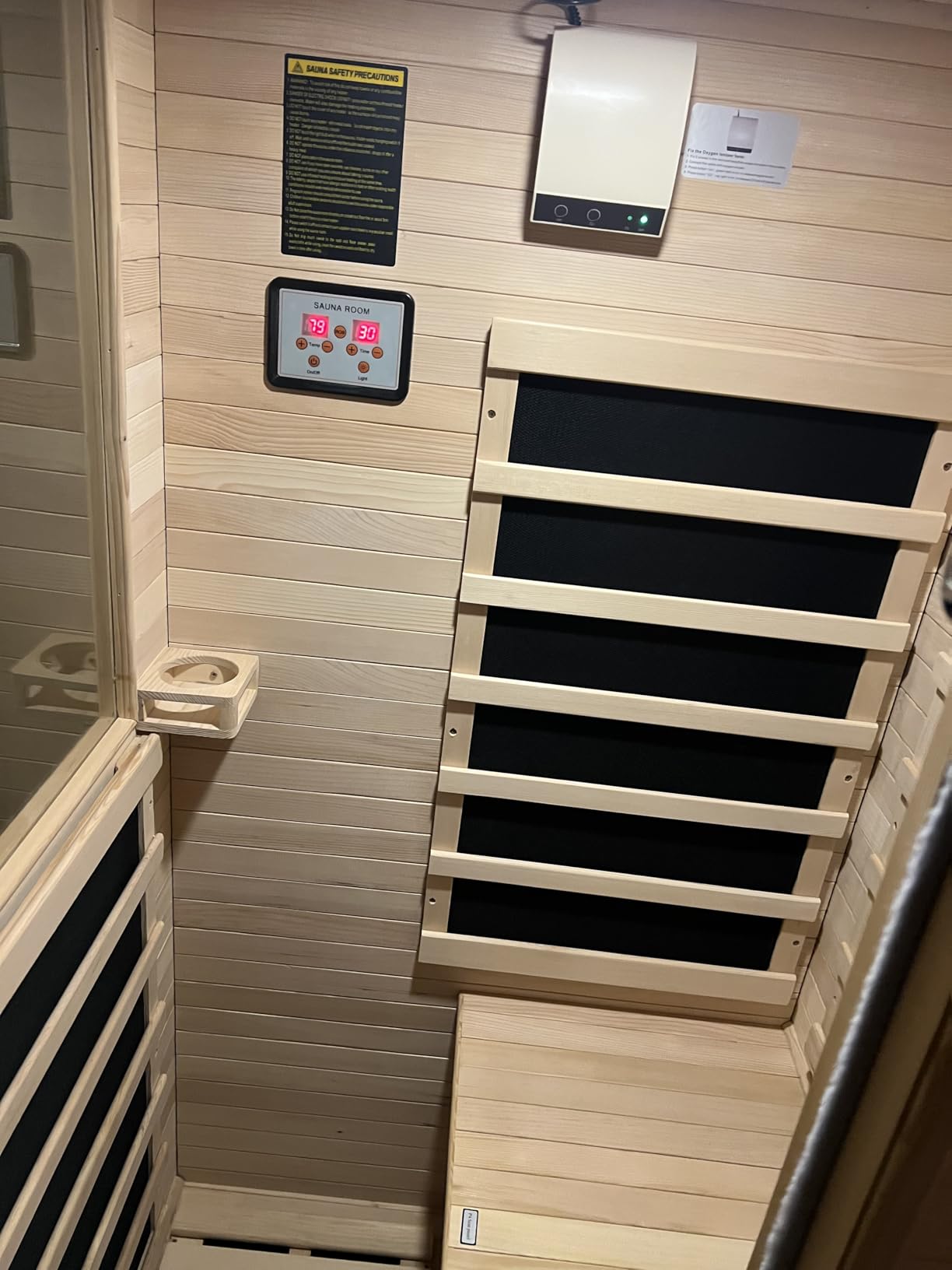
Be careful with the sample size. Ten reviews at 4.5 stars, with 69 percent five-star, 16 percent four-star, 15 percent three-star, and nothing at two stars or one star at all. There is no bad experience in the record, which is encouraging, but ten people is not a durability history.
The 15 percent three-star share is the widest mid-tier gap in the group, and the listed 99-pound weight is light for a six-person solid wood cabin, so plan for more handling than the number suggests. The 85 by 72.8 by 91.7 inch footprint also demands real yard space, and it costs more than the near-identical four-to-six-person sibling for very little added capability.
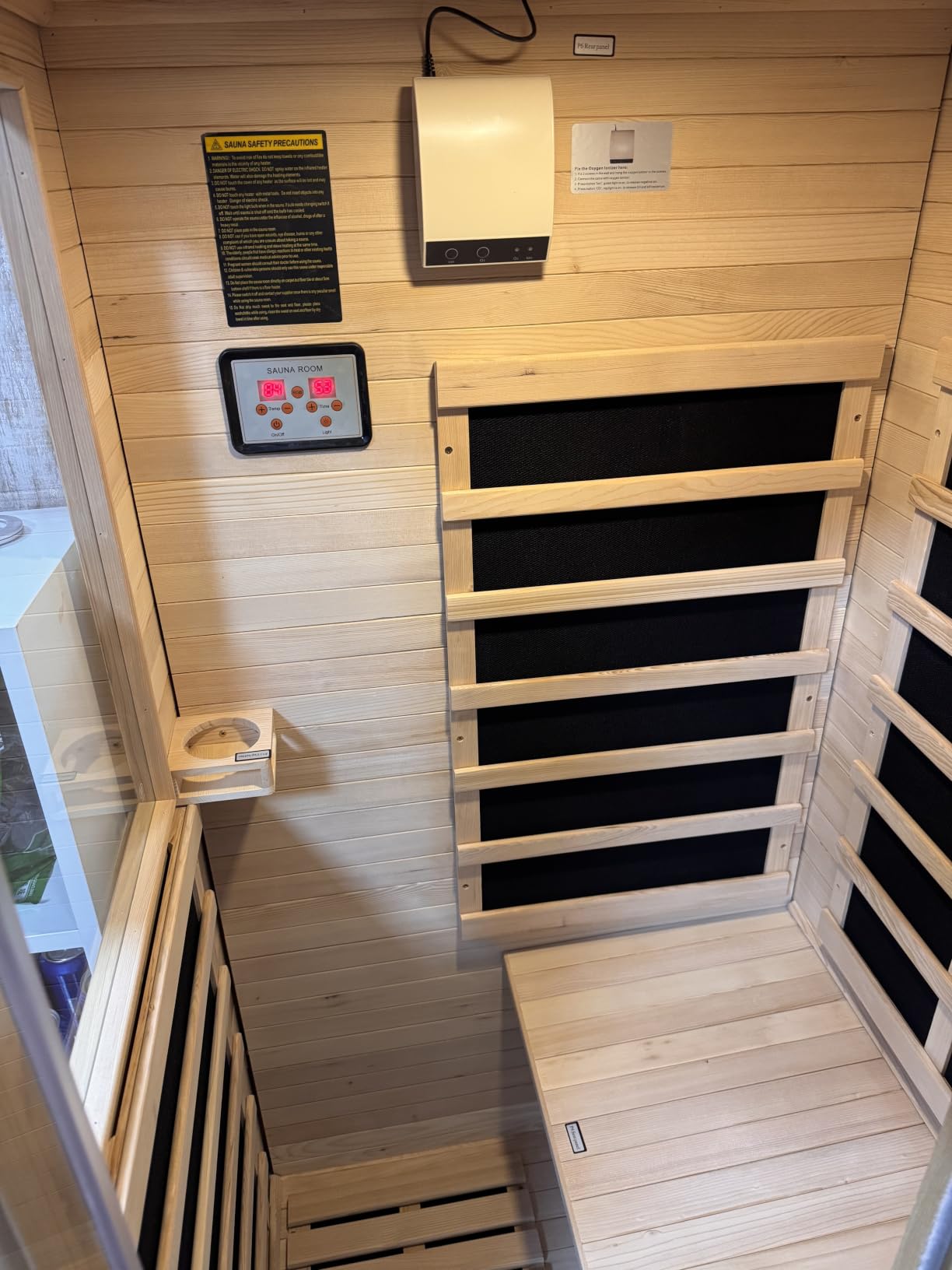
Why six seats changes the session
More bodies mean more moisture, more löyly, and a faster climb in a sealed room. For a family that wants the sauna as a shared winter ritual, capacity is the feature that matters and this is the only barrel here rated for six.
The glass door and side windows keep a six-person barrel from feeling like a locker, which is the standard objection to large barrels.
Where it falls short
You are paying more for a capacity claim backed by the thinnest review record here, and the 6KW heater is carrying the largest stated load.
Plan the 220V run early, and treat the tarp roof as a component that will need attention in a few seasons of real snow rather than a permanent answer.
What to Look for in a Freezing Climate
Before you pick a model, work through these nine items. They are the specs that separate a sauna that runs in January from one that sits under a cover until April.
Exterior material for freeze-thaw. Carbonized or thermally treated spruce, asphalt shingle covering, and stainless hardware all handle repeated freezing better than untreated timber. Untreated wood absorbs moisture, freezes, expands, and eventually fails at the joints and the base.
Insulation depth. R-21 in the walls and R-30 or better in the ceiling is the working target for a real winter, and a double-wall build beats a single thicker wall for the same depth.
Heater output per cubic foot. Start from 1 kW per 45 to 50 cubic feet of adjusted room volume, then add 10 to 20 percent for cold. A 6 by 8 foot cabin lands around 6 kW moderate and 7 to 8 kW cold; an 8 by 8 foot room lands closer to 8 to 9 kW.
Adjusted room volume, not nominal. Subtract the volume of the heater, benches, and uninsulated surfaces, because glass walls and the heater body itself count against your heat loss.
Roof pitch and shedding. Steep roofs shed snow; shallow roofs collect it and build ice dams that push water back under the roof edge. On a barrel, a tarp or shingled profile reduces the flat surface that collects.
Electrical supply. A 1950W infrared cabin on a 120V 20A circuit is a weekend project. A 9KW stove on 240V is a panel conversation, a trench, and a permit. Decide which before the first frost.
Foundation and frost depth. The base has to extend below the local frost depth, and the ground around the structure has to be able to heave without twisting the shell. A deck, pavers, or a compacted gravel pad all raise the shell clear of the worst of it.
Cover requirement. A permanently frozen cover ends spontaneous use, so either choose a cabin rated for no-cover operation or accept a hard-sided shelter and a snow-removal routine.
Warranty scope. Look for the words outdoor use, the ambient temperature limits, and whether a cover is required to keep coverage valid. Exclusions written in cold-weather language void the warranty exactly when you need it.
Warm-up planning in the cold
Published heat-up times are almost always measured in mild conditions. In genuine cold, expect the real figure to run meaningfully longer, and build your session planning around a preheat you start before you walk out to the sauna rather than after. Owners running small heaters on a low setting to keep an attached garage just above freezing use a similar logic, preheating a larger space slowly so the fabric and shell never sit soaked and frozen.
One owner in a forum thread running a 6 by 8 by 8 room reported roughly one degree per minute heat-up with a properly sized unit, while a smaller heater on the same room left top-bench readings near freezing on cold days. That contrast is the whole heater-sizing argument in a single anecdote: undersizing does not slow your sauna down, it prevents it from arriving.
Barrel, cube, or tent in snow
Barrels shed water and snow off a curved surface, hold a tight volume, and heat evenly with less wall area per cubic foot. Cubes and panelized cabins give you a steeper roof, more usable headroom at the door, and easier electrical access, at the cost of more flat surface to defend against snow. Tents are the fastest and cheapest to deploy, and the least capable of holding temperature through an extended deep freeze, which is why the two best-performing tents here both burn wood rather than electricity.
Winter problems nobody puts in a catalog
Rodents are a commonly raised concern in owner discussions, and the fix is unglamorous: close the ventilation openings when the sauna is cold, plug the drain, and use stainless mesh at any service penetration. Ice at the threshold and along the path from the house is a genuine slip hazard and the reason path lighting and a change area matter in a northern install. Condensation dripping from ceiling panels and upper walls during and after a session in near-freezing air is normal physics, and a vented roof with a drip path manages it.
Related reading if you are also hardening the property: our outdoor security cameras built for cold climates are the natural companion to a sauna path you will be crossing in the dark at 6AM.
Frequently Asked Questions
Can you use an outdoor sauna in the winter?
Yes, provided the unit is built for full outdoor exposure. Look for a freeze-thaw resistant shell such as carbonized or thermally treated wood, a weatherproof roof, real insulation between shell and interior, and a heater sized 10 to 20 percent above the moderate-climate recommendation. Also confirm the warranty does not require a permanent cover, because a frozen cover ends spontaneous winter use.
Should I oversize my sauna heater for cold weather?
Yes, by 10 to 20 percent. Heat loss rises with the gap between interior and outdoor temperature, so a heater sized for a mild climate will produce long warm-up waits and poor recovery in freezing air. A 6 by 8 foot cabin that needs about 6 kW in autumn generally wants 7 to 8 kW for reliable cold-weather operation.
How do I calculate the size of a sauna heater needed?
Start from adjusted room volume rather than nominal cubic feet: subtract the heater body, benches, and any uninsulated or glass surfaces. Apply the baseline of about 1 kW per 45 to 50 cubic feet, then add 10 to 20 percent for cold-climate operation. Divide the final wattage by the supply voltage to get amperage and confirm your panel can carry it on a dedicated circuit.
What exterior material is best for cold climates?
For freeze-thaw resistance, carbonized or thermally treated spruce and asphalt shingle covering perform best because they absorb far less moisture than untreated timber. Aluminum shells are the most weatherproof option available. Untreated wood absorbs water, freezes, expands, and fails first at the base and the joints, which is exactly where forum owners report their damage starting.
Do outdoor saunas need a cover in winter?
It depends on the model and on your warranty. Many infrared and fabric units require a cover to keep coverage valid, and a cover that freezes to the roof is impractical to remove, which effectively ends winter use. Rigid barrel and cabin models with shingled or sloped roofs are far better suited to cover-free operation. Always check the warranty language before you buy.
Can you use a portable sauna tent in the snow?
Yes, with conditions. Owners report running portable tents through northern winters successfully, provided the base is a deck, pavers, or gravel rather than bare ground, which keeps the shell out of the freeze-thaw mess. Tents with wood-burning stoves perform far better in deep cold than electric models, and most fabric shells are rated for mild moisture rather than heavy snow.
What is the average lifespan of an outdoor sauna?
A well-built rigid cabin with a treated wood or shingled exterior and stainless hardware can last decades with routine sealing and stain maintenance. Fabric tents are a different category entirely, with a much shorter practical life because the material fatigues under UV, moisture, and repeated freeze-thaw. Warranty terms in this roundup range from one year on a tent set to seven years of after-sales service on a carbonized spruce barrel.
How much does it cost to run an outdoor sauna in winter?
Running cost tracks heater wattage, not cabin size. A 1950W infrared cabin pulling an hour to heat plus a session uses roughly 3 to 4 kWh, while a 6 kW traditional stove holds temperature for about 6.5 to 9 kWh per cold session. Multiply by your local residential rate, and remember that longer cold-start warm-ups add a full heater-load period to every session.
Conclusion: The Best Outdoor Saunas for Cold Climates, by Tier
There is no universal winner among the best outdoor saunas for cold climates in 2026, so here is our split by climate tier. For a four-season backyard in a temperate winter that runs roughly 0 to 40F, the SALUSHEAT full-spectrum cabin is the low-friction answer, because it runs on an ordinary 120V circuit and publishes what it does below freezing. For a serious mountain or Upper Midwest property that sees repeated deep cold, the HOSAUNA 9KW barrel is the right machine, and the OUTEXER 4.5KW barrel is the safest all-round bet if you want a large review base behind the decision.
For couples, the KUNSANA two-person cabin is compact and fast, and the amocane barrel is the choice if you want real steam temperatures in the smallest possible yard. For families and groups, the two Breezestival barrels are the rigid cabins here rated for up to six adults, with the tarp roof doing the work a pitched metal roof would do on a traditional cabin. If you have no electrical service or you are not ready to build, the WILLOWYBE Portable set is the best-documented sub-zero performer among tents, and the WILLOWYBE tent is the cheapest way to find out whether you will use a sauna at all.
Whichever tier you land on, do the site work first: a base below your local frost depth, electrical in the ground before the ground freezes, and a path from the house that will not be an ice sheet in February. Those three jobs decide whether your sauna gets used all winter or until April.