
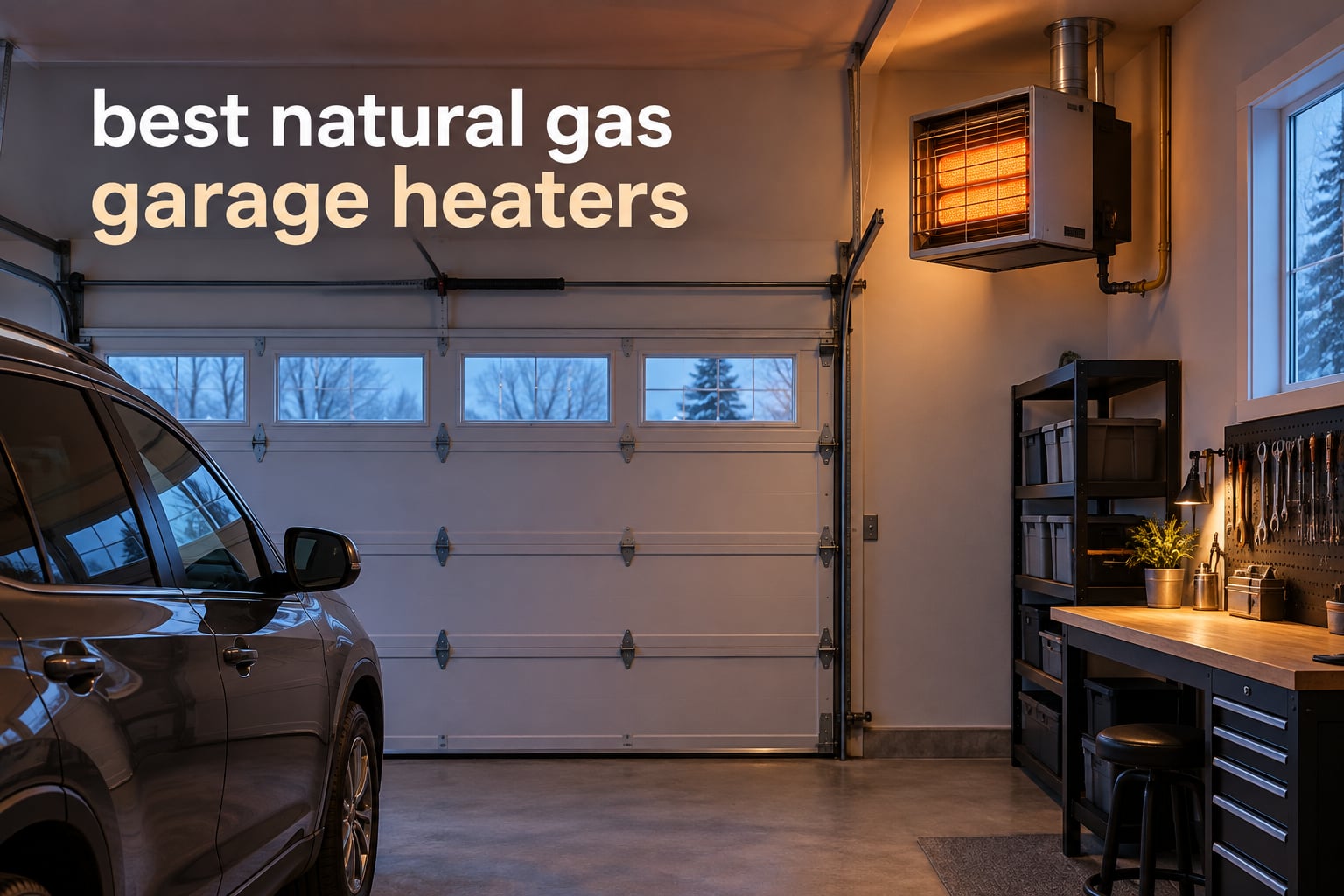
The best natural gas garage heaters for most garages are vent-free radiant or blue-flame units that need no electricity and no flue work, while a three-car garage or a working shop usually needs a ceiling-mounted forced-air unit such as the Mr. Heater 50,000 BTU or the Modine Hot Dawg. Natural gas is the cheapest fuel per hour of heat in most regions of the country, and it is also the most expensive to install.
That tradeoff is the single most useful thing to understand before you start shopping. A vent-free blue flame heater hooks to an existing gas line and warms a space in roughly half an hour. A separated-combustion unit needs a flue through a wall or roof plus 115V or 120V power, and it earns that extra install cost back in fuel savings over a decade. Forum regulars on garagejournal.com and wranglertjforum.com reach the same conclusion, and the cost anxiety in those threads is real rather than exaggerated.
I compared 10 natural gas garage heaters across the entire range, from an 11,000 BTU direct-vent wall unit to a 45,000 BTU commercial-grade ceiling model, and read through the full owner review base on each one. What follows is what holds up in real garages, plus the sizing math that most roundups skip entirely. If you are also refreshing the rest of your shop gear, our best gas pressure washers guide covers the cleanup side of the same weekend.
Table of Contents
Top 3 Picks for Natural Gas Garage Heaters for 2026
These three cover the realistic range of buyer profiles: the Mr. Heater 30,000 BTU vent-free blue flame heater for the easiest install, the Mr. Heater 50,000 BTU forced-air unit for a full three-car garage, and the Dyna-Glo 20,000 BTU wall heater for small spaces and tight budgets.

Mr. Heater 30K Blue Flame
- 30000 BTU output
- Heats up to 1000 sq ft
- Vent-free with no electricity needed
- Built-in thermostat

Mr. Heater 50K Forced-Air
- 50000 BTU forced air
- Heats up to 1667 sq ft
- Ceiling mount
- Works with 24V or Wi-Fi thermostats

Dyna-Glo 20K Blue Flame
- 20000 BTU blue flame
- Heats up to 700 sq ft
- 10000 to 20000 BTU variable output
- No electricity required
Best Natural Gas Garage Heaters at a Glance in 2026
Every heater below is a natural gas unit. The columns that actually change your decision are output, whether the heat is radiated or forced through a blower, and whether the unit needs a flue and electrical power.
| Product | Specifications | Action |
|---|---|---|
| Mr. Heater 30,000 BTU Vent Free Blue Flame Heater |
|
Check Latest Price |
| Mr. Heater 50,000 BTU Forced-Air Unit Heater |
|
Check Latest Price |
| Dyna-Glo 20,000 BTU Natural Gas Blue Flame Wall Heater |
|
Check Latest Price |
 ProCom MN300TPA-B 30,000 BTU Infrared Plaque Heater ProCom MN300TPA-B 30,000 BTU Infrared Plaque Heater |
|
Check Latest Price |
 Mr. Heater 30,000 BTU Dual Fuel Blue Flame Heater Mr. Heater 30,000 BTU Dual Fuel Blue Flame Heater |
|
Check Latest Price |
 Modine Hot Dawg 45,000 BTU Garage Heater Modine Hot Dawg 45,000 BTU Garage Heater |
|
Check Latest Price |
 Comfort Glow KWN521 30,000 BTU Five Plaque Wall Heater Comfort Glow KWN521 30,000 BTU Five Plaque Wall Heater |
|
Check Latest Price |
 Ashley Hearth DVAG11N Direct-Vent Wall Heater Ashley Hearth DVAG11N Direct-Vent Wall Heater |
|
Check Latest Price |
 Heatstar MH25NG Radiant Overhead Garage Heater Heatstar MH25NG Radiant Overhead Garage Heater |
|
Check Latest Price |
 ProCom MN200TBA-B 20,000 BTU Blue Flame Heater ProCom MN200TBA-B 20,000 BTU Blue Flame Heater |
|
Check Latest Price |
1. Mr. Heater 30,000 BTU Vent Free Blue Flame Heater – The Easiest Install With Real Output
Mr. Heater 30,000 BTU Vent Free Blue Flame Natural Gas Heater
30000 BTU output
Heats up to 1000 sq ft
Vent-free and no electricity needed
1 year limited warranty
Pros
- Radiant blue flame output rated for up to 1000 sq ft
- Runs with no electricity so a power cut does not stop your heat
- Vent-free design means no flue or duct work
- Battery electronic ignition with the battery included
- Built-in adjustable thermostat with low oxygen shutoff
Cons
- Radiant heat warms objects and people more than the air
- Blower fan kit is sold separately
- Natural gas only with no propane conversion
With more than 4,400 ratings behind it, this is the most thoroughly proven heater in the group, and the pattern in the reviews is remarkably consistent: strong heat for the size, a setup that most owners finish in an afternoon, and useful heat during outages. The 30,000 BTU rating is paired with a stated coverage of up to 1,000 square feet, which lines up well with a two-car garage.
It is a pedestal-form cabinet that also accepts wall mounting hardware in the box, so you decide the height on installation day. A built-in adjustable thermostat cycles the burner, and a low oxygen safety shutoff handles the vent-free risk. The battery-operated electronic ignition means the unit is alive without any power at all.
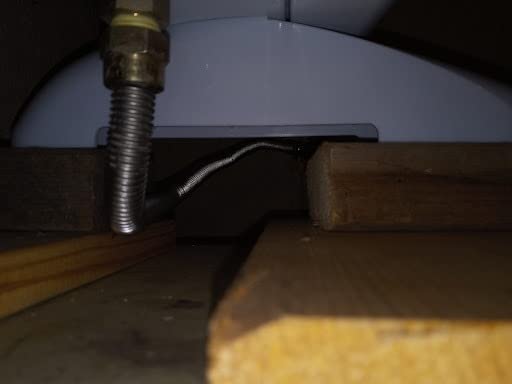
The honest limitation is the nature of radiant heat. It warms whatever is in front of it, which is exactly what you want at a workbench, and it is much less effective at turning the whole air mass of a garage warm. Owners who wanted room heating bought the optional blower fan kit separately, and that is the single most common follow-up purchase in the reviews.
Spec-wise it is 30 inches deep by 13 inches wide by 28 inches high at 24.7 pounds, indoor use only, with a maximum temperature setting of 900 degrees F. It is natural gas only, which is the one thing to confirm if you might ever run propane.
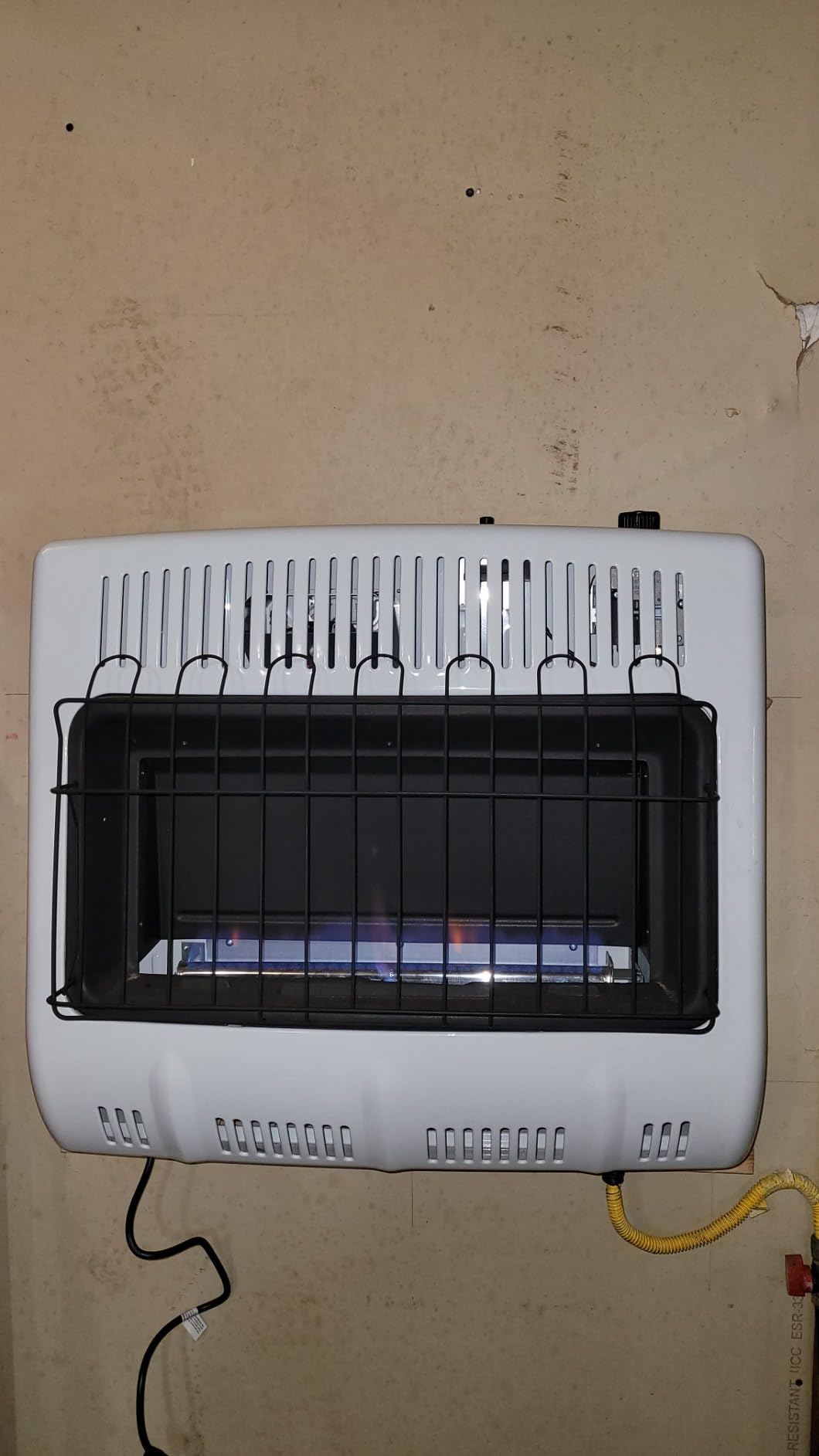
Where the radiant heat actually reaches
Think of this as a heat lamp pointed at your work zone rather than a room heater. Under a bench, in front of a sofa being stored for the winter, or above a spot where you stand for hours, it is very effective. Across an open floor in a cold snap, it is slow, and no amount of thermostat setting changes that.
What the optional blower kit changes
The blower kit turns it into something closer to a forced-air unit, pushing warmed air into the far corners of the space. If your garage is a storage room and you only need a warm spot, skip it. If you plan to work out there, budget for it from the start.
2. Mr. Heater 50,000 BTU Forced-Air Unit Heater – The Answer for a Three-Car Garage
Mr. Heater 50,000 BTU Forced-Air Unit Heater (Propane or Natural Gas)
50000 BTU forced air
Heats up to 1667 sq ft
Ceiling mount needs 10 ft height
NG to LP kit included
Pros
- Forced air circulates warmth instead of only radiating it
- 50000 BTU covers about 1667 sq ft or a three-car garage
- Owners report a 10 degree rise in 15 to 20 minutes
- Low profile housing keeps floor and wall space free
- Works with standard 24V or Wi-Fi thermostats
Cons
- Needs a gas line a flue and 120V power so install is the bigger cost
- A few units ship with a noisy fan from loose set screws
- A burned control board is a known failure mode
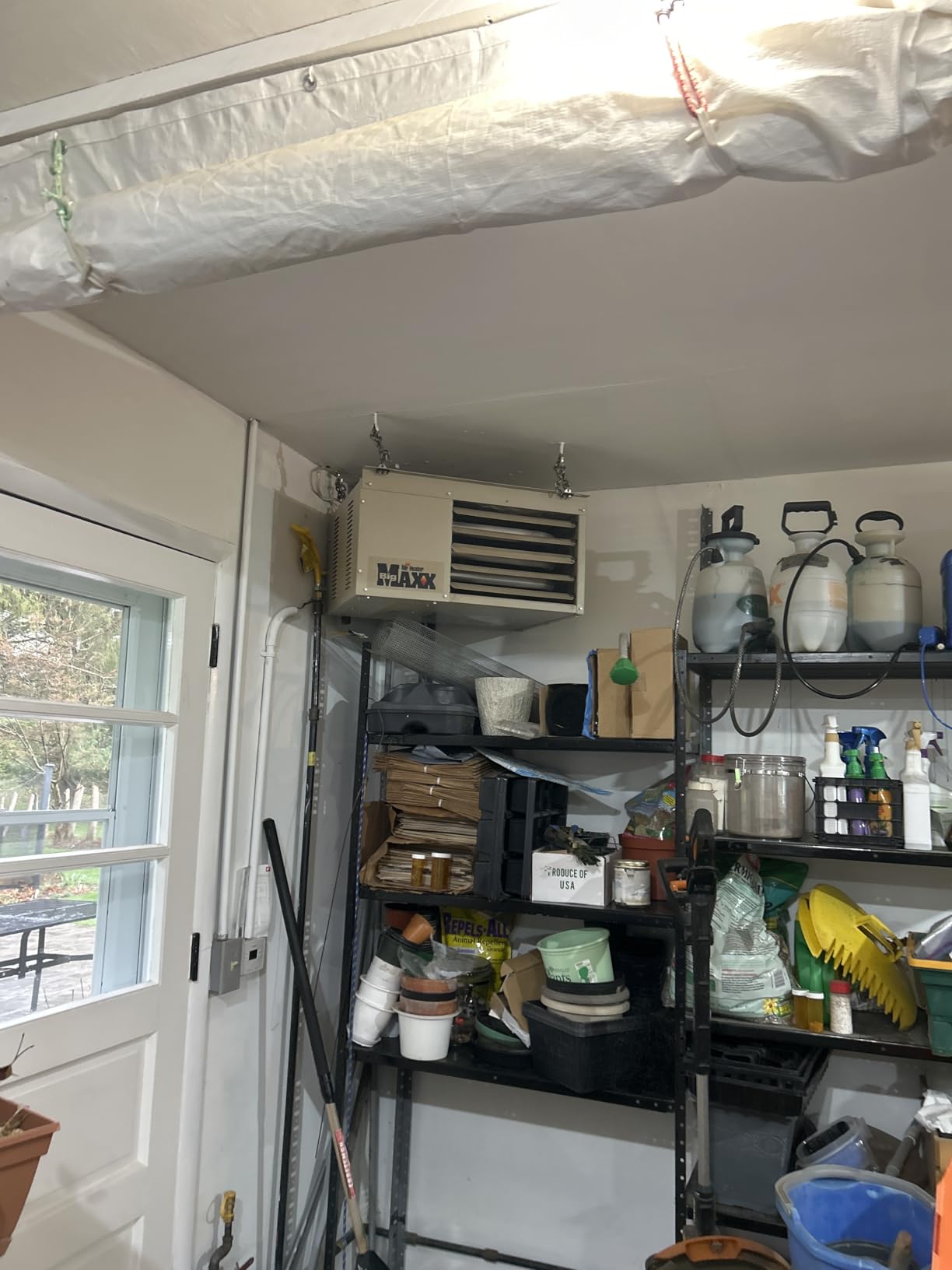
When a garage needs to become a room rather than a warm corner, this is the unit that does it. Fifty thousand BTU is the highest output in this roundup, paired with a stated coverage of up to 1,667 square feet, which is roughly a three-car garage. Owners describe lifting an uninsulated space by about 10 degrees in 15 to 20 minutes, which is the fastest heat-up of any heater here.
It hangs from the ceiling, so the floor and wall stay completely clear for a vehicle lift, a workbench, or a second car. The low profile housing needs a minimum 10 foot ceiling with 8 feet of clearance below, so measure before you commit.
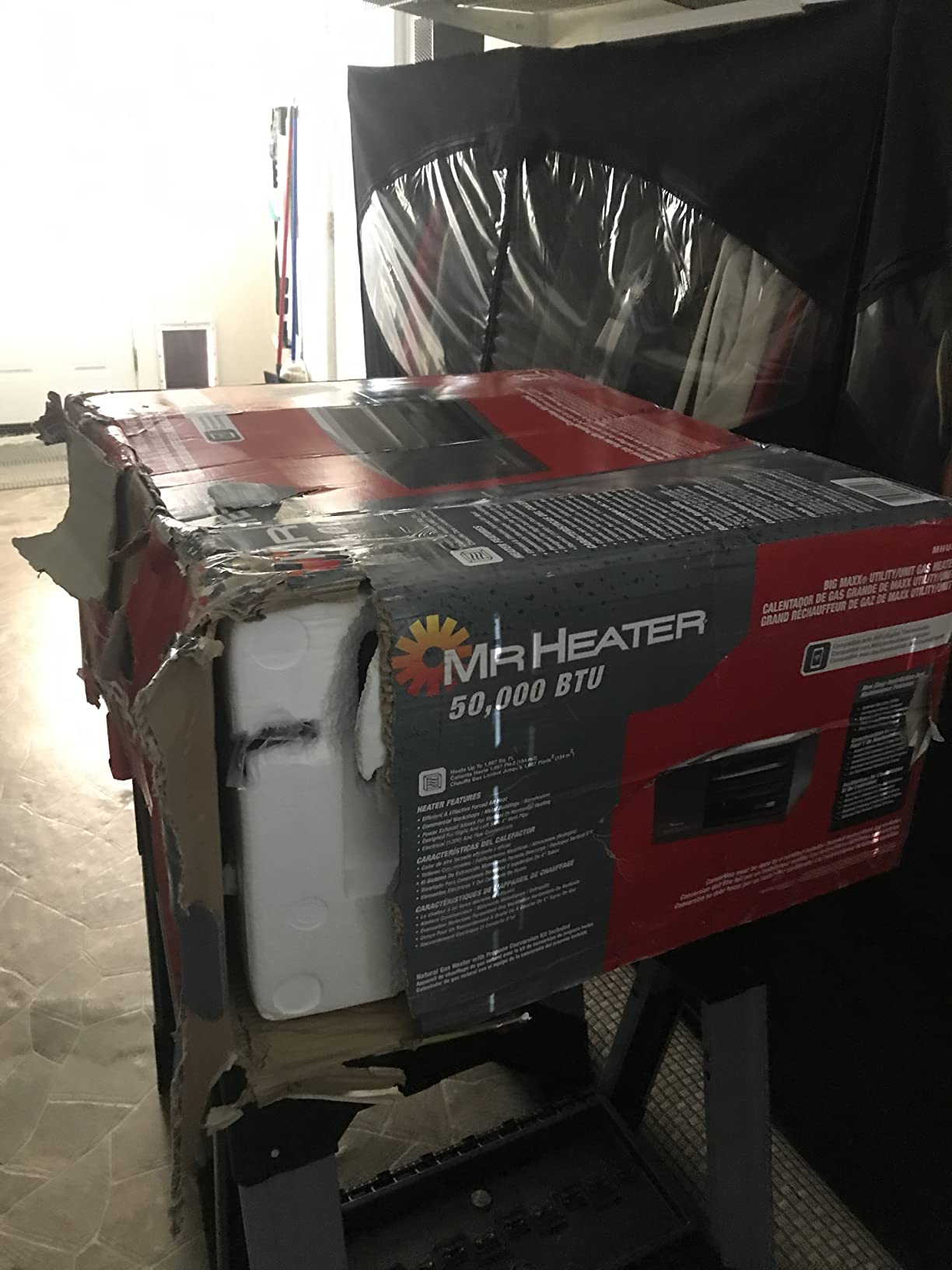
A natural gas to liquid propane conversion kit is included, so the same cabinet can run on either fuel if your setup changes. The chassis is 24 inches deep by 25.5 inches wide by 13 inches high at 60.3 pounds, and a high temperature safety shutoff plus a gas safety flame sensor handle the basics.
Two things temper the enthusiasm. Control board failures are a documented failure mode, and owners who hit one describe manufacturer support as slow to nonexistent. A noisy circulation fan from loose set screws is also reported on a share of units, which is quality control rather than design. Neither is a reason to skip the class of heater, but both argue for keeping a receipt and knowing your installer’s contact.
Heat-up time in a real three-car garage
The 15 to 20 minute figure comes from owners with insulated doors and moderate insulation in the walls. An uninsulated two-car space in a hard cold snap takes longer, and the thermostat will cycle rather than run continuously. Plan on planning for a warm-up period, not instant heat.
Clearances, thermostats and the ceiling clearance trap
Ten foot ceilings are common in older garages, and this unit needs them. If your joists sit lower, the Mr. Heater blue flame units or a wall-mounted radiant model fit where this one will not. Thermostats are sold separately and the unit takes standard 24V or Wi-Fi models, so you can add smart control later.
3. Dyna-Glo 20,000 BTU Blue Flame Wall Heater – Simple, Compact and Cheap to Run
Dyna-Glo 20,000 BTU Natural Gas Blue Flame Vent Free Wall Heater
20000 BTU blue flame
Heats up to 700 sq ft
10000 to 20000 BTU output
No electricity required
Pros
- Blue flame warms the air the way central heating does
- 10000 to 20000 BTU variable output in three steps
- No electricity needed so it is usable as backup heat
- Wall mount design with no duct work
- Back of the cabinet stays cool against the wall
Cons
- The three heat settings are hard to tell apart
- Manual control only on this model with no thermostat
- Natural gas only and fuel conversion is not permitted
This is the small-garage answer. Twenty thousand BTU covers up to 700 square feet, which is a one-car garage, a small workshop bay, or the working half of a larger space. Owners report quick warm-up in a three-car garage they use only occasionally, and a 900 square foot cabin, which says the real ceiling is often higher than the rated number.
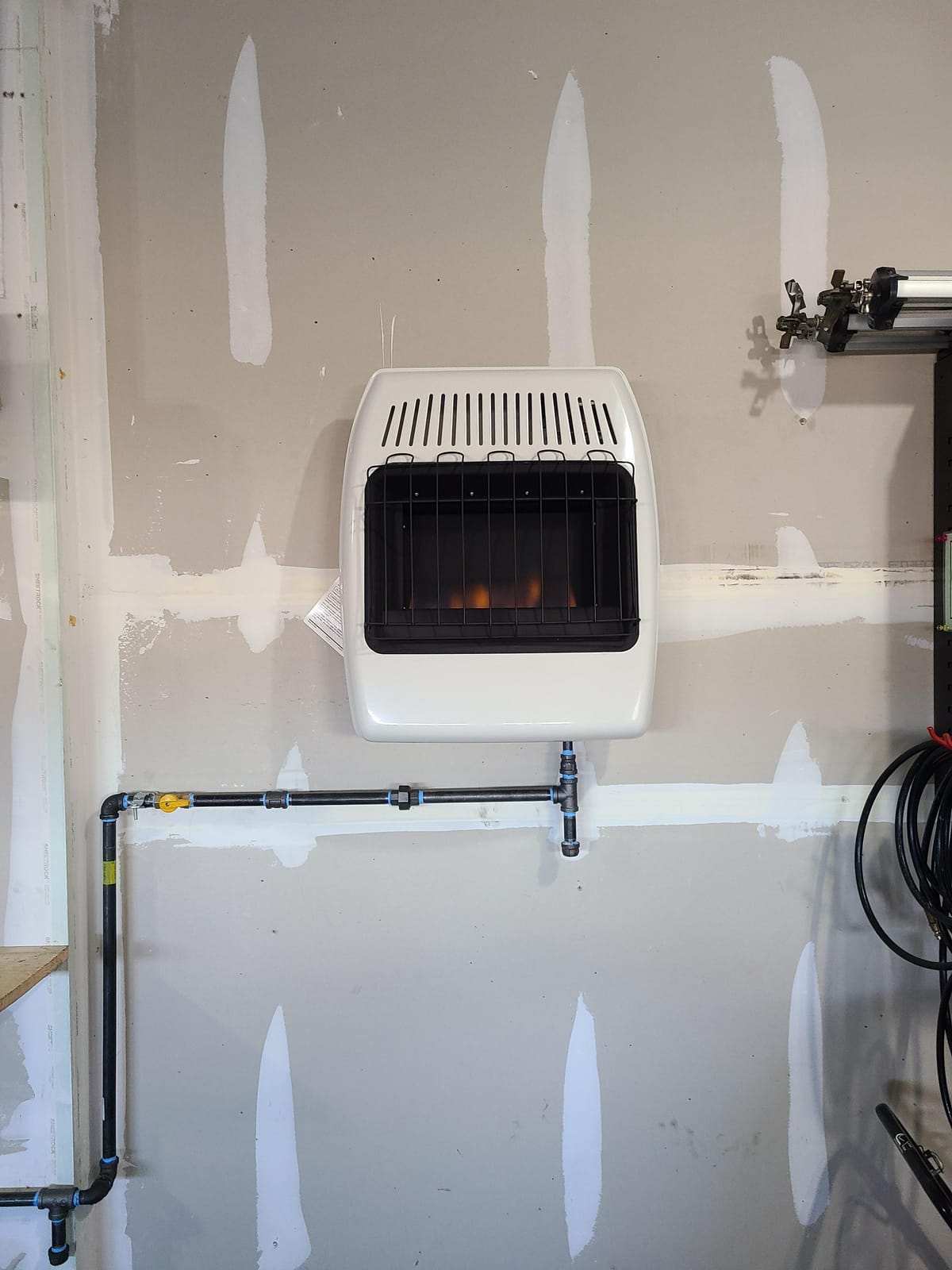
Blue flame technology is the reason it feels different from a radiant plaque heater. Rather than only heating surfaces in front of it, it converts heat to warm the air, so the whole small space evens out. No electricity is required, which makes it a genuinely useful backup heat source.
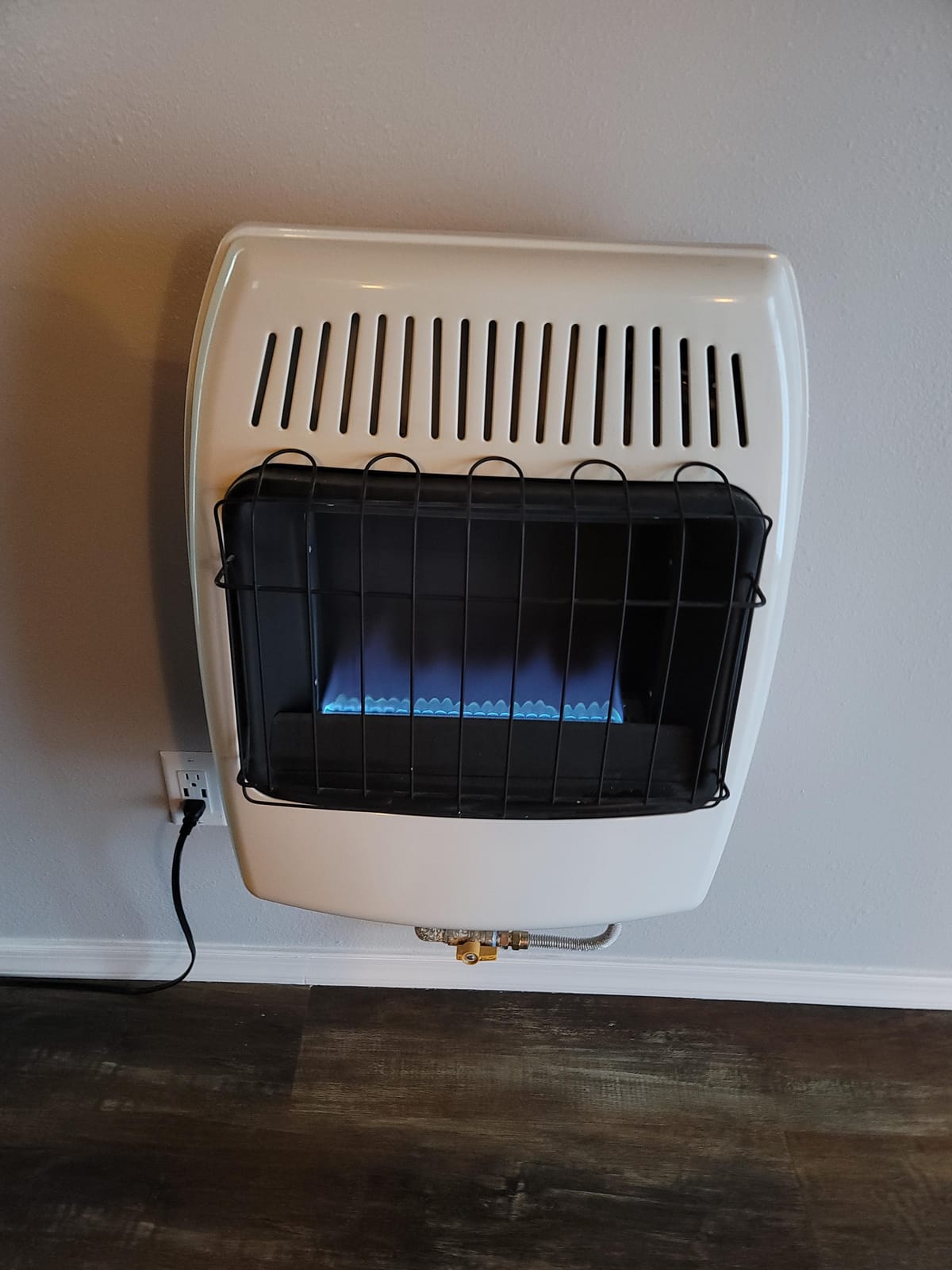
Output steps between 10,000 and 20,000 BTU per hour through a control knob with low, medium and high positions. The cabinet is 24 inches square by 10 inches deep at 20.2 pounds, wall mounted, white, indoor use only, and the back half stays cool enough to sit against a wall without a heat shield.
Two limits are worth knowing before you buy. First, on this model number the control is manual rather than thermostatically controlled, and the thermostat version carries a different model number. Second, the three flame settings look similar enough that owners often cannot tell which one they selected. If you want automatic cycling, pick a different unit in this roundup.
Why blue flame beats radiant in a cold start
Warm air rises and circulates, which is exactly what a garage full of cold concrete needs. A radiant unit leaves a hot zone and a cold zone; a blue flame unit pushes warmth across the whole footprint. On a small floor area that difference is dramatic.
Manual control versus a real thermostat
No thermostat means you set the level and walk away, which is fine for occasional use but wastes gas in a deep cold snap. If you plan to hold a garage near a set temperature for hours at a time, a thermostat-equipped model is worth the small step up in cost.
4. ProCom MN300TPA-B 30,000 BTU Infrared Plaque Heater – Thermostat Control in a Slim Cabinet
ProCom Heating Natural Gas Ventless Infrared Plaque Heater With Base Feet – 30,000 BTU, T-Stat Control – Model# MN300TPA-B
30000 BTU infrared
Heats up to 1400 sq ft
Thermostat with high med low
Wall mount or feet
Pros
- 30000 BTU in a slim cabinet rated for up to 1400 sq ft
- Built-in thermostat with high medium low settings
- Wall mount hardware and base feet both in the box
- Push button ignition with oxygen depletion sensor
- No electricity required and ANSI certified
Cons
- Radiant heat needs a clear line of sight
- Many owners add a fan for air circulation
- Heavier and deeper than a small blue flame unit
The 1,400 square foot coverage figure is the largest stated number of any compact ventless unit here, and 30,000 BTU is enough to heat a two-car space properly even in an uninsulated shell. The reason it works better than a bare radiant plaque is the built-in thermostat, with high, medium and low settings and a minimum setting of 40 degrees F.
It is a slim modern profile at 8 inches deep by 26.63 inches wide by 23.5 inches high, and both wall mounting hardware and base feet are included. You can hang it at working height or stand it on the floor, which is unusual for a 30,000 BTU unit and makes it easy to reposition as the season changes.

Push button ignition feeds a pilot oxygen depletion sensor that shuts the unit down if carbon monoxide or low oxygen is detected, and the heater is ANSI certified. No electricity is required, so it keeps working during an outage. The stated weight is 15.58 kilograms, which is heavier than the compact blue flame units and matters if you are mounting it on a finished wall.
As with all infrared plaques, effectiveness depends on placement. Wall mounting it opposite the open garage door, with nothing stored in front of it, is the difference between a heater that works and one that does not.
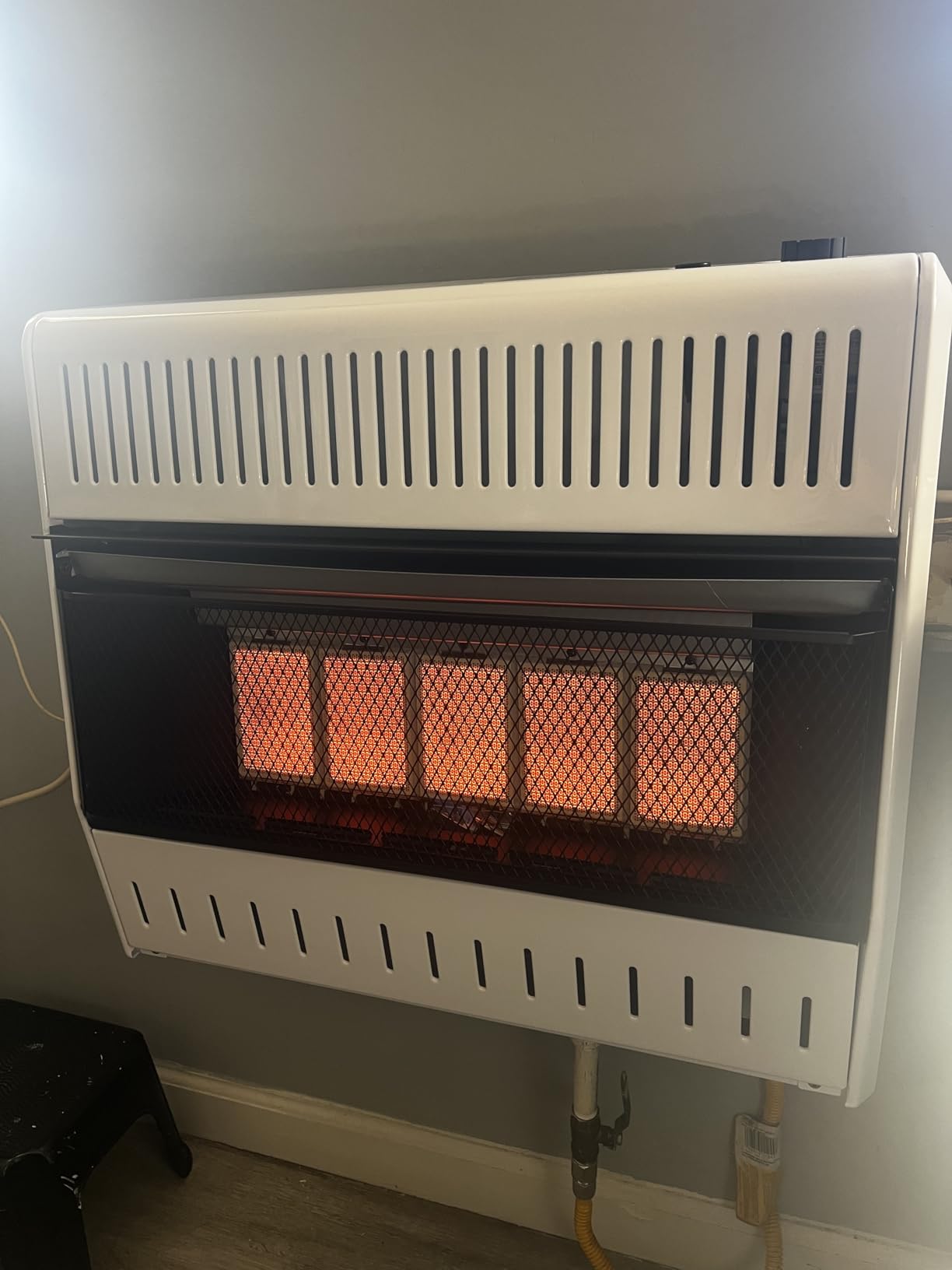
Wall mount or floor placement
Mounting it low on a wall, roughly chest height, puts the radiant face where your hands and torso are while you work. Standing it on the base feet is better for a storage-only garage where you walk past it rather than sit near it. Both mounting paths are in the box, so decide later if you are unsure.
Line of sight is the whole game
Infrared heat travels straight out. A parked SUV, a stack of plywood, or a shelving unit will quietly absorb most of the output. Keep the zone in front of the heater clear, and mount it where the heat lands on people rather than on stored cardboard.
5. Mr. Heater 30,000 BTU Dual Fuel Blue Flame Heater – One Cabinet for Gas or Propane
Mr. Heater 30,000 BTU Vent Free Blue Flame Dual Fuel Heater
30000 BTU output
Heats up to 1000 sq ft
Runs on natural gas or propane
No electricity required
Pros
- One unit runs on natural gas or propane
- Owners report 30F to the 60s in about 20 minutes
- Built-in thermostat with an exposed sensor
- Dual LP and NG low oxygen detection systems
- Quiet running with strong airflow
Cons
- Thermostat is a 1-to-5 heat level dial with no numeric temperature readout
- Blower fan kit must be purchased separately for air circulation
- A small 3/8 inch NPT street elbow may be needed for the base feet gas connection
Dual fuel capability is the reason to choose this over the natural gas only version of the same size. If your shop is on a propane line, or you are not certain which gas will be available at the property in ten years, one cabinet handles both.
Owners report taking an uninsulated one-car garage from about 30 degrees F into the 60s in roughly 20 minutes, and they single out the clean, low-odor burn compared with radiant plaque units. The thermostat uses an exposed sensor, which reviews suggest cycles more reliably than a recessed one.
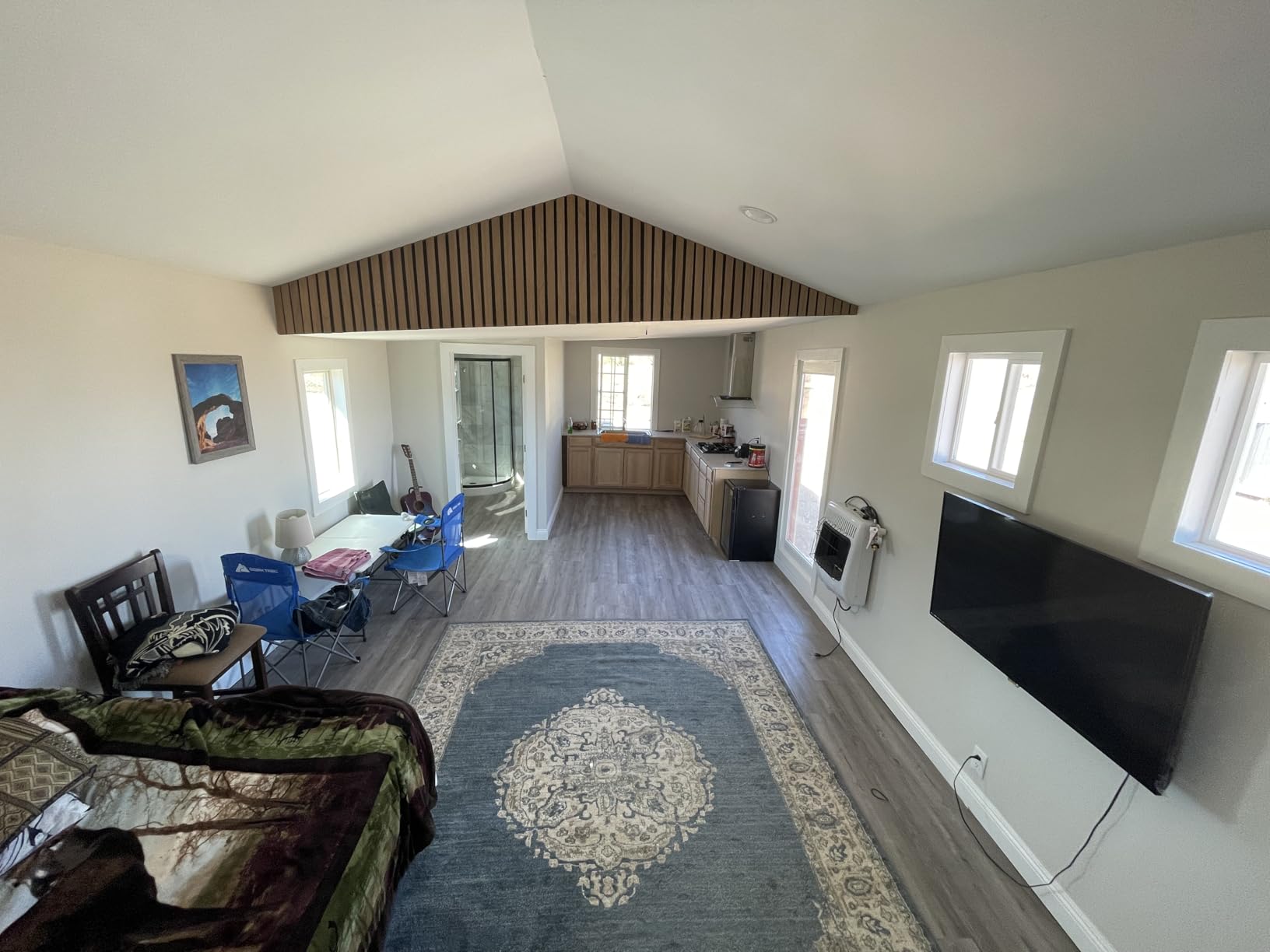
Battery operated electronic spark ignition with the battery included, no electricity required, and no outdoor venting. Dual LP and NG low oxygen detection systems run alongside the safety shutoff. The cabinet is 11.42 inches deep by 27.36 inches wide by 25.51 inches high at 26.1 pounds, and wall mounting hardware is included.
Two practical notes. The thermostat is a one to five heat level dial with no numeric temperature readout, so it is a level selector rather than a set-and-forget thermostat. And a small 3/8 inch NPT street elbow may be needed for the base feet gas connection, which is a five-minute part that trips up first-time installers.
Switching fuel without buying a new unit
Dual fuel models carry both detection systems and a burner set up for either gas, so changing over is a matter of the correct conversion procedure and fuel type, not a new appliance. That flexibility is worth more than it first appears if you ever sell the property or convert the shop to a different heating arrangement.
The thermostat is a heat level dial
Do not expect to set 68 degrees and walk away. You pick a level and the unit runs at that output until the sensor decides otherwise. For a garage used in short bursts, that is fine. For long sessions, a model with a real thermostat setting is a better fit.
6. Modine Hot Dawg 45,000 BTU Garage Heater – Quiet Forced Air at 80 Percent Efficiency
Modine HD45AS0111Natural Gas Hot Dawg Garage Heater 45,000 BTU with 80-Percent Efficiency Grey
45000 BTU forced air
80 percent efficiency
Ceiling bracket mount
Needs 115V power
Pros
- Certified for residential commercial and industrial use
- 80 percent efficiency cuts fuel use for the output
- Quiet forced air operation
- Power exhaust works with small diameter vent pipe
- Knockouts make gas and electric access quick
Cons
- Highest cost in this group by a wide margin
- 115V power required so it stops during an outage
- Venting and wiring make install more involved
The Hot Dawg is the heater that keeps showing up in forum recommendations, and the reason is consistency rather than a headline spec. It is the only unit in this roundup certified for residential, commercial and industrial use, and at 80 percent efficiency it converts more of the gas into heat than anything else here.
Forced air means the room becomes genuinely warm rather than having one hot zone, and owners consistently describe the running noise as minimal. It mounts on a ceiling bracket, which frees the floor and wall entirely, and the low profile grey cabinet is deliberately neutral so it does not stand out.
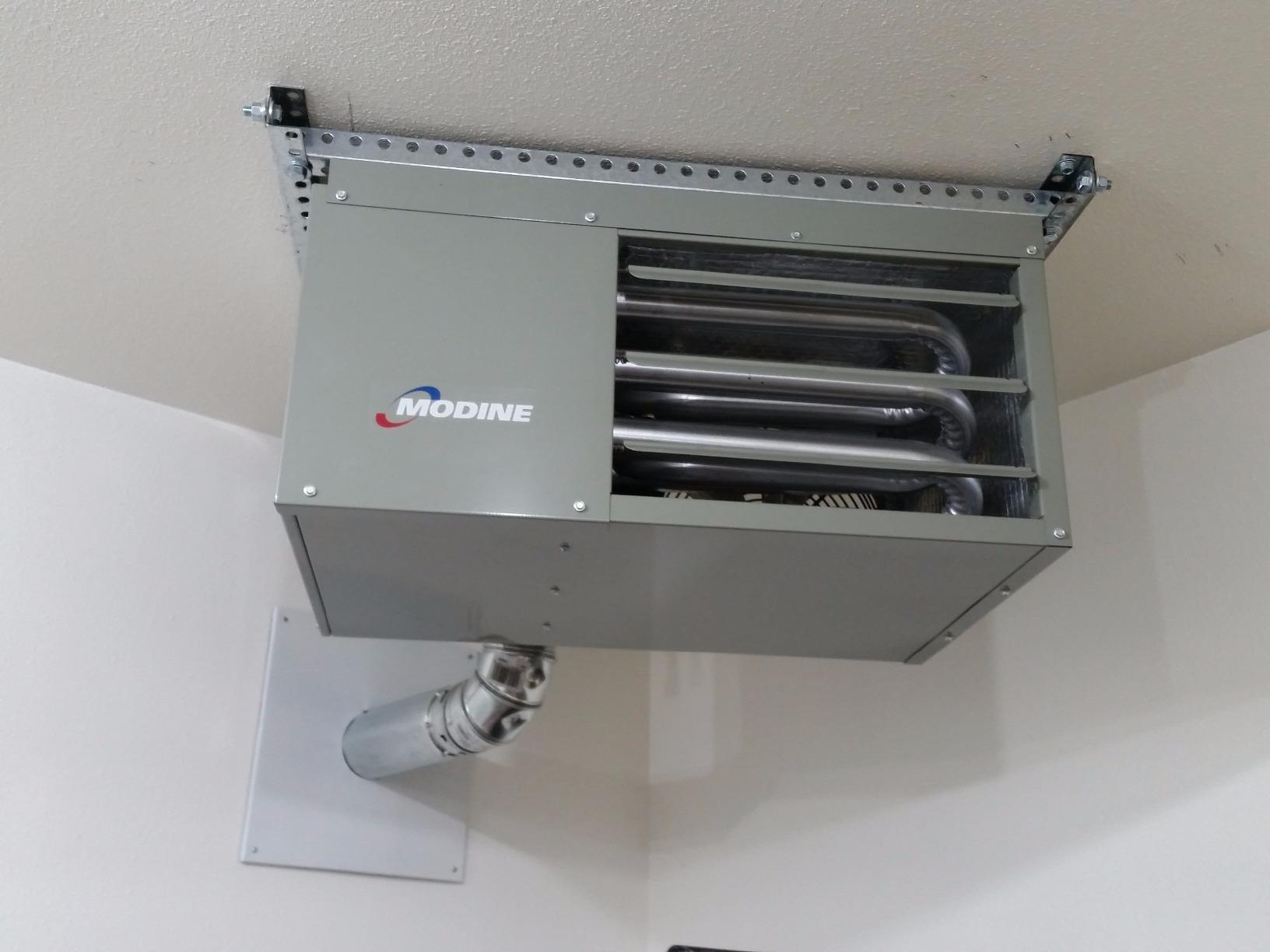
Installation features that matter: field wiring connections and knockouts give quick access for gas and electric, and the standard power exhaust simplifies a side wall or roof run with small diameter vent pipe. It is 26 inches deep by 12 inches wide by 16.5 inches high at 60 pounds, ceiling bracket mounted, and runs on 115 volts.
The stated coverage figure in the product data is 700 square feet, which is far lower than the output suggests and reflects the fact that a sealed, insulated space heats very differently from an open garage. Treat the 45,000 BTU output and your own insulation level as the sizing basis.
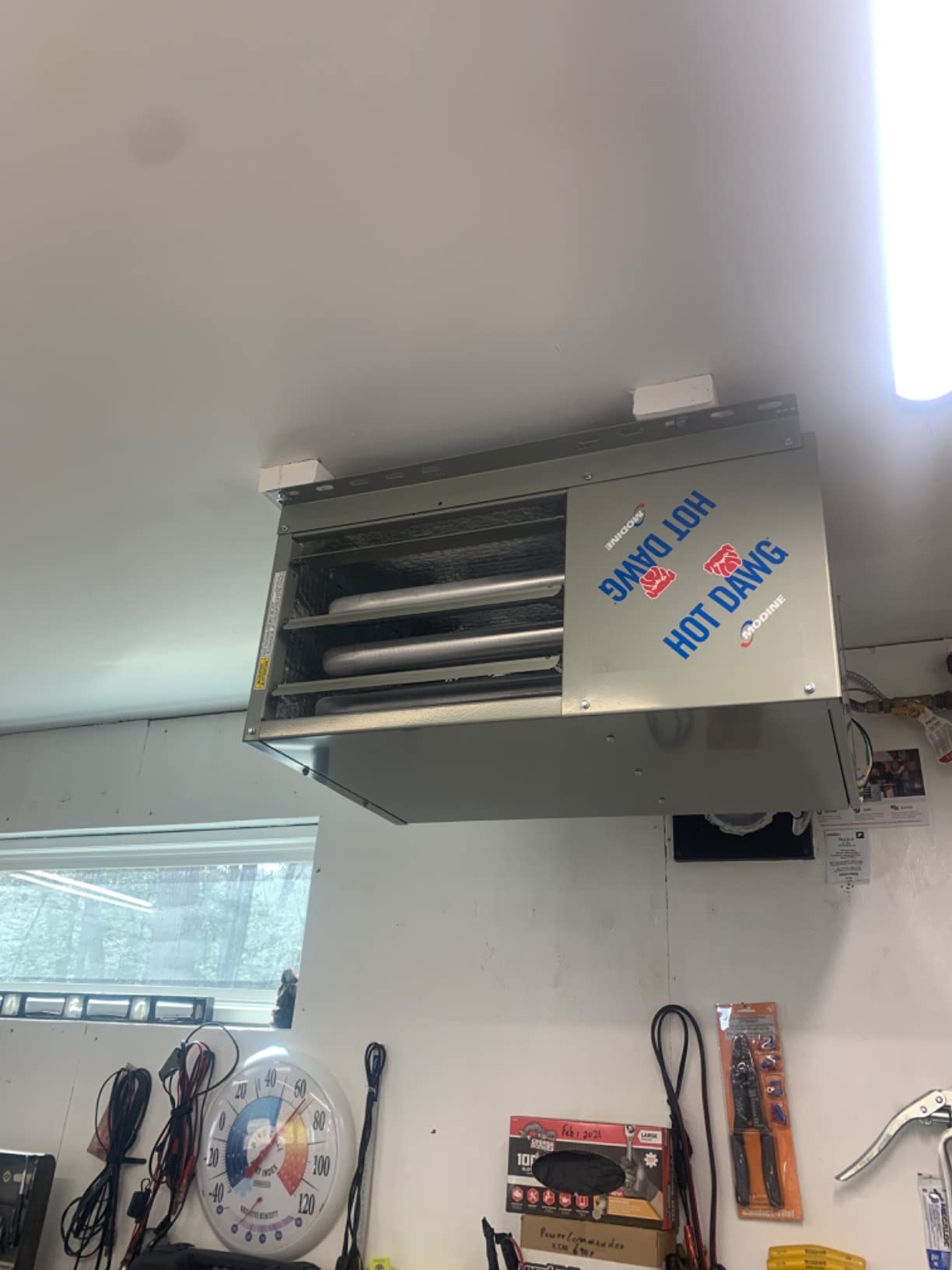
Why shops and hobbyists keep coming back to it
Efficiency compounds. At 80 percent, the same BTU output costs meaningfully less gas than a lower-efficiency unit, and in a space you heat every winter for years the savings accumulate. The commercial and industrial certification also means it is the unit a code-compliant commercial shop can actually be inspected against.
115V power rules it out for outage use
The blower needs electricity, so a power cut stops the heat. If you are in an area with frequent outages and want a garage you can still warm in a storm, choose a vent-free no-electricity unit instead. In exchange you gain real air circulation and a much quieter operating profile.
7. Comfort Glow KWN521 30,000 BTU Five Plaque Heater – Five Levels Instead of Three
WORLD MKTG OF AMERICA/IMPORT KWN521 5 Plaque 30000 BTU Gas Wall Heater,gray, 24.41×28.15×10.25
30000 BTU infrared
Heats up to 1000 sq ft
Five adjustable heat levels
No electricity required
Pros
- Five separate heat levels beat a three position selector
- Owners report heating 1000 sq ft on the middle setting
- Vent-free infrared design needs no duct work
- Runs quietly with a clean steady burn
- Built-in oxygen depletion sensor
Cons
- Manual control only with the thermostat sold separately
- 15 percent of reviews are 1 star mostly over service
- Not certified for installation in Canada
Five adjustable heat settings are the reason this one earns a place. Most vent-free infrared units give you three coarse positions, and in a space that swings between work and storage, five levels make a real difference. Owners report heating a 1,000 square foot space on the middle setting at very low running cost.
It is a vent free infrared burner with no electricity required, so there is no duct work, no flue, and no circuit to run. A built-in oxygen depletion sensor handles the vent-free safety function, and a two year manufacturer defect only warranty is longer than the one year cover on most of the Mr. Heater units here.
Five levels in an uninsulated 1,000 sq ft space
The cabinet is 10.25 inches deep by 28.15 inches wide by 24.41 inches high at 25.5 pounds, wall bracketed, and rated for up to 1,000 square feet at 30,000 BTU. Long-term owners describe it as exceptionally cheap to run and effective in older uninsulated buildings, which is a specific and credible claim.
Service and support are the real trade-off
One-star reviews are 15 percent of the total, the widest negative tail in this group, and they concentrate on returns, reshelving and customer service friction rather than on heater performance. The heater itself is not the problem. Budget for the possibility that a return is inconvenient, and check the warranty terms before you buy.
A floor stand and a blower are both optional add-ons, and the unit is not certified for installation in Canada. If you are in a region that bans vent-free combustion, this is not a candidate regardless of how well it performs.
8. Ashley Hearth DVAG11N 11,000 BTU Direct-Vent Heater – Sealed Combustion With the Vent Kit Included
Ashley Hearth DVAG11N Natural Gas Direct-Vent Wall Heater
11000 BTU direct vent
Heats up to 375 sq ft
Sealed burn takes air outdoors
Vent kit included
Pros
- Sealed burn pulls combustion air from outdoors
- Complete vent kit ships in the box
- Runs without electricity using an AA battery
- Steel cabinet built for long service
- Approved for mobile homes as well as garages
Cons
- Smallest coverage here at about 375 sq ft
- 16 percent of ratings are 1 star
- Direct venting needs an exterior run
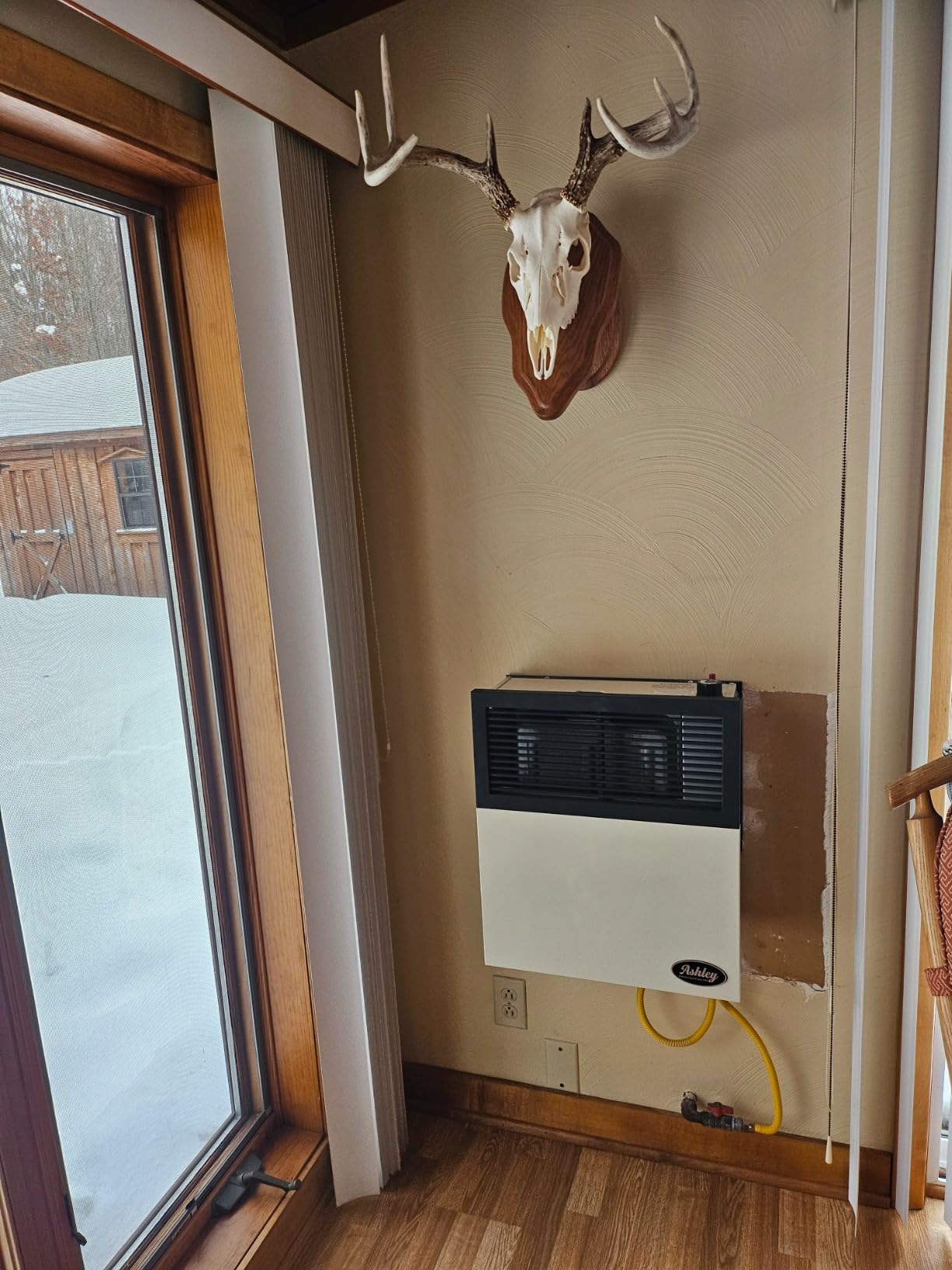
This is the safest indoor air story in the roundup. Sealed combustion means the unit draws its combustion air from outdoors and vents exhaust straight outside, so nothing from the burn enters your garage. For an attached garage, a workshop where you spray paint or weld nearby, or any tight space with a door to the house, that is the feature that matters most.
The vent kit is in the box: mounting bracket, heat shield, vent pipe, air intake pipe, flashing, cap and connecting rod. That single detail saves the most common surprise in a direct-vent install, where owners discover mid-project that the flue kit is a separate purchase.
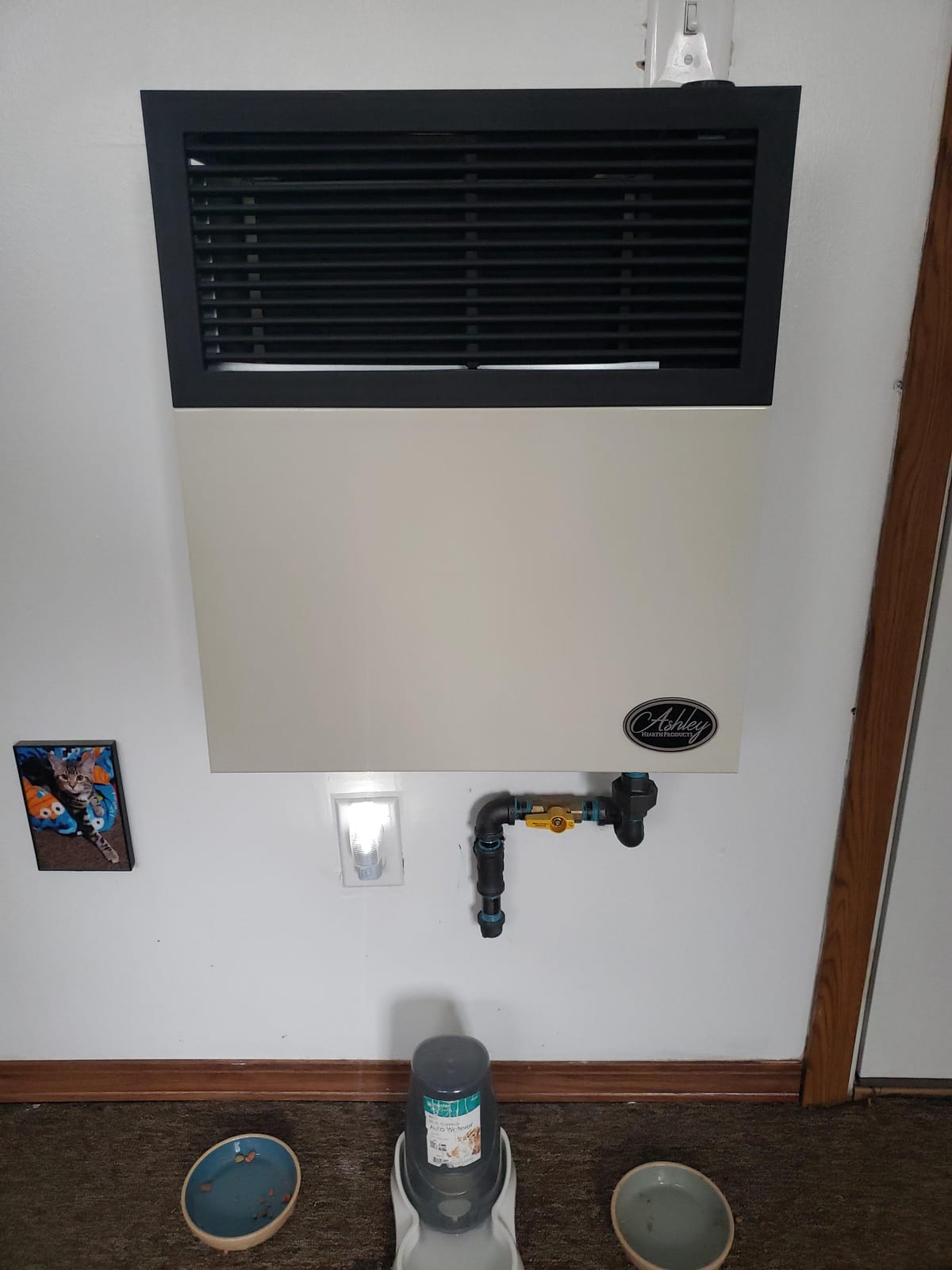
Ignition is a manual AA battery system, so the heater works without electricity. A top control knob sets adjustable heat levels, and an internal thermostat takes over once the pilot is lit. The steel cabinet is 6.75 inches deep by 17.25 inches wide by 20 inches high at 40 pounds, runs on 110 volts for the optional blower, and carries a one year limited warranty.
Output is 11,000 BTU for up to 375 square feet, which is the smallest coverage in the group. It is also approved for mobile homes in the USA as well as houses, cabins and garages. Rated at 4.1 with a 16 percent one-star share, this is the most polarized product here, and the negatives cluster around sizing limits and installation complexity rather than safety.
Sealed burn versus vent-free indoor air
A vent-free unit puts combustion products into the room it heats and relies on an oxygen depletion sensor to shut down before that becomes dangerous. A sealed burn unit sends them out a pipe. If anyone in your house has asthma, or you are considering paint and body work, the sealed design is the calmer choice.
Sizing honestly: 375 square feet is small
Eleven thousand BTU is a supplementary heater, not a garage heater for a two-car bay. It suits a small workshop corner, a cabin, a mobile home, or a space you need kept just above freezing. Pairing it with a bigger unit is more common than replacing one, which is worth thinking through before you install.
9. Heatstar MH25NG Radiant Overhead Heater – Built for Decades of Service
Heatstar By Enerco F125444 Radiant Overhead Garage Heater MH25NG Natural Gas
Radiant overhead natural gas
Wall mount installation
Long running mount pattern
Thermostat included
Pros
- Owners report 20 plus years of service
- Drop-in fit matched a 20 year old unit
- Heats a three-car garage in sub zero weather
- One Michigan owner ran a 45 to 50F garage all winter
- Quiet dependable design with a proven record
Cons
- The included thermostat is mismatched with a wire run of only about 10 feet
- A wall vent kit or cracked window is needed for room ventilation
- Pilot flame is a little large when the burner is off
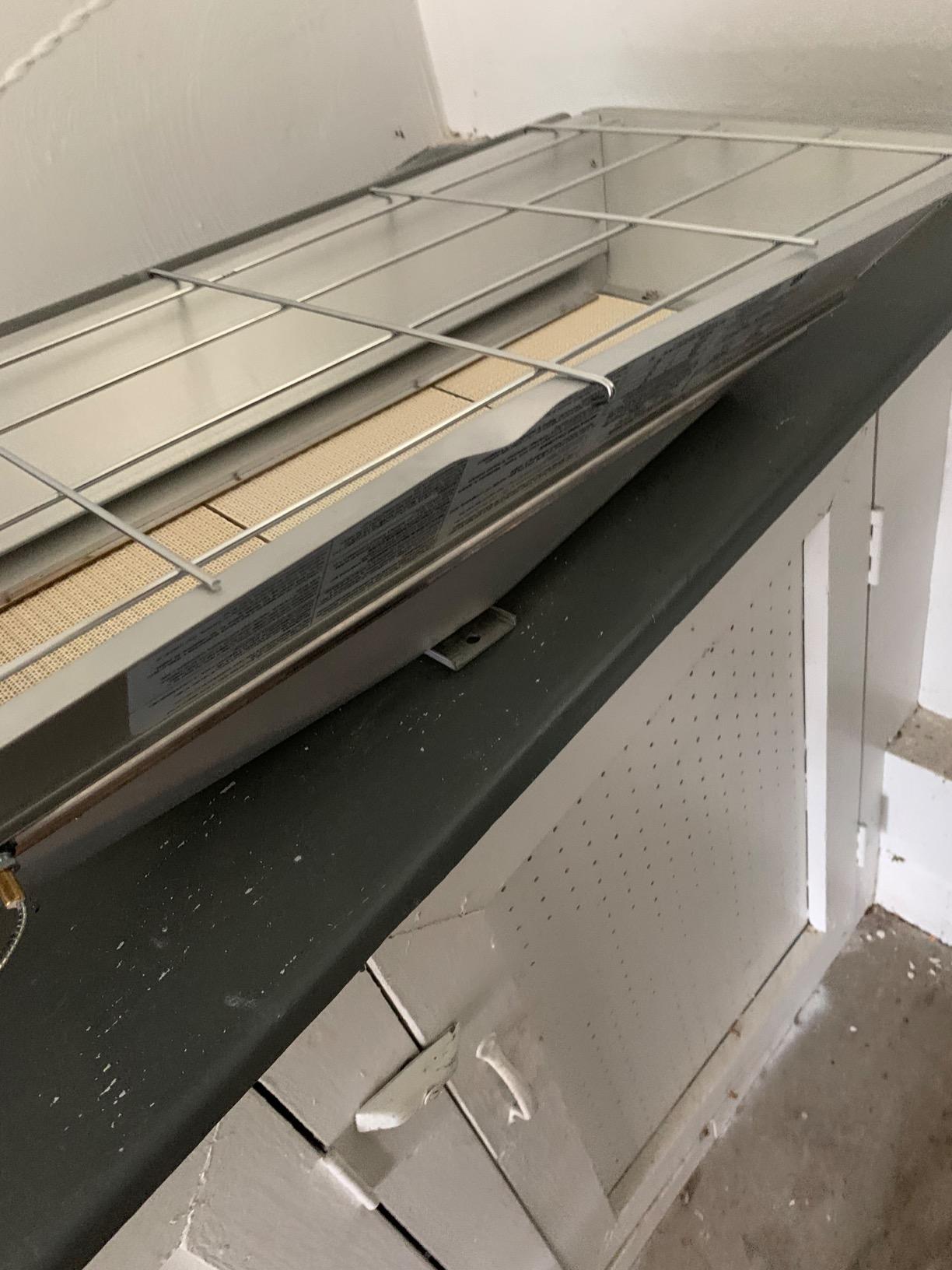
Durability is the headline here, and it comes from a long production history rather than a marketing claim. Owners report 20-plus years of service from the same heater line, and one buyer found the mounting holes on the current model matched a 20 year old unit exactly, so the replacement was a drop-in swap rather than a remodel.
It is a wall mounted radiant overhead heater for natural gas, so it hangs above the working area and throws infrared heat down onto you and the vehicle rather than trying to heat the whole air mass. The dimensions are 12 by 29.75 by 9 inches, which suits a wall without stealing vehicle clearance.
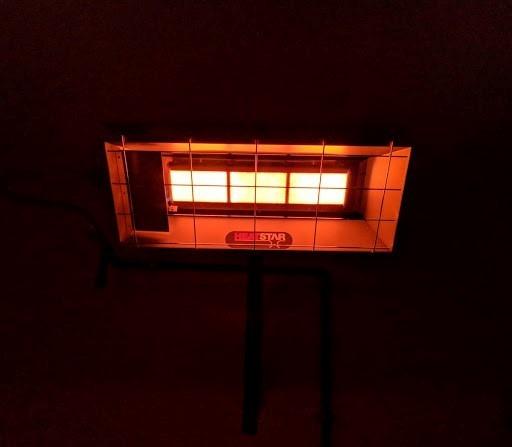
Owners report heating a three-car garage in sub zero weather and running a garage at 45 to 50 degrees F all winter in Michigan on minimal gas, which is an efficiency story as much as an output story. A heating contractor with four decades in the trade describes it as a proven workhorse, and the running noise is minimal.
There are real caveats. The included thermostat has a mismatched setting arm and thermometer, and the wire run is only about 10 feet, so several buyers replaced it with a digital model. The natural gas connection kit is sold separately, and adequate room ventilation is required through the included wall vent pack or an open window.
Drop-in replacement and long service life
If an identical unit is already hanging on your wall, or a compatible older model is, the swap is straightforward. That long-run consistency is unusual in appliances and it is why shops keep the same model on the wall for two decades. It also means parts and advice for this platform are easy to find.
The included thermostat is the weak part
Budget to replace it. The setting arm and thermometer do not line up, which makes the dial hard to trust, and the 10 foot thermostat wire run limits where you can mount the unit. A digital replacement costs little and removes the single most repeated complaint in the reviews.
10. ProCom MN200TBA-B 20,000 BTU Blue Flame Heater – Thermostat Control for Small Garages
ProCom Heating Natural Gas Ventless Blue Flame Heater With Base Feet – 20,000 BTU, T-Stat Control – Model# MN200TBA-B
20000 BTU blue flame
Heats up to 950 sq ft
Thermostat control
Wall mount or feet
Pros
- Blue flame warms air as well as surfaces
- Built-in thermostat in a compact ventless box
- Covers up to 950 sq ft
- No electricity required for outage use
- Wall hardware and base feet included
Cons
- Thermostat is a stepped high medium low control
- Radiant only output needs a fan in a bigger space
- Smallest review base in the group
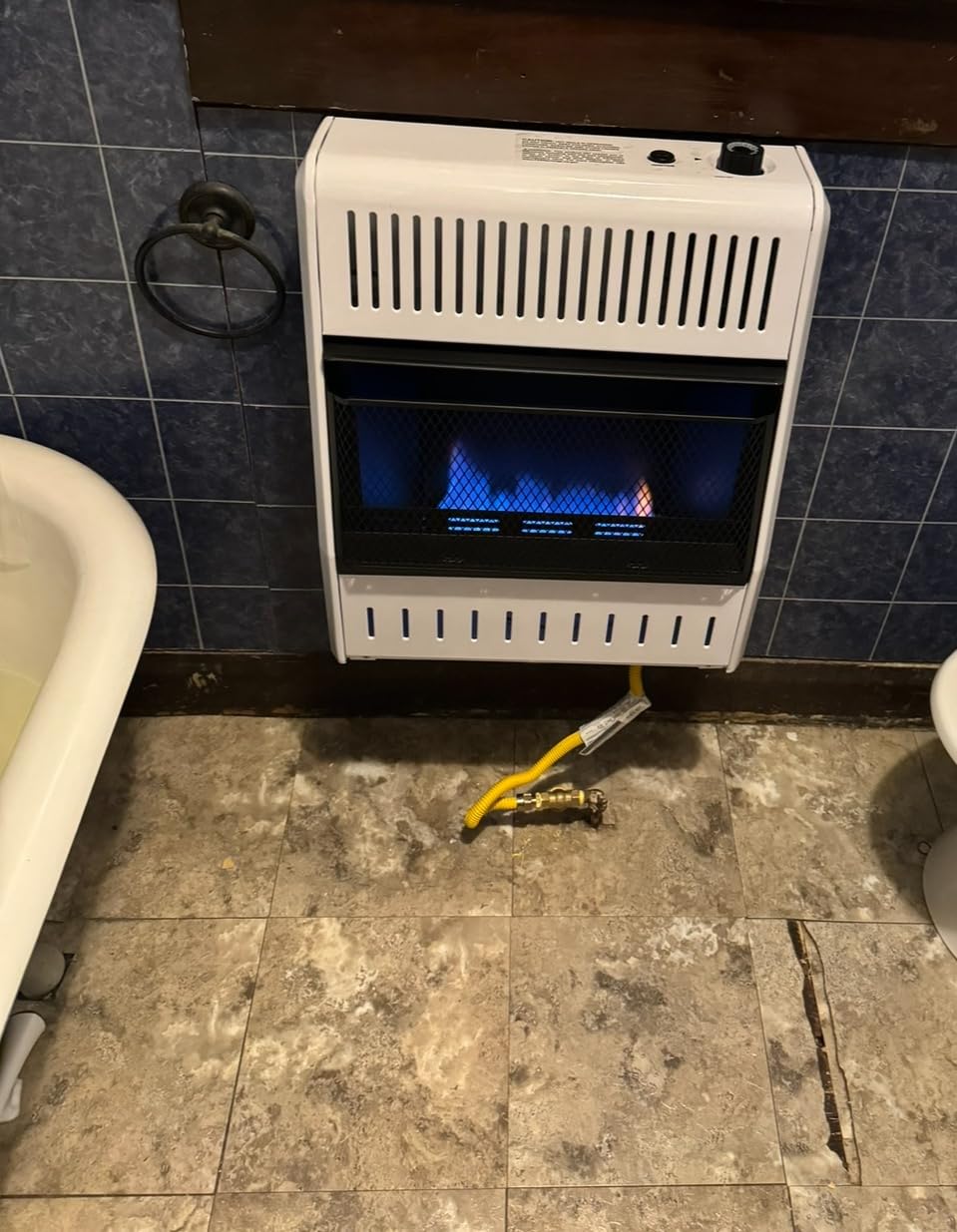
Twenty thousand BTU rated for up to 950 square feet is an unusually good coverage number for a compact ventless unit, and this is the heater to shortlist for a one-car garage, a small shop bay, or a two-car space you only partially use. Blue flame output warms the air as well as surfaces, so it feels more like central heating than a radiant plaque unit.
It has a built-in thermostat with high, medium and low settings, which is the feature most compact units at this size leave out. It also needs no electricity, so it works during an outage, and both wall mounting hardware and base feet are included.
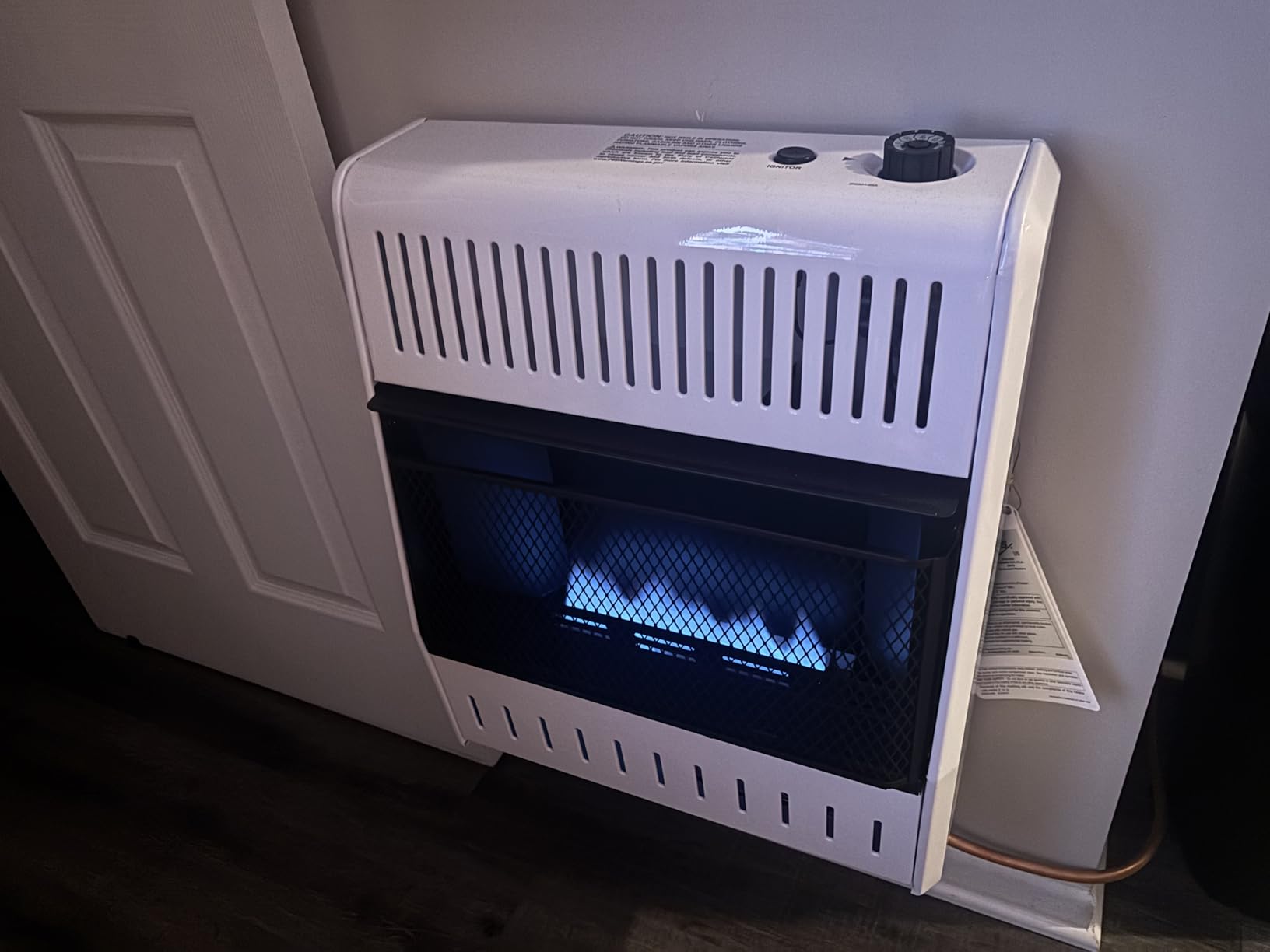
Push button ignition feeds a pilot oxygen depletion sensor and the unit is ANSI certified. The cabinet is 8 inches deep by 22 inches wide by 26 inches high at 24 pounds, white, and rated for indoor use. The coverage figure of 950 square feet is the stated number, and it assumes reasonable insulation.
Two honest caveats. The thermostat is a stepped three-position control rather than a dial with a temperature setting, so it is better than manual but not a set-and-forget thermostat. And the output is radiant, so a fan noticeably improves circulation in anything larger than a small space. Its 63 ratings are the smallest review base here, which is worth keeping in mind when weighing it against better-proven models.
Coverage per unit in a small garage
The gap between a 20,000 BTU unit rated at 700 square feet and this one rated at 950 square feet is the design, not marketing inflation. Same class of cabinet, same no-electricity vent-free installation, materially more usable warmth for a small footprint. For a one-car garage that difference decides the purchase.
Stepped thermostat and radiant limits
High, medium and low gives you more control than a single dial, and the cycle is automatic. It still will not hold a set temperature, and in a space much bigger than 950 square feet you will want forced air instead of radiant.
How to Size a Natural Gas Garage Heater
Most sizing mistakes come from ignoring the ceiling and the insulation, not from picking the wrong brand. A BTU is simply the energy needed to raise one pound of water by one degree F, and garage heat loss is driven by surface area, ceiling height and how much insulation sits behind the walls and door.
The working rule is roughly 50,000 BTU per hour for a well-insulated attached two-car garage, and 80,000 to 100,000 BTU per hour for an uninsulated three-car space with a high ceiling. Multiply your floor area by the ceiling height in feet, then apply a factor for the insulation on the walls and ceiling. An uninsulated single-layer wall can roughly double the requirement compared with framed and insulated construction.
For the question most people search, a 24 by 24 foot garage is 576 square feet. Insulated with a 9 foot ceiling, that calls for roughly 30,000 to 40,000 BTU. Uninsulated with a 12 foot ceiling, budget 60,000 BTU or more. Ceiling height matters because warm air collects above head level, so a tall garage effectively doubles the air volume you are heating.
Add ceiling clearance to the calculation. Ceiling-mounted forced-air units need a 10 foot ceiling and 8 feet of clearance below, and garage door tracks, openers and vehicle lifts occupy the same space. If a lift goes under the hood, a wall-mounted radiant unit is the only realistic option.
While you are working through this, it is worth thinking about the rest of the building. Sealing and insulating your garage door is the cheapest heat retention win available, and if you are planning a broader upgrade, our smart garage door openers guide covers units with better insulation ratings than the doors you currently have.
Vented vs Vent-Free: Which One You Can Actually Use
Vented units send combustion gases and intake air out through a flue. Separated combustion, or sealed burn, pulls intake air from outdoors and vents exhaust out, so the indoor air stays clean and you can use the heater in tighter spaces. The tradeoff is a real flue through a wall or roof and a more involved install.
Vent-free units put everything indoors and rely on an oxygen depletion sensor to shut the burner down before the air becomes unsafe. That makes them the simplest and cheapest to install, and the reason they dominate the reviews here, but it also puts a hard limit on where they are legal. Some jurisdictions, including California and Canada, prohibit or heavily restrict vent-free combustion appliances.
Forum users on r/HomeImprovement and r/hvacadvice raise carbon dioxide buildup repeatedly, and the concern is legitimate rather than fear-based. Install a working carbon monoxide detector in any garage, keep a vent-free unit away from stored chemicals and paint, and never run one in a space with a door opening into living quarters without a detector on both sides.
Sealed combustion is the answer for an attached garage, a room you work in for hours, and any space where indoor air quality matters. Vent-free is the answer for a detached shop with good ventilation, a storage garage, and any situation where the install budget is the deciding factor. If you are unsure about local rules, ask your local mechanical or gas inspector before you purchase, not after.
What Installation Actually Involves
Almost every forum thread about gas garage heaters contains the same surprise: the heater was affordable, the install was not. A new natural gas line run, a flue through a wall or roof, and a 240V or 120V circuit are separate line items from the appliance, and they often cost more than the heater itself.
First, permits. Most jurisdictions require a permit for a gas appliance and a fuel gas line, and many require the gas work to be done by a licensed plumber or gas fitter. The electrical side may need its own permit. Unpermitted gas work is the kind of thing that shows up during a home sale, so this is not the place to save money.
Second, the parts that are not in the box. Across this roundup: blower fan kits on both Mr. Heater blue flame units, a thermostat and vent kit on the 50,000 BTU forced-air model, a natural gas connection kit on the Heatstar unit, and optional floor stands and blowers on the Comfort Glow plaque heater. Add these to your budget on day one rather than discovering them in week two.
Third, power. The forced-air units need 115V or 120V for the blower and the control system, which can mean a new circuit. The vent-free radiant and blue flame units need no electricity at all, which is both a safety feature during outages and a genuine savings on installation.
Finally, distance and clearance. Manufacturers specify clearance to combustibles, and garages are usually full of them: cardboard, shelving, vehicles, solvents, and a parked truck. A clean mounting zone in front of the heater is a safety requirement and a performance requirement at the same time, and it is worth rearranging the garage before the installer arrives.
On the fuel question, natural gas is the cheapest to run and the most expensive to install, propane is the next cheapest to run, and electric is the most expensive to run with the simplest install. A 10,000 square foot shop with a 200,000 BTU load running four hours a day for four months of the year changes that arithmetic quickly, which is why commercial and long-term buyers keep landing on the higher efficiency ceiling units.
If your garage shares a wall with the house, adding a gas appliance also raises a question worth answering before the install, not after. Our gas ranges comparison covers the same code and ventilation considerations for the kitchen, and the rules your inspector applies tend to be consistent across the property.
Frequently Asked Questions
What is the best natural gas heater for a garage?
For most garages the best natural gas heater is the Mr. Heater 30,000 BTU vent-free blue flame unit, which heats up to 1,000 square feet with no electricity and no flue work. Three-car garages and working shops are better served by a ceiling-mounted forced-air model such as the Mr. Heater 50,000 BTU or the Modine Hot Dawg at 45,000 BTU.
How many BTUs do I need to heat a 24×24 garage?
A 24 by 24 foot garage is 576 square feet. With framed insulated walls and a 9 foot ceiling, roughly 30,000 to 40,000 BTU per hour covers it. In an uninsulated space with a 12 foot ceiling, plan on 60,000 BTU or more because heat loss scales with surface area and air volume, not floor space alone.
Which brand of gas heater is considered the best?
Mr. Heater and Modine are the two brands that come up most often, and for different reasons. Mr. Heater offers the widest vent-free blue flame range with the largest review base, while Modine builds the ceiling-mounted forced-air units that shops choose for quiet operation and an 80 percent efficiency rating.
What are the pros and cons of using a natural gas garage heater?
Pros: natural gas is the cheapest fuel per hour of heat, the output is far higher than electric resistance units, and vent-free models need no electricity. Cons: installation is the expensive part, often requiring a new gas line, a flue and an electrical circuit, and vent-free combustion is restricted or banned in some regions. A carbon monoxide detector is essential.
What type of heater is best to heat a garage?
A vented separated combustion unit is best for an attached garage, a workshop where you spend hours, or any space with paint and solvents, because it draws combustion air from outdoors. A vent-free blue flame or radiant unit is best for a detached shop with good ventilation and a tight install budget, because it needs no flue and no electricity.
Are natural gas garage heaters safe?
A correctly installed and maintained natural gas garage heater is safe. Every unit in this roundup has an oxygen depletion sensor or flame sensor with safety shutoff, and sealed combustion models vent outdoors entirely. Install a carbon monoxide detector, keep the clearance zone free of combustibles, and have the gas line and flue done by a licensed professional.
Which Natural Gas Garage Heater Should You Buy
Start with the shape of your garage, not the number on the box. A one-car or small two-car space with an existing gas line and no interest in flue work gets the Mr. Heater 30,000 BTU vent-free blue flame heater, our editor’s choice, which has the deepest review base in the group and no power requirement. Add the optional blower fan if you want whole-room warmth rather than a warm work zone.
A three-car garage or a working shop gets a ceiling-mounted forced-air unit. Choose the Mr. Heater 50,000 BTU when you want the highest output available and thermostat flexibility, or the Modine Hot Dawg when quiet running, an 80 percent efficiency rating and commercial certification matter more to you than upfront cost.
If indoor air quality or a tight space drives the decision, the Ashley Hearth direct-vent unit is the safe answer, and the vent kit in the box removes the most common install surprise. If the install budget is tight and your garage is detached and ventilated, the Dyna-Glo 20,000 BTU blue flame wall heater or the ProCom 20,000 BTU thermostat-controlled unit cover a small space with no electricity and no duct work.
Whatever you choose in 2026, size for your ceiling height and your insulation, add a carbon monoxide detector, and confirm the vent-free rules for your area before the installer arrives. That short list prevents most of the problems we saw in the reviews.