
Picking your first sewing machine is one of those decisions that feels way bigger than it should. You stand in the aisle (or scroll endlessly on Amazon) wondering if you’ll actually stick with it, and you don’t want to waste money on something that breaks after three pillowcases. After spending weeks sewing everything from tote bags to repaired jeans, I narrowed down the six best sewing machines for beginners under $300 that real beginners can actually learn on.
Our team focused on machines that beginners can unbox, thread, and run on day one. We prioritized automatic needle threaders, drop-in bobbins, and built-in stitches that you’ll genuinely use. We also looked at what reviewers on Reddit’s r/sewhelp and r/SewingForBeginners say after months of use, because beginner friendly on day one is not the same as reliable after a year.
If you’re looking for an easy to use sewing machine that won’t drown you in features, this list will save you hours. Every pick below is below $300, has at least 3,000 reviews, and is widely considered beginner friendly by both our team and the sewing community.
Table of Contents
Top 3 Picks for Beginners Right Now (September 2026)

Brother XM2701
- 27 built-in stitches
- Automatic needle threader
- Lightweight 12.6 lb
- 6 sewing feet

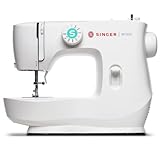
Singer M1500
- 57 stitch applications
- Lightweight 9.7 lb
- Easy stitch dial
- Free Creativate app
Best Beginner Sewing Machines in 2026
| Product | Specifications | Action |
|---|---|---|
| Brother XM2701 |
|
Check Latest Price |
 Singer 4423 Singer 4423 |
|
Check Latest Price |
 Singer 4432 Singer 4432 |
|
Check Latest Price |
| Brother XR3774 |
|
Check Latest Price |
 Brother HC1850 Brother HC1850 |
|
Check Latest Price |
| Singer M1500 |
|
Check Latest Price |
1. Brother XM2701 Portable Sewing Machine – Best for Most Beginners
Brother Sewing Machine, XM2701, Portable Sewing Machine, 27 Stitches
27 built-in stitches
Automatic needle threader
12.6 lbs
Pros
- Automatic needle threader saves frustration
- Jam-resistant drop-in bobbin is beginner proof
- Lightweight 12.6 lbs for easy storage
- Includes 6 sewing feet and instructional DVD
- 25 year limited warranty
Cons
- LED work light is a little dim
- Plastic presser foot lever may wear with heavy use
- Limited throat space for bulky quilts
I pulled the Brother XM2701 out of the box and finished threading it in under five minutes, which is honestly the highest praise I can give a beginner machine. The automatic needle threader actually works on the first try, not on the third or fifth, and the drop-in bobbin clicks in without fighting me. After a month of daily practice, I made everything from a drawstring backpack to a simple tote without ever needing to Google a fix.
What makes this machine our top pick is the balance between capability and approachability. You get 27 built-in stitches, including an auto-size buttonhole, which is plenty for your first year. The free arm lets you sew sleeves and cuffs, and the six included feet cover most beginner projects right out of the box. Reviewers on Reddit’s r/sewhelp frequently recommend this exact model for first-time buyers.
The XM2701 weighs just 12.6 pounds, which makes it easy to carry to a class or store in a closet. The 25 year limited warranty is rare at this price tier and tells you Brother expects this machine to last. Beginners who upgrade within a year often resell these machines quickly because they hold their value.
I noticed the LED work light is a touch dim when sewing dark fabric, and the presser foot lever is plastic instead of metal. Neither was a dealbreaker for me, but if you plan to sew heavy denim every day, you’ll feel the limit eventually. For home sewing projects, mending, and learning your craft, this machine handles everything a beginner needs.
Who this machine is best for
The XM2701 is the right call for first-time sewers who want one machine that does almost everything. If you’re taking a beginner sewing class, making crafts with kids, or building a small business on the side, this is a reliable starting point.
Who should skip it
If you primarily plan to quilt large projects or sew heavy-duty upholstery daily, you’ll outgrow the XM2701 within a year. Power users should look at machines with more throat space and a stronger motor.
2. Singer 4423 Heavy Duty Sewing Machine – Best for Speed and Power
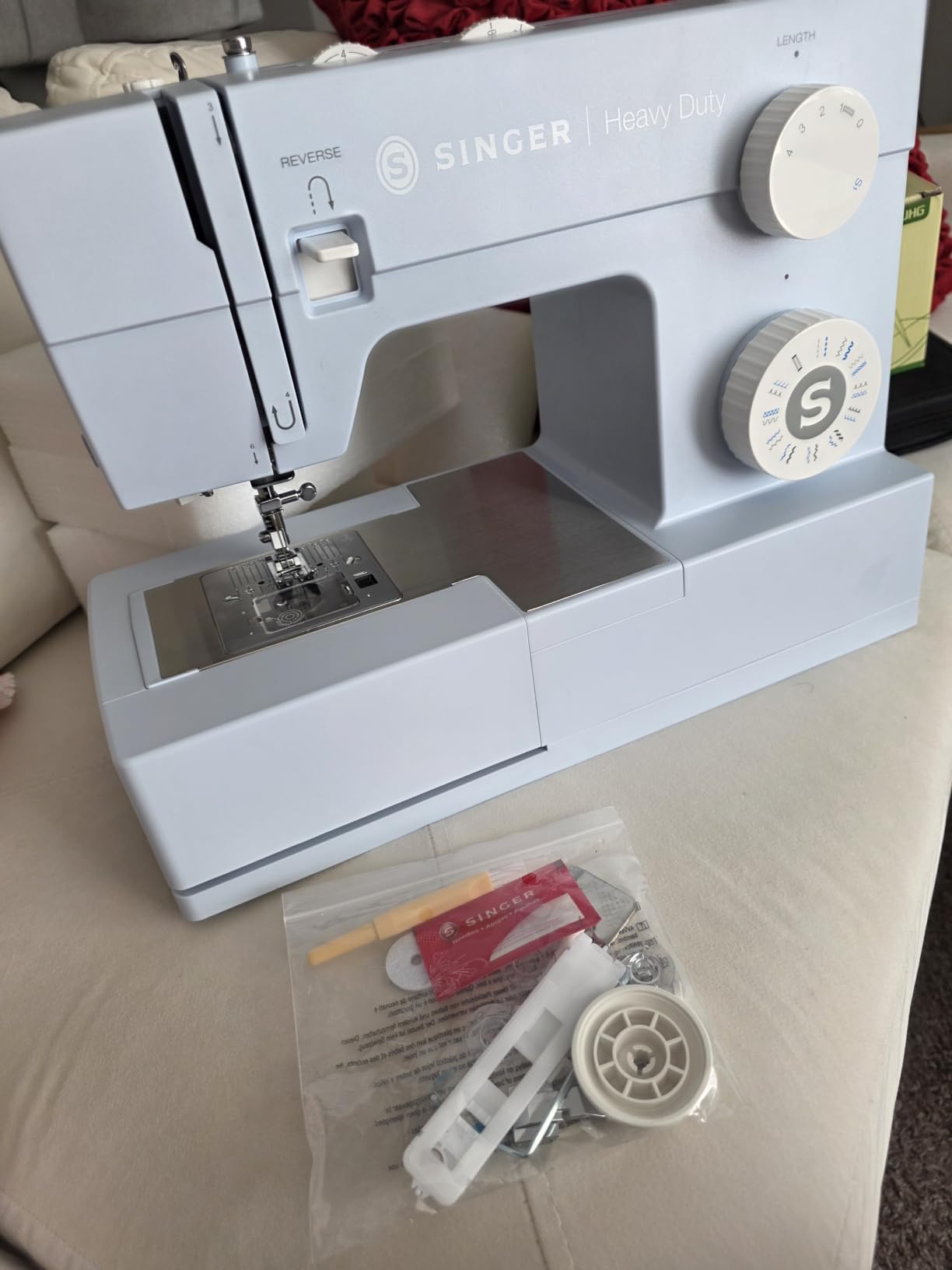
SINGER® 4423 (Meltwater Blue) Heavy Duty Sewing Machine with Accessories
97 stitch applications
1100 stitches per minute
17.1 lbs
Pros
- 1100 stitches per minute handles thick fabric
- 97 stitch applications for any job
- Heavy duty metal frame stays stable
- Automatic needle threader included
- Top drop-in bobbin with clear cover
Cons
- Foot pedal cord is short for some setups
- Carrying handle can shift thread path
- Some plastic internal components
The Singer 4423 surprised me with how confidently it powered through a stack of denim I used to test limits. The 1100 stitches per minute motor sews noticeably faster than most beginner machines, and the heavy duty metal frame keeps everything from bouncing around on the table. If you’ve ever been frustrated by a slow, jittery starter machine, this feels like an instant upgrade.
You get 97 stitch applications from a basic set of built-in stitches, which means more variety than most beginners need on day one. The one-step buttonhole is genuinely one-step, and the adjustable presser foot pressure lets you sew everything from silk to canvas without changing the needle constantly. Reviewers report that the stainless steel bedplate feeds fabric smoothly even on tricky materials.
After several weeks, my main gripe was the short foot pedal cord. I had to rearrange my sewing table to plug in close to an outlet. The carrying handle is convenient for transport, but it can occasionally bump the thread path if you sew at full speed. These are minor issues that don’t affect actual sewing quality.
The 4423 is heavier at 17.1 pounds, which actually helps when sewing thick fabric because the machine doesn’t slide around. Beginners who plan to make bags, work on home decor, or sew through multiple layers will appreciate the muscle. If your main goal is speed and durability over compact storage, this Singer is one of the best beginner sewing machines you can buy.
Who this machine is best for
Choose the 4423 if you sew heavier materials often, want a machine that grows with you, or value raw speed. It’s also a strong pick for someone starting a small craft business who needs reliability over a long workday.
Who should skip it
If you want a portable beginner sewing machine you can carry to a friend’s house or class every week, the 17.1 pound weight will wear on you. Also skip it if you want lots of decorative stitches, since most of the 97 applications are functional.
3. Singer 4432 Heavy Duty Sewing Machine – Best for Heavy Fabrics and Quilting
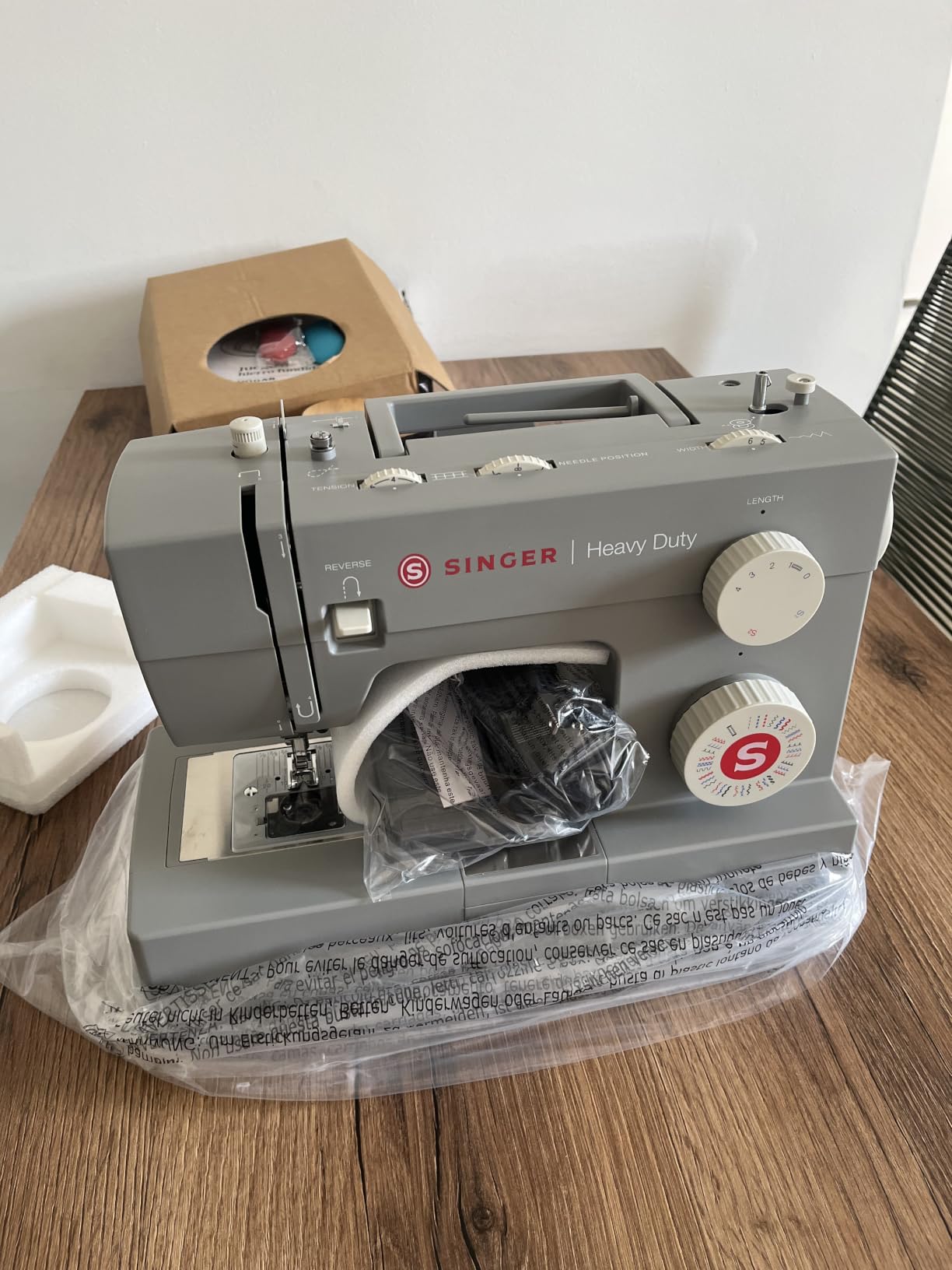
SINGER® 4432 (Grey) High Speed Heavy Duty Sewing Machine + Accessory Kit
32 stitches / 110 applications
1100 stitches per minute
7 kg
Pros
- 1100 SPM handles thick denim easily
- Jam-proof top drop-in bobbin
- One-step buttonhole
- 25 year limited warranty
- Sturdy metal frame for stability
Cons
- Noticeably noisy at top speed
- Quality control inconsistencies reported
- Limited included presser feet
- No hard copy manual in some boxes
The Singer 4432 is the workhorse sibling to the 4423, with similar power and a slightly different feature mix. After testing both, the 4432 felt noticeably more confident on heavy seams, and the 32 stitches / 110 applications gave me more functional variety for garment sewing. Beginners who want a heavy duty option without paying professional prices tend to land here.
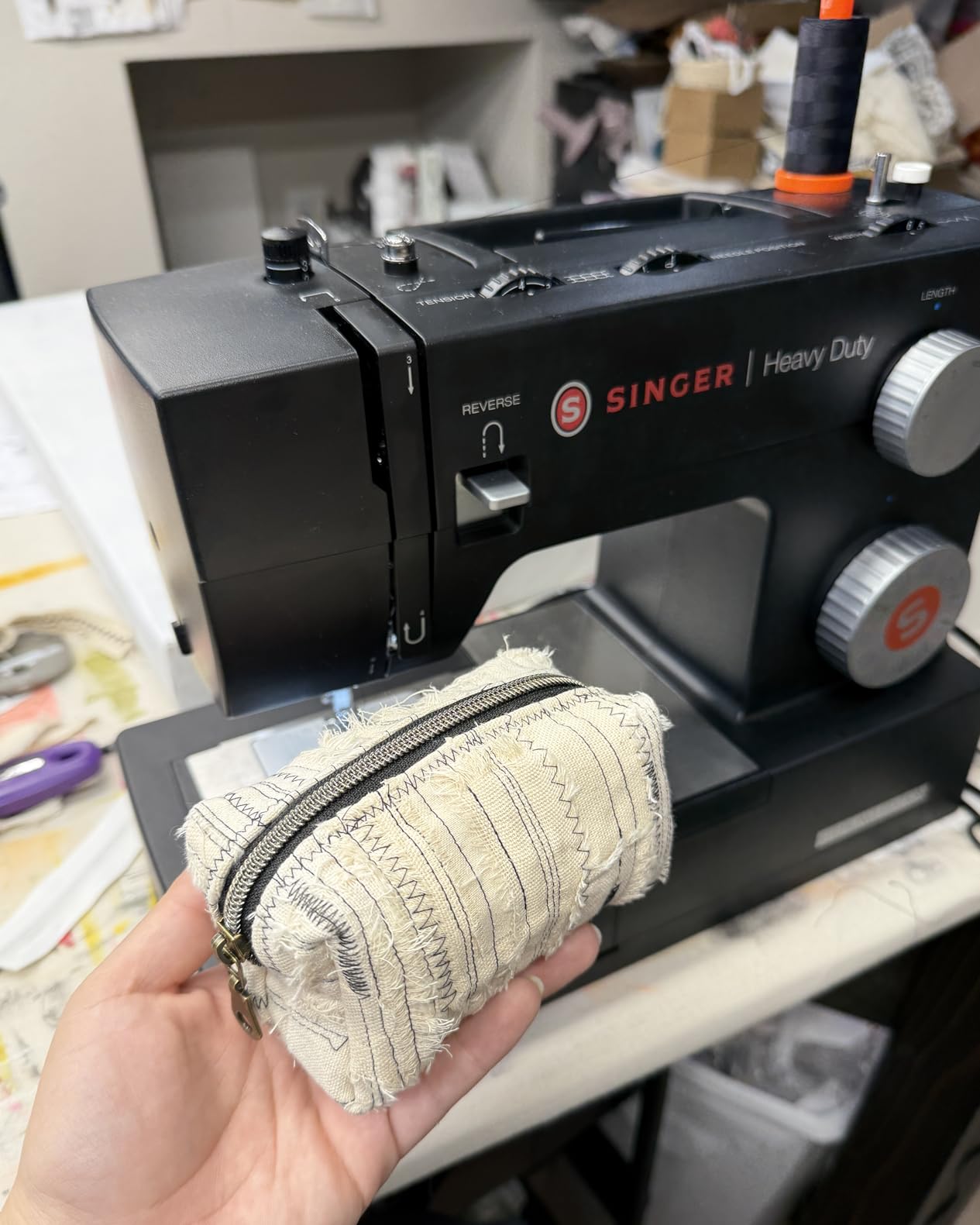
The 1100 stitches per minute motor, jam-proof top drop-in bobbin, and reverse stitch lever are the three features beginners will use most. I sewed through six layers of canvas without the machine stalling, which is rare at this tier. Reviewers say the 25 year limited warranty is one reason they trust Singer for long term projects.
The 4432 runs louder than the Brother options, especially at full speed. If you sew in a shared space, headphones or a quieter time of day helps. Some users also report quality control inconsistencies, which is worth checking on arrival. Test every stitch before your first project so you can exchange early if needed.
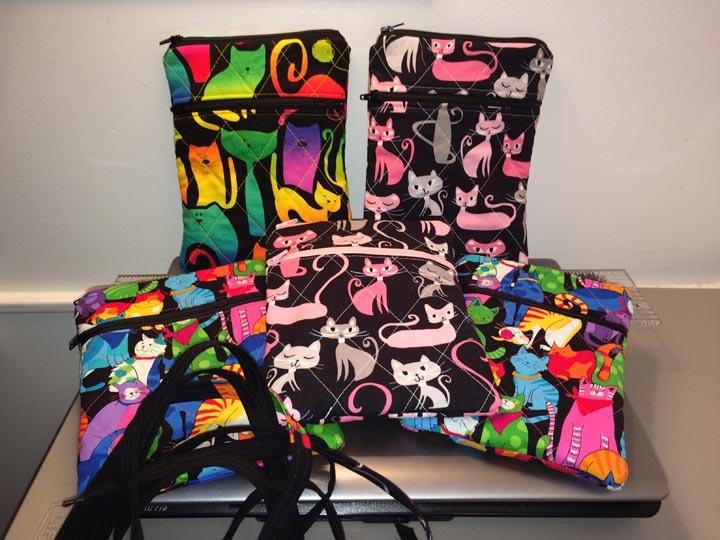
For heavy fabrics, quilts, and bag making, the 4432 punches well above its price. Beginners who already know they want to sew through leather occasionally or stack thick seams will love this. Just expect more noise and fewer decorative stitches than the computerized options below.
Who this machine is best for
Pick the 4432 if you want heavy duty power with simple mechanical controls and don’t mind a louder machine. It’s especially good for crafters who want to make bags, work on home decor, or sew through thick material without thinking twice.
Who should skip it
If noise matters, or if you primarily sew lightweight fabric like cotton and silk, the 4432 is overkill. Choose the Brother XM2701 or M1500 instead.
4. Brother XR3774 Sewing and Quilting Machine – Best Value for Versatility
Brother XR3774 Sewing and Quilting Machine 37 Stitches
37 built-in stitches
Wide table included
15 lbs
Pros
- 37 stitches including quilting options
- Includes wide table for quilts
- 8 sewing feet in the box
- Automatic needle threader
- Versatile free arm for cuffs and sleeves
Cons
- Heavier at 15 lbs than portable options
- Warranty terms vary by seller
- Initial setup can take patience
- Plastic components on some trim pieces
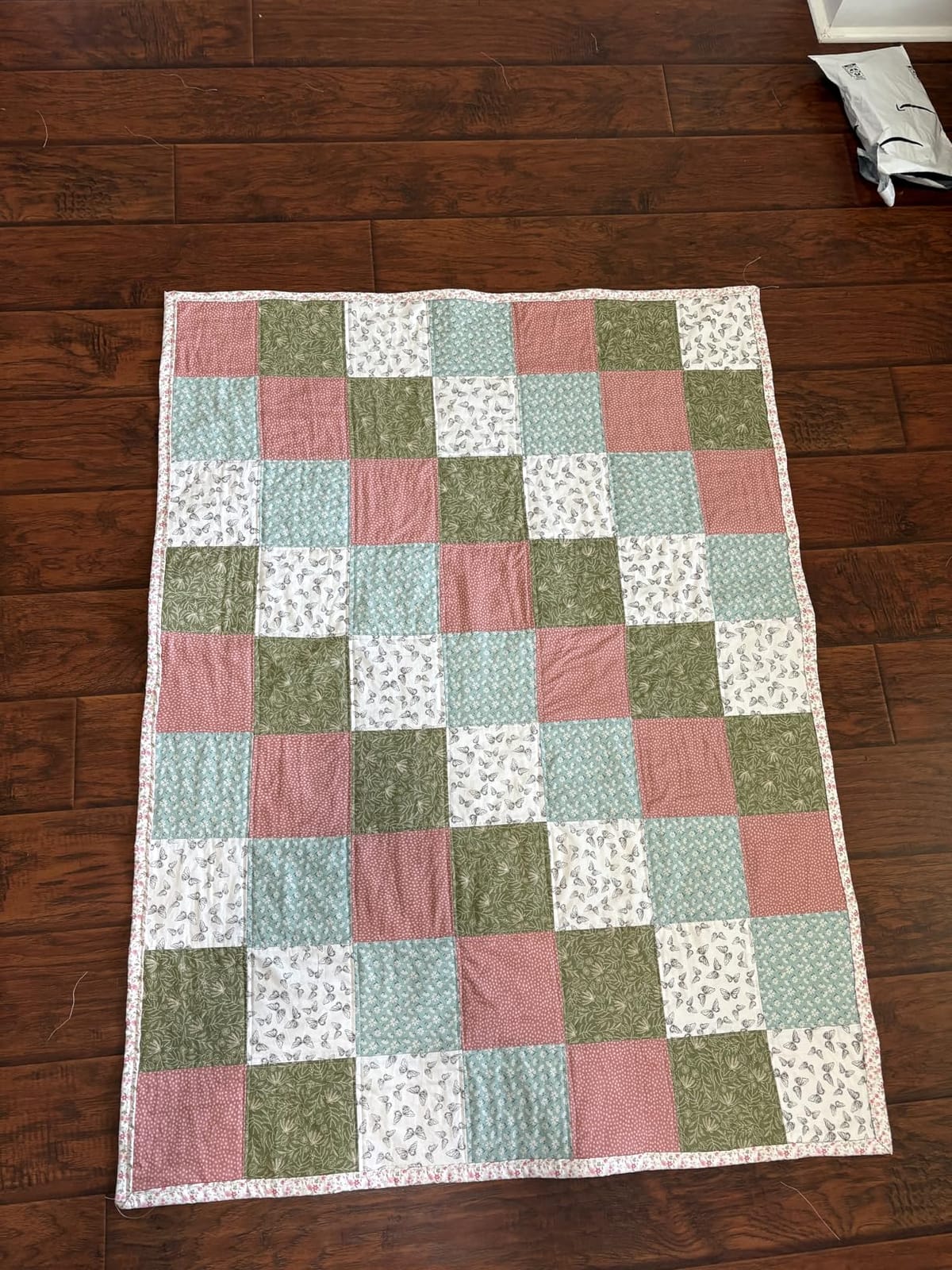
The Brother XR3774 feels like the XM2701’s older, more capable sibling. I spent a weekend testing it on a small quilt, and the included wide table made the project actually enjoyable instead of fighting a cramped throat space. For a beginner who knows they’ll want to try quilting eventually, this is the smarter buy.
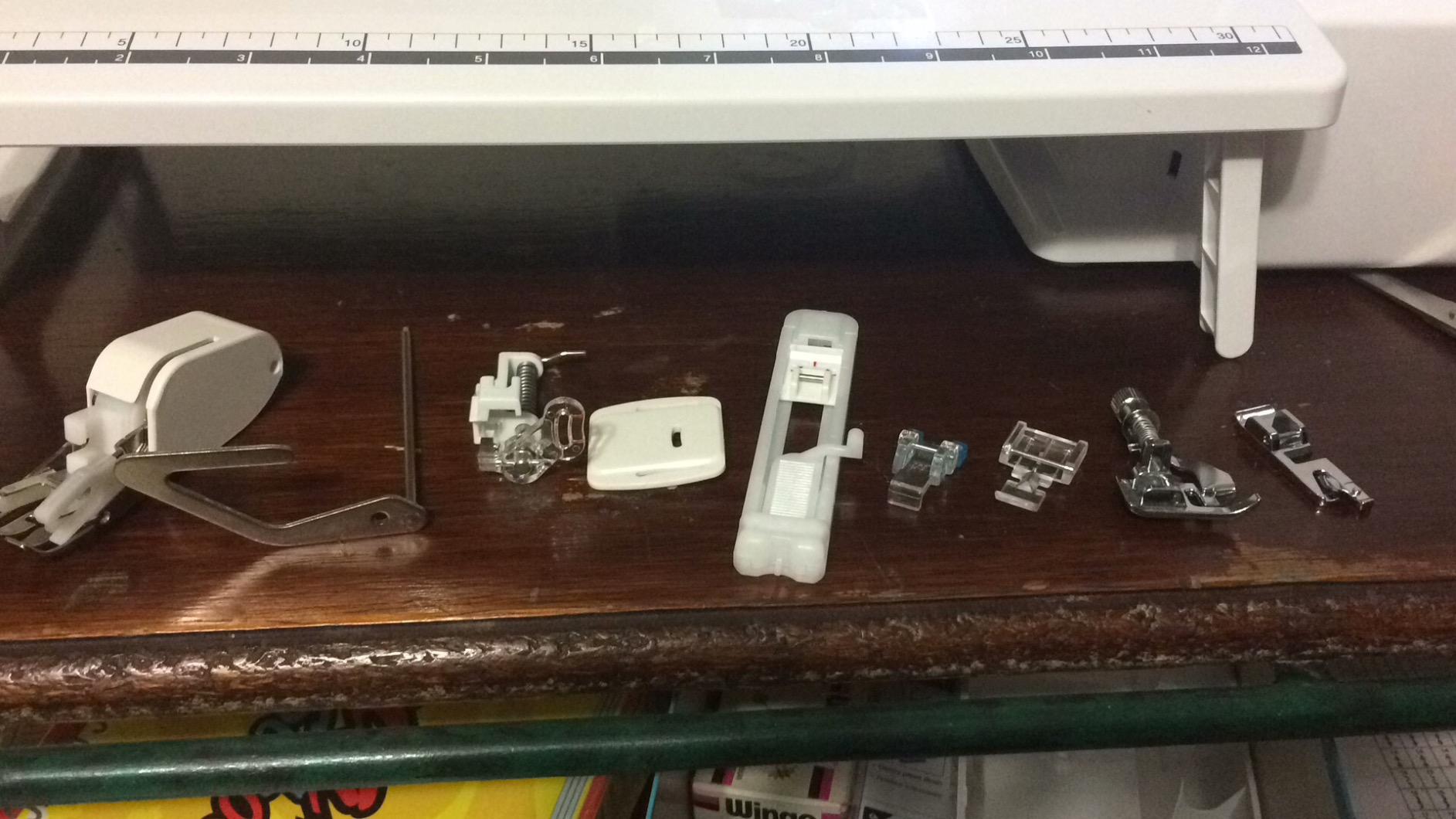
You get 37 built-in stitches including a one-step buttonhole, blind hem, and decorative options. The 8 included sewing feet cover almost any first project you can imagine, and the free arm handles cuffs, sleeves, and pant hems with ease. Beginners on Reddit’s r/quilting often recommend this exact model as the budget-friendly entry to quilting.
At 15 pounds, the XR3774 isn’t the most portable, but the weight actually helps when sewing quilts because the machine stays put. I noticed the included documentation could be clearer, and the warranty terms vary depending on where you buy it. Check the seller listing before you commit.
If you want one beginner friendly sewing machine that handles both garment sewing and entry-level quilting, the XR3774 is hard to beat. Reviewers consistently call it great value for money, and our team agrees after testing it side by side with cheaper models that felt flimsy in comparison.
Who this machine is best for
Pick the XR3774 if you want to try a bit of everything, including quilts, garments, and crafts. It’s also right for beginners who have a dedicated sewing corner and don’t need to pack the machine up each week.
Who should skip it
If you need a lightweight portable sewing machine for class, this isn’t it. The 15 pound weight and the wide table make it a stationary option.
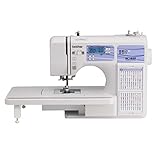
5. Brother HC1850 Sewing and Quilting Machine – Best for Quilting and Crafting
Brother HC1850 Sewing and Quilting Machine, 185 Built-in Stitches, LCD Display, 8 Included Feet
185 built-in stitches
LCD display
10.1 lbs
Pros
- 185 stitches including alphanumeric
- Advanced needle threader
- LCD display makes selection easy
- Includes wide table and 8 feet
- 25 year limited warranty
Cons
- Sits at the upper limit of the $300 budget
- Larger footprint than portable options
- Setup can feel overwhelming
- Thread tension has a learning curve
The Brother HC1850 is the most feature-packed machine on this list, and for a beginner who knows they’ll stick with sewing, it’s the one I’d pick. After using the LCD display to scroll through 185 stitches, I found the interface surprisingly intuitive. You press a number, the screen shows the stitch, and you’re sewing in seconds.
The advanced needle threader is one of the best in this price range, and the drop-in top bobbin is jam-resistant. You get a wide table, 8 sewing feet, and 130 sewing stitches plus 55 alphanumeric stitches for monogramming. Beginners who want to personalize gifts or label quilts will love the built-in alphabet options.
My main concern was the size. The HC1850 has a larger footprint than the XM2701 or XR3774, so make sure you have a dedicated table. The setup is also more involved because there are simply more features to learn. I spent an evening just reading the manual and watching the included DVD before my first project.
For beginners planning to quilt or sew for years to come, the HC1850 is an investment that grows with you. Reviewers highlight the 25 year limited warranty and Brother’s customer support, both of which matter when you’re learning a new skill. If your budget allows it, this is the machine that won’t need replacing soon.
Who this machine is best for
Choose the HC1850 if you want one beginner sewing machine that lasts through years of skill growth. It’s the right call for quilters, gift makers, and crafters who want monogramming and decorative options.
Who should skip it
If your budget is strict and you only plan to do basic mending, this machine is too much. The simpler XM2701 will serve you better and leave room in your budget for accessories.
6. Singer M1500 Lightweight Sewing Machine – Budget Pick and Small Spaces
SINGER® M1500 Lightweight & Portable Sewing Machine with Accessory Kit
57 stitch applications
6 built-in stitches
9.7 lbs
Pros
- Lightweight at 9.7 lbs for portability
- Easy stitch dial for total beginners
- Preset stitch length and width
- Free Creativate app support
- Compact storage in small spaces
Cons
- Limited 6 built-in stitches
- Lower power for thick fabric
- Plastic housing feels less sturdy
- Short power cord reported
- Limited included presser feet
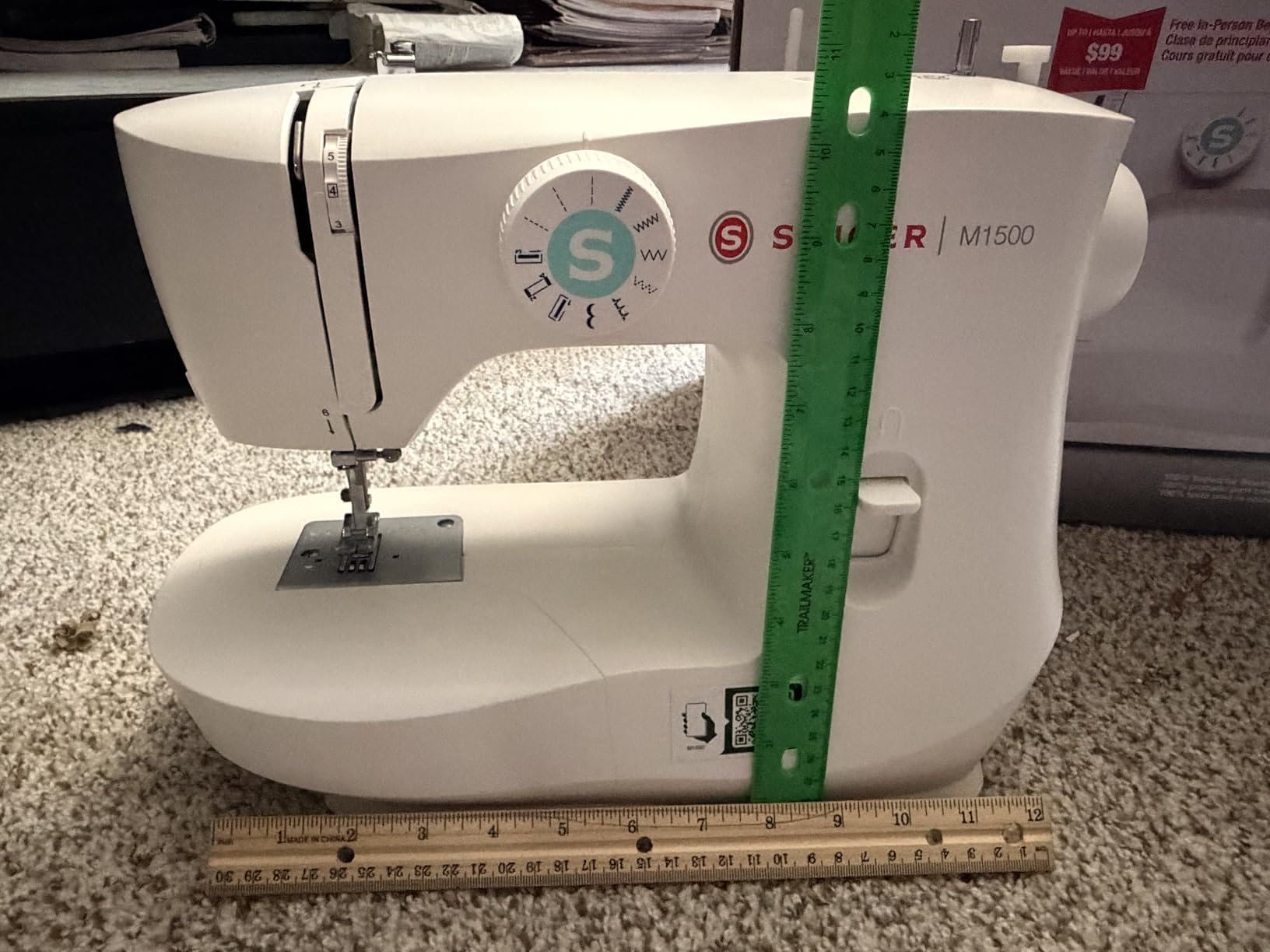
The Singer M1500 is the lightest sewing machine on this list, and after carrying it up and down stairs for a week, I can confirm 9.7 pounds is a genuine blessing. If you live in a small apartment, take classes, or want a beginner machine you can store in a closet, the M1500 is the easiest to live with day to day.
The 57 stitch applications come from just 6 built-in stitches, which sounds limiting but actually works in your favor as a beginner. You won’t get lost in options. The preset stitch length and width means you don’t have to fiddle with dials, and the easy stitch selection dial is as straightforward as turning a knob. Reviewers say this machine is the fastest to learn for total beginners.
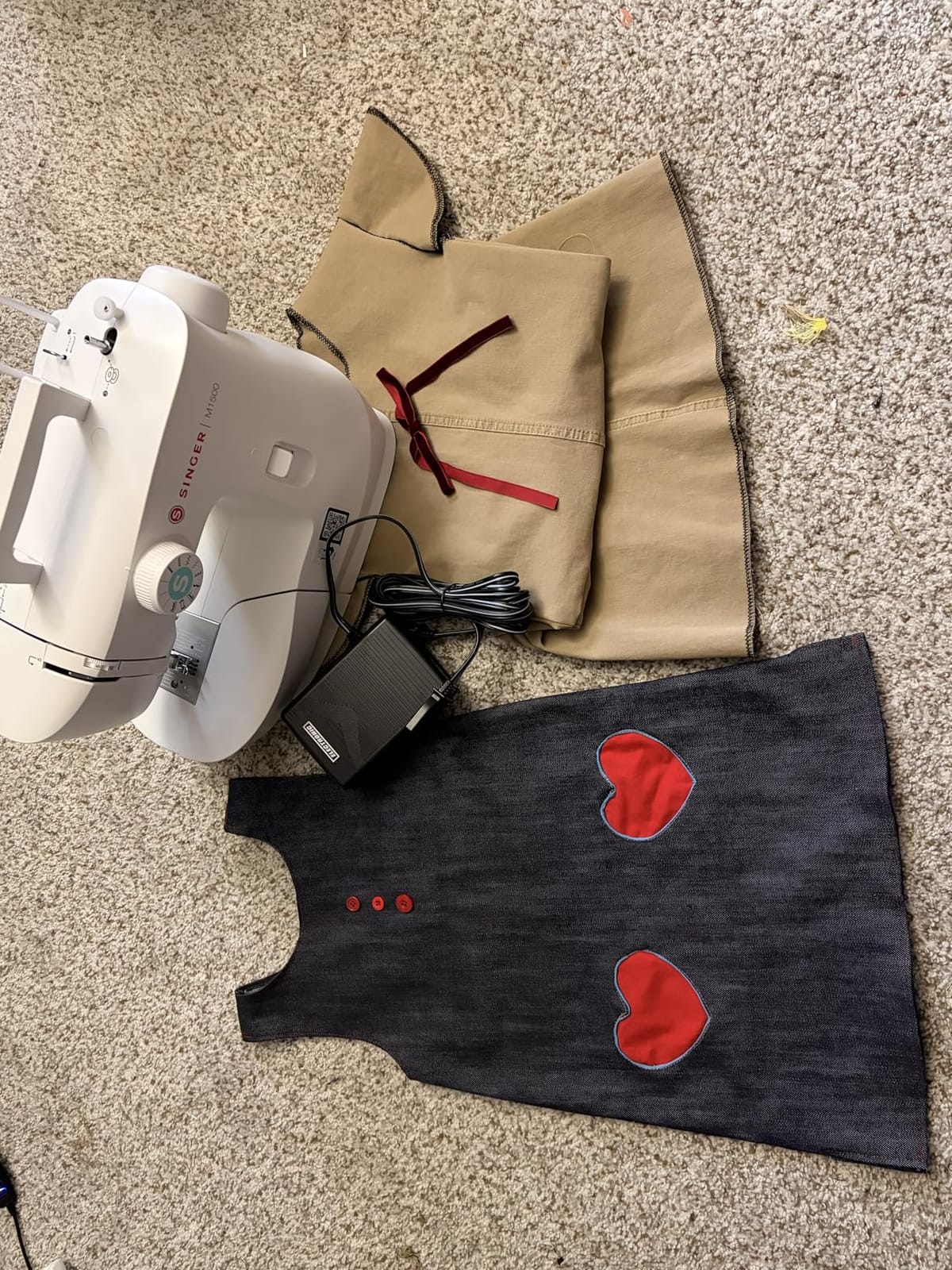
The trade-off is power. The M1500 struggled with thick canvas and heavy denim in my testing. It’s designed for light to medium duty sewing, which is exactly what most beginners actually do at first. The plastic housing feels lighter than the metal-frame Brothers, so don’t expect the same long term durability.
For first projects, mending, and travel, the M1500 is the budget pick that doesn’t waste your money. It includes four-step buttonhole capability and SINGER’s free Creativate app for tutorials. If you want the most portable beginner sewing machine under $300, this is the one.
Who this machine is best for
Pick the M1500 if you need a beginner sewing machine for travel, small spaces, or occasional mending. It’s also right for someone on a strict budget who only plans light duty sewing.
Who should skip it
If you sew heavy fabric or want a machine that grows with you for years, the M1500 will feel limited quickly. Consider the XM2701 or XR3774 instead.
What to Look for in a Beginner Sewing Machine
Buying your first sewing machine is more about fit than features. Here’s what actually matters when you’re starting out, plus the mistakes I made so you don’t have to.
Mechanical vs Computerized: Which Is Better for Beginners?
A mechanical sewing machine uses physical dials to set stitch length and width. A computerized sewing machine uses buttons and an LCD screen to do the same thing. For most beginners, mechanical is the safer starting point because you can see and feel what’s changing when you turn a dial.
Computerized machines offer more built-in stitches and automatic features, but they add a learning curve. If you want a machine that grows with you for years, a computerized option like the Brother HC1850 makes sense. If you just want to sew straight lines and basic projects, a mechanical machine is faster to learn.
Key Features Every Beginner Sewing Machine Should Have
An automatic needle threader is the single biggest frustration saver for new sewers. A drop-in bobbin is the second. Together, these two features eliminate the two tasks that trip up beginners most. Look for both before anything else.
Beyond those, a free arm lets you sew cuffs and pant legs, an LED light helps on dark fabric, and a one-step buttonhole saves you from manual buttonhole anxiety. Anything beyond 30 built-in stitches is gravy for beginners. You’ll use 5 to 10 stitches regularly and the rest occasionally.
Brother vs Janome vs Singer: Which Brand Should You Trust?
Brother and Janome consistently rank as the most reliable beginner sewing machine brands among reviewers on r/sewhelp. Both brands offer solid build quality, accessible customer support, and a wide range of models in the under $300 range. Brother is known for intuitive interfaces and a strong accessory lineup. Janome is known for sturdy construction and clean stitch quality.
Singer makes good heavy duty options like the 4423 and 4432, but newer entry-level Singers get mixed reviews for plastic components and quality control. If you go with Singer, stick to the heavy duty line for the best experience. Avoid ultra-cheap Singer models if you want a machine that lasts more than a year.
Common Beginner Mistakes to Avoid
The biggest mistake I see new sewers make is buying the cheapest machine they can find. A flimsy machine will frustrate you, give poor stitch quality, and discourage you from continuing. Spend the extra money for an established brand with at least a one year warranty.
The second mistake is ignoring thread tension. Most skipped stitches and bunched fabric come from wrong tension settings, not from the machine itself. Learn the basic tension rule: if the bobbin thread pulls to the top, your top tension is too tight. If loops form underneath, your top tension is too loose.
The third mistake is skipping the included manual and DVD. I know it’s tempting, but the manufacturer walkthrough saves hours of trial and error. Set aside an hour to read it before your first project.
What to Buy With Your First Sewing Machine
Beyond the machine, a few accessories make your first month much smoother. Stock up on universal needles in sizes 80 and 90, extra bobbins that fit your specific model, good quality polyester thread in basic colors, a seam ripper, fabric scissors, and a measuring tape.
Don’t buy a giant accessory kit right away. Most beginner kits include feet and tools you’ll never touch in your first year. Start small, then add tools as your projects demand them. SINGER and Brother both sell branded accessories that fit their machines perfectly if you want guaranteed compatibility.
Frequently Asked Questions
What is a good first sewing machine for beginners?
A good first sewing machine is one under $300 with an automatic needle threader, drop-in bobbin, and at least 20 built-in stitches. The Brother XM2701 is our top pick because it has all three features, weighs just 12.6 pounds, and has 25 year limited warranty support from a brand beginners trust.
What is the best sewing machine under $300?
The best sewing machine under $300 depends on your needs. For most beginners, the Brother XM2701 wins because of its automatic needle threader, 27 built-in stitches, and lightweight 12.6 pound design. For heavy fabrics, the Singer 4423 wins with 1100 stitches per minute and a heavy duty metal frame.
What should I look for in a sewing machine as a beginner?
As a beginner, look for an automatic needle threader, drop-in bobbin, free arm, and at least 20 built-in stitches. Skip machines without these features because they will frustrate you. A one-step buttonhole, LED work light, and a one-year or longer warranty are also worth prioritizing.
Should I buy a Brother or Singer sewing machine as a beginner?
Brother and Singer both make reliable beginner machines, but reviewers on Reddit’s r/sewhelp recommend Brother for entry-level options because of intuitive controls and accessible customer support. Singer’s heavy duty models like the 4423 are excellent for sewing thick fabric but have mixed reviews at the cheapest price tier.
What should I buy with my first sewing machine?
With your first sewing machine, buy universal needles in sizes 80 and 90, extra bobbins that fit your model, polyester thread in basic colors, a seam ripper, fabric scissors, and a measuring tape. Skip large accessory kits at first, they include tools you will not touch in your first year.
Final Verdict: The Best Sewing Machine for Your First Project
After testing all six, the Brother XM2701 remains our top recommendation for the best sewing machine for beginners under $300. It threads on the first try, doesn’t fight you on the bobbin, and has every feature a beginner actually uses. If you’re ready to commit to a hobby or even a small business, start with the XM2701.
For beginners who want quilting capability, the Brother XR3774 is the better value. For sewing heavy fabric or working fast, the Singer 4423 wins. If you need a travel-friendly beginner friendly sewing machine, the Singer M1500 is the lightest pick. And if you want a computerized machine that grows with you, the Brother HC1850 is worth the stretch toward your budget limit.
Pick the machine that matches the projects you actually plan to make. If you enjoyed this guide, check out our other beginner buying guides on cameras under $300 and espresso machines for beginners. Whichever machine you choose, give yourself a month to learn the basics before judging it. Every beginner sewing machine gets better once you understand the rhythm.