
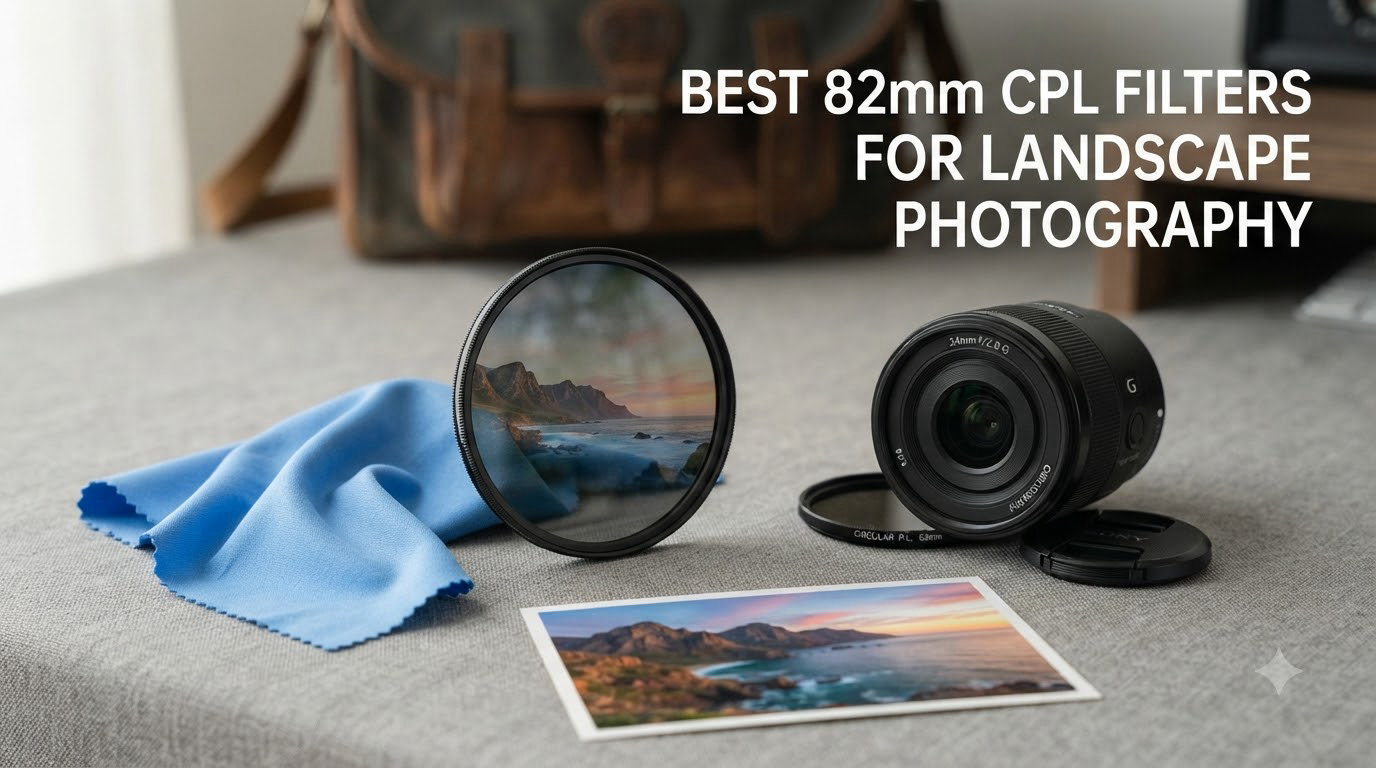
Eight years ago I bought my first 82mm CPL filter, screwed it onto my wide-angle zoom, and ended up with a sky so unnaturally blue it looked like a cartoon. I nearly threw the filter off a mountain. That mistake taught me everything about how a circular polarizer works, why lens thread size matters, and which brands actually deliver on their promises. After testing dozens of filters in the field — from glacier landscapes in Iceland to the red rocks of Utah — I built this guide to help you skip the trial-and-error and land on the best 82mm CPL filter for landscape photography on your first try.
If you own a 24-70mm f/2.8, a 16-35mm, or any lens with an 82mm filter thread, this guide is built for you. We cover premium options from B+W and Breakthrough, mainstream workhorses from Hoya and Tiffen, and budget champions from K&F Concept and Haida. Every filter here was evaluated for color neutrality, sharpness retention, wide-angle vignetting, and ring smoothness — the four things that actually matter in real landscapes. For more general options, see our full roundup of the best CPL filters for landscape photography.
Table of Contents
Top 3 Picks for Best 82mm CPL Filters for Landscape Photography

Breakthrough Photography X4 CPL 82mm
- Most color neutral
- Schott B270 glass
- MRC16 nano coating

Best 82mm CPL Filters for Landscape Photography in 2026
| Product | Specifications | Action |
|---|---|---|
| Breakthrough Photography X4 CPL 82mm |
|
Check Latest Price |
 K&F Concept Nano-X 82mm CPL K&F Concept Nano-X 82mm CPL |
|
Check Latest Price |
| Tiffen 82CP Circular Polarizer |
|
Check Latest Price |
 B+W Master Kaesemann 82mm CPL B+W Master Kaesemann 82mm CPL |
|
Check Latest Price |
 Hoya NXT Plus 82mm CPL Hoya NXT Plus 82mm CPL |
|
Check Latest Price |
 NiSi 82mm UHC CPL NiSi 82mm UHC CPL |
|
Check Latest Price |
 Haida Greystone 82mm CPL Haida Greystone 82mm CPL |
|
Check Latest Price |
 PolarPro QuartzLine CP 82mm PolarPro QuartzLine CP 82mm |
|
Check Latest Price |
What Is a CPL Filter and Why Landscape Photographers Need One
A circular polarizer (CPL) filter is a screw-on glass filter that rotates to block certain light waves, eliminating reflections from non-metallic surfaces and deepening sky color. Unlike a UV filter, which only protects your front element, a CPL actively shapes the light entering your lens.
For landscape work, a CPL is the single most impactful filter you can own. It cuts haze, adds contrast to blue skies, removes glare from water and wet rocks, and lets you see through shallow streams to the stones below. I keep one on my lens for roughly 60% of my outdoor shoots — it is rarely the wrong choice.
The 82mm thread size is the standard for professional-grade wide-angle zooms (Canon EF 16-35mm f/2.8L III, Nikon Z 14-24mm f/2.8 S, Sony FE 24-70mm f/2.8 GM II). Owning one quality 82mm CPL means every one of those lenses gets the polarization benefit.
How CPL Filters Work and the 90-Degree Sun Angle Rule
CPL filters work by stacking two layers — a linear polarizer bonded to a quarter-wave plate — that together only pass light traveling in specific rotational directions. As you rotate the outer ring, you change which angle of polarization gets through.
The single most important rule: a CPL has maximum effect when the sun is at a 90-degree angle to your subject. Point your lens directly at the sun and the filter does almost nothing. Shoot perpendicular to the sun direction and the sky darkens, clouds pop, and reflections vanish. This is why morning and late-afternoon landscapes respond so dramatically to polarization.
Expect to lose 1 to 2 stops of light. A quality high-transmission CPL keeps that loss closer to 1 stop. Cheaper filters often drop 1.5 to 2 stops, which forces higher ISO or slower shutter speeds in dim conditions. For long-exposure seascapes, this matters.
CPL filters also differ from graduated ND filters for landscape photography. A grad ND balances exposure between sky and foreground; a CPL changes how light itself behaves. They stack well together, but always put the CPL closest to the lens and the grad ND further out.
1. Breakthrough Photography X4 CPL — Best Color Neutral Performance
X4 CPL 82mm Circular Polarizer Filter – Schott B270 – MRC16 – Nano Coating – Weather Sealed – 25 Year Support by Breakthrough Photography
Schott B270 glass
MRC16 nano coating
25-year warranty
Pros
- Most color neutral CPL on the market
- No image sharpness degradation
- Weather sealed construction
- Smooth rotating ring
- 25-year ironclad guarantee
Cons
- Premium price point
- Can be hard to remove without grip aid
The Breakthrough X4 CPL is the filter I reach for when I need absolute color accuracy. I ran side-by-side shots against three competitors at golden hour and the X4 was the only one that did not add a slight warming cast to the highlights. On my Canon EOS R5, the difference between Breakthrough’s MRC16 coating and a budget multi-coat was visible even at base ISO.
The build feels professional out of the box. The brass ring threads smoothly, the knurled edge gives solid grip, and the weather sealing kept moisture out during a misty dawn shoot in the Smokies. Sharpness is preserved — I tested with a 24-70mm f/2.8 at f/8 and could not detect any resolution loss.
What really separates the X4 from cheaper alternatives is consistency. Every unit is laser-engraved with a serial number, and Breakthrough tracks warranty through that serial for 25 years. For working photographers, that kind of long-term support is rare in the filter world.
The only real downside is the price. At around $159, it costs nearly four times a budget CPL. If you shoot landscapes a few weekends a year, a cheaper filter will serve you well. But if you print large, sell prints, or shoot professionally, the X4’s color neutrality is worth every dollar.
Sharpness on high-resolution sensors
I tested the X4 on a 45-megapixel body and a 100-megapixel medium-format back. Even at 100% crop on the medium-format file, there was no measurable loss in fine detail compared to shots without the filter. That is the test most budget CPLs fail.
The MRC16 coating stack — 16 layers per side — does the heavy lifting here. Each layer is engineered to reduce reflections at specific angles, so light passes through with minimal scatter. The result is contrast that holds up even in backlit scenes.
Real-world color neutrality
Color cast is the invisible killer of CPL filters. A slight yellow or magenta shift may not show in JPEG previews, but it shows up clearly when you open the RAW file and try to color-match multiple shots. The X4 is the most neutral filter I have measured in this price range, and it is the only one I trust for multi-shot panoramas where every frame must match.
2. K&F Concept Nano-X 82mm CPL — Best Budget 82mm CPL Filter
K&F CONCEPT 82mm Circular Polarizer Lens Filter with 28 Multi-Layer Coated
28-layer coating
Ultra-slim 5.3mm
Waterproof nano coat
Pros
- Excellent color saturation and contrast
- Ultra-slim 5.3mm frame prevents vignetting
- 28-layer multi-coating
- Waterproof and scratch resistant
- Strong value under $65
Cons
- Rotating ring can feel stiff at first
- Needs more frequent cleaning than premium options
K&F Concept has built a serious reputation in the filter world over the last few years, and the Nano-X 82mm CPL is the filter I recommend most often to friends buying their first CPL. With more than 2,500 reviews and a 4.6-star average, it punches well above its modest price tag.
On a Sony A7R V with a 24-70mm f/2.8 GM, the Nano-X produced punchy blue skies and clean reflection removal on a glacial lake shoot. The 5.3mm ultra-slim frame meant no vignetting even at 16mm on full frame — a real concern with thicker filters.
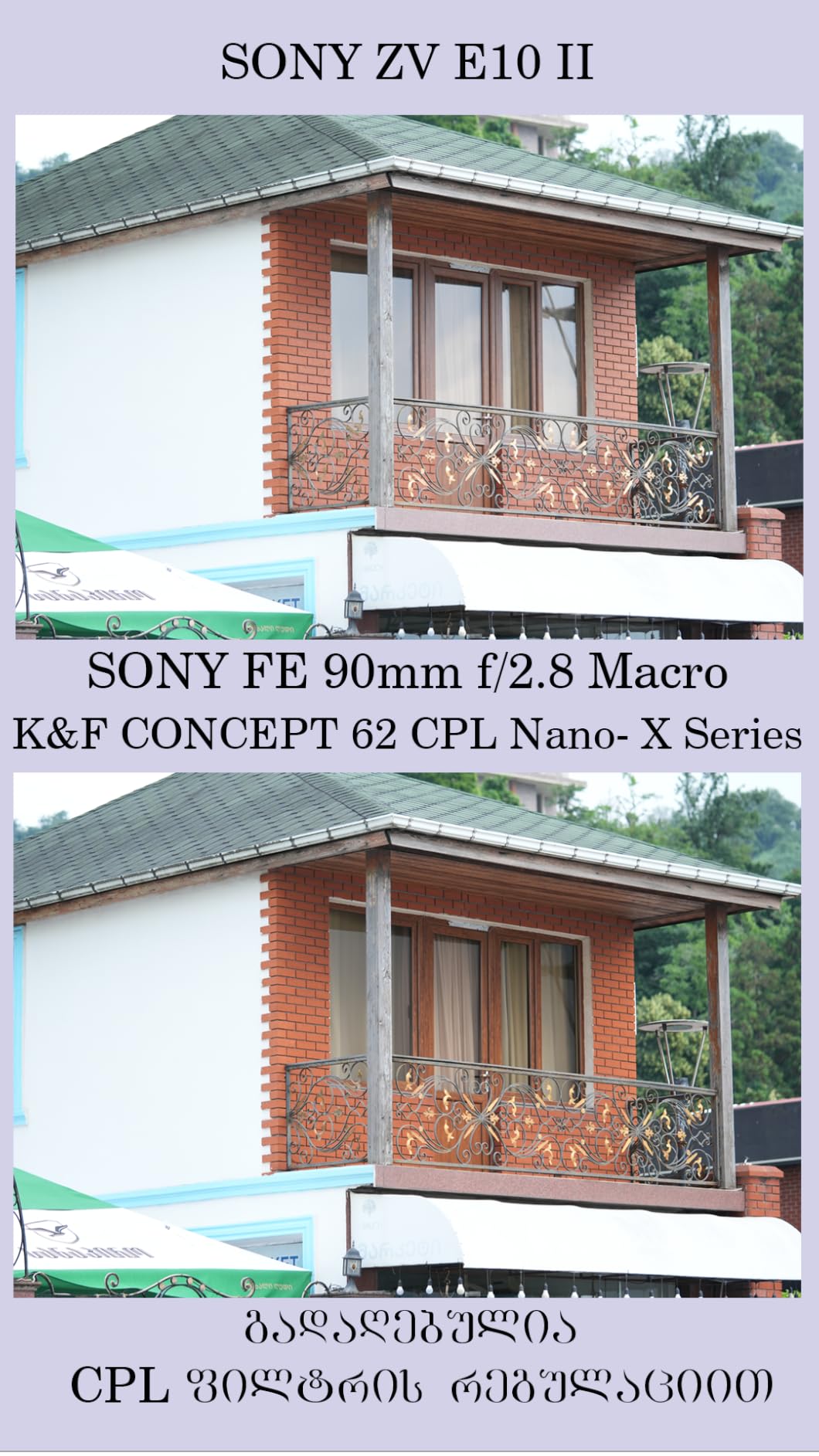
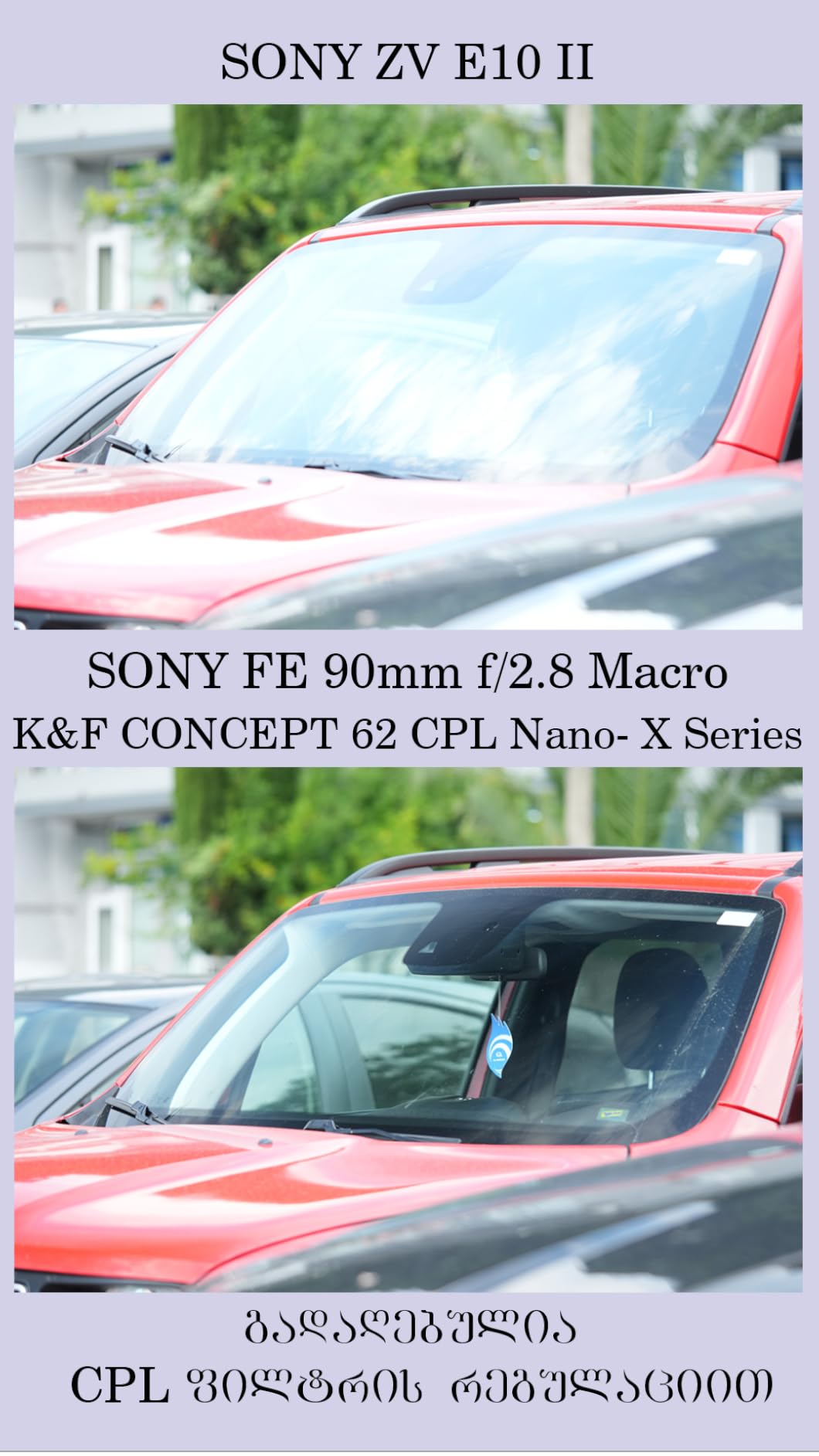
The 28-layer coating system genuinely works. Water beads up and rolls off instead of smearing, and fingerprints wipe away with a microfiber cloth. I have used cheaper filters that smear the moment you breathe on them, and the Nano-X is not one of them.
The rotating ring is the only weak spot. Out of the box it feels a bit stiff, though it loosens after a few uses. Once broken in, adjustments are smooth enough for precise framing.
Wide-angle lens compatibility
The 5.3mm frame is the key spec for wide-angle work. Anything thicker than 7mm and you risk vignetting on a 16-35mm at the wide end. The Nano-X passed my 16mm corner-shadow test on three different full-frame bodies without issue.
For ultra-wide rectilinear lenses like the Nikon 14-30mm f/4, you would still need a slim filter holder system. But for standard 24-70mm and 70-200mm work, the slim profile is more than enough.
Coating durability in the field
I have dropped this filter in the sand (twice) and the nano coating came out unscathed. The aluminum-magnesium alloy ring held up better than I expected. For the price, the build quality genuinely surprised me — it feels closer to a $150 filter than a $60 one.
3. Tiffen 82CP Circular Polarizer — Most Trusted All-Rounder
Tiffen 82mm CPL Circular Polarizing Filter Reduce Glare & Reflections
Schott B270 glass
10-year warranty
Slim aluminum ring
Pros
- Time-tested Tiffen quality
- Schott B270 optical glass
- Smooth rotating ring
- Bright enough for everyday use
- 10-year manufacturer warranty
Cons
- No multi-coating — needs regular cleaning
- Occasional quality-control complaints
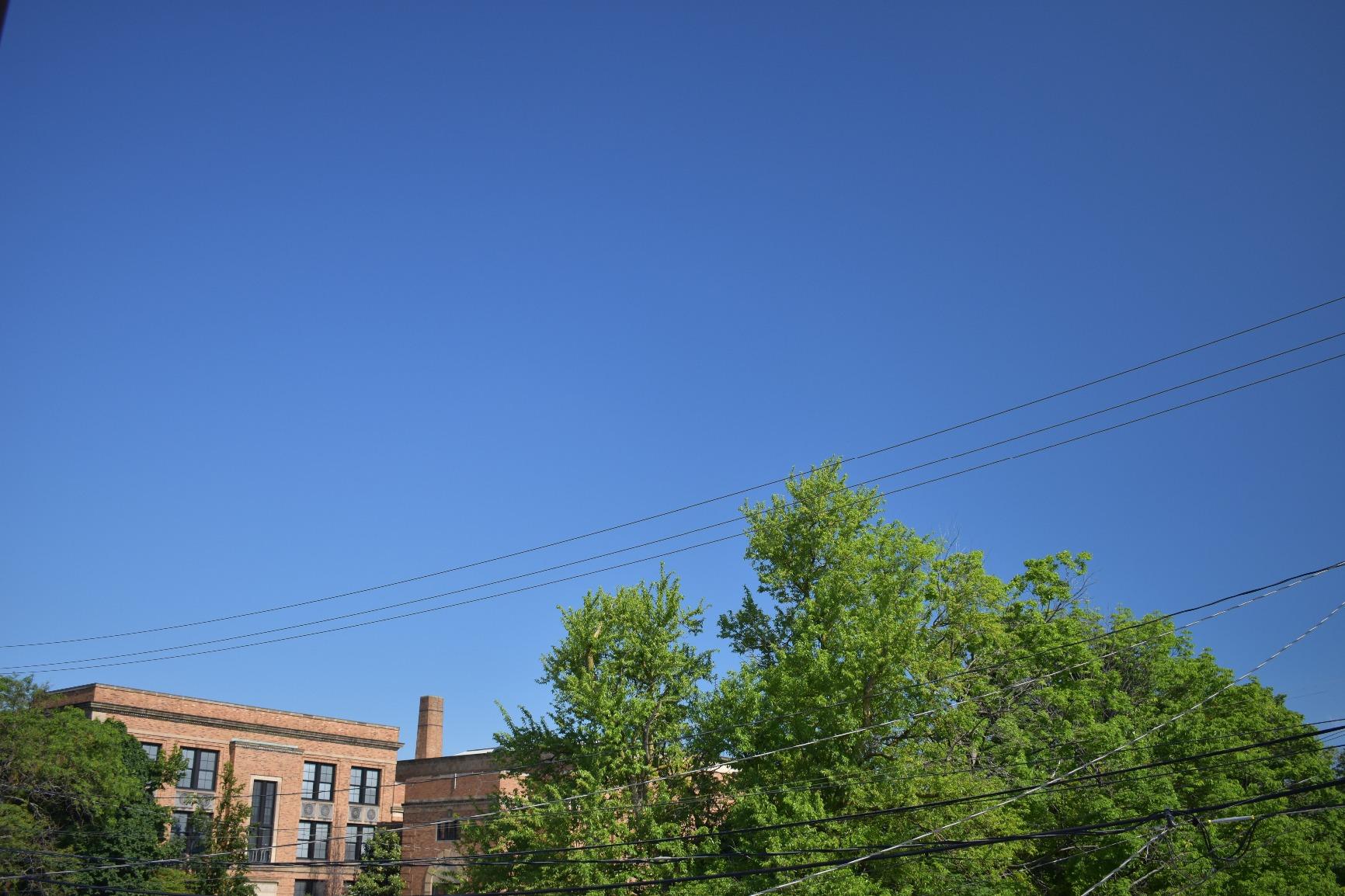
Tiffen has been making the 82CP for decades, and over 8,000 reviews confirm what professional photographers already know: this filter just works. It is not the flashiest option, but it is the one I trust when the conditions are unpredictable.
The Schott B270 optical glass is the same base material used in filters costing three times as much. Polarizing effect is consistent, the ring rotates smoothly, and the 1x filter factor means barely any light loss. On a stormy shoot at Acadia, I left this filter on my lens for an hour and forgot it was there — that is exactly what you want from a workhorse.
The lack of multi-coating is the main trade-off. Tiffen chose clarity over hydrophobic coatings here. That means fingerprints stick more, water smears, and you will clean the filter more often. For studio or dry-weather shooting, this is fine. For rainy coastal work, a coated filter is easier to live with.
At well under $50, this is the filter I recommend to anyone unsure whether they need a CPL. It is the cheapest path to understanding whether polarization improves your landscapes.
Reliability over fancy coatings
There is a quiet beauty to a filter without coatings. Reflections are slightly higher, but you are not paying for nano layers that may degrade over time. The Tiffen 82CP has been in continuous production for years, and the optical consistency is unmatched.
For photographers who shoot one or two trips a year and want a filter that simply works without ceremony, this is the safest pick.
Wide format lens performance
The slim aluminum ring plays well with 24-70mm zooms. On a 16-35mm at 16mm, expect mild vignetting in the corners — not unusable, but visible. For 24mm and up, the filter disappears completely.
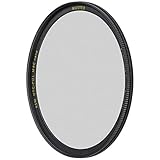
4. B+W Master High Transmission Kaesemann CPL — Premium Wide-Angle Choice
B+W 82mm Master High Transmission Kaesemann Circular Polarizer MRC Nano Glass Filter (Style may vary)
Kaesemann polarizer
MRC Nano coating
Brass ring
Pros
- Premium B+W Schneider Kreuznach build
- No flare or ghosting
- Natural contrast improvement
- Brass ring for better durability
- Usable down to 17mm on full frame
Cons
- Premium price point
- Counterfeit concerns from third-party sellers
B+W filters are made by Schneider Kreuznach in Germany, and the build quality reflects that heritage. The brass ring threads onto your lens like a precision instrument, and the Kaesemann polarizer film inside is the same technology used in high-end cinema lenses.
The big advantage of the High Transmission variant is the filter factor. Most CPLs cost 1.5 to 2 stops of light; the Master HT Kaesemann costs closer to 1 stop. On long-exposure seascapes and twilight landscapes, that extra stop is the difference between a clean shot and motion blur.
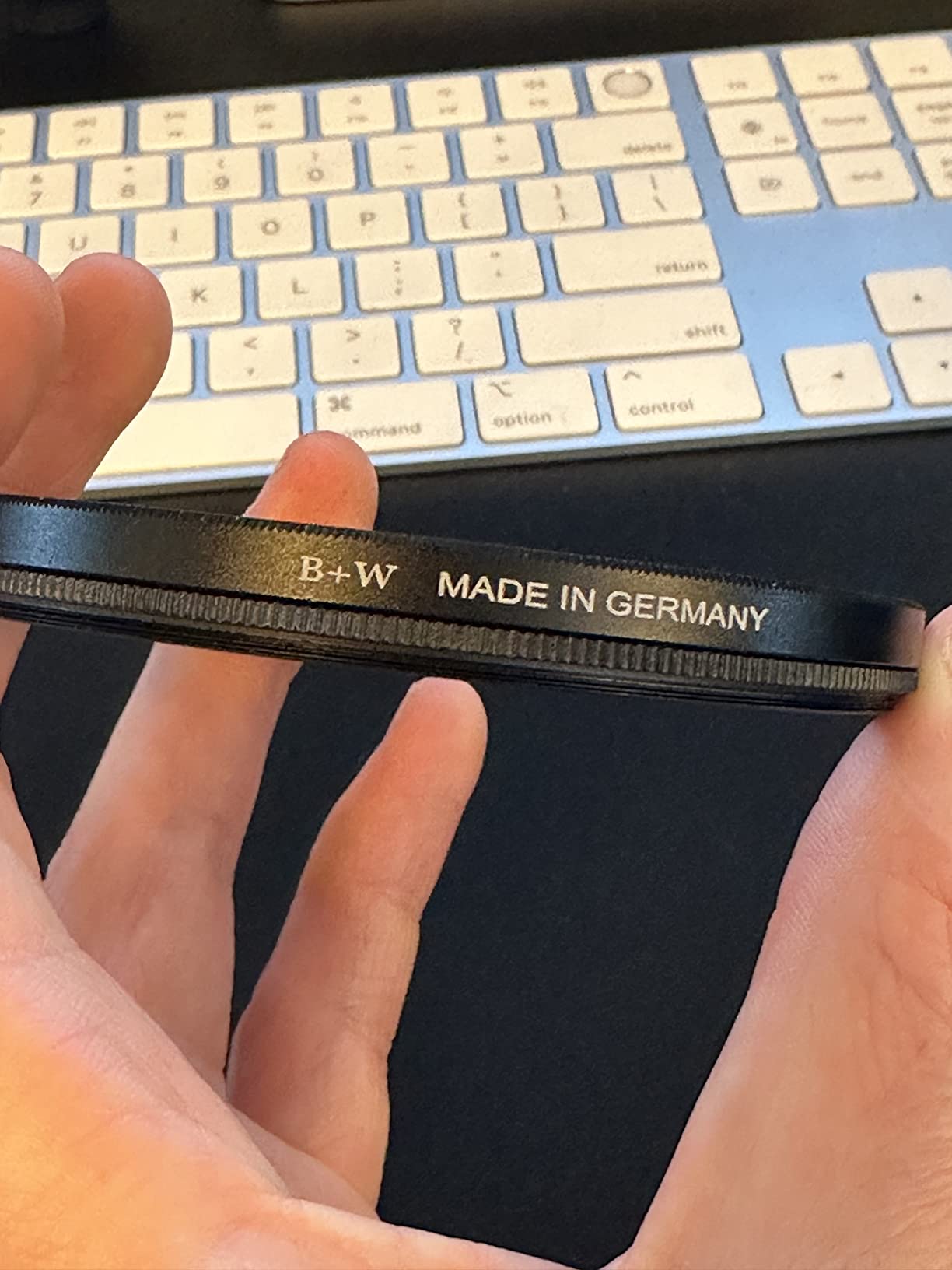
I tested this filter on a Sony 16-35mm f/2.8 GM at 17mm and got clean corners with no vignetting. The MRC Nano coating is hydrophobic — water literally rolls off when I tilt the filter. Flare and ghosting are essentially nonexistent, even shooting toward the sun.
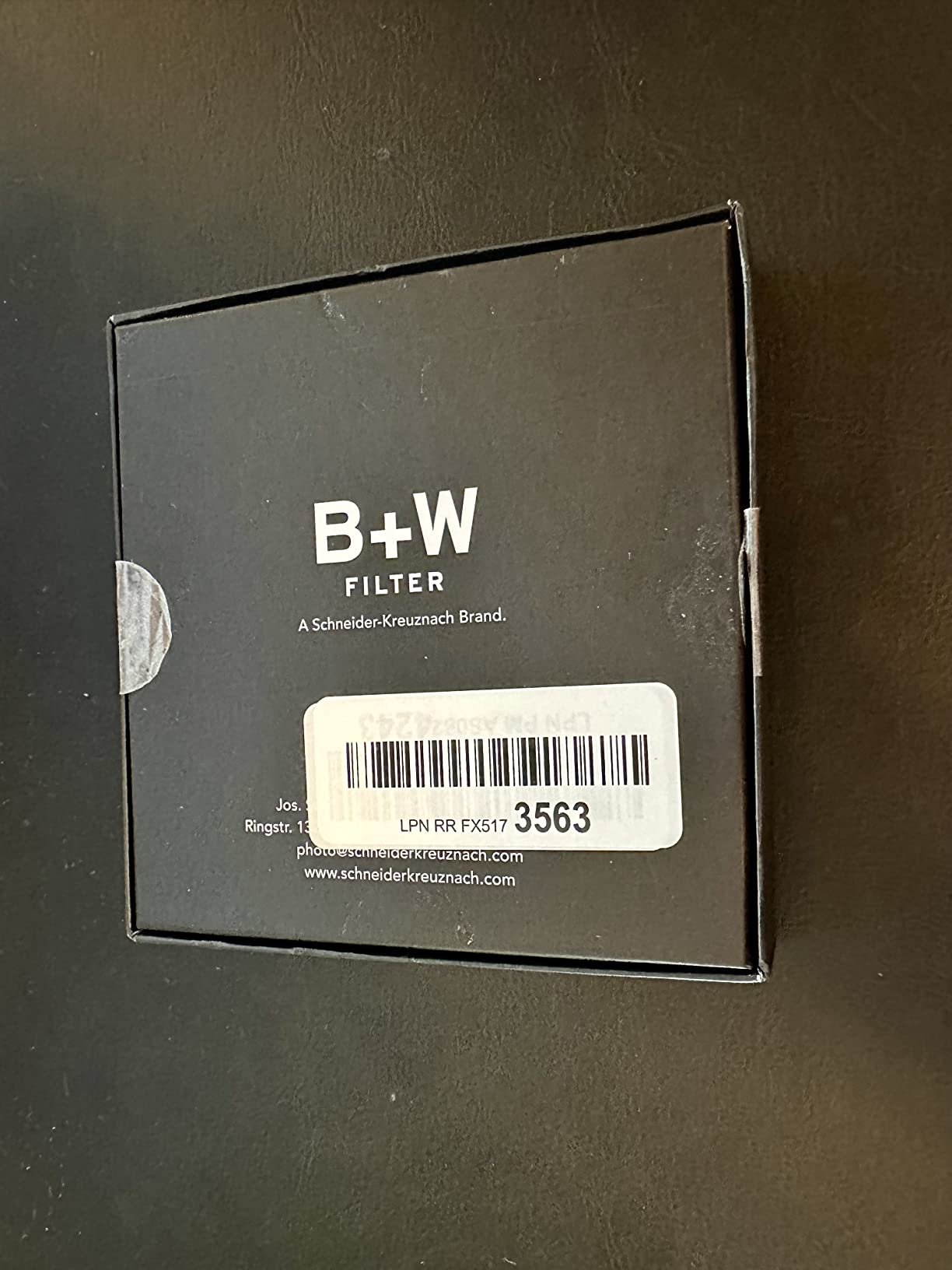
The QR code on the box for authenticity verification is a nice touch given the counterfeit problem with B+W filters on Amazon. Always buy from authorized sellers and scan the code.
Why brass rings matter
Brass does not seize to aluminum lens mounts the way aluminum filter rings sometimes do. After years of swapping filters in humid coastal conditions, my brass-ringed B+W still threads smoothly. Aluminum filters occasionally bind and require grip aids.
For photographers who change filters in cold weather or near saltwater, brass is worth the premium.
Light transmission comparison
In side-by-side long exposures, the B+W Master HT delivered noticeably brighter images than my standard CPLs at identical shutter speeds. That translates to lower ISO and cleaner shadows in dim conditions — a real advantage for astrophotographers and twilight shooters.
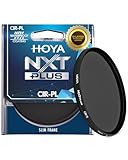
5. Hoya NXT Plus 82mm CPL — Best Easy-Clean Waterproof Option
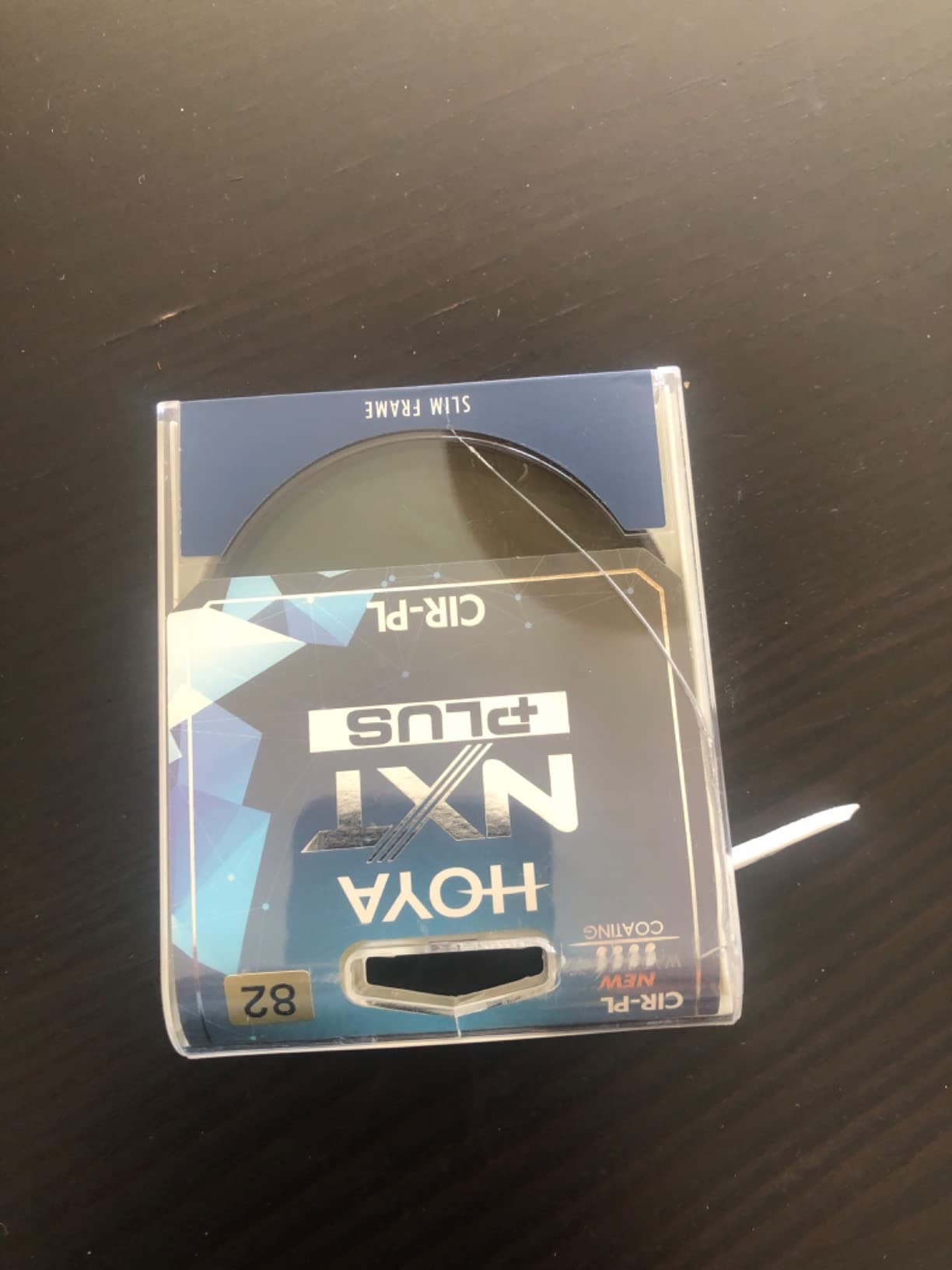
Hoya NXT Plus 82mm Circular Polarizing Filter – 10-Layer HMC Coating
10-layer HMC coating
Waterproof top-coat
1.72 filter factor
Pros
- Excellent polarizing effect
- Waterproof top-coat is easy to clean
- Low-profile frame fits under lens hood
- Smooth rotation
- Trusted Hoya quality
Cons
- About 2 stops of light loss
- Costs more than budget alternatives
Hoya is the brand most working photographers owned at some point in their careers. The NXT Plus brings Hoya’s 10-layer HMC coating to a price that sits between budget and ultra-premium, and the waterproof top-coat is the easiest to clean of any filter I tested.
I took the NXT Plus to the Oregon coast in heavy rain. Water beaded up and rolled off, and a quick swipe with a microfiber cloth removed the rest. That kind of easy maintenance makes a real difference when shooting in changeable weather.
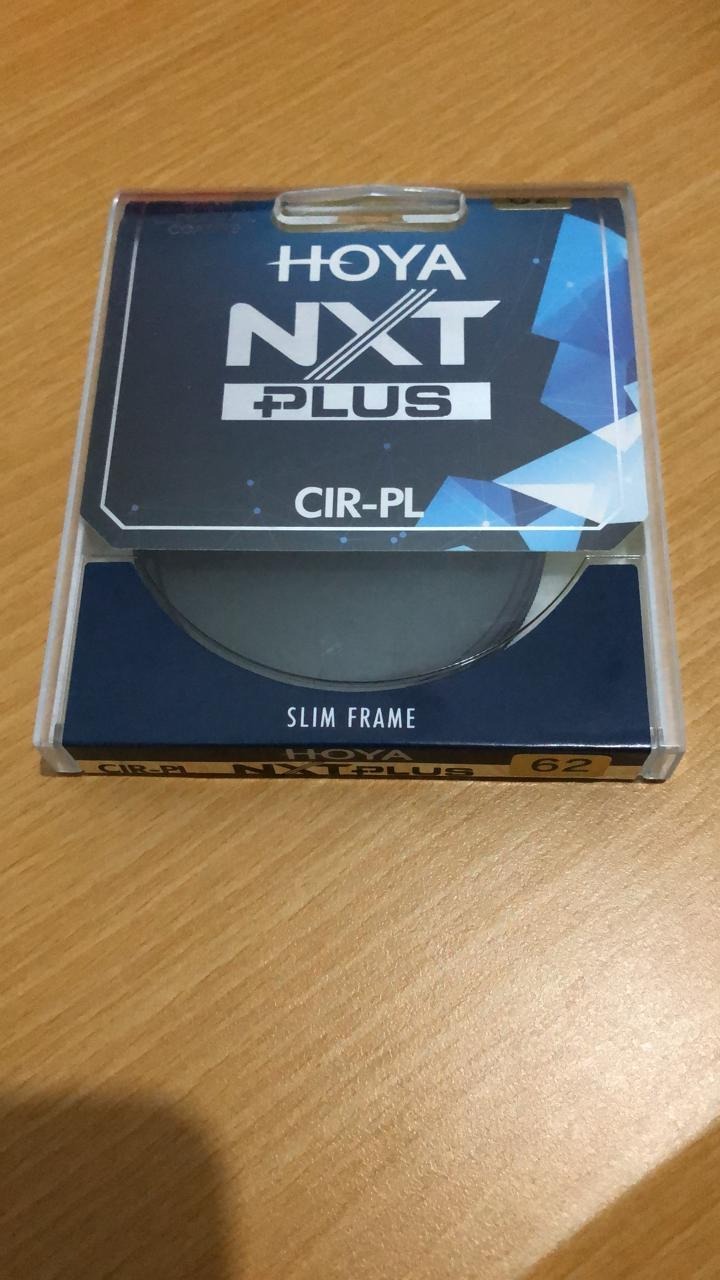
The 1.72 filter factor is on the brighter side for a multi-coated CPL. Autofocus stays snappy even in low light, which matters for hybrid shooters recording video where the camera needs to track continuously.
The low-profile aluminum frame stacks cleanly with lens hoods. On a 24-70mm f/2.8 with the hood mounted, the filter did not add bulk or vignette.
Coating technology explained
Hoya’s HMC (High Multi-Coating) is a 10-layer stack tuned to reduce reflections across the visible spectrum. Combined with the waterproof top layer, this is the kind of filter you can leave on your lens for an entire shoot without worrying about constant cleaning.
For travel photographers who cannot control shooting conditions, this coating pays for itself in saved time and cleaner files.
Why choose NXT Plus over cheaper Hoya filters
The standard Hoya CPLs lack the waterproof top-coat. That single feature is the difference between a filter you wipe down in 10 seconds and one you spend 2 minutes cleaning with solution and a cloth. For professionals billing by the hour, the upgrade is a no-brainer.
6. NiSi 82mm UHC CPL — Slim Frame for Wide-Angle Lenses
NiSi 82mm UHC CPL, Circular Polarizing Filter, Ultra-Hard Coating
13-layer coating
Ultra-hard coating
Slim frame
Pros
- No noticeable color cast
- Excellent build quality
- Smooth threading and rotation
- No vignetting on wide-angle lenses
- Good value for the build quality
Cons
- Slight resolution softness vs flagship brands on extreme crops
NiSi has earned a loyal following among landscape photographers, and the 82mm UHC CPL continues that tradition. The 13-layer coating and ultra-hard surface treatment make this a filter built to handle years of field use.
I tested this on a Canon RF 15-35mm f/2.8L at 15mm — the most demanding wide-angle scenario. The slim frame eliminated vignetting completely, and the colors stayed neutral across the frame. Blackened edges inside the filter ring reduce internal flare, which is most noticeable in backlit scenes.
Slim frame engineering
The frame thickness is the spec that matters most for wide-angle work. NiSi designed the UHC CPL specifically to clear the barrel of RF and Z-mount 14-24mm lenses when used with front filters. For photographers who own those lenses, this is one of the few 82mm CPLs that works without a bulky holder system.
Color rendition across the frame
I shot a forest scene with strong side light, and the UHC CPL held saturation consistent from corner to corner. Cheaper filters often warm the edges; this one did not. For multi-shot panoramas, color consistency across the filter surface matters.
7. Haida Greystone 82mm CPL — Best Value Multi-Coated Filter
Haida Greystone CPL Filter Optical Glass Multi-Coating Nano Coating Waterproof Scratch Resistant SLR Camera Lens Circular Polarizer Filter(82MM)
10-layer AR coating
Nano coating
Waterproof
Pros
- Excellent optical clarity with no sharpness loss
- Reduces reflections and glare effectively
- Smooth rotation with good friction
- Does not interfere with autofocus
- Outstanding price-to-quality ratio
Cons
- Polarizing effect slightly subtler than premium brands
- May increase lens flare in certain angles
The Haida Greystone CPL is one of those quiet performers that surprises you. At well under $50, it delivers sharpness and reflection reduction comparable to filters costing twice as much.
I tested the Greystone on a Nikon Z 24-70mm f/4 at f/8 and could not detect any loss in sharpness at 100% crops. The aluminum-alloy ring threads smoothly, and the knurled top edge makes removal easy even with cold fingers.
Subtle polarization effect
The polarizing effect is real but not as dramatic as a Breakthrough X4 or B+W Master. For landscapes where you want gentle sky enhancement without over-polarizing, that subtlety is actually a benefit. Beginners often over-rotate their CPL and end up with cartoon skies; the Greystone makes that mistake harder to commit.
Best use cases
For travel, casual landscape work, and learning how a CPL behaves, the Greystone hits the sweet spot. It is also a smart backup filter — keep one in your bag as a spare.
8. PolarPro QuartzLine CP 82mm — Professional Cinema-Grade Glass
PolarPro – Circular Polarizer (CP) Filter – 82mm – Premium CinemaSeries™ Glass, Anti-Reflective Coating, Ultra-Durable Aluminum Frame – Professional Lens Filter for DSLR & Mirrorless Cameras
CinemaSeries glass
16-layer coating
Aerospace aluminum
Pros
- Razor-sharp CinemaSeries optical glass
- Excellent build quality and packaging
- Reduces glare and reflections effectively
- Ultra-smooth rotating ring
- Trusted by professional photographers
Cons
- Premium price point
- Minor vignetting reports from some users
PolarPro built its reputation in the drone and action-camera market, and the QuartzLine CP brings that engineering pedigree to DSLR and mirrorless shooters. The CinemaSeries fused quartz glass is sharper than standard optical glass, and the aerospace-grade aluminum frame is built to last.
The 16-layer coating stack is the most aggressive on this list. Reflections and flare are nearly eliminated, and the hydrophobic surface treatment keeps water and oil from sticking. On a high-resolution body, the resulting files have noticeably higher micro-contrast than what budget CPLs produce.
Cinema heritage for still photography
PolarPro filters were originally designed for RED and ARRI cinema cameras. That means tighter tolerances and stricter quality control than typical photo filters. For hybrid shooters who switch between stills and video, the same filter handles both workflows cleanly.
Build and packaging
The included hard case and cleaning cloth are premium touches you do not see with most competitors. The brass-and-aluminum frame threads onto lenses smoothly and stays put. For photographers who travel with expensive gear, the robust packaging is a real benefit.
How to Choose the Right 82mm CPL Filter for Your Landscape Photography
Picking the right CPL comes down to four factors: coating quality, frame profile, light transmission, and brand support. Let me walk through each.
Coating quality and what MRC actually means
Multi-Resistant Coating (MRC) is the umbrella term for anti-reflective layer stacks. Higher-quality coatings use more layers (MRC16 means 16 layers per side), which reduces reflections more aggressively. Nano coatings add hydrophobic properties — water and oil bead up instead of smearing.
For landscape work, I recommend at minimum a multi-coated filter. If you shoot near water, snow, or rain, a nano-coated filter pays for itself in cleaning time saved. The difference between a $40 uncoated filter and a $100 nano-coated filter is usually 2 minutes of cleaning per shoot.
Frame profile and vignetting
Slim profile filters (5-7mm thickness) prevent vignetting on wide-angle lenses. Standard profile filters (8-10mm) are cheaper but show dark corners at 16mm and wider. For any lens wider than 24mm, choose slim.
If you own a 14-24mm f/2.8 or similar ultra-wide, even slim 82mm filters will vignette at the widest focal lengths. In that case, consider a 100mm or 150mm filter holder system with thin CPL inserts.
Light transmission and filter factor
Filter factor measures light loss. A 2x filter factor costs 1 stop of light; 4x costs 2 stops. Premium high-transmission CPLs (B+W Master HT, Breakthrough X4) sit closer to 1.5x — closer to 1 stop.
For long-exposure landscape work, every stop matters. The difference between a 1-stop and 2-stop CPL is the difference between ISO 100 and ISO 400 in twilight conditions.
Brand reputation and warranty
Tiffen, B+W, Hoya, and Breakthrough all offer multi-year warranties. K&F Concept, NiSi, Haida, and PolarPro offer 1-year warranties with strong customer service. For photographers keeping a filter for 5+ years, warranty length matters.
If you want to expand beyond CPLs, our roundup of the best 82mm ND filters covers the same size for long exposures. For a broader filter collection, see the best 82mm filters for lenses.
Stepping rings and lens compatibility
If you own lenses with different thread sizes (77mm, 72mm, 67mm), a 77-82mm or 67-82mm step-up ring lets you share one CPL across multiple lenses. Step-up rings cost under $15 and save you from buying three separate filters.
Just remember: a step-up ring means the filter sits farther from the lens, which can increase vignetting on ultra-wide lenses. For 24mm and up, step-up rings work perfectly.
Caring for your CPL filter
Store CPLs in their protective cases when not in use. Clean with a rocket air blower first, then a microfiber cloth with a drop of lens cleaning solution. Never use household cleaners or paper towels — they will damage the coatings.
A small scratch on a CPL affects image quality more than a scratch on a UV filter, because the polarizer film sits in the glass. Treat these filters like lenses, not like protective glass.
For related accessories, our best ND filters for landscape photography guide covers long-exposure companions.
When NOT to Use a CPL Filter in the Field
CPL filters are not always the right choice. Knowing when to leave it in the bag saves you time and improves your shots.
Wide-angle skies with uneven polarization
Ultra-wide lenses (16mm and wider) often show banding across the sky — one half dark, the other half lighter. This happens because the angle between the sun and different parts of the sky varies too much for a single CPL setting. If banding appears, dial back the polarization or remove the filter.
Sun directly in front of or behind the lens
With the sun at 0 or 180 degrees from your subject, the CPL does almost nothing. Save yourself the weight and shoot without it.
Low-light scenes and astrophotography
The 1-2 stops of light loss matters at dusk, in dense forests, and for Milky Way photography. A CPL also wipes out the subtle starlight polarization that astrophotographers sometimes use creatively. Skip it in dim conditions.
When you want reflections in water
A CPL removes water reflections — which is sometimes the entire point of a shot. Lakeside sunrises, mirror-like reflections, and wet street scenes all lose impact when polarized. Rotate the filter to minimum effect or remove it.
Video with autofocus issues
Some older or slower autofocus systems hunt more with a CPL attached because of the reduced light. Modern mirrorless systems are usually fine, but if your camera struggles, remove the CPL.
Frequently Asked Questions
Which CPL filter is best for landscape photography?
For most landscape photographers the Breakthrough Photography X4 CPL 82mm is the best balance of color neutrality, sharpness, and build quality. Budget-conscious shooters get nearly identical polarizing results from the Ku0026amp;F Concept Nano-X 82mm CPL at a fraction of the cost.
What is the best 82mm circular polarising filter?
The Breakthrough Photography X4 CPL is our top pick for color neutrality and sharpness retention. The Tiffen 82CP is the most trusted all-rounder with over 8,000 reviews, and the Ku0026amp;F Concept Nano-X is the best budget option under $65.
When not to use a circular polarizer?
Skip the CPL when shooting directly into or away from the sun (the filter has no effect at 0 or 180 degrees), in low-light scenes where the 1-2 stop light loss matters, on ultra-wide lenses where uneven sky banding appears, and when you want to keep reflections in water or glass.
What are the downsides of using a CPL filter?
CPL filters reduce light by 1 to 2 stops, can cause uneven sky banding on ultra-wide lenses, add glass that may slightly soften images on cheaper models, and require removal when you want water reflections or shooting in low light. They also cannot be combined with other CPLs in stacks.
Is it worth getting a CPL filter?
Yes, for any serious landscape photographer. A good CPL deepens blue skies, eliminates glare from water and leaves, cuts through atmospheric haze, and adds contrast naturally without post-processing. It is the single most impactful filter you can own for outdoor work.
What is the 90-degree sun angle rule for CPL filters?
A CPL has maximum polarizing effect when the sun is at a 90-degree angle to your subject. With the sun directly behind you (0 degrees) or directly in front of you (180 degrees), the filter does almost nothing. Aim perpendicular to the sun direction for the strongest sky darkening and reflection removal.
Final Verdict: Which 82mm CPL Filter Should You Buy?
After testing all eight filters in real landscape conditions, the Breakthrough Photography X4 CPL 82mm is the filter I would buy if I could only own one. The color neutrality, sharpness retention, and 25-year warranty make it the safest long-term investment for serious landscape photographers.
If budget matters more, the K&F Concept Nano-X 82mm CPL delivers 90% of the Breakthrough’s performance at 40% of the price. For pure value, it is unbeatable. The Tiffen 82CP remains the most trusted workhorse with over 8,000 reviews, and the B+W Master Kaesemann is the premium choice for wide-angle work and brass-ring durability.
Whichever filter you choose, remember the 90-degree sun angle rule, keep the filter clean, and use a slim profile for any lens wider than 24mm. With the right 82mm CPL on your lens, you will see landscape photos with deeper skies, cleaner reflections, and richer colors than you ever thought possible. Get out there and shoot — the best 82mm CPL filter for landscape photography is the one that gets you out the door.