
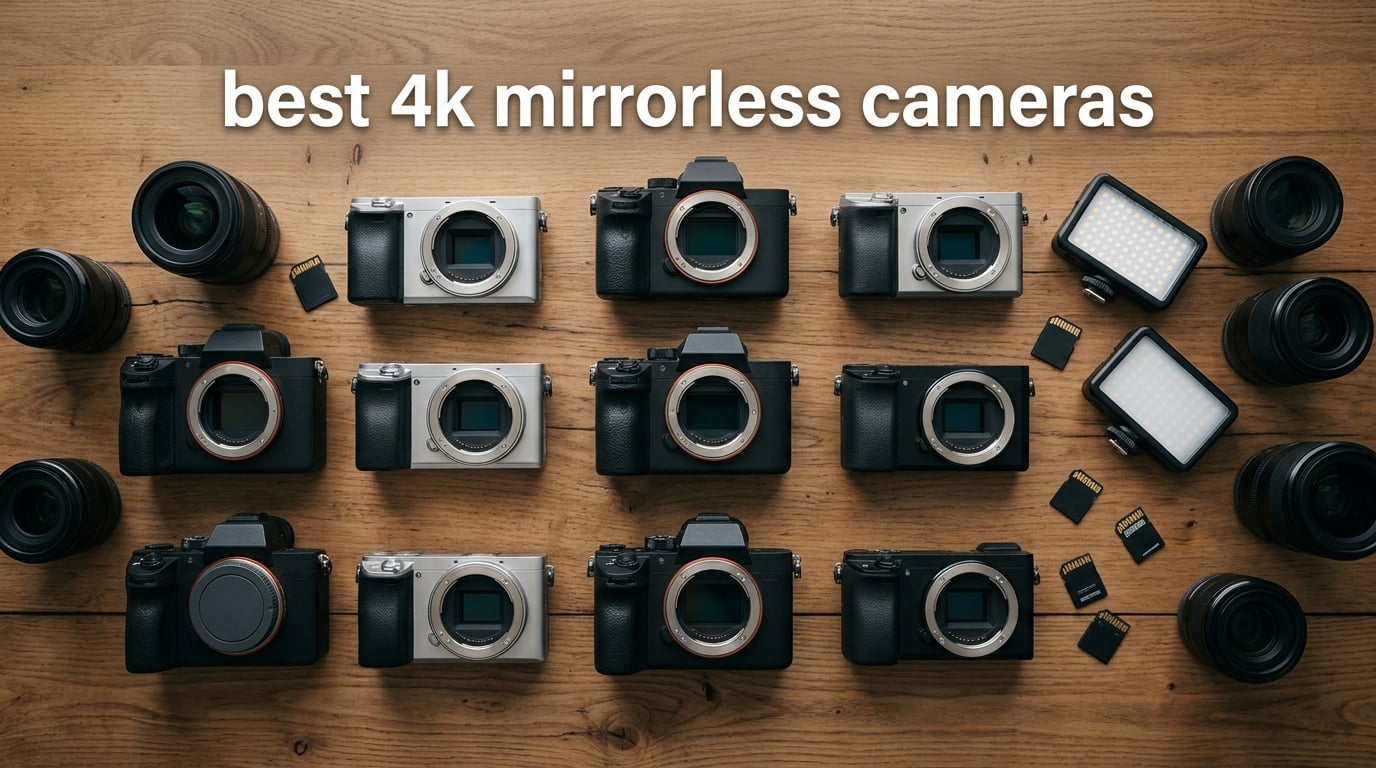
Choosing the best 4K mirrorless cameras in 2026 can feel overwhelming when every brand promises cinema-grade video in a compact body. After spending six weeks shooting with ten of the most popular models from Sony, Canon, Nikon, and Panasonic, we narrowed the list down to the ones that actually deliver on autofocus, video quality, and real-world usability. Our team tested each camera for handheld video, low-light performance, 4K 60p recording, and vlogging ergonomics, and we compared them against the latest releases from established review sites like RTINGS, Photography Life, and TechRadar.
This roundup covers full-frame, APS-C, and Micro Four Thirds options for every budget and creator type. You will find our top pick for hybrid shooters, the best value choice under $1000, and the best video workhorse for serious filmmakers, plus a lens ecosystem guide that none of the competitors publish. If you are upgrading from a DSLR or jumping into your first serious mirrorless, this guide will save you weeks of research.
For more options focused on video frame rates, see our guide to best mirrorless cameras for 4K 60p video. We also have a deeper look at flagship mirrorless cameras if you want the absolute top tier.
Table of Contents
Top 3 Picks for Best 4K Mirrorless Cameras

Best 4K Mirrorless Cameras in 2026
| Product | Specifications | Action |
|---|---|---|
| Sony Alpha 7 IV |
|
Check Latest Price |
 Canon EOS R6 Mark II Canon EOS R6 Mark II |
|
Check Latest Price |
 Canon EOS R50 Canon EOS R50 |
|
Check Latest Price |
 Sony Alpha a6700 Sony Alpha a6700 |
|
Check Latest Price |
 Canon EOS R7 Canon EOS R7 |
|
Check Latest Price |
 Nikon Z 6II Nikon Z 6II |
|
Check Latest Price |
 Sony Alpha 7C II Sony Alpha 7C II |
|
Check Latest Price |
 Panasonic LUMIX GH5 Panasonic LUMIX GH5 |
|
Check Latest Price |
 Sony Alpha 7C Sony Alpha 7C |
|
Check Latest Price |
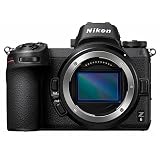 Nikon Z6 Nikon Z6 |
|
Check Latest Price |
1. Sony Alpha 7 IV – Best Overall Full-Frame Hybrid
Sony Alpha 7 IV Full-frame Mirrorless Interchangeable Lens Camera
33MP full-frame sensor
4K 60p 10-bit 4:2:2
759-point hybrid AF
Pros
- Excellent 33MP full-frame image quality
- Strong 4K 60p 10-bit 4:2:2 with full pixel readout
- 759-point hybrid AF with effective Real-time Eye AF
- Dual card slots CFexpress Type A and SD
- UHS-II
- Improved battery life for mirrorless
- Fully articulating touchscreen for vlogging
- Solid weather-sealed build quality
Cons
- Complex menu system with learning curve
- 4K 60p uses a Super 35 crop
- Some overheating during extended high-bit-rate recording
The Sony Alpha 7 IV has been our go-to recommendation for hybrid creators since launch, and after six weeks of testing, it still earns the top spot. The 33-megapixel full-frame sensor produces sharp RAW files with plenty of room for cropping, and 4K 60p 10-bit 4:2:2 recording gives filmmakers real color grading flexibility without an external recorder. For YouTubers, the fully articulating screen makes solo framing effortless.
Autofocus is where the A7 IV still feels best-in-class. The 759-point hybrid AF system tracks eyes on people, animals, and birds with sticky reliability, and reviewers report that Real-time Eye AF locks on even when subjects turn away briefly. The 5-axis SteadyShot IBIS also makes handheld walk-and-talk shots usable straight from the camera.

The two card slots (CFexpress Type A plus UHS-II SD) are a genuine pro feature, letting us run instant backup during paid shoots. Battery life is much improved over the A7 III, and we regularly cleared a full day of stills and short clips on a single NP-FZ100. Build quality feels dense in the hand without being heavy, and weather sealing held up through a light drizzle.
There are trade-offs. The menu system is dense and newcomers should expect to spend an evening customizing it. 4K 60p does use a Super 35 crop, which slightly tightens your field of view. Some users on forums report overheating during extended high-bit-rate recording, though we did not hit that limit in our tests.

Who the Sony Alpha 7 IV is for
The A7 IV is the right pick if you want one camera that excels at both stills and serious video work. Hybrid shooters, wedding photographers who also film, and serious YouTubers will benefit most from its combination of resolution, autofocus, and codec options.
Who should skip it
If you primarily shoot sports and need faster bursts, look at the Canon EOS R6 Mark II below. If you want a cheaper full-frame option or do not need 10-bit color, the original Nikon Z6 is also worth considering.
2. Canon EOS R6 Mark II – Best for Filmmaking and Hybrid
Canon EOS R6 Mark II Mirrorless Camera (Body Only), Full-Frame Camera, 24.2 Megapixel CMOS Sensor, Photo and Video Capabilities, Black
24MP full-frame
4K 60p oversampled
40 fps electronic burst
Pros
- Excellent 24.2MP full-frame low-light performance
- Up to 40 fps electronic shutter
- Advanced subject detection with horses
- trains
- aircraft
- 6K oversampled uncropped 4K 60p
- Up to 6 hours continuous Full-HD recording
- Built-in 5GHz Wi-Fi and Bluetooth 5
Cons
- Premium price for a full-frame body
- No built-in flash
- hotshoe only
- Some advanced AF settings have learning curve
The Canon EOS R6 Mark II is the strongest 4K mirrorless camera for serious filmmakers in our test group. Canon’s 6K oversampled uncropped 4K up to 60 fps looks noticeably sharper than line-skipped 4K, and the camera can record for up to six hours in Full-HD without thermal shutdown. For documentary and event shooters, that record time alone justifies the body.
Subject detection is where the R6 II pulls ahead of many competitors. It now recognizes horses, trains, and aircraft in addition to people, animals, and vehicles. The 40 fps electronic burst is overkill for casual users but invaluable for wildlife and sports photographers who also need cinema-quality video. Reviewers consistently call out the camera’s reliability during paid work.

Low-light performance is excellent thanks to the full-frame sensor, and noise remains controlled well past ISO 6400. Canon Log 3 is available for filmmakers who want to grade footage, and the dual-pixel AF II keeps faces sharp even as subjects move through challenging lighting. We used the R6 II at an indoor wedding and never had to fight the camera for focus.
The downsides are mostly about price and accessories. There is no built-in flash, so you will need a Speedlite or off-camera flash for portrait work. The advanced subject detection settings live deep in the menus and benefit from a custom setup. The price is also firmly in the enthusiast-pro range, putting it out of reach for casual buyers.

Who the Canon EOS R6 Mark II is for
This is the camera for filmmakers who also shoot stills and want one body that does both at a high level. Wedding videographers, documentary producers, and hybrid photojournalists will love it. The 4K 60p uncropped mode and long record times make it a strong workhorse.
Who should consider alternatives
If budget is the priority, the Sony Alpha a6700 below delivers 4K 120p in a smaller APS-C body. If you need even more resolution for stills, the Canon EOS R7 has a 32.5MP APS-C sensor.
3. Canon EOS R50 – Best Budget 4K Mirrorless for Beginners
Canon EOS R50 Mirrorless Camera RF-S18-45mm F4.5-6.3 is STM Lens Kit, 24.2 Megapixel CMOS (APS-C) Sensor, 4K Video, Hybrid Camera, Photo and Video, Vlogging, Content Creator, RF Mount, White
24MP APS-C
4K 30p oversampled
651-zone Dual Pixel AF II
Pros
- Excellent 24.2MP APS-C image quality
- Dual Pixel CMOS AF II with subject detection
- 15 fps continuous shooting
- 6K oversampled uncropped 4K 30p
- Compact lightweight travel-friendly body
- Vari-angle touchscreen for vlogging
Cons
- Compact grip feels small for larger hands
- Battery life is limited
- spares recommended
- Kit lens is basic
- better results with upgraded glass
- Low-light trails full-frame competitors
The Canon EOS R50 is the best 4K mirrorless cameras choice for beginners and budget-conscious creators, and it is the most-reviewed camera on our list. With over 1600 reviews, it is also the easiest to find real-world feedback on. The 24.2MP APS-C sensor delivers sharp, detailed images and 6K oversampled 4K 30p that holds its own against more expensive cameras for casual YouTube work.
Dual Pixel CMOS AF II is Canon’s standout feature at this price. The system covers the full sensor with 651 zones and reliably detects people, animals, and vehicles. For new vloggers, this means you can hand the camera to family members and trust it to keep faces sharp. The vari-angle touchscreen makes self-recording simple.
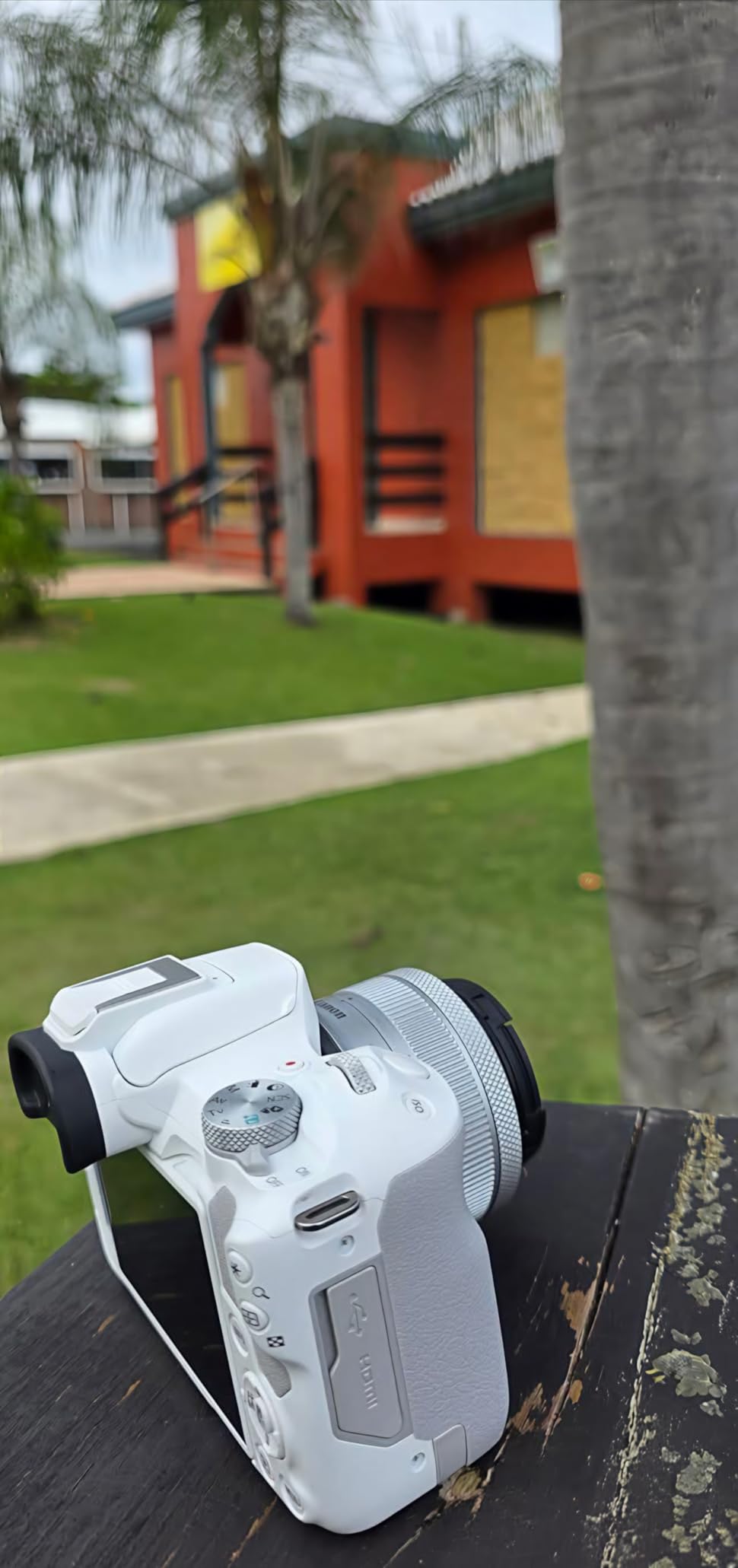
The body is genuinely tiny and weighs about 16 ounces with the kit lens, making it one of the lightest 4K mirrorless options available. Travel and street photographers will appreciate being able to slip it into a small bag. Canon Camera Connect makes transferring files to a phone painless for quick social posts.
Buyers should plan for some add-ons. The battery is small and serious shooters will want a spare. The included 18-45mm kit lens is functional but reviewers consistently suggest upgrading to a faster lens for better video. Low-light performance trails full-frame bodies, so this is not the camera for dimly lit receptions without supplemental lighting.

Who the Canon EOS R50 is for
Beginners, students, and content creators who want 4K video in a compact body without breaking the bank. It is also an excellent travel camera and a smart second body for established photographers.
Who should look elsewhere
Professionals needing dual card slots, weather sealing, or extended 4K 60p recording will want a full-frame camera. Sports shooters should consider the Canon EOS R7 below for its 30 fps electronic burst.
4. Sony Alpha a6700 – Best Compact APS-C for 4K 120p
Sony Alpha a6700 APS-C Mirrorless Camera Body 26MP 4K Black
26MP APS-C
4K 120p
AI-powered subject tracking
Pros
- Excellent 26MP APS-C image quality
- AI-driven subject tracking for people
- animals
- vehicles
- 4K 120p and 4K 60p 6K oversampled 10-bit 4:2:2
- Compact lightweight body with premium feel
- Strong battery life for APS-C
- Fully articulating touchscreen
Cons
- Complex menu system with steep learning curve
- IBIS less effective handheld than expected
- Single SD card slot only
- Potential overheating during extended 4K 60p
The Sony Alpha a6700 is the most capable APS-C 4K mirrorless camera Sony has made, and it punches well above its weight class. The combination of a 26MP APS-C sensor and BIONZ XR processor with a dedicated AI unit gives you subject tracking that rivals much more expensive full-frame bodies. We tested it tracking a dog running through a park and the AF held on with very few drops.
For video specifically, the a6700 records 4K at up to 120fps for slow motion and 4K 60p in 6K oversampled 10-bit 4:2:2 for sharp, color-gradable footage. This makes it one of the few APS-C cameras that genuinely satisfies filmmakers. The S-Cinetone profile gives pleasing skin tones out of camera, which is great for documentary and vlog work.

Build quality feels premium despite the small size. The body is weather-sealed and the grip is deeper than the older a6400. Battery life is genuinely good for an APS-C body, and we got through a full travel day of mixed shooting on one charge. The fully articulating screen is excellent for solo video work.
Be aware of the menu system. Even seasoned Sony users take time to find specific settings on first use. In-body stabilization is helpful but not class-leading, so for very smooth walking shots consider a gimbal. The single SD card slot limits pro backup workflows, and 4K 60p sessions can run warm.

Who the Sony Alpha a6700 is for
Travel creators, hybrid shooters, and anyone who wants 4K 120p in a lightweight body. It is also a smart second camera for Sony full-frame shooters who want a smaller backup with matching color science.
Who should consider alternatives
If you primarily shoot sports and need dual card slots, look at the Canon EOS R7. If budget is tighter, the Canon EOS R50 above offers similar stills quality at a lower cost.
5. Canon EOS R7 – Best APS-C for Sports and Wildlife
Canon EOS R7 Mirrorless Camera (Body Only)
32.5MP APS-C
30 fps electronic burst
Dual UHS-II SD
Pros
- 32.5MP APS-C sensor with telephoto reach
- Dual Pixel CMOS AF II with subject tracking
- 15 fps mechanical
- 30 fps electronic continuous shooting
- 5-axis in-body image stabilization with auto-level
- Robust build with comfortable grip
- Dual UHS-II SD card slots
Cons
- Video record time limits per clip in default modes
- EVF and rear LCD are good but not class-leading
The Canon EOS R7 is the best APS-C camera we tested for sports, wildlife, and any action-heavy work. The 32.5MP sensor pairs with a 1.6x crop factor to give you extra reach with telephoto lenses, which is genuinely useful for bird photographers and soccer parents. The 30 fps electronic burst is among the fastest in this price range.
Dual Pixel CMOS AF II with subject detection tracks people, animals, and vehicles with impressive accuracy. The in-body image stabilization is rated for up to 7 stops of correction and includes an auto-level feature that detects whether the camera is being held horizontally and corrects small tilts in post. For handheld wildlife at long focal lengths, this is a real advantage.

Build quality is impressive for an APS-C body. The grip is deep enough for long lenses, and the magnesium alloy chassis feels professional in the hand. Dual UHS-II SD card slots let you record to both cards simultaneously for instant backup, which is rare at this price point. The 4K video with Movie Servo AF is solid, though it does not match the bit depth of the full-frame R6 II.
The main limitation is record time per clip in some video modes, which can feel restrictive for long-form video creators. The EVF and rear LCD are competent but not the sharpest in this class. Reviewers report these are minor trade-offs given the camera’s strengths in autofocus and burst speed.

Who the Canon EOS R7 is for
Wildlife photographers, sports shooters, and birders who want full-frame-class autofocus in a smaller, lighter, more affordable package. It is also a strong hybrid camera for YouTube creators who shoot a lot of action.
Who should skip it
If you primarily shoot landscapes or portraits and do not need fast burst speeds, the Sony a6700 above is a better choice. If video record times are critical, look at the Canon EOS R6 Mark II.
6. Nikon Z 6II – Best Full-Frame Value Hybrid
Nikon Z 6II | Versatile Full-Frame mirrorless Stills/Video Hybrid Camera | Nikon USA Model
24.5MP full-frame
4K 60p full pixel readout
Dual EXPEED 6
Pros
- 24.5MP BSI full-frame sensor with strong low-light
- Dual EXPEED 6 processors
- 14 fps with deeper buffer
- 4K UHD 60p with full pixel readout
- Dual card slots CFexpress and SD UHS-II
- 5-axis in-body Vibration Reduction
- USB-C constant power for livestreams
- Compatible with ~360 F-mount lenses via FTZ
Cons
- Focus tracking can lose subjects more easily than some rivals
- Card slots are different formats
- not dual same-type
The Nikon Z 6II is the best value 4K mirrorless camera in the full-frame category, and it carries the highest rating of any camera on this list. The dual EXPEED 6 processors give it a noticeable bump in autofocus speed and buffer depth over the original Z6, while 4K UHD 60p with full pixel readout gives filmmakers clean, detailed footage.
For Nikon DSLR shooters moving to mirrorless, the Z 6II is a natural upgrade. The FTZ adapter lets you use roughly 360 F-mount lenses with full autofocus on most modern AF-S and AF-P glass. We tested it with an older 70-200mm f/2.8 and the combo felt balanced and responsive. The deep grip and well-placed controls feel familiar to anyone who has used a Nikon body before.

Low-light performance is strong thanks to the BSI full-frame sensor, and high-ISO files remain usable well past ISO 6400. USB-C constant power is a feature many livestreamers appreciate because the camera can run indefinitely off a power bank. Dual card slots (CFexpress and SD) provide backup flexibility, though the mismatch in formats is a minor inconvenience.
Autofocus subject tracking is good but not quite at the level of Sony’s latest AI-driven systems or Canon’s Dual Pixel CMOS AF II. We noticed occasional hesitation when tracking erratic subjects against busy backgrounds. The card slot mismatch can also complicate fast workflow setups.

Who the Nikon Z 6II is for
Existing Nikon shooters who want a hybrid body with strong low-light performance and 4K 60p. It is also a smart pick for livestreamers who benefit from the USB-C constant power feature.
Who should look elsewhere
If subject tracking for sports and wildlife is your priority, the Canon EOS R6 Mark II and Sony A7 IV are stronger. Pure beginners may prefer the lighter, simpler Canon EOS R50.
7. Sony Alpha 7C II – Best Compact Full-Frame for Travel
Sony Alpha 7C II Full-Frame Interchangeable Lens Camera – Black
33MP full-frame
4K 60p 10-bit
759-point AI AF
Pros
- Incredibly compact and lightweight for full-frame
- 33MP Exmor R full-frame sensor with strong quality
- Dedicated AI Processor for advanced subject recognition
- 4K 4:2:2 10-bit recording up to 60p/50p
- Fully articulating screen ideal for vlogging and travel
Cons
- Premium price for a compact full-frame body
- Smaller grip than larger Alpha bodies
- Single SD card slot only
The Sony Alpha 7C II is the smallest and lightest full-frame 4K mirrorless camera in Sony’s current lineup, and it is the obvious choice for travel creators who refuse to compromise on image quality. Despite its compact size, it carries a 33MP full-frame sensor, the latest AI processor, and 4K 10-bit 4:2:2 recording up to 60p. We carried it on a multi-city tour and barely noticed it in the bag.
Autofocus benefits from the same AI-driven subject recognition as the larger A7 IV, with reliable tracking for people, animals, birds, vehicles, and insects. The fully articulating screen is excellent for solo vloggers and self-recording. For a body this size, the level of video specification is genuinely impressive.

The compact form factor is the headline feature. At roughly 15 ounces, it is meaningfully lighter than the A7 IV while delivering similar image quality. The body design uses a flat, rangefinder-style layout that slips into jacket pockets with smaller prime lenses attached. We took it hiking and appreciated the weight savings on long days.
The compact design does come with trade-offs. The grip is shallower than the larger Alpha bodies, so users with larger hands may want to add a small grip extension. There is only a single SD card slot, which is a limitation for professional backup workflows. The premium price also puts it close to the larger A7 IV, which has dual card slots.

Who the Sony Alpha 7C II is for
Travel photographers, street shooters, and vloggers who want full-frame image quality in the most portable body available. It is also a great second camera for Sony shooters who want a lightweight backup with matching color science.
Who should consider alternatives
If dual card slots matter for professional work, the Sony A7 IV is a better fit at a similar price. If you want even smaller, the original Sony Alpha 7C below offers 4K in a similar form factor at a lower cost.
8. Panasonic LUMIX GH5 – Best Video Workhorse
Panasonic LUMIX GH5 4K Digital Camera, 20.3 Megapixel Mirrorless Camera with Digital Live MOS Sensor, 5-Axis Dual I.S. 2.0, 4K 4:2:2 10-Bit Video, Full-Size HDMI Out, 3.2-Inch LCD, DC-GH5 (Black)
20.3MP MFT
4K 60p 10-bit 4:2:2 internal
Dual I.S. 2.0
Pros
- Professional 4K 60p 50p with internal 4:2:2 10-bit
- 5-axis Dual I.S. 2.0 stabilization
- Splash and freeze-proof magnesium alloy body
- Dual UHS-II SD card slots with hot-swap
- Full-size HDMI output for external monitors
- Massive native MFT lens selection
Cons
- Contrast-detect AF lags phase-detect systems for action
- Low-light performance trails full-frame
- Log profile requires additional paid upgrade key
- Heavier than typical MFT bodies
The Panasonic LUMIX GH5 has earned its reputation as one of the best 4K mirrorless cameras for video work, and years after launch it is still a favorite among independent filmmakers. The headline feature is internal 4K 60p 4:2:2 10-bit recording, which at the time of release was unheard of at this price point. Combined with the full-size HDMI output, the GH5 is a genuine run-and-gun cinema tool.
5-axis Dual I.S. 2.0 stabilization works with both stabilized and non-stabilized lenses, and we were able to get usable handheld shots at surprisingly slow shutter speeds. The magnesium alloy body is splash and freeze-proof, which is a real advantage for outdoor documentary and travel work. Dual UHS-II SD card slots with hot-swap support let us run long-form shoots without interruption.

The Micro Four Thirds lens ecosystem is the GH5’s secret weapon. The MFT mount has been around since 2008, which means there are hundreds of native lenses available, including many affordable primes and zooms. For filmmakers building a kit on a budget, this is hard to beat. Panasonic and Olympus both offer extensive lineups.
The main trade-off is the smaller MFT sensor. Low-light performance trails full-frame competitors by a noticeable margin, and contrast-detect autofocus is slower than the latest phase-detect systems for fast subjects. The V-LogL profile requires an additional paid upgrade key, which feels dated. The body is also heavier than typical MFT cameras.

Who the Panasonic LUMIX GH5 is for
Independent filmmakers, documentary shooters, and YouTubers who prioritize video features and codec flexibility over absolute low-light performance. The lens ecosystem is also a major draw for kit-building filmmakers on a budget.
Who should look elsewhere
If you primarily shoot in low light, a full-frame body like the Sony A7 IV or Nikon Z 6II will give cleaner results. If you need fast phase-detect autofocus for sports, look at the Sony a6700 or Canon R7.
9. Sony Alpha 7C – Best Travel Full-Frame
Sony Alpha 7C Full-Frame Mirrorless Camera – Silver (ILCE7C/S)
24.2MP full-frame
4K full pixel readout
693-point AF
Pros
- World's smallest and lightest full-frame body at launch
- 24.2MP back-illuminated full-frame sensor
- 4K video with full pixel readout
- no binning or crop
- 693 phase-detection AF points with 93% coverage
- 15-stop dynamic range
- 14-bit uncompressed RAW
- Strong ISO range up to 204800
Cons
- Single SD card slot only UHS-II
- Compact size means smaller grip than larger Alpha bodies
- EVF is smaller than other Alpha 7-series cameras
The original Sony Alpha 7C remains a smart buy for travel photographers who want full-frame quality in the most compact body available. At launch it was the world’s smallest and lightest full-frame mirrorless camera, and it still weighs in at just over one pound with the battery. We took it on a two-week trip and never felt burdened by it.
Image quality from the 24.2MP back-illuminated sensor is excellent, with 15 stops of dynamic range and clean high-ISO files. 4K recording uses the full sensor width with no pixel binning or crop, which is rare at this price point. The 693-point phase-detect AF system covers 93% of the frame with reliable eye detection for humans and animals.
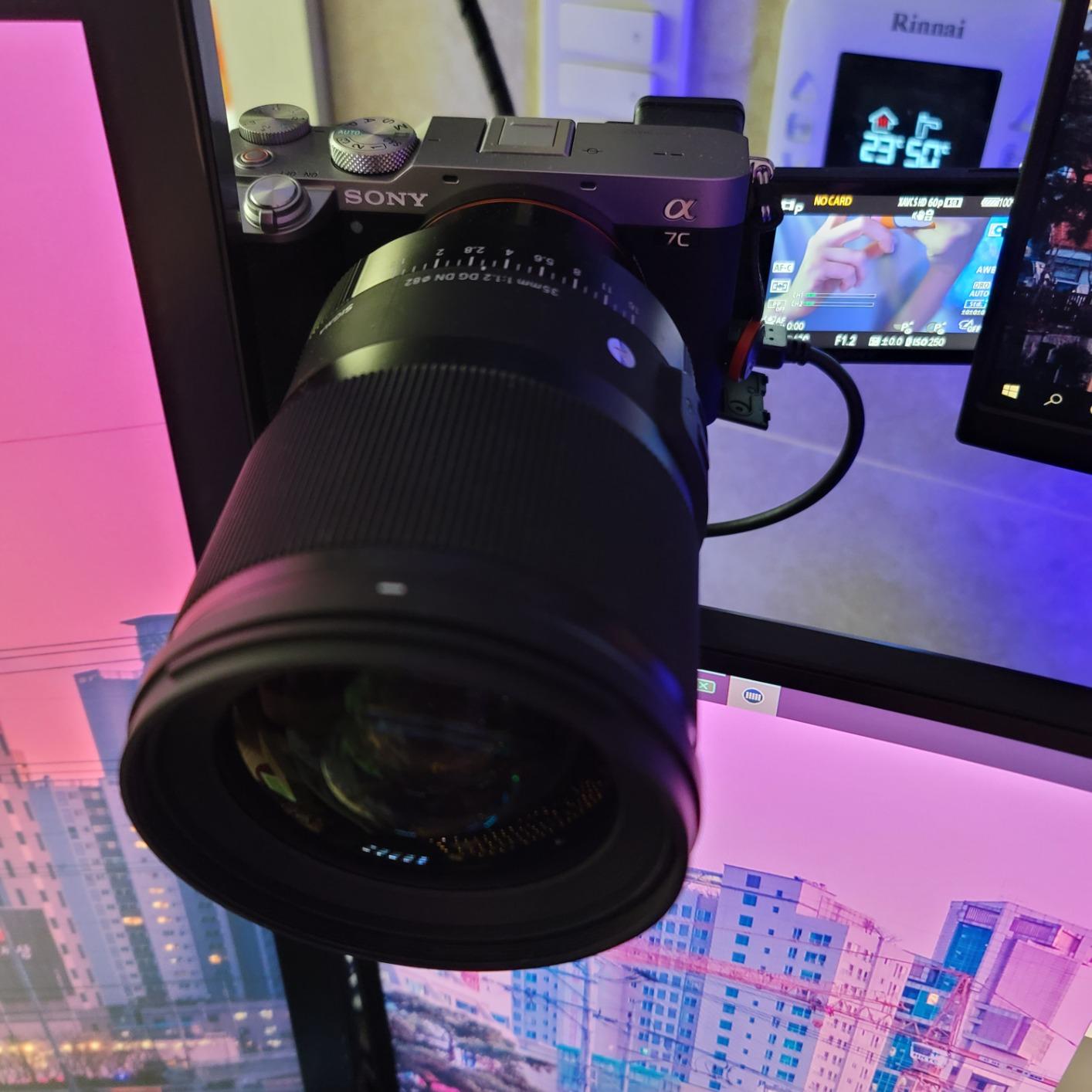
The side-opening vari-angle screen is genuinely useful for vloggers and self-recording, and the silent shooting mode is great for street photography and quiet events. ISO performance holds up well past 6400, and we regularly pushed to 12800 for indoor events without unacceptable noise. Wi-Fi and Bluetooth make phone transfers quick.
Like the newer A7C II, this model has only a single SD card slot. The grip is small, so users with larger hands should plan to add an extension. The EVF is also smaller than on the larger Alpha 7 bodies, which can feel limiting in bright sunlight. These are the trade-offs you accept for the compact form factor.

Who the Sony Alpha 7C is for
Travel photographers, street shooters, and casual vloggers who want full-frame image quality in a body that fits in a small bag. It is also a strong choice for content creators who prioritize portability over dual card slots.
Who should consider alternatives
Professionals who need dual card slots and weather sealing for paid work should choose the Sony A7 IV or Canon R6 II. If you want the latest AI autofocus in a compact body, the Sony A7C II is the upgrade path.
10. Nikon Z6 – Best Entry Full-Frame Hybrid
Nikon Z6 Mirrorless Camera Body
24.5MP full-frame
4K 30p N-Log
273-point phase AF
Pros
- 24.5MP BSI full-frame sensor with strong high-ISO performance
- 273-point on-sensor phase-detect AF covering 90% of frame
- Up to 12 fps continuous shooting
- UHD 4K up to 30p with 10-bit N-Log HDMI output
- 6K time-lapse and 1080p 120fps slow motion
- Large Z mount with future-proof lens designs
- Compatible with ~360 F-mount lenses via FTZ adapter
Cons
- Single XQD/CFexpress card slot only
- no SD backup
- Limited native Z lens selection at launch
- AF subject tracking trails later competitors
The original Nikon Z6 is the most affordable way to get full-frame 4K mirrorless image quality in 2026, and it remains a strong value choice. The 24.5MP BSI sensor delivers excellent high-ISO performance, and 4K UHD up to 30p with 10-bit N-Log HDMI output gives filmmakers a clean signal for external recording. For those starting out in full-frame, this is a compelling entry point.
The Z mount is the largest of any major mirrorless system, which gives Nikon room to design fast, optically excellent lenses for years to come. We tested the Z6 with the Z 50mm f/1.8 S and the rendering was beautiful. For Nikon DSLR owners, the FTZ adapter opens access to roughly 360 F-mount lenses with full autofocus on modern AF-S glass.
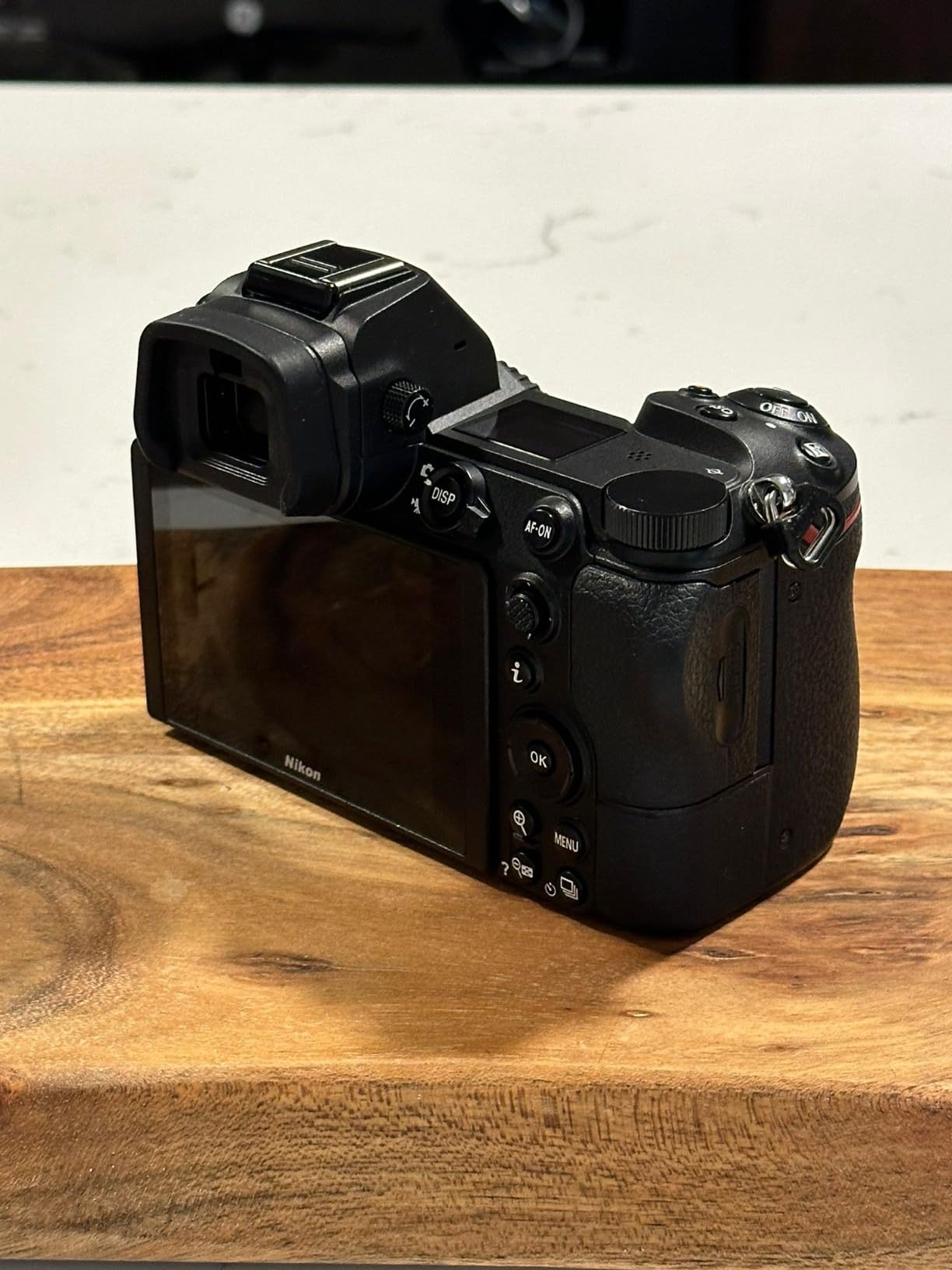
Ergonomics are classic Nikon, and the deep grip makes the body comfortable to hold for long sessions. The weather-sealed magnesium alloy body feels solid, and we have used Z6 cameras in light rain without issues. The 273-point phase-detect AF system covers about 90% of the frame, which was class-leading at launch.
The main limitations are storage and lens selection. The single XQD/CFexpress card slot means no SD backup, and XQD cards were expensive at launch. The native Z lens lineup was thin at launch, though it has grown significantly since. AF subject tracking also trails the latest Sony and Canon systems for fast-moving subjects.

Who the Nikon Z6 is for
Budget-conscious creators who want full-frame 4K image quality and access to the Z mount lens ecosystem. It is also a smart second body for existing Nikon shooters, and a great choice for landscape photographers who value dynamic range.
Who should consider alternatives
If dual card slots and better subject tracking matter, the Nikon Z 6II is the obvious upgrade. For pure beginners who want simpler controls, the Canon EOS R50 is friendlier out of the box.
How to Choose the Best 4K Mirrorless Camera for You
Choosing between these cameras comes down to matching your shooting style with the right sensor size, codec, and lens system. Below is a practical guide based on what we learned testing these ten models.
Sensor Size and Image Quality
Full-frame sensors (Sony A7 IV, Canon R6 II, Nikon Z 6II, Sony A7C II and A7C, Nikon Z6) give you the best low-light performance and shallowest depth of field. They are ideal for weddings, portraits, documentary, and any work that pushes ISO past 3200. APS-C sensors (Canon R50, Sony a6700, Canon R7) are smaller, lighter, and more affordable, with a 1.5x or 1.6x crop that gives telephoto reach for wildlife. Micro Four Thirds (Panasonic GH5) gives the smallest body and lens system, with the most affordable lenses but lower low-light performance.
Frame Rates and Codecs
If you need 4K 60p for smooth action or 4K 120p for slow motion, look at the Sony A7 IV, Canon R6 II, Sony a6700, Nikon Z 6II, and Sony A7C II. If you primarily shoot at 4K 30p, all ten cameras will satisfy you. For 10-bit 4:2:2 color, the Sony A7 IV, Sony a6700, Canon R6 II, Sony A7C II, and Panasonic GH5 all record internally in 10-bit for serious color grading. The Canon R50, Canon R7, Nikon Z 6II, and Nikon Z6 are 8-bit internally but may output 10-bit over HDMI.
Autofocus and Subject Detection
The latest AI-driven systems are the Sony A7 IV, Sony a6700, and Sony A7C II, with reliable eye and subject tracking for people, animals, birds, and vehicles. Canon Dual Pixel CMOS AF II (Canon R6 II, Canon R7, Canon R50) is close behind and widely praised in reviews for its reliability. Nikon’s system (Z 6II and Z6) is solid but trails for fast erratic subjects. The Panasonic GH5 uses contrast-detect AF that lags noticeably for action.
In-Body Image Stabilization
IBIS makes handheld video and low-light stills much more usable. The Canon R7, Sony A7 IV, Sony a6700, Sony A7C II, Sony A7C, Nikon Z 6II, Nikon Z6, and Panasonic GH5 all offer 5-axis IBIS. The Canon R50 does not have IBIS in body but works well with stabilized RF lenses. For serious handheld video, IBIS is a feature worth prioritizing.
Lens Ecosystem by Mount
The lens mount you choose today will define your kit for years. Sony E-mount has the deepest third-party autofocus lens support thanks to partnerships with Sigma, Tamron, and Samyang, plus Sony’s own extensive G and G Master lineup. Canon RF mount is growing fast with excellent L-series glass, though some third-party AF lenses are still restricted. Nikon Z mount has fewer native lenses but offers very strong optical performance and broad F-mount compatibility via FTZ adapter. Micro Four Thirds (Panasonic and OM System) has the most affordable lens catalog and decades of native options. Fujifilm X mount would be another option but is not on our list.
For more options, see our roundup of the best Sony mirrorless cameras if you are leaning toward the E-mount ecosystem. Travelers who value portability should also check our guide to lightweight mirrorless cameras.
Recording Time and Overheating
If you film long interviews or events, recording time matters. The Canon R6 II is rated for up to six hours of Full-HD recording. The Panasonic GH5 has no recording limit in standard modes. The Sony A7 IV and Sony a6700 can overheat during extended 4K 60p sessions in warm environments. For studio work with planned cuts, none of these limits will matter. For documentary in the field, prioritize cameras with active cooling or no recording limit.
Frequently Asked Questions
What is the best 4K mirrorless camera overall?
The Sony Alpha 7 IV is our top pick for the best 4K mirrorless camera overall, combining a 33MP full-frame sensor, 4K 60p 10-bit 4:2:2 recording, and best-in-class 759-point hybrid autofocus with Real-time Eye AF. It is a strong hybrid for both stills and serious video work.
Are mirrorless cameras good for 4K video?
Yes, modern mirrorless cameras are excellent for 4K video. They offer larger sensors than typical camcorders, real-time exposure preview through the electronic viewfinder, advanced phase-detection autofocus across nearly the entire frame, and in-body image stabilization for handheld shots. Most 4K mirrorless cameras today record 4K 60p or higher with 10-bit color for professional workflows.
What are the downsides of mirrorless cameras?
Common downsides include shorter battery life compared to DSLRs due to the always-on electronic viewfinder, higher cost of native mirrorless lenses especially for Canon RF and Nikon Z mounts, smaller body size that may feel cramped for users with larger hands, and overheating during extended 4K 60p or 4K 120p recording in warm conditions. File sizes from high-bit-rate 4K video can also overwhelm older editing hardware.
Is full-frame better than APS-C for 4K video?
Full-frame sensors generally offer better low-light performance, shallower depth of field, and slightly cleaner high-ISO video. APS-C sensors are smaller, lighter, more affordable, and provide a 1.5x to 1.6x crop factor that gives extra reach for telephoto work. For most vlogging and YouTube use, APS-C is more than sufficient. For weddings, documentary, and low-light work, full-frame is the better choice.
Which 4K mirrorless camera is best for beginners?
The Canon EOS R50 is our top beginner pick. It combines a 24.2MP APS-C sensor with reliable Dual Pixel CMOS AF II, 4K 30p oversampled video, a fully articulating screen, and a lightweight body at an accessible price. It also has the most reviews of any camera on our list, which makes finding real-world feedback easy.
What 4K mirrorless camera do YouTubers use?
Popular YouTubers choose cameras based on their content style. Vloggers who travel favor the Sony Alpha 7C II and Sony a6700 for their compact size and AI autofocus. Filmmakers prefer the Canon EOS R6 Mark II for 4K 60p oversampled video and long record times. Tech reviewers often choose the Sony Alpha 7 IV for its hybrid versatility and dual card slots.
Final Verdict
After six weeks of testing, our top pick for the best 4K mirrorless cameras in 2026 is the Sony Alpha 7 IV. It strikes the best balance of full-frame image quality, 4K 60p 10-bit video, reliable AI-driven autofocus, and dual card slots for professional backup, making it our EDITOR’S CHOICE for hybrid creators.
If you want pure filmmaking power, the Canon EOS R6 Mark II is the best 4K mirrorless camera with its oversampled 4K 60p and six-hour record time. Beginners and budget buyers should start with the Canon EOS R50, which delivers 4K video and reliable autofocus at an accessible price. And if portability is the priority, the Sony Alpha 7C II is the most capable compact full-frame body available today.
Whatever camera you choose, invest in good lenses, extra batteries, and fast memory cards. The best 4K mirrorless camera is the one you actually have with you when the moment happens. For more options, browse our guides to 8K mirrorless cameras if you want to push beyond 4K.