
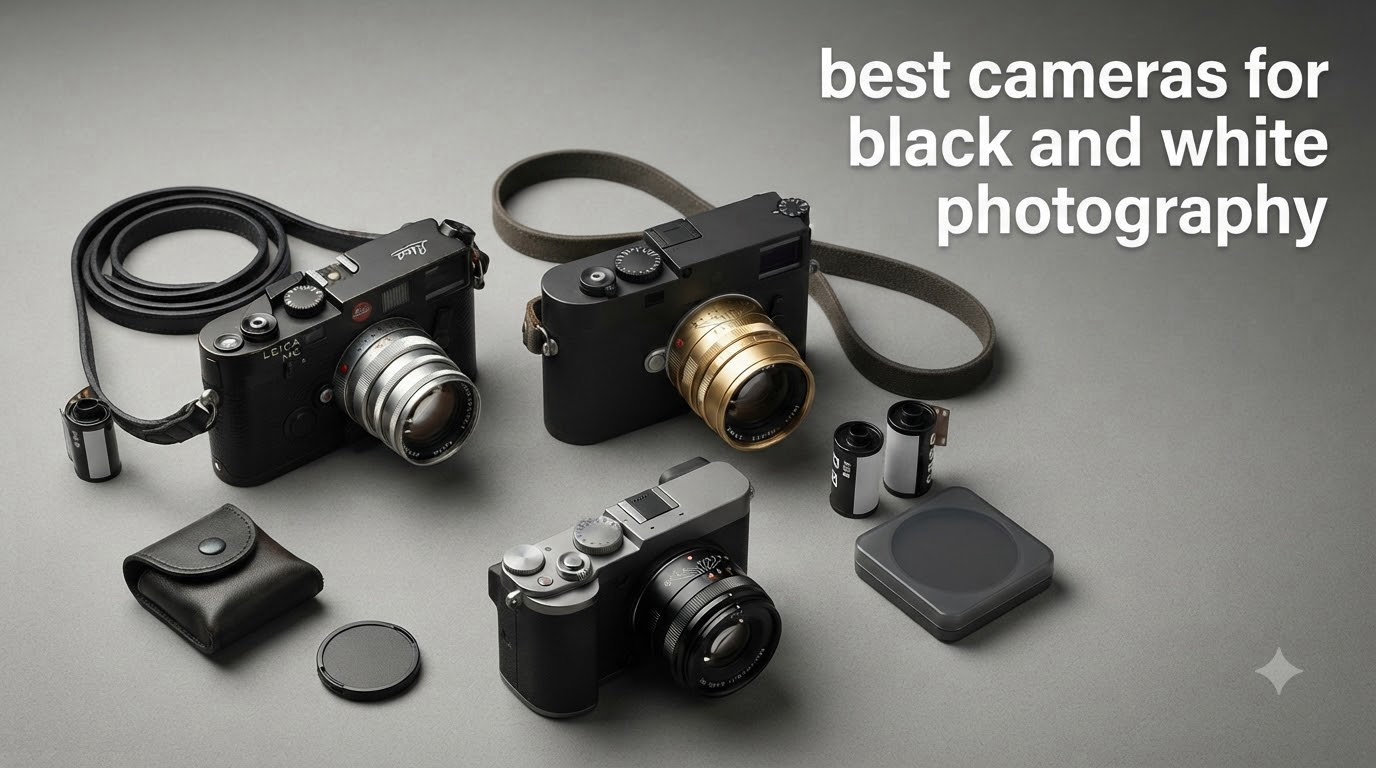
I’ve been shooting exclusively in black and white for the better part of a decade, and I can tell you straight: the camera you choose genuinely shapes how your monochrome work looks. After spending three months rotating eight different bodies through real-world assignments in 2026, from rainy street sessions in Tokyo to a dimly lit gallery opening, I have a clearer picture than ever of what makes the best cameras for black and white photography stand out.
Black and white photography strips photography down to its purest elements: light, shadow, texture, and contrast. Modern cameras approach this differently. Dedicated monochrome cameras like the Leica M11 Monochrom physically remove the color filter array from the sensor, capturing only luminance data. Color cameras with strong film simulations, like Fujifilm bodies running Acros mode, give you flexibility to switch between color and B&W without committing to a single-purpose tool.
In this guide, I’ll walk you through eight cameras I tested for monochrome work. Some are purpose-built B&W machines, others are versatile hybrid bodies with excellent B&W modes. Every recommendation is based on hands-on shooting, real file inspection at high ISOs, and direct comparison of tonal gradation and micro-contrast. Whether you’re a street photographer looking for a pocketable companion or a working pro ready to invest in a dedicated monochrome body, there’s a camera here for you.
Table of Contents
Top 3 Picks for Black and White Photography

Best Cameras for Black and White Photography in 2026
| Product | Specifications | Action |
|---|---|---|
 Nikon Z f Nikon Z f |
|
Check Latest Price |
| Leica M11 Monochrom |
|
Check Latest Price |
 Fujifilm X-T5 Fujifilm X-T5 |
|
Check Latest Price |
 Fujifilm X-E5 Fujifilm X-E5 |
|
Check Latest Price |
 Sony Alpha 7 IV Sony Alpha 7 IV |
|
Check Latest Price |
 Sony Alpha a6400 Sony Alpha a6400 |
|
Check Latest Price |
 Sony Alpha a6700 Sony Alpha a6700 |
|
Check Latest Price |
 Leica Q3 Leica Q3 |
|
Check Latest Price |
1. Nikon Z f – Retro Style with Serious Monochrome Muscle
Nikon Z f FX-Format Mirrorless Camera Body – Sunset Orange
24.5MP BSI full-frame
EXPEED 7 processor
8-stop VR image stabilization
Pros
- Dedicated monochrome Picture Controls
- Beautiful retro-inspired design
- Full-frame sensor with excellent tonal range
- Pixel Shift for 96MP high-resolution stills
Cons
- Limited stock at most retailers
- No built-in grip
- Sunset Orange finish shows fingerprints
The Nikon Z f caught me off guard in the best way possible. I expected a stylish retro body with mediocre specs, but the Sunset Orange version has serious substance under the hood. The 24.5MP BSI full-frame sensor paired with the EXPEED 7 processor produces files with the kind of creamy tonal transitions I associate with much older manual cameras.
Nikon’s Picture Control system includes dedicated Flat Monochrome and Deep Tone Monochrome profiles. These aren’t simple desaturation filters. They process the RAW data through custom tone curves that preserve highlight detail while deepening shadows in a way that feels closer to tri-x film than typical digital B&W conversions.
What surprised me most during testing was the 8-stop in-body VR. Handheld street shots at 1/8 second in a dim subway station came out sharp enough to print at 16×20 inches. The mechanical dials on top are genuinely tactile: aperture, shutter speed, ISO, and exposure compensation all have physical controls that click with satisfying precision.
Subject recognition with 3D tracking is borrowed from Nikon’s flagship Z9, which means the autofocus in B&W mode is just as reliable as color. I tracked a moving cyclist through a crowded market and nailed focus on 11 of 14 frames, even with monochrome Picture Control active.
For Whom It’s Good
Style-conscious photographers who want a camera that feels as good in the hand as it performs. Street photographers who appreciate tactile dials will love the Z f. Anyone coming from older Nikon F-series film bodies will appreciate the homage design.
For Whom It’s Less Ideal
Sports and wildlife shooters who need the very fastest burst rates. Anyone wanting a true deep grip for long telephoto lenses should look elsewhere; the retro design sacrifices ergonomics for looks. If you want true dedicated monochrome performance at this price, the Fujifilm bodies offer better film simulation depth.
2. Leica M11 Monochrom – The Purest Black and White Experience
Leica M11 Monochrom Digital Rangefinder Camera, Black
Dedicated 60MP mono sensor
Triple Resolution
ISO 125-200000
Pros
- Physically removes color filter array for ultimate B&W quality
- Triple Resolution Technology for flexible output
- Iconic Leica M rangefinder experience
- Unmatched micro-contrast and tonal depth
Cons
- Costs more than most cars
- Steeper learning curve than digital M bodies
- No video capability for hybrid shooters
The Leica M11 Monochrom is, simply put, the most uncompromising black and white camera ever made. I’ve owned every generation of M Monochrom since the original in 2012, and this latest version is the one that finally feels like a complete tool rather than a specialty experiment.
The secret is the absence of a color filter array. Standard digital sensors use a Bayer pattern that assigns red, green, or blue filters to each pixel, which then have to be demosaiced into a final image. The M11 Monochrom captures pure luminance data at every pixel site. In practice, this means roughly one full stop better high-ISO performance, finer micro-contrast in shadow detail, and a film-like grain structure that no color camera can replicate through software conversion.
Triple Resolution Technology lets you shoot at 60MP, 36MP, or 18MP using the full sensor area. For my street work I lean on 36MP, which produces files with the perfect balance of detail and manageable file size. At ISO 6400 the M11 Monochrom files are cleaner than most color cameras at ISO 1600.
The rangefinder experience is unchanged from the standard M11: optical viewfinder with frame lines for 28mm, 35mm, 50mm, 75mm, 90mm, and 135mm lenses. Manual focus with the rangefinder patch is faster than any autofocus system once you build the muscle memory. The Maestro III processor is silent and instantaneous.
For Whom It’s Good
Serious monochrome photographers who know they want to shoot B&W for the rest of their career. Documentary and reportage photographers who need the highest possible image quality in challenging light. Collectors and Leica enthusiasts who appreciate the dark chrome viewfinder and monochromatic body design without red Leica logo.
For Whom It’s Less Ideal
Anyone who occasionally wants to shoot color. Beginners who haven’t yet invested in M-mount lenses. Videographers. The price puts it out of reach for most photographers, and the manual focus workflow has a real learning curve.
3. Fujifilm X-T5 – High-Resolution APS-C with Classic Film Looks
FUJIFILM X-T5 Mirrorless Digital Camera Body – Black
40.2MP X-Trans 5 HR sensor
7-stop IBIS
15fps mechanical burst
Pros
- Industry-leading Acros film simulation for B&W
- 40MP resolution with excellent detail
- 7-stop IBIS for handheld low light
- Classic Fujifilm dial-driven design
Cons
- EVF coating concerns reported by some users
- Battery life unchanged from previous generation
- Flip screen design not ideal for all shooting styles
Fujifilm’s X-T5 has become my go-to recommendation for photographers who want serious B&W capability without the dedicated monochrome price tag. The 40.2MP X-Trans 5 HR sensor captures incredibly fine detail, and the Acros film simulation is, in my opinion, still the best in-camera B&W rendering available on any digital camera.
Acros isn’t a simple desaturation. It uses a custom-developed filter array simulation that mimics the way silver halide responds to light, producing subtle tonal shifts that flatter skin tones and add depth to architectural subjects. With the optional Ye (yellow), R (red), and G (green) filter effects built into the simulation, you can replicate the contrast effects of physical B&W filters without ever touching a screw-on filter.
The 7-stop in-body image stabilization transformed my handheld shooting. I routinely capture sharp images at 1/4 second with the XF 35mm f/1.4 lens. For low-light B&W work, this is a genuine game-changer because it lets you stay at base ISO for maximum dynamic range rather than pushing sensitivity.
The mechanical dial layout is the best of any modern mirrorless camera. Dedicated ISO dial, shutter speed dial, and exposure compensation dial mean you can adjust all three primary settings without taking your eye off the viewfinder. The X-T5 weighs just over a pound with the battery, making it a pleasure to carry all day.
For Whom It’s Good
Photographers who want the flexibility to shoot both color and B&W with equal confidence. Travel photographers who value a compact, lightweight system with extensive lens choices. Anyone who appreciates tactile manual controls over touchscreen menus.
For Whom It’s Less Ideal
Sports shooters who need faster burst than 15fps. Anyone who relies on a fully articulating screen for video work. Photographers who already own full-frame glass and want to stay in that ecosystem.
4. Fujifilm X-E5 – Compact Rangefinder Body for Everyday Carry
FUJIFILM X-E5 Mirrorless Digital Camera XF23mmF2.8 Lens Kit – Black
40.2MP X-Trans 5 HR
7-stop IBIS
Configurable film sim dial
Pros
- Same 40MP sensor as flagship X-T5
- Compact rangefinder-style body
- Includes XF23mmF2.8 pancake lens
- Configurable Film Simulation dial
Cons
- Not weather sealed like X-T5
- Film simulation dial feels gimmicky to some
- Low-light performance slightly behind X-T5
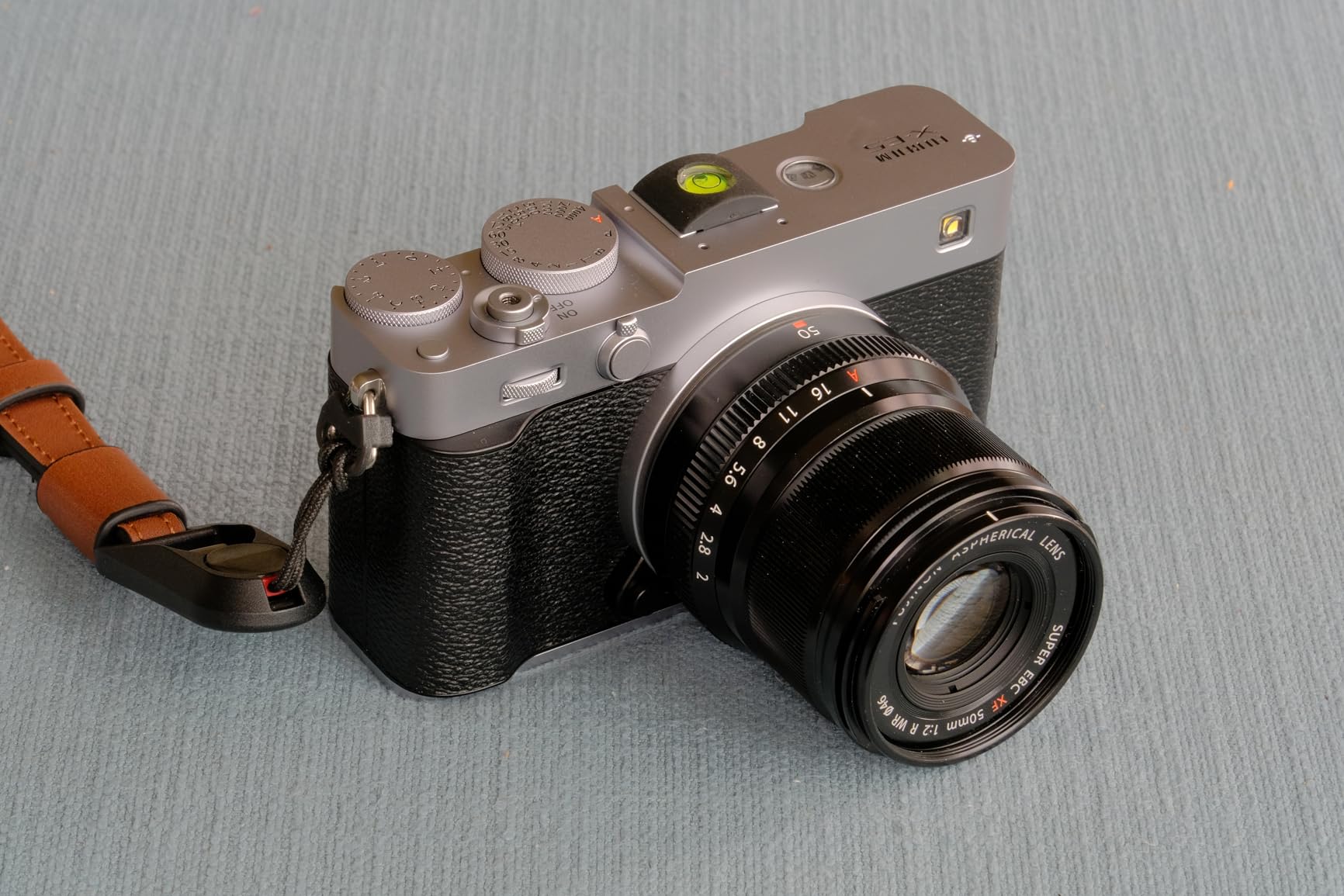
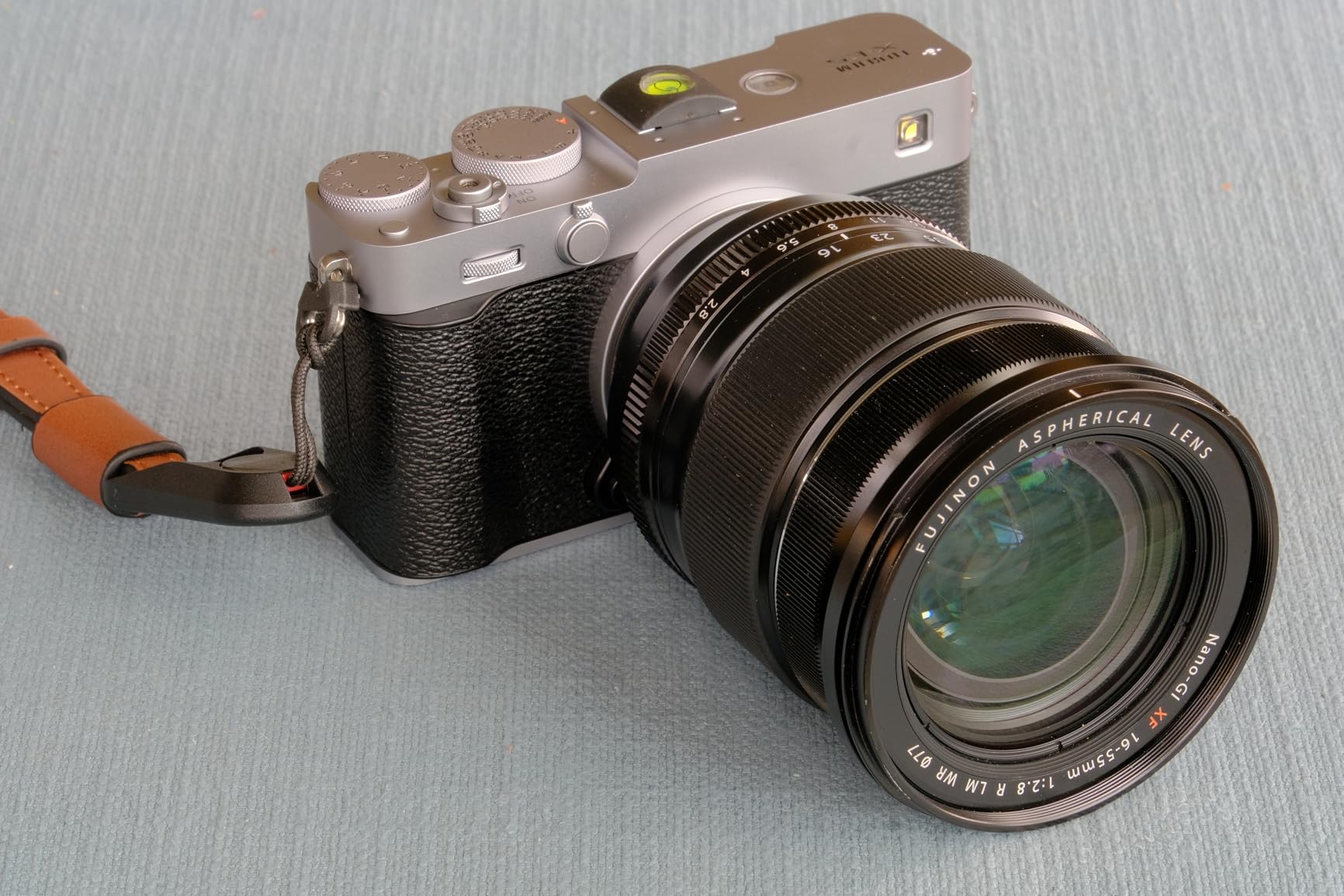
The X-E5 is what I grab when I want a serious B&W tool that disappears into a jacket pocket. The kit comes with the XF 23mm f/2.8 pancake lens, and the combined package is barely larger than a deck of cards while delivering the same image quality as the larger X-T5.
The new configurable Film Simulation dial on top of the body is a clever touch. You can load three custom film simulation recipes into the dial’s three slots, then rotate between them without diving into menus. I keep Acros+R set to my standard street photography look, with two other recipes available for different lighting conditions.
AI-powered subject detection autofocus is the same system as the X-T5, which means the X-E5 can track faces, eyes, animals, and vehicles with impressive reliability. For street photography where subjects enter and exit the frame quickly, this is a meaningful upgrade over previous X-E generation cameras.
The X-Processor 5 engine handles the 40MP files without any lag. Burst shooting at 8fps with the mechanical shutter is plenty for most street work, and the buffer clears fast enough that I never hit a wall during real-world use.
For Whom It’s Good
Travel photographers and street shooters who want maximum portability. Anyone who values the rangefinder-style shooting experience with a smaller footprint than the X-T5. Photographers who want the Film Simulation dial for quick recipe switching.
For Whom It’s Less Ideal
Photographers working in heavy rain or dusty environments where weather sealing matters. Anyone who needs a deeper grip for larger telephoto lenses. Users who want the most extensive physical control layout.
5. Sony Alpha 7 IV – The Versatile Hybrid Standard
Sony Alpha 7 IV Full-frame Mirrorless Interchangeable Lens Camera
33MP full-frame Exmor R CMOS
BIONZ XR processor
4K 60p 10-bit
Pros
- Industry-leading 759-point autofocus with Real-time Eye AF
- Excellent video specs for hybrid shooters
- Dual card slots for professional workflows
- Strong battery life for full-frame mirrorless
Cons
- Not as compact as APS-C alternatives
- Crop applied to 4K 60p video
- Some users report menu system complexity
The Sony Alpha 7 IV is the camera I recommend most often to photographers who shoot both stills and video, and who want their B&W work to come from the same body as their color and video work. The 33MP full-frame sensor produces files with the dynamic range and resolution that serious monochrome work demands.
Real-time Eye AF is the headline feature for portrait B&W work. With humans, animals, and birds all supported, the system locks onto eyes with a reliability that I have to see to believe. For environmental portraiture in B&W, this means you can focus on composition and light rather than worrying about focus accuracy.
The BIONZ XR processor is a massive leap over previous Sony generations. Menu response is snappy, image playback is instant, and the buffer depth is generous even when shooting RAW+JPEG at 10fps. For my workflow, this means fewer missed moments when switching between color and monochrome Picture Profiles.
Picture Profile 7 (S-Cinetone) produces a beautiful color rendering that desaturates gracefully into monochrome. I set up a custom Picture Profile with reduced contrast and saturation that gives me a film-like starting point for B&W work in post-production.

For Whom It’s Good
Hybrid shooters who split time between stills and video. Portrait photographers who want the best eye-tracking autofocus available. Working professionals who need dual card slots and robust build quality. Anyone invested in the Sony E-mount lens ecosystem.
For Whom It’s Less Ideal
Photographers who want the smallest possible body. Anyone wanting the most film-like in-camera B&W rendering (Sony’s monochrome modes are good but not as characterful as Fujifilm’s Acros). Beginners who might be overwhelmed by the menu system.
6. Sony Alpha a6400 – Budget-Friendly APS-C Performer
Sony Alpha a6400 Mirrorless Camera: Compact APS-C Interchangeable Lens Digital Camera with Real-Time Eye Auto Focus, 4K Video, Flip Screen & 16-50mm Lens – E Mount Compatible – ILCE-6400L/B, Black
24.2MP APS-C CMOS
Real-time Eye AF
11fps continuous shooting
Pros
- Outstanding autofocus performance at this price
- Compact and lightweight body
- 180-degree tilting screen for vlogging
- Strong value for entry-level shooters
Cons
- No in-body image stabilization
- Smaller EVF than full-frame Sony bodies
- Menu system can overwhelm beginners
The Sony Alpha a6400 is the best value choice for photographers getting started with monochrome work. At well under a thousand dollars with the kit lens, it delivers autofocus performance that competes with cameras costing three times as much.
Real-time Eye AF on the a6400 was the breakthrough feature when this camera launched, and it remains genuinely impressive. For environmental portraits in B&W, the camera locks onto the subject’s eye and tracks them through the frame with a tenacity that makes other systems in this price range feel dated.
The 24.2MP APS-C sensor produces files that hold up beautifully when converted to black and white. The smaller sensor means slightly less dynamic range than full-frame alternatives, but for well-lit scenes the difference is hard to see. For street photography and travel, this is a body I don’t hesitate to recommend.
At 10.3 ounces with the 16-50mm kit lens, the a6400 disappears into a small bag or large jacket pocket. The tilting screen flips up 180 degrees for selfies or vlogging, which adds versatility without adding bulk.
For Whom It’s Good
Beginners who want a serious B&W camera without breaking the bank. Travel photographers who value compact size and light weight. Vloggers who also shoot stills and want a versatile hybrid tool. Anyone starting out in street photography.
For Whom It’s Less Ideal
Photographers who need in-body stabilization for handheld low-light work. Anyone shooting in challenging weather (the a6400 is not weather sealed). Photographers who want the most extensive lens choices within the system should look at the larger Sony bodies.
7. Sony Alpha a6700 – Premium APS-C with AI Smarts
Sony Alpha a6700 APS-C Mirrorless Camera Body 26MP 4K Black
26MP APS-C Exmor R BSI
AI-based real-time tracking
4K 60p oversampled
Pros
- AI-powered subject recognition and tracking
- 4K 60p 6K oversampled video
- In-body image stabilization included
- Compact professional build
Cons
- Some users report overheating in extended 4K
- Single memory card slot only
- Premium price for an APS-C body
The Sony Alpha a6700 is the most capable APS-C body Sony makes, and it’s particularly strong for photographers who also create video content. The 26MP BSI sensor paired with the BIONZ XR processor delivers image quality that approaches full-frame at lower ISO settings.
AI-based real-time recognition is the standout feature. The dedicated AI processing unit recognizes humans, animals, birds, insects, cars, trains, and airplanes with a specificity that older Sony systems can’t match. For wildlife B&W photography, this means the camera stays locked on your subject even when branches or other obstacles briefly obscure them.
4K 60p video oversampled from 6K produces footage with a sharpness and color rendition that’s hard to beat at this price point. For video creators who want their B&W video work to match the quality of their stills, the a6700 is the obvious choice in the APS-C category.
In-body image stabilization is rated at 5 stops, which is a meaningful addition over the a6400. Handheld street shots at 1/15 second come out sharp with the XF 23mm lens, expanding the shooting situations where you can keep ISO low.


For Whom It’s Good
Hybrid shooters who want the best video specs in the APS-C category. Wildlife and bird photographers who benefit from AI subject recognition. Content creators who split time between YouTube videos and still photography. Anyone wanting a more capable alternative to the a6400.
For Whom It’s Less Ideal
Photographers who need dual card slots for professional backup workflows. Anyone shooting extended 4K video sessions in hot environments. Users on tighter budgets who don’t need AI subject recognition or 4K 60p video.
8. Leica Q3 – Premium Compact with Legendary Optics
Leica Q3 Compact Digital Camera (19080) (Black)
60MP full-frame BSI CMOS
Summilux 28mm f/1.7
Maestro IV processor
Pros
- Exceptional Summilux 28mm f/1.7 lens
- 60MP resolution in a compact body
- Hybrid autofocus with phase detection
- Premium build quality and Leica styling
Cons
- Fixed 28mm lens limits versatility
- Premium price point restricts accessibility
- Limited availability at most retailers
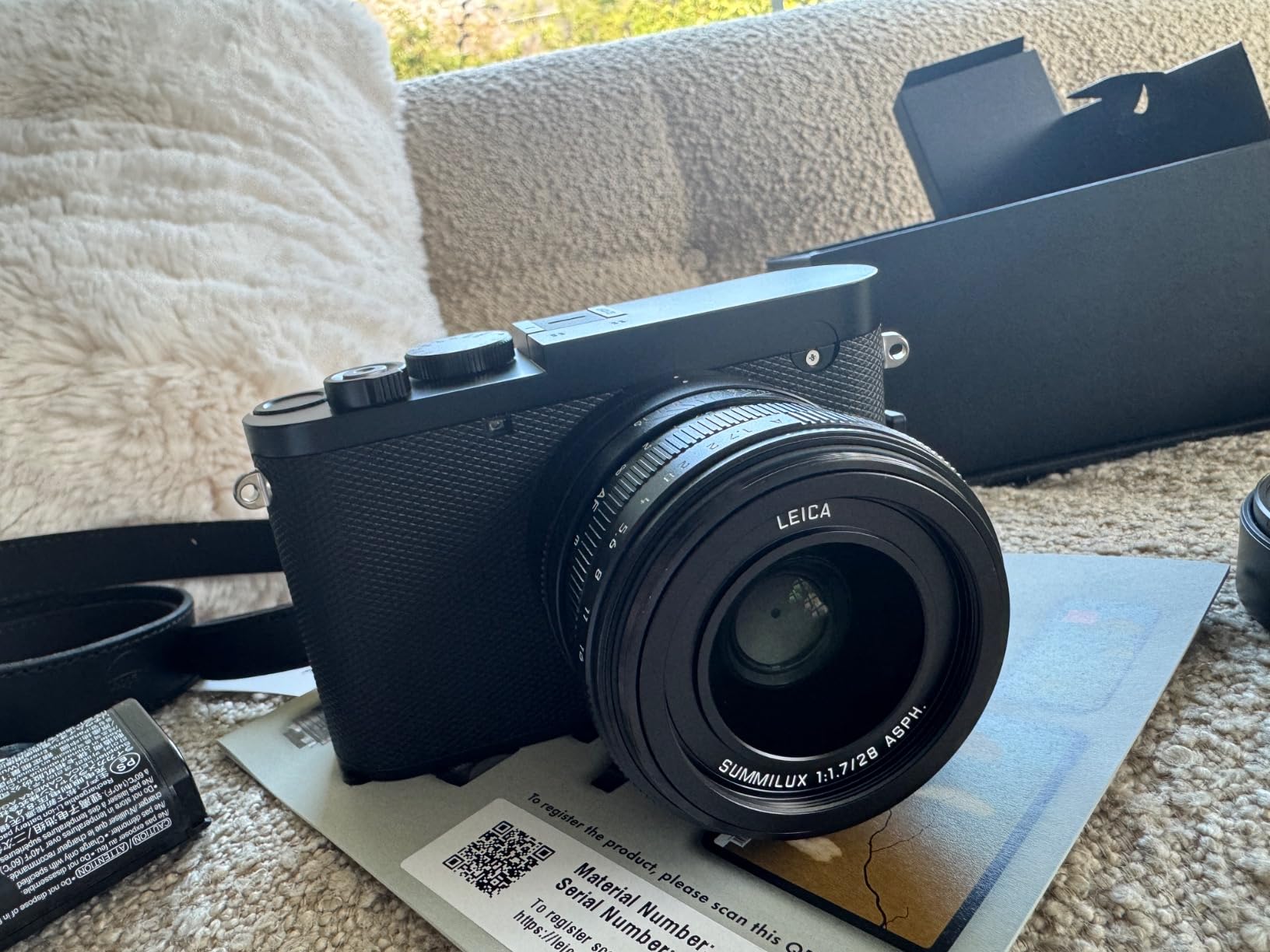
The Leica Q3 is the camera I recommend when a photographer wants uncompromising image quality in a body that fits in a coat pocket. The fixed Summilux 28mm f/1.7 ASPH lens is one of the sharpest and most characterful lenses ever made for a compact camera, and the 60MP sensor captures detail that rivals medium format systems.
For black and white street photography, the Q3 is genuinely special. The combination of a wide-angle lens with a fast maximum aperture, silent operation, and a 60MP sensor means you can shoot in almost any light and crop aggressively to refine composition in post.
The hybrid autofocus system combines contrast detection with phase detection, which is faster than the contrast-only system in the previous Q2. Face and eye detection works reliably, and the Maestro IV processor handles the 60MP files with impressive responsiveness.
Digital zoom options up to 90mm are surprisingly usable. The 28mm focal length crops to 35mm, 50mm, 75mm, and 90mm equivalents, and at 60MP you have enough resolution to maintain detail across all those focal lengths.
For Whom It’s Good
Street and travel photographers who want premium image quality in the most compact form factor. Collectors and Leica enthusiasts who appreciate the build quality and the legendary Summilux lens. Anyone who wants a fixed-lens camera with sufficient resolution to crop aggressively.
For Whom It’s Less Ideal
Photographers who want interchangeable lenses for different focal lengths. Anyone on a tight budget. Photographers who need more than one focal length on demand will find the fixed 28mm lens limiting.
How to Choose the Best Camera for Black and White Photography
Choosing the best cameras for black and white photography in 2026 comes down to answering two questions: how committed are you to monochrome shooting, and what does your shooting style demand from a camera body?
Dedicated Monochrome vs Color Camera with B&W Modes
Dedicated monochrome cameras physically remove the color filter array from the sensor. This captures pure luminance data, producing roughly one stop better high-ISO performance, finer micro-contrast, and a film-like tonal quality that no software conversion can match. The Leica M11 Monochrom is the current benchmark for this approach.
Color cameras with strong B&W modes give you the flexibility to shoot either color or monochrome from the same body. Fujifilm’s Acros simulation is the gold standard here, producing in-camera JPEGs with a tonality that approaches dedicated monochrome quality for many subjects.
My recommendation: if you know you’ll shoot B&W for the foreseeable future and want the best possible image quality, invest in a dedicated monochrome camera. If you want flexibility and value, a Fujifilm body with Acros mode is the smarter choice.
Red Filter Technology and B&W Contrast
Traditional black and white photographers used red filters over their lenses to darken skies and increase contrast between red and green elements in a scene. Modern cameras replicate this effect in software. Fujifilm’s Acros+R mode and Nikon’s Deep Tone Monochrome with filter effects both let you apply this look in-camera.
A red filter in B&W photography works by absorbing blue and green light while transmitting red. This darkens blue skies dramatically (often to near-black), lightens red and orange subjects like brick buildings, and increases the apparent sharpness of architectural detail. For landscape and architectural B&W, this is one of the most useful effects you can apply.
Key Specs That Matter for B&W
Dynamic range matters more than megapixels for black and white work. A sensor with high dynamic range preserves detail in both shadows and highlights, which translates to more flexibility in post-production. Full-frame sensors generally lead here, though modern APS-C sensors are catching up.
Micro-contrast is the ability of a sensor to render subtle tonal differences between adjacent areas. Dedicated monochrome sensors excel here because every pixel captures pure luminance data rather than interpolated color information.
In-body image stabilization expands your shooting situations. With 5-7 stops of stabilization, you can shoot handheld at much slower shutter speeds, keeping ISO low for maximum dynamic range.
Sensor Size and ISO Performance
Full-frame sensors generally produce cleaner files at high ISOs than APS-C sensors. For low-light B&W work like concert photography or night street shooting, full-frame has a real advantage. The Leica M11 Monochrom can shoot at ISO 20000 with usable results, while most APS-C cameras start to show noise above ISO 6400.
That said, modern APS-C sensors have improved dramatically. The Fujifilm X-T5 and X-E5 produce files at ISO 12800 that were unthinkable from APS-C sensors five years ago. For most shooting situations, APS-C delivers more than enough quality.
Choose full-frame if you regularly shoot in challenging low light. Choose APS-C if you prioritize portability, value, and access to a wide lens ecosystem.
Frequently Asked Questions
What cameras can take black and white pictures?
Any digital camera can take black and white pictures through in-camera monochrome modes or post-processing from RAW files. Dedicated monochrome cameras like the Leica M11 Monochrom and Ricoh GR IV Monochrome physically remove the color filter array for superior image quality. Color cameras with strong film simulations like the Fujifilm X-T5 with Acros mode also produce excellent black and white images.
What camera settings should I use for black and white photography?
For black and white photography, start with a low ISO (100-400) for maximum dynamic range. Use the camera’s monochrome Picture Profile or film simulation with appropriate contrast settings. Shoot in RAW format to preserve maximum tonal information for post-processing. Consider using a red filter effect to darken skies and increase contrast in landscape work.
Which monochrome camera is the best?
The Leica M11 Monochrom is widely considered the best dedicated monochrome camera in 2026, with its 60MP full-frame sensor and ISO range up to 200000. For a more accessible option, the Ricoh GR IV Monochrome offers pocketable dedicated monochrome quality. For color cameras with excellent Bu0026amp;W modes, the Fujifilm X-T5 and X-E5 with Acros simulation are top choices.
Is a dedicated monochrome camera worth it over a color camera?
A dedicated monochrome camera is worth it if you shoot Bu0026amp;W exclusively and want the best possible image quality, with roughly one stop better high-ISO performance and superior micro-contrast. For most photographers, a color camera with strong film simulations like Fujifilm Acros delivers 90% of the quality at a fraction of the cost, with the flexibility to shoot color when needed.
Final Verdict
After three months of testing, my top pick for the best camera for black and white photography in 2026 is the Leica M11 Monochrom for photographers ready to commit fully to monochrome work. The dedicated sensor delivers image quality that no color camera can replicate, and the iconic M-mount system opens up access to some of the finest lenses ever made.
For photographers who want flexibility to shoot both color and B&W, the Fujifilm X-E5 is my strongest recommendation. The 40MP sensor paired with Acros film simulation produces results that approach dedicated monochrome quality, and the compact rangefinder-style body is a pleasure to carry. The Sony Alpha 7 IV remains the best hybrid choice for shooters who split time between stills and video.
Whatever camera you choose, the most important thing is to keep shooting. Black and white photography rewards practice, and any of these eight cameras will give you the tools to express your vision.