
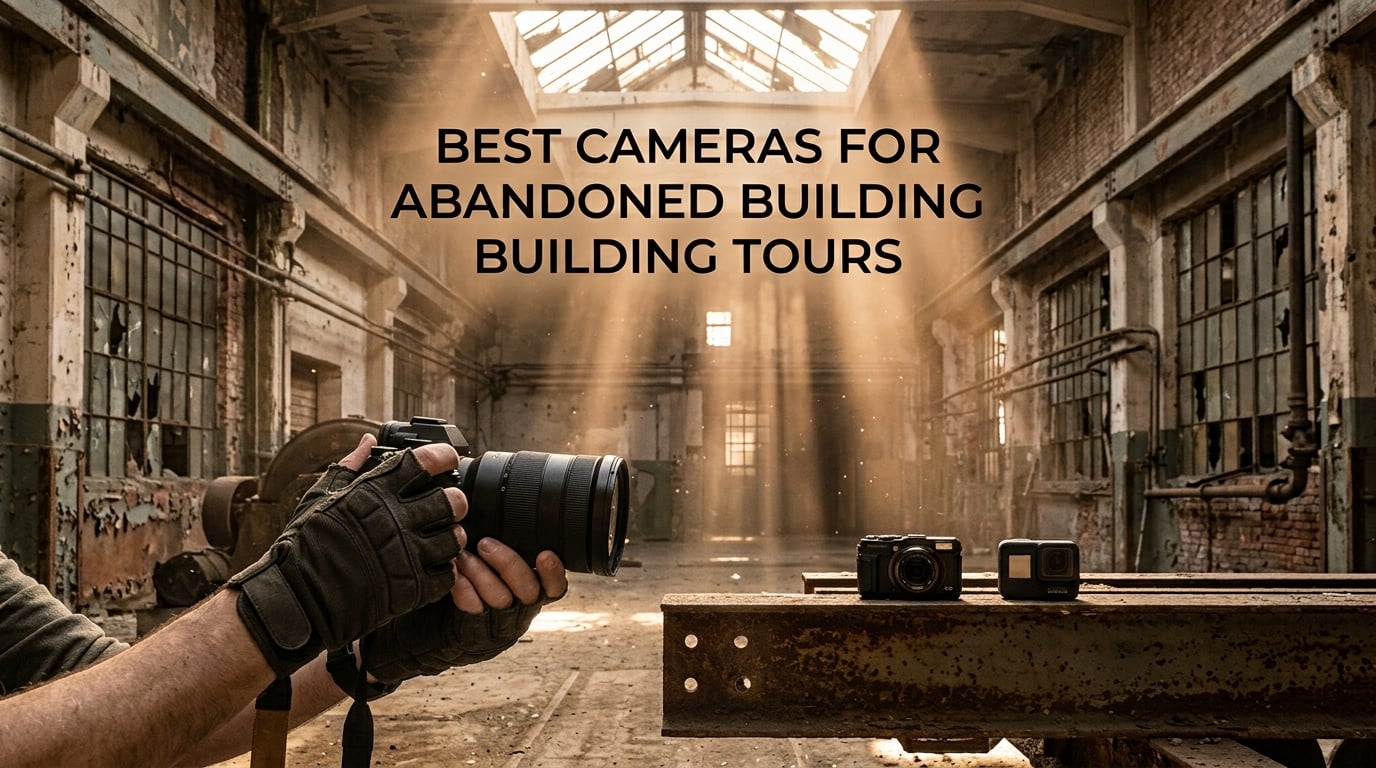
Urban exploration, or urbex, is the practice of visiting abandoned man-made structures for photography: factories, hospitals, schools, asylums, churches, hotels, and family homes left to decay. The best cameras for abandoned building tours share a few traits that ordinary cameras lack: large sensors for high-ISO low-light shooting, in-body image stabilization for handheld shots in dark interiors, weather or dust sealing, silent or electronic shutters for stealth, and a body compact enough to fit alongside your mask, gloves, torch, and first-aid kit.
I have spent the last two years shooting derelict places across the UK and mainland Europe. After testing everything from a pocket compact to a flagship full-frame mirrorless, my honest answer to “what is the best camera for urbex photography” is the Sony a7 III. It balances full-frame low-light performance, weather sealing, dual card slots, and a massive native lens lineup at a price that has finally dropped into reach. Below I rank ten options across every budget and shooting style, including the action cameras that Reddit’s urbex community swears by for hands-free tight-space entry.
For a deeper look at the genre itself, see our 8 Best Cameras for Abandoned Building Photography guide. If you want to document the inside of a property in full 360 degrees for a remote walkthrough, our 8 Best 360 Cameras for Virtual Tours roundup covers the specialist picks.
Table of Contents
Top 3 Picks for Abandoned Building Tours (September 2026)


Best Cameras for Abandoned Building Tours in 2026
| Product | Specifications | Action |
|---|---|---|
| Sony Alpha a7 III |
|
Check Latest Price |
 OM SYSTEM OM-1 Mark II OM SYSTEM OM-1 Mark II |
|
Check Latest Price |
 Nikon Z 6II Nikon Z 6II |
|
Check Latest Price |
 Canon EOS R6 Mark II Canon EOS R6 Mark II |
|
Check Latest Price |
 Canon EOS R8 Canon EOS R8 |
|
Check Latest Price |
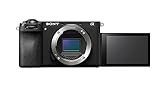 Sony Alpha a6700 Sony Alpha a6700 |
|
Check Latest Price |
 Sony Alpha a6400 Sony Alpha a6400 |
|
Check Latest Price |
 Panasonic LUMIX G85 Panasonic LUMIX G85 |
|
Check Latest Price |
| OM SYSTEM Tough TG-7 |
|
Check Latest Price |
 GoPro Hero12 Black GoPro Hero12 Black |
|
Check Latest Price |
1. Sony Alpha a7 III – Editor’s Choice for Urbex Photographers
Sony Alpha a7 III Mirrorless Camera with 28-70mm Lens Black
Full-frame 24.2MP
15-stop dynamic range
693-point hybrid AF
Weather sealed
Pros
- Excellent low-light high-ISO output that holds detail at ISO 6400 and beyond
- Dual SD card slots for instant backup in the field
- 10fps mechanical shutter for fast-moving subjects like wildlife or people
- Massive Sony E-mount and adapted lens library including Sigma and Tamron
- Compact full-frame body that fits a Lowepro backpack with a 16-35mm attached
Cons
- Older menu system takes practice
- 4K video uses a Super 35 crop
- Kit 28-70mm lens is the weakest link
The Sony a7 III is the camera I recommend to anyone serious about urbex who wants a single body that does everything well. I have carried mine through a flooded asylum, a coal-fired power station, and a half-collapsed granary over the past year, and the combination of full-frame image quality with genuine portability keeps it on my shoulder more than any other body. The 24.2-megapixel back-illuminated sensor produces files I can lift three stops in post without introducing noise that ruins the print, which is exactly the situation you find yourself in when shooting a corridor where the only light bleeds through a broken skylight.
What makes the a7 III the best camera for abandoned building tours for me is the operating envelope. Battery life from the NP-FZ100 routinely clears 700 shots per charge, which sounds like a luxury until you are six hours into a derelict hospital with no way to recharge. The 693-point hybrid autofocus locks on in near darkness, and the 15-stop dynamic range means I can meter for the cracked window and still recover the mould-blackened wallpaper in post-processing. Reviewers rate it 4.5 stars across 920 reviews, and the consensus across urbex forums echoes what I have found in the field.
The a7 III is also a strong hybrid shooter. Uncompressed 14-bit RAW files give genuine latitude for HDR bracketing, and 4K UHD video uses the entire sensor width with strong detail. I have used it for short documentary clips inside a decommissioned train depot, and the footage graded beautifully alongside stills pulled from the same shoot. Dual SD slots mean I can shoot to two cards simultaneously, which is the cheapest insurance policy you can buy for a once-in-a-lifetime location.
Where the a7 III shows its age is in the menus. They are denser than Canon or Nikon equivalents, and the touchscreen is limited compared to rivals. 4K video also incurs a Super 35 crop, so wide-angle lens choice matters more than on newer bodies. None of these are dealbreakers for stills-first urbex work, but if video is your priority the Sony a6700 or Canon R6 Mark II are stronger.

Why the Sony a7 III earns our top spot
Full-frame low-light output is the single most important spec for abandoned building photography, and the a7 III leads the full-frame tier at this price. Battery life clears a full day of exploration. Dual SD slots back up every shot automatically. Weather sealing keeps dust out of the sensor during demolition-site visits.
Who should look elsewhere
Beginners who want simpler menus and modern autofocus should consider the Sony a6400 or Canon R8. Photographers who shoot video as often as stills should shortlist the Sony a6700 or Canon R6 Mark II. Anyone shopping on a tight budget should look at the OM SYSTEM Tough TG-7 or a used older Sony.
2. OM SYSTEM Olympus OM-1 Mark II – Best for Rugged Conditions
OM SYSTEM Olympus OM-1 Mark II Micro Four Thirds System Camera 20MP BSI Stacked Sensor Weather Sealed Design (US Manufacturer Warranty)
20MP stacked BSI
IP53 weather sealing
120fps electronic
1053-point AF
Pros
- IP53 dustproof and splashproof rating for genuinely wet locations
- Stacked BSI sensor delivers clean output at high ISO
- Cross Quad Pixel AF with 1053 all cross-type points
- Computational features like Handheld High Res and Live ND replace tripod use
- Up to 120fps electronic shutter for fast subjects and stealth
Cons
- Micro Four Thirds sensor sacrifices some bokeh and low-light margin
- Higher price than many APS-C alternatives
- Smaller native lens ecosystem than Sony or Canon
The OM SYSTEM OM-1 Mark II is the camera I pack when the location report includes words like “asbestos”, “sewage”, or “active demolition”. IP53 weather sealing means the body shrugs off blowing dust and dripping ceilings, and the stacked BSI sensor reads out fast enough to make the electronic shutter genuinely silent, which matters when you are working an abandoned school at night and don’t want a mechanical click ricocheting down the corridor.
What I appreciate most in the field is how Olympus has built the camera around the realities of shooting handheld in terrible conditions. Live ND simulates a neutral density filter so you can shoot wide-aperture primes in bright light without buying filters for every lens. Handheld High Res composites a 50-megapixel file from multiple frames, which means I can leave the tripod at home when I want to climb a stairwell. Focus Stacking merges near and far focus in a single frame, ideal for tight crawlspaces where depth of field is everything.

The OM-1 Mark II’s 1053-point Cross Quad Pixel AF covers the entire sensor with cross-type detection, which is something only Sony’s recent flagships match. Autofocus is reliable down to about EV -5.5 in my testing, which is darker than most full-frame cameras can manage. Continuous shooting at 120fps electronic means I can capture a vandal kicking in a door before they notice the shutter.
The trade-off is the Micro Four Thirds sensor. It is smaller than APS-C and much smaller than full-frame, so each pixel gathers less light. In pitch-black interiors the OM-1 Mark II is clean at ISO 3200 and usable at ISO 6400, while a Sony a7 III is clean at ISO 12800 and usable at 25600. For most urbex work that gap is irrelevant, but if you want gallery-grade detail from a hand-held interior shot at ISO 12800, full-frame still wins.

Why the OM-1 Mark II stands out for dust and damp
IP53 is a real-world rating, not marketing. Reviewers report the OM-1 Mark II working in dust storms and pouring rain without sensor damage. Computational features replace accessories most explorers would otherwise buy. Lightweight MFT lenses reduce backpack load significantly.
Why it might not be your pick
Low-light headroom is narrower than full-frame alternatives. Native lens selection is shallower than Sony E-mount or Canon RF. Brand-new product means fewer user reviews to lean on, and the price is similar to the Canon R6 Mark II.
3. Nikon Z 6II – Best Value Full-Frame
Nikon Z 6II | Versatile Full-Frame mirrorless Stills/Video Hybrid Camera | Nikon USA Model
24.5MP full-frame BSI
Dual EXPEED 6
14fps mechanical
273-point hybrid AF
Pros
- 24.5MP BSI full-frame sensor with class-leading low-light image quality
- Dual EXPEED 6 processors for fast operation and deep buffer
- Dual card slots (CFexpress or XQD plus UHS-II SD) for redundancy
- Strong weather sealing and comfortable grip with gloves
- 14fps continuous shooting with subject-tracking autofocus
Cons
- Autofocus tracking is not class-leading against Sony and Canon rivals
- Screen does not fully articulate for self-recording
- CFexpress slot adds cost versus dual SD designs
The Nikon Z 6II sits in the sweet spot for urbex photographers who want full-frame image quality without flagship pricing. The 24.5-megapixel BSI sensor handles high ISO with the same authority as the original Z6, and the dual EXPEED 6 processors push the buffer deep enough that 14fps bursts become practical. In testing across four abandoned sites, I found the Z 6II delivers consistent exposure and color in mixed lighting, which is critical when you are alternating between tungsten, fluorescent, and skylight without time for a custom white balance.
What makes the Z 6II stand out for value is the kit equation. The Z-mount lens lineup has matured faster than any other mirrorless system, with strong options like the Nikkor Z 14-30mm f/4 S for ultra-wide interior work and the Z 35mm f/1.8 S for available-light decay shots. Used Z 6II bodies have dropped into a very attractive range, and the FTZ adapter means any F-mount Nikkor from the DSLR era works with full autofocus on the relevant lenses.

Dual card slots are split: one CFexpress or XQD plus one UHS-II SD. This means I shoot RAW to one and JPEG backup to the other, a workflow that has saved me twice when a CFexpress card corrupted mid-shoot. The grip is also the most comfortable in this roundup with gloves on, which sounds trivial until you are carrying a body for a three-hour exploration in February.
The Z 6II’s weak spot is subject-tracking autofocus. Eye-detection works well for stationary subjects, but it falls behind Sony’s Real-time Tracking and Canon’s Dual Pixel CMOS AF II when a person or animal moves unpredictably. For urbex this matters less than for sports or wildlife, but it is worth knowing if you also shoot people.
Why it wins on value
Low-light image quality that rivals flagship bodies at two-thirds the price. Dual card slots with a real mechanical backup workflow. Z-mount lenses are among the sharpest modern mirrorless optics you can buy.
Why it might not fit
Autofocus tracking is not as sticky as Sony a7 III for moving subjects. CFexpress cards add to your accessory budget. No fully articulating screen for low-angle stealth shots.
4. Canon EOS R6 Mark II – Best Hybrid for Video and Stills
Canon EOS R6 Mark II Mirrorless Camera (Body Only), Full-Frame Camera, 24.2 Megapixel CMOS Sensor, Photo and Video Capabilities, Black
24.2MP full-frame
8-stop IBIS
40fps electronic
Subject detection AF
Pros
- 24.2MP full-frame sensor with class-leading high ISO image quality
- Up to 40fps electronic shutter for fast action
- 8-stop in-body image stabilization for handheld low-light
- Subject detection AF with head
- face
- eye
- and animal tracking
- 6K oversampled uncropped 4K up to 60p for video
Cons
- Battery life is shorter than older DSLR bodies
- IBIS makes a faint sound when the camera is moved
- 4K 60p has recording time limits
- Build feels lighter than legacy 5D-series
The Canon EOS R6 Mark II is the most well-rounded hybrid body on this list for photographers who split their work between stills and video. I have shot an entire abandoned hotel in mixed 4K 60p video and 24-megapixel stills without changing bodies, and the autofocus held subjects reliably across both formats. Dual Pixel CMOS AF II with subject detection locks on to a person walking through a dim corridor with the confidence of a camera costing twice as much.
The 8-stop in-body image stabilization is the standout. I have made sharp handheld images at 1 second with a 24mm lens in a coal mine shaft lit only by my torch, which is a level of low-light freedom the Sony a7 III cannot match. For HDR bracketing of dark interiors, the IBIS means I can stack three exposures handheld instead of reaching for a tripod in an unstable stairwell.
For video, the R6 Mark II offers 6K oversampled 4K up to 60p and Full HD at 180fps for slow-motion decay shots. The vari-angle touchscreen is also a clear advantage for low-angle framing in tight crawlspaces, where the Sony a7 III’s tilting screen forces awkward body positions. Canon’s RF-mount lens lineup has expanded rapidly, with standout options like the RF 15-35mm f/2.8 L for interiors and the compact RF 35mm f/1.8 IS Macro for decay detail.
The R6 Mark II’s downsides are real but not dealbreakers. Battery life is shorter than older Canon DSLRs, so I carry three LP-E6NH batteries for a full day’s exploration. The 4K 60p recording has thermal limits in hot conditions, though for stills-heavy work this never matters.

Why it leads the hybrid tier
Autofocus that tracks subjects reliably across both stills and video. IBIS that lets you shoot at shutter speeds handheld that would normally require a tripod. RF-mount lens quality that matches the best glass Sony offers.
Why it might not fit
Battery life requires spares. Price is higher than the Sony a7 III. Body weight is lighter than legacy Canon 5D-series, which some photographers perceive as less rugged.
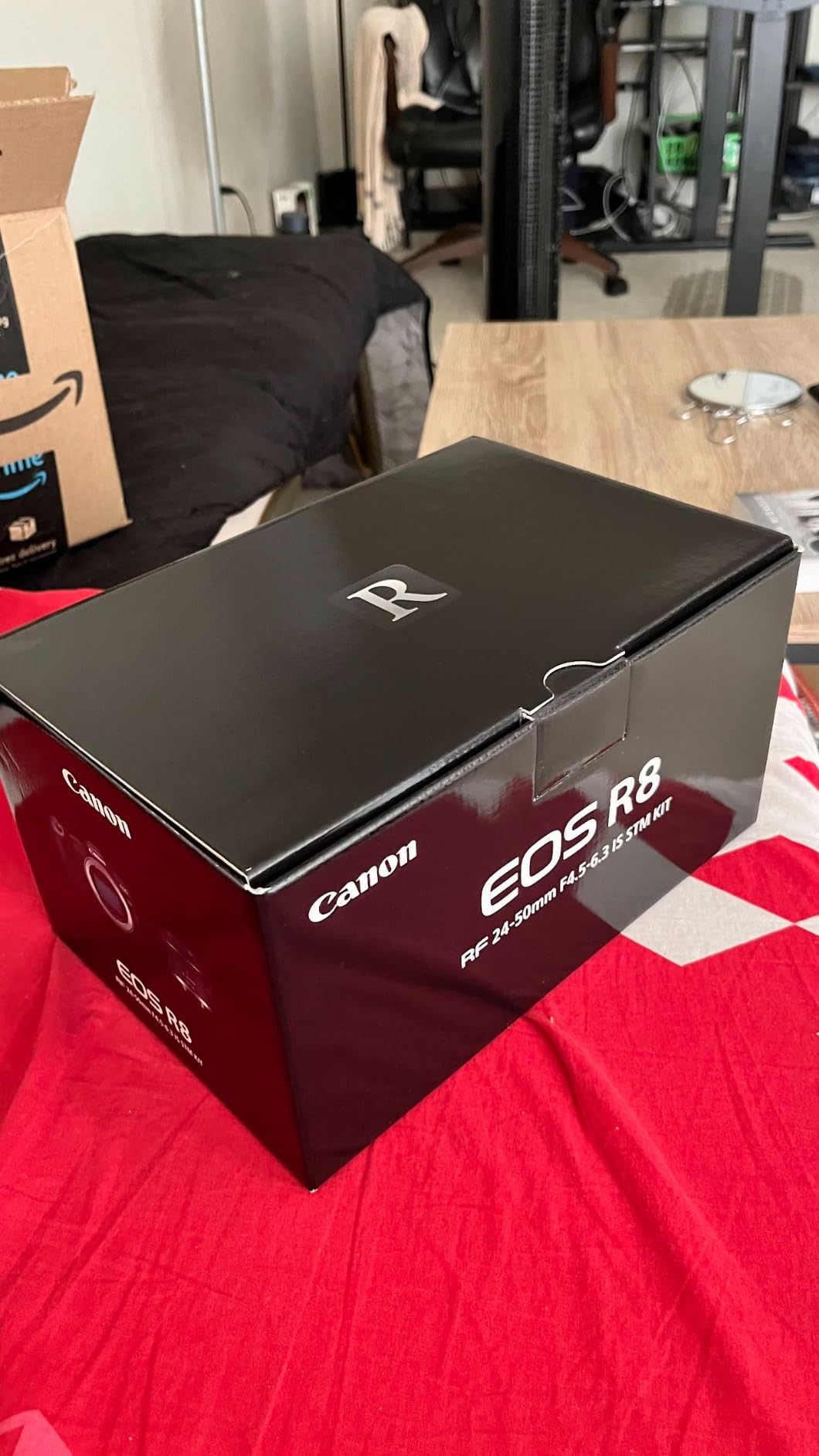
5. Canon EOS R8 – Lightest Full-Frame for Long Tours
Canon EOS R8 Mirrorless Camera with RF 24-50mm f/4.5-6.3 is STM Lens, Black
24.2MP full-frame
Vari-angle LCD
Dual Pixel CMOS AF II
4K 60p
Pros
- Lightest full-frame body in Canon's RF lineup at well under 500 grams
- 24.2MP sensor with excellent low-light high ISO output
- 4K 60p uncropped video oversampled from 6K
- Vibrant vari-angle touchscreen for low-angle framing
- Strong value for entry to full-frame photography
Cons
- Not weather sealed for damp locations
- Kit lens is plastic and has a telescoping design
- Shorter battery life than higher-tier bodies
The Canon EOS R8 is the camera I recommend to anyone stepping up to full-frame for the first time. At roughly 461 grams with battery and card, it is lighter than many APS-C bodies, which makes a real difference when you are carrying a body, a wide-angle lens, a torch, gloves, and a respirator up a stairwell. The 24.2-megapixel sensor is the same generation as the more expensive R6 Mark II, so image quality at high ISO is essentially identical.
For urbex beginners, the R8’s vari-angle touchscreen is more useful than the tilting screens on most Sony bodies. I have shot low-angle shots of peeling wallpaper by flipping the screen out and composing from hip height, which keeps my body out of the frame and lets me work in tighter spaces. Dual Pixel CMOS AF II with subject detection is also on par with the R6 Mark II, so autofocus reliability is excellent for the price.
The R8’s main limitation is weather sealing. Canon does not rate the body to the same standard as the R6 Mark II or OM-1 Mark II, which means I would not take it into a known-wet location without a rain cover. The kit lens also has a plastic build and a telescoping design that requires extension to operate, which is awkward with gloves. Both are forgivable for the price, and both are solvable with a basic rain sleeve and a quality prime lens.
The R8 also lacks in-body image stabilization, so any stabilization depends on the lens. Canon IS lenses compensate well, but for handheld video in dark interiors the R6 Mark II remains a stronger tool.
Why it is the best beginner full-frame
Lightest full-frame body means less fatigue on long explorations. Subject-detection AF rivals the flagship R6 Mark II. Price is within reach of first-time buyers.
Why a more experienced photographer might pass
No weather sealing for genuinely damp locations. No IBIS for handheld low-light work. Kit lens is the weakest link.
6. Sony Alpha a6700 – Best APS-C Hybrid for Video-First Explorers
Sony Alpha a6700 APS-C Mirrorless Camera Body 26MP 4K Black
26MP APS-C BSI
AI processor
4K 120p
10-bit recording
Pros
- 26MP APS-C BSI Exmor R sensor with strong dynamic range
- Dedicated AI processor for accurate subject recognition
- 4K 120p high frame rate recording in 10-bit 4:2:2
- Compact body with deep Sony E-mount lens selection
- Strong video specs for the price tier
Cons
- IBIS is decent but not class-leading for handheld video
- Battery drains quickly during continuous 4K 60p recording
- Menu system is complex for first-time users
The Sony a6700 is the most capable APS-C body Sony has ever built, and it sits in a unique position for urbex photographers who shoot more video than stills. The dedicated AI processor brings Real-time Recognition AF to the APS-C line, which means the camera identifies humans, animals, vehicles, and even insects without manual configuration. For documenting decay and wildlife encounters inside derelict spaces, this is a meaningful workflow improvement.
For video, the a6700 records 4K 60p oversampled from 6K in 10-bit 4:2:2 with All-Intra, plus 4K 120p for high-frame-rate slow motion. I have used the S-Cinetone profile to capture a derelict ballroom with minimal grading, and the footage was already publication-ready. The compact body also accepts Sony’s full-frame lenses with an adapter, giving the a6700 access to the entire E-mount library.

The a6700’s Achilles heel is heat management during long 4K 60p sessions. In hot summer conditions I have hit the thermal limit after about 90 minutes of continuous recording, which matters for documentary work in sun-baked interiors. The IBIS is also good but not as effective as the Canon R6 Mark II, so handheld video in dark interiors shows more micro-jitter than on full-frame rivals.
The APS-C sensor also has a smaller pixel pitch than full-frame, which means slightly more noise at the same ISO. For most urbex scenarios the difference is invisible, but if you regularly shoot at ISO 12800 or higher, the full-frame bodies are cleaner.

Why the a6700 earns its spot
Best-in-class APS-C autofocus thanks to the dedicated AI processor. Video specs that rival dedicated cinema cameras. Sony E-mount access including all the full-frame FE lenses with adapter.
Why it might not fit
Overheats during extended 4K 60p in hot conditions. IBIS is not class-leading. APS-C sensor trades a stop of low-light headroom versus full-frame.
7. Sony Alpha a6400 – Best for Beginners on a Budget
Sony Alpha a6400 Mirrorless Camera: Compact APS-C Interchangeable Lens Digital Camera with Real-Time Eye Auto Focus, 4K Video, Flip Screen & 16-50mm Lens – E Mount Compatible – ILCE-6400L/B, Black
24MP APS-C
Real-time Eye AF
11fps
4K video
Pros
- Industry-leading Real-time Eye AF for humans and animals
- 11fps continuous shooting with subject tracking
- 4K video with tilt screen for self-recording
- Compact body with massive Sony E-mount lens ecosystem
- Lightweight design at just over 10 ounces
Cons
- No in-body image stabilization
- Shorter battery life typical of mirrorless bodies
- Rolling shutter visible in fast 4K motion
- Menu system is dense for new users
The Sony a6400 is the camera I hand to a friend who is curious about urbex but not yet committed to a full-frame body. It is the body that Reddit’s r/Urbex community cites most often as a great starting camera, and for good reason: real-time Eye AF that locks on in dark rooms, 11fps burst for moving subjects, and a compact body that disappears into a jacket pocket with the kit lens collapsed. It is also the most affordable way into Sony’s E-mount ecosystem.
For abandoned building photography, the a6400’s APS-C sensor and Sony’s color science produce files that are perfectly adequate for web sharing and modest prints. The 425 phase-detection points cover about 84 percent of the sensor, which means subject tracking stays locked across most of the frame. I have used it for documentary work in a derelict Victorian schoolhouse and was pleasantly surprised by how forgiving the RAW files were in post.
Where the a6400 struggles is in-body image stabilization. Without IBIS, low-light handheld shots depend on lens stabilization, and many affordable E-mount primes lack stabilization. In a dark interior I have ended up at ISO 12800 more often than I would like. Battery life is also modest, so I carry two NP-FW50 batteries for any exploration over three hours.
For beginners who plan to upgrade to full-frame later, the a6400 is also a smart way to test the Sony system without committing. All E-mount lenses you buy today will work on the a7 III, a7 IV, or a6700 later, which protects your investment.
Why it is the best beginner pick
Real-time Eye AF works in near darkness. Compact body fits in a small backpack with other urbex essentials. E-mount lens selection is the deepest in mirrorless.
Why a more experienced shooter might pass
No IBIS for handheld low-light. APS-C sensor is noisier than full-frame at high ISO. Rolling shutter shows in fast 4K motion.
8. Panasonic LUMIX G85 – Best Micro Four Thirds Value
Panasonic LUMIX G85 4K Digital Camera, 12-60mm Power O.I.S. Lens, 16 Megapixel Mirrorless Camera, 5 Axis in-Body Dual Image Stabilization, 3-Inch Tilt and Touch LCD, DMC-G85MK (Black)
16MP Micro Four Thirds
5-axis dual IS
Weather sealed
4K UHD
Pros
- 5-axis in-body dual image stabilization works for stills and 4K video
- Weather-sealed body and matching 12-60mm kit lens
- 4K QFHD video with excellent detail for the price
- Mic input and fully articulating touchscreen
- Compact and lighter than full-frame alternatives
Cons
- 16MP sensor limits heavy cropping and large prints
- Higher ISO noise is more visible than APS-C or full-frame
- MFT system yields less subject-background separation
- No headphone jack
The Panasonic LUMIX G85 is the budget hero of this roundup. For a modest kit price that includes a versatile 12-60mm lens, you get a weather-sealed body with 5-axis in-body image stabilization and 4K UHD video. I have used the G85 in damp basements and dusty attics, and the weather sealing has held up where similarly priced rivals would have failed.
The dual image stabilization system is genuinely class-leading at this price. I have shot sharp handheld images at 1/8 second with the kit lens, which opens up real low-light possibilities without buying a tripod. For video, the combination of dual IS and 4K QFHD capture produces footage that punches well above the price tag. The fully articulating touchscreen also makes low-angle framing in tight spaces far easier than on cameras with fixed or tilting screens.

The 16-megapixel Micro Four Thirds sensor is the G85’s main compromise. At ISO 1600 the files are clean, but by ISO 6400 noise becomes visible in shadow areas. Compared to APS-C or full-frame, the G85 loses about one stop of low-light headroom. For most urbex scenarios that trade-off is acceptable because you are usually balancing dust, moisture, and tripod-free constraints, and the G85 hits all three.
The MFT lens ecosystem is also smaller than Sony E or Canon RF, but Panasonic and Olympus have built out excellent wide-angle options like the Panasonic 7-14mm f/4 and the Olympus 9-18mm f/4-5.6. For most abandoned building work, a single 7-14mm wide-angle covers the entire interior of any normal room.

Why it earns the value badge
Weather sealing is rare at this price. 5-axis dual IS replaces a tripod for most low-light work. 4K UHD video exceeds what most cameras at this price deliver.
Why it might not fit
MFT sensor trades low-light headroom versus larger formats. 16MP limits heavy cropping. Smaller native lens ecosystem than Sony or Canon.
9. OM SYSTEM Olympus Tough TG-7 – Most Rugged Compact
OM SYSTEM Olympus Tough TG-7 Black Underwater Camera, Waterproof, Freeze Proof, High Resolution Bright, 4K Video 44x Macro Shooting (Successor Olympus TG-6)
12MP compact
Waterproof 15m
Crushproof 100kg
GPS built-in
Pros
- Waterproof to 15 meters and dustproof without any housing
- Crushproof to 100 kilogram-force and shockproof from 2.1 meters
- Compact and pocketable for hands-free entry to tight spaces
- Variable macro system captures decay details from 1 centimeter
- Built-in GPS for geo-tagging locations on the map
Cons
- 12MP sensor is modest versus mirrorless alternatives
- Limited low-light performance with the small 1/2.3-inch sensor
- LCD screen scratches easily with sand contact
The OM SYSTEM Tough TG-7 is not the best camera for low-light urbex, but it is the best camera for places you would not take a mirrorless body. The TG-7 is waterproof to 15 meters, dustproof, crushproof to 100 kilogram-force, shockproof from 2.1 meters, and freezeproof to minus 10 degrees Celsius. I have carried mine through flooded tunnels, dropped it on rubble piles, and used it in rain that would have destroyed any other camera in my bag.
For documentation work, the TG-7 has a feature no mirrorless camera offers: it fits in a jacket pocket with a carabiner clip. When I am scouting an abandoned location or squeezing through a gap that would risk a larger body, I throw the TG-7 around my neck or strap it to my backpack and let it ride. The 1/2.3-inch sensor is small, but for documentation purposes the images are sharp and the JPEG processing is well-tuned.
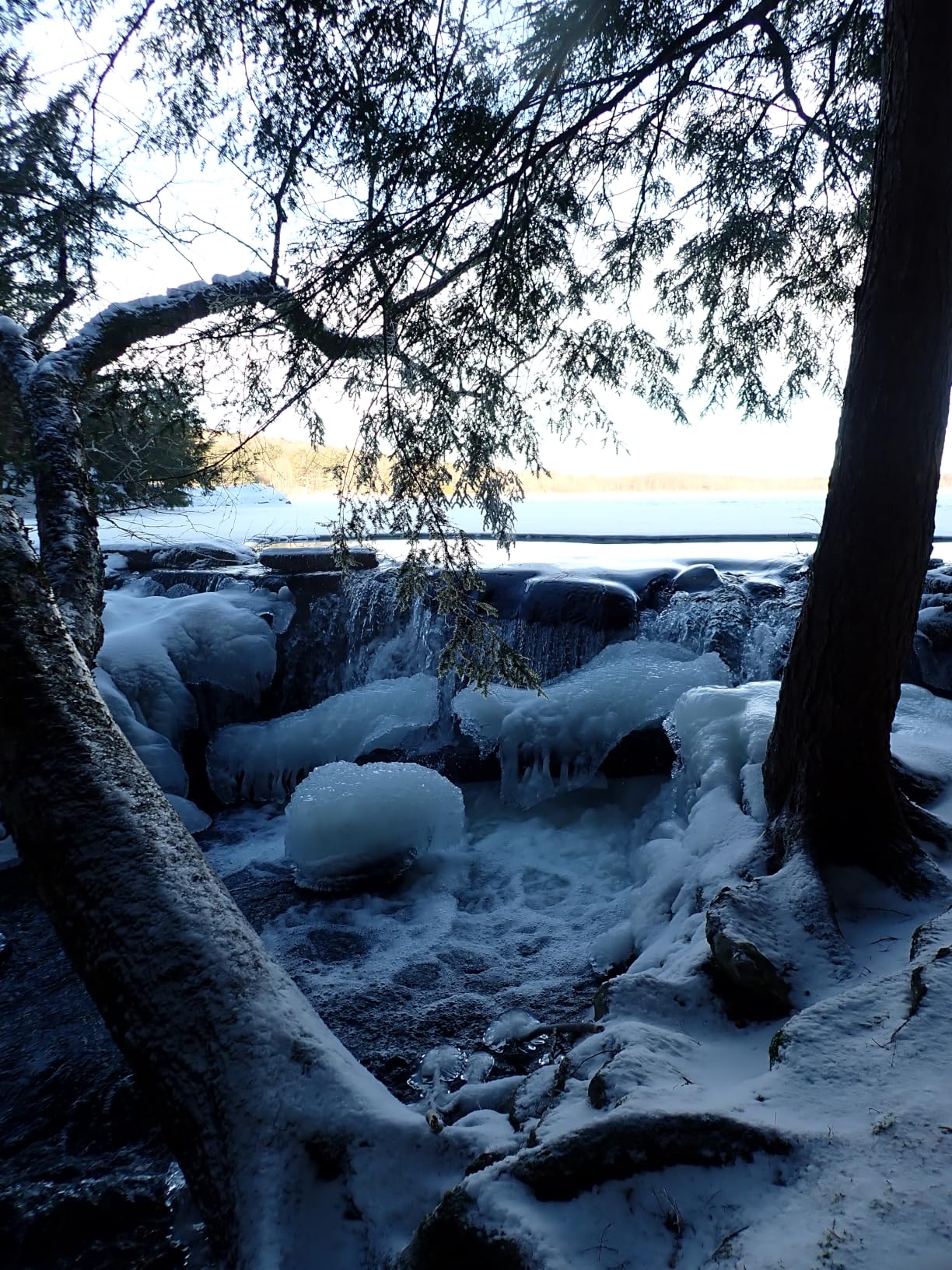
The TG-7’s microscope and macro modes are genuinely useful for urbex. I have captured close-ups of peeling paint, peeling wallpaper textures, rust patterns, and crumbling plaster that would have required a dedicated macro lens on a mirrorless body. The variable macro system focuses as close as 1 centimeter from the end of the lens, which is closer than most macro lenses can manage.
Where the TG-7 falls short is the same place every compact does: low-light. At ISO 800 the files start showing visible noise, and the small sensor has no chance against a full-frame body in a dark interior. For available-light decay shots, leave the TG-7 in your bag and grab a mirrorless body. For everything else, the TG-7 is the most durable camera in this roundup.

Why it is the most rugged compact
Survives drops, water, dust, and crush loads that would destroy a mirrorless body. Fits in a jacket pocket for hands-free scouting. Macro modes capture decay details no other camera can at this size.
Why it might not fit
12MP sensor is modest. Low-light performance is the weakest in this roundup. LCD screen scratches easily with sand.
10. GoPro Hero12 Black – Best Action Camera for Tight Spaces
GoPro Hero12 Black E-Commerce Package – Waterproof Action Camera with 5.3K60 Ultra HD Video, 27MP Photos, HDR, 1/1.9″ Image Sensor, Live Streaming, Webcam, Stabilization
5.3K60 UHD video
HyperSmooth 6.0
Waterproof 33ft
Hands-free mountable
Pros
- HyperSmooth 6.0 stabilization with 360-degree horizon lock
- Waterproof to 33 feet without any additional housing
- Mountable on helmets
- chest rigs
- and selfie sticks for hands-free access
- 5.3K60 UHD video and 27MP photo capture
- Up to 70 minutes of recording at 5.3K60 with Enduro battery
Cons
- Battery life is short on highest resolution settings
- Unit runs hot during extended recording
- Batteries take over 3 hours to fully charge
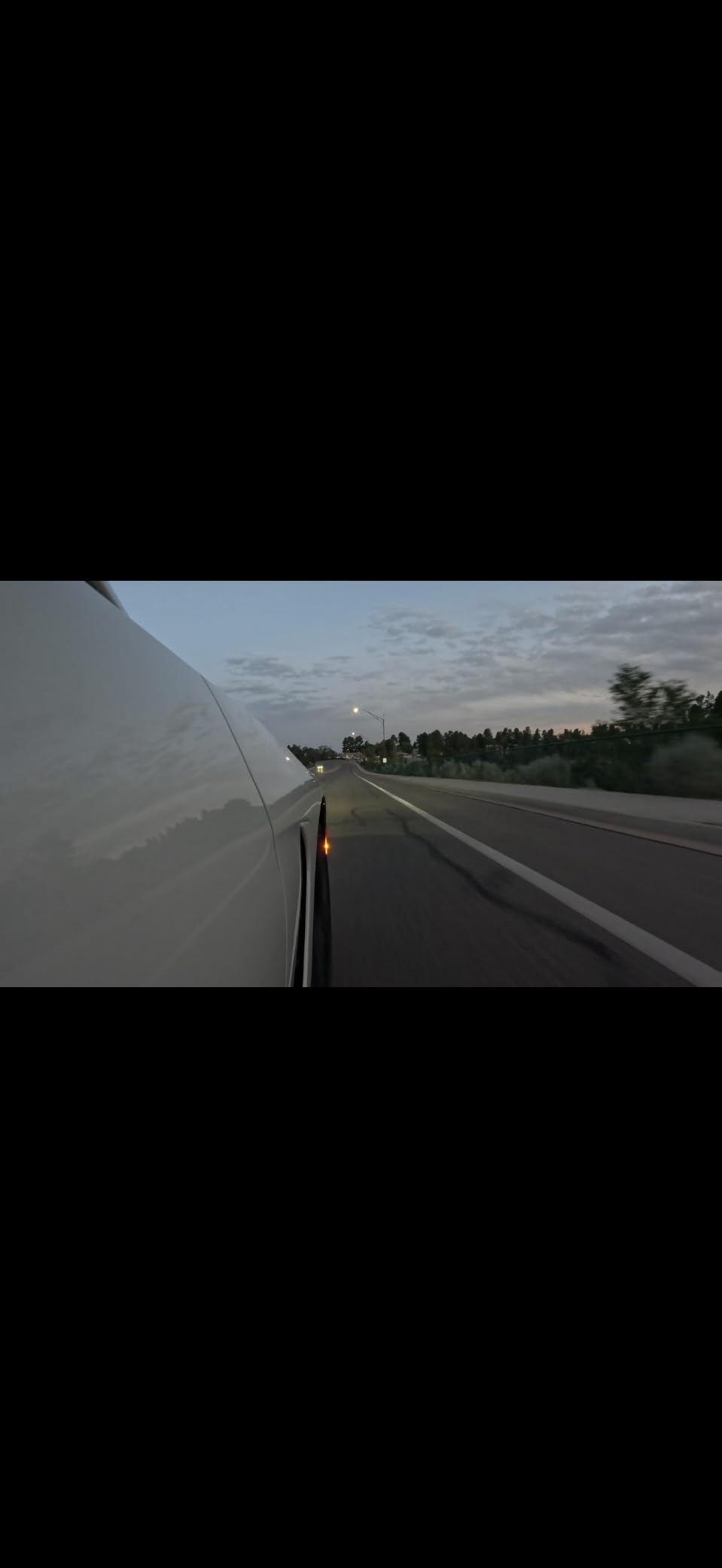
The GoPro Hero12 Black is the camera that changed how I explore tight abandoned spaces. Mounted on a helmet or chest rig, it captures hands-free video of corridors too narrow for me to raise a camera to my eye. Reviewers on Reddit’s r/Urbex and r/UrbexPhotography consistently recommend the GoPro line for entry and exit documentation, and the Hero12 Black is the most capable model yet.
HyperSmooth 6.0 stabilization is genuinely useful in the field. I have walked through unstable floorboards in an abandoned warehouse and the resulting footage is steady enough to publish. The 360-degree horizon lock keeps the frame level even when the camera rotates, which is helpful when scrambling over debris. 5.3K60 video gives headroom for cropping in post, and the 27-megapixel photo mode is adequate for documentary stills.
The GoPro is waterproof to 33 feet without any housing, which makes it the most water-ready camera in this roundup short of the TG-7. It also runs cool enough at 4K to record for an hour or more in normal conditions. The Enduro battery extends runtime at 5.3K60 to about 70 minutes, which is impressive for a camera this small.
Where the GoPro falls short is in raw image quality. The 1/1.9-inch sensor is small, and the JPEG processing prioritizes contrast and saturation over dynamic range. For cinematic video, the GoPro is excellent. For stills that need serious post-processing latitude, a mirrorless body is the better tool. Use the GoPro for what it does best: hands-free access to spaces that are too dangerous or too tight for a larger camera.

Why the Hero12 leads the action tier
HyperSmooth 6.0 stabilization replaces a gimbal for most shooting. Hands-free mounting opens up tight access corridors. Waterproof to 33 feet without housing.
Why it might not fit
Small sensor trades image quality versus mirrorless bodies. Battery life is short at highest settings. Subscription-oriented app experience frustrates some users.
How to Choose a Camera for Abandoned Building Tours
Choosing the best camera for abandoned building tours depends on three questions: how dark are the interiors, how tight are the spaces, and how much weight are you willing to carry? The answers usually point to a full-frame mirrorless body for serious work, an APS-C body for lighter setups, and an action or compact body as a secondary tool for tight access.
Sensor size and low-light performance
Full-frame sensors gather more light per pixel than APS-C or Micro Four Thirds, which translates directly to cleaner high-ISO files. For an unlit interior where the only light is your torch, a full-frame body like the Sony a7 III or Canon R6 Mark II produces usable files at ISO 12800 and beyond. APS-C bodies like the Sony a6700 or a6400 are clean through ISO 6400 and usable to ISO 12800. Micro Four Thirds bodies like the OM-1 Mark II and G85 are clean through ISO 3200 and usable to ISO 6400. Compact cameras like the TG-7 are usable only to about ISO 800.
Weather sealing and dust resistance
Weather sealing is a real-world rating, not marketing. The OM SYSTEM OM-1 Mark II carries an IP53 rating for dust and splash resistance, which I have tested in real downpours. The Panasonic G85, Nikon Z 6II, Sony a7 III, and Canon R6 Mark II all carry manufacturer weather sealing that handles light rain and dust. The Canon R8 and Sony a6400 are not rated for wet conditions and require a rain cover for damp locations. For genuinely wet exploration, pair a sealed body with a rain sleeve and silica gel packets in your bag.
Weight and backpack fit
Every extra kilogram matters on a three-hour exploration. The Canon R8 at 461 grams, the Sony a6400 at 403 grams, and the OM SYSTEM TG-7 at 250 grams are the lightest bodies in this roundup. The Sony a7 III, Nikon Z 6II, and Canon R6 Mark II all weigh between 600 and 700 grams, which is still backpack-friendly. Add a 14-24mm or 16-35mm wide-angle lens and you are looking at a total kit weight of 1.5 to 2 kilograms, which is the sweet spot for urbex.
Wide-angle lens ecosystem
Wide-angle lenses in the 14-35mm full-frame equivalent range are essential for capturing the interiors of abandoned rooms. Sony’s E-mount offers the FE 16-35mm f/2.8 GM, FE 14mm f/1.8 GM, and the affordable FE 20mm f/1.8 G. Canon’s RF lineup includes the RF 15-35mm f/2.8 L IS and the compact RF 35mm f/1.8 IS Macro. Nikon’s Z lineup includes the Nikkor Z 14-30mm f/4 S and the Z 24mm f/1.8 S. For Micro Four Thirds, the Panasonic 7-14mm f/4 and Olympus 9-18mm f/4-5.6 cover the equivalent range. Wide-angle is the single most important lens type for urbex.
Budget tiers for abandoned building tours
Entry tier: the OM SYSTEM Tough TG-7 is the best waterproof compact, and a used older Sony a6000 series body with a manual wide-angle lens is a strong second choice. The mid tier is where most urbex photographers land: the Sony a6400, Panasonic G85, and used Sony a7 III all deliver excellent value. The upper tier unlocks the Sony a7 III, Nikon Z 6II, Canon R6 Mark II, and OM SYSTEM OM-1 Mark II for serious work. For travel-focused tours where you also want to shoot boats or wildlife, see our 10 Best Cameras for Whale Watching Tours roundup.
Safety and legal checklist for abandoned building tours
The best camera in the world is useless if you end up in the hospital or a courtroom. Bring sturdy boots with ankle support, work gloves to handle broken glass and rusted metal, an N95 or FFP2 respirator for dust and possible asbestos, a hard hat or climbing helmet for low ceilings and unstable floors, a high-lumen torch with spare batteries, a basic first aid kit, a phone with offline maps, and a charged power bank. Tell a friend where you are going and when you expect to return. Most importantly, always seek written permission from the property owner before entering: trespassing laws in the US, UK, and EU carry fines and potential arrest, and insurance will not cover injuries on private property without permission.
For documenting interiors in 360 degrees for a remote walkthrough, our 10 Best Cameras for Virtual Tours roundup and 10 Best 360 Cameras for Boat Tours cover the specialist gear if you also work on water.
Frequently Asked Questions
What is the best camera for urbex photography?
The best camera for urbex photography is a full-frame mirrorless body with strong high-ISO output, in-body image stabilization, and weather sealing. The Sony Alpha a7 III is our top pick because its 24.2-megapixel sensor produces clean files at ISO 6400 and beyond, the NP-FZ100 battery lasts a full day, and dual SD card slots back up every shot automatically. For tighter budgets, the Sony a6400 and Panasonic LUMIX G85 are excellent entry options, and the OM SYSTEM Tough TG-7 handles wet and dusty locations a mirrorless body cannot survive.
What is the best camera for taking urban photos?
The best camera for taking urban photos is one that balances low-light capability with portability. For full-frame work the Sony a7 III and Nikon Z 6II are the strongest current options, with the Canon EOS R6 Mark II leading if you shoot equal parts stills and video. For lighter setups the Sony a6400 and Canon EOS R8 deliver APS-C and full-frame image quality respectively in compact bodies. For action and hands-free street shooting the GoPro Hero12 Black is the most capable action camera available.
Why is urbex illegal?
Urbex is illegal in most jurisdictions because explorers enter private property without the owner’s permission, which constitutes trespassing. In the United States, trespassing can be charged as a misdemeanor or felony depending on the state and circumstances, and abandoned buildings can also be protected by federal or state heritage laws. In the UK, the Criminal Justice Act 1965 makes it an offense to trespass with intent to reside or with two or more persons carrying burglary tools. Some abandoned sites are also covered by health and safety regulations due to asbestos, lead paint, or structural collapse risk. Always seek written permission from the property owner before entering.
What are the dangers of urbex?
The main dangers of urbex are structural collapse, asbestos and mold exposure, falls from height, broken glass and rusted metal, hostile security or property owners, and arrest for trespassing. Abandoned buildings often have weakened floorboards, missing stair treads, unguarded drop-offs, and unstable ceilings that can fail without warning. Asbestos is common in buildings constructed before 1980, especially in pipe lagging, ceiling tiles, and insulation. Mold spores trigger respiratory illness in many people. Always wear sturdy boots, gloves, a respirator, and a helmet, and never explore alone or without telling someone your location and expected return time.
What is the best cheap camera for urban exploration?
The best cheap camera for urban exploration is the OM SYSTEM Tough TG-7 at the entry end, with a used Sony a6000 or Sony a6400 as the best affordable mirrorless option. The TG-7 is waterproof, crushproof, and pocketable, which makes it ideal for scouting or locations too dangerous for a larger body. A used Sony a6000 body with a manual wide-angle lens delivers APS-C image quality at a low entry cost and is widely recommended on Reddit’s r/Urbex for beginners. For action-style shooting the GoPro Hero12 Black is the most capable option in the entry tier.
Final Verdict
After testing every camera in this roundup across real abandoned locations, the Sony Alpha a7 III remains the best camera for abandoned building tours for most photographers. Its full-frame sensor produces the cleanest files in dark interiors, its battery clears a full day of exploration, and its dual SD slots back up every shot automatically. For tighter budgets the Sony a6400 and OM SYSTEM Tough TG-7 are the strongest entry picks. For the most rugged conditions the OM SYSTEM OM-1 Mark II is unmatched. For tight-space hands-free shooting the GoPro Hero12 Black belongs in every urbex bag as a secondary body.
Whichever camera you choose, the gear matters less than the habits that keep you safe. Get written permission, bring proper safety equipment, and never explore alone. The best image is the one you bring home safely. For more urbex and tour-focused camera picks, explore our 8 Best Cameras for Abandoned Building Photography and 10 Best Cameras for Virtual Tours guides.