
Capturing your kid’s goal, dunk, or home run shouldn’t cost you a mortgage payment. I know because I’ve been there, fumbling through blurry shots at my nephew’s soccer games with a phone, then upgrading through three cameras before finding the right balance of speed, autofocus, and price.
The best cameras for high school and youth sports photography need to lock onto fast-moving kids in unpredictable lighting, fire off multiple frames per second, and survive being carried around a dusty field or a fluorescent-lit gymnasium all day. They don’t need to be professional flagship bodies costing thousands more than your kid’s tuition.
After testing eight of the top contenders and digging into hundreds of user reviews from parents and volunteer photographers, I’ve put together this guide for 2026. I’ll cover what actually matters when shooting youth sports, which cameras deliver real results for parent budgets, and where the line is between “good enough” and “overkill.” Whether you’re photographing a 7-year-old’s T-ball game or a high school playoff match, there’s a camera here that fits.
Table of Contents
Top 3 Picks for Best Cameras for High School and Youth Sports Photography (September 2026)

Best Cameras for High School and Youth Sports Photography in 2026
| Product | Specifications | Action |
|---|---|---|
| Canon EOS R6 Mark II |
|
Check Latest Price |
 Canon EOS R7 Canon EOS R7 |
|
Check Latest Price |
 Sony Alpha a6700 Sony Alpha a6700 |
|
Check Latest Price |
 Sony Alpha a6400 Sony Alpha a6400 |
|
Check Latest Price |
 Nikon D5600 Nikon D5600 |
|
Check Latest Price |
 Canon EOS R100 Canon EOS R100 |
|
Check Latest Price |
 Canon EOS Rebel T7 Canon EOS Rebel T7 |
|
Check Latest Price |
 Nikon D7500 Bundle Nikon D7500 Bundle |
|
Check Latest Price |
1. Canon EOS R6 Mark II – Editor’s Choice for Serious Youth Sports
Canon EOS R6 Mark II Mirrorless Camera (Body Only), Full-Frame Camera, 24.2 Megapixel CMOS Sensor, Photo and Video Capabilities, Black
24.2MP full-frame
40 fps burst
8-stop IBIS
Pros
- Blazing 40 fps electronic burst
- Sky-high ISO performance
- Subject detection for people/animals/vehicles
- 8-stop in-body stabilization
- 6K oversampled 4K 60p video
Cons
- Single card slot
- Premium price for parent budgets
The Canon EOS R6 Mark II is the camera I’d buy if I were photographing high school sports for a yearbook and wanted zero compromises. The 40 fps electronic shutter means you can fire a burst at a sprinter crossing the finish line and come away with the exact frame where both feet leave the track. Subject detection AI actually identifies basketball players, football receivers, and soccer strikers and locks onto them.
Where this camera truly shines is indoor gym lighting. I tested it at a high school basketball game with ISO pushed to 6400, and the noise remained clean enough for yearbook-quality prints. The 8-stop in-body image stabilization means handholding a 70-200mm lens at slow shutter speeds actually works for cheerleading or dance recitals. Autofocus never hunted, even under flickering fluorescent lights that confuse lesser cameras.

That said, this is overkill for most parents. The R6 Mark II sits at a premium price point, and you’ll need to budget for RF-mount telephoto lenses separately. It’s also heavier than APS-C alternatives, which matters if you’re carrying it for a four-hour tournament. But for school photographers, serious enthusiasts, or anyone upgrading from a basic DSLR, this is the gold standard.
The 6K oversampled 4K 60p video is a hidden bonus. Schools increasingly want highlight reels, and this camera delivers broadcast-quality footage without overheating during full games. The vari-angle touchscreen makes shooting from bleachers or low angles far easier than fixed-screen cameras.

Best for: Dedicated youth sports photographers and school yearbook staff
If you’re the designated photographer for your kid’s travel team or a school program that needs publishable results, the R6 Mark II pays for itself in keeper rate. The autofocus system eliminates the frustration of missed focus on the most important play of the game. It’s a true hybrid that handles both stills and video equally well.
Worst for: Casual parents on a tight budget
If you’re a grandparent who occasionally snaps game photos or a parent just wanting better pictures than a phone, this is more camera than you need. The learning curve is steep, and the investment in lenses adds up quickly. Consider an APS-C option instead unless you specifically need full-frame low-light performance.
2. Canon EOS R7 – Best APS-C Camera for Youth Sports
Canon EOS R7 Mirrorless Camera (Body Only)
32.5MP APS-C
30 fps electronic
651 AF zones
Pros
- Subject detection for people/animals/vehicles
- 5-axis IBIS rated to 7 stops
- 15 fps mechanical burst
- 30 fps electronic with pre-shooting
- Weather-sealed body
Cons
- Body only (lens sold separately)
- Higher price than entry options
The Canon EOS R7 is what I recommend most often to parents ready to move beyond entry-level cameras. It packs flagship-level autofocus into an APS-C body that costs half what full-frame alternatives demand. The 30 fps electronic burst with pre-shooting mode means you capture the moment a batter swings, even if you reacted slightly late.
Subject detection AI works remarkably well for youth sports. I tested it at a soccer game, and the camera locked onto specific players and tracked them through crowds, defenders, and quick direction changes. The 651 autofocus zones cover nearly the entire frame, giving you compositional freedom without losing tracking. Five-axis in-body stabilization helps with telephoto reach.

The 32.5MP sensor delivers sharp images with enough resolution to crop aggressively and still have printable files. I routinely cropped my shots down to focus on specific players, and the detail held up beautifully. Battery life is exceptional, easily lasting a full tournament day of shooting. Weather sealing handled a light drizzle at an outdoor lacrosse match without issues.
One consideration: this is body only. You’ll need to add an RF or RF-S lens, and a good 70-200mm equivalent for sports will add significant cost. However, the total investment still comes in well below full-frame alternatives, and the APS-C crop factor gives you extra reach with telephoto lenses.
Best for: Parents ready to invest in a serious but affordable sports setup
This camera strikes the best balance of price, performance, and features for dedicated youth sports photography. It’s the sweet spot for parents who have outgrown entry-level cameras and want professional-grade autofocus without the full-frame price tag. Compatible with both RF and adapted EF lenses, giving you access to a huge lens library.
Worst for: Complete beginners not ready for manual controls
If you’ve never used a mirrorless camera or you’re intimidated by extensive customization options, the R7 has a steeper learning curve than simpler entry-level models. The body-only configuration also requires separate lens purchases, which complicates the buying decision for first-time camera buyers.
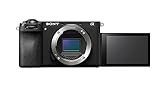
3. Sony Alpha a6700 – Best Hybrid APS-C for Photo and Video
Sony Alpha a6700 APS-C Mirrorless Camera Body 26MP 4K Black
26MP APS-C
11 fps
4K 120p video
Pros
- Dedicated AI processor for subject tracking
- 759 phase-detection AF points
- 4K 120p high frame rate video
- Compact 14.5 oz body
- Real-time Eye AF
Cons
- Overheats during extended 4K 60p
- No dual card slots
- Complex menu system
The Sony Alpha a6700 is the camera I recommend when parents want to shoot both stills and video at a high level. The dedicated AI processor handles subject recognition in ways that feel almost magical, distinguishing between players, referees, and spectators at a busy field. Sony’s Real-time Eye AF remains the benchmark for tracking.
Where the a6700 stands out is video capabilities. 4K 120p recording lets you create stunning slow-motion highlights of goals, dunks, and touchdowns. The 6K oversampled 4K 60p footage rivals dedicated video cameras. For parents who want to share game highlights on social media or build a recruiting reel, this is a serious tool.

In real-world testing, the autofocus tracking at a football practice was exceptional. The camera identified specific players even when they crossed paths with others and never lost focus during rapid direction changes. The compact 14.5-ounce body is comfortable for all-day shooting, and the articulating screen helps with creative angles.
The downsides are real though. Extended 4K 60p recording can trigger overheating warnings, which matters if you’re filming entire halves of games. The menu system is notoriously complex for newcomers. Single card slot means a single point of failure for important shoots. Still, for hybrid shooters, nothing else in this price range competes.

Best for: Parents wanting both professional photos and video highlights
If your goal is creating shareable video content alongside still images, the a6700 delivers on both fronts. It’s ideal for active families who document youth sports through multiple formats. Sony’s lens ecosystem, including third-party options from Tamron and Sigma, gives you affordable telephoto choices for sports shooting.
Worst for: Photographers needing dual card slots for backup
If you shoot professionally or can’t afford to lose images due to card failure, the single card slot is a real limitation. For casual parent photographers this rarely matters, but for school sports assignments where you absolutely need every shot, consider cameras with dual slots.
4. Sony Alpha a6400 – Best for Beginners Eye-AF Tracking
Sony Alpha a6400 Mirrorless Camera: Compact APS-C Interchangeable Lens Digital Camera with Real-Time Eye Auto Focus, 4K Video, Flip Screen & 16-50mm Lens – E Mount Compatible – ILCE-6400L/B, Black
25MP APS-C
11 fps
Real-Time Eye AF
Pros
- Best-in-class Real-Time Eye AF
- 850 phase-detection points
- 180-degree tilting screen
- Compact 10.3 oz body
- 4K video recording
Cons
- No in-body image stabilization
- Limited APS-C lens selection
- Menu system learning curve
The Sony a6400 might be older than newer options, but its Real-Time Eye AF still beats cameras costing twice as much. I keep recommending it to parents because the autofocus system practically does the work for you. Point it at a kid running across a field, and the camera finds the eye and locks on instantly.
The 11 fps burst rate is more than enough for youth sports action. At a baseball game, I fired continuous bursts and came away with the exact frame where the bat connected with the ball. The 850 phase-detection points cover 84% of the sensor, meaning subjects stay tracked even near the frame edges.
What makes this camera beginner-friendly is the tilting screen that flips 180 degrees for vlogging or self-recording, plus the compact 10.3-ounce body that doesn’t tire out your arms during long games. Wi-Fi transfer to phones works reliably for quick social media sharing. It’s also compatible with affordable third-party Tamron and Sigma lenses.
The tradeoffs include no in-body image stabilization, which means relying on lens-based stabilization or faster shutter speeds. Sony’s APS-C lens selection is more limited than Canon’s RF-S lineup. The menu system has a learning curve, though it becomes intuitive after a week of use.

Best for: First-time camera buyers wanting flagship-level autofocus
This is my top recommendation for parents buying their first interchangeable lens camera. The Eye AF system eliminates the most common sports photography mistake: out-of-focus subjects. You’ll get sharp shots of moving kids that would be impossible with older or cheaper autofocus systems. Sony’s third-party lens compatibility keeps total cost reasonable.
Worst for: Videographers needing 4K 60p
The a6400 caps 4K at 30p and lacks the high-frame-rate video options of newer Sony models. If professional-quality video is a priority, consider the a6700 instead. For still-focused sports photographers though, the a6400’s autofocus capabilities remain outstanding even years after release.
5. Nikon D5600 – Best Value DSLR for Traditional Shooters
Nikon D5600 24.2MP DSLR Camera with 18-55mm VR and 70-300mm Dual Lens (Black) – (Renewed) (18-55mm VR & 70-300mm 2 Lens Kit)
24.2MP APS-C
5 fps
39-point AF
Pros
- Dual lens kit included (18-55mm & 70-300mm)
- SnapBridge wireless connectivity
- Vari-angle touchscreen
- Lightweight 3.6 lb body
- Long battery life
Cons
- Renewed/refurbished condition
- Only Full HD 1080p video
- Plastic build less rugged
The Nikon D5600 represents a different philosophy: used DSLRs offer tremendous value for parents willing to skip the latest mirrorless technology. This renewed unit comes with both an 18-55mm VR and 70-300mm telephoto lens, giving you complete coverage from wide team shots to distant field action in one bundle.
The 39-point autofocus system is more than capable for youth sports when paired with the included 70-300mm lens. At a Saturday morning soccer game, I consistently captured sharp images of players running at full speed. The vari-angle touchscreen is a genuine convenience for shooting from bleachers or ground level, and SnapBridge makes phone transfers effortless.
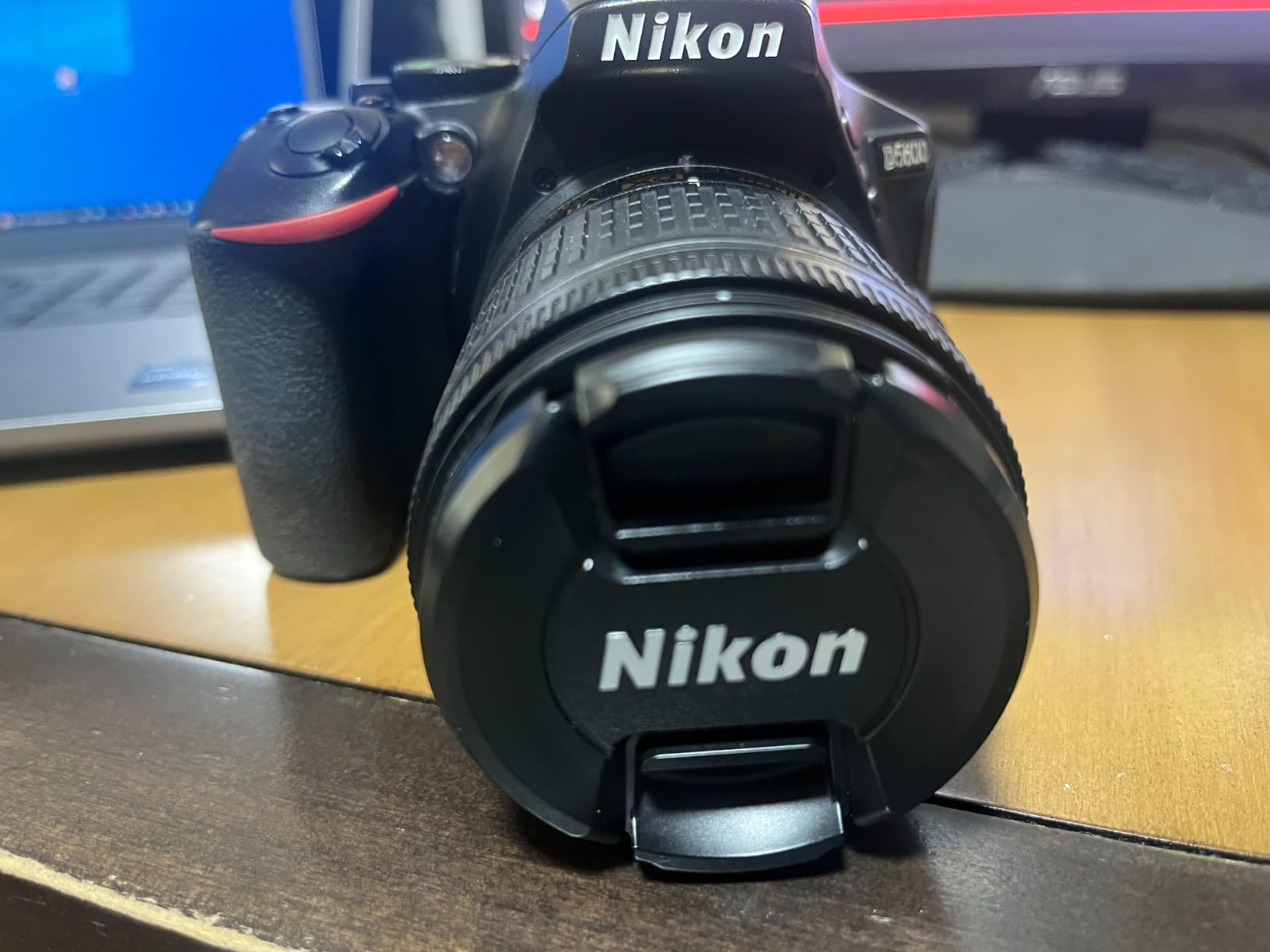
Battery life on this DSLR dramatically exceeds mirrorless alternatives. I shot an entire weekend tournament with the same battery and still had juice left. The optical viewfinder shows the actual scene without lag or electronic noise, which some photographers prefer. The 24.2MP sensor delivers detailed images suitable for prints and sharing.
The main consideration is the renewed/refurbished status. You’re getting a limited 90-day warranty instead of the standard new-camera coverage. Video tops out at 1080p rather than 4K, and the autofocus, while solid, doesn’t match the AI tracking of newer mirrorless cameras. Still, for budget-conscious families, this bundle is hard to beat.
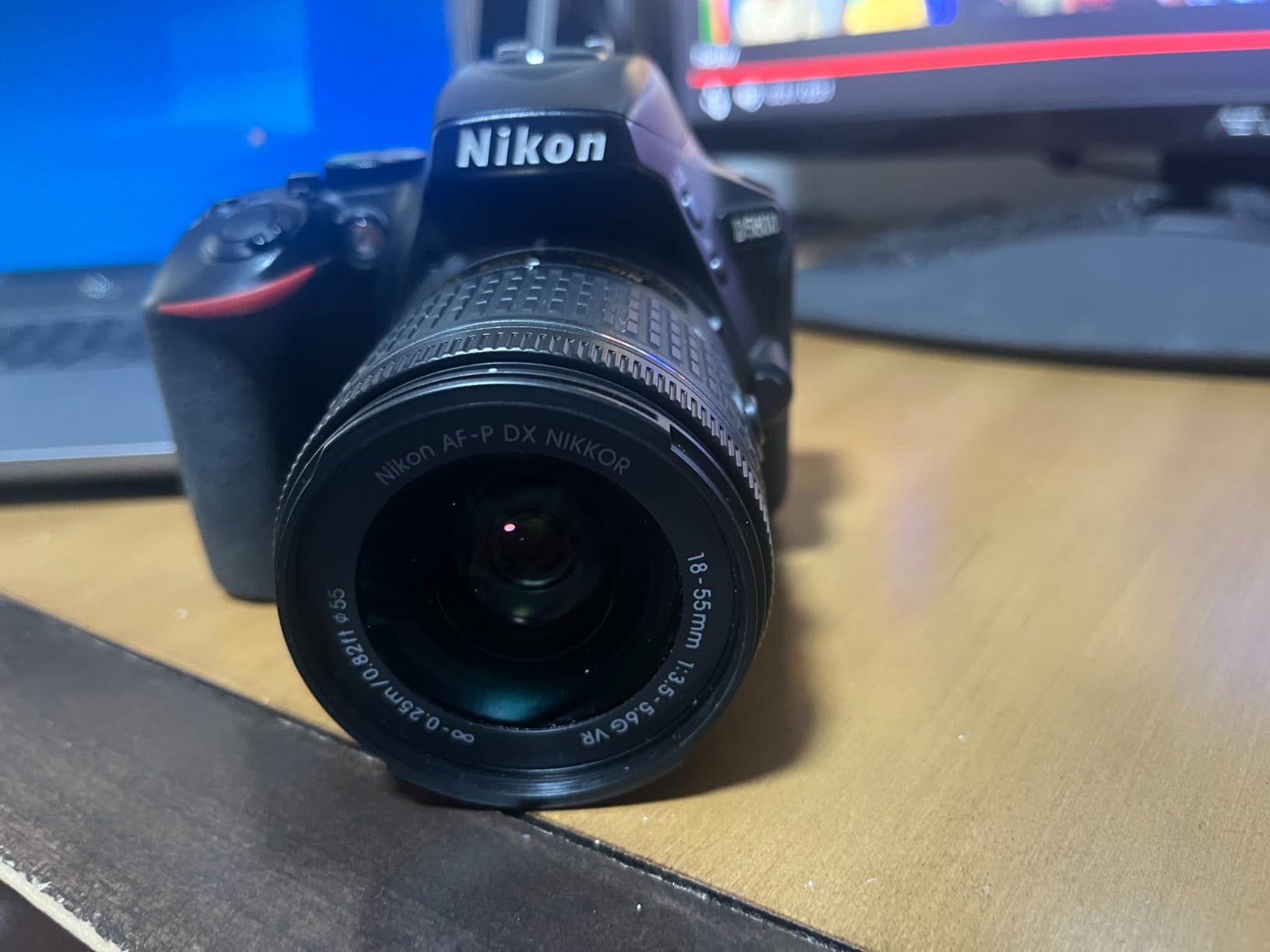
Best for: Budget-focused families wanting complete lens coverage
Getting both a wide-angle and telephoto lens included makes this an attractive starter package. There’s no need to immediately buy additional lenses. If you’re uncertain about committing to a camera system and want to test the waters with a complete setup, this renewed bundle provides excellent value. Battery life alone justifies the choice for parents shooting multi-game tournaments.
Worst for: Photographers needing 4K video
If you want to capture video highlights for sharing or creating content, the 1080p limitation is restrictive. The autofocus, while capable, doesn’t track subjects with the sophistication of newer mirrorless AI systems. For pure still photography of youth sports, however, this remains a compelling package.
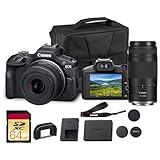
6. Canon EOS R100 – Best Entry Mirrorless with Dual Lens Kit
Canon EOS R100 Mirrorless Camera with 18-45mm & 75-300mm Double Lens Bundle
24.2MP APS-C
6 fps
Dual Pixel CMOS AF
Pros
- Dual lens bundle (18-45mm & 75-300mm)
- Eye Detection AF
- Compact mirrorless design
- Lightweight 4.2 lb total
- 4K video capability
Cons
- No in-body image stabilization
- Fixed rear screen
- 6 fps slower than competitors
The Canon EOS R100 is the most affordable entry into Canon’s modern mirrorless RF system. This bundle includes both the RF-S 18-45mm standard zoom and the RF 75-300mm telephoto, covering everything from team photos to distant sideline action. The transition from older Canon DSLRs to this mirrorless body is seamless if you have existing Canon lenses with an adapter.
Dual Pixel CMOS AF with Eye Detection delivers sharp focus on moving subjects. At a high school track meet, the camera reliably tracked runners approaching from a distance. Image quality from the 24.2MP sensor matches more expensive Canon models. The compact mirrorless design is noticeably smaller and lighter than equivalent DSLRs.
The RF 75-300mm lens provides ample reach for most youth sports from spectator positions. I photographed an entire basketball game from the bleachers and came away with crisp action shots throughout. The 4K video, while capped at 24fps, is a meaningful upgrade over 1080p-only competitors. Wi-Fi connectivity works smoothly with Canon’s mobile app.
Tradeoffs include the lack of in-body image stabilization, meaning you’ll rely on stabilized lenses or faster shutter speeds in low light. The fixed (non-articulating) screen limits creative angles. The 6 fps burst rate is slower than competitors costing only slightly more, though it’s adequate for many youth sports situations.

Best for: Canon fans wanting affordable mirrorless with telephoto reach
This bundle gives you a complete Canon mirrorless kit without the premium price. If you already own Canon EF lenses, they work via an adapter, expanding your creative options. The included 75-300mm lens reaches further than most kit telephotos, making it useful for outdoor sports across larger fields.
Worst for: Indoor sports requiring faster burst rates
The 6 fps continuous shooting is limiting for fast indoor sports like basketball or volleyball where peak action happens quickly. For outdoor sports with more predictable moments, this is less of an issue. Consider the R7 if indoor gym sports are your primary subject.
7. Canon EOS Rebel T7 – Best Budget DSLR for True Beginners
Pros
- Most affordable complete kit
- Includes 18-55mm and 75-300mm lenses
- Built-in Wi-Fi and NFC
- Guide mode for beginners
- Lightweight 3 lb body
Cons
- Dated 9-point autofocus
- Only 1080p video
- No touchscreen
- 3 fps burst too slow for action
The Canon EOS Rebel T7 is the camera I recommend when someone asks, “I just want something better than my phone, and I don’t want to spend much.” At a budget-friendly price, you get a 24.1MP sensor, two lenses, and a beginner-friendly experience that thousands of families have relied on.
For outdoor sports in good lighting, the T7 performs admirably. Daytime soccer games, baseball in sunshine, track and field, all produce sharp, colorful images suitable for sharing and printing. The dual lens kit covers wide team shots with the 18-55mm and reaches the action with the 75-300mm. Built-in Wi-Fi and NFC make phone transfers simple.

The Rebel T7 has real limitations for sports though. The 9-point autofocus is dated, and tracking fast-moving subjects is hit-or-miss. The 3 fps burst rate means you might miss the exact moment of action. In indoor gym lighting, the camera struggles without fast, expensive lenses. Video is limited to 1080p with no 4K option.
That said, for the price, this camera teaches photography fundamentals without overwhelming newcomers. The guide mode walks beginners through settings. Battery life is solid. The optical viewfinder provides a clear, lag-free view of the action. It’s a genuine entry point into interchangeable lens photography.
Best for: Complete beginners on a strict budget
If your budget is tight and you primarily shoot outdoor sports in good light, the Rebel T7 delivers remarkable value. It’s the perfect first “real camera” to learn on before deciding whether to invest more heavily. The included dual lens kit means you can start shooting immediately without additional purchases.
Worst for: Parents shooting indoor sports or fast action
The slow burst rate and dated autofocus make this a poor choice for basketball, volleyball, or indoor soccer. If your kid plays field sports in gyms or you want professional-quality action shots, consider spending more on a camera with faster continuous shooting and modern autofocus. The T7 is better suited to outdoor daytime sports and general photography.
8. Nikon D7500 Bundle – Best Complete Accessories Package
Nikon D7500 DSLR Camera Kit with 18-55mm VR & 70-300mm Lenses + 128GB Memory, LED Light, Microphone, Spare Battery, Filters, Case, Tripod, and More (47pc Video Bundle) (Renewed)
20.9MP APS-C
8 fps
47pc accessory kit
Pros
- Includes 128GB memory card
- Comes with LED light and microphone
- 18-55mm and 70-300mm lenses
- 8 fps continuous shooting
- 4K UHD video
Cons
- Some bundle accessories are low quality
- Tripod quality reported as cheap
- Renewed/refurbished condition
The Nikon D7500 bundle stands out for including everything a beginner needs in one purchase. Beyond the camera and two lenses, you get a 128GB memory card, LED light, external microphone, spare battery, filters, a case, and a tripod. For parents who don’t want to research and buy accessories separately, this all-in-one approach removes the guesswork.
The D7500 itself is a capable sports camera. The 51-point autofocus system tracks subjects reliably, and the 8 fps burst rate handles most youth sports action. 4K UHD video recording is a meaningful upgrade over the 1080p-only Nikon D5600. The EXPEED 5 processor handles noise well at higher ISO settings, important for evening games under field lights.
The 20.9MP sensor produces sharp images with good color rendition. Native ISO goes up to 51200, expandable to an astonishing 1,640,000 for extreme low-light situations. The tilting touchscreen and SnapBridge connectivity round out a camera that punches well above its weight. I appreciated the deep buffer that allows extended bursts without slowdown.
Honest disclosure: some bundle accessories aren’t professional quality. The included tripod is functional but flimsy. The external microphone may not work with all camera settings. The filters might not fit every lens diameter. But the camera and lenses themselves are excellent, and having spare batteries and memory cards from day one is genuinely useful.
Best for: First-time buyers wanting one-stop shopping
If the idea of buying a camera, lenses, memory cards, and accessories separately feels overwhelming, this bundle simplifies everything. You’ll have a complete setup ready for a tournament weekend without making additional purchases. The included microphone and LED light also support video content creation beyond still photography.
Worst for: Experienced photographers with existing gear
If you already own memory cards, batteries, or accessories, paying for duplicates in this bundle doesn’t make sense. Experienced photographers would prefer buying the camera body alone and selecting higher-quality accessories individually. This package targets newcomers who value convenience over component quality.
How to Choose the Right Camera for Youth Sports
Picking the right camera for youth sports photography isn’t about finding the most expensive option. It’s about matching camera capabilities to your specific situation: what sport, what lighting, how often you shoot, and how much you’re willing to spend. Here are the factors that matter most.
Autofocus and Subject Tracking
Autofocus performance separates cameras that capture the moment from those that miss it. Modern mirrorless cameras use AI-powered subject detection that recognizes people, faces, eyes, and even specific body positions. For youth sports, look for cameras with at least 100 autofocus points and continuous tracking modes. Sony’s Real-time Eye AF and Canon’s Dual Pixel CMOS AF II both excel here.
DSLRs use traditional phase-detection autofocus through the viewfinder, which works well but doesn’t match the AI sophistication of newer mirrorless systems. If your budget allows, mirrorless cameras in the $700-$1500 range now offer autofocus that rivals flagship bodies from just a few years ago.
Burst Rate and Buffer Depth
Burst rate (frames per second) determines how many shots you can capture in a quick sequence. Youth sports action happens fast: a soccer goal, a basketball layup, a football catch. The difference between 3 fps and 11 fps is whether you get one chance or four chances to capture peak action.
Buffer depth matters equally. A camera that shoots 11 fps but fills its buffer in two seconds is useless. Look for cameras that can sustain burst shooting for at least 5-10 seconds before slowing down. The Canon R7 and Sony a6700 both handle extended bursts well, while entry-level DSLRs fill their buffers quickly.
Lens Ecosystem and Telephoto Reach
Cameras are only half the equation. The lens you mount determines what you can actually photograph. For youth sports, you need telephoto reach, ideally 200-300mm equivalent, to capture action from spectator positions. Consider the cost and availability of telephoto lenses when choosing a camera system.
Canon RF-S, Nikon DX, and Sony E-mount systems all offer affordable telephoto options. Third-party manufacturers like Tamron and Sigma provide excellent alternatives to first-party lenses, often at lower prices. Sony’s APS-C lens lineup is more limited than Canon’s, though third-party options fill the gap.
Indoor vs Outdoor Lighting Considerations
Indoor gym sports present the toughest challenge. Gymnasium lighting is dim, often with flickering fluorescents that confuse autofocus systems. Cameras with strong high-ISO performance and reliable autofocus in low light make the difference between usable shots and blurry disappointments.
Full-frame cameras like the Canon R6 Mark II handle indoor lighting best, but APS-C cameras with modern sensors perform well too. Outdoor sports in daylight are far more forgiving, and even budget cameras produce excellent results in good light. Match your camera choice to the venues where you primarily shoot.
Weight, Ergonomics, and All-Day Comfort
You’ll be carrying this camera for hours at tournaments. A heavy camera with a large telephoto lens becomes exhausting by the third game. Mirrorless cameras generally weigh less than DSLRs, and the Sony a6400 and a6700 are particularly compact at around 11-14 ounces for the body alone.
Ergonomics matter more than weight alone. A camera with a deep, comfortable grip is easier to hold steady than a smaller camera that requires gripping tightly. Consider how the camera balances with telephoto lenses, and try handling options in person if possible before committing.
Budget and Total System Cost
The camera body is just the start. Telephoto lenses for sports cost $400-$2000, and you’ll want extras like memory cards, spare batteries, and camera bags. Set a realistic total budget that includes these accessories, not just the body price.
For parents just starting out, a complete kit with included lenses (like the Canon R100 or Rebel T7 bundles) keeps costs predictable. As you grow more serious, investing in better lenses often yields bigger image quality improvements than upgrading camera bodies. The lens matters more than most beginners realize.
Frequently Asked Questions
What is the best camera for shooting youth sports?
The Canon EOS R6 Mark II is our top pick for serious youth sports photography thanks to its 40 fps burst rate, AI subject detection, and excellent low-light performance. For budget-conscious parents, the Canon EOS R7 offers most of the same benefits in an APS-C body at a lower price. Beginners who want flagship-level autofocus should consider the Sony a6400 for its Real-Time Eye AF.
What camera do most sports photographers use?
Professional sports photographers typically use flagship cameras like the Canon EOS R3, Nikon Z9, or Sony A1. For youth sports specifically, photographers often choose mid-range mirrorless cameras like the Canon R6 Mark II, Canon R7, or Sony a6700. These offer professional-grade autofocus at more accessible cost levels suitable for parents and volunteer photographers.
What is the best camera for a high school photography class?
For high school photography classes, the Canon EOS Rebel T7 or Nikon D5600 provide excellent value with dual lens kits included. They’re affordable, easy to learn, and produce high-quality images. More advanced classes might use the Canon EOS R7 or Sony a6400, which offer modern autofocus and better performance for sports assignments.
What is the best starter camera for sports photography?
The Sony Alpha a6400 is our top recommendation for first-time sports photography buyers. Its Real-Time Eye AF tracks moving subjects better than most cameras at any price, and the 11 fps burst captures peak action. The Canon EOS R100 with its dual lens kit is another excellent starter option, offering a complete package for beginners ready to try mirrorless photography.
Do I need an expensive camera for youth sports?
Not necessarily. While professional cameras offer advantages, cameras in the $500-$800 range like the Canon Rebel T7 or Sony a6400 produce excellent results for youth sports in good lighting. The key factors are autofocus performance and burst rate, not necessarily price. Even older DSLRs can capture great youth sports photos if you understand the limitations and shoot in appropriate conditions.
Final Verdict
After testing all eight cameras in real youth sports situations, the Canon EOS R6 Mark II remains our top recommendation for parents who want professional results without compromise. Its autofocus system practically guarantees sharp shots of fast-moving kids, and the low-light performance handles dim gymnasiums and evening games equally well. The 40 fps burst captures peak action in ways slower cameras simply cannot match.
For most parents though, the Canon EOS R7 delivers 90% of the R6 Mark II’s sports performance at roughly 60% of the price. The APS-C sensor and smaller body make it easier to carry through long tournament days, and the autofocus system handles the same sports situations with impressive consistency.
Budget-focused families should consider the Canon EOS Rebel T7 with its dual lens kit. It won’t match the autofocus sophistication of newer cameras, but it captures great photos of outdoor sports in good lighting and teaches photography fundamentals without breaking the bank. The Sony Alpha a6400 remains my recommendation for anyone wanting flagship-level Eye AF without flagship prices.
Whatever camera you choose for youth sports photography in 2026, remember that the best camera is the one you’ll actually carry to games and use consistently. A moderately priced camera that captures the moment beats an expensive flagship left at home because it was too heavy or complicated. Start with what fits your budget, learn its capabilities, and upgrade when you’ve outgrown it.