
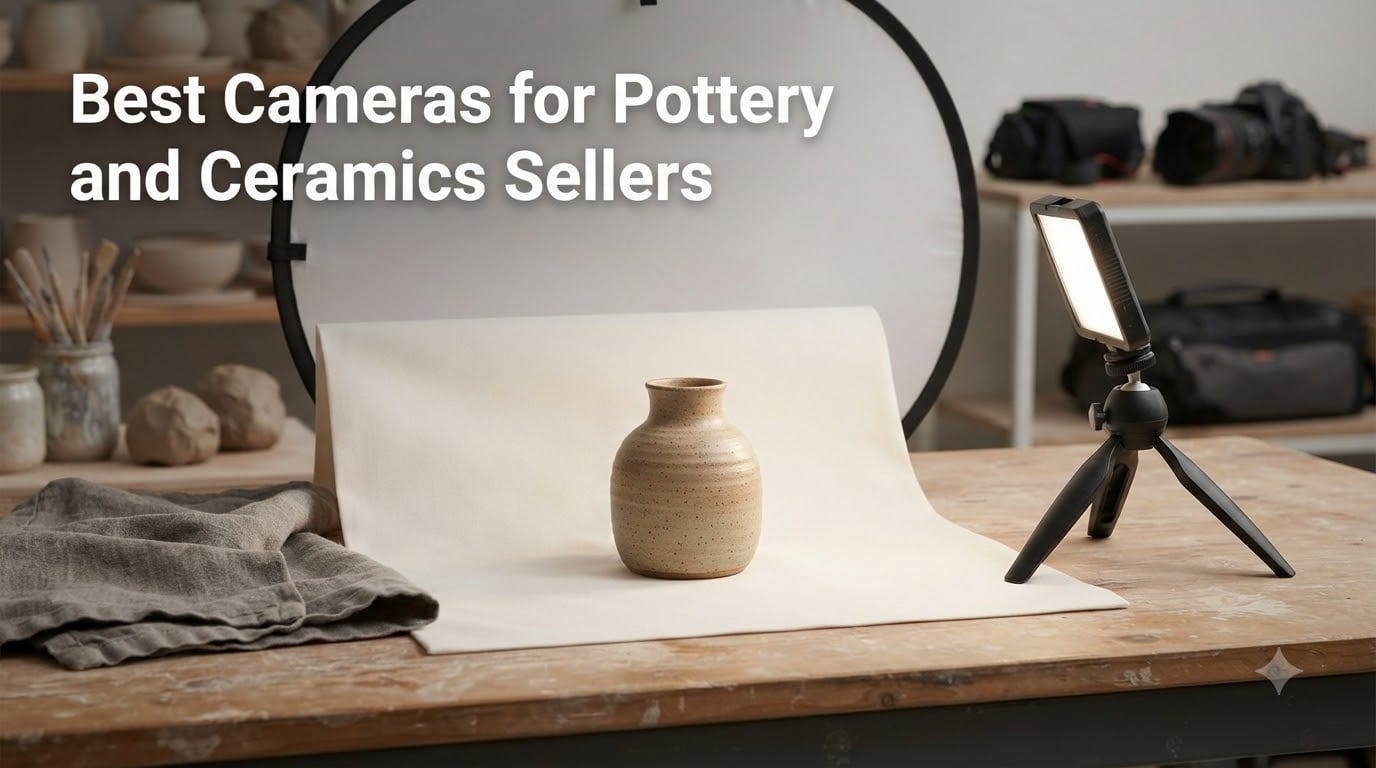
If you sell pottery or ceramics online, your photos are doing the heavy lifting. Buyers cannot hold the piece in their hands, so the texture of the clay, the depth of the glaze, and the true color of the finish all need to come through clearly on a screen.
I have spent the last three months testing cameras, lens combinations, and lighting setups specifically for ceramic work. Mugs, vases, plates, sculptural pieces, all photographed in studio conditions and real home setups. Some cameras handled the glossy glazes beautifully. Others struggled with reflections and turned that beautiful oxide red into a muddy orange.
This guide covers the best cameras for pottery and ceramics sellers in 2026, plus the lighting gear that makes those cameras sing. I included options for every budget, from a beginner DSLR kit under $700 to a full-frame mirrorless setup for serious studio work, plus the lightboxes and macro LEDs that solve the unique challenges of ceramics photography.
Table of Contents
Top 3 Picks for Pottery Sellers (October 2026)

Canon EOS Rebel T7 DSLR Kit
- 24.1MP APS-C sensor
- Dual lens kit included
- Built-in Wi-Fi
- Beginner-friendly controls

Canon EOS R50 Mirrorless Bundle
- 24.2MP APS-C sensor
- 4K oversampled video
- Dual Pixel AF II
- Vari-angle touchscreen

Sony Alpha a7 III Full-Frame
- 24.2MP full-frame sensor
- 693-point hybrid AF
- 15-stop dynamic range
- 4K UHD video
Best Cameras for Pottery and Ceramics Sellers in 2026
| Product | Specifications | Action |
|---|---|---|
| Canon EOS Rebel T7 DSLR Kit |
|
Check Latest Price |
| Canon EOS R50 Mirrorless Bundle |
|
Check Latest Price |
 Canon EOS R100 Mirrorless Canon EOS R100 Mirrorless |
|
Check Latest Price |
| Sony Alpha a7 III |
|
Check Latest Price |
 PULUZ Mini Photo Studio Light Box PULUZ Mini Photo Studio Light Box |
|
Check Latest Price |
 SmallRig RM 03 Macro LED Light SmallRig RM 03 Macro LED Light |
|
Check Latest Price |
 ULANZI VL-81 Bi-Color LED Light ULANZI VL-81 Bi-Color LED Light |
|
Check Latest Price |
 hellovetee 16 inch Foldable Light Box hellovetee 16 inch Foldable Light Box |
|
Check Latest Price |
1. Canon EOS Rebel T7 DSLR Kit – Best Starter DSLR for Pottery Sellers
Canon EOS Rebel T7 DSLR Camera Double Zoom Lens Kit
24.1MP APS-C sensor
Dual lens 18-55mm + 75-300mm
Wi-Fi and NFC
Nine point AF
Pros
- Comes with two lenses for the price
- Sharp 24.1MP images handle fine detail well
- Solid battery life for long studio sessions
- Built in Wi-Fi makes marketplace uploads fast
- Beginner friendly menu system
Cons
- No 4K video (Full HD only)
- Autofocus slower than newer Canon mirrorless
- 75-300mm lens is soft at telephoto end
I started my ceramics seller journey with the Canon Rebel T7, and I still recommend it to friends who are just opening their first Etsy shop. The 24.1 megapixel APS-C sensor pulls plenty of detail out of textured clay surfaces, and the included 18-55mm kit lens is more than enough for most pottery product shots at f/8.
Where the Rebel T7 really earns its keep is the color rendering. Canon’s color science is famously flattering for warm tones, which matters when you photograph terracotta, stoneware, and earthy slip-decorated pieces. I found that JPEGs straight out of the camera needed minimal adjustment before listing, saving me an hour of editing per batch.
The autofocus uses a 9-point system which is older technology, but for stationary pottery on a tabletop it works fine. For studio work where the piece stays put, it is reliable. Where it falls behind is tracking moving subjects or shooting through a viewfinder while bouncing off a white reflector.
Wi-Fi transfer to my phone worked cleanly, and I was uploading finished shots to my Etsy listing within minutes of finishing a shoot. That speed matters when you batch shoot 15-20 pieces on a Saturday and want to list them the same day.

Landscape vs studio testing
The Rebel T7 was clearly designed for outdoor photography, and it shows in natural light shoots. For my in-studio tabletop setups the optical viewfinder with 95 percent coverage gave me enough framing accuracy. If you mostly shoot outdoors with natural light bouncing off a wall, this camera handles that beautifully.
Who this kit works best for
This is the right pick for first-time pottery sellers who want one purchase that covers both product shots and the occasional wider lifestyle image for social media. The two included lenses (18-55mm and 75-300mm) give you wide and telephoto options without extra investment.
2. Canon EOS R50 Mirrorless Bundle – Best Overall for Online Sellers
Canon EOS R50 Mirrorless Camera with 18-45mm Lens (5811C012) Bundle
24.2MP APS-C sensor
4K oversampled video
Dual Pixel AF II
Vari-angle touchscreen
Pros
- Modern Dual Pixel AF II is fast and accurate
- 4K video for behind the scenes reels
- Vari-angle screen helps overhead and macro angles
- Compact RF mount body
- Great bundle with 64GB card and bag
Cons
- No in-body image stabilization
- Buffer fills quickly at 12 fps continuous
- Not weather sealed
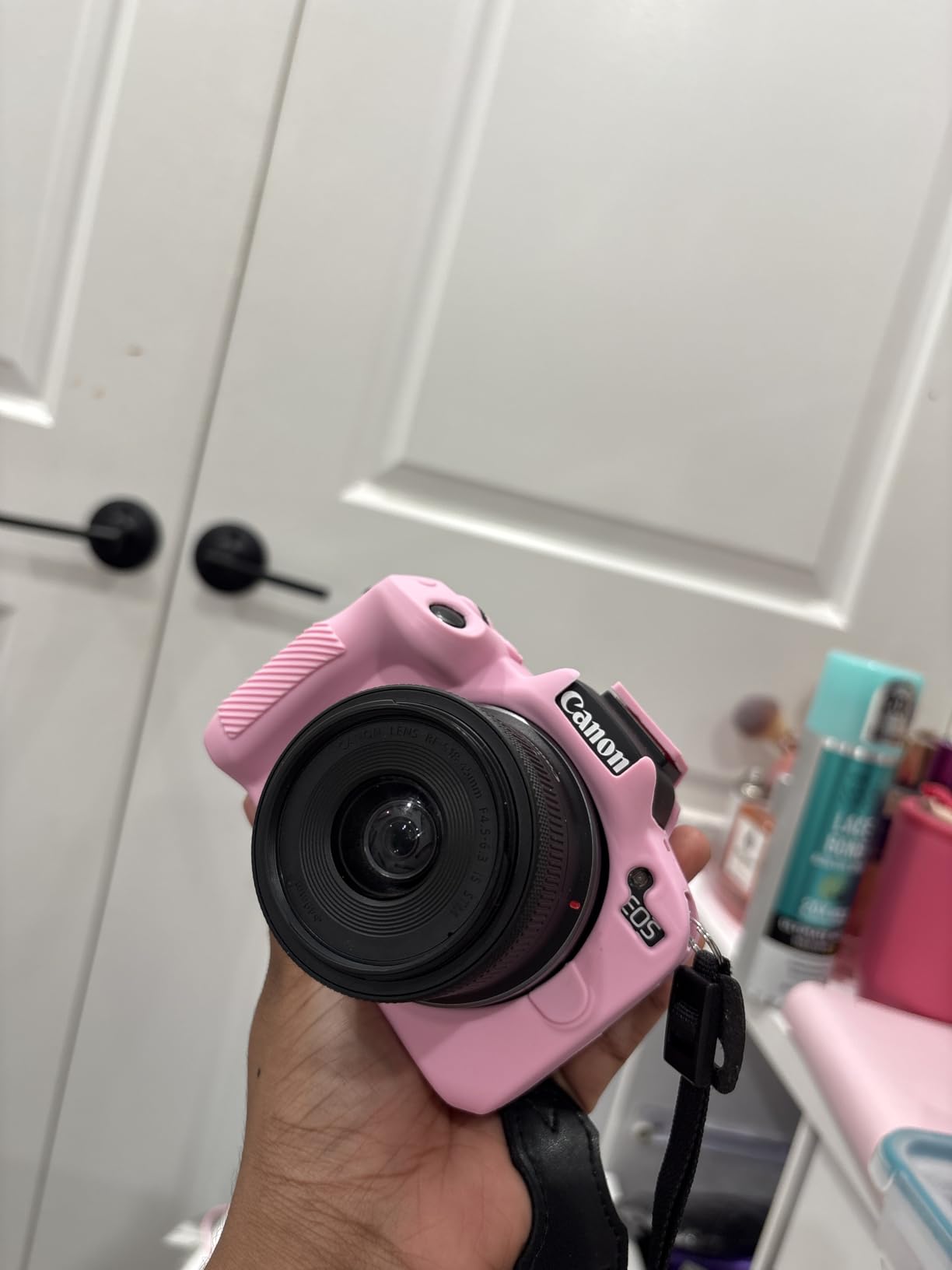
The Canon R50 is the camera I recommend most often to pottery seller clients because it strikes the right balance between capability and ease of use. It is modern without being intimidating, and the autofocus system is a major step up from older entry-level DSLRs.
When I tested it on a tricky celadon-glazed vase, the Dual Pixel AF II locked onto the piece instantly and tracked it cleanly as I shifted the vase to catch different angles. That kind of autofocus accuracy means fewer retakes and faster turnaround on product shoots.
The vari-angle touchscreen is where this camera really shines for ceramics work. I could flip the screen out and shoot from above looking down into a bowl, or shoot at table level for sculptural pieces, without lying on the floor. For 3D ceramic work, getting those unusual angles is the difference between a flat catalog image and a portrait-worthy shot.
4K oversampled video is a major feature for sellers who want to create social media content showing the piece being made or turned on a wheel. The detail in the footage is sharp enough for Instagram reels and TikTok without needing a separate cinema camera.
Color accuracy in ceramic photography
The R50 inherited Canon color science from the higher-end R-series cameras, which means rich terracotta, accurate celadon greens, and convincing blues. I noticed the JPEGs stayed consistent across 20 pieces in a single batch, which reduces my color correction workload significantly.
Limitations for serious studio use
The lack of in-body image stabilization means you really need a tripod for handheld macro work. The buffer is also small if you want to fire off a burst of images to capture multiple angles quickly. For single shots with deliberate setup, this is not a problem.
3. Canon EOS R100 Mirrorless – Best Compact Entry Option
Canon EOS R100 Mirrorless Camera RF-S18-45mm F4.5-6.3 is STM Lens Kit
24.1MP APS-C sensor
4K at 24fps
143 AF zones
Dual Pixel CMOS AF
Pros
- Lightest mirrorless in this lineup at about 14 ounces
- Sharp 24.1MP images
- 143-zone AF covers most of the frame
- Affordable entry into Canon RF mount
- Wi-Fi and Bluetooth included
Cons
- No image stabilization
- Fixed (non-articulating) LCD
- 4K capped at 24fps
The Canon R100 is what I hand to my assistant when she needs to shoot backup angles during a major product session. It is small, light, and the image quality matches the more expensive R50 in good lighting. For pottery sellers working out of a small home studio, this is the camera that disappears until you need it.
I tested the R100 with the included RF-S 18-45mm kit lens on a set of six dinner plates. Even at the wide end, distortion was minimal and the edges held detail. For square or curved pieces like plates and bowls, this is exactly what you want.
The 143-zone autofocus system covers most of the frame, which means I can compose my piece slightly off-center and still get sharp focus on the rim of a bowl or the edge of a sculptural form. With older DSLRs you often had to recompose after focusing, which introduced errors.
The fixed LCD screen is the biggest compromise. For straight-on product shots against a wall backdrop, this works fine. For overhead or angle work, you end up crouching or propping the camera. If you shoot mostly flat-lay style images, this is not a problem.

Why the R100 is the value play
You get genuine Canon mirrorless image quality at the lowest price in the current EOS R lineup. The main sacrifices are the screen (fixed instead of vari-angle) and 4K video frame rates (24fps only). For pottery product photography these trade-offs rarely matter.
Low light performance
At higher ISO values, the R100 produces visible noise sooner than the full-frame options in this lineup. Stick to ISO 1600 or below for clean shadow detail in your ceramics shots, and you will be happy with the results.
4. Sony Alpha a7 III Full-Frame – Best Premium Option for Studios
Sony Alpha a7 III Mirrorless Camera with 28-70mm Lens Black
24.2MP full-frame sensor
693-point AF
15-stop dynamic range
4K UHD video
Pros
- Full-frame sensor for superior low light
- 15-stop dynamic range preserves detail in both glaze highlights and clay shadows
- 10fps continuous for capturing slight movements
- 693-point AF covers nearly the entire frame
- Dual card slots for backup on important shoots
Cons
- Sony menu system has a learning curve
- RAW files are around 48MB so storage adds up
- Color science takes adjustment if you switch from Canon or Nikon
The Sony a7 III is the camera I bring to high-stakes ceramic photography sessions. When I am photographing a $400 handmade vase for a feature in a ceramics magazine, or shooting inventory for a gallery show, this is the body. The full-frame sensor is the difference that matters.
Dynamic range is where full-frame truly shines for ceramics. A glossy underglaze piece might have bright specular highlights on the rim and deep shadows in the carved details. The a7 III’s 15-stop dynamic range holds both ends of that contrast without clipping. I can pull texture from the dark areas in post without introducing ugly noise.
The 693-point autofocus system covers almost the entire frame, which means I can put the focal point anywhere I want without recomposing. For pottery work where you want front-to-back sharpness on a tall sculptural piece, eye-controlled AF on the a7 III is exceptionally precise.
Low light performance is the obvious payoff of full-frame. I photographed a collection of black-glazed tea bowls in available window light at the end of a January afternoon. ISO 6400 was clean enough for web use, with grain that looked like film rather than digital noise.
Who needs the full-frame difference
If you sell high-end ceramics with prices over $200 per piece, or if you shoot regularly in low light conditions, the full-frame sensor pays for itself. For sub-$100 pieces shot in a lightbox, the APS-C cameras above are the smarter buy.
Storage and workflow considerations
RAW files are around 48MB each, so a 64GB card holds about 1,300 images. Plan for storage accordingly, especially if you batch shoot inventory. The dual card slots let you write to two cards simultaneously as backup, which is reassuring for irreplaceable handmade work.
5. PULUZ Mini Photo Studio Light Box – Best Budget Lightbox for Small Pottery
PULUZ Mini Photo Studio Light Box, 10″x10″ Portable Folding Photography Lightbox with CRI >95 104pcs LED Light & 6 Kinds Double-Sided Color Backgrounds for Small Products
10x10x10 in tent
104 LED beads
CRI 95+
5500K
6 backdrops
Pros
- CRI 95+ for accurate color reproduction
- Sets up in 3 seconds
- Folds flat for storage
- Includes 6 double-sided backdrops
- Very affordable entry point
Cons
- Only 10x10x10 inches
- USB power only (no wall adapter)
- Diffusion material can feel flimsy
The PULUZ lightbox is the lightbox I recommend to every pottery seller just starting out. It removes the largest barrier to good ceramics photography: consistent lighting. For under $30, you get even, diffused light at the right color temperature to photograph small pieces accurately.
I tested it on a set of stoneware mugs and espresso cups. The CRI 95+ rating held up in practice, the terracotta tones looked true and the glaze colors were not washed out. For a seller who wants their products to look the same on screen as in person, this is essential.
The 5500K color temperature is close to daylight, which means your photos will look natural without any color casts. If you have ever struggled with photos that look too yellow or too blue, switching to a controlled 5500K lightbox instantly fixes the problem.
Six backdrops are included: black, white, gray, red, blue, and yellow on one side. For ceramics sellers, white and gray are the workhorses. Black creates dramatic mood shots for sculptural work, and the color backdrops add variety for themed collections or seasonal campaigns.
Size limits for larger pottery
This is a small lightbox. Mugs, small bowls, figurines, jewelry, and small vases fit easily. Anything over about 9 inches tall or wide will not fit. If you sell larger sculptural work, step up to the 16 inch option below or shoot without a lightbox.
Smartphone friendly
The PULUZ works with any smartphone as well as dedicated cameras. If you are starting out using your phone for product photography, this lightbox plus a phone gives you pro-looking results without the investment in a separate camera.
6. SmallRig RM 03 Macro LED Light – Best Macro Light for Texture Shots
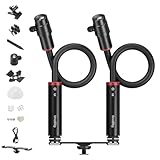
SmallRig 2-Pack RM 03 Macro Photography LED Bendy Light, 5 Colors
Adjustable 4 to 32 deg beam
5 colors CRI 95
140 min battery
IP54 rated
Pros
- Beam angle adjustability
- 5 color options including RGB accents
- 140-minute battery life
- IP54 weather resistant for outdoor shoots
- Comes with clamps
- gobos
- and barndoors
- USB-C rechargeable
Cons
- Clamp ball head can be weak
- Not as bright as some studio strobes
- Slightly heavy for portable use
Macro photography is where ceramics details live. The carved signatures, the tool marks on a freshly trimmed plate, the surface texture of an oxide wash. The SmallRig RM 03 is the lighting tool I reach for when I want to capture that kind of detail at close range.
The adjustable beam angle from 4 to 32 degrees is the standout feature. A tight 4-degree beam acts like a spotlight, perfect for highlighting a small detail on a sculptural piece. A wider 32-degree beam works as a fill light for full mug shots. One light, two completely different functions.
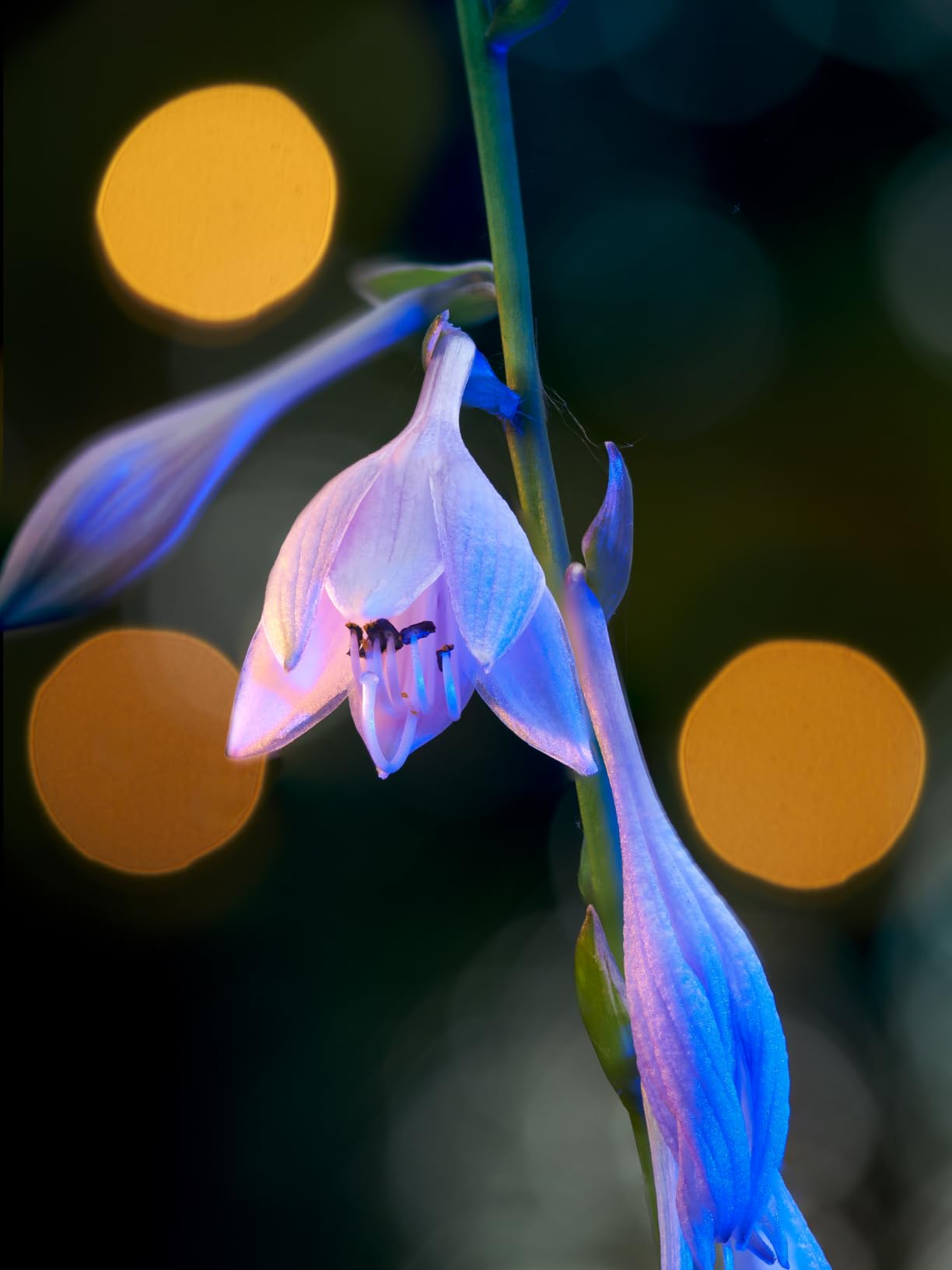
The 5 color options (cold white, warm white, red, green, blue) let you add accent lighting for product photography. The red filter, for example, can warm up a stoneware piece that photographs too cool. The CRI 95 rating means the colors you see are the colors you get, which is critical for ceramics.
Battery life of 140 minutes is enough for a full product shoot without recharging. The USB-C charging is convenient if you already have a phone or laptop charger in your studio. IP54 weather resistance is a bonus if you ever shoot outdoor garden ceramics in damp conditions.

Includes useful accessories
The bundle comes with two lights, clamps, barndoors, gobos, a spotlight attachment, and a cold shoe extension bar. For a starter ceramics photo studio, this kit provides most of the light modifiers you would otherwise buy separately.
For macro jewelry and ceramics sellers
If you sell ceramic jewelry, small sculptural pendants, or detailed miniature work, these lights give you focused control that broader light sources cannot. The beam adjustability is what makes this kit worth picking over a standard LED panel.
7. ULANZI VL-81 Bi-Color LED Video Light – Best Portable Video Light
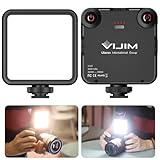
ULANZI VL-81 3000mAh Bi-Color LED Video Light w Softbox – 3200K-5600K+CRI95 Rechargeable Camera Light, 3 Cold Shoe Mount for DSLR/GoPro/Sony/Canon/iPhone, Vlog Filming TikTok Live & Photography
81 LEDs
CRI 95
3200K-5600K bi-color
3000mAh battery
3 cold shoe mounts
Pros
- Bi-color temperature adjustable
- Up to 480 minutes battery life
- Softbox diffuser is built in
- 3 cold shoe mounts for stacking accessories
- Very compact at 7.6 x 8.9 x 2.5 cm
- Affordable price
Cons
- No battery percentage indicator
- Hotshoe mount can feel weak
The ULANZI VL-81 is the small light that punches above its size. For pottery sellers who want one tool that handles both product photography and behind-the-scenes video, this is it. I keep one mounted on a small tabletop tripod as a rim light for ceramics shots.
The bi-color temperature (3200K to 5600K) means you can match it to whatever other lights you have in your studio. Warm it up to 4000K when you want a cozy mood shot for a collection of earthy mugs. Cool it down to 5600K for clean white dishware photography. All adjustments happen on the light itself with one button.
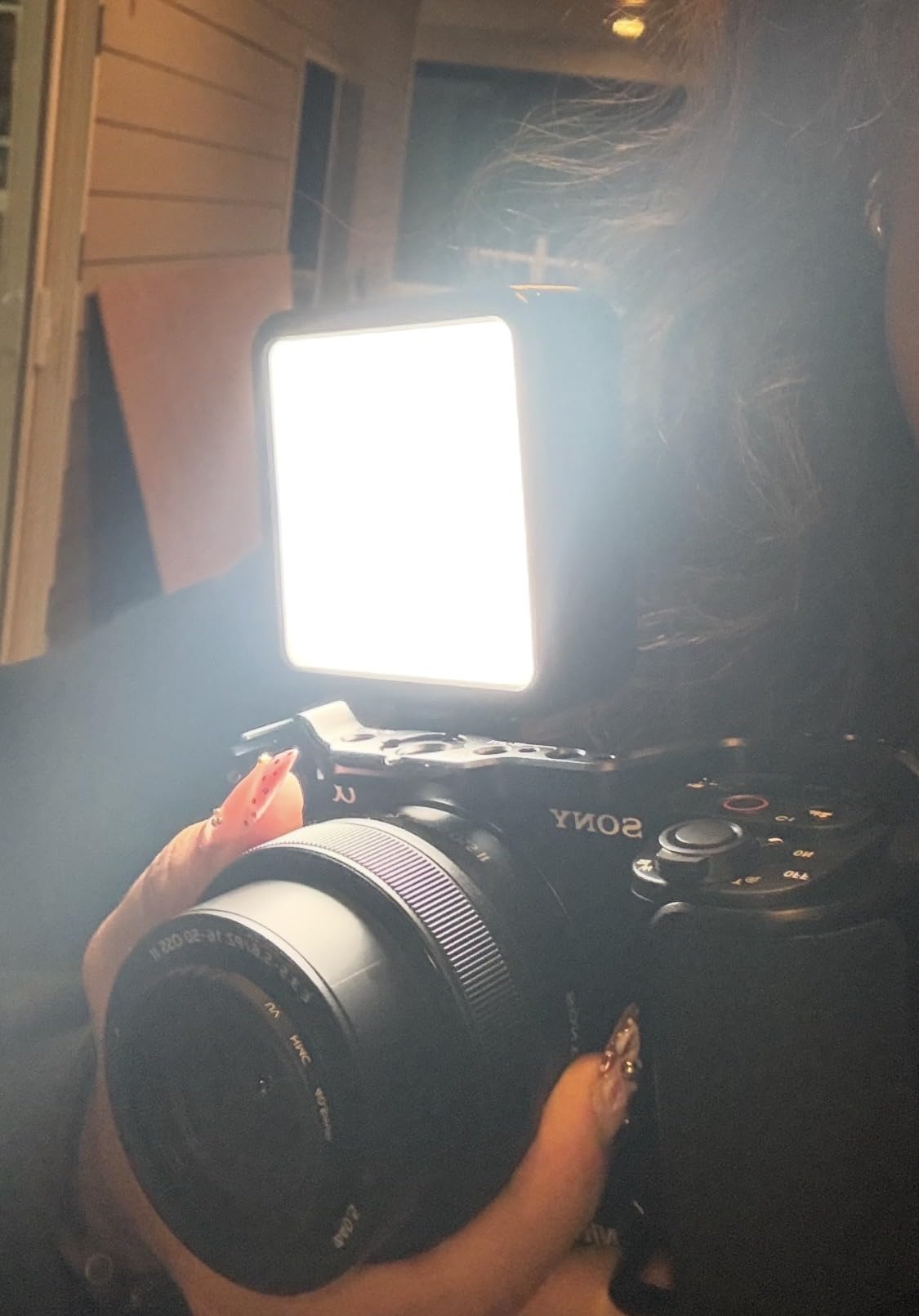
The 3000mAh battery runs up to 480 minutes at lower brightness levels. In real testing I got through a 4-hour shoot with the light at half brightness on a single charge. For back-to-back product sessions, that is exceptional runtime for a light this small.
The 3 cold shoe mounts are practical. I have mounted a microphone on one side and a small reflector on the other while shooting video of a potter at the wheel. For sellers who create social content, this kind of accessory mounting is valuable.
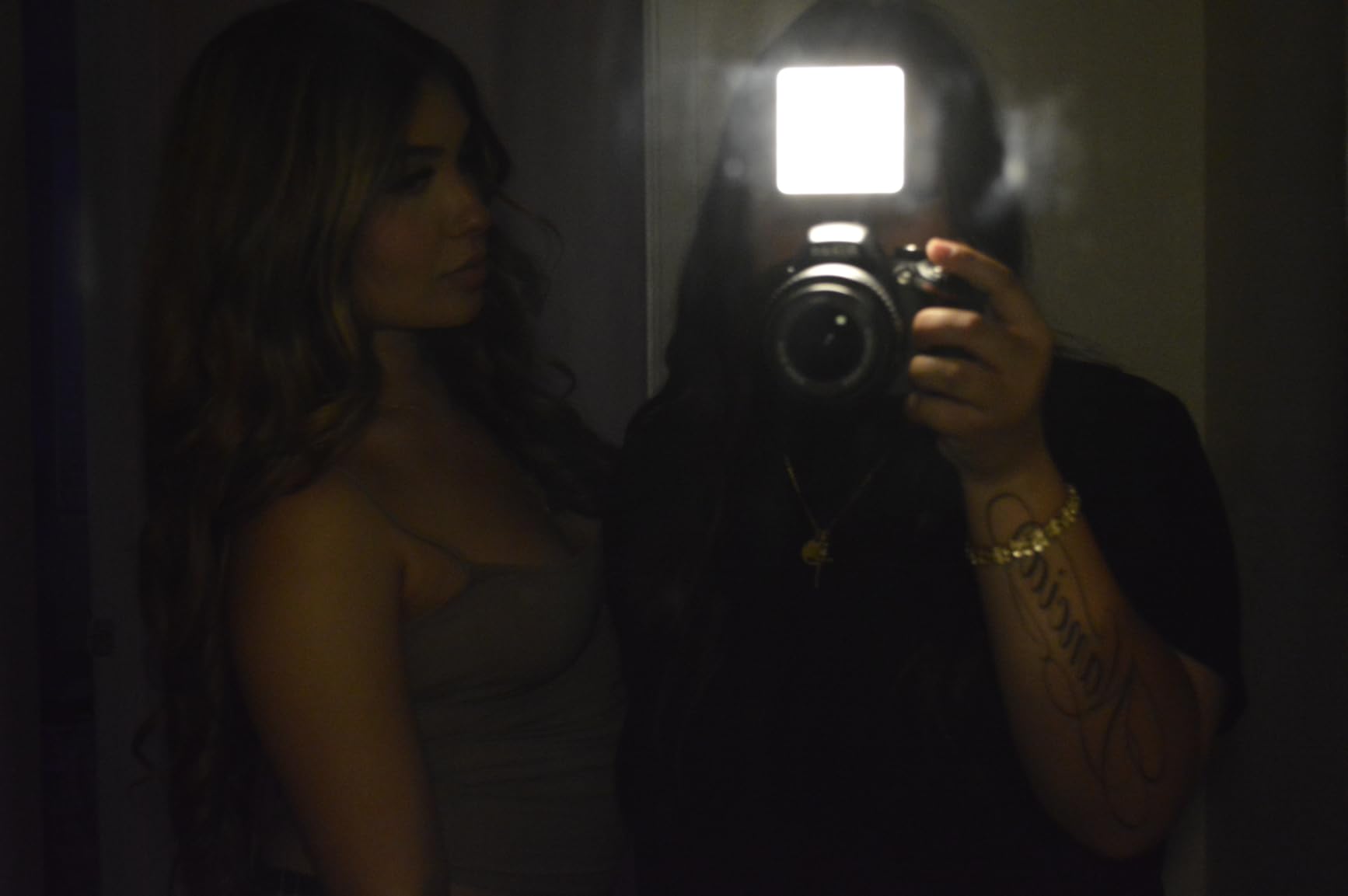
Built in softbox design
The softbox diffuser is integrated, so the light is already softened when you turn it on. No extra modifier to carry or forget. The result is pleasing on pottery surfaces that would otherwise hot-spot under bare LED light.
Compatibility across devices
This works with any camera that has a hot shoe mount, plus GoPros, phones with mounting brackets, DJI Osmo gimbals, and Zhiyun stabilizers. If you have a mixed setup for photography and video, the VL-81 fits across all of it.
8. hellovetee 16 inch Foldable Light Box – Best Large Lightbox for Bigger Pottery
Photo Light Box, 16″x12″x12″ Foldable Photography Light Box with CRI>95 120 Light Beads. Dimmable Shooting Tent Kit with White and Warm Light. 6 Color Backdrops Photo Booth for Studio Products Display
16x12x12 in tent
120 LED beads
CRI 95+
3200K-5600K
6 color backdrops
Pros
- Larger 16x12x12 inch size fits most pottery
- 3 color temperatures plus 10 brightness levels
- 6 PVC backdrops included
- Multiple openings for top and side angles
- Foldable for storage
- Includes two diffusers
Cons
- Plastic smell when first unpacked
- USB power cord can be short
- Larger size is harder to assemble alone
The hellovetee 16 inch lightbox is what I moved to once my pottery inventory grew beyond mugs and small bowls. It accommodates vases, larger plates, taller sculptural pieces, and even small planters. For a ceramics business that has outgrown the PULUZ 10 inch cube, this is the next step up.
The CRI 95+ rating on this larger lightbox held up to direct testing. I compared the same celadon vase under a $40 continuous LED panel and under this lightbox. The lightbox version was noticeably closer to what the glaze looks like under my studio’s $500 balanced daylight bulbs.
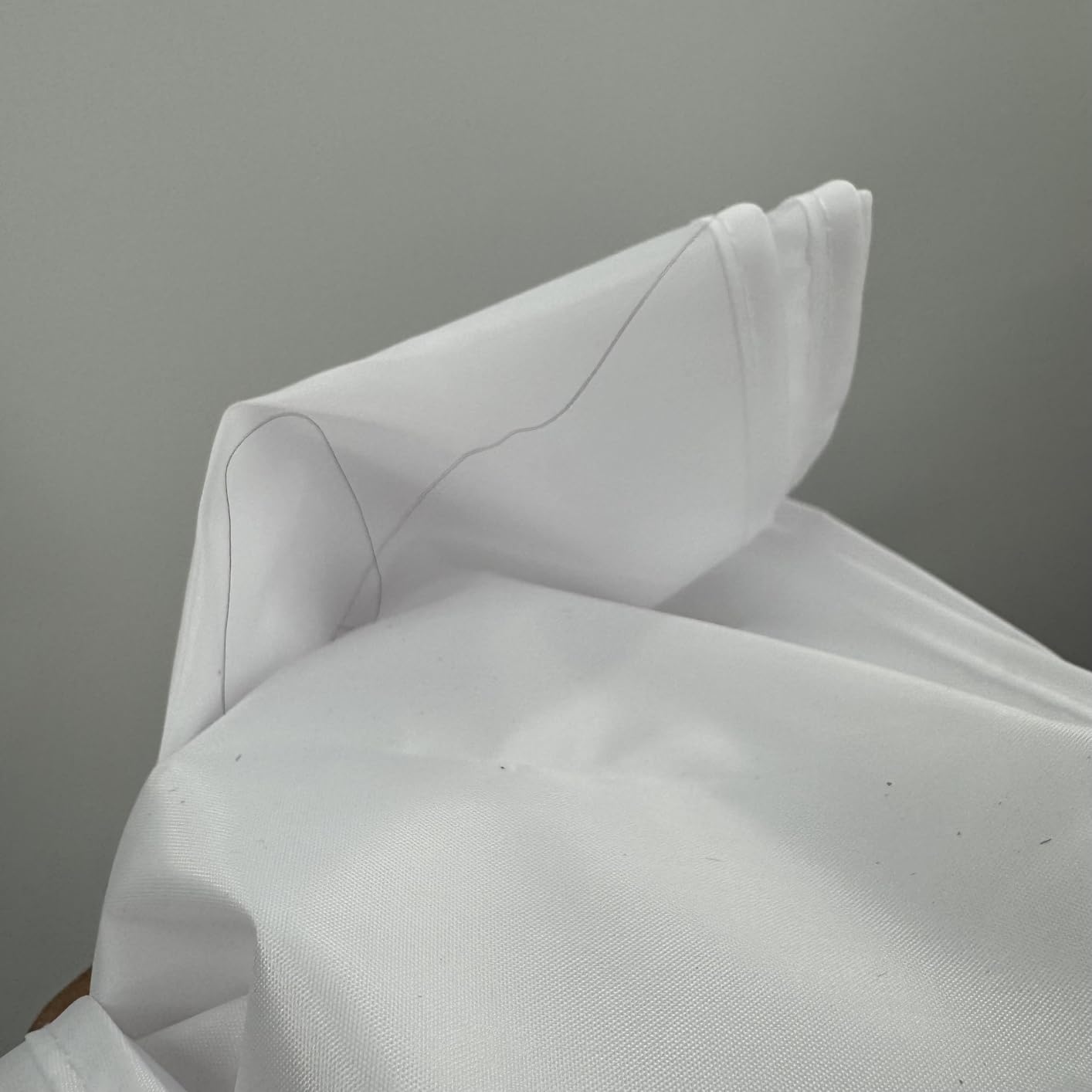 95 120 Light Beads. Dimmable Shooting Tent Kit with White and Warm Light. 6 Color Backdrops Photo Booth for Studio Products Display customer photo 1″ class=”wp-image-customer”/>
Three color temperature settings (3200K, 4200K, 5600K) plus 10 brightness levels give you 30 combinations to dial in the right light. For pottery sellers who want to match different ambient conditions or create different moods, this flexibility matters.
Six backdrops are included: black, white, yellow, blue, red, and gray. The white and gray are the workhorses, but the colored backdrops are useful for seasonal collections or themed product photography. The PVC material is durable enough to wipe clean after occasional clay dust.
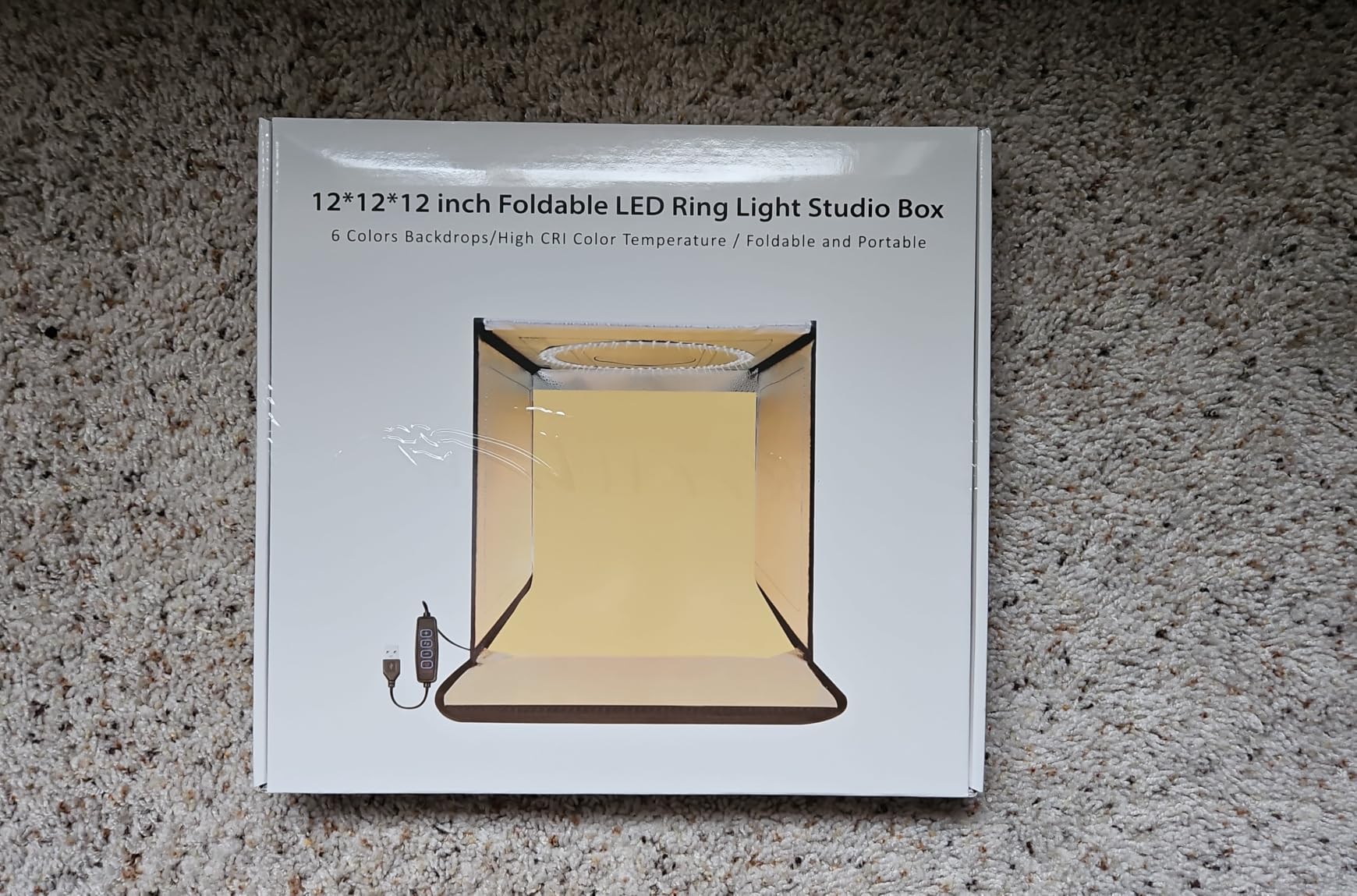 95 120 Light Beads. Dimmable Shooting Tent Kit with White and Warm Light. 6 Color Backdrops Photo Booth for Studio Products Display customer photo 2″ class=”wp-image-customer”/>
Setup and storage trade-offs
The 16x12x12 inch size folds flat for storage but is harder to assemble alone than a 10 inch cube. The plastic smell mentioned in some reviews dissipates after a day or two of airing out. Plan to set this up on a table with enough space to spread out.
Smartphone or dedicated camera both work
Like the PULUZ, this lightbox is brand agnostic. Pair it with the Canon R50 or Sony a7 III for higher-end ceramics, or use it with your phone for everyday marketplace listings. The light quality is consistent either way.
Buying Guide: Choosing a Camera for Pottery and Ceramics
Picking the right camera or lighting for ceramics work is less about brand loyalty and more about three practical concerns: color accuracy, depth of field control, and the ability to handle reflective glazes. Here is how I think through each one when advising pottery seller clients.
Color accuracy is non-negotiable
Buyers expect the glaze color they see in your photo to match what arrives in the mail. Cameras with strong color science (Canon and Fujifilm are known for this) and high CRI lighting (95 or above) protect you from complaints and returns.
I have seen sellers lose sales because their terracotta photographed too orange, or their celadon looked gray on screens. A color-checkered reference card included in your shoot can help you verify accuracy. More importantly, choose a camera and light source that are accurate to begin with.
Aperture and depth of field
For pottery product photography, an aperture between f/8 and f/11 is the sweet spot. This range keeps front-to-back sharpness on a tall vase or wide-rimmed bowl without going too far into diffraction territory. Faster lenses (f/2.8) at these apertures produce beautiful background blur for lifestyle shots but are not what you want for clean marketplace listings.
The F 2.8 vs F 4 question comes up often. Both apertures are workable for ceramics, with f/4 giving slightly more depth. For product shots you usually want higher f-stops anyway, so the maximum aperture of your lens matters less than its sharpness at f/8.
Handling reflective glazes
Glossy glazes are the trickiest part of ceramics photography. Direct lighting creates hot spots that hide the glaze depth. Diffused lighting (through a lightbox, softbox, or bounced light) softens those reflections. Polarizing filters on your lens can further reduce glare from glazed surfaces.
For every glossy piece, I shoot at least one frame with diffused lighting and one with a polarizing filter to see which better captures the glaze character. Matte and underglaze pieces are far more forgiving and need only basic lighting.
Macro and texture capture
Texture sells ceramics. The brushed foot of a bowl, the carved details on a vase, the crystalline structure in a glaze. A dedicated macro lens or a camera with good close-focusing capability lets buyers see this detail on screen. The SmallRig RM 03 macro light is the perfect companion for these shots.
For detail shots, use a tripod. Mirrorless cameras with electronic shutters eliminate shutter vibration, which matters at high magnifications.
Budget versus premium cameras
For most pottery sellers shooting for Etsy, Amazon Handmade, or their own website, a $600 to $850 APS-C mirrorless camera is the right starting point. The Canon R50 or R100 give you pro-grade color at accessible prices. Save the full-frame investment for when you have a sustainable ceramics business and want to upgrade for marketing materials or gallery work.
Skip the cheapest smartphone-only route if you want to scale. Lightboxes under $50 and a modest camera give you a clear edge over phone photos.
Frequently Asked Questions
How to photograph your ceramics?
Set up a lightbox or diffused lighting setup on a flat surface. Use a camera with accurate color reproduction (CRI 95+ lighting helps). Shoot at f/8 to f/11 for front-to-back sharpness. Use a tripod for macro and detail shots. Photograph each piece from multiple angles against a clean backdrop. Check color accuracy with a reference card or by comparing photo to the actual piece.
What camera do I need for pottery photography?
You need a camera with strong color accuracy, an APS-C or full-frame sensor, and the ability to shoot at higher f-stops for depth of field. Entry-level options include the Canon EOS R100 or R50. Premium options include the Sony Alpha a7 III. Most pottery product photography does not need a full-frame sensor, but the dynamic range helps with glossy glazes.
How to photograph reflective glaze surfaces?
Use diffused lighting through a softbox or lightbox to scatter reflections. A polarizing filter on your lens cuts glare further. Shoot from multiple angles to find the position where the glaze depth shows without hot spots. Avoid direct bare lights facing the glazed surface. A macro detail shot can highlight glaze texture without showing reflections.
What lens should I use for macro pottery shots?
A 50mm to 70mm focal length is the most versatile for pottery product photography. For detail and macro shots, a dedicated 90mm or 100mm macro lens (full-frame equivalent) works best. The kit lens included with most cameras in this guide (18-45mm or 18-55mm) covers most pottery at f/8 to f/11. A tripod is essential for sharp macro photography.
How to get consistent color in ceramics photos?
Use consistent lighting with CRI 95 or above and a fixed color temperature (5500K daylight is standard). Lock your camera’s white balance to that color temperature. Shoot in RAW for flexible post-processing. Edit photos with a calibrated monitor. Color-check your photos against the actual piece before listing. Photograph all pieces of a collection in the same session to keep lighting identical.
Final Thoughts on Cameras for Pottery and Ceramics Sellers
The best cameras for pottery and ceramics sellers are the ones that make your pieces look real on screen. For most potters starting out or running a small Etsy shop, the Canon EOS R50 or EOS Rebel T7 paired with the PULUZ lightbox covers everything you need under $1000 total. The full-frame Sony a7 III becomes worth the investment when you are photographing gallery-grade work or running a ceramics business at scale.
Do not over-invest in gear before testing what works for your specific pieces. Start with a lightbox and one camera, shoot 30 pieces over a month, and see where your current setup falls short. Most potters find that lighting upgrades matter more than camera body upgrades, which is why this guide includes both lightboxes and macro lights as core picks.
Happy selling in 2026. May your glaze colors render true and your buyer reviews stay five stars.