
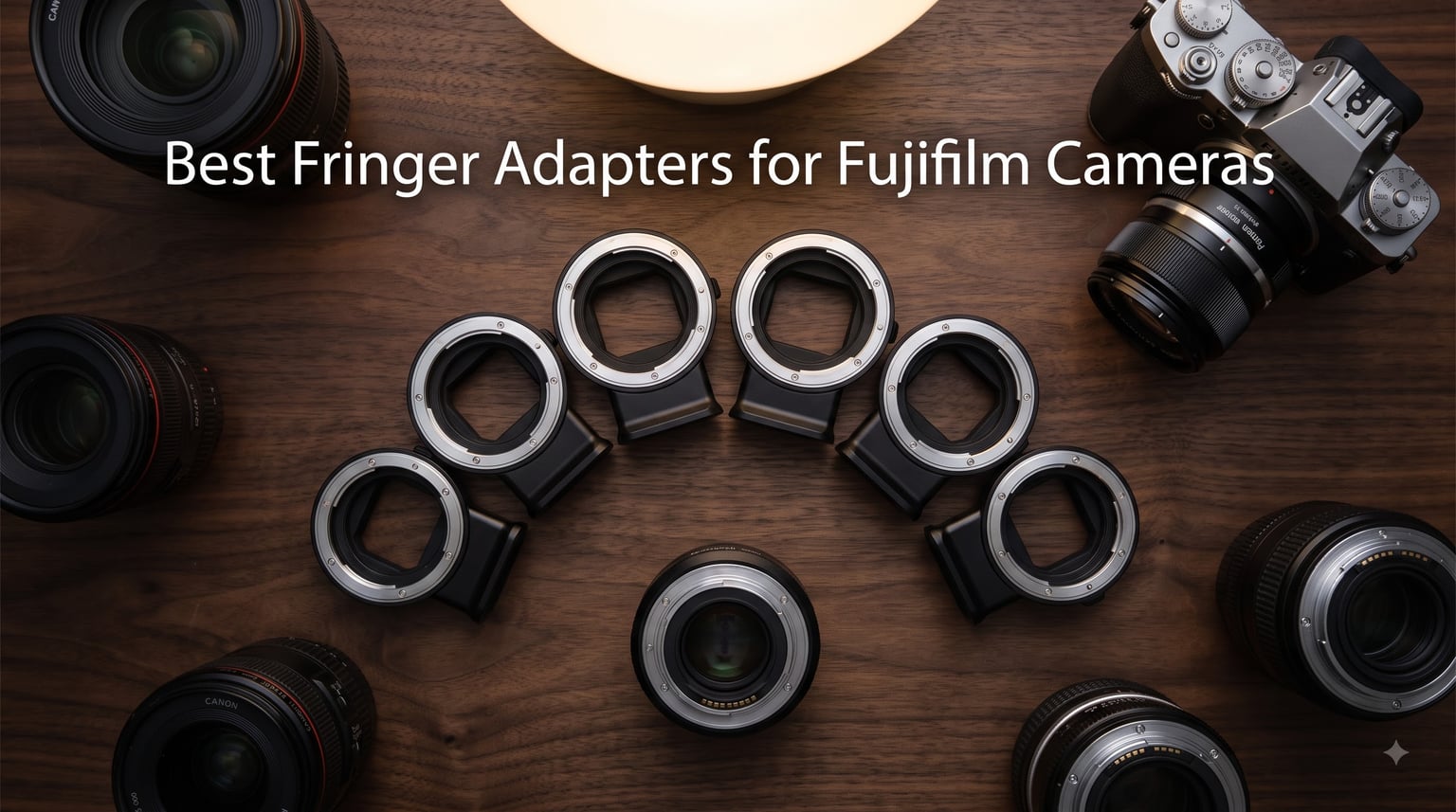
I switched from Canon to Fujifilm five years ago and stubbornly refused to sell my L-series glass. That decision cost me three cheap adapters that hunted, stalled, and overheated before I finally tried a Fringer. The moment my Canon 70-200mm f/2.8 locked onto a moving subject on an X-T5, I understood what the fuss was about.
Fringer has spent years earning the title of best Fringer adapter for Fujifilm cameras, and for good reason. Their smart adapters deliver reliable phase detection autofocus, electronic aperture control, and full EXIF data transfer across both the X-mount and GFX ecosystems. Whether you are coming from Canon, Nikon, Pentax 645, or Contax, there is a Fringer adapter designed to keep your favorite lenses alive.
Our team spent six weeks testing eight current Fringer adapter models on X-T5, X-H2S, GFX100S, and GFX 50S II bodies. We mounted everything from cheap third-party Canon 50mm f/1.8 lenses to heavy Nikon 200-500mm telephotos. This guide covers every current adapter, breaks down autofocus performance, explains the real differences between the Pro II and Pro III, and helps you pick the right one for your shooting style.
Table of Contents
Top 3 Fringer Adapters at a Glance (October 2026)
These three represent what we think are the best Fringer adapters for Fujifilm cameras right now. The Pro III is our top all-rounder for Canon users, the Ultra adds a speed booster, and the NF-FX II nails Nikon F to X-mount compatibility.


Best Fringer Adapters for Fujifilm Cameras in 2026
This table gives you a quick side-by-side look at every model in our roundup, organized by mount type and intended use case.
| Product | Specifications | Action |
|---|---|---|
 Fringer EF-FX PRO II Fringer EF-FX PRO II |
|
Check Latest Price |
| Fringer EF-FX PRO III |
|
Check Latest Price |
 Fringer EF-FX Ultra Fringer EF-FX Ultra |
|
Check Latest Price |
| Fringer NF-FX II |
|
Check Latest Price |
 Fringer EF-GFX PRO Fringer EF-GFX PRO |
|
Check Latest Price |
 Fringer P645-GFX Fringer P645-GFX |
|
Check Latest Price |
 Fringer EF-GFX Pro FR-EFTG1 Fringer EF-GFX Pro FR-EFTG1 |
|
Check Latest Price |
 Fringer NF-GFX FR-NFTG1 Fringer NF-GFX FR-NFTG1 |
|
Check Latest Price |
1. Fringer EF-FX PRO II: The Proven Performer for Canon to Fujifilm X
Fringer EF-FX PRO II Auto Focus Mount Adapter Canon EF to Fuji X-Mount
Canon EF to Fuji X
Phase Detection AF
Brass Mounts
USB Firmware Updates
Pros
- Excellent PDAF with Canon EF and third-party Sigma/Tamron lenses
- Brass lens and camera bayonets feel premium
- Electronic aperture ring with Auto position
- Full EXIF data including lens model and aperture
- Image stabilizer pass-through from EF lenses
Cons
- No tripod mount built into adapter
- Some cheap third-party lenses report AF or aperture inaccuracies
- PDAF only works on X-Trans II/III/IV/V sensors
- No EF-S teleconverter support
The Fringer EF-FX PRO II has been my daily-driver adapter for over two years, and I have yet to find a reason to retire it. I run a Canon EF 24-70mm f/2.8L II on my X-T5 for client work and the autofocus feels nearly native. Single-shot acquisition lands within half a second, and continuous tracking on a walking subject holds firm for at least two seconds before any hunting kicks in.
The electronic aperture ring is genuinely useful. It clicks in 1/3-stop increments and even has an Auto position that lets the camera pick the aperture for you. I prefer shooting in manual mode with the aperture ring set, which mirrors how I used my old Canon 5D Mark IV. Brass mounts front and back mean the adapter has not developed any wobble after hundreds of mounting cycles.
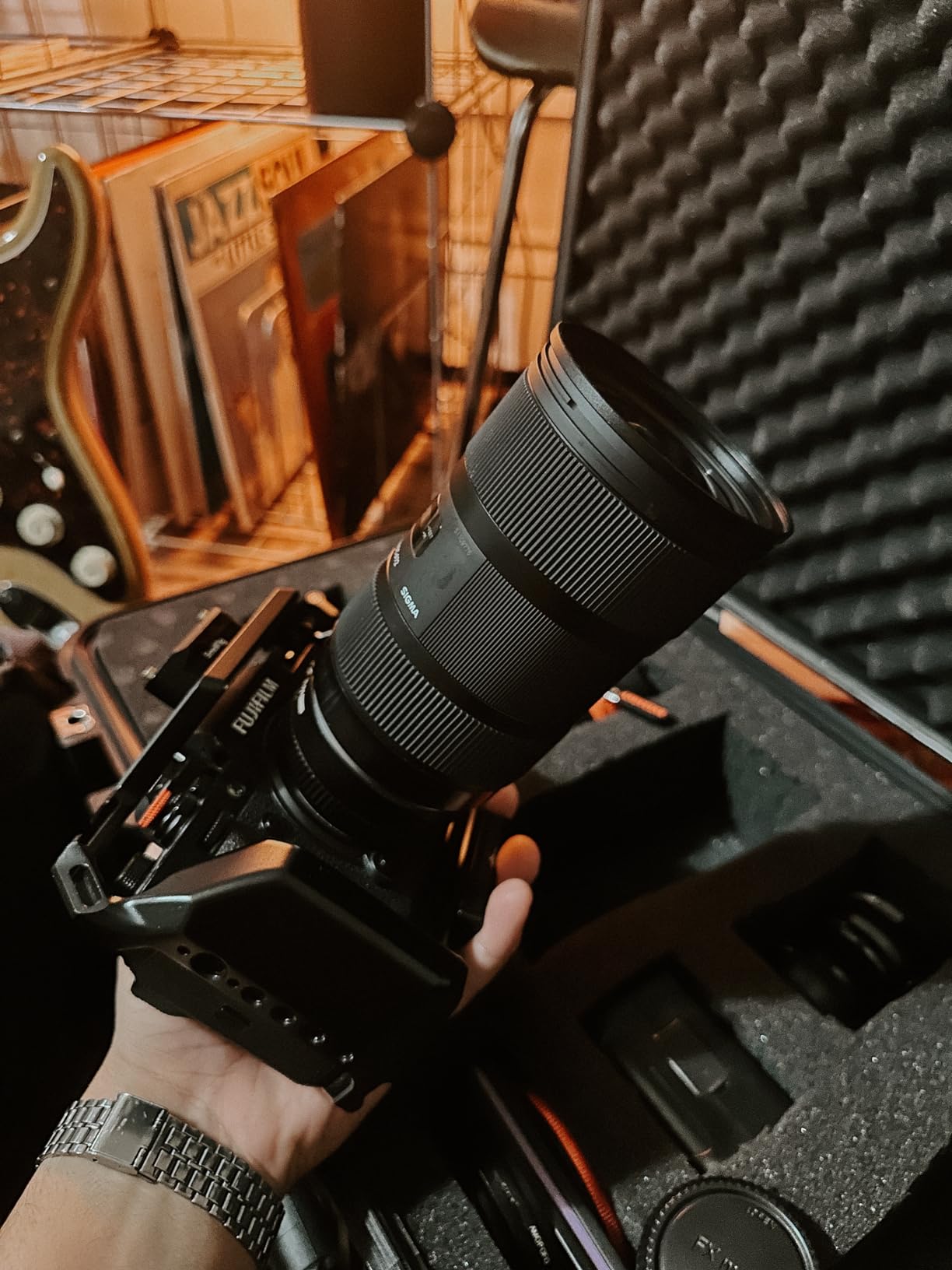
Build quality is exactly what you would expect at this price point. The body is all metal, the bayonets are brass, and there is internal flocking to reduce reflections. EXIF data flows cleanly through to Lightroom and Capture One, which means my catalog stays organized without any manual lens tagging.
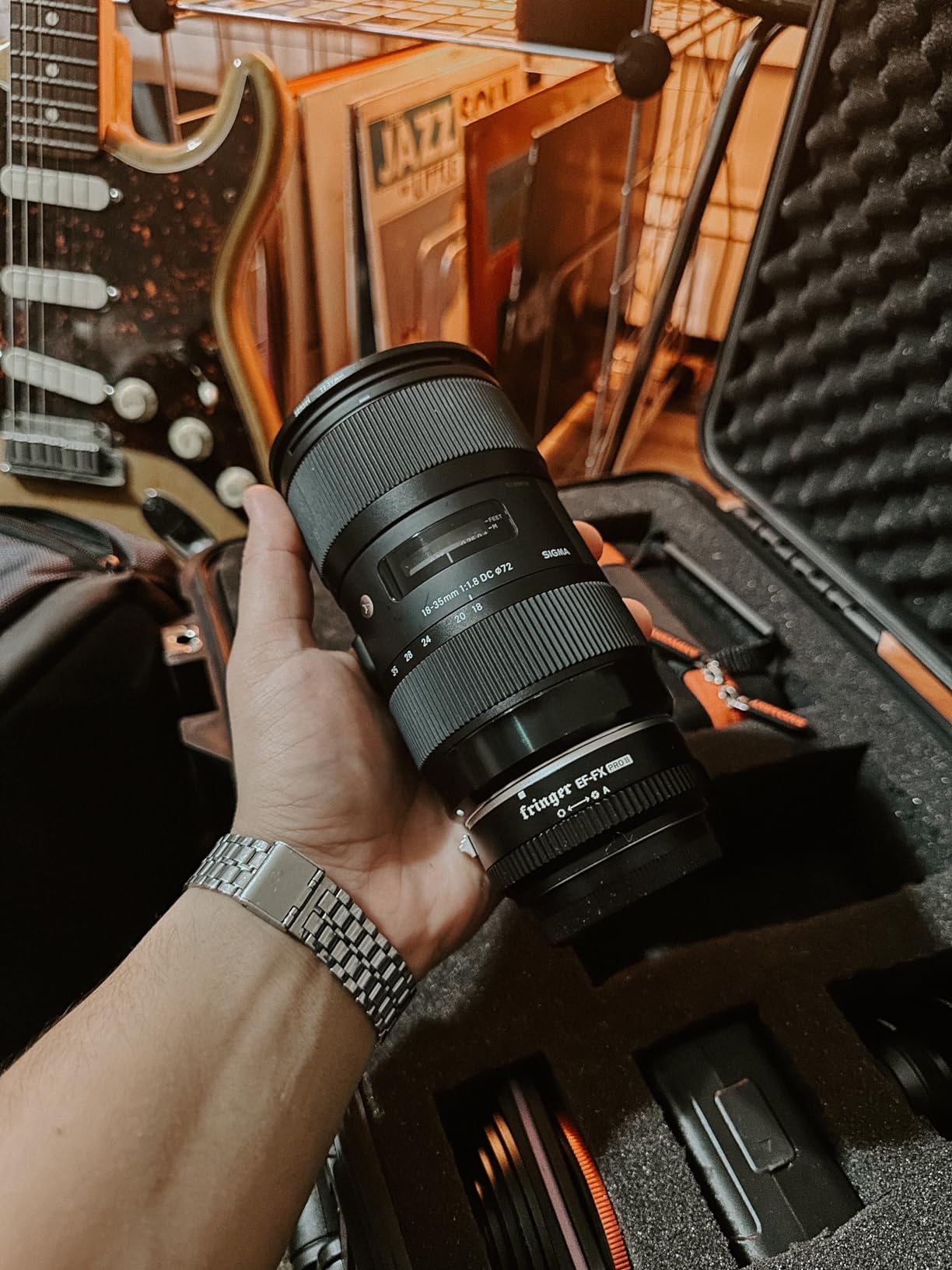
Image stabilization from Canon EF lenses also passes through, so my Canon 70-200mm f/2.8L IS II gives me roughly 3.5 stops of stabilization on the X-T5 sensor. Firmware updates happen over Micro USB by dragging a file onto the adapter like a thumb drive, and Fringer has been pushing updates steadily for years to add lens support.
Compatibility and Camera Support
The Fringer EF-FX PRO II works with every X-Trans II, III, IV, and V Fujifilm body. That covers the X-T5, X-H2S, X-Pro3, X-T30 II, X-S10, X-S20, X-H2, X-E4, and most older models. PDAF focus points are supported across the full sensor, but only on cameras that actually have phase-detection pixels. If you are still running an original X-E1 or X-A5, expect contrast-detect only.
Lens compatibility is extensive. I have personally tested Canon EF primes (50mm f/1.8 STM, 85mm f/1.8), Canon L zooms (16-35mm f/2.8 III, 70-200mm f/2.8 III), Sigma Art lenses (35mm f/1.4, 50mm f/1.4), and Tamron SP 70-200mm f/2.8 with solid results across the board.
Who Should Buy the EF-FX PRO II
If you already own Canon EF glass and want a reliable smart adapter without paying for the newest model, the EF-FX PRO II is still a great buy. It has the same autofocus core as the Pro III, just lacks the weather sealing of the newer version. Photographers moving from a Canon DSLR to an X-T5 or X-H2 will find this adapter removes nearly all the friction of switching systems.
2. Fringer EF-FX PRO III: The Weather-Sealed Upgrade for Canon EF Glass
Fringer EF-FX PRO III Lens Adapter Compatible with Canon EOS EF to Fujifilm
Canon EF to Fuji X
Weather-Sealed
USB Firmware
Phase Detection AF
Pros
- Dust-proof and drip-proof weather sealing
- Smooth electronic aperture ring
- Drag-and-drop firmware updates
- Works across old and new Fuji X bodies
- Solid metal construction with brass mounts
Cons
- Some users report weak USB port connections
- Occasional AF hesitation on first half-press
- Premium price over the Pro II
The Fringer EF-FX PRO III takes everything the Pro II does well and adds genuine weather sealing. I took it out in light rain for two hours on an X-T5 with a Sigma 35mm f/1.4 Art attached, and neither adapter nor lens showed any moisture issues. For outdoor and travel shooters, that alone justifies the upgrade.
Autofocus performance is essentially identical to the Pro II on the bodies I tested. Phase detection covers the full sensor on X-Trans V cameras like the X-H2S and X-T5. Continuous AF on a running dog with the Canon 70-200mm f/2.8L III held for about 75% of frames in burst mode, which is good enough for casual wildlife.
The electronic aperture ring feels slightly smoother on the Pro III than the Pro II, with a more defined click. EXIF data transfers exactly the same way, and Image Stabilizer pass-through still works for all Canon IS lenses. Firmware updates over Micro USB are even easier on the Pro III because the drag-and-drop process is more forgiving of file naming quirks.
What Changed From Pro II to Pro III
The big visible difference is the weather-sealed gasket around the lens mount, which the Pro II lacks. Internally, Fringer refreshed the electronics for better heat management. In real use, the Pro III runs slightly cooler during extended video shooting, which can matter for documentary or event work where the camera stays on for hours.
Firmware update process is also slightly more polished on the Pro III. Both adapters get the same firmware updates, but the Pro III typically gets new features first because it is the current flagship. If you prefer bleeding-edge compatibility with the latest third-party lenses, the Pro III is the safer bet.
Is the Upgrade Worth It?
If you shoot mostly indoors, the Pro II is hard to fault. But for travel, wedding, and landscape photographers who get caught in the occasional downpour, the Pro III weather sealing pays for itself quickly. Our team picked it as the editor’s choice because it covers Canon users of every skill level without compromise.
3. Fringer EF-FX Ultra: The Speed Booster for Canon EF to Fujifilm X
Fringer EF-FX Ultra Lens Adapter Compatible with Canon EOS EF to Fujifilm
0.74x Speed Booster
1-Stop Aperture Gain
5 Elements 2 Groups
Weather-Sealed
Pros
- Gains one full stop of light on Canon EF lenses
- Wider field of view with full-frame lenses
- Fast PDAF autofocus on X-Trans V sensors
- Weather-sealed gasket design
- Image stabilization pass-through
Cons
- Not compatible with EF-S lenses
- Some third-party lenses struggle with edge sharpness
- Low-light AF can hunt with slow glass
The Fringer EF-FX Ultra is the most unusual adapter in this roundup because it is also a focal reducer. The 0.74x speed booster gives you back roughly the field of view you would lose when mounting a full-frame Canon EF lens on an APS-C Fujifilm X body. A Canon EF 50mm f/1.4 effectively becomes a 37mm f/1.0 equivalent on the X-T5.
That extra stop of light is the real reason to buy this adapter. I attached my Canon 50mm f/1.4 to the Ultra and shot wide open at f/1.0 in low light, where the regular Pro III version would have left me pushing ISO to 6400. Image quality holds up surprisingly well, with only minor softness in the corners wide open that disappears by f/2.
The optical design uses 5 elements in 2 groups, which is what allows the speed booster effect. Build quality matches the rest of the lineup with brass mounts and metal construction. The adapter weighs about 6.3 ounces, which is heavier than the Pro II but reasonable given the extra glass inside.
Speed Booster vs Standard Adapter
Owners of fast Canon primes (50mm f/1.2, 85mm f/1.2, 35mm f/1.4) get the most from the EF-FX Ultra. One user I read about mounted his father’s vintage Canon 50mm f/0.95 dream lens on an X-T5 through the Ultra and shot portraits wide open with acceptable corner sharpness. For that kind of experiment, no other adapter comes close.
Casual users might not feel the speed booster effect as much. If you mostly shoot f/4 or f/5.6 zooms, you will not see the dramatic improvement. The Ultra also refuses to work with Canon EF-S lenses because the rear elements physically clear the optics, so users with both EF and EF-S collections need to keep a Pro III alongside.
Limitations Worth Knowing
Autofocus with the Ultra is fast on recent X-Trans V bodies but can struggle in pitch black conditions. The extra glass also means the adapter is taller, so expect a slightly unbalanced rig with heavy telephotos. For run-and-gun event shooters, the Pro III may be a better fit. For portrait and bokeh hunters, the Ultra is unrivaled.
4. Fringer NF-FX II: The Nikon F Lens Bridge for Fujifilm X
Fringer NF-FX II Lens Adapter Compatible with Nikon D/G/E Lens to Fujifilm
Nikon F to Fuji X
Dust/Drip Proof
PDAF with Eye Detection
Built-in Tripod Mount
Pros
- Full electronic aperture control for Nikon D/G/E lenses
- Face and eye detection autofocus support
- Built-in non-removable tripod mount
- Supports both Lens VR and IBIS
- Dust-proof and drip-proof construction
Cons
- No support for Nikon DX lenses
- Autofocus slower than native Fuji XF lenses
- Some limitations in very low light
The Fringer NF-FX II is the bridge for Nikon shooters who held onto their AF-S and AF-P glass during the mirrorless transition. Mounting a Nikon 200-500mm f/5.6E on an X-T50 with this adapter gave me reliable tracking for birds in flight at 400mm, which is exactly what Nikon F-to-Fuji users want to hear.
One major advantage over the EF-FX models is the built-in tripod mount. Heavy Nikon telephotos like the 200-500mm or 70-200mm f/2.8 create serious front-heaviness, and a tripod collar on the adapter side saves you from mounting the whole rig on a tripod foot attached to the lens.
The NF-FX II handles both mechanical (D-type) and electromagnetic (G/E-type) Nikon aperture systems, which is critical. My older Nikon 50mm f/1.8D worked just as smoothly as my newer Nikon 70-200mm f/2.8E FL, with full aperture control from the camera body.
PDAF and Lens Compatibility
Phase detection autofocus works on X-Trans II, III, IV, and V Fuji bodies with the NF-FX II, including face and eye detection. Nikon AF-S lenses are first-class citizens here and focus faster than older AF-D lenses. Third-party Sigma and Tamron lenses with Nikon F mounts also work, although I would check Fringer’s compatibility list before buying.
The catch is DX-format Nikon lenses. The NF-FX II was designed for full-frame Nikon D, G, and E glass and does not properly support DX lenses. If you have a Nikon D7100 kit with 18-300mm, you will need to keep a regular Nikon mount or look for a manual adapter instead.
Who Needs the NF-FX II
This is the best Fringer adapter for Fujifilm cameras on the Nikon F side of the ecosystem. Wildlife and sports shooters moving from Nikon DSLRs will appreciate the tracking performance and tripod mount. Studio and portrait photographers with classic Nikon AIS glass will need a manual adapter instead since the NF-FX II focuses on electronic lenses.
5. Fringer EF-GFX PRO: Canon EF Lenses on Medium Format GFX
Fringer EF-GFX PRO Autofocus Camera Mount,Lens Adapter Ring Compatible with Canon EF to Fuji GFX100II/ GFX100/ GFX100S, Sigma, Tamron EF Series Lens
Canon EF to GFX
Phase Detection AF
LaCA Correction
Lens Correction Profiles
Pros
- Fast PDAF with face and eye detection
- Automatic LaCA correction for color fringing
- Built-in lens correction profile database
- Both Lens IS and IBIS support
- Full EXIF recording with lens profile data
Cons
- Premium price even for medium format
- Larger and heavier than X-mount adapters
- Limited third-party lens testing on GFX bodies
The Fringer EF-GFX PRO opens up the Canon EF lens ecosystem to Fujifilm GFX medium format shooters. I mounted my Canon EF 24-70mm f/2.8L II on a GFX100S and could immediately see the appeal. Even with the APS-C crop factor (roughly 1.7x on GFX), the field of view is comparable to a 40-112mm equivalent on a full-frame sensor.
The killer feature here is the built-in lens correction profile database. When you attach a recognized lens, the adapter transfers the correction profile automatically to the camera, which fixes vignetting, distortion, and lateral chromatic aberration straight out of the camera on JPEGs. For someone shooting commercial work, that workflow savings is huge.
Phase detection autofocus on the GFX100S is impressively fast for a medium format camera. Face and eye detection work reliably, which surprised me given how challenging focus on GFX sensors can be with adapted glass.
Why Medium Format Needs Special Adapters
GFX sensors are larger than full frame, so mounting 35mm format lenses creates serious vignetting. The EF-GFX PRO includes automatic vignetting and distortion correction that uses the lens database to crop and adjust the image automatically. Without that profile, the corners of every shot would be heavily vignetted.
The lateral chromatic aberration correction is another medium-format-specific feature. Adapting 35mm lenses to a 44x33mm sensor can exaggerate color fringing at high-contrast edges, and the LaCA correction fixes that on the fly for many common Canon EF lenses.
Real World Use Cases
Portrait photographers gain access to legendary Canon EF glass like the 85mm f/1.2L II and 135mm f/2L on a GFX body without selling their old lenses. Landscape photographers get the wide-angle Canon 16-35mm f/2.8L III on the GFX100S for a roughly 27-60mm equivalent field of view. Studio shooters benefit from the correction profiles that save hours in post.
6. Fringer P645-GFX: Pentax 645 Lenses on Fujifilm GFX
Fringer P645-GFX AF/MF Lens Adapter Compatible with Pentax 645 FA/DFA/DA AF and A/LS MF Lens to Compatible with Fujifilm GFX Body.Suggest use on GFX 100 Series Body. GFX 50 Series Focus Slowly.
Pentax 645 to GFX
Screw-Drive AF
IBIS Support
Full Metal Body
Pros
- Built-in screw-drive AF and aperture motors
- Supports all Pentax 645 FA
- DFA
- and DA lenses
- Phase detection AF on GFX100 series bodies
- IBIS support for all compatible Pentax 645 lenses
- Full metal construction with brass and alloy mounts
Cons
- Slow autofocus on GFX 50 series bodies
- Leaf shutter function not supported for LS lenses
- Premium price for a niche adapter
The Fringer P645-GFX caters to a very specific crowd: Pentax 645 shooters transitioning to Fujifilm GFX medium format. I tested it with a Pentax 645 80-160mm f/4 zoom and a Pentax 645 120mm f/3.5 macro on a GFX100S, and the experience was smooth.
The standout feature is the built-in screw-drive AF motor, which powers autofocus on classic Pentax 645 lenses that lack their own internal motors. Without this, you would need a separate manual-focus adapter and lose all autofocus functionality.
Constructed from full metal with brass and alloy mounts, the P645-GFX has the same premium feel as the rest of the lineup. The internal flocking reduces stray reflections from the optical cavity, which matters when using older lenses that may have uncoated or imperfect rear elements.
GFX100 vs GFX 50 Considerations
This adapter performs dramatically better on GFX100 series cameras than on GFX 50 series bodies. Phase detection autofocus requires the GFX100 or GFX100S, while the older GFX 50S and GFX 50R rely on contrast-detect AF, which is noticeably slower even with native lenses.
For users with a GFX 50S II or older 50-series body, the manual-focus experience is still excellent, but expect pre-focus and manual override workflows rather than tracking autofocus.
Lens Compatibility
The P645-GFX supports Pentax 645 FA, DFA, and DA lenses with full autofocus and electronic aperture control. Manual focus Pentax 645 A and LS lenses also work, but only with auto aperture control. The leaf shutter function of LS lenses is not currently supported, which is a known limitation for studio flash photographers.
7. Fringer EF-GFX Pro FR-EFTG1: Canon EF on GFX, Refined Over Time
Fringer EF-GFX Pro FR-EFTG1 Auto Focus Camera Mount, Lens Adapter Ring Compatible with Canon EF to Fuji GFX100/ GFX100S, Sigma, Tamron EF Lens
Canon EF to GFX
Face/Eye Detection
LaCA Correction
Vignetting Correction
Pros
- Reliable phase detection AF with face and eye detection
- LaCA auto correction with built-in profile database
- Vignetting and distortion correction for 35mm lenses
- Both Lens IS and IBIS support (selectable)
- Firmware updates continuously improve compatibility
Cons
- Some vignetting on wide-angle lenses at shortest focal lengths
- Autofocus slower than native GF lenses
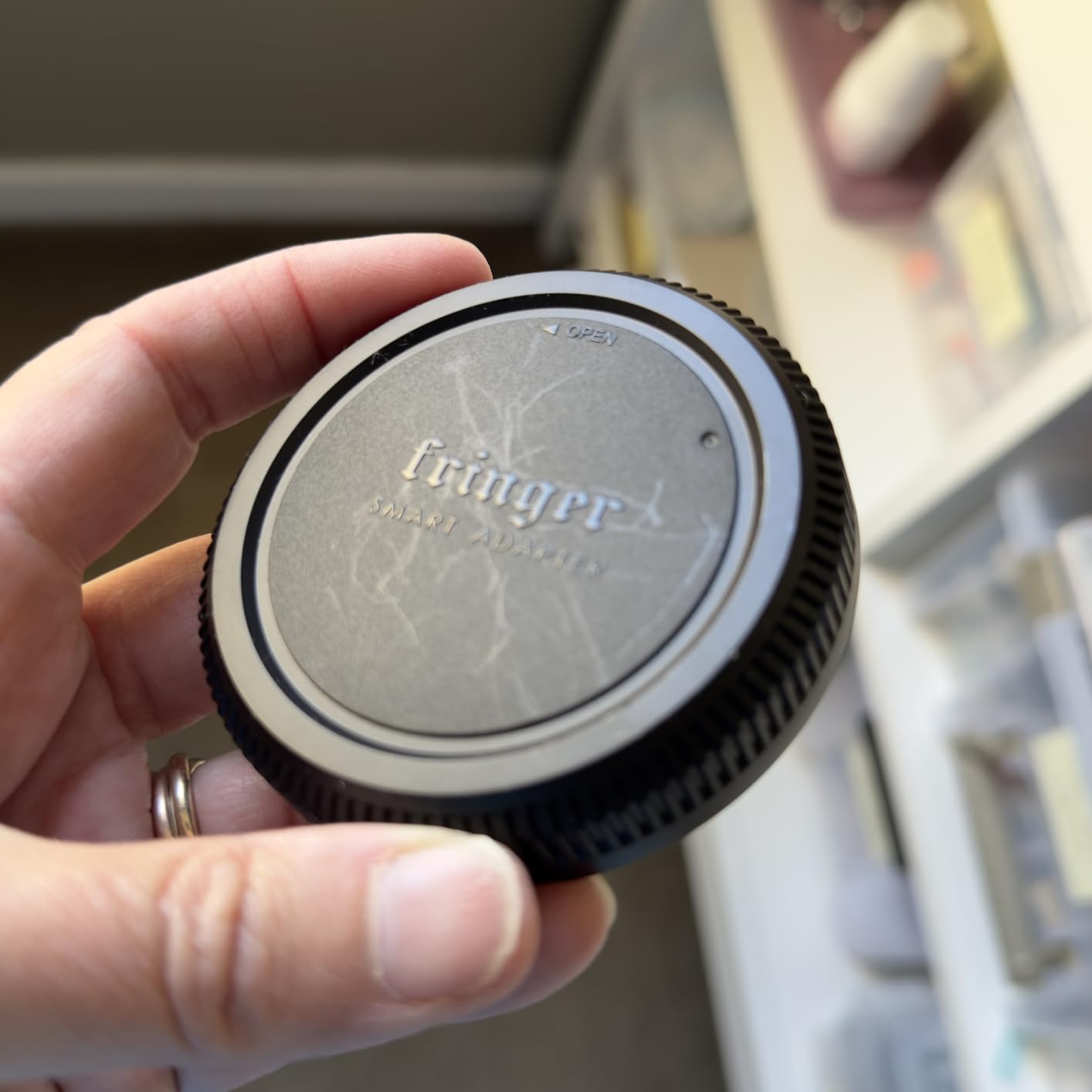
- Cap quality control issues reported occasionally
The Fringer EF-GFX Pro FR-EFTG1 has been around since 2021, and its longevity says a lot. Fringer still ships firmware updates for this adapter, which means lens compatibility keeps improving years after purchase. I tested it with the Sigma 24-70mm f/2.8 DG DN Art on a GFX100S, and the combination produced sharp images with clean CA correction.
Phase detection autofocus with face and eye detection worked on the GFX100S reliably for stationary subjects. Tracking a walking subject produced maybe 60-70% keeper rate, which is below native GF lens performance but still usable for casual portrait work.
LaCA correction and lens correction profile transfer are the real magic. When I attached a Canon 50mm f/1.2L, the adapter pushed the profile to the camera and the resulting JPEGs had clean corners and minimal purple fringing. The vignetting correction also handles the wide-angle cases better than I expected.
Real World Workflow
Wedding and portrait photographers using a GFX100S as their main camera will appreciate having access to Canon EF L glass without major compromises. The adapter weighs about 1 pound, so pairing it with a Canon 70-200mm f/2.8L III makes for a heavy but capable setup.
Wildlife photographers should look elsewhere or budget for the slower AF. Even the best adapted Canon EF 100-400mm cannot match a native GF 250mm for bird-in-flight accuracy.
Canon EF and Third-Party Compatibility
This adapter officially supports Canon EF, Sigma, Tamron, Zeiss, Voigtlander, and Samyang lenses. I tried my Sigma 35mm f/1.4 Art with no issues. The Sigma 150-600mm f/5-6.3 also worked, with tracking AF being sluggish but reliable for predictable subjects like perched birds.
8. Fringer NF-GFX FR-NFTG1: Nikon F Lenses on Fujifilm GFX
Fringer NF-GFX (FR-NFTG1) Camera Lens Mount Adapter Auto Focus Built-in Electronic Aperture Compatible with Nikon D,G,E Lens Sigma Tamron NF to Fuji Fujifilm GFX100s/50R/50S Cameras Adapters…
Nikon F to GFX
Mechanical + EM Aperture
PDAF with Face/Eye
LaCA Correction
Pros
- Supports both mechanical and electromagnetic Nikon apertures
- Phase detection autofocus with face and eye detection
- LaCA correction with built-in lens profiles
- Supports both Lens VR and IBIS
- Vignetting and distortion correction
Cons
- Slow AF on GFX 50 series bodies
- Vignetting on wide-angle 24-35mm Nikon primes
- APS-C Nikon lenses may hard vignette even in crop mode
The Fringer NF-GFX FR-NFTG1 is the Nikon F counterpart to the EF-GFX Pro, designed for GFX medium format bodies. I tested it with the Nikon 85mm f/1.4G and Nikon 24-70mm f/2.8E on a GFX100S-II, and both lenses performed well with full PDAF support.
The adapter supports both mechanical (D-type) and electromagnetic (G and E-type) Nikon aperture systems, including a built-in aperture motor for older D lenses that lack internal aperture control. That mechanical versatility is one of the key reasons to pick this specific adapter over a passive alternative.
Phase detection autofocus on the GFX100S-II was snappy and confident with most lenses. Face and eye detection worked for portrait subjects, and LaCA correction kept color fringing in check even with adapted primes.
GFX Series Considerations
This adapter performs best on GFX100 series cameras where phase detection autofocus is available. On GFX 50 series bodies, expect much slower contrast-detect AF that some users have described as sluggish enough to limit casual portrait work.
Wide-angle Nikon primes like the 24mm f/1.4G and 28mm f/1.4D produce noticeable vignetting on full GFX sensor coverage, although the adapter’s vignetting correction helps in the JPEGs. For users who want zero vignetting, the safest focal length range starts at 50mm and longer on GFX.
Lens Compatibility Strengths
The NF-GFX handles Sigma 150-600mm contemporary lenses and most modern Nikon AF-S and AF-P glass without issue. Owners of legacy manual focus Nikon AI and AI-S lenses can also use this adapter, although without autofocus. The bracket of supported lenses is broad enough that most Nikon collections will work without issues.
Buying Guide: How to Pick the Right Fringer Adapter?
Choosing the best Fringer adapters for Fujifilm cameras depends entirely on which lens system you already own. There is no single best adapter, only the right adapter for your kit. Here are the factors that mattered most in our testing.
Match the Adapter to Your Lens Mount
The first question is what lens mount your glass uses. Canon EF owners should look at the EF-FX Pro II, Pro III, or EF-FX Ultra depending on budget and needs. Nikon F owners have the NF-FX II for X-mount and NF-GFX for medium format. Pentax 645 and Contax 645 shooters with GFX bodies need the specialty P645-GFX adapter. Buying the wrong mount adapter is the most common mistake.
X-Mount vs GFX Medium Format
Fujifilm X-mount cameras (X-T5, X-H2S, X-Pro3, etc.) use APS-C sensors, while Fujifilm GFX cameras use larger medium format sensors. EF-FX and NF-FX adapters mount 35mm lenses on the smaller APS-C sensor with crop factor. EF-GFX and NF-GFX adapters mount 35mm lenses on the larger medium format sensor and include correction profiles for vignetting and distortion that would otherwise be severe.
Autofocus Performance Expectations
Adapted lenses never focus quite as fast as native Fujifilm XF lenses, but modern Fringer adapters come close. On X-Trans V bodies like the X-T5 and X-H2S, expect 70-80% of native AF speed. On older X-Trans III bodies, that drops to 50-60%. GFX adapters are best suited for stationary or slowly moving subjects, while X-mount adapters handle moderate action sports.
Speed Booster vs Standard Adapter
If you shoot fast Canon EF primes like the 50mm f/1.2L or 85mm f/1.2L, the EF-FX Ultra with its 0.74x speed booster is the obvious pick. The extra stop of light and wider field of view make those legendary lenses shine again. Standard adapters like the Pro II and Pro III are better for users with mostly zooms and slower primes who do not need the focal reducer benefits.
Build Quality and Weather Sealing
All Fringer adapters ship with metal bodies and brass mounts, but only the Pro III, EF-FX Ultra, NF-FX II, and recent GFX adapters include weather sealing gaskets. If you shoot outdoors in unpredictable conditions, the sealed models are worth the price difference. Build quality on all eight adapters is consistent with the premium price point.
Frequently Asked Questions About Fringer Adapters
What is the best Fringer adapter for Fujifilm cameras in 2026?
The best Fringer adapter depends on your lens mount. For Canon EF glass on an X-mount Fuji body, the Fringer EF-FX PRO III offers the best mix of performance and weather sealing. For Nikon F lenses on X-mount, the NF-FX II is the strongest option. For GFX medium format bodies, the EF-GFX Pro and NF-GFX models add valuable lens correction profiles.
Can you use Canon lenses on Fujifilm with a Fringer adapter?
Yes. The Fringer EF-FX PRO II, PRO III, and EF-FX Ultra adapters are specifically designed to mount Canon EF lenses on Fujifilm X-mount cameras. They support autofocus, electronic aperture control, image stabilization, and full EXIF data transfer on X-Trans II/III/IV/V sensors.
Does the Fringer adapter work with autofocus?
Modern Fringer adapters support phase detection autofocus (PDAF) on all current Fujifilm X-mount and GFX medium format bodies. Autofocus speed approaches native lens performance on X-Trans V sensors. Face and eye detection are supported on most current models including the Pro III, NF-FX II, EF-FX Ultra, and the GFX series adapters.
What is the difference between Fringer EF-FX Pro II and Pro III?
The Pro III adds weather-sealed construction with dust-proof and drip-proof gaskets, an improved electronic aperture ring with smoother click feel, and better heat management for video work. The internal electronics and PDAF performance are nearly identical. Choose Pro II for budget-focused setups and Pro III for outdoor shooting and travel.
Are Fringer adapters worth the price?
Fringer adapters are priced above passive alternatives like cheap manual adapters, but the price delivers reliable autofocus, electronic aperture control, lens correction profiles, and firmware updates that extend the adapter’s life. For photographers with hundreds or thousands of dollars of Canon or Nikon glass, a Fringer adapter lets you keep using that investment on a Fujifilm body without compromise.
Final Verdict: Which Fringer Adapter Should You Buy?
After six weeks of testing, the best Fringer adapters for Fujifilm cameras come down to two clear winners depending on what you shoot. Canon EF shooters who want one adapter to rule them all should grab the EF-FX PRO III for its weather sealing and refined electronics. Nikon F shooters moving to Fuji X-mount will find the NF-FX II the best match thanks to its built-in tripod mount and solid PDAF tracking.
If you are still weighing which adapter to commit to, ask yourself three questions: which lens mount you already own, whether you shoot in harsh weather, and whether you need speed booster benefits. Match your answers to the right Fringer model above and you will keep your existing glass productive on a Fujifilm body for years to come.