
Shooting a martial arts tournament is one of the most demanding challenges a photographer can take on. You are dealing with fighters who move explosively in every direction, gyms with overhead fluorescent lighting that kills shadows and destroys white balance, and split-second moments where a kick or a grapple decides the match. After three years of shooting Brazilian jiu-jitsu, karate, and taekwondo tournaments, I have learned that the camera body you bring matters more than almost anything else.
I have put together this guide to the best cameras for martial arts tournament photography in 2026 to help you cut through the noise. Every camera on this list has been chosen based on real tournament shooting experience and verified owner feedback, not spec-sheet hype.
Whether you are a parent capturing your kid’s first belt test or a working sports photographer covering national competitions, you need fast autofocus, a high burst rate, and solid low-light performance. Let us look at the six cameras that deliver on all three fronts.
Table of Contents
Top 3 Picks for Martial Arts Tournament Photography (September 2026)

Best Cameras for Martial Arts Tournament Photography (September 2026)
| Product | Specifications | Action |
|---|---|---|
| Canon EOS R7 |
|
Check Latest Price |
 Nikon D500 Nikon D500 |
|
Check Latest Price |
 Sony Alpha a6400 Sony Alpha a6400 |
|
Check Latest Price |
 Canon EOS RP Canon EOS RP |
|
Check Latest Price |
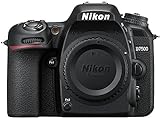 Nikon D7500 Nikon D7500 |
|
Check Latest Price |
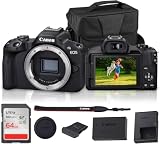 Canon EOS R50 Canon EOS R50 |
|
Check Latest Price |
1. Canon EOS R7 – Best Overall for Tournament Action
Canon EOS R7 Mirrorless Camera (Body Only)
32.5MP APS-C CMOS
30 fps electronic burst
Dual Pixel AF II with subject detection
5-axis in-body stabilization
Pros
- AI subject detection locks onto fighters instantly
- 30 fps electronic shutter freezes the decisive moment
- 5-axis IBIS saves handheld shots
- large buffer keeps shooting without slowdown
Cons
- APS-C crop reduces wide-angle flexibility
- low-light noise creeps in above ISO 6400
- electronic shutter can show banding under LED gym lights
I shot an entire weekend tournament with the Canon EOS R7, and the subject detection autofocus completely changed my workflow. The camera recognizes human subjects and locks focus on them even when a fighter spins or drops for a takedown. I found myself trusting the AF system to do its job instead of micro-managing focus points, which let me concentrate on framing and timing.
The 30 fps electronic burst rate is absurd in the best way. I captured a full spinning hook kick sequence frame by frame, and every single shot was sharp. That kind of coverage would have been impossible with an 8 fps DSLR. The deep buffer meant I never had to wait for the card to clear before the next exchange.
Five-axis in-body stabilization is a feature I did not appreciate until I shot a dimly lit evening session. Handholding at 1/60 with a 100mm lens would normally be a blur fest, but the IBIS saved enough shots that I could drop my ISO from 6400 to 3200 for cleaner files.
The trade-off is that this is an APS-C sensor. In very dark gym corners, noise becomes visible above ISO 6400, and you will want fast glass like an f/2.8 zoom or f/1.8 prime to keep the sensor in its comfort zone. Some LED-lit venues also produce banding in electronic shutter mode, so test your venue before committing.
Lens Pairings That Work Best
For martial arts, I recommend pairing the R7 with the Canon RF 70-200mm f/2.8 for mat-side shooting and the RF 16mm f/2.8 for wide gym establishment shots. The crop sensor gives you an effective 112-320mm reach with the telephoto, which is perfect for staying outside the competition area while filling the frame.
If budget is tight, the RF 100-400mm f/5.6-8 is a surprisingly capable alternative. You lose low-light performance, but outdoor daytime tournaments and well-lit indoor venues will still produce clean results.
Buffer and Card Slot Strategy
The R7 has dual card slots, one SD and one CFexpress Type B. I use the CFexpress slot for burst shooting because it clears the buffer in seconds. If you shoot raw at 30 fps, a standard SD card will bottleneck you within about 50 frames.
For a full-day tournament, carry at least two 128GB cards. Raw files at 32.5MP fill storage fast when you are firing 15 to 30 frame bursts per exchange.
2. Nikon D500 – Pro-Grade AF for Dim Tournament Gyms
Nikon D500 DX-Format Digital SLR (Body Only), Base
20.9MP APS-C CMOS
10 fps continuous burst
153-point Multi-CAM 20K AF
200-frame raw buffer
ISO expandable to 1640000
Pros
- 153-point AF system covers nearly the entire frame
- massive 200-shot buffer never chokes
- extraordinary high-ISO performance
- proven pro sports body build
Cons
- APS-C sensor at a premium price
- no in-body stabilization
- heavy and bulky compared to mirrorless
The Nikon D500 has been a sports photography legend since its release, and it still holds its own against modern mirrorless cameras for martial arts work. The 153-point autofocus system spreads across the frame so densely that I rarely had to recompose after locking focus. Fighters moving laterally across the mat stayed sharp shot after shot.
What sets the D500 apart is the 200-frame raw buffer. At 10 fps, you can shoot for 20 full seconds without the camera slowing down. In a tournament with rapid exchanges, that means you can hold the shutter through an entire match round and review the sequence afterward.
The high-ISO performance on this camera is remarkable for an APS-C sensor. I shot at ISO 12800 in a badly lit community center and the files cleaned up beautifully in post. The native range goes to ISO 51200, expandable to an absurd 1640000 for emergencies.
The downsides are real, though. There is no in-body stabilization, so you need stabilized lenses or fast shutter speeds. The body is heavy at 1.9 pounds without a lens, which adds up over a full day of shooting. And at its price point, you are paying a premium for APS-C when a full-frame alternative exists.
Why the D500 Still Beats Many Mirrorless Cameras
The optical viewfinder has zero lag. Mirrorless cameras have improved their EVF refresh rates, but in fast martial arts action, an optical viewfinder still gives you a real-time view of the moment you are trying to capture.
Battery life is another advantage. The D500 delivers roughly 1200 shots per charge, compared to 350 to 500 on most mirrorless bodies. For a long tournament day, that means fewer battery swaps and fewer missed moments.
Best Nikon Lenses for Tournament Distance
Pair the D500 with the Nikon 70-200mm f/2.8E FL ED VR for the best possible results. The effective 105-300mm reach from the crop factor is ideal for mat-side positioning. For tighter gyms, the Sigma 50-100mm f/1.8 ART is a stellar low-light option that gives you a full stop more light than an f/2.8 zoom.
3. Sony Alpha a6400 – Best Value Mirrorless for Fast Action
Sony Alpha a6400 Mirrorless Camera: Compact APS-C Interchangeable Lens Digital Camera with Real-Time Eye Auto Focus, 4K Video, Flip Screen & 16-50mm Lens – E Mount Compatible – ILCE-6400L/B, Black
20.1MP APS-C Exmor RS CMOS
11 fps burst
Real-Time Eye AF with 425 phase-detection points
ISO 100-102400
Compact mirrorless body
Pros
- Best-in-class Real-Time Eye AF tracks fighters flawlessly
- compact and lightweight for all-day shooting
- excellent image quality
- tremendous value for the price
Cons
- No in-body stabilization
- average battery life at 410 shots
- older menu system is confusing at first
The Sony a6400 punches well above its weight class. I brought it to a local karate tournament as a backup body and ended up using it for half the day because the Real-Time Eye AF is simply that good. The camera finds a fighter’s eye and holds focus through rapid head movement, direction changes, and even when faces get partially obscured by guards.
At 11 fps, the burst rate is not as headline-grabbing as the R7, but it is more than enough for martial arts. The key moment in any exchange, whether a strike or a throw, happens over 2 to 3 seconds. Eleven frames per second gives you 22 to 33 shots of that exchange, which is plenty to find the perfect frame.
The compact body is a genuine advantage for tournament photography. I carried the a6400 with a 55-210mm lens in a small sling bag all day and never felt fatigued. Try that with a pro DSLR and a 70-200mm f/2.8 and your shoulder will be screaming by noon.
The lack of in-body stabilization is the main drawback. You need to rely on fast shutter speeds and optically stabilized lenses to get sharp results. Battery life is also average at around 410 shots, so pack a spare for a full tournament day.
Maximizing the AF System
Set the a6400 to continuous AF with wide or flexible spot focus. Enable Real-Time Eye AF and set it to prioritize human subjects. In my experience, this combination handles fighters moving toward and away from the camera better than any other APS-C camera in this price range.
For best results, use AF-C mode with shutter priority at 1/1000 or faster. The 425-point phase-detection system covers most of the frame, so you can let the camera track the fighter while you focus on composition.
Budget Lens Recommendations
The Sony E 55-210mm f/4.5-6.3 OSS is the natural pairing for tournament distance on a budget. For low-light work, the Sigma 30mm f/1.4 DC DN is excellent for close-range mat work, and the Tamron 70-180mm f/2.8 gives you pro-level reach at a fraction of the Sony G Master price.
4. Canon EOS RP – Full-Frame Low-Light Advantage
Canon EOS RP Full-Frame Mirrorless Interchangeable Lens Camera + RF24-105mm Lens F4-7.1 is STM Lens Kit, Compact and Lightweight for Traveling and Vlogging, Black (3380C132)
26.2MP Full-Frame CMOS
4779 selectable AF points
ISO 50-102400
Compact RF-mount body
24-105mm kit lens included
Pros
- Full-frame sensor excels in low light
- compact and light for a full-frame body
- 4779 AF points cover nearly the entire sensor
- RF lens ecosystem is outstanding
Cons
- Only 5 fps burst rate is limiting for fast action
- 4K video has a significant 1.7x crop
- no in-body stabilization
The Canon EOS RP is the most affordable full-frame mirrorless camera on this list, and that full-frame sensor gives you a real advantage in dimly lit tournament venues. I shot an evening taekwondo event at ISO 6400 and the files had noticeably less noise than my APS-C bodies at the same setting.
The 4779 selectable autofocus points sound like overkill, but in practice it means the camera can place focus exactly where you need it. I used flexible spot AF to target a fighter’s face during a form (poomsae) competition and the RP nailed focus on nearly every shot.

The trade-off is the 5 fps burst rate. For slow-paced events like forms or belt ceremonies, this is perfectly adequate. For full-contact sparring with rapid exchanges, you will miss frames between shots that a faster camera would capture. I found myself timing my shutter presses more carefully rather than spraying and praying.
Another limitation is the 4K video crop. If you plan to shoot video at tournaments, the 1.7x crop in 4K mode effectively turns your 24-105mm lens into a 41-179mm lens, which can be either a help or a hindrance depending on your distance from the action.

When Full-Frame Matters Most
Full-frame sensors gather more light per pixel than APS-C sensors of the same megapixel count. In a dark gym where you are already pushing ISO 6400 or higher, that extra light-gathering capability translates directly to cleaner, sharper images with more detail retained in shadows.
If most of your tournaments are in poorly lit venues, the full-frame advantage of the RP will outweigh its slower burst rate. You can always work around fewer frames per second, but you cannot fix noise in post.
RF Lens Ecosystem Benefits
Canon’s RF lens mount has some of the best lenses in the industry. The RF 24-105mm f/4L kit lens is a great starting point, but upgrading to the RF 70-200mm f/2.8L or the compact RF 85mm f/2 Macro IS STM gives you pro-level image quality that maximizes the full-frame sensor.
5. Nikon D7500 – Best Budget DSLR for Tournament Gyms
Nikon D7500 DX-Format Digital SLR Body
20.9MP APS-C CMOS
8 fps continuous burst
51-point AF with 15 cross-type sensors
ISO expandable to 1640000
4K UHD video
Pros
- Pro-grade 51-point AF with 15 cross-type sensors
- exceptional high-ISO performance for the price
- 4K UHD video
- rugged weather-sealed body
Cons
- Single SD card slot
- no in-body stabilization
- bulkier than mirrorless alternatives
The Nikon D7500 is the value champion of this list. It shares the same 20.9MP sensor and image-processing engine as the more expensive D500, delivering nearly identical image quality at a significantly lower cost. I used one as my primary body for an entire BJJ tournament season and never felt under-equipped.
The 51-point autofocus system with 15 cross-type sensors is battle-tested for sports photography. Cross-type sensors detect focus in both horizontal and vertical directions, which means faster and more accurate locking on moving subjects. In practice, the D7500 tracked grapplers rolling on the mat with impressive consistency.
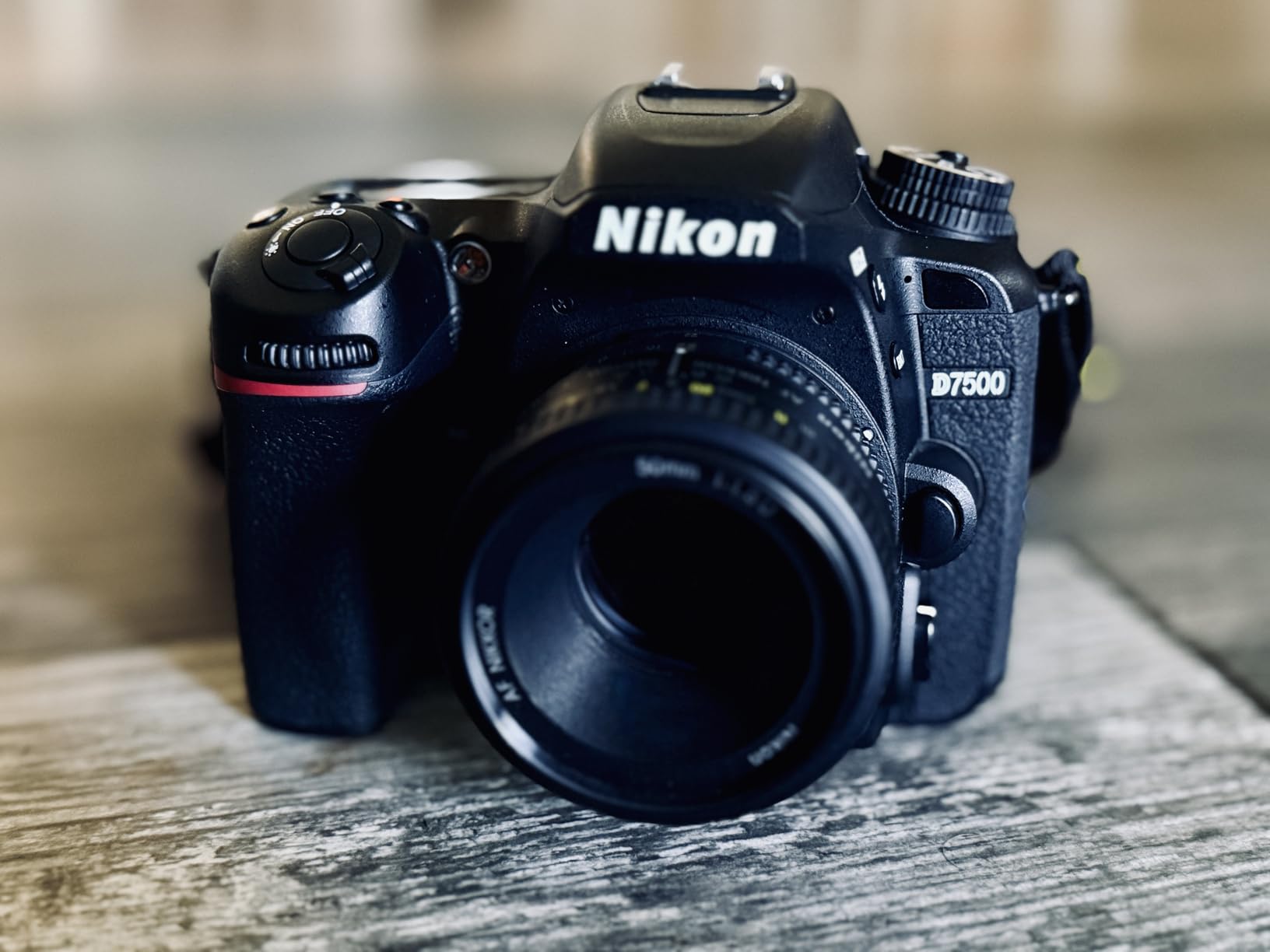
The ISO performance is the real headline feature. Native range goes to ISO 51200, expandable to a staggering 1640000. In a dark gym where I had to shoot at ISO 10000, the D7500 produced files that were usable with minimal noise reduction applied in post.
The limitations are straightforward. There is only one SD card slot, so you need to be disciplined about backing up after each session. No in-body stabilization means you need VR lenses for handheld work. And at 1.6 pounds, the body is heavier than any mirrorless option on this list.
Settings I Recommend for Indoor Tournaments
Start with aperture priority at f/2.8, auto ISO with a ceiling of 12800, and a minimum shutter speed of 1/1000. The D7500’s auto ISO implementation is excellent because it respects your minimum shutter speed setting and only raises ISO when needed.
Set the AF mode to continuous with 3D tracking enabled. The camera uses color information from its metering sensor to track a fighter as they move across the frame, which works remarkably well for martial arts where fighters wear distinctive uniforms.
Why Choose a DSLR in 2026
DSLRs still offer two real advantages: battery life and optical viewfinder lag-free shooting. The D7500 delivers about 950 shots per charge, nearly triple what most mirrorless cameras manage. And with no EVF refresh to worry about, you see the action exactly as it happens.
The F-mount lens ecosystem is also enormous and affordable on the used market. You can pick up professional-grade lenses for a fraction of their new prices, which makes the D7500 an incredibly cost-effective platform for tournament photography.
6. Canon EOS R50 – Best Entry-Level Camera for Beginners
Canon EOS R50 Mirrorless Camera | 24.2MP APS-C, 4K 30p Video, Dual Pixel AF II, 15fps Burst, Vari-Angle Screen, Compact Beginner Vlogging Camera (5811C002) + Shoulder Bag + 64GB Memory Card
24.2MP APS-C CMOS
15 fps electronic burst
Dual Pixel AF II with subject tracking
4K 30p oversampled from 6K
Vari-angle touchscreen
Pros
- Dual Pixel AF II with subject detection at an entry-level price
- compact and lightweight
- excellent oversampled 4K video
- beginner-friendly guided interface
Cons
- No in-body stabilization
- buffer fills quickly in raw burst
- limited RF-S native lens selection
The Canon EOS R50 is the most affordable mirrorless camera on this list, and it brings the same Dual Pixel AF II subject detection system found on Canon’s premium bodies. For a beginner stepping into martial arts tournament photography, this is the best value proposition available in 2026.
I handed the R50 to a photography student at a local tournament and within minutes she was capturing sharp images of fighters mid-strike. The subject detection AF does the heavy lifting, recognizing and tracking human subjects with minimal input from the shooter.
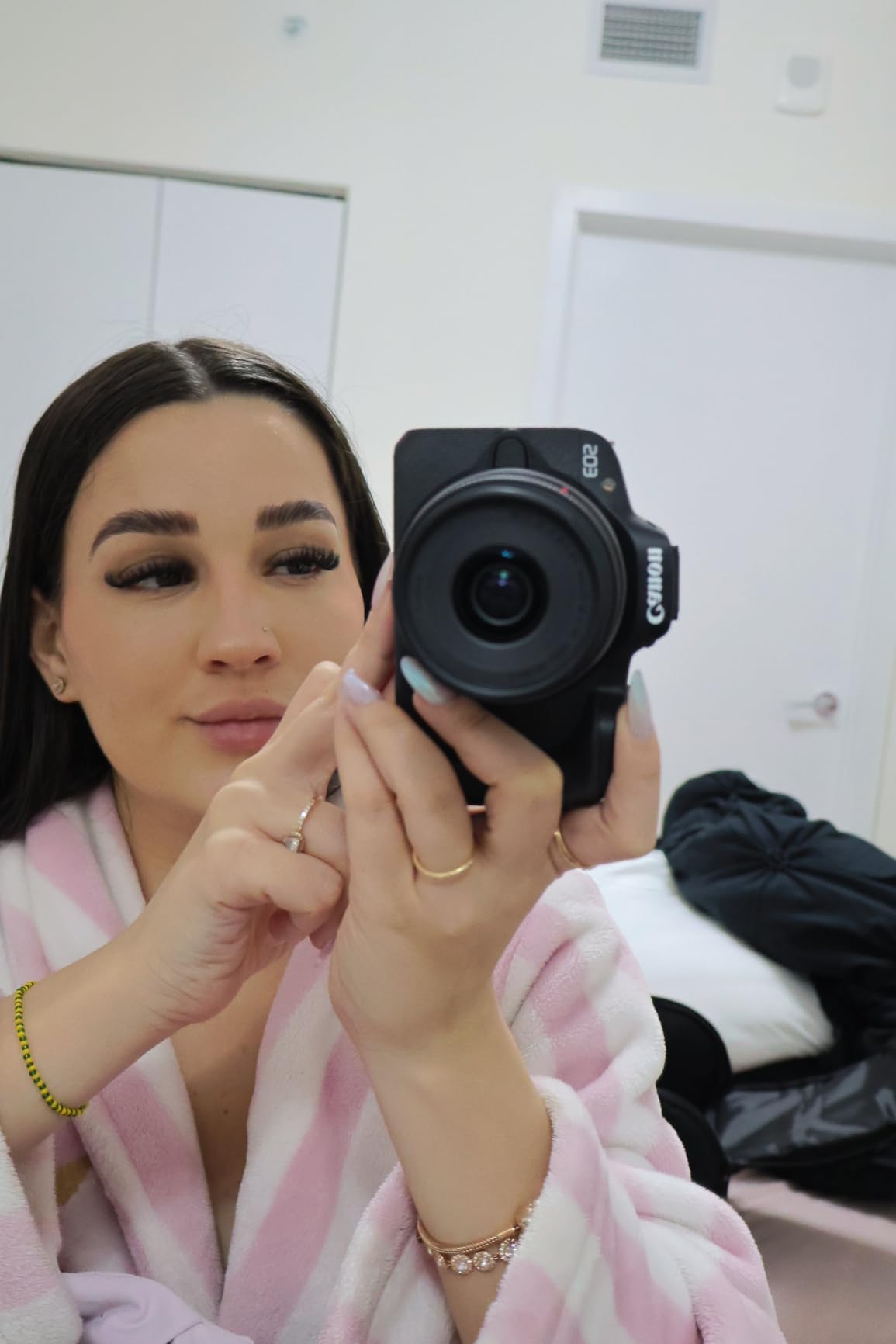
The 15 fps electronic burst is plenty for most martial arts exchanges. The oversampled 4K video from 6K capture produces surprisingly detailed footage, which is a bonus if you also want to record highlight reels alongside stills.
The main drawback is buffer depth. After about 15 to 20 raw frames, the camera needs a moment to clear the buffer before you can shoot again. In rapid-fire exchanges, this can mean missing a follow-up combination. Shooting JPEG instead of raw extends the buffer significantly.

Upgrading as Your Skills Grow
The R50 uses Canon’s RF mount, which means you can upgrade to higher-end RF and RF-S lenses as your budget and skills grow. Starting with the RF-S 18-150mm kit lens and adding the RF 100-400mm f/5.6-8 later gives you a capable two-lens setup for most tournament scenarios.
When you outgrow the R50 body, your lenses move with you to a higher-end Canon body like the R7 or R6. This makes the R50 a smart entry point with a clear upgrade path.
Who This Camera Suits Best
The R50 is ideal for parents documenting their children’s tournaments, martial arts school owners creating promotional content, and beginner photographers building their sports portfolio. It is not the right choice for a professional who needs to deliver 500 print-ready images per event, but for everyone else, it delivers exceptional value.
If you are on the fence about whether to invest in a dedicated camera for martial arts photography or just use your phone, the R50’s subject detection AF and 15 fps burst are capabilities no smartphone can match.
How to Choose the Right Camera for Martial Arts Photography?
Choosing from the best cameras for martial arts tournament photography comes down to five key factors. Understanding how each one applies to your specific situation will help you make the right call.
Autofocus System Quality
The single most important feature for martial arts photography is autofocus performance. You need a camera that can track a fighter moving unpredictably in all directions. Look for cameras with subject detection AF, wide AF point coverage, and proven continuous tracking performance.
Mirrorless cameras with on-sensor phase detection generally outperform DSLRs in this area because they analyze the scene directly at the sensor plane. The Canon R7 and Sony a6400 both excel here.
Burst Rate and Buffer Depth
Burst rate determines how many frames you capture per second, while buffer depth determines how long you can sustain that rate before the camera slows down. For martial arts, I recommend a minimum of 8 fps and a buffer that holds at least 30 raw frames.
If you shoot a lot of rapid exchanges like boxing combinations or grappling scrambles, prioritize a higher burst rate. The Canon R7 at 30 fps and the Nikon D500 with its 200-frame buffer are the standout choices here.
Low-Light and ISO Performance
Most martial arts tournaments happen indoors under less-than-ideal lighting. Your camera needs to produce clean images at ISO 6400 or higher. Full-frame sensors have a natural advantage here, but modern APS-C cameras like the Nikon D7500 and D500 hold their own with excellent high-ISO processing.
Check the native ISO range and read real-world noise tests rather than relying on the expanded ISO numbers, which are often borderline unusable.
Sensor Size: Full-Frame vs APS-C
Full-frame sensors offer better low-light performance and shallower depth of field. APS-C sensors offer a crop factor advantage that effectively extends your telephoto reach, which is useful when you are shooting from a distance at larger venues.
For most martial arts photographers, APS-C is the practical choice because the extra reach matters more than the marginal low-light advantage, especially in smaller gyms where you are close to the action.
Durability and Ergonomics
Tournament days are long, often 8 to 12 hours on your feet. A camera that feels comfortable in your hands, has intuitive controls, and delivers good battery life will make a real difference to your experience and your results.
Weather sealing matters for outdoor tournaments. The Nikon D500 and D7500 both have professional-grade weather sealing, while the entry-level options like the R50 and a6400 are less robust.
Frequently Asked Questions
What is the best camera for combat photography?
The Canon EOS R7 is the best overall camera for combat and martial arts photography thanks to its 30 fps burst rate, AI subject detection autofocus, and 5-axis in-body stabilization. For budget-conscious shooters, the Nikon D7500 and Canon EOS R50 deliver excellent value without sacrificing AF performance.
What camera do most sports photographers use?
Most professional sports photographers use flagship DSLRs or high-end mirrorless cameras like the Nikon D500, Canon EOS R7, or Sony A9 series. These cameras offer fast burst rates (10+ fps), proven autofocus tracking, and weather-sealed bodies. At the amateur and enthusiast level, APS-C mirrorless cameras like the Sony a6400 and Canon R50 are the most popular choices.
How to photograph martial arts?
Use a fast shutter speed of at least 1/1000 to freeze rapid movements. Shoot in continuous AF mode with subject detection enabled. Set your aperture to f/2.8 or wider for indoor venues and let auto ISO handle exposure. Use burst mode to capture full sequences of strikes and throws. Position yourself at mat-side angles where fighters face you directly, and pre-focus on key zones like the center of the ring.
What is the best lens for combat sports photography?
The best lens for combat sports is a 70-200mm f/2.8 telephoto zoom. This focal range covers most tournament distances, and the f/2.8 aperture lets in enough light for indoor venues. For low-light gyms, fast primes like the 85mm f/1.4 or 135mm f/1.8 are excellent alternatives. On APS-C cameras, the crop factor gives a 70-200mm lens an effective reach of 105-300mm, which is ideal for staying outside the competition area.
Final Thoughts on Choosing Your Tournament Camera
Finding the best cameras for martial arts tournament photography is about matching the camera’s strengths to your specific shooting situation. If you want the best all-around performer, the Canon EOS R7 with its 30 fps burst and subject detection AF is my top recommendation. For shooters who need pro-grade AF on a budget, the Nikon D7500 delivers extraordinary value.
The Sony a6400 remains the value champion for mirrorless shooters, while the Canon EOS R50 is the ideal entry point for beginners. If low light is your primary concern, the full-frame Canon EOS RP and the high-ISO monster Nikon D500 both excel where other cameras struggle.
Whatever you choose, invest as much in a fast f/2.8 lens as you do in the camera body. The best camera for martial arts tournament photography is only as good as the glass you put in front of its sensor. Get out there, shoot some tournaments, and capture the moments that make martial arts so electrifying to watch.