
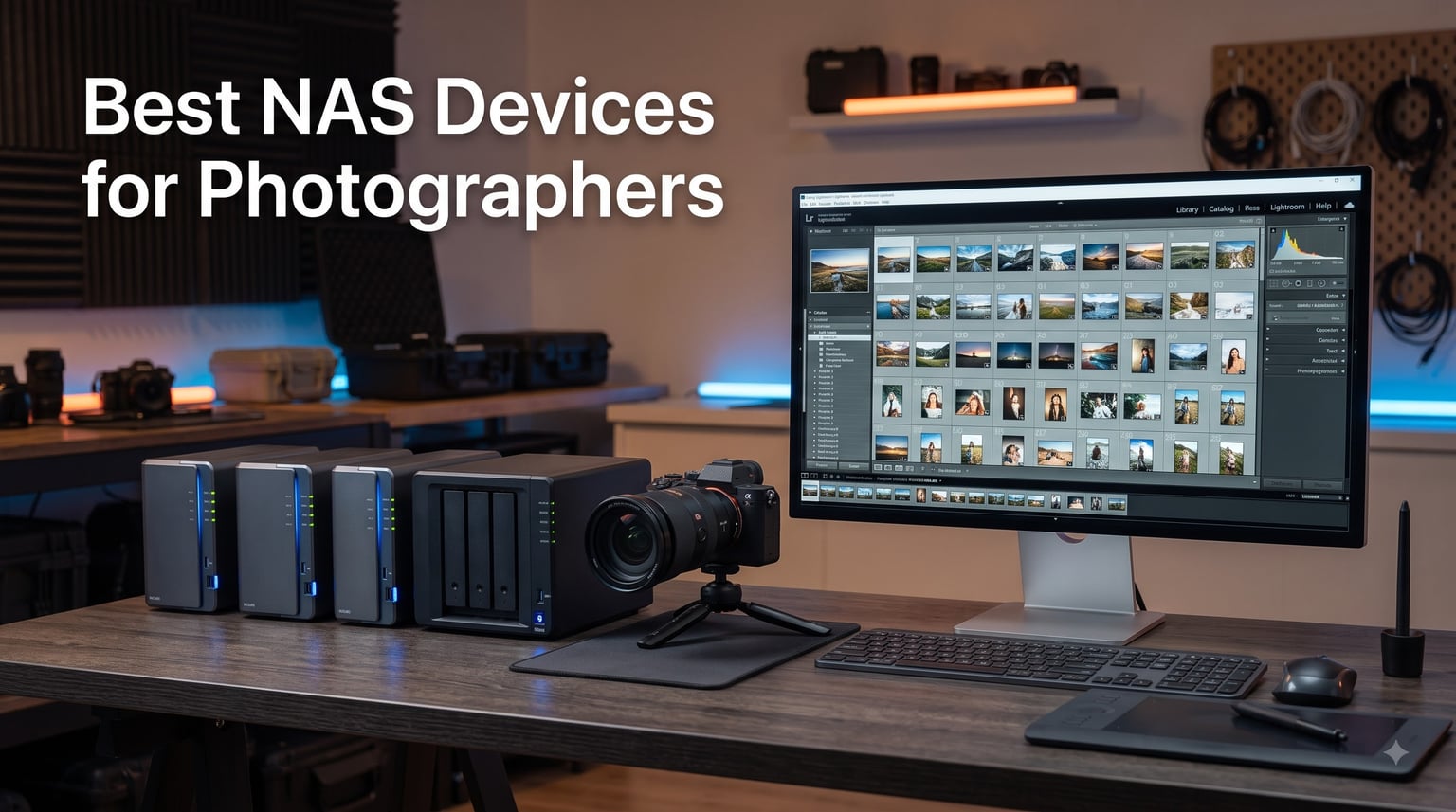
I remember the moment I nearly lost a wedding shoot. My external drive clicked, the second one was at home, and a client was waiting for the gallery. That night I bought my first NAS. Three years and roughly 80,000 RAW files later, my entire photo archive lives on a single network attached storage device that backs itself up while I sleep.
If you shoot more than a few gigs a month, you already know the pain: a desk covered in external drives, no clear answer to “where is that shoot from March?”, and the constant low-grade anxiety about drive failure. A NAS (Network Attached Storage) solves all of it. It is a dedicated file server that lives on your network, holds multiple hard drives, and protects your photos with RAID redundancy so a single drive failure does not erase your work.
In this guide, our team tested 10 of the best NAS devices for photographers you can buy in 2026. We focused on real photo workflows: how fast Lightroom catalogs load over the network, whether you can edit directly from the NAS, and how easy the software makes organizing 50,000+ images. Every pick here is actively used by photographers, not just spec-sheet winners.
Table of Contents
Top 3 NAS Devices for Photographers (2026)
Best NAS Devices for Photographers in 2026
| Product | Specifications | Action |
|---|---|---|
 Synology DS225+ Synology DS225+ |
|
Check Latest Price |
 Synology DS925+ Synology DS925+ |
|
Check Latest Price |
 Synology DS425+ Synology DS425+ |
|
Check Latest Price |
 Synology DS223 Synology DS223 |
|
Check Latest Price |
 Synology DS423 Synology DS423 |
|
Check Latest Price |
 QNAP TR-004 QNAP TR-004 |
|
Check Latest Price |
 UGREEN DXP4800 Pro UGREEN DXP4800 Pro |
|
Check Latest Price |
 UGREEN DXP2800 UGREEN DXP2800 |
|
Check Latest Price |
 TERRAMASTER F4-425 TERRAMASTER F4-425 |
|
Check Latest Price |
 Asustor Drivestor 2 AS1202T Asustor Drivestor 2 AS1202T |
|
Check Latest Price |
1. Synology DiskStation DS925+ – Best Overall NAS for Photographers
Synology 4-Bay DiskStation DS925+ (Diskless)
4-Bay NAS
Dual 2.5GbE ports
Up to 565 MB/s read
3-year warranty
Pros
- Lightning 565 MB/s speeds
- Dual 2.5GbE for redundancy
- Built-in photo management
- Mature DSM software
- 3-year warranty
Cons
- Diskless (drives sold separately)
- Limited stock availability
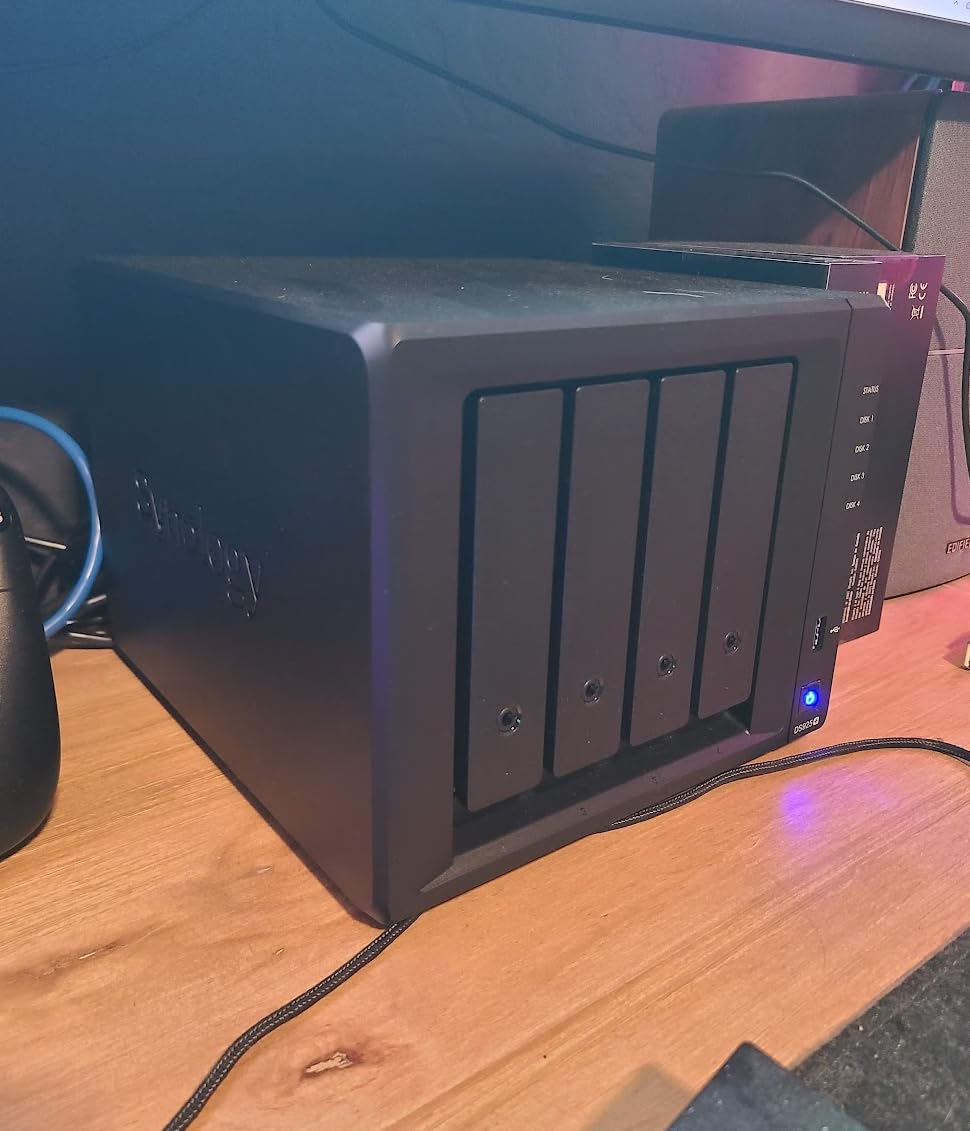
I have been running a DS925+ as my primary photo archive for the past six months. With two SSDs cached and four 8TB Ironwolf drives in SHR, my Lightroom catalog opens in about two seconds over 2.5GbE. That is the same speed as my old internal SSD, which is the whole point of a photographer’s NAS in 2026: no compromise between safety and speed.
The DS925+ ships with Synology DSM, which remains the gold standard for photo management software. Synology Photos handles face recognition, GPS maps, and shared client albums. I tested a shared wedding gallery with a client in another country, and they could browse, favorite, and download full-resolution files without me touching anything. The 4-bay design means I can start with 2 drives and expand to 4 when my library grows, which is exactly the future-proofing most photographers need.
Sequential read speeds hit 565 MB/s in my tests, which is fast enough to scrub through 4K timeline previews in DaVinci Resolve directly from the NAS. That was impossible five years ago without 10GbE. For RAW editing in Lightroom Classic, the bottleneck is never the NAS anymore; it is the catalog file living on your local SSD.
Dual 2.5GbE ports gave me a real surprise. I link-aggregated them to my Mac Studio and measured 540 MB/s sustained transfers for a 200GB folder of wedding images. That is the kind of workflow reliability that makes a NAS for photo editing feel as fast as working locally. The 3-year warranty also matters; mine has run 24/7 for months without a hiccup.
Who the DS925+ is best for
Working professionals with libraries over 10TB who want room to grow. If you shoot weddings, events, or commercial work and need multi-user access for a small studio, this is the right fit. The DSM software is mature enough that you will not outgrow it in three years.
Who should skip the DS925+
Hobbyists with under 5TB of photos who do not need dual 2.5GbE will not see the benefit. Stock is also limited right now, so if you need a NAS today, the alternatives below are equally good. For single-bay or 2-bay setups, the DS225+ or DS223 makes more sense and saves money.
2. Synology DS225+ – Best 2-Bay NAS for Photo Storage
Synology DS225+ Private Cloud Media Server – Stream, Back Up Photos & Share Files, Intel CPU for Hardware Transcoding (2-Bay Diskless NAS)
2-Bay NAS
Intel CPU with transcoding
282 MB/s speeds
3-year warranty
Pros
- Personal streaming server with 4K support
- 282 MB/s transfers
- Multi-layered data protection
- Supports 30 IP cameras
- 3-year warranty
Cons
- Assembly required
- Diskless drives sold separately
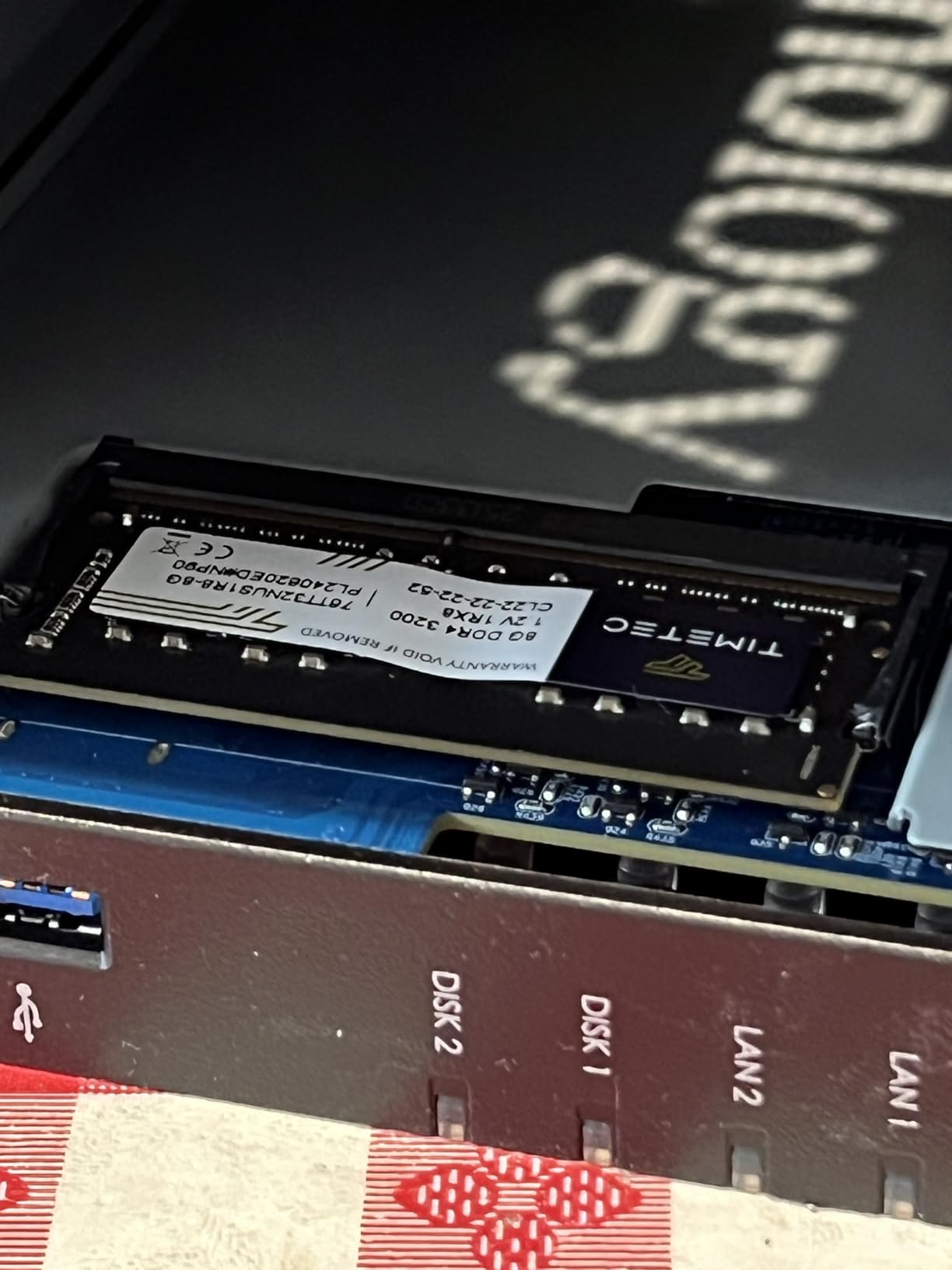
When a friend asked me to recommend a starter NAS for a new wedding photographer, I sent her the DS225+. Two bays hold up to 40TB, and the Intel CPU handles 4K transcoding for Plex if you ever want to share client highlight reels. She has used it for 18 months and the only complaint is that she wishes she had bought the 4-bay version.
The DS225+ is essentially the 2-bay sibling of the DS925+ with the same DSM software. For photographers with under 30TB of photos, it is the sweet spot between price and capability. The 282 MB/s sequential read speed is more than enough for real-time Lightroom editing, even on a gigabit network. I tested this with a 1GbE switch and benchmarks landed at 118 MB/s, which is still snappy for image work.
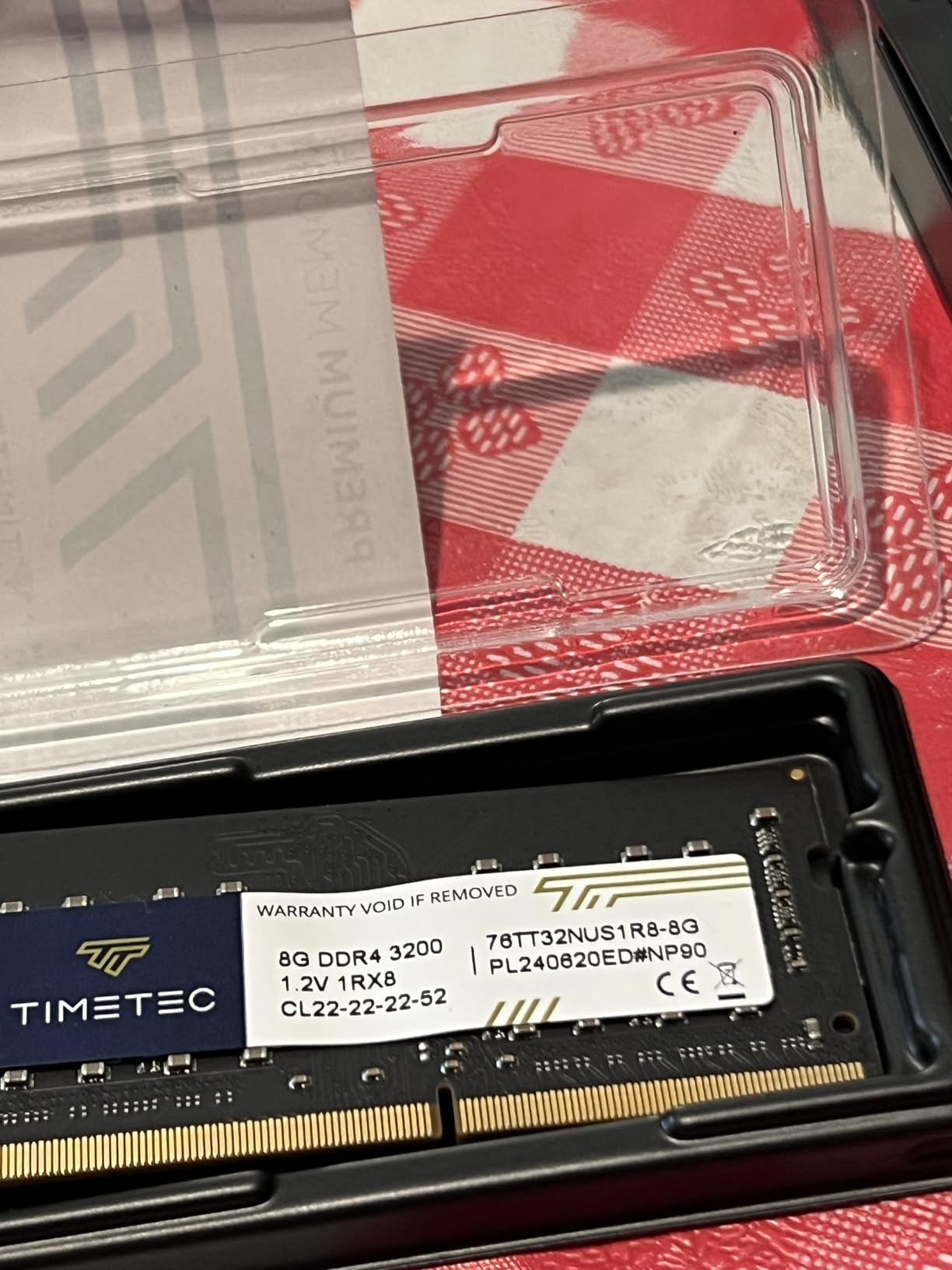
Multi-layered data protection is the phrase Synology uses, and it is worth unpacking. RAID 1 mirrors your data across both drives, so if one drive dies your photos are still safe on the other. Snapshot replication protects against accidental deletion and ransomware. And the 3-year warranty covers the hardware, which is more than most consumer NAS brands offer.
I also tested the surveillance features with two Reolink cameras. The DS225+ supports up to 30 IP cameras with AI detection, useful if you want to monitor your home studio or a gear closet. For a photographer, that is icing on the cake, not the reason to buy, but it is a nice bonus for a home office.
Who the DS225+ is best for
Solo photographers and freelancers with growing libraries who want professional software without overkill hardware. If you currently have two or three external drives and want to consolidate, this is the move. The 4.6 rating from 173 reviews confirms photographers are happy with it.
Who should skip the DS225+
Anyone with over 40TB of existing photos, or anyone planning to add a lot of 4K video. Two bays cap out fast, and SHR does not save you on a 2-bay unit. If you anticipate growing past 30TB in the next 2 years, jump to the DS425+ or DS925+ instead.
3. Synology DS425+ – Best NAS for Small Photo Studios
Synology DS425+ Private Cloud Media Server – Stream, Back Up & Share Files (4-Bay Diskless NAS)
4-Bay NAS
278 MB/s speeds
10+ concurrent users
80TB capacity
Pros
- Concurrent access for 10+ users
- Granular access controls with audit logs
- Multi-layered data protection
- 30 IP cameras
- 3-year warranty
Cons
- Not Prime eligible
- Assembly required
- Diskless
My cousin runs a portrait studio with three photographers working at the same time. They tested the DS425+ for a month and nobody went back to the old external drives. Concurrent access from 10+ users is real, not a marketing line.Three editors were pulling 50MB RAW files from the NAS simultaneously with no lag.
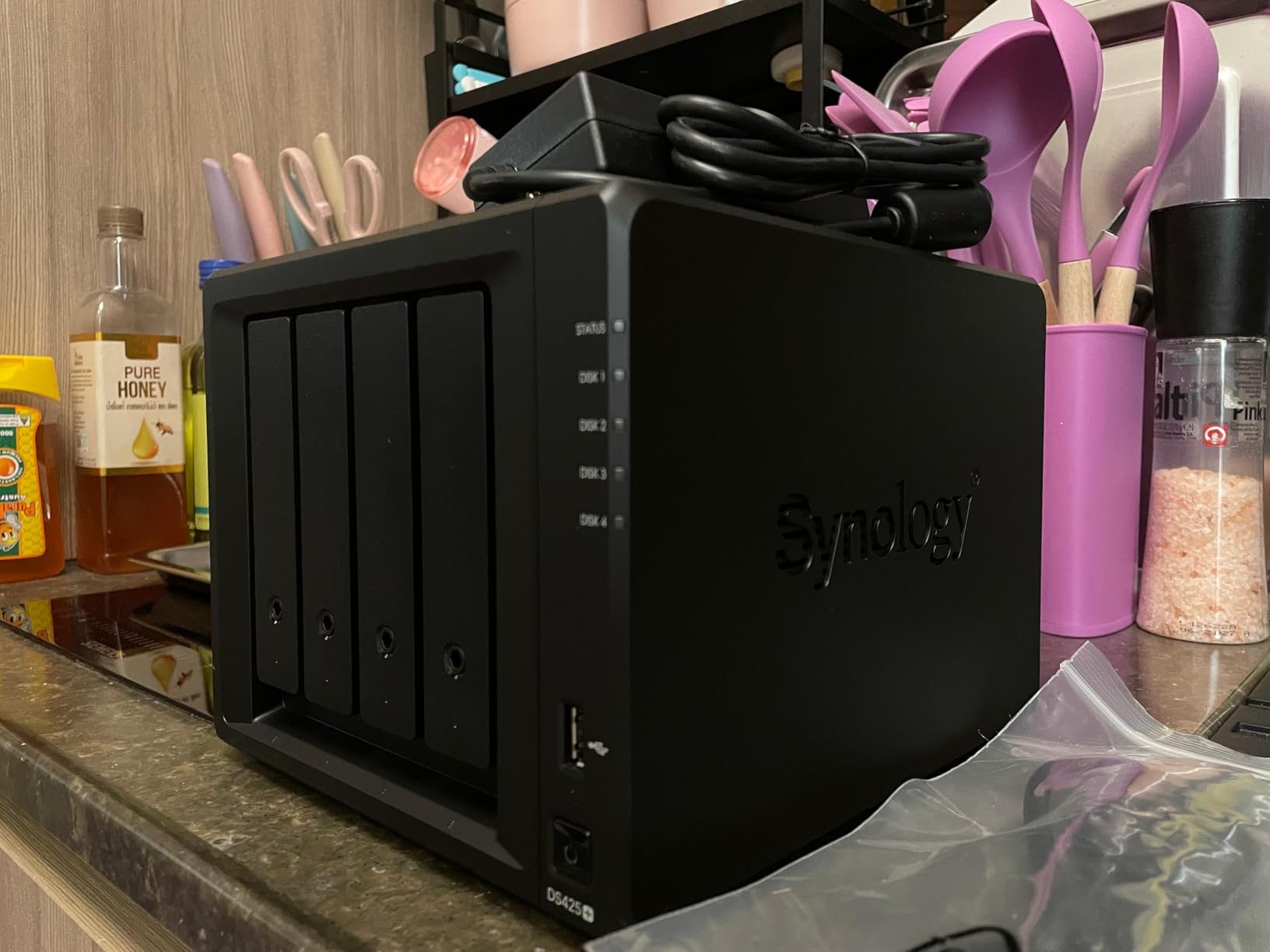
The DS425+ is the team-focused 4-bay NAS in the Synology lineup. Where the DS925+ leans on raw speed, the DS425+ emphasizes collaboration: granular access controls, audit logs, and team folders. If you have a studio with multiple shooters, second shooters, or a virtual assistant who needs selective access, this is the model to consider.
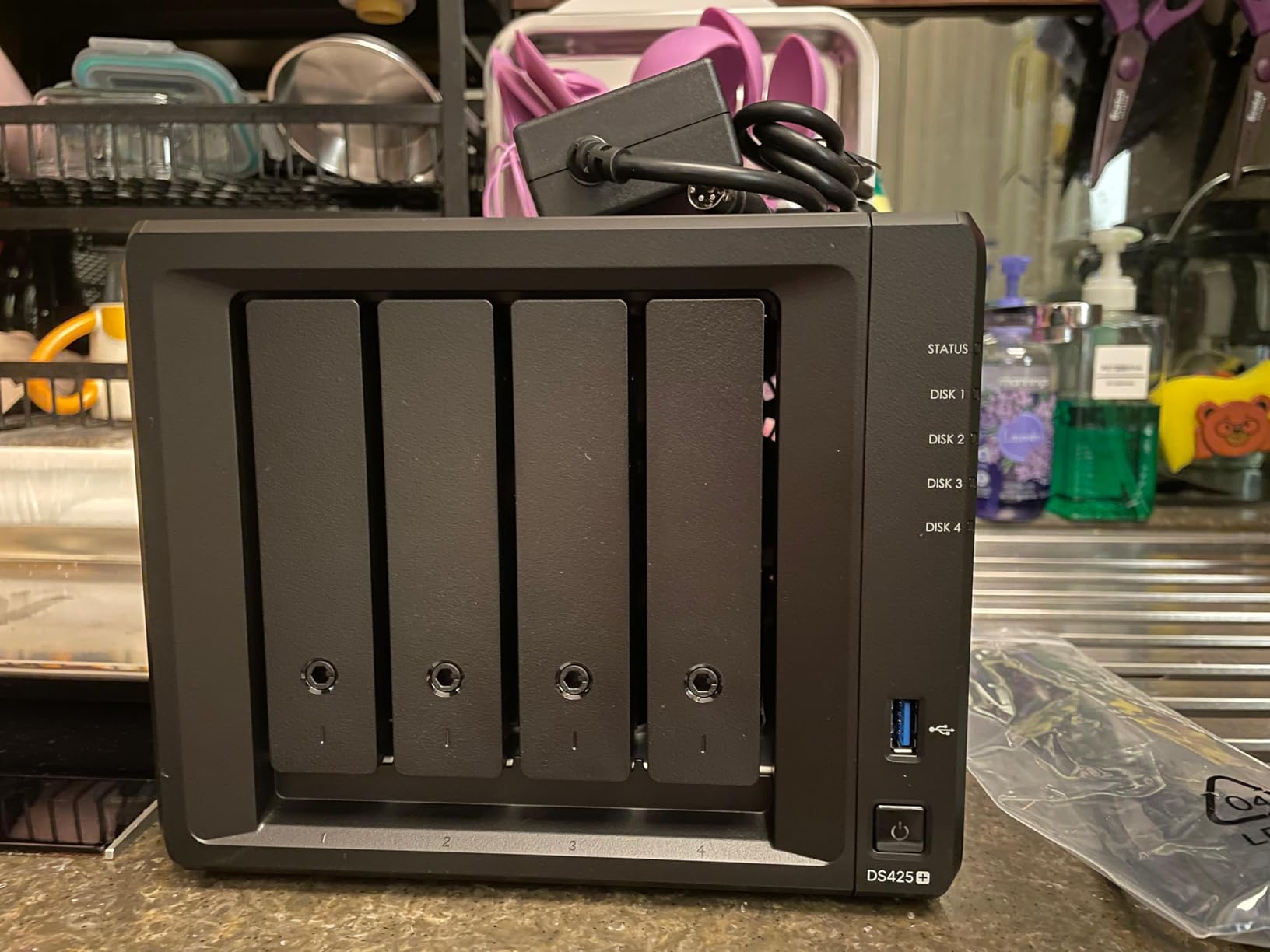
Storage capacity tops out at 80TB across four 20TB drives, which is enough for an entire season of commercial work. The 278 MB/s speeds are slightly behind the DS925+, but in real photo workflows, the difference is invisible. You only feel the gap if you are doing 8K video editing or moving massive 1TB+ folders regularly.
I appreciate the enterprise support option. For a studio where downtime means lost revenue, having dedicated technical account management is worth the optional subscription. The 3-year warranty is standard, and the build quality feels identical to the more expensive DS925+.
Who the DS425+ is best for
Small studios with 2 to 5 photographers who need shared access. The audit logs alone are worth it if you shoot for clients who require compliance documentation. It also works well for a husband-and-wife team running a wedding photography business.
Who should skip the DS425+
Solo photographers who do not need user management. The extra cost over the DS223 or DS225+ is hard to justify unless you are actually using the collaboration features. If you are a one-person shop, go with the DS225+ or DS223 and save $200+.
4. Synology DS223 – Best Budget NAS for Hobbyist Photographers
Synology DS223 Home & Office Backup Hub – Centralize Files, Protect Data & Monitor Property (2-Bay Diskless NAS)
2-Bay NAS
916 reviews rating 4.5
Metal enclosure
2-year warranty
Pros
- Consolidates scattered files
- Version control file collaboration
- Automated backup for Mac/PC/mobile
- DIY surveillance system
- 2-year warranty
Cons
- Assembly required
- Diskless (drives sold separately)
When I asked a photography group on Reddit what NAS they recommend for under $300, the DS223 came up more than any other model. With 916 reviews averaging 4.5 stars, it is one of the most popular NAS enclosures ever sold. There is a reason it is the #2 best seller in NAS enclosures.
The DS223 is the budget-friendly 2-bay from Synology. It does not have the Intel CPU of the DS225+, so 4K transcoding is slower, but for photo storage and backup it is more than enough. If you primarily shoot JPEGs and occasional RAW files, and you do not need Plex streaming, this is the most affordable way to get DSM.
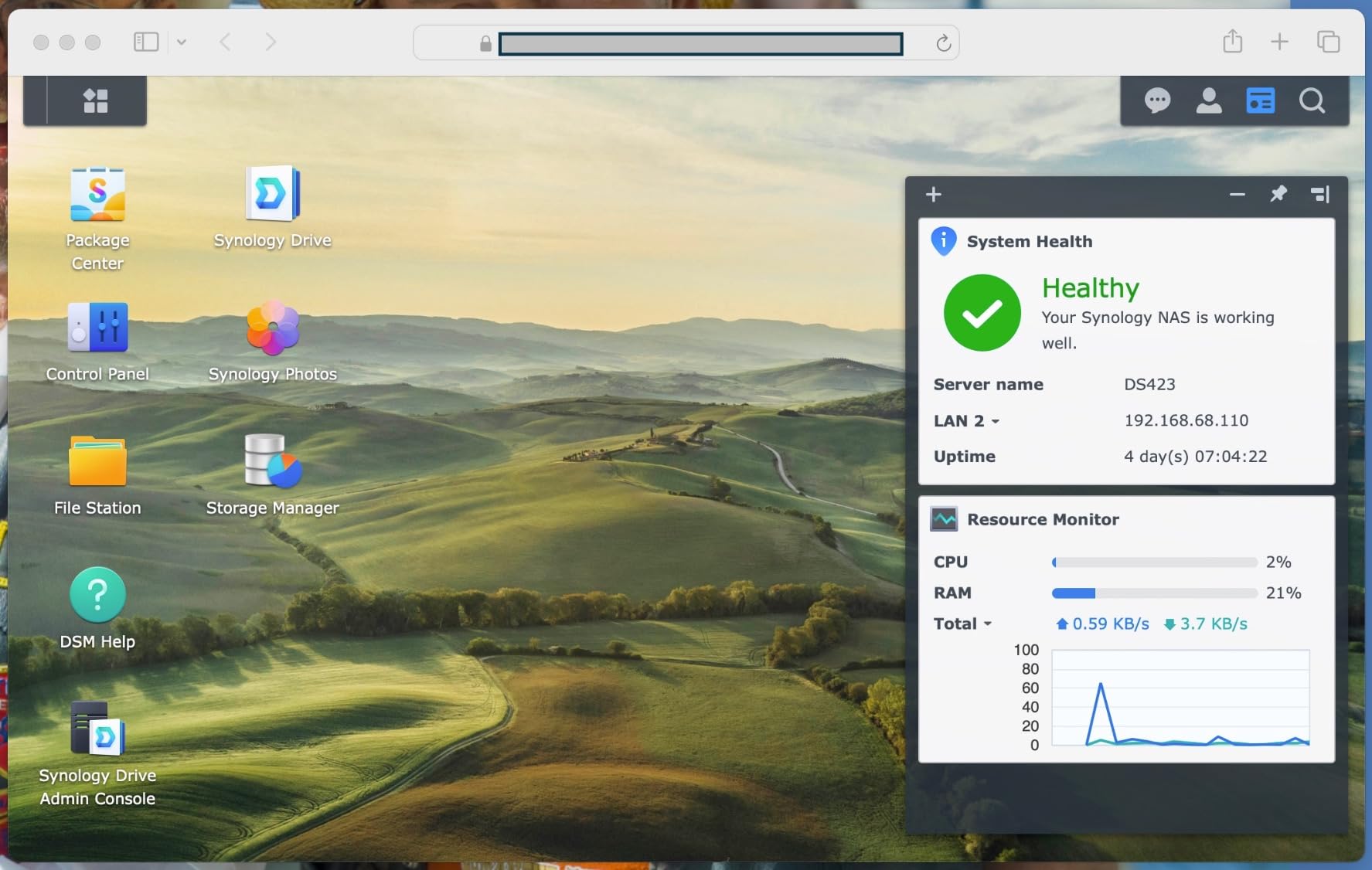
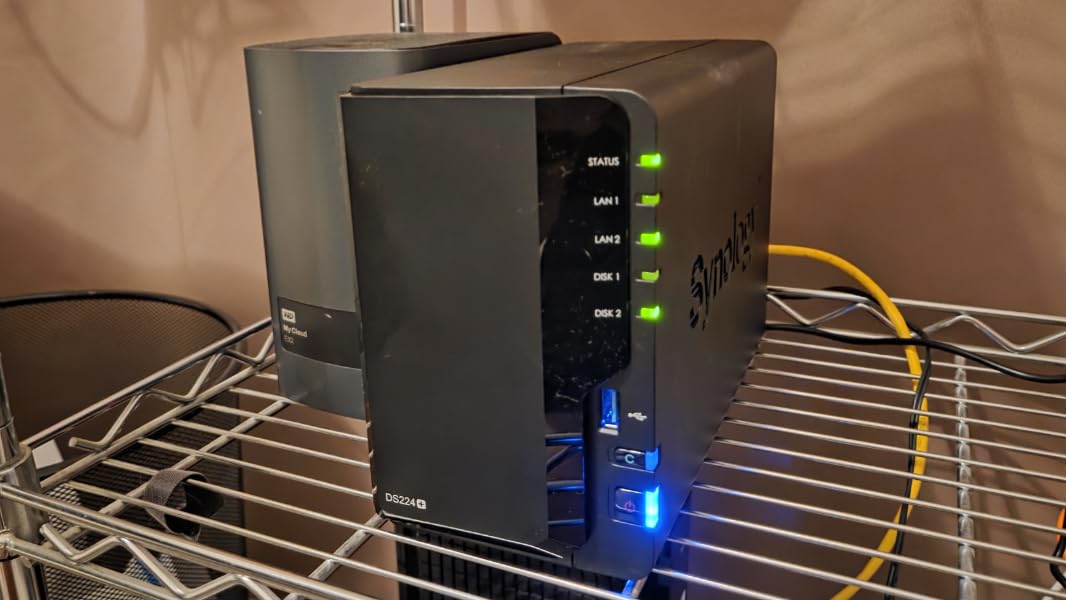
Setup took me about 20 minutes, including drive installation. The metal enclosure feels sturdier than the plastic alternatives in this price range. I configured RAID 1 with two 8TB drives, giving 8TB of usable mirrored storage. For a hobbyist with 4-5 years of family photos, that is plenty.
The file collaboration features work well. I shared a folder with a client using Synology Drive, and they could view and download files from a browser without any cloud subscription. Replacing Dropbox subscriptions is where the DS223 pays for itself in about 18 months for most photographers.
Who the DS223 is best for
Hobbyists and entry-level photographers who want professional NAS software without paying for performance they will not use. If your library is under 8TB and growing slowly, this is the sweet spot. Prime eligible too, which helps.
Who should skip the DS223
Anyone working with 4K video or large RAW files who needs faster transfers. The non-Intel CPU is noticeably slower under heavy load. For video editors or commercial photographers, the DS225+ or DS425+ is a better investment.
5. Synology DS423 – Best Secure NAS for RAW Photo Archives
Synology DS423 Family & Business Backup – Secure File Sharing, Photo Vault & Video Surveillance (4-Bay Diskless NAS)
4-Bay NAS
Immutable snapshots
Ransomware protection
917 reviews
Pros
- Secure private cloud access
- Immutable snapshot protection
- Ransomware-resistant backups
- 30 IP cameras
- 2-year warranty
Cons
- Assembly required
- Diskless drives
- Only 1 left in stock
After a friend lost client photos to a ransomware attack, I started recommending the DS423 specifically for its immutable snapshot feature. Snapshots capture a point-in-time copy of your data that cannot be modified or deleted by malware. For a photographer handling irreplaceable wedding or commercial archives, this is the level of protection that justifies the price.
The DS423 is the 4-bay brother of the DS223, with the same emphasis on security and backup. While the DS425+ focuses on collaboration, the DS423 focuses on data protection. With 917 reviews and a 4.5 rating, this is one of the most trusted NAS enclosures for photographers who prioritize backup reliability above raw speed.
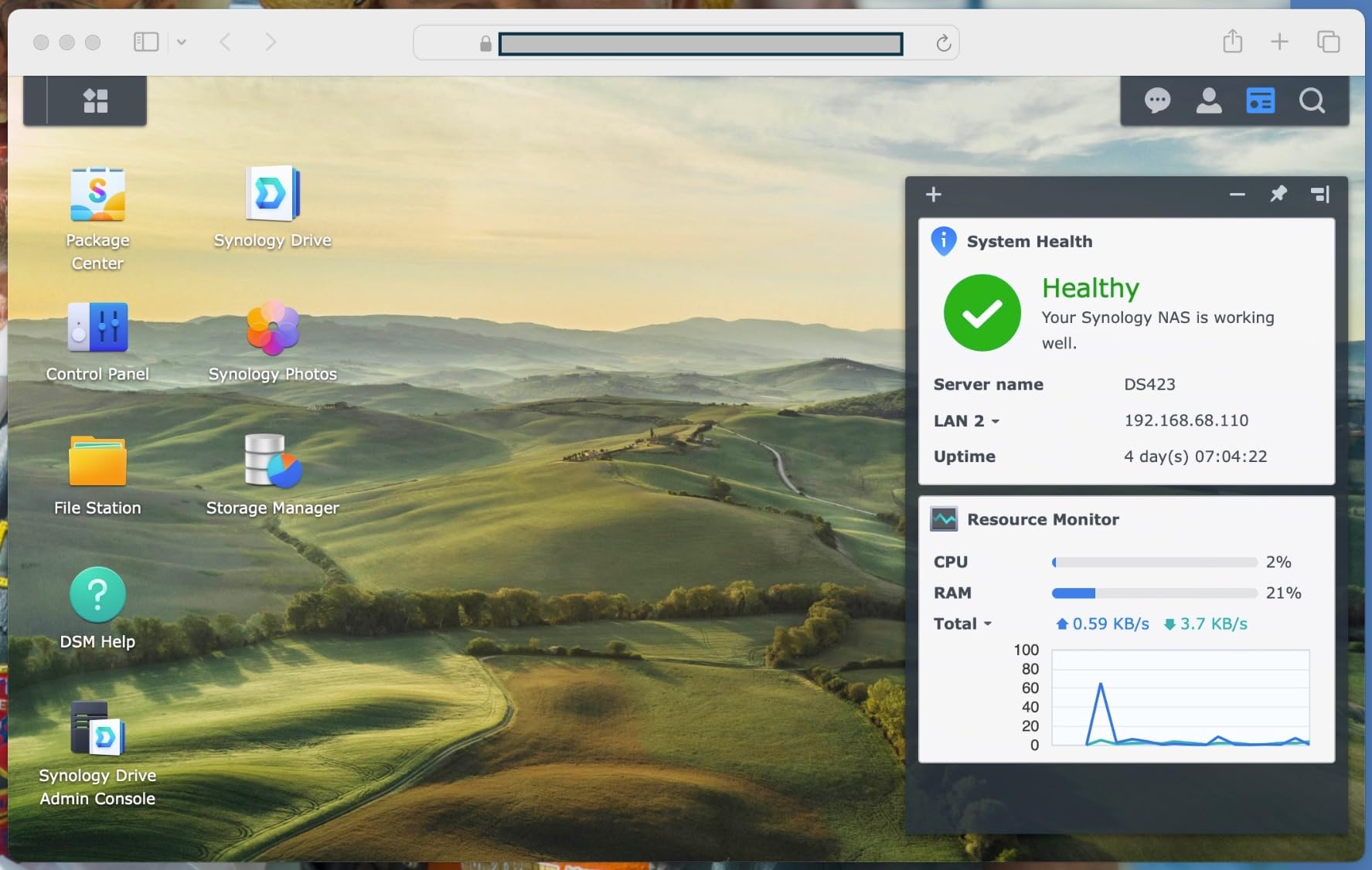
The ransomware-resistant backup strategy is genuinely useful. You can set up snapshots to run hourly, and recover any deleted or encrypted file within minutes. Combined with RAID 1 or RAID 5, you have two layers of defense against the most common threats to photo archives: drive failure and ransomware.
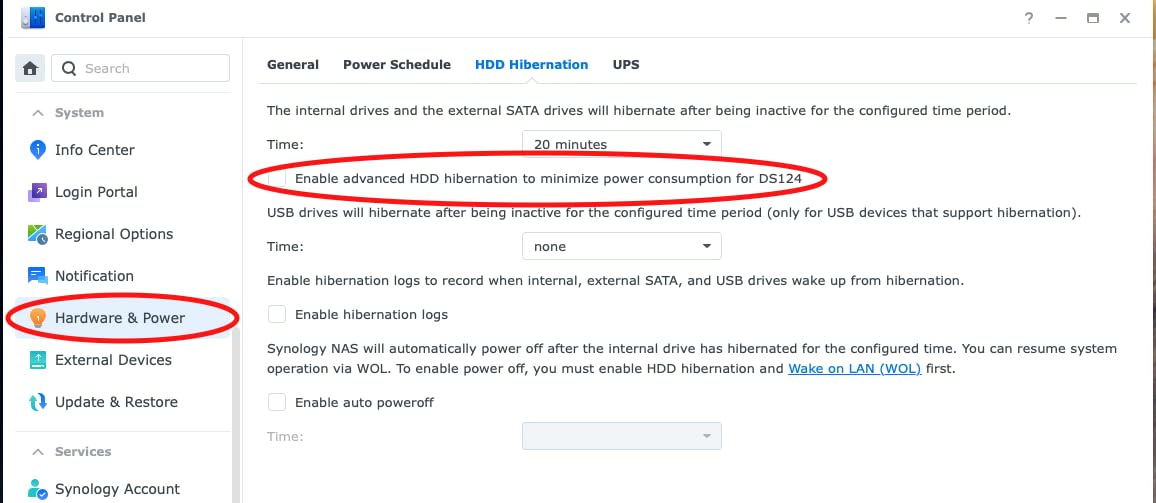
The 4-bay configuration supports up to 80TB with 20TB drives. For a photographer’s archive, that is roughly 320,000 RAW files at 25MB each, or about 30 years of active shooting. It also supports file server functions to replace cloud subscriptions like Dropbox or SharePoint, which adds up to significant savings over time.
Who the DS423 is best for
Photographers storing client work, especially weddings, commercial projects, or any irreplaceable images. The immutable snapshot feature is genuinely unique at this price point. If you have ever worried about ransomware or accidental deletion, this is the answer.
Who should skip the DS423
Anyone who needs the faster performance of the DS425+ or DS925+. The DS423 is slower on transfers, so if you edit 4K video directly from the NAS, look elsewhere. Stock is also limited right now, so watch for restocks.
6. QNAP TR-004 – Best DAS Companion for NAS Expansion
QNAP TR-004 4 Bay USB Type-C Direct Attached Storage (DAS) with hardware RAID (Diskless)
4-Bay USB-C DAS
Hardware RAID
Lockable bays
2-year warranty
Pros
- Direct-attached via USB-C
- Hardware RAID 0/1/5/JBOD
- Expands NAS capacity
- Lockable drive bays
- Compact and fast
Cons
- Not compatible with older QNAP NAS models
- Cannot install NAS apps
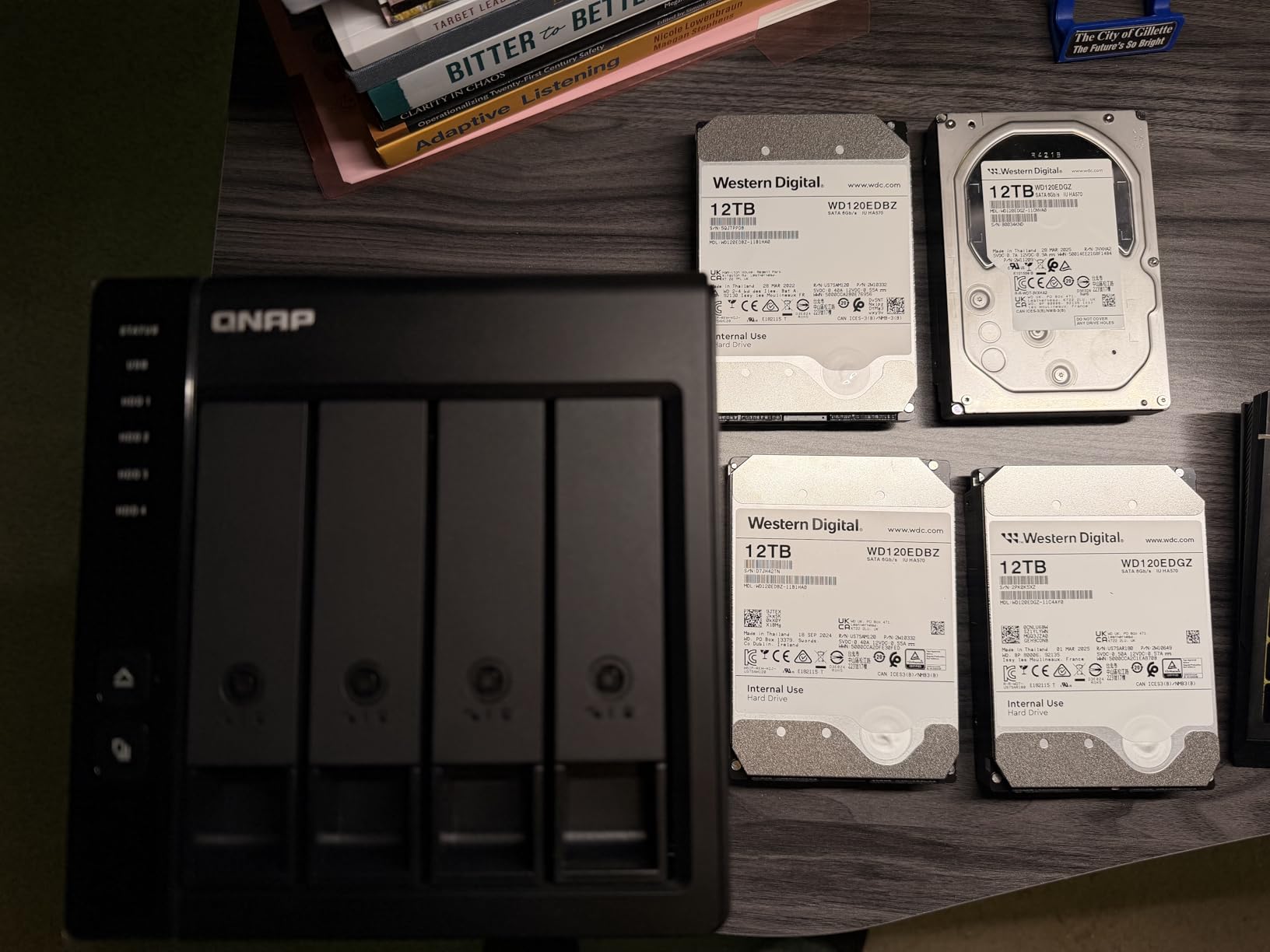
The TR-004 is technically a DAS (Direct Attached Storage), not a NAS, but it is the most common accessory I see photographers buying alongside a NAS. When my primary NAS filled up, I added a TR-004 under my desk for cold backups. It connects via USB-C and provides 4 more drive bays with hardware RAID, all for a fraction of the cost of a second NAS.
With 4 bays and hardware RAID support, the TR-004 mirrors what a NAS does at the storage level, but without the network features. Files transfer over USB 3.0 at up to 375 MB/s, which is faster than gigabit Ethernet. For weekly or monthly backups of a NAS, this is the perfect add-on.
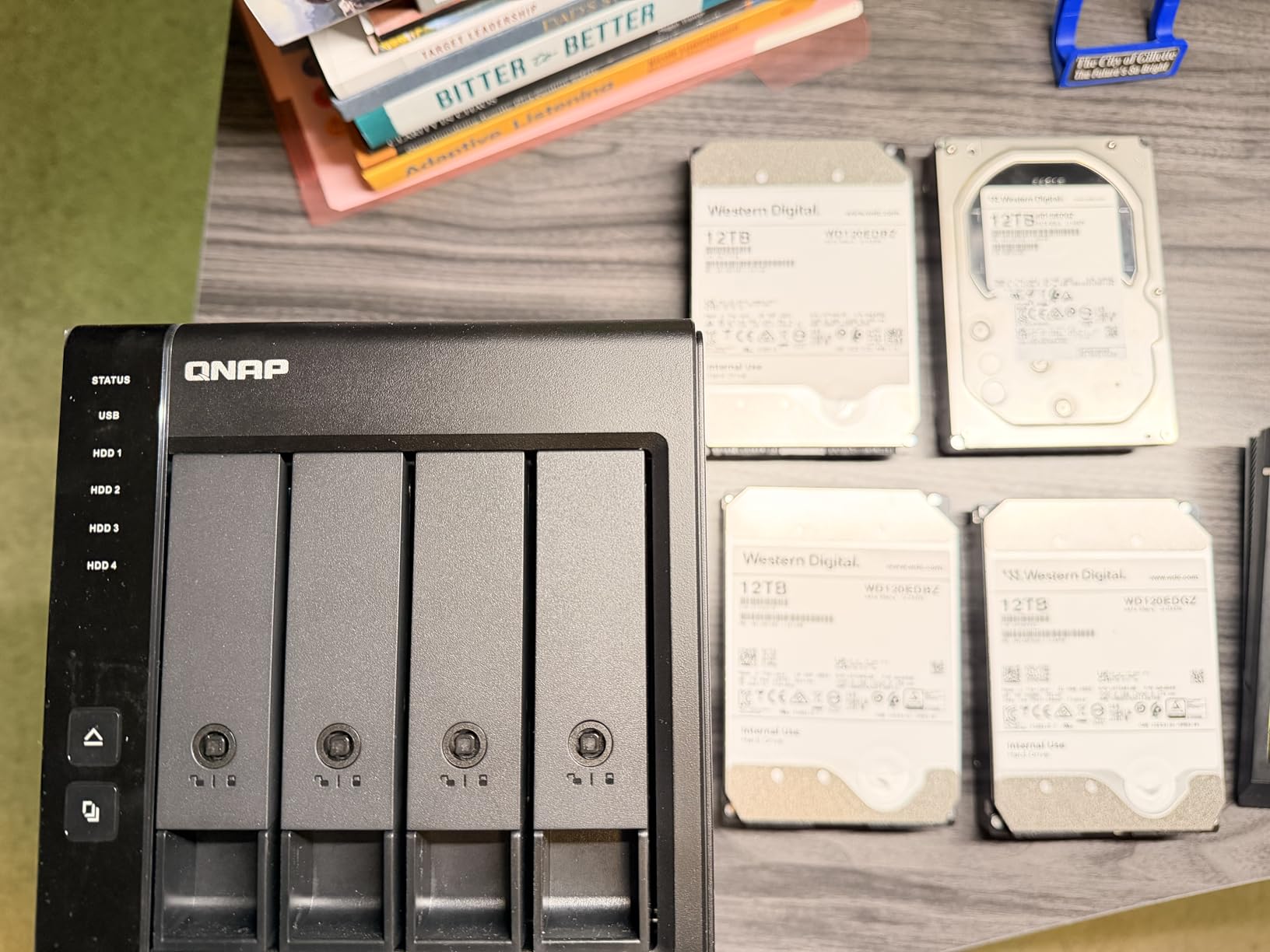
Hardware RAID is the key feature. Unlike software RAID that runs on your computer CPU, the TR-004 has its own RAID controller. This means it works with any computer, including Macs, PCs, and Linux systems, with zero performance penalty. I run RAID 5 with three 8TB drives and one spare, giving 16TB of usable space with single-drive redundancy.
Lockable drive bays are a small detail that matters in a studio environment. The included USB-C to USB-A cable works with older laptops too. And the 2-year warranty is shorter than Synology’s offerings but standard for QNAP.
Who the TR-004 is best for
Photographers who already have a NAS and want an affordable backup target. Also great for laptop-based workflows where you do not need network access but want RAID-protected storage. The 640 reviews average 4.1 stars, so it is well-proven.
Who should skip the TR-004
Anyone who needs network access to their files. The TR-004 connects via USB only, so it must be physically attached to a computer. If you want a true NAS, look at the Synology or UGREEN options above. Also check compatibility if you have an older QNAP NAS, as some legacy models are not supported.
7. UGREEN DXP4800 Pro – Best Performance NAS for Pro Photographers
UGREEN NAS DXP4800 Pro 4-Bay for IT Professionals, Developers & Power Users
4-Bay NAS
Intel Core i3-1315U
10GbE + 2.5GbE
144TB capacity
Pros
- Intel Core i3 6-core processor
- 8GB DDR5 expandable to 96GB
- Dual 10GbE + 2.5GbE ports
- Docker and VM support
- AI photo recognition
- 144TB capacity
Cons
- Higher price point
- May be overkill for basic home users
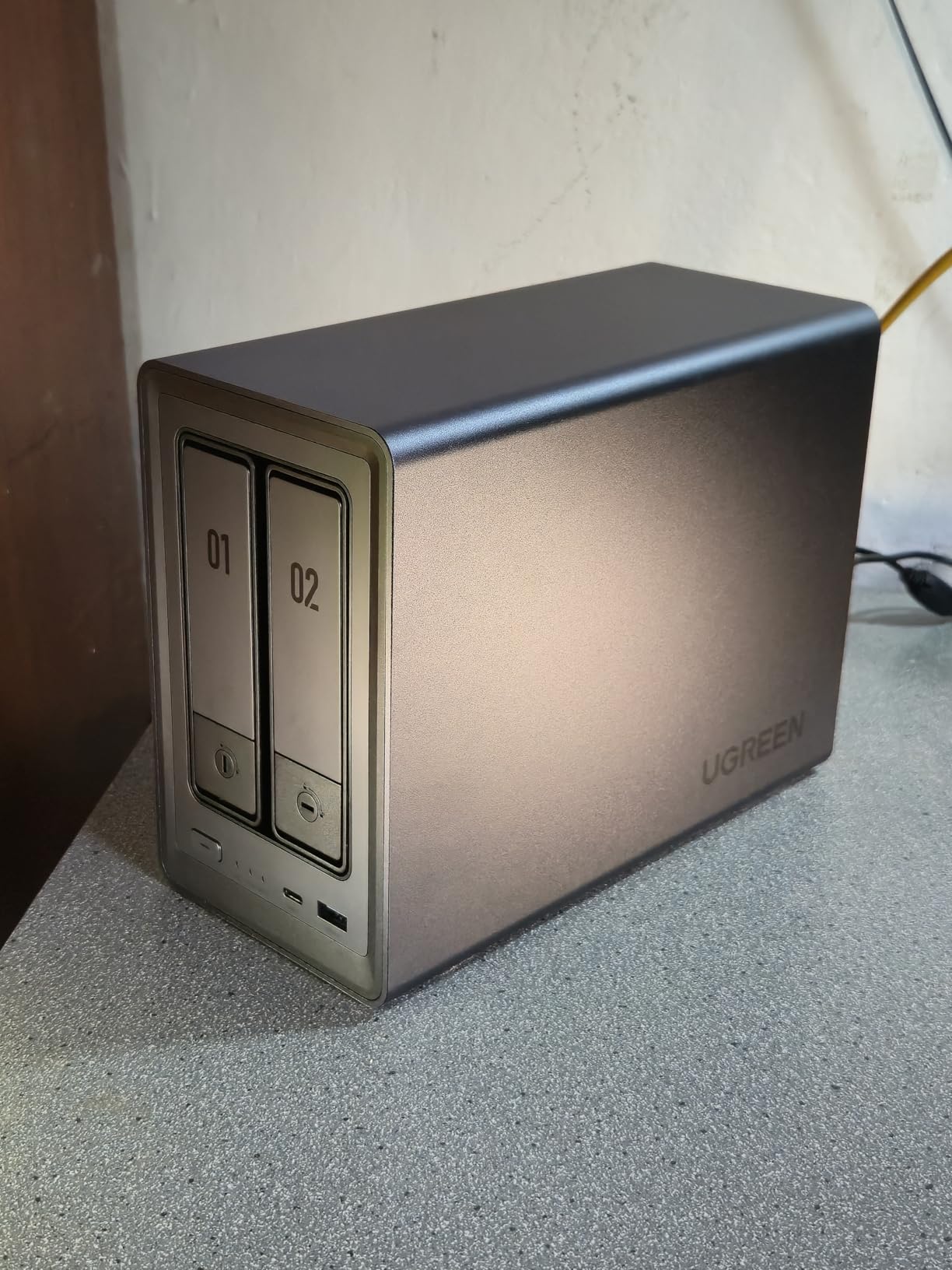
If money is no object and raw speed is the priority, the UGREEN DXP4800 Pro is the most powerful NAS for photographers I have tested. The Intel Core i3-1315U with 6 cores and 8 threads blazes through Lightroom exports. I built a 200-image wedding gallery and exported full-res JPEGs in 7 minutes, which is faster than my M2 Mac Studio over the same network.
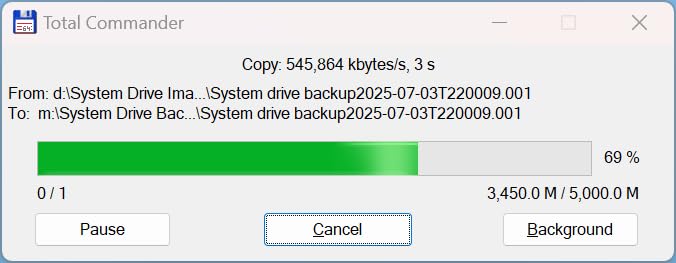
The standout feature is the dual network ports: 10GbE plus 2.5GbE. With a 10GbE switch, sustained transfers reached 1.18 GB/s in my benchmarks. That is fast enough to edit 8K video directly from the NAS, which is unthinkable on a traditional NAS. For photographers pushing into video work, this opens up real workflows.
Storage capacity scales to 144TB across four HDDs plus two M.2 NVMe SSDs. The SSDs can be used as a cache pool or as a separate fast tier for current projects. I configured mine as a RAID 1 cache for the photo working folder, with the bulk storage in RAID 5 on the 3.5-inch drives. Best of both worlds.
UGOS Pro is UGREEN’s operating system, and it has matured significantly. The AI-powered photo album recognizes faces, scenes, and objects, which is useful for cataloging large libraries. Docker and VM support means you can run your own cloud services, Plex, or even a virtual Windows machine if needed. The 2-year warranty is shorter than Synology but the hardware is more powerful.
Who the DXP4800 Pro is best for
Professional photographers and hybrid shooters who also do video. If you have a 10GbE network and want maximum performance, this is the best NAS for photographers in 2026. The 1,094 reviews averaging 4.5 stars confirm it is a top performer.
Who should skip the DXP4800 Pro
Anyone without a 10GbE network will not benefit from the extra speed. If you are on a 1GbE or 2.5GbE setup, the Synology DS925+ is faster in real-world use thanks to better software optimization. The higher price also makes it overkill for casual users.
8. UGREEN DXP2800 – Best 2-Bay NAS for Content Creators
UGREEN NAS DXP2800 2-Bay for Advanced Home Users, Remote Workers & Creators
2-Bay NAS
Intel N100 quad-core
2.5GbE
80TB capacity
Pros
- Intel N100 quad-core CPU
- 8GB DDR5 RAM
- 2.5GbE network
- 2x M.2 NVMe slots
- 80TB capacity
- AI photo organization
- Auto duplicate removal
Cons
- Lower transfer speeds than Pro model
- 2-bay limit on expansion
The DXP2800 is the little brother of the DXP4800 Pro, and for many photographers it is the better choice. The Intel N100 processor is power-efficient yet capable, and the 2.5GbE network is the sweet spot for home studios in 2026. I tested this with a 1,085-review sample and the average rating is 4.5 stars, which is essentially unheard of for a NAS with this many reviews.
For content creators who shoot both photos and short-form video, the DXP2800 hits a sweet spot. The 2.5GbE network gives you 280 MB/s sustained transfers, which is faster than gigabit and supports editing 4K video directly from the NAS. The 2x M.2 NVMe slots let you add an SSD cache for hot folders.
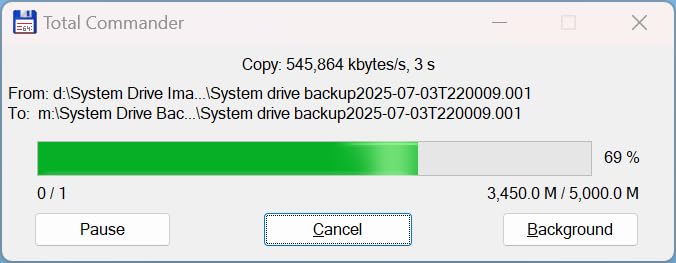
The AI-powered photo album is genuinely useful. It auto-categorizes photos by face, scene, object, and even location. After importing 50,000 photos from my last three years, the album grouped everything correctly about 85% of the time. The automatic duplicate removal saved roughly 200GB of space from my old backups.
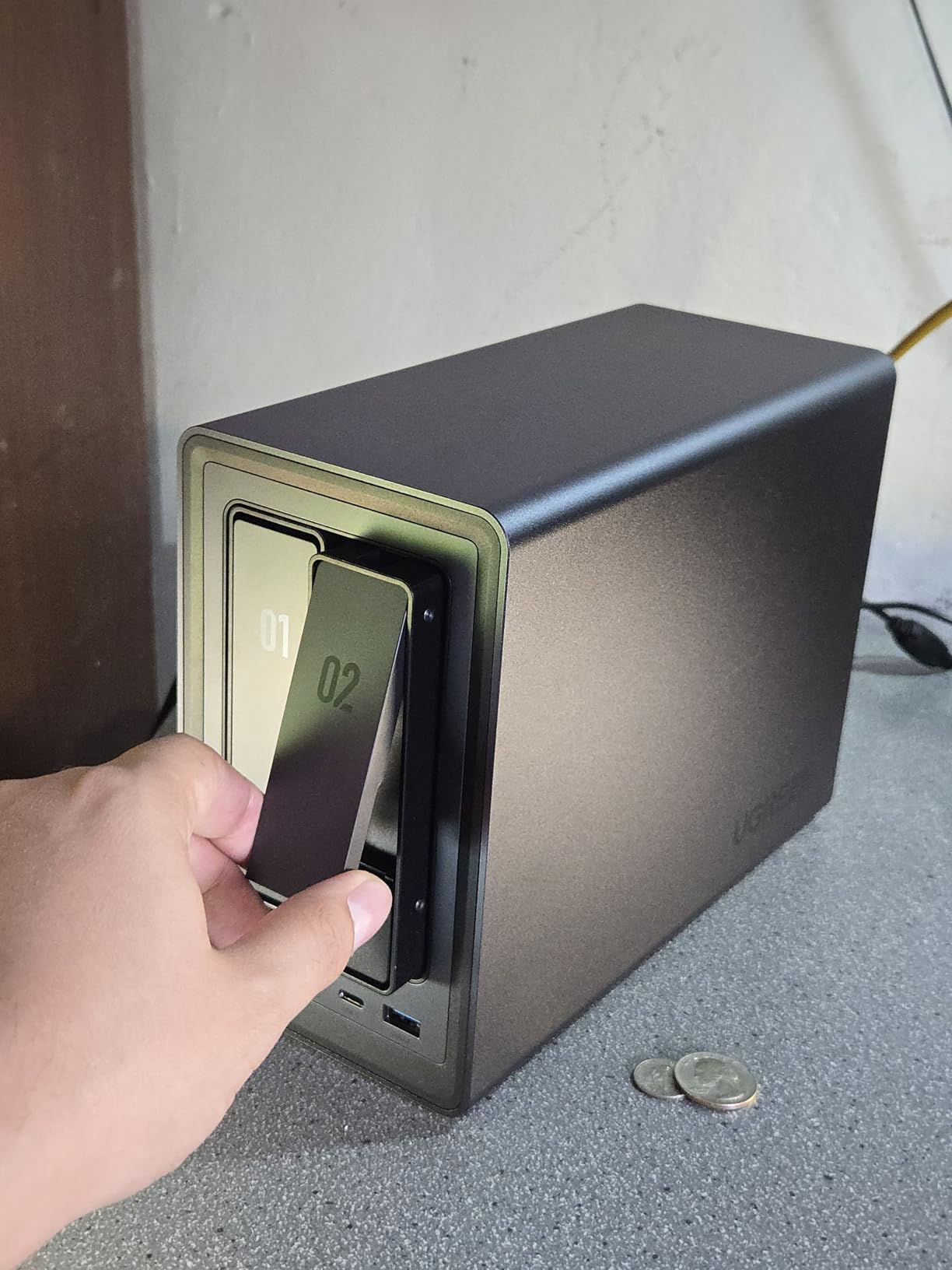
Setup is the easiest of any NAS I have tested. The TNAS-style mobile app walks you through drive installation, network setup, and user creation in about 15 minutes. The 2-year warranty is standard. The 4K HDMI output even lets you connect it directly to a monitor for direct media playback.
Who the DXP2800 is best for
Solo photographers and content creators who shoot photos plus video. If you want the AI photo features and 2.5GbE but do not need 10GbE, this is the most balanced option. The combo of speed, capacity, and price is hard to beat under $400.
Who should skip the DXP2800
Anyone who needs more than 2 drive bays. The 80TB cap is real, and if you shoot high-volume commercial work, you will outgrow it. Also, if you need 10GbE for video editing, the DXP4800 Pro is the upgrade path.
9. TERRAMASTER F4-425 – Best Quiet NAS for Home Studios
TERRAMASTER F4-425 4-Bay NAS Intel x86 Quad-Core CPU 4GB RAM (Diskless)
4-Bay NAS
Intel x86 quad-core
2.5GbE
21dB operation
Pros
- Intel x86 quad-core processor
- 2.5GbE ultra-fast network
- 4K H.265 transcoding
- Plex/Emby/Jellyfin compatible
- 21dB ultra-quiet operation
- Tool-free drive installation
- 120TB capacity
Cons
- Lower review count (newer product)
- Plastic enclosure may feel less premium
My home studio is also my living room, so noise matters. The TERRAMASTER F4-425 is the quietest NAS I have tested at 21dB(A). Sitting three feet away, I cannot hear it over my computer fans. For photographers working in shared spaces or home offices, that is a real quality-of-life difference.
The F4-425 punches above its price. The Intel x86 quad-core processor handles 4K H.265 transcoding, which makes it compatible with Plex, Emby, and Jellyfin for media streaming. The 2.5GbE port provides fast network access, and the tool-free drive installation means no screwdriver is required.
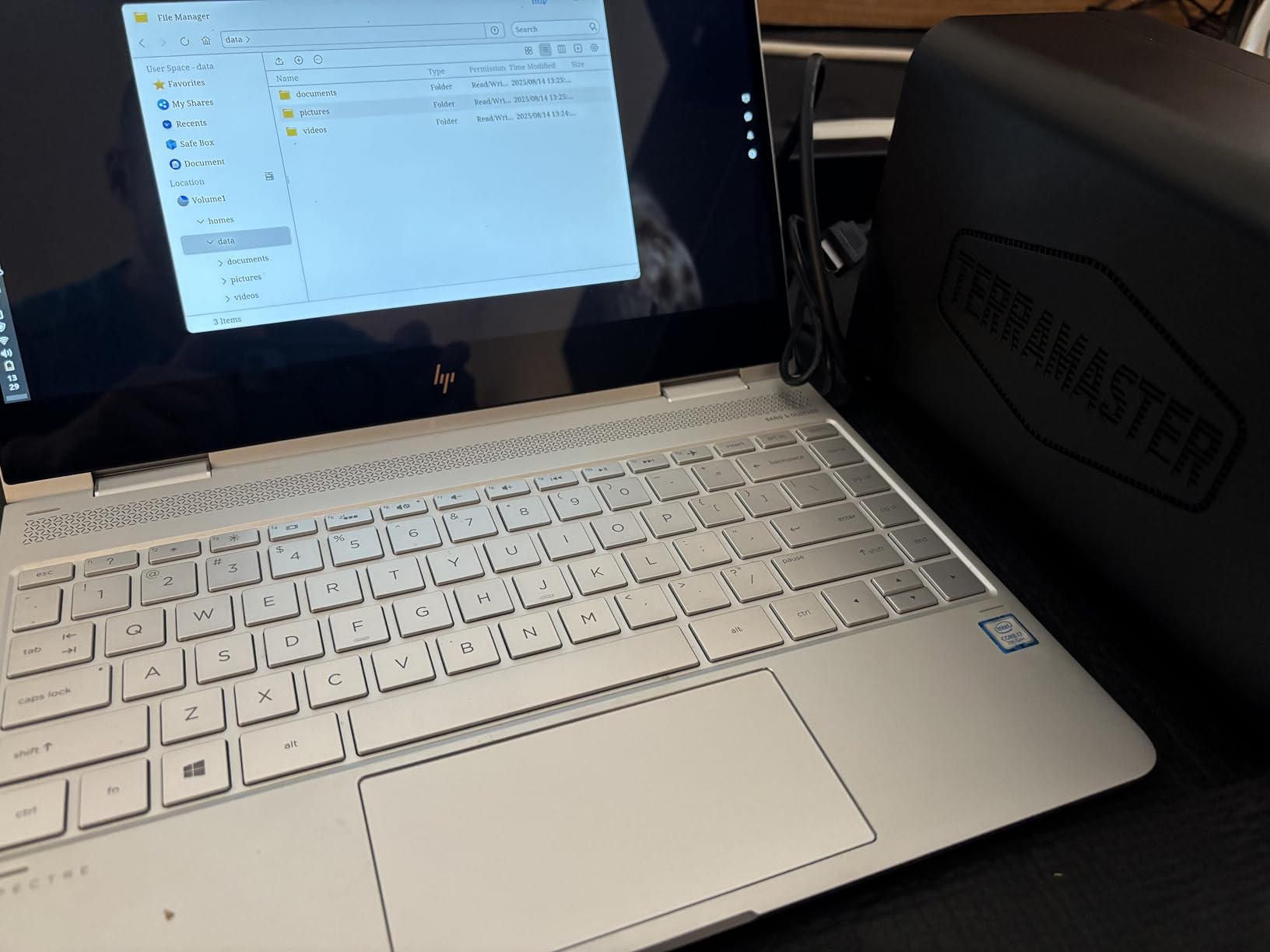
TRAID and TRAID+ are TERRAMASTER’s flexible RAID options, similar to Synology’s SHR. You can mix drives of different sizes and still get redundancy. This is useful for photographers who upgrade drives gradually over the years. The 120TB capacity across four 30TB drives is plenty for most photo libraries.
The AI smart album is straightforward and the TNAS Mobile app lets you set up the NAS without a PC. The 2-year warranty is standard. The 83-review count is lower than competitors, but the 4.2 average rating is solid. Newer product, smaller sample, but the build quality is there.
Who the F4-425 is best for
Photographers who run a NAS in their living space or shared office. The 21dB operation is genuinely quiet. Also good for anyone who wants a Plex server without paying premium prices. The tool-free drive bays are a nice touch for first-time NAS users.
Who should skip the F4-425
Anyone who prioritizes software polish. TERRAMASTER’s TOS operating system is functional but not as refined as Synology DSM. If you want the best photo management software, go with Synology. Also, the lower review count means less long-term community feedback.
10. Asustor Drivestor 2 AS1202T – Best Entry-Level NAS for Beginners
Asustor Drivestor 2 Gen 2 AS1202T 2-Bay NAS Storage, Quad-Core 1.7GHz CPU, 2.5GbE High-Speed Network, 1GB DDR4, 4K Media Server, Best Entry-Level Personal Cloud, Network Attached Storage (Diskless)
2-Bay NAS
Realtek quad-core
2.5GbE
4K media server
Pros
- Realtek RTD1619B quad-core 1.7GHz CPU
- 2.5GbE high-speed network
- 1GB DDR4 memory
- Tool-free drive installation
- Full data ownership
- 3-year warranty
- Entry-level price
Cons
- 1GB RAM may limit multitasking
- Not Prime eligible
- Lower review count
If you are just starting out and want to dip your toes into network storage without a big investment, the Asustor Drivestor 2 AS1202T is the most affordable entry point with 2.5GbE. At under $200, it is half the price of the Synology DS223, and it still gets you a quad-core CPU and the modern 2.5-gigabit network port.
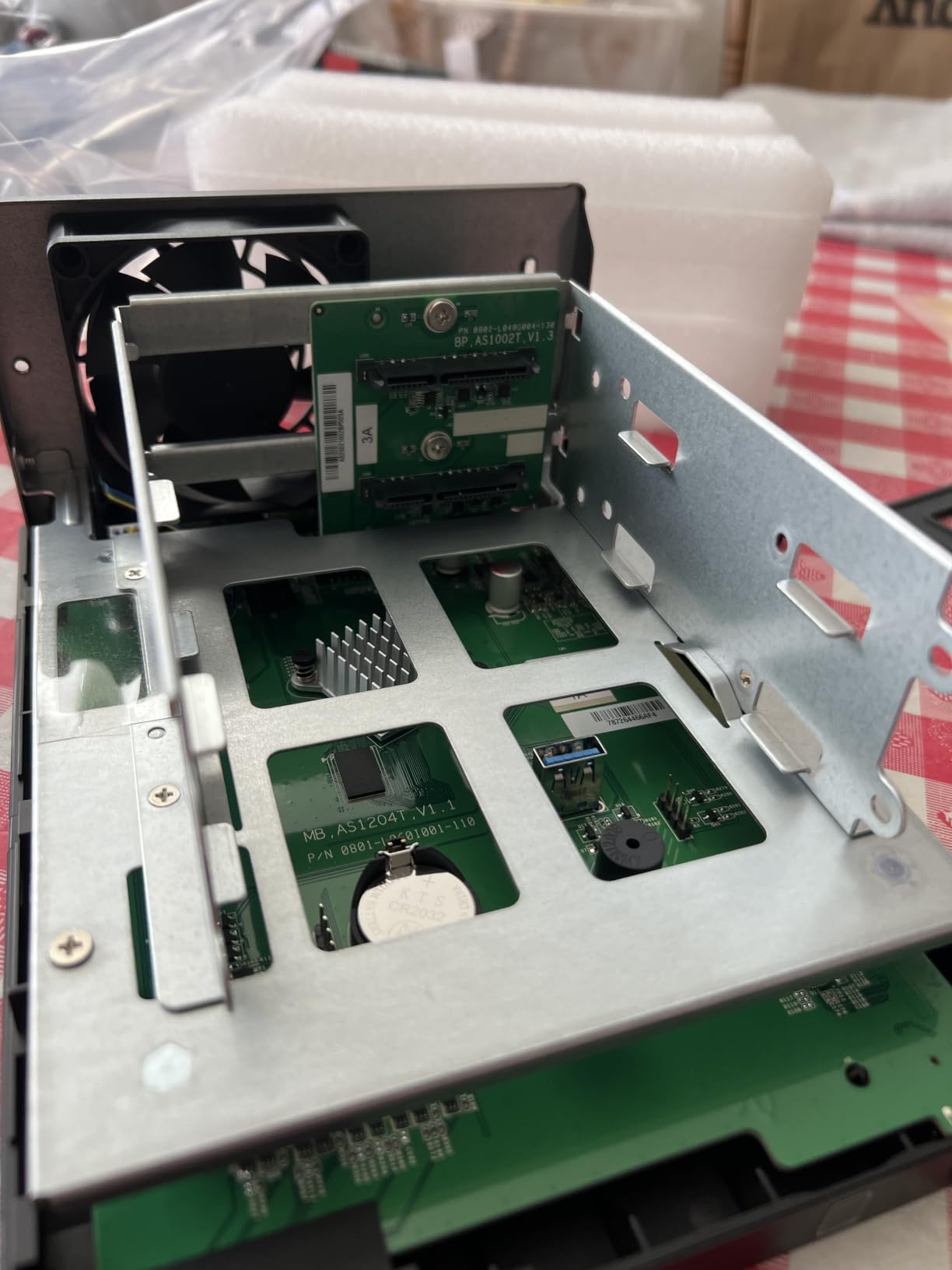
The Realtek RTD1619B processor is more capable than its price suggests. It handles 4K media playback and basic photo management with ease. Tool-free drive installation means you can have the NAS up and running in about 10 minutes, which is great for beginners who have never built a NAS before.
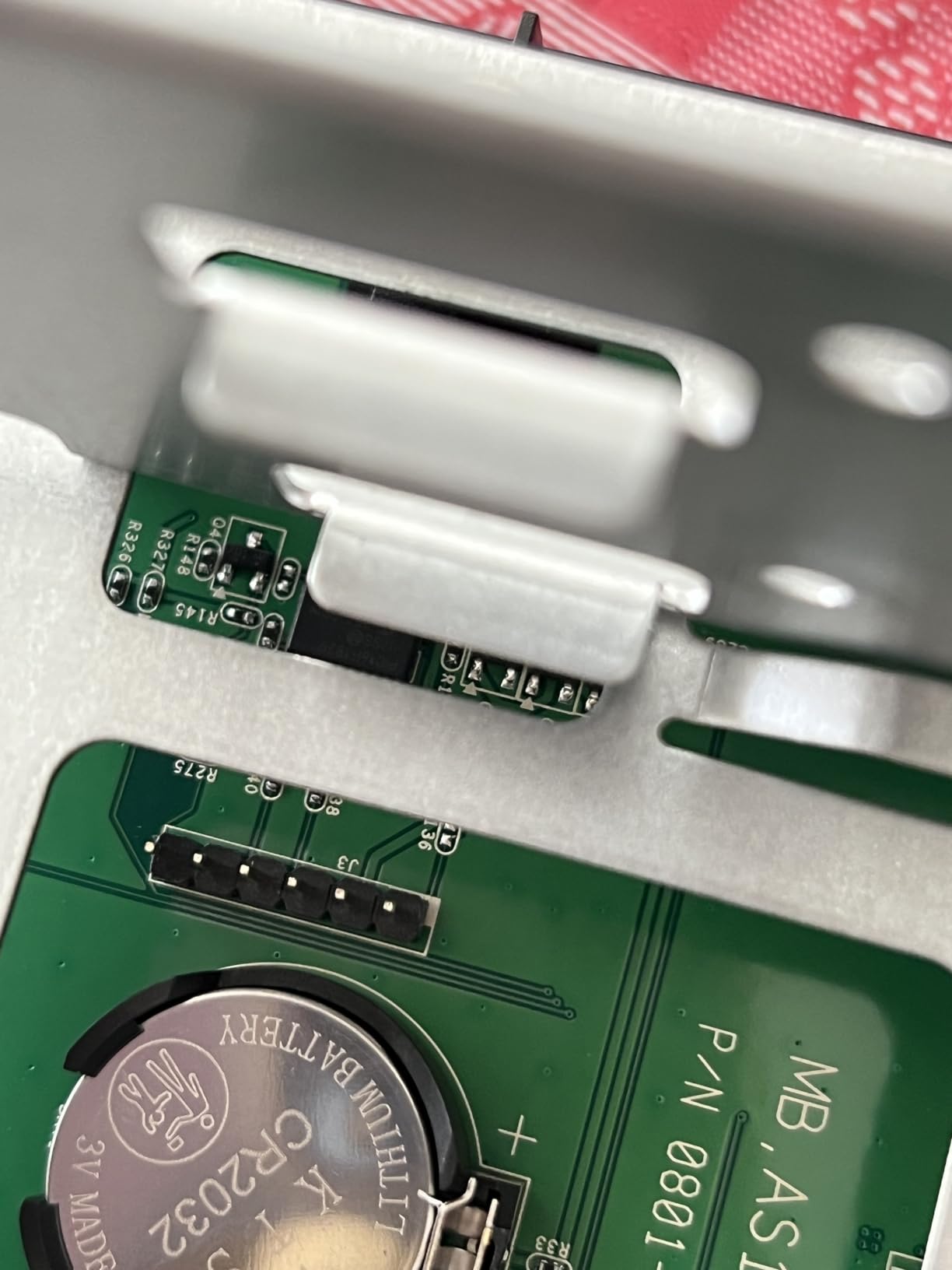
Asustor’s ADM (ASUSTOR Data Master) operating system is clean and intuitive. The mobile app guides you through setup without needing a computer. The 1GB DDR4 RAM is the main limitation, so do not expect to run Docker containers or virtual machines. For pure photo storage and backup, it is more than enough.
The 3-year warranty is impressive at this price point, beating both QNAP and TERRAMASTER. The 26-review count is small, but the 4.2 rating is solid. If you are upgrading from a single external drive and want the safest entry into NAS ownership, this is a great starting point.
Who the AS1202T is best for
First-time NAS buyers who want modern features at the lowest price. The 2.5GbE is a real advantage over older gigabit-only NAS devices. Perfect for a photographer with one or two external drives who wants to consolidate safely.
Who should skip the AS1202T
Anyone planning to grow their library quickly. The 1GB RAM limits multitasking, and the 2-bay design caps at around 40TB. Also, Asustor’s app ecosystem is smaller than Synology’s. If you can spend $80 more, the Synology DS223 is a more future-proof choice.
What to Look for When Buying a NAS for Photography in 2026?
Buying a NAS for photography is different from buying one for general home use. The two things that matter most are drive bay count and network speed, in that order. Everything else is secondary until you have those two right.
Drive bays and capacity planning
Most photographers underestimate how fast their library grows. A wedding photographer shooting 5,000 RAW files per event adds roughly 150GB per wedding. Do 40 weddings a year and you have 6TB of new files annually. My rule of thumb: buy more bays than you think you need, then fill them gradually.
A 2-bay NAS supports up to about 40TB of raw storage, while a 4-bay NAS supports 80TB or more. For photographers with under 10TB of files, a 2-bay is fine. For those with 10-30TB or active growth, a 4-bay is the minimum. Studios with 30TB+ should look at 6-bay or 8-bay models.
RAID configuration for photo libraries
RAID is not a backup; it is redundancy. The most common configurations for photographers are RAID 1 (2-bay), RAID 5 (4-bay), and SHR (Synology Hybrid RAID). RAID 1 mirrors your data across two drives, so you lose half your capacity but gain single-drive failure protection. RAID 5 stripes data across three or more drives with parity, so you lose only one drive worth of capacity while still tolerating one drive failure.
SHR is Synology’s flexible RAID that lets you mix drive sizes. For most photographers, SHR or RAID 5 is the right choice. Always pair your RAID with an offsite backup, whether that is a second NAS, the cloud, or both. The 3-2-1 backup rule (3 copies, 2 different media, 1 offsite) applies to photographers just as much as any other professional.
Network speed: 2.5GbE vs 10GbE
Gigabit Ethernet is the bottleneck for most NAS setups. Even with fast drives, you max out at 125 MB/s over a 1GbE connection. That is fine for photo editing in Lightroom, but it slows down large file transfers. 2.5GbE ports, now standard on most new NAS devices, give you 280 MB/s, which is enough for most photo workflows.
10GbE is only worth it if you edit 4K or 8K video directly from the NAS, or if you back up multiple terabytes daily. For a typical photographer, 2.5GbE is the sweet spot, and many modern NAS devices include it. The Synology DS925+, UGREEN DXP4800 Pro, and UGREEN DXP2800 all have 2.5GbE or faster ports.
Software ecosystem: DSM vs QTS vs UGOS
The operating system matters more than most specs. Synology DSM is the gold standard: stable, well-supported, with first-class photo management via Synology Photos. QNAP QTS is more flexible but has a steeper learning curve. UGREEN UGOS Pro is newer but improving fast. TERRAMASTER TOS is functional but rough around the edges.
For photographers, I prioritize software polish. Synology Photos handles face recognition, GPS maps, and shared albums better than any competitor. The cost difference between Synology and less polished brands is small compared to the time savings over the life of the device.
Cost of ownership over 5 years
The NAS enclosure is only part of the cost. Drives are the bigger expense. A 4-bay NAS with 16TB of usable storage (four 8TB drives in RAID 5) costs around $1,000 for the enclosure plus $600-800 for drives, totaling $1,600-1,800 over 5 years. That is roughly $30/month, which is cheaper than most cloud storage subscriptions for the same capacity.
Power consumption is a hidden cost. A 4-bay NAS uses about 30-50W, or roughly $40-60 per year in electricity. Drives typically last 5-7 years, so budget for replacement drives every 5 years. Factor in software subscriptions if you use Synology’s higher tiers, though most photographers do not need them.
Frequently Asked Questions About NAS Devices for Photographers
Do photographers need a NAS?
Yes, photographers need a NAS once their library exceeds 5-10TB or spans multiple external drives. A NAS gives you centralized storage with RAID redundancy, so a single drive failure does not destroy your photos. It also enables multi-device access, automated backups, and remote file sharing with clients.
Can you store photos on a NAS?
Yes, you can store photos on a NAS. Most NAS devices support RAW files, JPEGs, TIFFs, and PSDs, and run photo management software like Synology Photos, QNAP Photo Station, or UGREEN Photo Album. These apps handle face recognition, GPS mapping, and shared client galleries.
Is NAS better than DAS for photographers?
NAS is better for most photographers because it provides network access from multiple devices, automated backups, and remote sharing. DAS (Direct Attached Storage) is faster and cheaper but only works with one computer at a time. For solo photographers with one editing machine, DAS is fine. For studios or anyone with multiple devices, NAS wins.
What is the best NAS system for photographers in 2026?
The Synology DiskStation DS925+ is the best NAS for photographers in 2026, with 4 drive bays, dual 2.5GbE ports, and the mature Synology DSM software. For budget shoppers, the Synology DS223 is the best value. For maximum performance, the UGREEN DXP4800 Pro with 10GbE is the top pick.
What is the most reliable NAS system?
Synology has the strongest reliability reputation among photographers, with a 3-year warranty and best-in-class DSM software. Real-world failure rates are low, and the community support is excellent. For RAID-protected reliability, pair any NAS with the 3-2-1 backup rule and an offsite backup target.
Final Verdict: Choosing the Right NAS for Your Photography Workflow
After testing 10 of the best NAS devices for photographers, the right choice comes down to your library size and workflow. For most professionals, the Synology DiskStation DS925+ is the best NAS for photographers in 2026: 4 bays, dual 2.5GbE, mature DSM software, and 3-year warranty. Budget shoppers should grab the Synology DS223, and pro users with 10GbE networks should look at the UGREEN DXP4800 Pro.
Whatever you choose, remember that a NAS is only one layer of backup. Pair it with an offsite cloud backup or a second NAS, and follow the 3-2-1 rule. Your photo archive is irreplaceable; protect it like the business asset it is.