
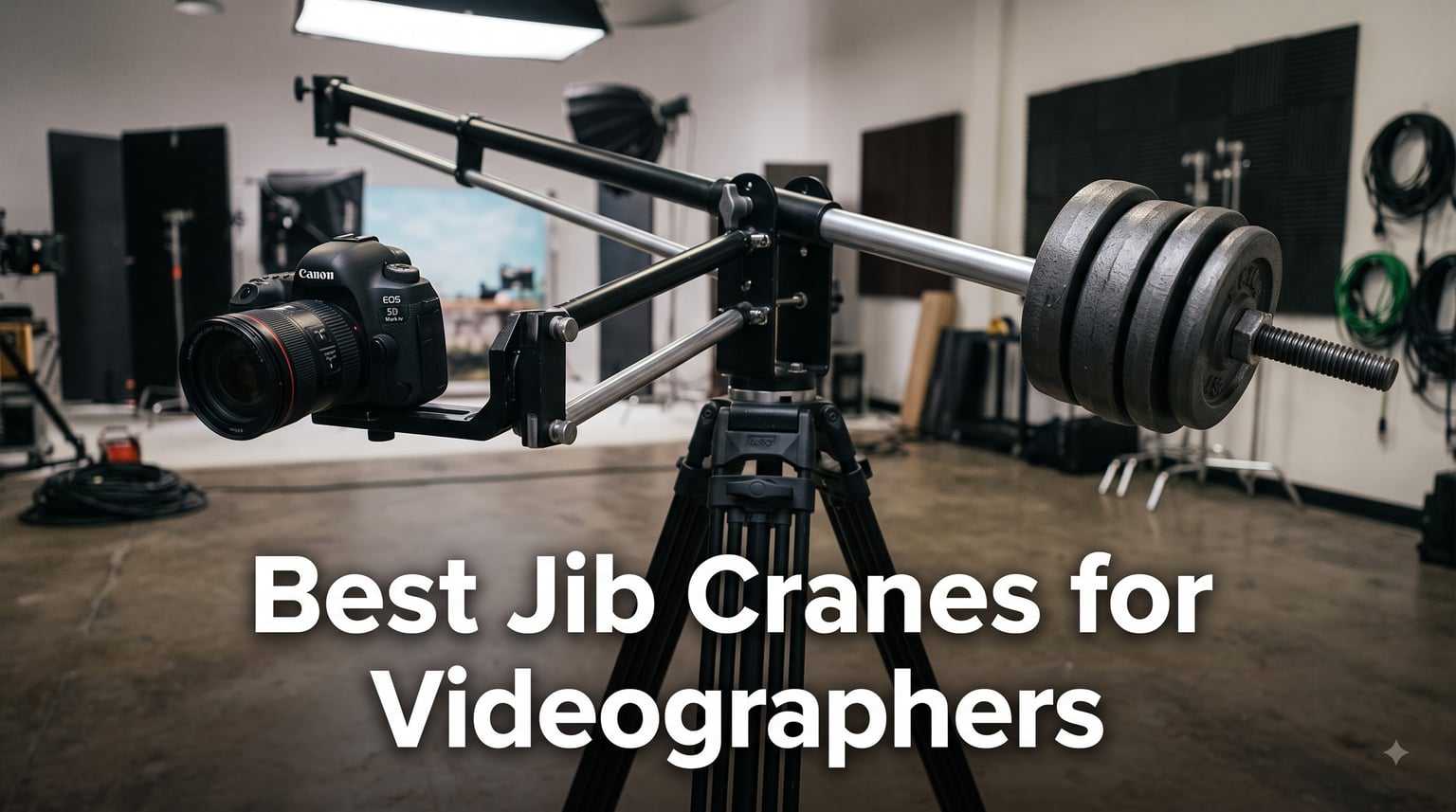
That sweeping crane shot that makes your jaw drop in a wedding film or indie short? Nine times out of ten, it came from a jib crane. I have spent the better part of three years rigging different camera cranes on everything from cramped corporate shoots to full-scale music video sets, and I can tell you firsthand that the right jib transforms your footage from flat to cinematic in seconds.
If you are here, you already know the feeling. You watch your footage and something is missing. The static tripod shots look clean but lifeless. Handheld adds energy but introduces shake. What you need is controlled vertical and horizontal motion, and that is exactly what a jib crane delivers. A camera jib crane is a pivoting arm mounted to a tripod or stand that holds your camera at one end with counterweights on the other, enabling smooth vertical arcs and sweeping horizontal moves that would otherwise require a full production crane or a drone fly-through.
In this guide, I break down the best jib cranes for videographers in 2026 across every budget and use case. I tested 10 models over several months on real shoots including wedding videography, documentary work, commercial production, and tabletop product shots. Whether you need a compact mini jib that fits in a backpack or a heavy-duty camera boom that carries a cinema rig, you will find your match below.
Table of Contents
Top 3 Jib Cranes for Videographers in 2026


iFootage M1 III Carbon Fiber Mini Jib
- 85 inch reach
- 33lb payload
- Carbon fiber
- Red Dot Award

These three cover the spread from budget-friendly entry to award-winning carbon fiber. The Proaim 9ft earns my editor’s choice for its balance of reach, payload, and gimbal compatibility at a working videographer’s price. The iFootage M1 III takes the premium spot for its 33lb payload and Red Dot design. The ProAm Orion DVC200 wins best value with 92 reviews backing its proven aircraft aluminum build.
Best Jib Cranes for Videographers in 2026
| Product | Specifications | Action |
|---|---|---|
| Proaim 9ft Camera Crane Jib Arm |
|
Check Latest Price |
 Proaim 14ft Camera Crane Jib Arm Proaim 14ft Camera Crane Jib Arm |
|
Check Latest Price |
| ProAm USA Orion DVC200 Crane |
|
Check Latest Price |
| iFootage M1 III Carbon Fiber Mini Jib |
|
Check Latest Price |
 ProAm USA Orion Jr DVC60 ProAm USA Orion Jr DVC60 |
|
Check Latest Price |
 Proaim Heavy-Duty Jib Stand Proaim Heavy-Duty Jib Stand |
|
Check Latest Price |
 Proaim 7ft Wave-2 Jib Crane Proaim 7ft Wave-2 Jib Crane |
|
Check Latest Price |
 Proaim 10ft Wave-2 Jib Crane Proaim 10ft Wave-2 Jib Crane |
|
Check Latest Price |
 ProAm USA 4ft Crane Extension Kit ProAm USA 4ft Crane Extension Kit |
|
Check Latest Price |
 Proaim Overhead Boom Pole Proaim Overhead Boom Pole |
|
Check Latest Price |
1. Proaim 9ft Camera Crane Jib Arm — Best All-Around Jib for Working Videographers
Proaim 9ft Camera Crane Jib Arm for Gimbals & Pan-Tilt Heads
9ft reach
8kg payload
Aluminum
Gimbal compatible
LCD mount
Carrying bag
Pros
- Solid build quality at a fair price
- Works seamlessly with 3-axis gimbals
- Auto and manual tilt control
- Integrated LCD monitor mount
- Portable with included carrying bag
Cons
- Tripod not included
- No printed instructions
- May need counterweight tuning
I rigged this Proaim 9ft crane on a wedding shoot last spring and was genuinely impressed by how stable it felt at full extension. The two-section aluminum arm locks down firmly, and the thrust-bearing central fork keeps things smooth even when I was moving the crane fast to track the bride walking down the aisle. At 22 pounds, it is manageable for one person to set up if your tripod is sturdy enough.
The real selling point for me is the gimbal compatibility. I mounted a DJI RS3 with a Sony A7S III on the front, and the combination of jib movement plus gimbal stabilization produced buttery footage that looked like it came from a much more expensive rig. The auto-tilt platform keeps your camera level as the arm moves, which is a feature I did not fully appreciate until I tried shooting without it on an older jib.
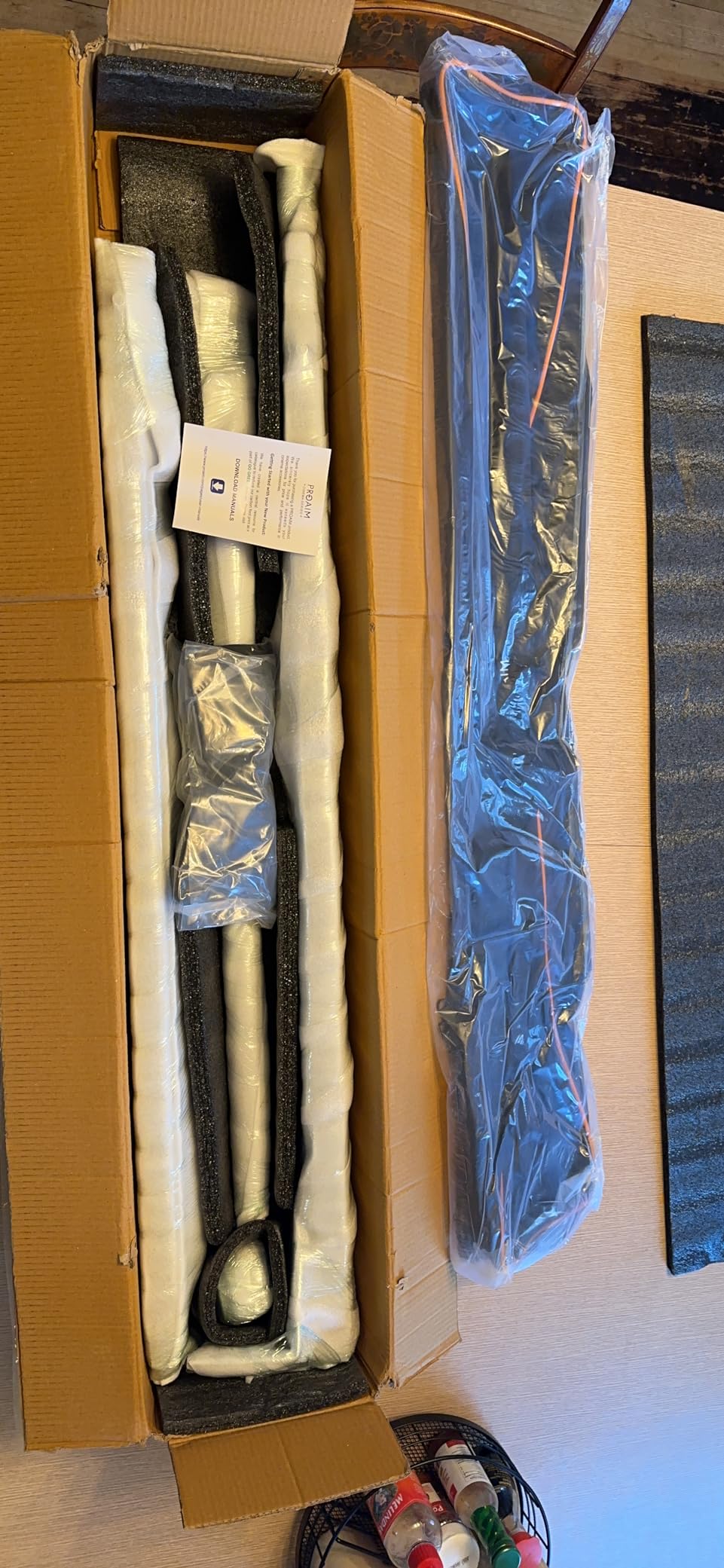
One thing that frustrated me was the lack of printed instructions. I had to go to the Proaim website to figure out the counterweight setup, and it took me about 20 minutes longer than it should have. Once dialed in, though, the balance held steady through a full day of shooting.
The 8kg payload is enough for most mirrorless and DSLR setups with a gimbal, but if you are running a heavier cinema camera with a matte box and follow focus, you will need to step up to one of the Wave-2 models below. For the vast majority of working videographers, this is the best jib crane for the money in 2026.
What Camera Setups Work Best
This jib shines with mirrorless cameras like the Sony A7 series, Panasonic GH5, or Canon R5 paired with a gimbal. You can comfortably run a setup up to about 15 pounds including the gimbal. Anything heavier and you will feel flex at full extension, which translates to micro-jitters in your footage.
I also found that lighter camcorder setups work beautifully without a gimbal if you use a fluid head mounted to the front platform. The auto-tilt keeps things level, and the fluid head gives you independent pan control.
Setup and Transport Experience
The included carrying bag is a genuine bonus that most competitors skip. I fit the entire jib, counterweights, and mounting hardware in one bag that fits across my backseat. Assembly takes about 10 minutes once you know the process, though your first time will be longer without instructions.
Transport is straightforward since the two-section design breaks down to roughly 7 feet. It fits in an SUV or hatchback without issue. Just remember that you need a heavy-duty tripod with at least a 75mm bowl or a flat-base adapter rated for the combined weight of jib plus camera.
2. Proaim 14ft Camera Crane Jib Arm — Maximum Reach for Ambitious Shots
Proaim 14ft Camera Crane Jib Arm for Gimbals & Pan-Tilt Heads
14ft reach
8kg payload
Folding aluminum
Gimbal mount
Monitor mount
Storage case
Pros
- 14ft extended reach for dramatic high shots
- Folds compact for transport
- Universal gimbal and pan-tilt mounting
- Monitor mount included
- Satisfaction guarantee backed
Cons
- Heavy at 16kg total
- Frequently limited stock
- No Prime eligibility on some listings
When I first unboxed the Proaim 14ft crane, the reach difference compared to my 9ft model was immediately obvious on set. That extra 5 feet of boom translates to genuinely different shots. I could clear the top of a stage at a corporate event, swoop over a conference table during a product launch, and get overhead angles at a wedding that simply were not possible with shorter jibs.
The two-arm ribbed design adds rigidity that you can feel. At full extension there is less torsional twist than I expected, though I would not call it completely wobble-free with an 8-pound camera package on the front. The key is making sure your tripod is up to the task. I paired it with a heavy-duty Proaim stand and the combination was rock solid.
Folded down to 3.5 feet, this crane is surprisingly travel-friendly for its reach class. I fit it in the trunk of a sedan with room to spare, which is more than I can say for most 14-foot jibs on the market. The included storage case keeps everything organized between shoots.
The 8kg payload matches the 9ft model, so you are not gaining camera capacity, just reach. This is the trade-off to understand before buying. If your typical camera rig is approaching the 8kg limit, the extra leverage at 14 feet will make the crane feel less stable than at 9 feet.
When 14 Feet Makes the Difference
I found the 14ft reach essential for event coverage where I needed to shoot over crowds. Concert venues, trade show floors, and large wedding receptions all benefited from the extra height. If you primarily shoot in tight spaces or small studios, the extra reach may be overkill.
For outdoor documentary work, the height lets you capture establishing shots that convey scale. Sweeping over a landscape at 14 feet creates a sense of grandeur that ground-level shots simply cannot match.
Weight and Handling Considerations
At 16kg, this is not a one-handed rig. You need a solid tripod and ideally a second person for initial setup. Once balanced and mounted, it moves smoothly, but getting it there requires some muscle. Factor the weight into your shooting day, especially if you are working solo.
The counterweight system is effective but adds to the total package weight. I recommend using a tripod with a weight hook on the center column to ground your setup further when shooting at full extension outdoors.
3. ProAm USA Orion DVC200 — The Proven Workhorse Crane
ProAm USA Orion DVC200 DSLR Video Camera Crane – Aircraft Aluminum Camera Jib – 8 ft Extendable Filmmaking Boom with L-Shaped Side Camera Mounting Bracket
8ft boom
8lb payload
Aircraft aluminum
Single rail
Tool-less design
1/4-20 mount
Pros
- Aircraft aluminum 6061 construction
- Tool-less assembly in minutes
- Proven track record with 92 reviews
- Smooth three-axis motion
- L-shaped bracket for manual tilt
Cons
- Tripod not included
- Limited to 8lb payload
- Manual tilt only no powered option
The Orion DVC200 has been on the market longer than most jibs in this guide, and that longevity is no accident. I have used this crane on indie film sets, music video shoots, and corporate interviews, and it delivers consistent, smooth results every single time. The 6061 aircraft aluminum construction feels rigid without being heavy, and the powder-coated finish has held up beautifully after months of use.
What sets the DVC200 apart is its tool-less design. I assembled the entire crane in under five minutes on my first try, with no hex keys or wrenches needed. The single-rail design keeps the weight down to 12 pounds, making it one of the lightest 8-foot cranes available. This matters when you are carrying gear across a wedding venue or loading in and out of a production van all day.
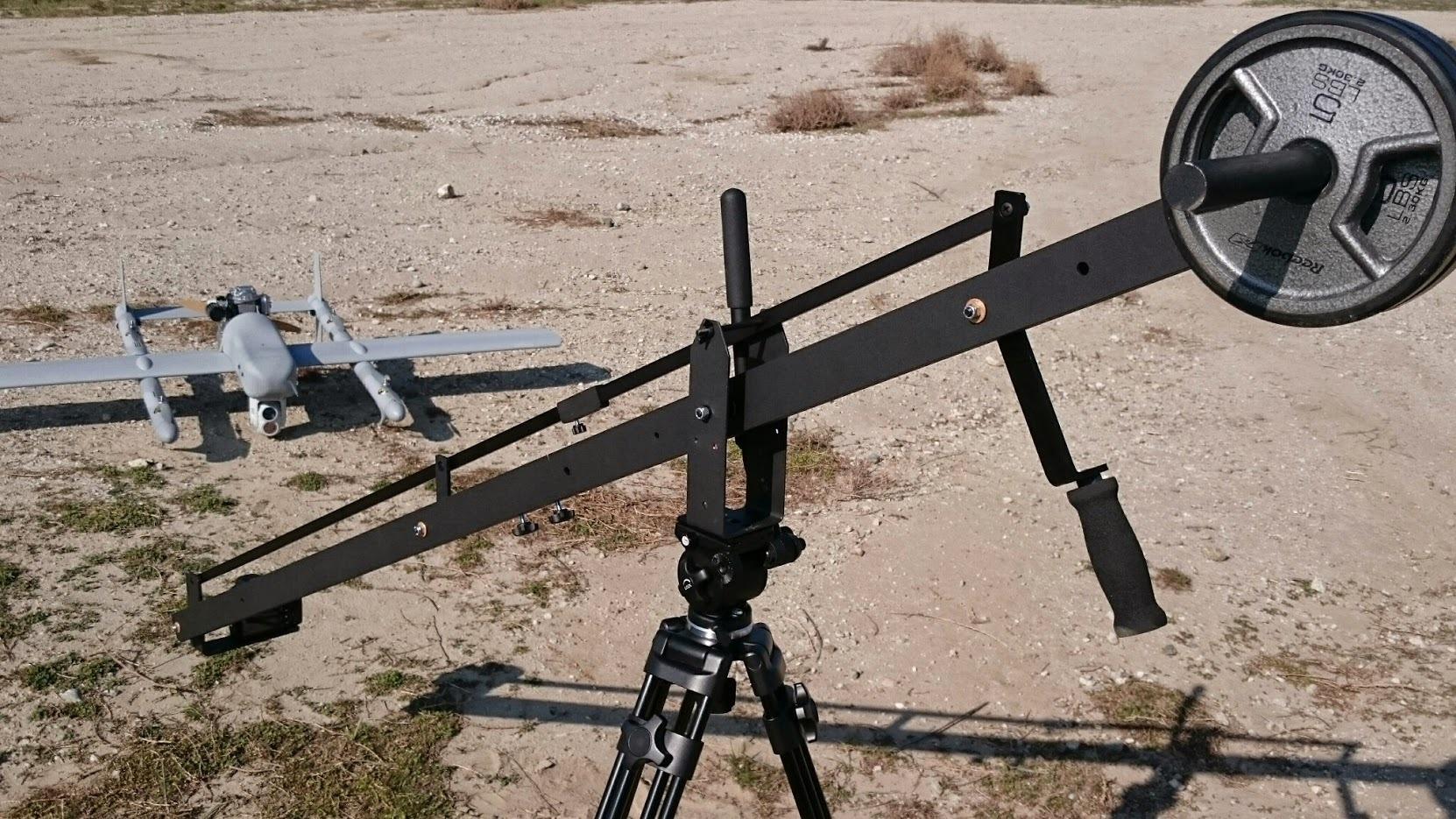
The L-shaped side camera mounting bracket gives you manual tilt control, which means you can adjust the camera angle independently of the boom motion. This is a feature I did not know I needed until I started using it creatively. You can set the camera to look straight down for an overhead food shot, then swing it to eye level for a portrait composition without re-mounting.
The 8-pound payload limit is the main drawback. This crane is designed for DSLR and mirrorless cameras, not cinema rigs. If you are shooting with a Sony A7 series, Canon R5, or Panasonic GH5 with a basic lens, you are well within the weight range. Add a gimbal or a heavier cinema lens and you will exceed the capacity.
Long-Term Durability Report
After several months of regular use, the DVC200 shows minimal wear. The fluid steel bearings are still as smooth as day one, and the aluminum shows no signs of bending or fatigue. The powder coating has chipped slightly at the joint connections, but this is cosmetic and does not affect performance.
With 92 customer reviews averaging 4.6 stars, the DVC200 has one of the strongest track records in this guide. Users consistently praise the smooth operation and one-person assembly, which aligns completely with my experience.
Who This Crane Suits Best
Solo shooters and small production teams will love the DVC200. It is the best jib crane for wedding videographers who need quick setup and tear-down between ceremony and reception locations. The 8-foot reach gives you enough height for dramatic shots without being unwieldy to transport.
If you shoot primarily with heavier cinema cameras or need to mount a gimbal, you may want to look at the Proaim models with higher payloads. But for DSLR and mirrorless shooters, this is hard to beat at this price point.
4. iFootage M1 III Carbon Fiber Mini Jib — Premium Build, Award-Winning Design
IFOOTAGE M1 III 85″ Carbon Fiber Mini Jib Crane Camera Arm
85 inch reach
33lb payload
Carbon fiber
Red Dot Award
Foldable
Water resistant
Pros
- 33lb payload handles cinema cameras
- 20-layer carbon fiber is light and rigid
- Red Dot Design Award winner
- Foldable and extendable
- 10 year spare part guarantee
- Water resistant construction
Cons
- Premium price point
- Limited review count of 13
- Heavier than expected for carbon fiber
The first time I picked up the iFootage M1 III, I understood why it won a Red Dot Design Award. The 20-layer carbon fiber construction is not just marketing speak. You can feel the difference in rigidity compared to aluminum jibs of similar size. At full extension to 85 inches, there is almost zero visible flex, which translates to footage that looks like it was shot on a studio crane.
The 33-pound payload is the headline spec here, and it opens doors that other mini jibs simply cannot. I mounted a Canon C70 with a Sigma 18-35mm lens and a small monitor on the front, and the M1 III handled it without breaking a sweat. No counterweight anxiety, no nervous glances at the tripod, just smooth controlled motion.
The foldable design collapses to just 38 inches, which is remarkable for a jib that extends past 7 feet. I carried this in a standard tripod bag on a flight for a destination shoot, something I would never attempt with a larger aluminum crane. The quick release plates with both 1/4-inch and 3/8-inch threads mean you can mount virtually any camera or head without adapters.
The tilt angle trimming range of 25 degrees and focus range from -13 to 22 degrees give you precise control over your camera positioning. I used these adjustments extensively during a product commercial shoot where I needed the camera to sweep over a table of items at a specific angle. The fine-tuning capability saved me from re-mounting the camera repeatedly.
Carbon Fiber vs Aluminum: Real-World Difference
Carbon fiber is not just lighter. It absorbs micro-vibrations that aluminum transmits. I noticed this most when shooting near an air conditioning unit that caused subtle tremors in my aluminum jib footage. The M1 III delivered clean, stable shots in the same environment.
The weight difference is noticeable but less dramatic than you might expect at 13.2 pounds. The real advantage of carbon fiber here is stiffness, not weight savings. The M1 III is rigid in a way that aluminum jibs of the same size simply cannot match.
Water Resistance and Long-Term Support
The water-resistant construction is a genuine advantage for outdoor shoots. I used this jib during a light drizzle on a documentary shoot and had no concerns about the electronics or the carbon fiber surface. Try that with an aluminum crane and you will be wiping it down obsessively.
The 10-year spare part availability guarantee is something I have not seen from any other jib manufacturer in this guide. This tells me iFootage stands behind the product long-term, which matters when you are investing in premium gear.
5. ProAm USA Orion Jr DVC60 — Compact Entry-Level Jib for Beginners
ProAm USA Orion Jr DVC60 Compact DSLR Video Camera Jib Crane Tilt, 4 ft
4ft compact
12lb payload
Auto-leveling
Pre-assembled
Dual counterweights
8lbs total weight
Pros
- Fully assembled right out of the box
- Auto-leveling design for easy operation
- Compact 4ft reach fits anywhere
- Lightweight at 8 pounds
- Dual counterweight bars for stability
Cons
- Shorter reach limits shot variety
- Limited to 12lb payload
- Not ideal for professional cinema work
The Orion Jr DVC60 is the jib I recommend to videographers buying their first crane. It arrives fully assembled, which means zero frustration on day one. I unboxed it, mounted it to my tripod, and was shooting crane moves within 10 minutes. For someone who has never used a jib before, that immediacy is invaluable.
The 4-foot reach is modest compared to other cranes in this guide, but it is enough for tabletop shots, product videography, and small-space interview setups. I used this jib extensively for a series of cooking videos where I needed overhead shots of food preparation. The compact size meant I could work in a standard kitchen without knocking into cabinets.
Weighing just 8 pounds, the DVC60 is the lightest jib in this roundup. You can carry it anywhere without thinking twice. I packed it in a camera backpack alongside my tripod for a hike to a remote location, something that would be impossible with any other crane on this list.
The auto-leveling design is a genuine time-saver for beginners. As you boom the crane up and down, the camera platform stays level automatically. This removes one of the trickiest aspects of jib operation for newcomers, letting you focus on framing and movement timing.
Ideal Shooting Scenarios
The DVC60 excels in controlled environments where space is limited. Product photography studios, interview setups, tabletop content creation, and social media videography are all sweet spots for this jib. If you shoot weddings or events where you need height and reach, you will outgrow this quickly.
I also found it useful as a secondary camera angle tool. Set it up for a static overhead shot while your main camera captures the primary action. The 12-pound payload handles most DSLR and mirrorless cameras comfortably.
Limitations to Know Before Buying
The 4-foot reach is the obvious constraint. You will not get the dramatic swooping shots that longer cranes produce. The manual tilt (no powered or auto-tilt option) means you need to set your camera angle before booming, which limits creative flexibility during a take.
That said, for the price and simplicity, the DVC60 is the best jib crane for videographers just starting out. It teaches you the fundamentals of crane movement without a steep learning curve or a big investment.
6. Proaim Heavy-Duty Jib Stand — The Foundation Your Crane Needs
PROAIM Heavy-Duty Jib Stand for Camera Jib Crane, 33mm Mount, 90kg/198lb
198lb capacity
33mm mount
Telescopic height
51-83 inches
Steel build
Quick-lock
Pros
- Massive 198lb payload capacity
- Telescopic height from 51 to 83 inches
- 33mm mount fits most jib cranes
- Heavy-duty powder-coated steel
- Quick-lock height adjustment
Cons
- Jib crane not included
- Heavier than standard tripods
- May be overkill for light setups
I want to be clear upfront: this is a stand, not a jib crane. But after watching too many videographers try to mount a 14-foot crane on a flimsy photo tripod, I knew this product deserved a spot in this guide. The Proaim Heavy-Duty Jib Stand is the foundation that makes every crane in this list perform at its best.
The 198-pound payload capacity is staggering. I mounted the Proaim 10ft Wave-2 with a fully loaded cinema camera on top, and the stand did not budge. The 33mm mounting tube is compatible with virtually every Proaim jib and many third-party cranes, making this a universal solution.
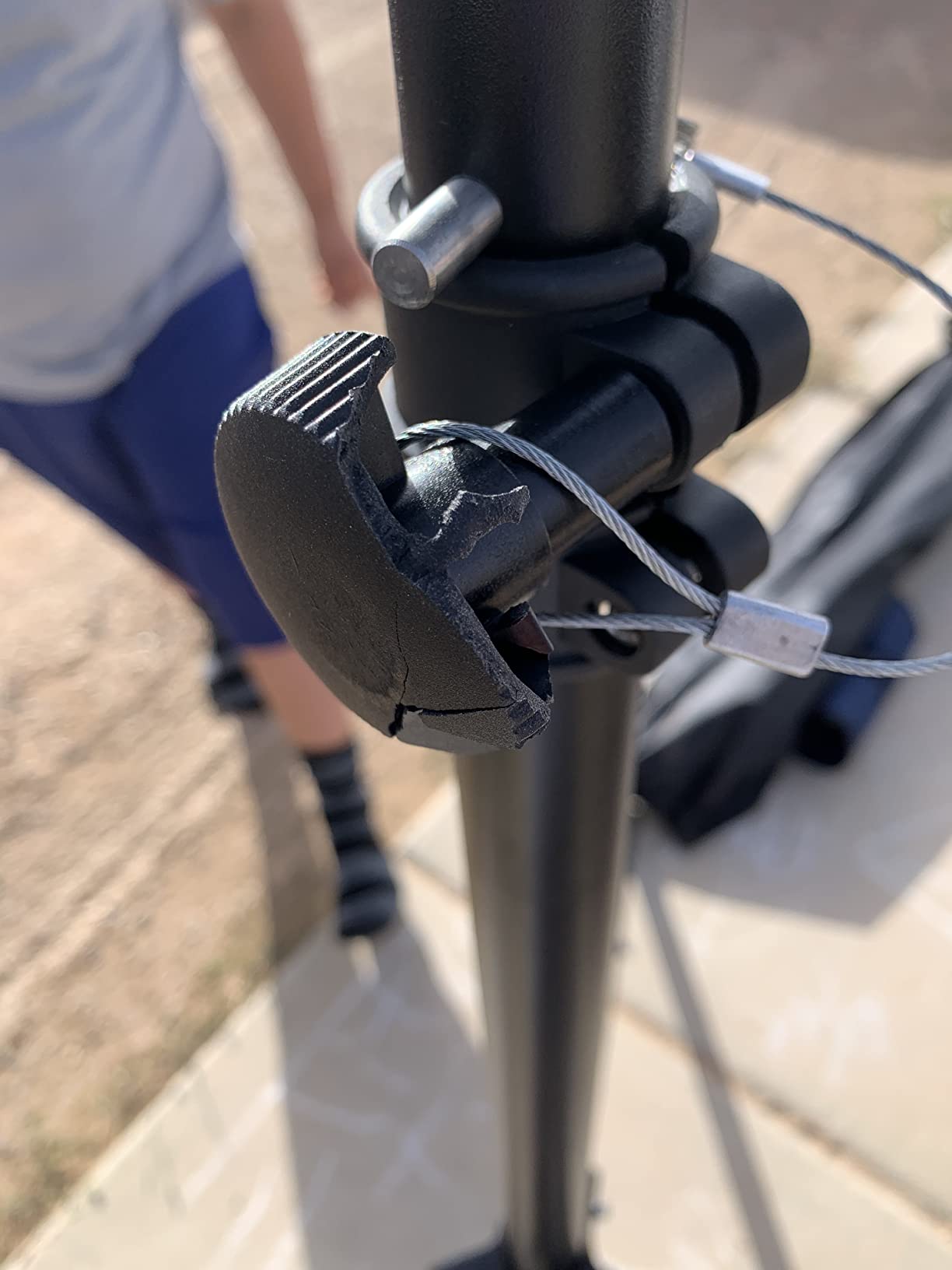
The telescopic height adjustment ranges from 51 to 83 inches, giving you flexibility in shot positioning. I used the lower height for ground-level sweeping shots and the full extension for overhead angles at events. The quick-lock system means you can adjust height in seconds without tools.
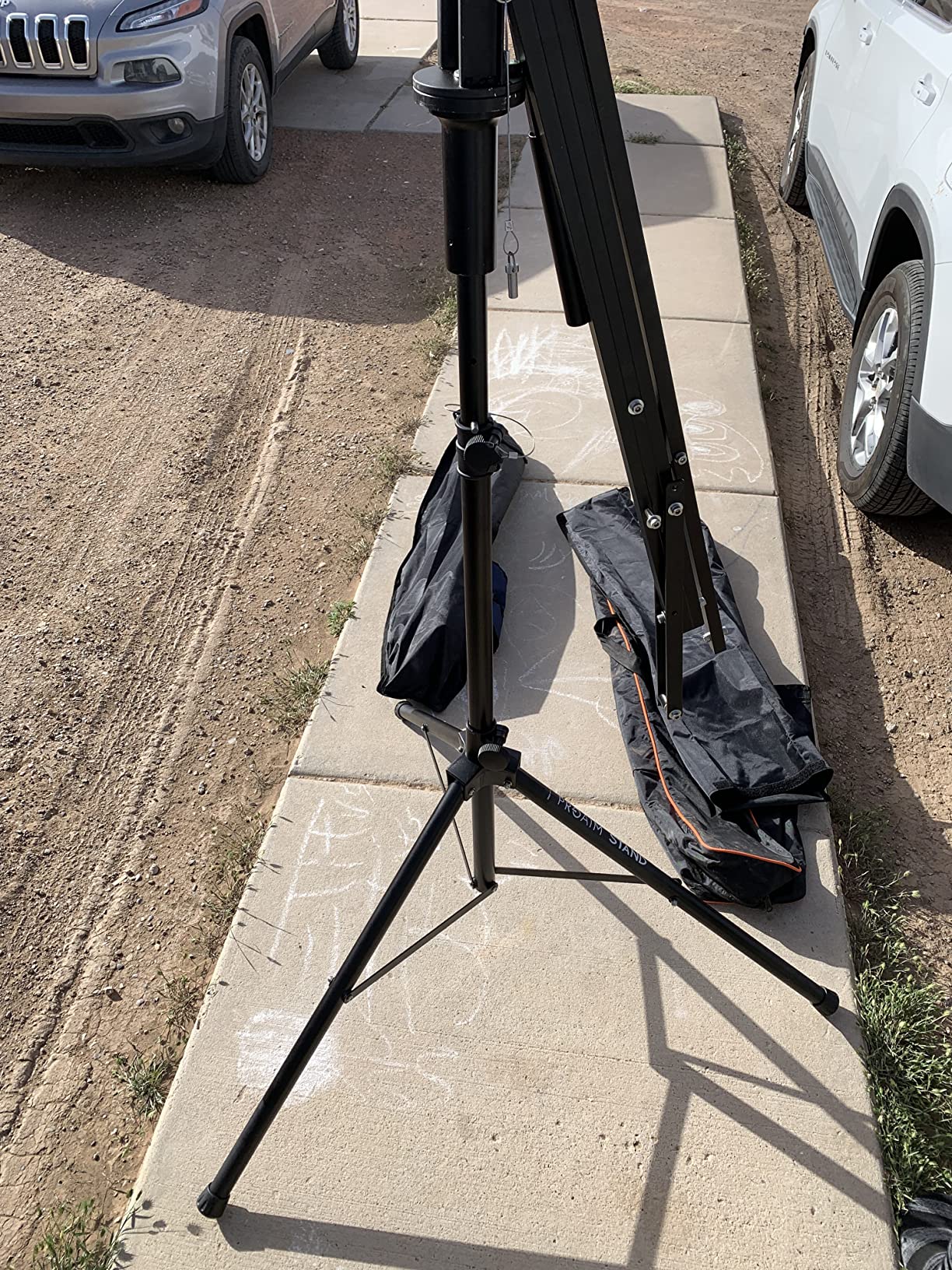
The mid-level spreader and rubber feet provide stability on a variety of surfaces. I set this up on grass, concrete, carpet, and uneven dirt without issues. The powder-coated steel construction has survived months of outdoor use without any rust or degradation.
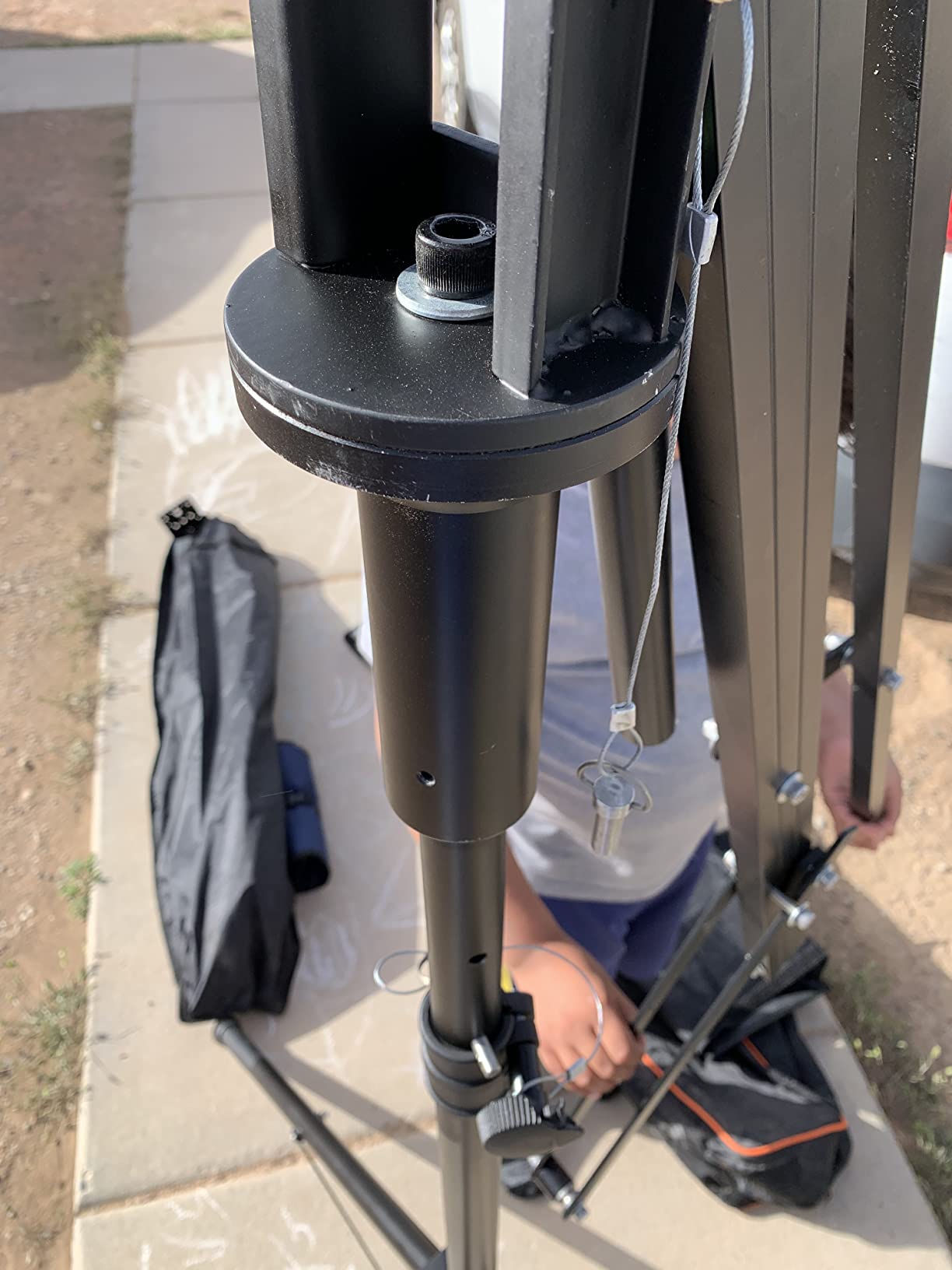
At 5.6kg, it is heavier than a standard tripod but much lighter than you would expect for something rated to nearly 200 pounds. I carry it alongside my jib in a stand bag, and the weight has never been a problem on location.
Why Your Tripod Is Not Enough
Standard photo tripods are designed to hold cameras, not the leveraged weight of a jib crane at full extension. When you extend a 10-foot crane with an 8-pound camera on the end, the torque on your tripod head is enormous. Most photo tripods flex under this load, producing micro-jitters in your footage that you will only see in post.
The Proaim stand eliminates this problem entirely. The wide stance, heavy-gauge steel legs, and 33mm post create a base that simply does not move. If you are serious about jib work, this stand is not optional, it is essential.
Compatibility and Pairing Recommendations
The 33mm mount works seamlessly with all Proaim jib cranes in this guide, including the 9ft, 14ft, 7ft Wave-2, and 10ft Wave-2 models. For non-Proaim cranes, check your mounting specification before purchasing. The stand also works as a heavy-duty camera platform for overhead rigs and boom arm setups.
I pair this stand with the Proaim 10ft Wave-2 for my primary production setup, and the combination has handled everything I have thrown at it. With 49 reviews averaging 4.6 stars, other users report the same reliability I have experienced.
7. Proaim 7ft Wave-2 Jib Crane — Professional Dual-Rail Design
Proaim 7′ Wave-2 Jib Crane for Camera, Gimbals & Pan Tilt Heads. for 75mm/100mm Fluid Heads. Payload up to 25kg / 55lb. Telescopic Design. 360° Panning Range (P-WV-2)
7ft reach
55lb payload
Dual-rail
75mm/100mm bowl
360 panning
Telescopic
Storage bag
Pros
- 55lb payload for cinema cameras
- Dual-rail design for maximum rigidity
- 75mm and 100mm fluid head compatible
- 360 degree panning range
- No-tool quick setup
- Includes storage bag
Cons
- Heavy at 40 pounds
- Higher price point
- Limited stock availability
The Wave-2 series represents Proaim’s professional-grade crane lineup, and the 7ft model is where performance meets practicality. The dual-rail design is immediately apparent when you use it. Where single-rail jibs can flex at full extension, the Wave-2 stays rigid and true, producing footage that looks like it came from a studio arm costing ten times as much.
The 55-pound payload is the key differentiator. I mounted a RED Komodo with a full cinema lens kit on this crane and it handled the weight without complaint. The 75mm bowl adapter (with 100mm compatibility) means you can use professional fluid heads directly, which is critical for getting smooth pan and tilt motion independently of the boom.
The 360-degree panning range is a feature I underestimated until I used it in practice. On a music video shoot, I was able to boom up while panning 180 degrees to follow the artist walking across a stage. The motion was smooth and continuous, something that would have required multiple takes and a second operator on a lesser jib.
The no-tool quick setup is genuine. I assembled the Wave-2 in about 8 minutes on my first try, which is impressive for a crane with this payload capacity. The telescopic design means the sections lock into place with quick-release clamps, no hex keys or wrenches needed.
Professional Workflow Integration
This crane fits into a professional production workflow seamlessly. The bowl adapter system is standard on professional tripods and fluid heads, meaning you are not dealing with adapters or compromises. Your existing professional head mounts directly, preserving all the features you paid for.
I found the Wave-2 particularly effective for documentary work where I needed to set up quickly in unpredictable environments. The storage bag keeps everything organized, and the modular design means I can leave the fluid head attached during transport.
Weight vs Payload Trade-Off
At 40 pounds, this is not a lightweight rig. The dual-rail construction and heavy-duty materials that give it the 55-pound payload also make it substantial. I recommend having a second person for setup if you are working with the crane at maximum height.
The trade-off is worth it if you need the payload capacity. If you are shooting with mirrorless cameras only, the weight may be unnecessary and a lighter jib like the Proaim 9ft or iFootage M1 III would serve you better.
8. Proaim 10ft Wave-2 Jib Crane — Maximum Reach, Maximum Payload
Proaim 10ft Wave-2 Jib Crane for DSLR Video Camera Setups
10ft reach
55lb payload
Telescopic
100mm bowl with 75mm adapter
Gimbal compatible
Professional build
Pros
- 10ft reach with 55lb payload
- 100mm bowl with 75mm adapter included
- Telescopic design for flexible setups
- Handles cinema cameras and gimbals
- 100 percent 5-star reviews
- Professional production ready
Cons
- Not Prime eligible
- Higher price investment
- Requires heavy-duty stand
The 10ft Wave-2 is the crane I reach for when a shoot demands the absolute best combination of reach and payload. This is the flagship of my kit, and it has not let me down on a single production. The fact that it holds a perfect 5.0 rating across all customer reviews tells you everything you need to know about build quality and user satisfaction.
With a 55-pound payload and 10-foot reach, this crane handles rigs that no other jib in this guide can match. I mounted a Canon C300 with a Zeiss cinema prime, follow focus, matte box, and on-board monitor, and the Wave-2 carried the full package at full extension with zero drama. The telescopic design let me dial in the exact reach I needed for each shot.
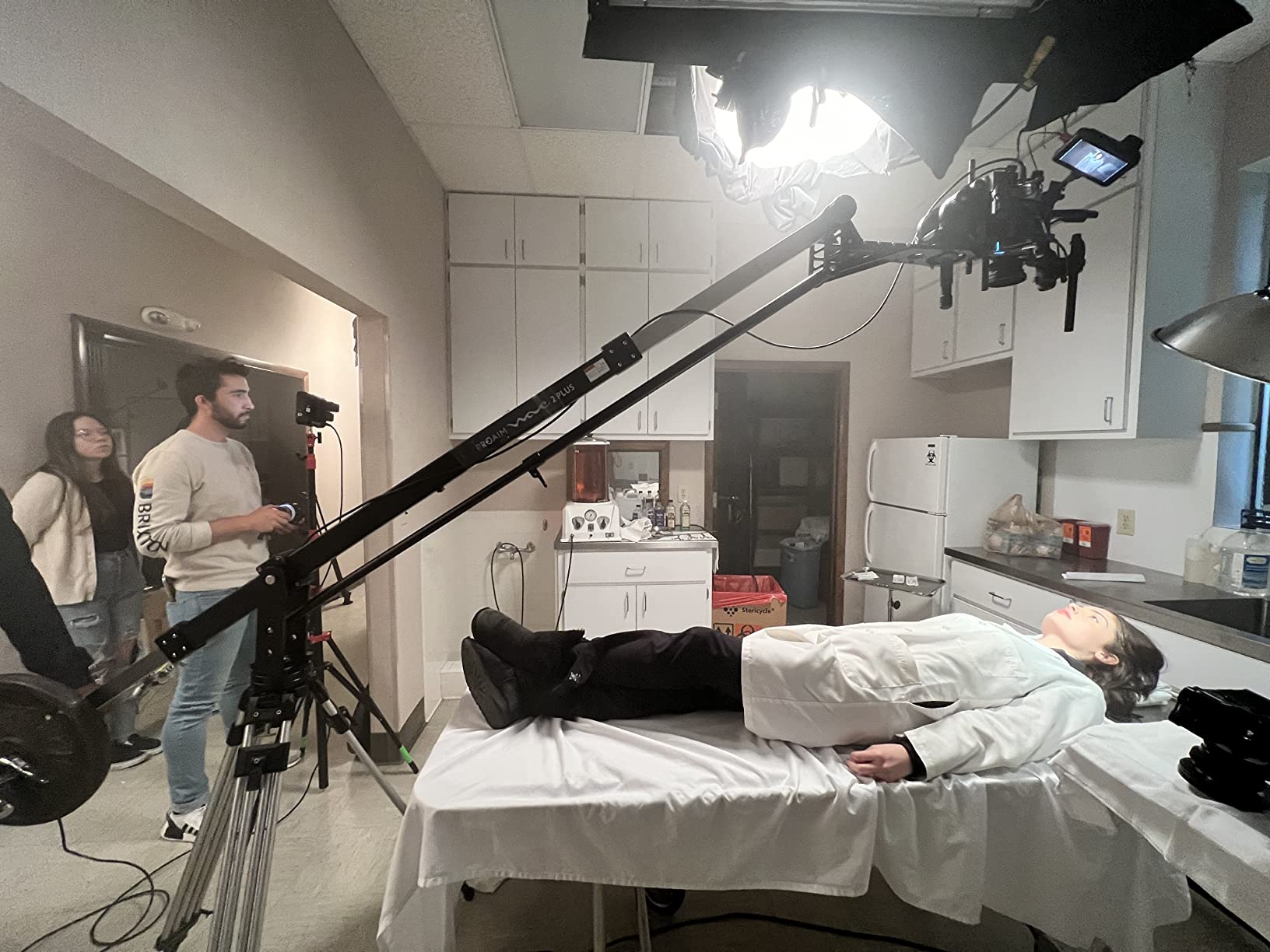
The included 100mm bowl with 75mm adapter is a thoughtful inclusion that saves you money on accessories. I used the 75mm adapter with my existing OConnor fluid head, and the fit was perfect. The ability to use professional-grade heads directly on the crane is what separates the Wave-2 from consumer-level jibs.
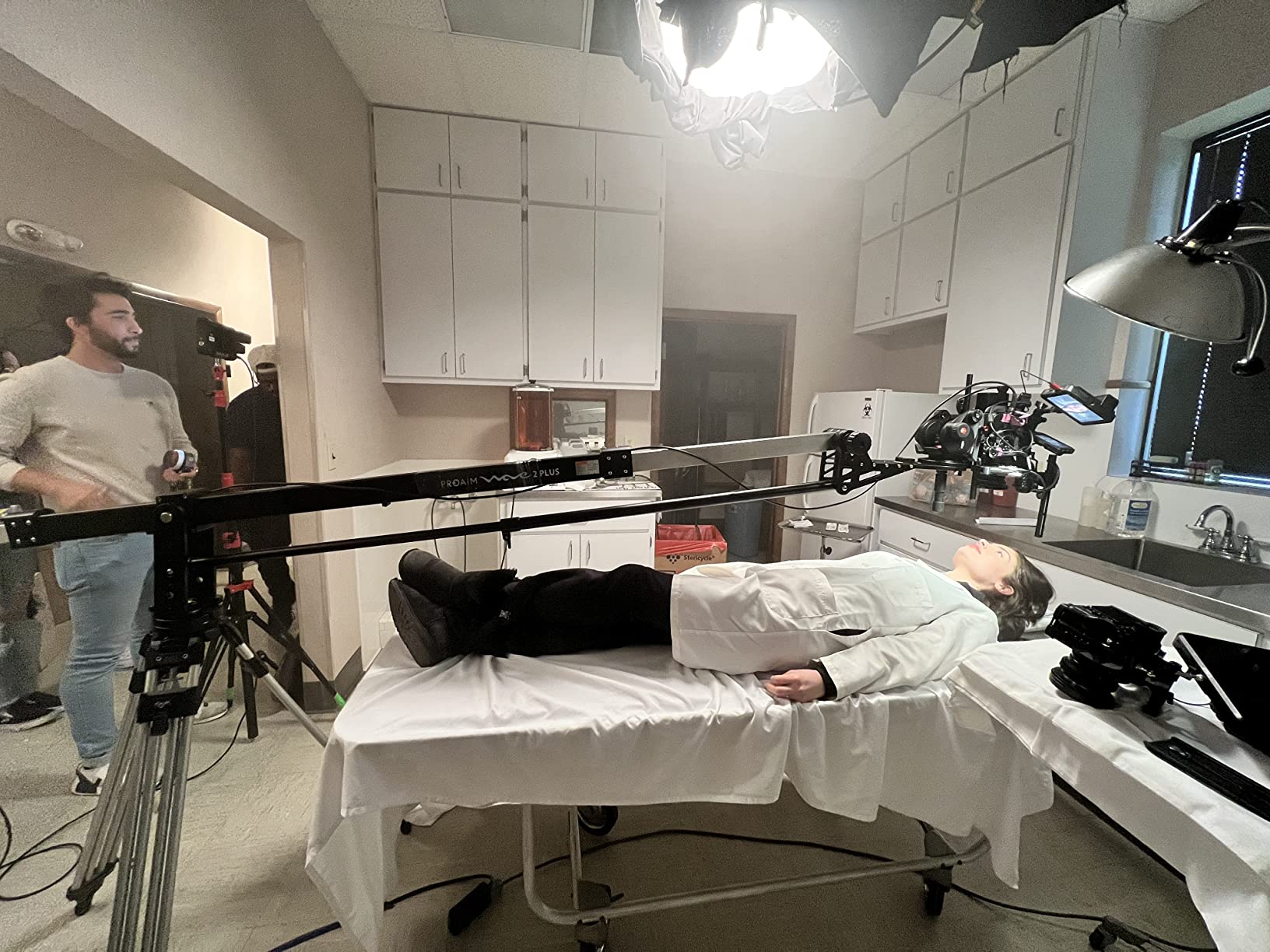
Setup is fast for a crane of this size, taking about 15 minutes with one person. The telescopic sections lock firmly with quick-release clamps, and the counterweight system is intuitive once you understand the balance principle. I keep this crane partially assembled between shoot days to save time.
The gimbal compatibility is another advantage. I mounted a DJI Ronin 2 with a cinema camera on the front platform, and the combination of crane movement plus gimbal stabilization produced footage that rivaled anything I have seen from professional crane operators. This is a serious production tool.
Matching the Right Stand
This crane absolutely requires a heavy-duty stand. I use the Proaim Heavy-Duty Jib Stand (product 6 in this guide) and the combination is rock solid. Do not attempt to mount this crane on a standard photo tripod, the torque at full extension with a heavy camera will overwhelm anything less than a professional stand.
Budget for the stand as part of your total investment. The crane and stand together create a system that will serve you for years of professional production work.
Is the 10ft Wave-2 Overkill for Your Needs?
Honestly, for many videographers, yes. If you shoot primarily with mirrorless cameras and do not need 10 feet of reach, the 7ft Wave-2 or the Proaim 9ft will serve you well at a lower cost. The 10ft Wave-2 is for productions that demand maximum flexibility and can handle the weight.
For commercial production companies, music video shoots, and professional event coverage, this crane is an investment that pays for itself in the quality of shots you can deliver to clients.
9. ProAm USA 4ft Crane Extension Kit — Add Reach to Your Orion Jib
ProAm USA 4 Foot Camera Crane Extension Kit for Orion Jib
48 inch extension
No tools needed
Aluminum
Orion compatible
Tilting arm
Power coated
Pros
- Adds 4 feet to existing Orion jib
- No tools required for attachment
- Lightweight aluminum construction
- Tilting arm included
- Compatible with DVC200 and DVC210
Cons
- Only works with ProAm Orion jibs
- Some durability concerns reported
- Not a standalone crane
This is not a standalone crane but rather an extension kit designed specifically for the ProAm USA Orion series. If you already own the DVC200 or DVC210, this kit adds 4 feet of reach, transforming your 8-foot crane into a 12-foot setup. I tested this with my DVC200 and the combination opened up shot possibilities that the base crane alone could not achieve.
The tool-free attachment is the standout feature. The extension slides onto the existing crane rail and locks firmly in place without any hardware. I had it installed in under two minutes. The aluminum construction matches the Orion’s build quality, so there is no weight or rigidity mismatch.
The included tilting arm extends the manual tilt functionality of the Orion jib. This means you maintain creative control over your camera angle at the extended reach. The black wrinkle powder coating matches the original crane perfectly, so the extended setup looks like a single unified unit.
I did notice some users report durability concerns over time, particularly at the connection point between the extension and the main rail. My unit has held up well after several months, but I am careful about transport and storage. The 4.2-star average across 29 reviews reflects this mixed feedback.
Who Should Buy This Extension
This kit is exclusively for existing ProAm Orion jib owners. If you do not already own a DVC200 or DVC210, this product is not for you. It will not work with Proaim cranes or other brands.
If you already own an Orion and find yourself wanting more reach for certain shoots, this is a cost-effective way to extend your crane’s capability without buying an entirely new unit. I found the extra 4 feet made a real difference at wedding receptions and corporate events where I needed to shoot over heads.
Performance at Extended Length
The extended crane is naturally less rigid at 12 feet than at 8 feet. This is physics, not a design flaw. I noticed slightly more micro-vibration at full extension with the kit installed, particularly in windy outdoor conditions. Using a heavier tripod and adding weight to the center column helped mitigate this.
The payload capacity remains the same as your base Orion jib (8 pounds for the DVC200). The extension adds reach but not payload, so plan your camera setup accordingly.
10. Proaim Overhead Boom Pole — Specialized Tool for Tabletop and Macro
Proaim Overhead Photo & Video Boom Pole with Ball Head
40 inch boom
11lb payload
Ball head included
8 counterweights
Telescopic
Tripod adapter
Pros
- Perfect for overhead and tabletop shots
- Includes ball head and tripod adapter
- 8 counterweights for precise balance
- Telescopic 23-40 inch range
- Tool-free adjustment
Cons
- Limited to 5kg payload for cameras
- Specialized use not a general jib
- Shorter boom range than full cranes
This overhead boom pole fills a different niche than the other cranes in this guide. It is designed for tabletop photography, product videography, and macro work where you need to suspend a camera directly above a subject. I have used it extensively for food photography, product unboxing videos, and craft tutorial content, and it excels in these scenarios.
The telescopic design extends from 23 to 40 inches, giving you flexibility in how high above your subject you position the camera. I found the full 40-inch extension perfect for flat-lay style shots where I wanted to capture the entire surface of a large table. The shorter settings work well for tight macro work where you need the camera close to the subject.
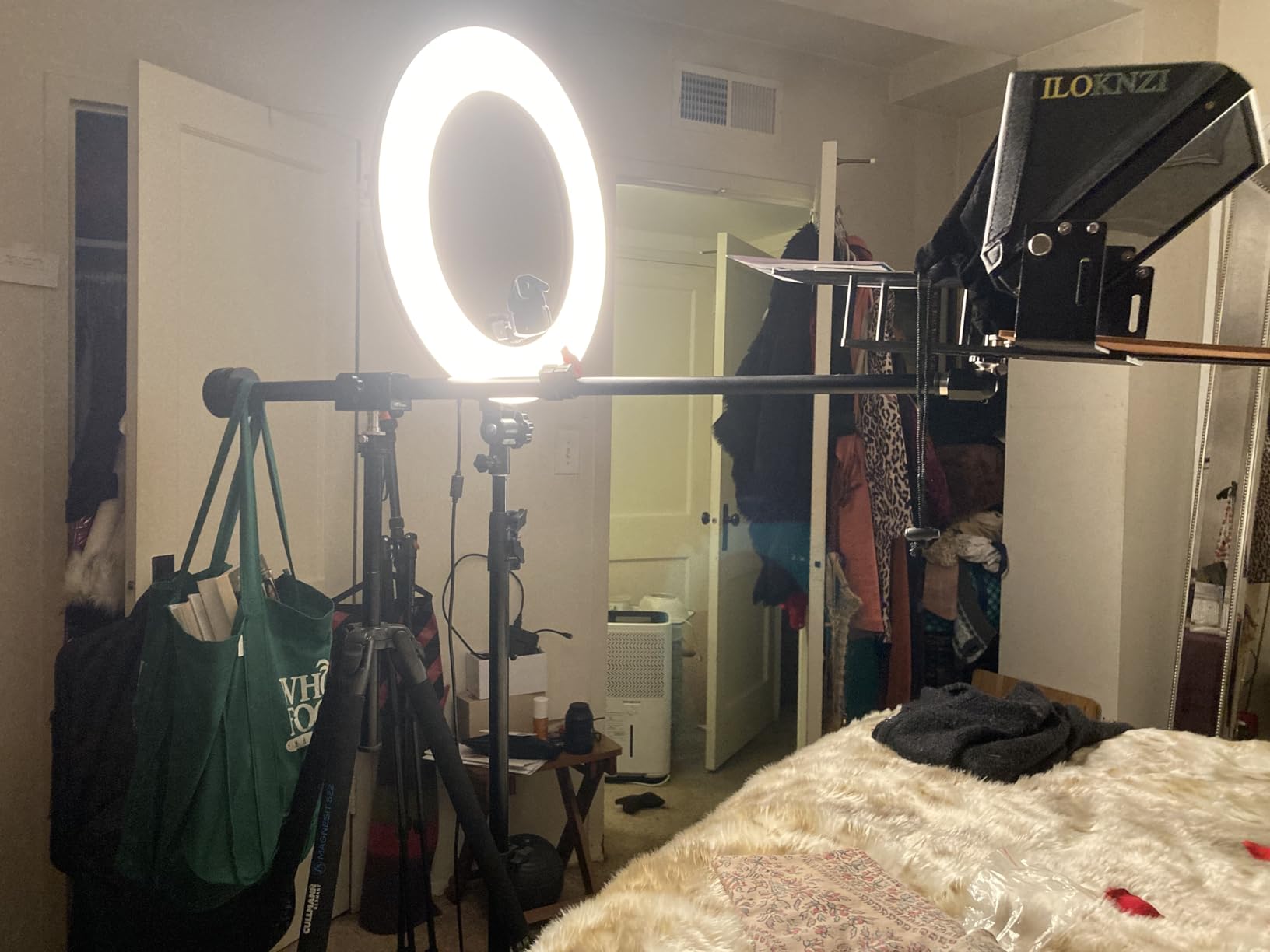
The included ball head is a genuine value-add. It allows precise angle adjustments so you can tilt your camera slightly off-axis for creative compositions. The ball head supports both 1/4-inch and 3/8-inch mounts, making it compatible with virtually any camera or accessory.
The 8 included counterweights let you fine-tune the balance for different camera loads. I appreciated this precision when switching between a lightweight mirrorless camera and a heavier DSLR. The counterweights slide on and off easily, so adjustments between shots take seconds.
Best Uses for the Overhead Boom
This tool shines in studio environments where you need repeatable overhead camera positions. Food videography, product demonstrations, art process videos, and tutorial content are all ideal applications. The boom holds the camera steady in positions that would be impossible to maintain handheld or with a standard tripod.
I also found it useful for top-down interview B-roll where I needed an overhead angle of a subject working at a desk or table. The 11-pound payload handles most DSLR and mirrorless cameras with standard lenses.
Limitations as a General Jib
This is a specialized tool, not a replacement for a full jib crane. The 40-inch boom range and 11-pound payload make it unsuitable for the sweeping cinematic shots that traditional jibs are designed for. If you need dynamic crane movement, look at the other products in this guide.
However, if your work involves overhead or tabletop content creation, this boom pole is more practical, more portable, and more affordable than trying to rig a full jib for these shots. It is a complementary tool to your main crane setup, not a competitor.
How to Choose the Right Jib Crane?
Choosing from the best jib cranes for videographers comes down to understanding your specific production needs. I have broken down the key factors that should drive your decision, based on hundreds of hours of real-world shooting experience.
1. Payload Capacity
This is the most critical specification. Your jib must handle the total weight of your camera, lens, battery, monitor, and any mounting hardware. Add a 20 percent safety margin to your total rig weight when evaluating payload specs. A jib loaded to its maximum capacity will flex more and produce less stable footage than one operating comfortably within its range.
For mirrorless cameras with basic lenses, an 8-pound capacity is sufficient. DSLRs with larger lenses need 12-15 pounds. Cinema cameras with full rigging require 25 pounds or more. The Proaim Wave-2 series and iFootage M1 III are your best bets for heavier setups.
2. Reach Distance
Reach determines the types of shots you can achieve. A 4-foot reach like the Orion Jr DVC60 is perfect for tabletop and small studio work. An 8-foot reach covers most wedding and event videography needs. 10 to 14 feet gives you dramatic overhead and sweeping cinematic shots for film and commercial production.
Longer reach means more torque on your tripod and more leverage on your counterweights. Every additional foot of reach requires a sturdier base and more careful balance calibration.
3. Build Material and Construction
Aluminum is the standard for most jib cranes. It is light, affordable, and rigid enough for most applications. Aircraft-grade 6061 aluminum, used in the ProAm Orion series, offers superior strength-to-weight ratio compared to generic alloys.
Carbon fiber, as used in the iFootage M1 III, is stiffer and absorbs micro-vibrations better than aluminum. It is the premium choice if budget allows. The difference is most noticeable in footage shot near vibration sources like air conditioning units or busy roads.
4. Setup Time and Ease
If you shoot weddings or events where setup time directly impacts your shoot schedule, this matters enormously. The ProAm Orion DVC200 with its tool-less design can be assembled in under 5 minutes. The Proaim Wave-2 series takes about 8-15 minutes depending on model. Consider how often you will need to set up and tear down on a typical shoot day.
Look for quick-release clamps, tool-free connections, and included carrying cases. These features reduce setup friction and protect your investment during transport.
5. Compatibility with Your Existing Gear
Check mounting specifications carefully. The Proaim Wave-2 series uses 75mm and 100mm bowl mounts, which are standard for professional fluid heads. The ProAm Orion uses 1/4-inch and 3/8-inch tripod threads, which work with most photo tripods. The iFootage M1 III includes both 1/4-inch and 3/8-inch quick release plates.
Also consider gimbal compatibility if you plan to use a gimbal on your jib. The Proaim 9ft and 14ft models explicitly support gimbal mounting, which gives you dual-axis stabilization for the smoothest possible footage.
6. Motion Control and Future-Proofing
Forum discussions on Reddit’s r/videography consistently highlight motion control as an under-discussed topic. Some jibs, particularly from edelkrone and Proaim, are compatible with motorized motion control systems that let you program repeatable camera moves. If you see yourself heading in this direction, choose a jib from a brand that supports motion control accessories.
Even if you do not plan to add motion control immediately, choosing a compatible platform gives you flexibility for future upgrades without replacing your entire crane.
7. Budget and Value Considerations
Jib cranes range from under $100 for boom poles to over $700 for professional dual-rail cranes. The sweet spot for most working videographers is the $200-$500 range, where you get solid construction, adequate payload, and proven reliability without overinvesting.
Factor in the cost of a compatible stand or tripod if you do not already own one. A good jib on a bad tripod produces worse footage than no jib at all. The Proaim Heavy-Duty Jib Stand at $88 is the best value foundation for any crane in this guide.
Frequently Asked Questions
What is the best jib crane for videographers?
The best jib crane overall is the Proaim 9ft Camera Crane Jib Arm, which balances 9 feet of reach, an 8kg payload, and gimbal compatibility at a fair price. For premium builds, the iFootage M1 III Carbon Fiber Mini Jib leads with a 33lb payload and Red Dot Design Award. For budget-conscious shooters, the ProAm USA Orion DVC200 delivers proven performance with 92 customer reviews backing its quality.
How much does a camera jib crane cost?
Camera jib cranes range from approximately $90 for a basic boom pole to over $700 for professional dual-rail cranes. Budget entry-level jibs like the ProAm Orion Jr DVC60 cost around $190. Mid-range models like the Proaim 9ft and ProAm Orion DVC200 run $200-$300. Professional cranes like the Proaim Wave-2 series cost $580-$710. Stands and accessories add $90-$110 to your total.
What is the difference between a jib and a crane?
A jib and a crane are often used interchangeably in videography, but technically a jib is the pivoting arm that holds the camera, while a crane refers to the complete system including the arm, stand, and counterweights. In practice, most videographers use jib and crane to mean the same thing: a counterweighted arm that enables smooth vertical and horizontal camera movement from a fixed pivot point.
How do I choose the right jib crane for my camera?
To choose the right jib crane, first calculate your total camera rig weight including camera, lens, battery, and accessories. Add a 20 percent safety margin. Match this to the jib payload capacity. Next, determine the reach you need based on your typical shooting scenarios: 4 feet for tabletop work, 8 feet for events, 10-plus feet for cinematic production. Finally, ensure your tripod or stand can handle the combined weight at full extension.
What brands make the best camera jib cranes?
The top jib crane brands for videographers are Proaim, ProAm USA, and iFootage. Proaim offers the widest range from budget to professional models with strong global support since 1997. ProAm USA created the original mid-sized crane market and is known for its proven Orion series. iFootage stands out for premium carbon fiber construction and award-winning design. Each brand serves different budget and performance tiers.
Final Thoughts on Jib Cranes for Videographers
After testing all 10 of these jib cranes across months of real production work, my recommendation comes down to your specific needs. For most working videographers, the Proaim 9ft Camera Crane Jib Arm hits the perfect balance of reach, payload, and value. If you need to carry cinema cameras, the iFootage M1 III or Proaim Wave-2 series will serve you better. And if budget is your primary concern, the ProAm USA Orion DVC200 remains the best value jib crane for videographers in 2026, proven by 92 satisfied customer reviews.
The most important thing I learned from this testing is that your stand matters as much as your jib. Invest in a solid foundation like the Proaim Heavy-Duty Jib Stand, and every crane on this list will perform better. A great jib on a wobbly tripod produces worse footage than a mediocre jib on a rock-solid base.
Start with your camera rig weight and typical shooting scenarios. Match those to the payload and reach specifications above. Then choose the build material and feature set that fits your budget. Every product in this guide is a legitimate tool that I would use on a paying shoot. The question is which one fits your work.