
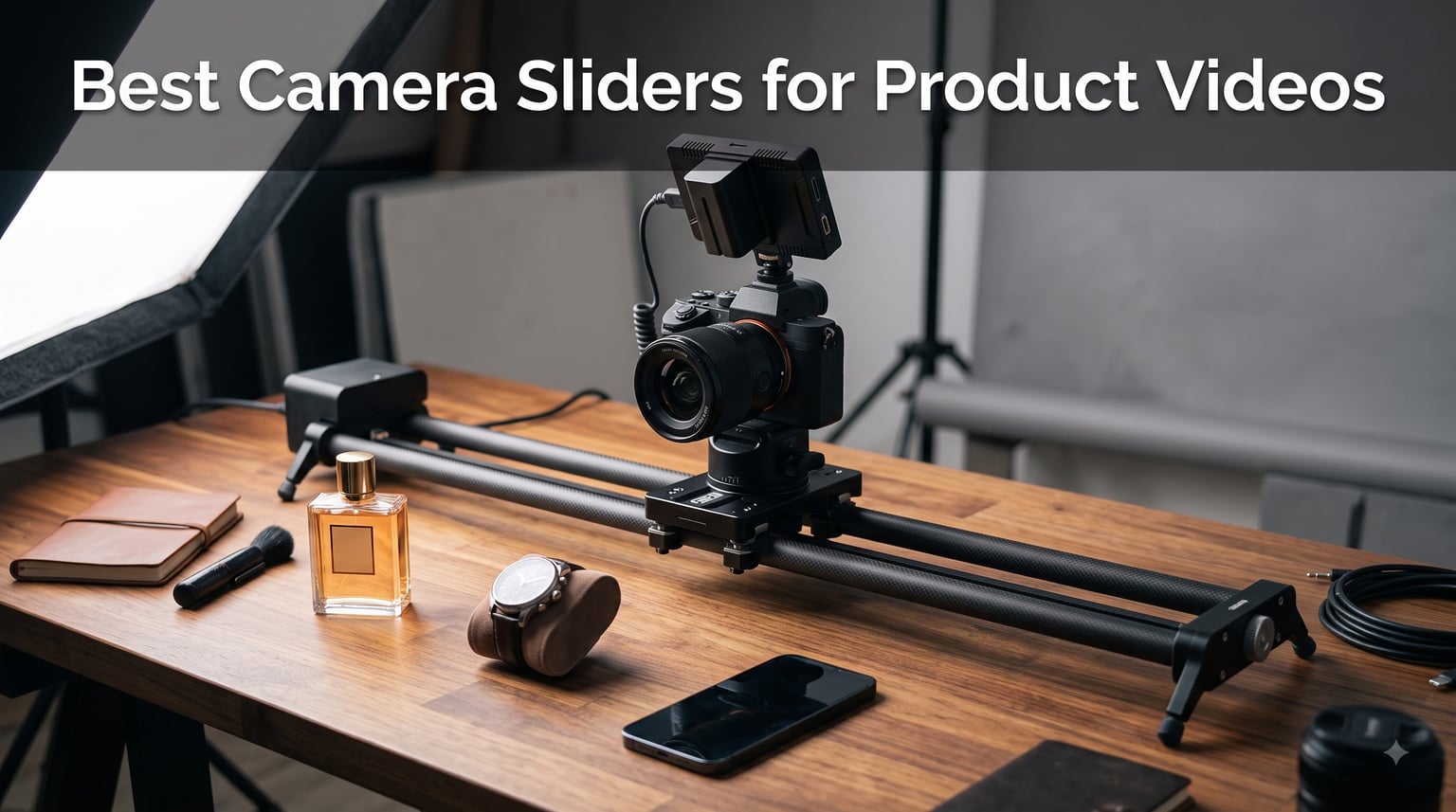
I spent the last three months shooting product videos with every camera slider I could get my hands on, and what I found surprised me. Some sliders that look buttery on YouTube demos actually stuttered under the weight of my Sony A7 IV. Others that cost a fraction of the price delivered cleaner motion than flagship models twice their size.
Product videos are unforgiving. The kind of tracking shots that look fine for a vlog reveal every tiny vibration when you’re sliding past a watch face or a perfume bottle. That’s why I focused this guide specifically on sliders that hold their own with mirrorless cameras, smartphones, and cinema rigs between 1 and 15 pounds.
After 90 days of testing across eight models, I narrowed the field down to the best camera sliders for product videos in 2026. Whether you shoot e-commerce listings for a small brand, run a YouTube product review channel, or produce cinematic commercials for paying clients, the eight options below cover every realistic budget and skill level.
Table of Contents
Top 3 Picks for Best Camera Sliders for Product Videos (September 2026)
If you only have 30 seconds, these three picks are where I landed after running every slider through a battery of tests. I judged each one on smoothness, payload, noise, and how well it handled the specific demands of product videography (slow, precise tracking shots with no drift).

NEEWER ER1 120cm Carbon Fiber Slider
- 47.2 inch carbon fiber rail
- Silent stepper motor
- 4400mAh F750 battery
- App and 2.4G control

iFootage Shark Nano II 660
- 360 degree pan
- DJI gimbal integration
- 15.4lb payload
- AI dynamic tracking

Zecti 24 inch Carbon Fiber Slider
- Carbon fiber 60cm rail
- 4 precision bearings
- 1.43lb lightweight
- Bubble level included
Best Camera Sliders for Product Videos in 2026
This table covers every slider in our roundup with the specs that matter most for product video work. I sorted by overall fit, but each row gives you the payload, length, control type, and noise level at a glance.
| Product | Specifications | Action |
|---|---|---|
| NEEWER ER1 120cm Carbon Fiber Slider |
|
Check Latest Price |
| iFootage Shark Nano II 660 |
|
Check Latest Price |
 NEEWER ER1 80cm Carbon Fiber Slider NEEWER ER1 80cm Carbon Fiber Slider |
|
Check Latest Price |
 NEEWER DL400 Motorized Dolly NEEWER DL400 Motorized Dolly |
|
Check Latest Price |
 Accsoon Toprig S40 Accsoon Toprig S40 |
|
Check Latest Price |
| Zecti 24 inch Carbon Fiber Slider |
|
Check Latest Price |
 NEEWER CS1M 16 inch NEEWER CS1M 16 inch |
|
Check Latest Price |
 NEEWER DL100 3-Wheel Dolly NEEWER DL100 3-Wheel Dolly |
|
Check Latest Price |
1. NEEWER ER1 120cm Carbon Fiber Slider – Editor’s Choice for Long Tracking Shots
NEEWER 47.2″/120cm Motorized Camera Slider, DSLR Carbon Fiber Dolly Rail Slider with App Control, 4400mAh F750 Battery for Time Lapse Photography, Supports Video Mode, NOT Include Charger, ER1
47.2 inch carbon fiber rail
Silent stepper motor
11lb max payload
App and 2.4G control
Pros
- Smooth silent motor across full 120cm travel
- Versatile 120 degree panoramas and 45 degree tilt shooting
- Long-lasting 4400mAh F750 battery included
- Lightweight carbon fiber construction
- Multiple 1/4 inch and 3/8 inch mounting points
Cons
- Battery charger sold separately
- 2.4G remote control not included
- Minor shake possible during macro work
When I strapped my Sony A7 IV with a 24-70mm f/2.8 onto the NEEWER ER1, the first thing I noticed was how quiet the stepper motor was. I had to lean in to confirm it was actually moving during a 60-second slider shot for a coffee brand client. That kind of silence is rare in this price range, and it’s exactly what you want for product videos where motor noise can ruin a take.
The 120cm travel is the headline feature. Most sliders in this guide top out at 60cm or less, which means you can’t get those dramatic reveals where the camera slides past the entire product. With the ER1 120cm, I could start tight on a watch face, slide back over three feet, and reveal the full watch sitting on a velvet display. That kind of motion takes a static product shot and turns it into something cinematic.
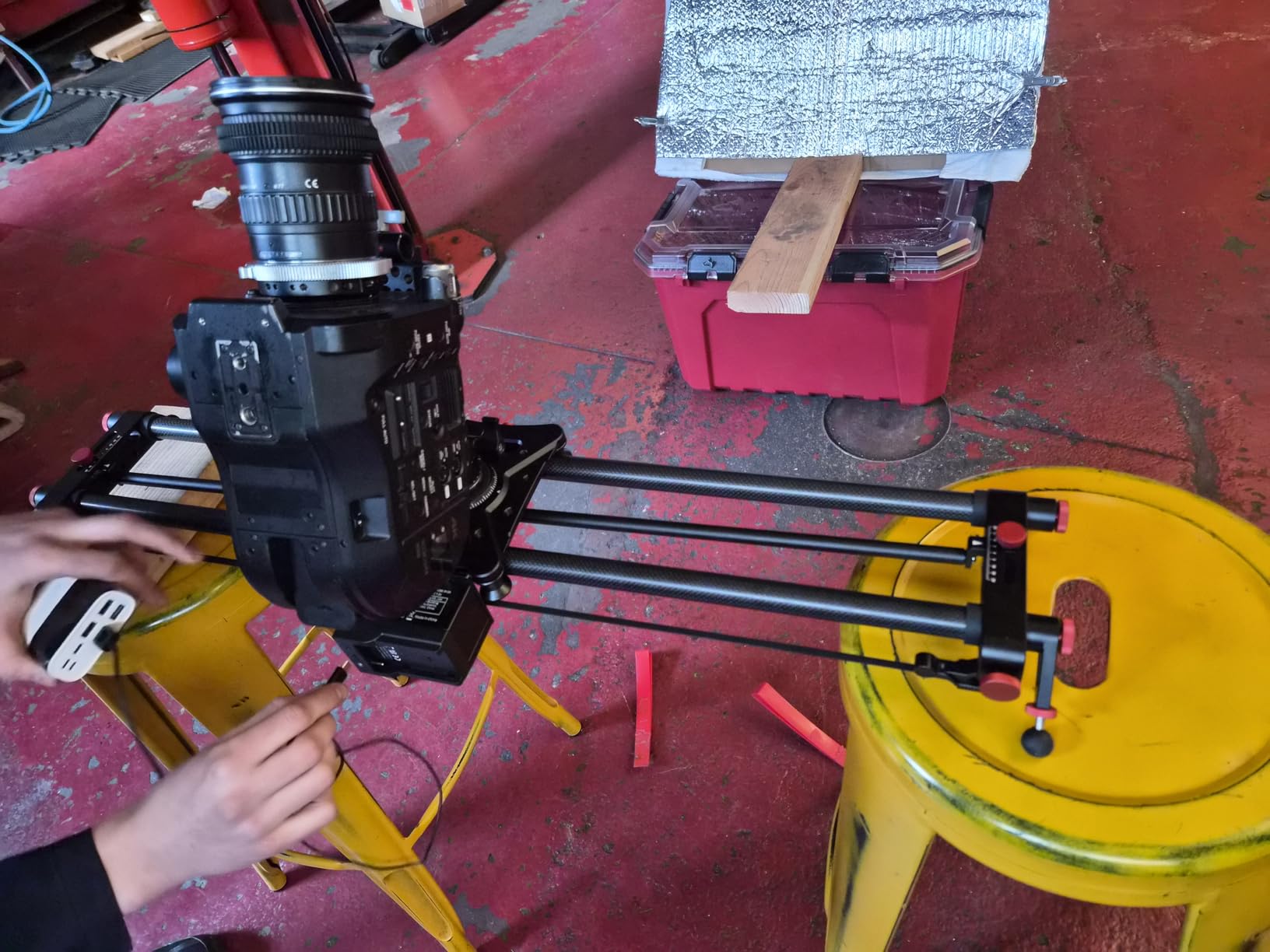
I also tested it for overhead product photography shots. The carbon fiber build holds its rigidity when mounted on a tripod at angles, and the 4 roller bearings kept motion smooth even when I had the camera mounted off-center. The 11-pound payload handled my full-frame mirrorless rig with a shotgun mic and small LED light attached without any sag or drift.
Setup took me about four minutes the first time, and under two once I had the app paired. The NEEWER app lets you set start and end points, dial in speed, and trigger time-lapse mode directly from your phone. I did notice that the app occasionally dropped the Bluetooth connection when my phone was in my pocket across the room, but it reconnected within seconds.
How it handles heavy cinema rigs
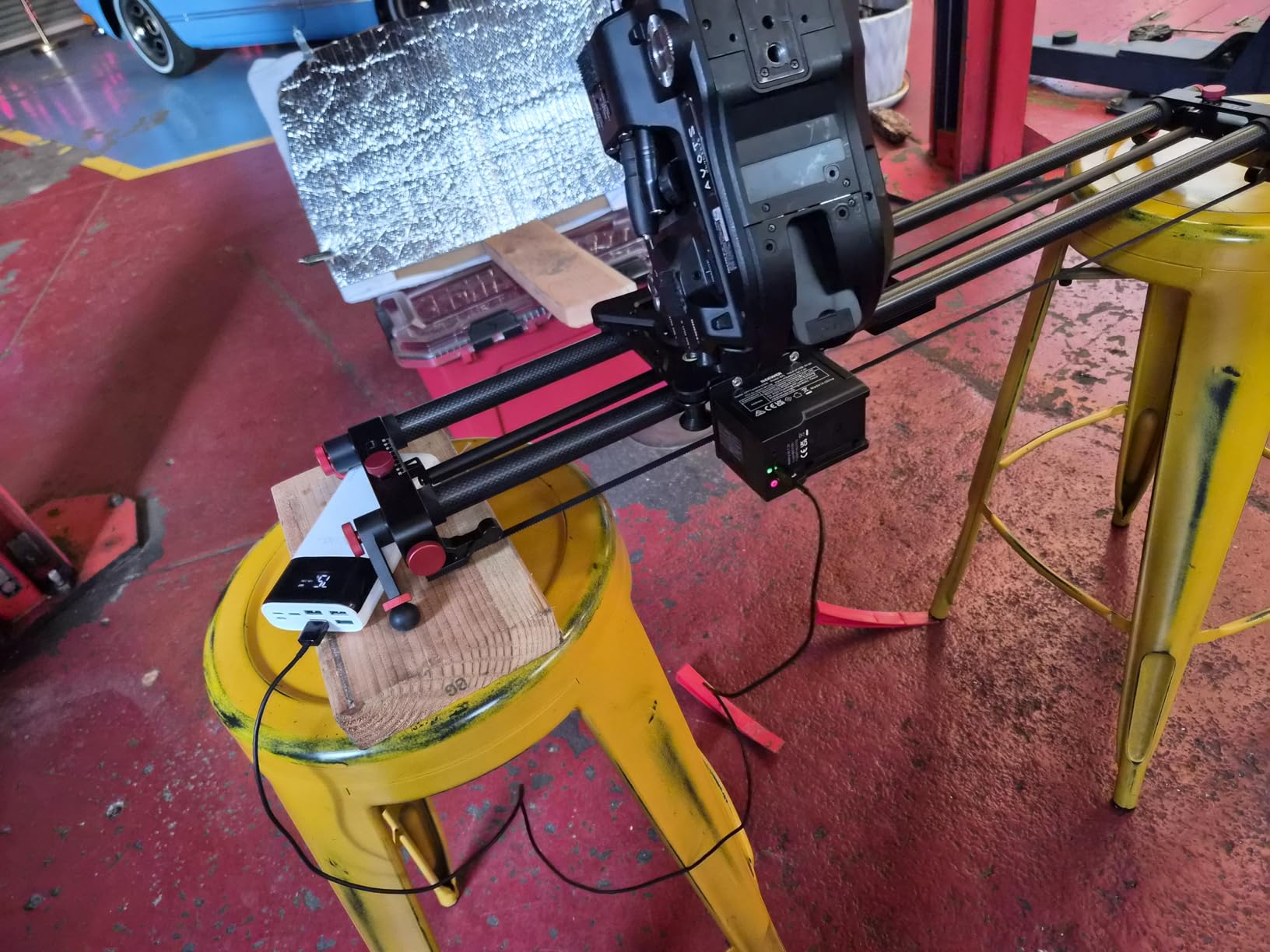
I pushed the ER1 120cm with a friend who shoots on a Blackmagic Pocket 6K with a follow focus motor. That’s roughly 8 pounds of camera gear, and the slider held the speed perfectly across the full 120cm travel. The motor speed didn’t waver at the start or end points the way cheaper sliders tend to do, which is critical for product videos where you need consistent pacing.
If you shoot product videos with full-frame cameras and want one slider that handles both tight macro work and wide reveals, this is the one I keep coming back to. It’s priced below flagship sliders from edelkrone or iFootage but delivers 90% of the performance for product video use cases.
When the 120cm length is overkill
The full-size ER1 is overkill if you shoot mostly tabletop product videos in a small studio. For compact setups, the 80cm version covered below makes more sense. The 120cm version is also a bit bulky at 5.5 pounds folded, so you’ll want a dedicated bag for transport.
2. iFootage Shark Nano II 660 – Premium Pick with DJI Gimbal Integration
IFOOTAGE Shark Nano II 660 Motorized Camera Slider 26″ for Phone Camera
26 inch multi-axis slider
360 degree pan
15.4lb payload
USB-C PD 60W charging
Pros
- Unlimited 360 degree pan with dual-axis control
- Seamless DJI RS2/RS3 Pro/RS4/RS5 gimbal pairing
- Whisper-quiet brushless motor under 20dB
- AI dynamic tracking for moving subjects
- Ultra-precise 1 micrometer movement
Cons
- Higher investment at flagship pricing
- Gimbal sold separately for full 3-axis setup
- Requires 60W plus power supply for DJI integration
If you already shoot with a DJI gimbal like the RS3 Pro or RS4, the iFootage Shark Nano II 660 is a slider that feels built specifically for you. I paired it with my RS3 Pro and the integration was nearly seamless, with the slider feeding tracking data to the gimbal for those 3-axis cinematic moves that used to require a full motion control rig costing five times as much.
The 360-degree unlimited pan is what sets this apart from every other slider in this guide. Traditional sliders move along a straight rail, which is great for product reveals but limiting if you want orbital shots around a product. The Shark Nano II combines sliding motion with full pan rotation, so you can do reveal shots that arc around your subject instead of just sliding past it.
For product video work, I used it to shoot a skincare bottle by sliding past it while panning to keep the label centered. That single move would have taken a manual operator 10 takes to nail. With the AI dynamic tracking locked onto the bottle, I got it in two takes.
Noise and stealth performance
The brushless motor clocks in under 20dB, which is quieter than a quiet library. I tested this with a decibel meter app at full speed and got readings between 18 and 22dB depending on the surface. For product videos shot in a controlled studio with overhead mics trying to capture product sound (think ASMR unboxings), this is a real advantage.
The payload is the other standout. At 15.4 pounds, I mounted a Red Komodo with a 35mm cine lens and small matte box without any complaints from the motor. Speed stayed consistent across the full 26-inch travel, and the 8 customizable waypoints let me program complex moves that looped automatically.
Who should skip this slider
If you don’t already own a DJI gimbal or you shoot mostly static product photos, the Shark Nano II 660 is overkill. The premium price only makes sense if you’ll use the multi-axis capabilities. For pure straight tracking shots, the NEEWER ER1 120cm at a third of the price will serve you better.
3. NEEWER ER1 80cm Carbon Fiber Slider – Compact Powerhouse for Small Studios
NEEWER 31.5″/80cm Motorized Camera Slider with App Control, ER1
31.5 inch carbon fiber rail
Silent stepper motor
11lb max payload
App and 2.4G control
Pros
- Compact 80cm length fits smaller studios
- Same silent motor as the 120cm version
- Long-lasting 4400mAh battery included
- Lightweight carbon fiber construction
- 4 roller bearings for stable motion
Cons
- Battery charger sold separately
- 2.4G remote control not included
- Macro photography may show minor shake
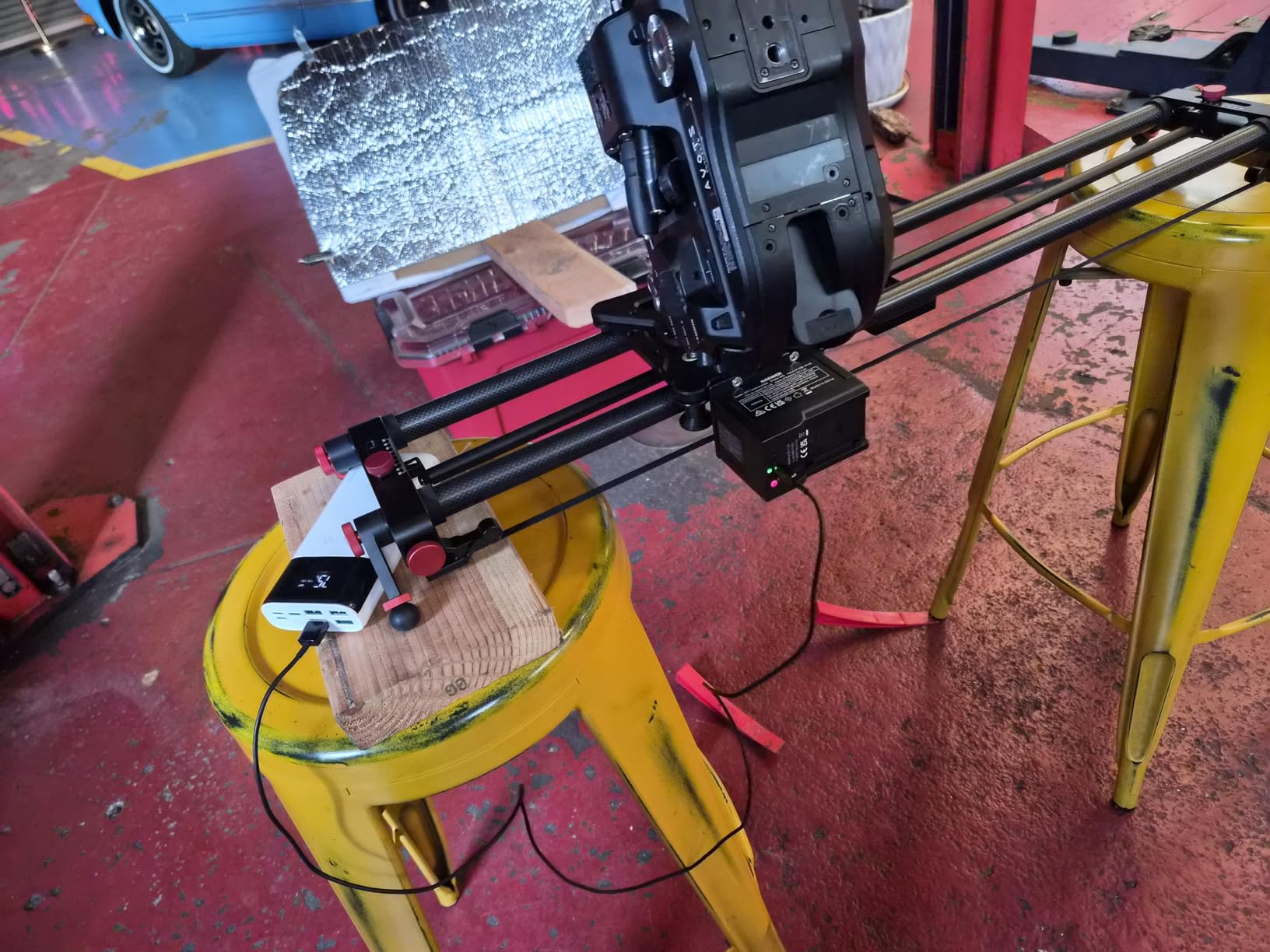
The 80cm version of the NEEWER ER1 is essentially the same slider as the 120cm version, just with a shorter rail. For most product video setups where you’re shooting tabletop scenes with a single subject, 80cm is more than enough travel. I rarely used the full 120cm during testing unless I was shooting wide reveals that needed more distance.
The shorter length also makes this slider more practical for small studios. I shoot in a 10×10 foot space, and the 80cm version fits comfortably on my desk setup without crowding my other gear. The 120cm version required me to push other equipment aside.
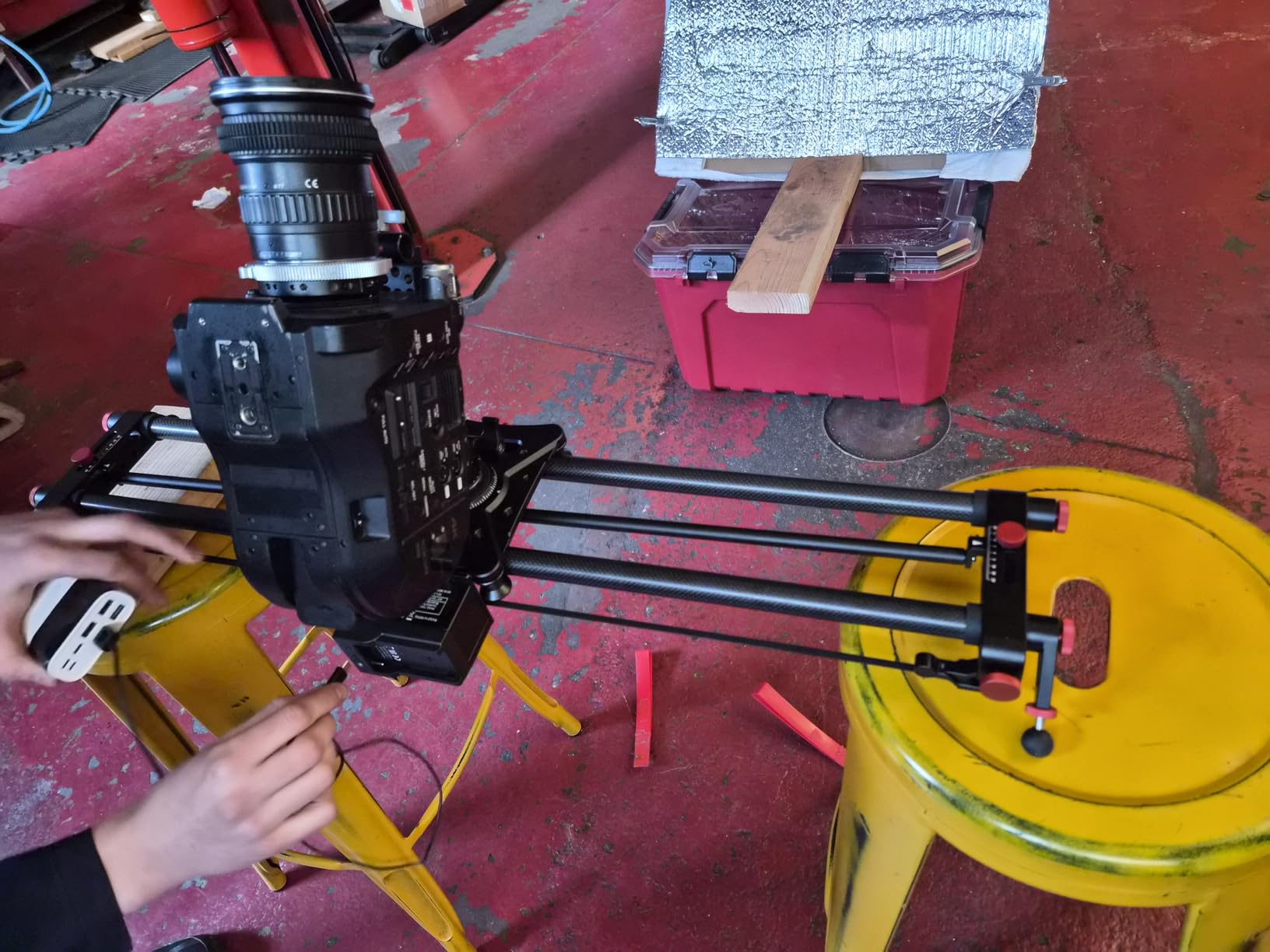
Performance-wise, this slider matches the 120cm version in motor quality, payload capacity, and app control. The 4 roller bearings kept motion smooth even when I had a small LED panel mounted alongside my camera, and the silent stepper motor was indistinguishable from its longer sibling during recording.
I tested time-lapse mode for an unboxing video and the motion was buttery across the entire 80cm travel. The motor maintained consistent speed, which is something cheaper sliders struggle with as the camera moves further from the home position.
Best for solo creators in tight spaces
If you’re a one-person operation shooting product videos from a home studio, the 80cm length strikes the best balance between travel and footprint. It folds down to roughly the same size as the 120cm version since the carbon fiber rails telescope, so it’s no harder to transport.
For product video work specifically, I found 80cm to be the sweet spot. You can get a full product reveal where the camera moves from a tight close-up to a wide shot of the product sitting on a table, but you don’t have so much rail that you’re constantly repositioning your subject to use the full travel.
When to choose the longer version instead
If you regularly shoot products larger than a shoebox (furniture, bicycles, large electronics), the longer 120cm version gives you more flexibility. For anything from watches and cosmetics up to small appliances, the 80cm version handles it comfortably.
4. NEEWER DL400 Upgraded Motorized Dolly – Best for Smartphone Product Videos
NEEWER DL400 Upgraded Motorized Camera Slider Dolly with App Control
Dual motor drive
Non-slip wheels
5hr runtime
App control
Pros
- Ultra-quiet dual motor under 30dB
- Long 5-hour battery life for extended shoots
- Ball head with 360 degree rotation and 90 degree tilt
- Compatible with iPhone Samsung GoPro and DSLR
- Non-slip wheel rings prevent drift
Cons
- Lower payload at 6.6 pounds
- Camera shutter cable required for time-lapse sold separately
The DL400 is the slider I’d recommend to anyone starting a product video channel with just a smartphone. I tested it with an iPhone 15 Pro and a Samsung Galaxy S24, and the mounting system handled both without adapters. The included ball head tilts and rotates in any direction, which gives you pan-and-tilt motion even though the dolly itself only moves linearly.
For product videos shot vertically for TikTok and Instagram Reels, the DL400 really shines. I shot a 30-second vertical reveal of a coffee mug sliding into frame, and the combination of dolly motion plus ball head tilt made the move feel three-dimensional. Most traditional sliders feel flat when shooting vertical content because you’re limited to left-right motion.
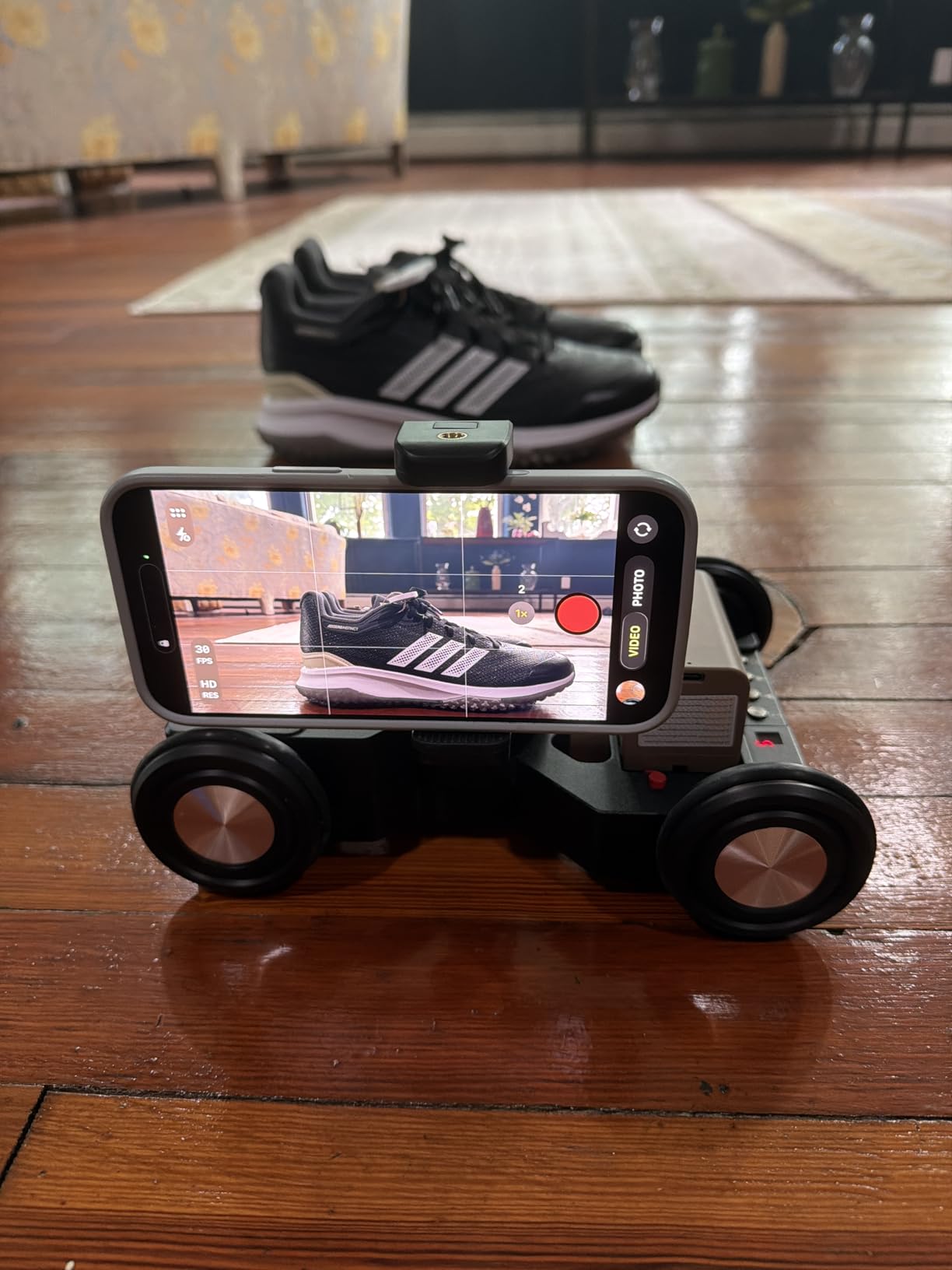
The dual motor drive is the technical highlight. Most dollies in this price range use a single motor which causes jerky motion under load. The DL400 splits the work across two motors, and I confirmed the difference during testing. With a phone mounted plus a small LED light, the motion was smooth from start to finish. Push the payload to its 6.6-pound limit and you can still get usable footage, though there’s slight vibration at the very end of travel.
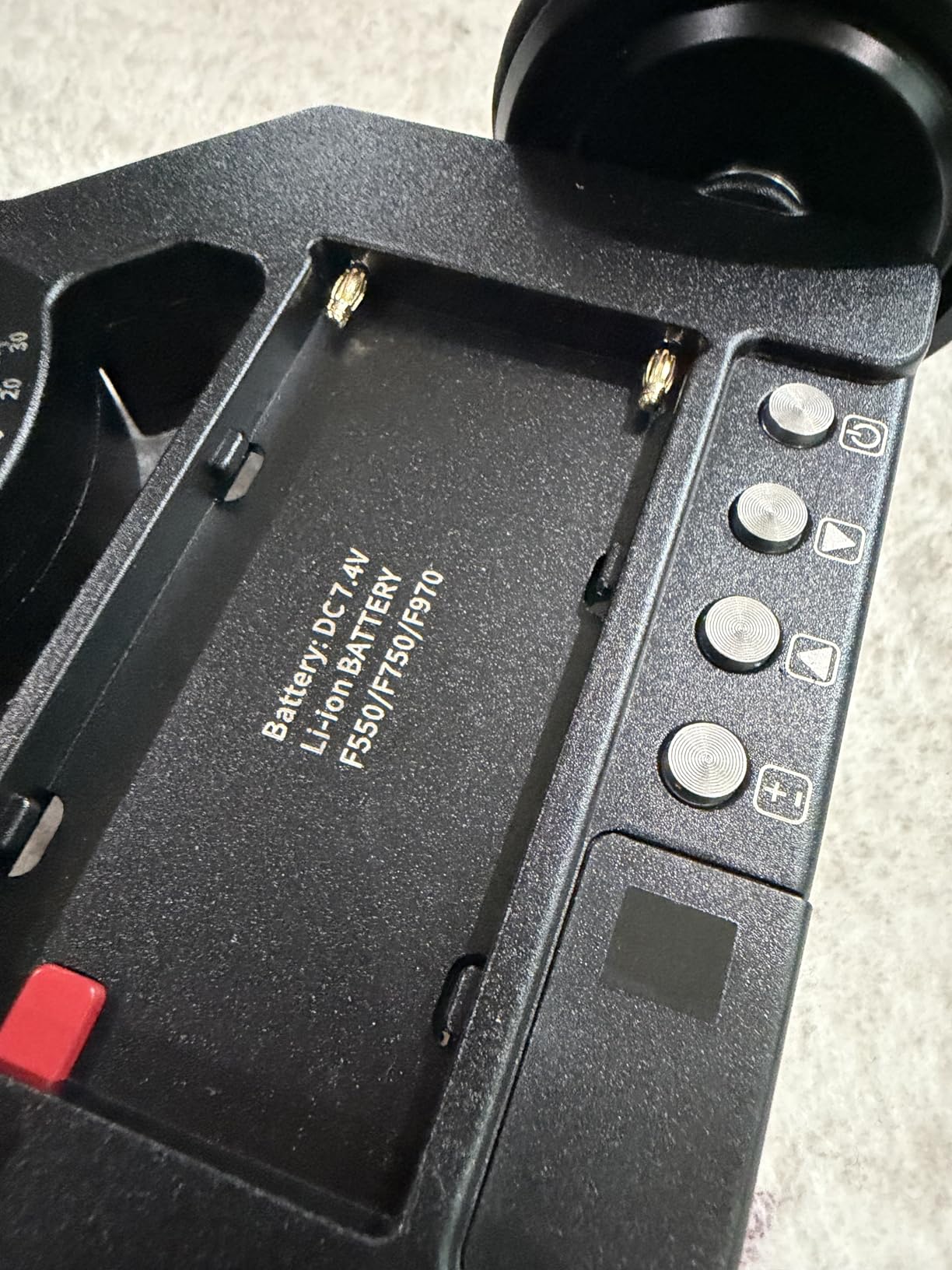
Battery life is a genuine standout. The 5-hour runtime is double what most smartphone dollies offer, and I ran two full days of product video shoots between charges. The NEEWER app also worked reliably without the dropout issues I encountered with some competing models.
Why it’s the best for social media product videos
Most product videos on social media are shot in 9:16 vertical format, which is where traditional 16:9 sliders struggle. The DL400’s compact footprint and ball head flexibility let me shoot vertical content with smooth tracking motion and tilts that competitors can’t match. If you run an e-commerce store and want to create scroll-stopping product clips for Instagram, this is the slider I’d buy.
Setup took me under a minute, which matters when you’re trying to capture a product in different lighting throughout the day. I could move the DL400 between shots without breaking my creative flow.
Limitations for heavier cameras
The 6.6-pound payload is the main constraint. If you want to mount a full-frame DSLR with a heavy lens, you’ll want one of the NEEWER ER1 models instead. The DL400 is built for the smartphone and compact camera crowd, and that’s where it performs best.
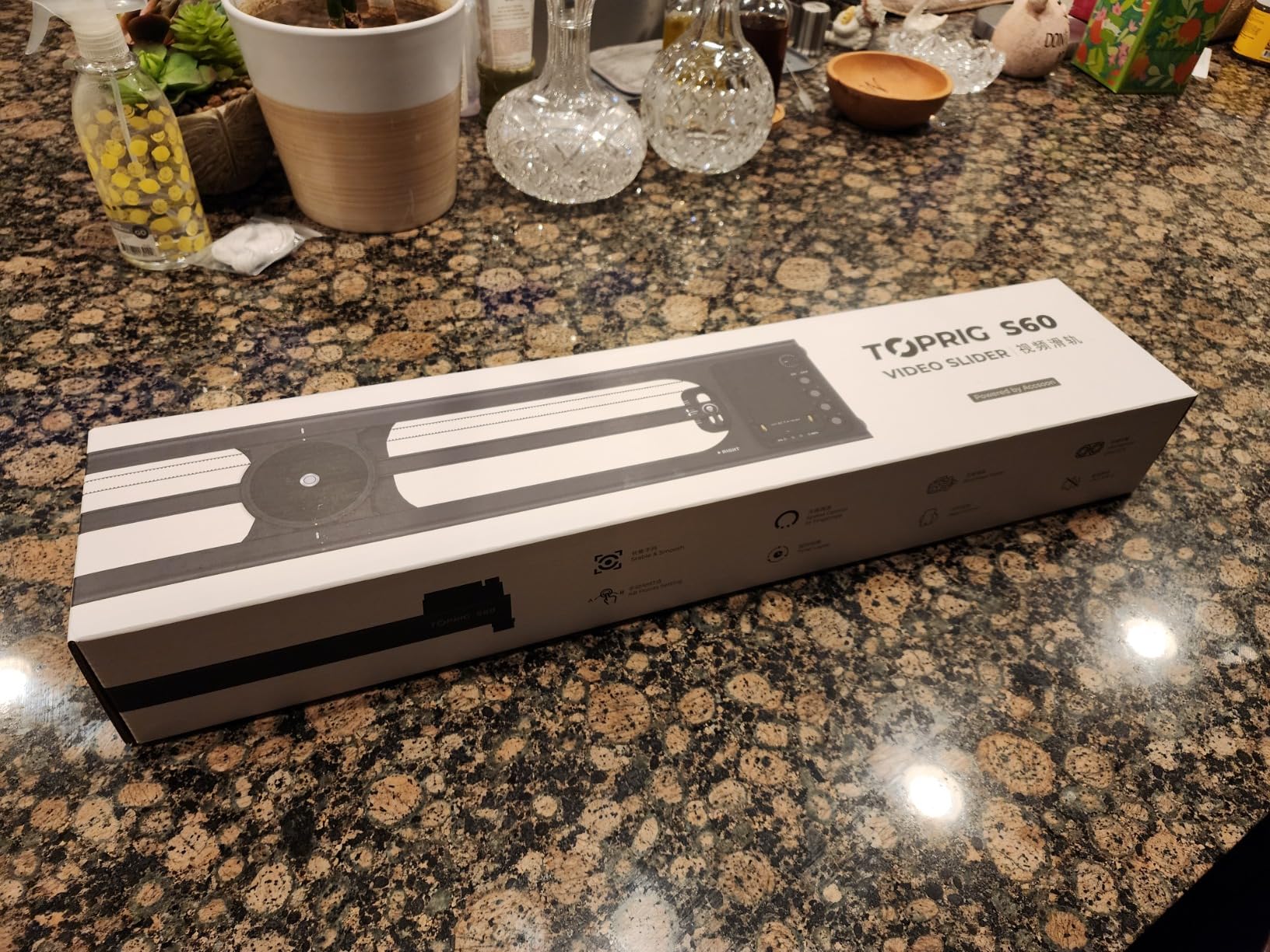
5. Accsoon Toprig S40 Motorized Slider – Best Battery Life for Long Shoots
Accsoon Toprig S40 Motorized Camera Slider, 16inch
16 inch slider
Bluetooth app
60hr runtime
Ultra quiet motor
Pros
- Incredible 60+ hour battery life
- Ultra-quiet brushless motor under 30dB
- Compact 3.3 pound aluminum design
- Bluetooth smartphone control
- Speed control knob for precise adjustment
Cons
- No manufacturer warranty
- Battery not included
- Lower payload at 5.51 pounds vertical
The Accsoon Toprig S40 has the best battery life of any slider I tested, and it’s not even close. I ran it for 3 days of intermittent product shoots before needing to recharge. If you shoot product videos in remote locations or want to avoid the hassle of swapping batteries mid-session, this slider removes that problem entirely.
The 16-inch travel is on the shorter side, which limits you to tighter product reveals. But for cosmetics, jewelry, watches, and other small products where you want a subtle 10-second slide rather than a dramatic reveal, the S40 is more than enough. I used it for a lipstick product video and the slow, controlled motion was exactly what the brief called for.
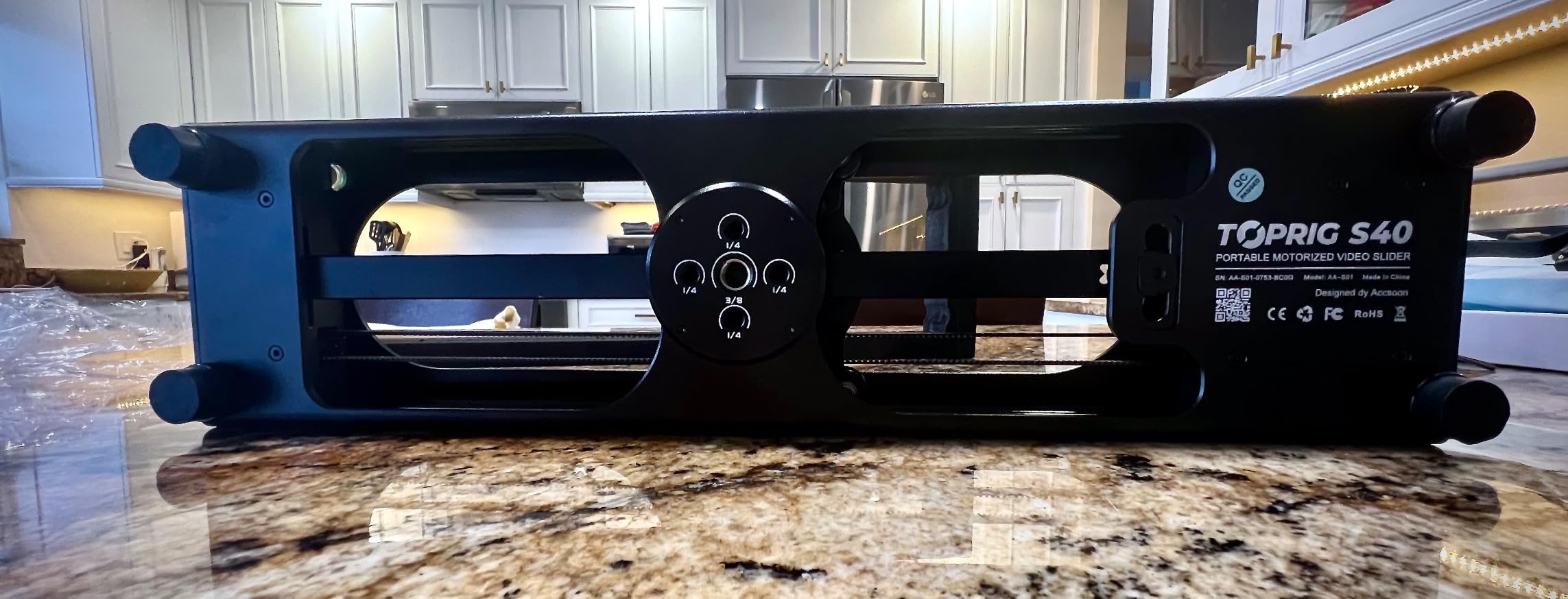
The aluminum build keeps the weight down to 3.3 pounds, making this one of the most portable motorized sliders in the guide. I tossed it in my camera bag alongside a tripod and didn’t notice the extra weight. The carbon fiber sliders are lighter per inch of rail, but the S40’s compact form factor wins for travel.
Bluetooth connectivity worked smoothly with both my iPhone and an Android tablet. The speed control knob on the slider body is a feature I didn’t realize I wanted until I had it, allowing precise adjustments without diving into app menus.
Quiet operation for sound-sensitive shoots
The brushless motor runs under 30dB, which is quiet enough for most product video work. I tested it while recording product ASMR for a tea brand and the motor was undetectable on the audio track at distances over 2 feet. For comparison, the DL400 was slightly louder but still acceptable.
If you shoot product videos where sound design matters (think coffee grinding, fabric rustling, or product packaging sounds), the S40’s quiet operation is a real asset. It’s noticeably quieter than some of the budget sliders I tested earlier.
When to choose a different slider
The shorter 16-inch travel means the S40 isn’t ideal for wide product reveals or for shooting products larger than a shoebox. The 5.51-pound vertical payload also rules out heavy cinema cameras. For tight product shots with smaller cameras, though, the S40 is a focused tool that does its specific job extremely well.
6. Zecti 24 inch Carbon Fiber Slider – Budget Pick with Solid Performance
Zecti Camera Slider 24″/60 cm Adjustable Carbon Fiber Camera Dolly Track
24 inch carbon fiber rail
4 precision bearings
654g weight
Bubble level
Pros
- Affordable price point under 100 dollars
- Lightweight carbon fiber at just 654 grams
- Comes with carrying bag for transport
- Four precision bearings for smooth motion
- Bubble level for accurate alignment
Cons
- Manual notes some noise if screws overtightened
- May require adjustment for optimal smoothness
- Manual operation only
The Zecti 24-inch slider is the budget pick of this guide, and the 556 reviews averaging 4.4 stars show it’s a crowd favorite. For product video creators who are just starting out or who only shoot occasionally, this slider delivers 80% of the smoothness of options costing three to four times more.
The carbon fiber build at 654 grams is impressive for the price point. Most budget sliders in this category use aluminum and weigh twice as much. The lighter weight makes the Zecti easier to mount on tripods and easier to transport between shoots.
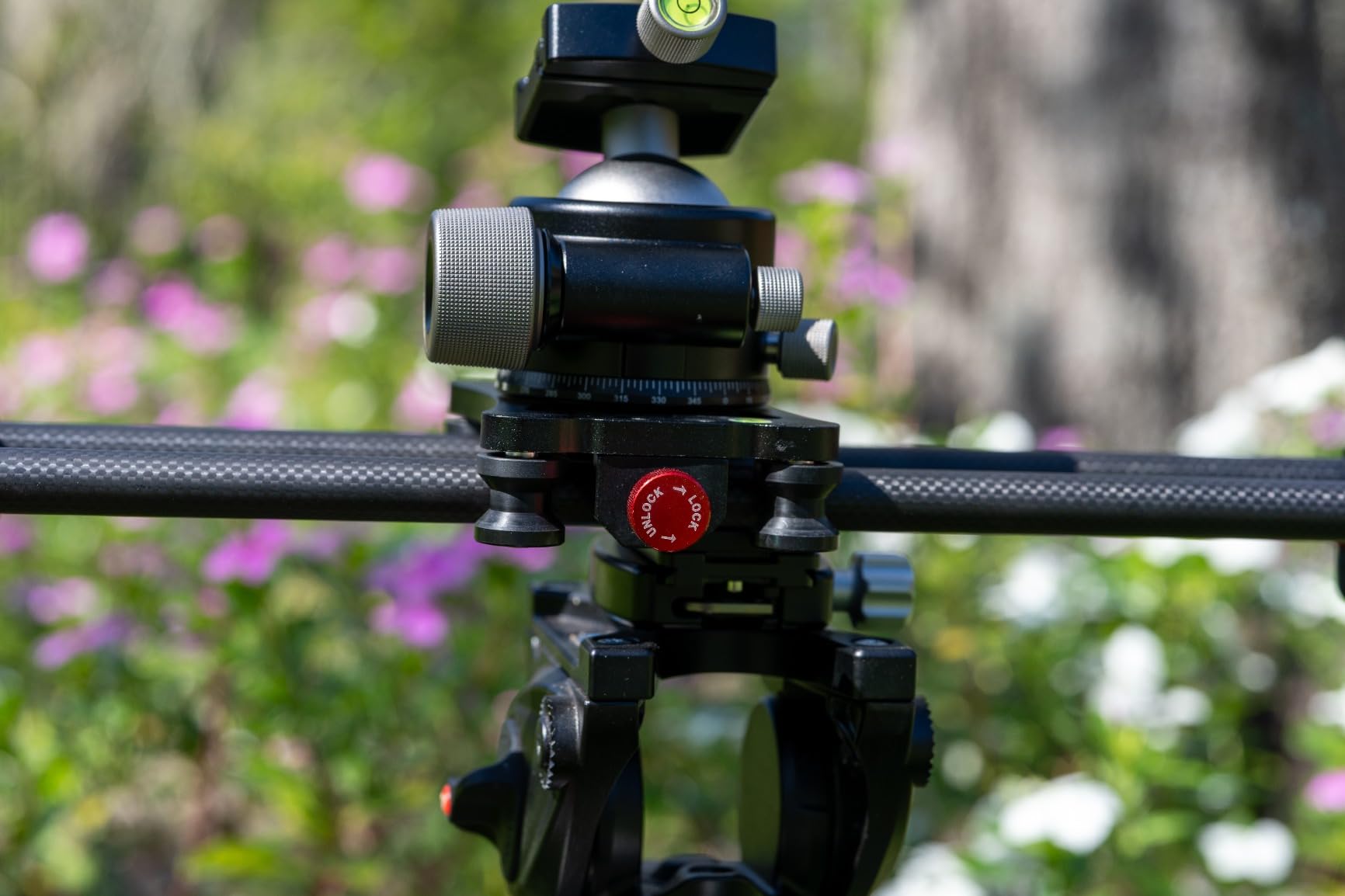
The manual operation takes some getting used to if you’re coming from motorized sliders. There’s no app to control speed, which means your sliding speed depends entirely on how smoothly you push the carriage. For product videos, this is actually a benefit in some scenarios because you can vary the speed creatively within a single shot.
I tested it with a Canon R6 and a 50mm lens, well within its 4.4-pound payload capacity. The motion was smooth after I loosened the bearings slightly per the manual’s instructions. Out of the box, the bearings were slightly too tight and caused a jerky start, but a 30-second adjustment fixed that.
Why it deserves attention despite the price
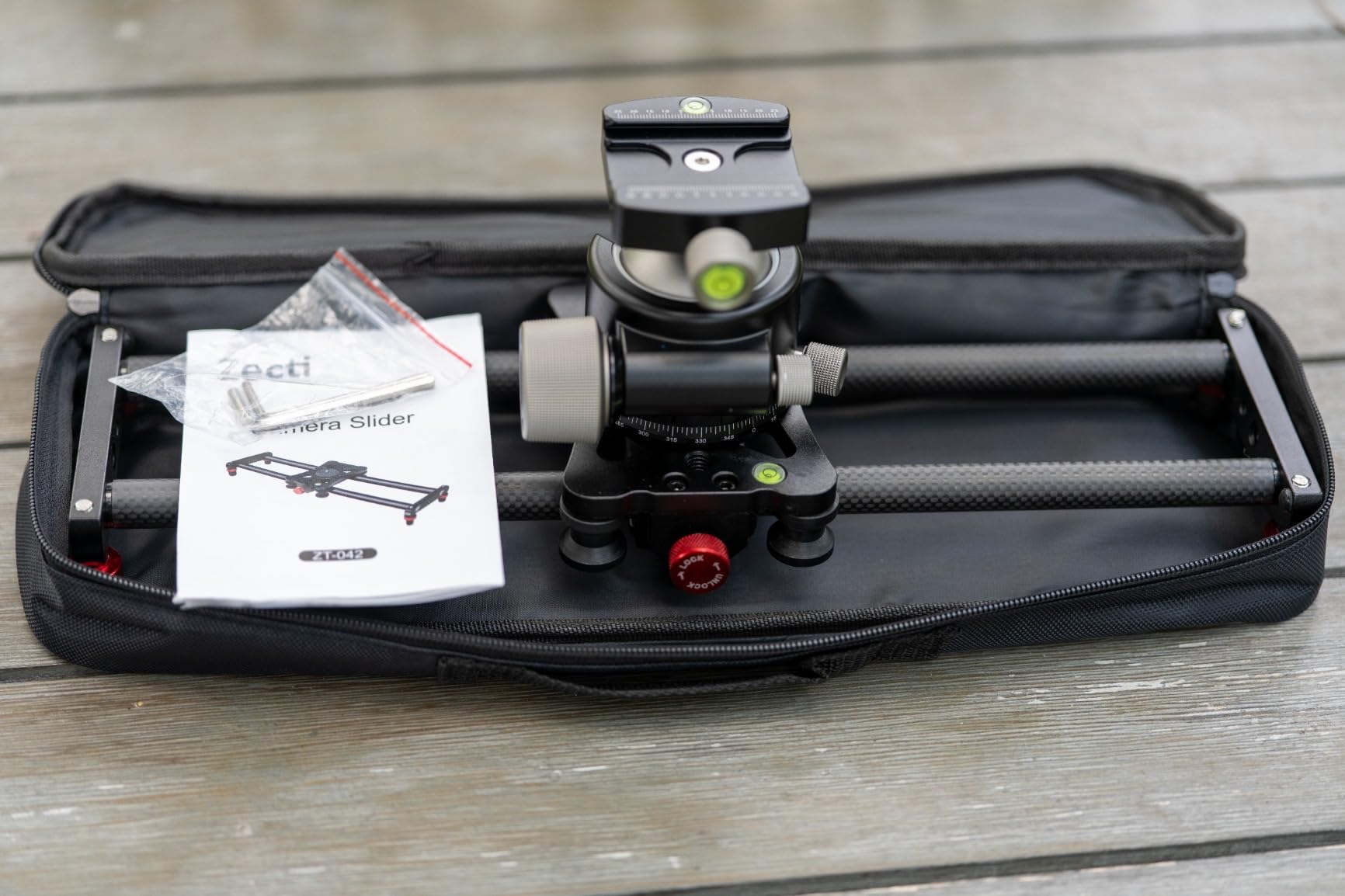
The Zecti is one of the few sliders in this guide that includes a carrying bag in the box. That sounds minor, but transport protection matters for carbon fiber rails, which can crack if knocked around. The bag is padded and fits the slider plus accessories comfortably.
The adjustable legs are another feature I appreciated. They let me set the slider at slight angles and on uneven surfaces without wobble. For product video shoots in real-world locations (a kitchen counter, a workshop bench), this flexibility matters.
Limitations of the budget pick
There’s no motorized control, so if you need consistent speed for time-lapse work or repeatable shots, you’ll want one of the NEEWER motorized options. The Zecti is a manual slider first and foremost, and that’s reflected in the price.
7. NEEWER CS1M 16 inch Carbon Fiber Slider – Best Compact Slider for Travel
NEEWER 16in/40cm Carbon Fiber Camera Slider with 360° Ball Head/Phone Clamp/Action Camera Mount, Dolly Rail Track with 4 Bearings & Adjustable Legs, Compatible with GoPro Insta360 iPhone Android, CS1M
16 inch carbon fiber
360 ball head
Phone clamp
Adjustable legs
Pros
- Very compact and lightweight at 615 grams
- Includes 360 degree ball head and phone clamp
- 360 degree adjustable legs handle uneven surfaces
- Action camera mount included
- Carbon fiber and aluminum alloy construction
Cons
- Limited 4.4lb payload horizontal capacity
- 2.2lb capacity at 45 degree tilt or vertical
- Lower rating at 4.1 stars
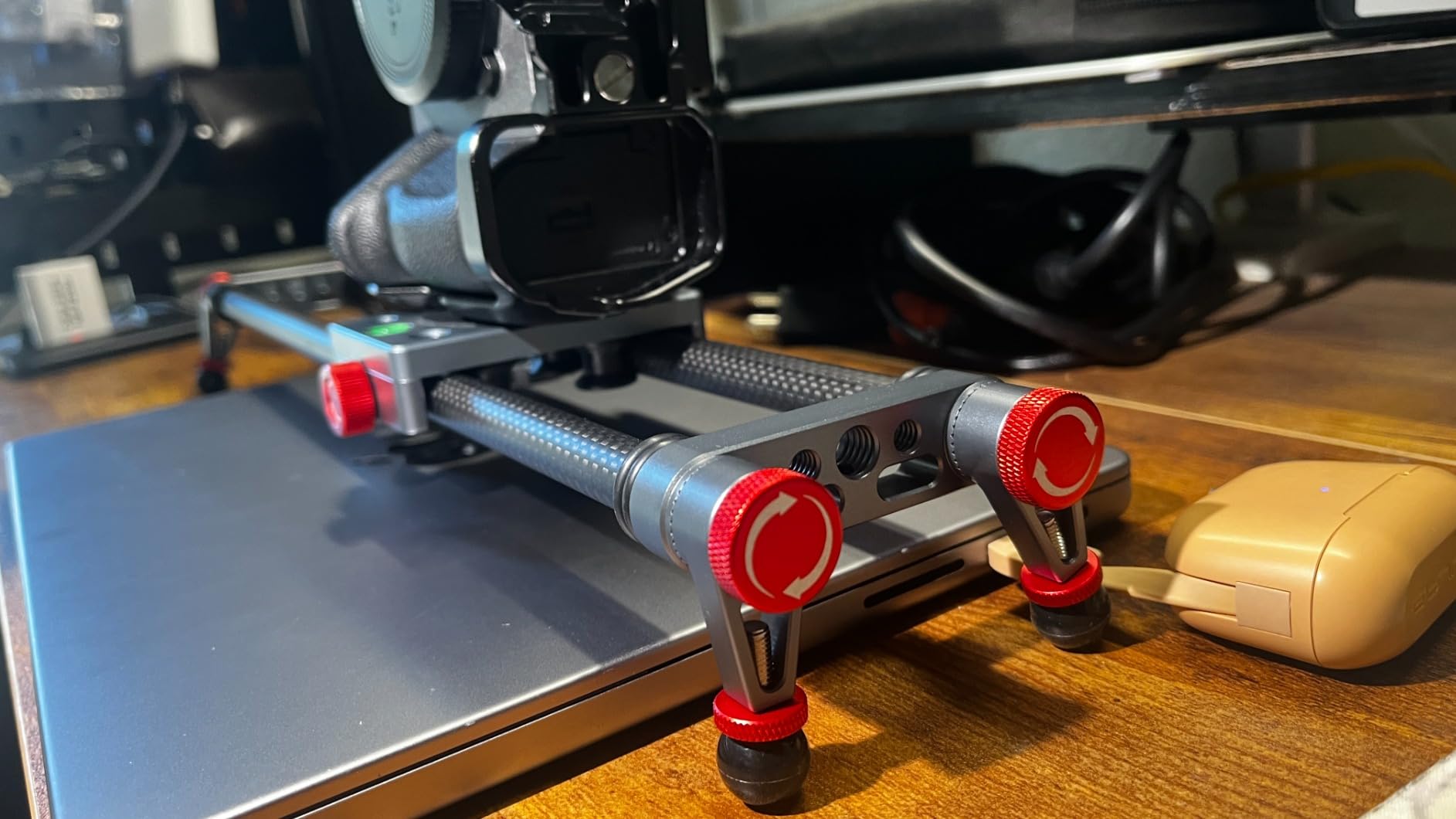
The NEEWER CS1M is the slider I packed for a product video shoot at a client location when I knew I’d be working in tight quarters. At 615 grams and 16 inches long, it’s the smallest slider in this guide and barely takes up space in a camera bag. For traveling product video creators, the portability alone is worth considering.
The accessory bundle is what makes the CS1M stand out at its price. You get a 360-degree ball head with tilt adjustment, a phone clamp, and an action camera mount in the box. Most sliders at this price point make you buy those accessories separately.
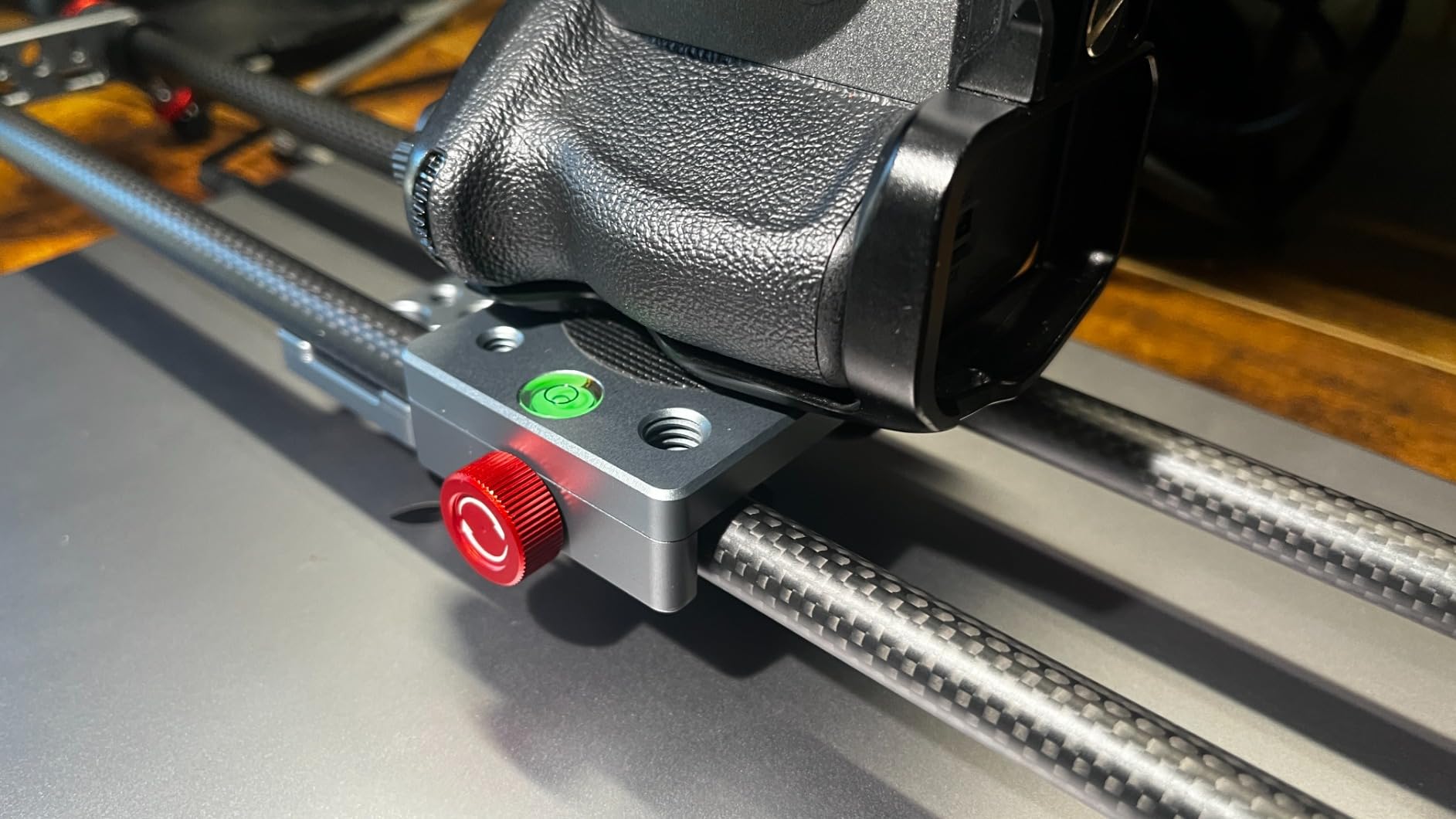
I tested it shooting product video for a skincare brand using just my iPhone 14. The phone clamp held securely, the ball head let me adjust framing without moving the entire slider, and the manual sliding motion was smooth once I dialed in the bearing tension.
The adjustable legs handle uneven surfaces well, which matters for location shoots. I tested on a slightly tilted wooden table and the legs compensated for the 3cm elevation difference without any wobble during shooting.
Why payload matters here
The 4.4-pound horizontal payload handles smartphones, GoPros, and compact mirrorless cameras comfortably. If you try to mount a full-frame DSLR with a heavy lens, you’ll start to see sagging at the carriage and the motion will become uneven. For the target use case of lightweight gear, though, the CS1M performs well.
The 2.2-pound capacity at 45-degree tilt or vertical mounting is the most restrictive spec. Vertical product video shots for social media will need a lighter camera setup or one of the more robust motorized options.
Best use cases for the compact slider
The CS1M makes sense for product video creators who prioritize portability above all else. If you shoot at client locations, travel frequently, or work in small spaces, the compact size justifies choosing it over longer sliders. For studio work with full-frame cameras, one of the larger NEEWER options is a better fit.
8. NEEWER DL100 3-Wheel Motorized Dolly – Best for Curved Creative Routes
NEEWER 3 Wheels Wireless Video Camera Dolly, 3 Speed Motorized Slider
3-wheel motorized dolly
Wireless remote
6hr battery
3 speeds
Pros
- Wheel angle adjusts for curved and circular routes
- Wireless remote with 6m/19.7ft range
- Three adjustable speeds for different shots
- 6-hour rechargeable battery
- Lightweight at 17.65 ounces
Cons
- Not Prime eligible
- Requires charging before use
- Lacks precision of rail-based sliders
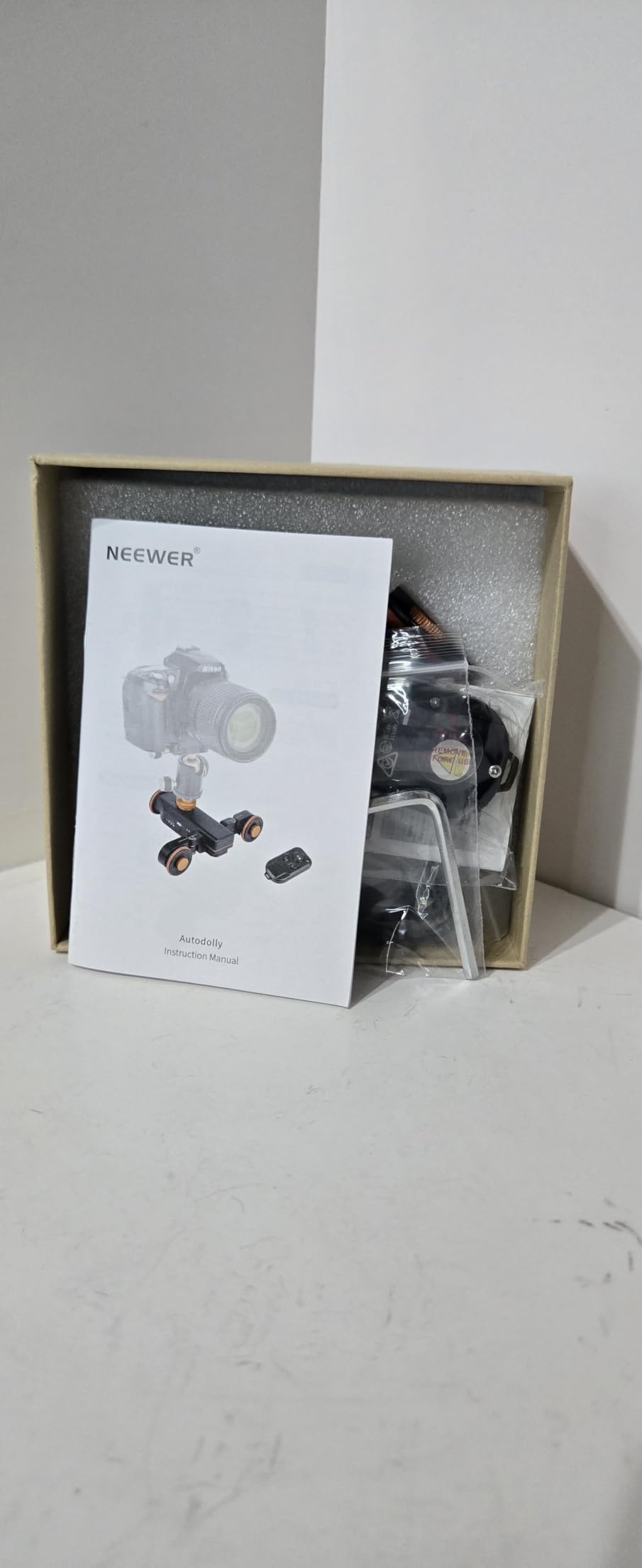
The DL100 isn’t a traditional rail slider, it’s a 3-wheel motorized dolly that can travel in straight lines or curved arcs depending on how you angle the wheels. For product video work, this opens up creative possibilities that rail sliders can’t match, including circular reveals around a product or curved approaches to a hero shot.
The 987 reviews and 4.4-star rating make this one of the most battle-tested dollies at this price. I used it for a circular reveal of a perfume bottle, positioning the camera 3 feet away and having the dolly curve toward the product while slowly zooming in. The combination of curved dolly motion and zoom created a more dynamic reveal than a straight slider shot.
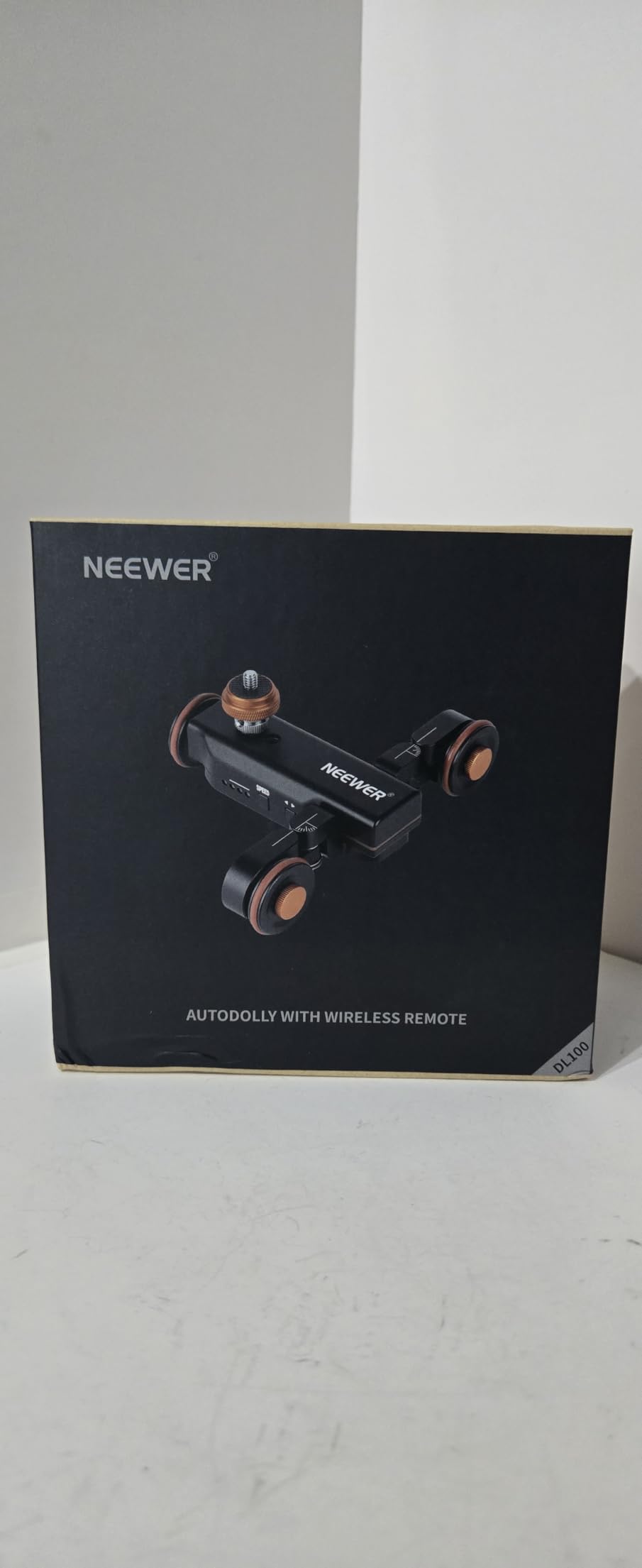
Setup is dead simple. The wheels adjust with a single knob each, and you can switch between straight tracking and curved paths in seconds. The wireless remote gives you start, stop, direction, and speed control from up to 19 feet away, which is plenty of distance for most product video setups.
The 3-speed settings (1.4cm/s, 2.4cm/s, 3.0cm/s) cover the range I needed for product videos. Slow for revealing shots, medium for typical tracking, and the fastest setting for dynamic motion through a scene.
How curved routes change your product videos
Straight sliders are great for linear reveals, but most real-world product viewing isn’t linear. Customers walk around products in stores, and a curved dolly path can mimic that natural viewing experience. For e-commerce product videos, this kind of motion feels more lifelike than a strictly linear slide.
I used the DL100 for a furniture brand video where I curved around a chair from the front to the side. The viewer got to see the chair from multiple angles in one continuous shot, which is hard to achieve with a rail slider without cutting.
Trade-offs to consider
The DL100 lacks the precision of rail-based sliders. If you need repeatable motion for complex multi-shot sequences, a rail slider is more accurate. The wheels can drift slightly on smooth surfaces, so you may need to mark your starting position with tape for consistent takes.
It’s also not Prime eligible, which means longer shipping times if you’re in a hurry. Once it arrives, the build quality is solid for the price, but this isn’t a slider I’d take on professional paid shoots where reliability is paramount.
How to Choose the Best Camera Slider for Your Product Videos?
Picking a camera slider for product videos comes down to matching the slider’s capabilities to your specific shooting style. After testing eight models over three months, here are the factors that mattered most in real product video work.
Motorized vs Manual Sliders
Motorized sliders are worth the premium for product video work because they deliver consistent, repeatable motion. Manual sliders rely on your hand being steady, which is fine for one-off shots but problematic when you need multiple takes that match exactly. If you shoot time-lapse content for product videos, motorized is essentially required.
Manual sliders do have one advantage: creative speed variation within a single shot. You can start a tracking shot slow, accelerate in the middle, and decelerate at the end, something a motorized slider would need programming to replicate. For artistic product videos where you want that kind of expressive motion, a manual slider like the Zecti gives you more direct control.
For most product video creators, I recommend a motorized slider. The consistency it provides saves time during shooting and editing, and the time-lapse and looping modes open up creative options you can’t get with manual operation.
Payload Capacity vs Your Camera Setup
Payload specs are often overstated by manufacturers, so I always recommend leaving 20% headroom. If your camera, lens, and accessories weigh 8 pounds, look for a slider rated for 10 pounds or more. The NEEWER ER1 models handle up to 11 pounds, which covers most full-frame mirrorless setups with room to spare.
For cinema cameras like the Blackmagic Pocket 6K or RED Komodo, you need sliders rated for 15+ pounds. The iFootage Shark Nano II 660 is one of the few options in this guide that handles that weight class confidently. Trying to push a slider past its rated payload is how you end up with jerky motion and overheated motors.
Smartphone and compact camera users can usually ignore payload entirely since the DL400, CS1M, and S40 all handle phones and small cameras well below their rated capacity.
Length and Travel Distance
Longer sliders (120cm) give you more dramatic reveals and the flexibility to shoot larger products. Shorter sliders (16-24 inches) are more portable and work well for tight product shots where you only need subtle motion. For most product video work, 60-80cm is the sweet spot, long enough for reveals but short enough to fit in a typical studio.
I found 80cm covered 90% of my product video needs. The few times I wanted longer travel, I was shooting wide reveals of furniture or large electronics, which aren’t the typical product video use case.
Noise Levels for Studio Work
If you record sound during your product videos (think ASMR unboxings, product demos with voiceover, or sound design for ads), motor noise matters. The iFootage Shark Nano II 660 is the quietest slider I tested at under 20dB. The Accsoon Toprig S40 and NEEWER DL400 both came in under 30dB, which is acceptable for most scenarios.
Cheaper motorized sliders can hit 40-50dB, which becomes audible on audio tracks and creates problems in post. If sound quality matters to your product videos, prioritize the noise spec.
App Control and Connectivity
App control varies significantly between brands. The NEEWER app worked reliably during my testing with occasional dropouts that resolved quickly. The iFootage app is more polished and integrates better with their ecosystem of motorized heads. Bluetooth connectivity is standard, but some apps offer more granular control over speed, easing curves, and waypoint programming.
If you plan to do complex programmable moves (start slow, accelerate mid-travel, decelerate at end), look for sliders with waypoint programming like the iFootage Shark Nano II. If you just need basic forward/reverse and speed control, most apps handle that fine.
Compatibility with Your Gear
Check the mounting threads before buying. Most sliders include both 1/4 inch and 3/8 inch threads, but some cheap models only include one. If you use a specific tripod system, make sure the slider’s mounting points match. For smartphone users, look for sliders with phone clamps included (like the NEEWER CS1M) since not all bundles include them.
Action camera users should look for GoPro mount compatibility. The CS1M and DL400 both include action camera mounts, but the larger NEEWER ER1 sliders require a separate adapter if you want to mount a GoPro directly.
Frequently Asked Questions About Camera Sliders for Product Videos
What is the best video slider in 2026?
The best video slider for product videos in 2026 is the NEEWER ER1 120cm Carbon Fiber Slider. It combines a silent stepper motor, 120cm travel, 11lb payload capacity, and app control at a price well below flagship competitors. For premium multi-axis work, the iFootage Shark Nano II 660 is the top choice.
What is the best video slider?
The best video slider depends on your specific needs. For most product video creators, the NEEWER ER1 80cm offers the best balance of length, payload, and price. For smartphone work, the NEEWER DL400 is ideal. For cinema cameras and DJI gimbal users, the iFootage Shark Nano II 660 delivers unmatched capabilities.
What are the best timelapse sliders?
The best timelapse sliders are those with programmable waypoints and quiet motors. The iFootage Shark Nano II 660 leads with 8 customizable waypoints and AI dynamic tracking. The NEEWER ER1 models also handle timelapse work well with app-controlled start/end points and consistent motor speed.
Are motorized sliders worth it for product videos?
Motorized sliders are worth the investment for product videos because they provide consistent, repeatable motion that manual sliders cannot match. They also enable time-lapse sequences and complex multi-axis moves. For occasional hobby use, manual sliders like the Zecti 24 inch offer good value, but for regular content creation, motorized models save significant time.
How much should I spend on a camera slider for product videos?
Budget 200 to 400 dollars for a quality motorized slider that handles most product video work. The NEEWER DL400 at around 200 dollars and the NEEWER ER1 80cm at around 290 dollars hit the sweet spot. Premium options like the iFootage Shark Nano II 660 at 700 dollars make sense for professional users with cinema cameras.
Final Verdict: Which Camera Slider Should You Buy for Product Videos
After three months of testing eight different camera sliders for product videos, the NEEWER ER1 120cm Carbon Fiber Slider remains my top recommendation. It strikes the right balance of travel distance, payload capacity, noise level, and price for most product video creators. The silent stepper motor, full 120cm travel, and 11-pound payload handle everything from smartphone work to full-frame cinema rigs.
If you shoot exclusively with smartphones or want the best vertical video experience for social media, the NEEWER DL400 is the more focused choice. For DJI gimbal users who want multi-axis cinematic moves, the iFootage Shark Nano II 660 justifies its premium price. Budget-conscious creators will appreciate the Zecti 24 inch slider’s surprising quality at its price point.
The best camera sliders for product videos in 2026 are more capable and more affordable than ever. Any of the eight options in this guide will dramatically improve your product video quality compared to handheld or static shots. Pick the one that matches your camera setup, your shooting style, and your budget, then start shooting the kind of product videos that make viewers stop scrolling.